Archive for ‘Henan province’

07/05/2020

Xinhua Headlines: Archaeological findings provide key proof of Chinese civilization origin

— Chinese archaeologists announced significant achievements at the Shuanghuaishu site in central China’s Henan Province, providing key proof of the origin of the over 5,000-year-long Chinese civilization.

— With an area of 1.17 million square meters, the Shuanghuaishu site, dating back to around 5,300 years, is located on the south bank of the Yellow River in the township of Heluo, Gongyi City, and was proposed to be named “Heluo kingdom.”

— A large number of relics of the Yangshao Culture dating back 5,000 to 7,000 years have been discovered at the site.

by Xinhua writers Xu Ruiqing, Wang Ding, Gui Juan, Shuang Rui

ZHENGZHOU, May 7 (Xinhua) — Chinese archaeologists announced Thursday significant achievements at the Shuanghuaishu site in central China’s Henan Province, providing key proof of the origin of the over 5,000-year-long Chinese civilization.

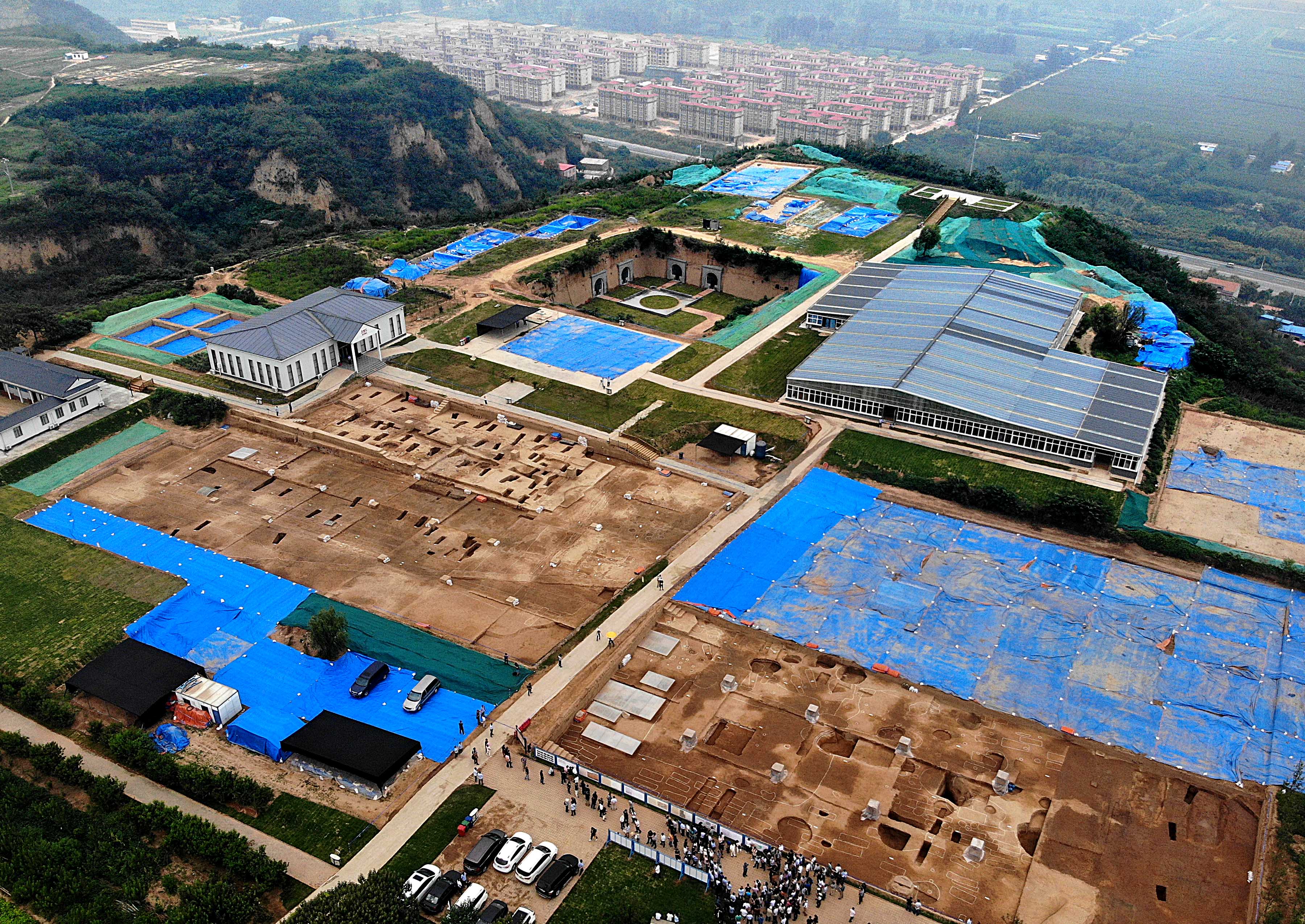
With an area of 1.17 million square meters, the Shuanghuaishu site is located on the south bank of the Yellow River in the township of Heluo, Gongyi City.

The ancient city relic dating back to around 5,300 years ago was proposed by Chinese archaeologists to be named “Heluo kingdom” after its location in the center of the Heluo area, where the Yellow River (known as He in ancient China) and the Luohe River meet.

“The Shuanghuaishu site is the highest-standard cluster with the nature of a capital city discovered so far in the Yellow River basin in the middle and late stage of Yangshao Culture, the early stage of the formation of Chinese civilization,” said Li Boqian, a professor at Peking University, at a press conference on major archaeological discoveries at Shuanghuaishu site held Thursday in Zhengzhou, the provincial capital.

Aerial photo taken on Aug. 27, 2019 shows the Shuanghuaishu site in central China’s Henan Province. (Xinhua/Li An)

A large number of relics of the Yangshao Culture dating back 5,000 to 7,000 years have been discovered at the site, said Gu Wanfa, director of the Zhengzhou Municipal Research Institute of Cultural Relics and Archaeology, at the press conference.

“The important archaeological findings provide key proof of the origin of Chinese civilization, and also prove the representativeness and influence of the Heluo area in the golden stage of the origin of Chinese civilization around 5,300 years ago,” said Wang Wei, a member of the Chinese Academy of Social Sciences.

Since 2013, the Zhengzhou Municipal Research Institute of Cultural Relics and Archaeology and the Institute of Archaeology of the Chinese Academy of Social Sciences have conducted continuous archaeological excavations on the site.

According to archaeologists, the Shuanghuaishu site was about 1,500 meters long from east to west and 780 meters wide from north to south. It was surrounded by three ring trenches with each found to have external access, forming a strict defense system.

Aerial photo taken on Aug. 27, 2019 shows the Shuanghuaishu site in central China’s Henan Province. (Xinhua/Li An)

The central residential area with four rows of houses was found in the northern part of the inner ring moat. Meanwhile, three public cemeteries with more than 1,700 tombs, three sacrificial remains, an astronomical relic, a pottery workshop area, a water storage area, a road system, and other facilities were also discovered at the city ruins.

“The Shuanghuaishu site was a well-selected and scientifically planned settlement site,” said Wang.

“Based on the geographical location and scale, it’s also the only large-scale city settlement discovered so far in the Yellow River basin from the middle and late stage of Yangshao Culture,” Wang added.

Archaeologists believe that the Heluo kingdom was the source of many typical characteristics of Chinese civilization.

Silk originated in China and later became one of the country’s major trade items. “The mulberry-growing and silkworm-raising culture was an important component of Chinese civilization,” said Li.

Among the unearthed relics at Shuanghuaishu, a boar tusk carving of a silkworm, 6.4 cm long, nearly 1 cm wide and 0.1 cm thick, was believed to be China’s earliest carving depicting silkworms.

Undated photo shows a boar tusk carving of a silkworm unearthed at the Shuanghuaishu site in central China’s Henan Province. (Xinhua)

Experts say that the carving depicts a spinning silkworm which is quite similar to modern silkworms in appearance. “The spinning shape of the carving suggests that ancient Chinese people were familiar with the habits of silkworms,” said Gu.

Along with silk fabrics unearthed at the surrounding Wanggou site and Qingtai site, archaeologists said they are solid evidence to prove that the ancient Chinese in the Yellow River basin began raising silkworms and silk production around 5,300 years ago.

“Except Shuanghuaishu and its surrounding settlement sites, there were no definite discoveries from around 5,300 years ago related to the silk textile industry in other parts of the country,” said Li. “In that sense, they are the earliest representatives in the development history of Chinese mulberry cultivation and silkworm-rearing culture.”

Meanwhile, at the astronomical relic at Shuanghuaishu, nine pottery pots were arranged in the pattern of the nine stars of the Big Dipper, which shows that the ancestors of Heluo had relatively mature astronomical knowledge.

Photo taken on April 28, 2020 shows one of nine pottery pots arranged in the pattern of the nine stars of the Big Dipper, at an astronomical relic at the Shuanghuaishu site in central China’s Henan Province. (Xinhua/Li An)

“The relic also indicates the worship of the celestial body may have formed a grand sacrificial ceremony for observing the solar terms and praying for a good harvest,” said Gu.

Experts also believe the astronomical relic and the surrounding sacrificial remains constitute a whole, which is consistent with the records of winter solstice sacrifices in ancient Chinese documents. “It is of great significance to the study of early Chinese astronomy and the origin of Chinese civilization,” added Gu.

Source: Xinhua

29/03/2020

China guards against second wave of coronavirus coming from abroad

WUHAN, China (Reuters) – The growing number of imported coronavirus cases in China risked fanning a second wave of infections at a time when “domestic transmission has basically been stopped”, a spokesman for the National Health Commission said on Sunday.

“China already has an accumulated total of 693 cases entering from overseas, which means the possibility of a new round of infections remains relatively big,” Mi Feng, the spokesman, said.

In the last seven days, China has reported 313 imported cases of coronavirus but only 6 confirmed cases of domestic transmission, the commission’s data showed.

There were 45 new coronavirus cases reported in the mainland for Saturday, down from 54 on the previous day, with all but one involving travelers from overseas.

Most of those imported cases have involved Chinese returning home from abroad.

Airlines have been ordered to sharply cut international flights from Sunday. And restrictions on foreigners entering the country went into effect on Saturday.

Five more people died on Saturday, all of them in Wuhan, the industrial central city where the epidemic began in December. But Wuhan, the capital of Hubei province, has reported only one new case on the last 10 days.

A total of 3,300 people have now died in mainland China, with a reported 81,439 infections.

Saturday marked the fourth consecutive day that Hubei province recorded no new confirmed cases. The sole case of domestically transmitted coronavirus was recorded in Henan province, bordering Hubei.

With traffic restrictions in the province lifted, Wuhan is also gradually reopening borders and restarting some local transportation services.

“It’s much better now, there was so much panic back then. There weren’t any people on the street. Nothing. How scary the epidemic situation was,” a man, who gave his surname as Hu, told Reuters as he ventured out to buy groceries in Wuhan.

“Now, it is under control. Now, it’s great, right?”

All airports in Hubei resumed some domestic flights on Sunday, with the exception of Wuhan’s Tianhe airport, which will open to domestic flights on April 8. Flights from Hubei to Beijing remain suspended.

A train arrived in Wuhan on Saturday for the first time since the city was placed in lockdown two months ago. Greeting the train, Hubei Communist Party Secretary Ying Yong described Wuhan as “a city full of hope” and said the heroism and hard work of its people had “basically cut off transmission” of the virus.

More than 60,000 people entered Wuhan on Saturday after rail services were officially restarted, with more than 260 trains arriving or travelling through, the People’s Daily reported on Sunday.

On Sunday, streets and metro trains were still largely empty amid a cold rainy day. Flashing signs on the Wuhan Metro, which resumed operations on Saturday, said its cars would keep passenger capacity at less than 30%.

The Hubei government on Sunday said on its official WeChat account that a number of malls in Wuhan, as well as the Chu River and Han Street shopping belt, will be allowed to resume operations on March 30.

Concerns have been raised that a large number of undiagnosed asymptomatic patients could return to circulation once transport restrictions are eased.

China’s top medical adviser, Zhong Nanshan, played down that risk in comments to state broadcaster CCTV on Sunday. Zhong said asymptomatic patients were usually found by tracing the contacts of confirmed cases, which had so far shown no sign of rebounding.

With the world’s second-biggest economy expected to shrink for the first time in four decades this quarter, China is set to unleash hundreds of billions of dollars in stimulus.

The ruling Communist Party’s Politburo called on Friday for a bigger budget deficit, the issuance of more local and national bonds, and steps to guide interest rates lower, delay loan repayments, reduce supply-chain bottlenecks and boost consumption.

Source: Reuters

06/03/2020

Industrial enterprises above designated size resume production

CHINA-HENAN-ENTERPRISES-PRODUCTION (CN)

People work on the production line of YTO Group in Luoyang, central China’s Henan Province, March 5, 2020. About 94.8 percent of industrial enterprises above designated size in Luoyang have resumed production so far. (Xinhua/Li Jianan) Source: Xinhua

05/03/2020

Special Report – Before coronavirus, China bungled swine epidemic with secrecy

(Reuters) – When the deadly virus was first discovered in China, authorities told the people in the know to keep quiet or else. Fearing reprisal from Beijing, local officials failed to order tests to confirm outbreaks and didn’t properly warn the public as the pathogen spread death around the country.

All this happened long before China’s coronavirus outbreak, which has claimed more than 3,000 lives worldwide in less than three months. For the past 19 months, secrecy has hobbled the nation’s response to African swine fever, an epidemic that has killed millions of pigs. A Reuters examination has found that swine fever’s swift spread was made possible by China’s systemic under-reporting of outbreaks. And even today, bureaucratic secrecy and perverse policy incentives continue undermining Chinese efforts to defeat one of the worst livestock epidemics in modern history.

Beijing’s secretive early handling of the coronavirus epidemic has troubling similarities to its missteps in containing African swine fever, but with the far higher stakes of a human infection. After the coronavirus was found in December 2019 in Wuhan, the capital of Hubei province, local and national officials were slow to sound the alarm and take actions disease experts say are needed to contain deadly outbreaks. Beijing continues to gag negative news and online postings about the disease, along with criticism of the government’s response.

With swine fever, Beijing set a tone of furtiveness across government and industry by denying or downplaying the severity of a disease that the meat industry estimates has shrunk China’s 440-million-hog herd by more than half. The epidemic has taken a quarter of the world’s hogs off the market, hurt livelihoods, caused meat prices to spike globally and pushed food inflation to an eight-year high. (For a graphic on soaring China pork prices, click here)

Cover-ups across China – coupled with underfinancing of relief for devastated pig farmers and weak enforcement of restrictions on pork transport and slaughter – have enabled the spread of the livestock virus to the point where it now threatens pig farmers worldwide, according to veterinarians, industry analysts and hog producers. Since the China outbreak, African swine fever has broken out in 10 countries in Asia.

The vacuum of credible information has made it impossible for farmers, industry and government to tell how and why the disease spread so quickly, making preventive measures difficult, said Wayne Johnson, a Beijing-based veterinarian who runs Enable Ag-Tech Consulting.

“To get it under control, you have to know where it is,” Johnson said.

China’s Ministry of Agriculture and Rural Affairs said in a statement to Reuters that it has repeatedly communicated to all regions the importance of timely and accurate reporting of African swine fever outbreaks and had zero tolerance for hiding and delaying the reporting of cases.

Interviews with farmers, industry analysts and major suppliers to China’s pork sector indicate otherwise. More than a dozen Chinese farmers told Reuters they reported disease outbreaks to local authorities that never made it into Beijing’s official statistics. Those infections are going unreported to central authorities in part because counties lack the cash to follow a separate requirement from Beijing to compensate farmers for pigs killed to control the disease.

Local officials have also avoided reporting outbreaks out of fear of the political consequences. And they have routinely refused to test pigs for the virus when mass deaths are reported, according to interviews with farmers and executives at corporate producers.

A farmer surnamed Zhao, who raises a herd in Henan province, said local officials told him as much when they resisted recording the outbreak he reported on his farm, which wiped out his herd.

“‘We haven’t had a single case of African swine fever. If I report it, we have a case,’” Zhao recalled an official telling him. The local officials could not be reached for comment and a fax seeking comment went unanswered.

When the coronavirus hit, Chinese authorities reacted with a push to reassure the public that all was well. The first reported death from the virus, also known as SARS-CoV-2, came on Jan. 9 – a 61-year-old man in Wuhan. In the following days, Chinese authorities said that the virus was under control and not widely transmissible.

The assurances came despite a lack of reliable data and testing capacity in Wuhan. Testing kits for the disease were not distributed to some of Wuhan’s hospitals until about Jan. 20, an official at the Hubei Provincial Centre for Disease Control and Prevention (Hubei CDC) told Reuters. Before then, samples had to be sent to a laboratory in Beijing for testing, a process that took three to five days to get results, according to Wuhan health authorities.

During that gap, city hospitals reduced the number of people under medical observation from 739 to 82, according to data from Wuhan health authorities compiled by Reuters, and no new cases were reported inside China.

China’s top leadership has dramatically ramped up the public-health response since its early missteps. Beijing built new hospitals in days to treat the sick and launched an unprecedented blockade of the disease epicentre on Jan. 23, first quarantining Wuhan’s 11 million residents at home, then suspending transport in all major cities of Hubei province, home to about 60 million people.

Still, the initial attempts to tightly control information left many people unaware of the risks and unable to take precautions that might have prevented infection – and the suppressing of news and commentary continues today. Wuhan authorities reprimanded eight people they accused of spreading “illegal and false” information about the disease. One of them, 34-year-old doctor Li Wenliang, later died from coronavirus, triggering an angry backlash on social media.

Some critical posts were allowed during a brief and unusual period of online openness in late January. But Beijing’s censors – the Cyberspace Administration of China (CAC) – have since cracked down on posts about Li and other information that authorities deem negative, according to CAC censorship orders sent to online news outlets and seen by Reuters. One CAC notice ordered online outlets to guard against “harmful information.” Another ordered them not to “push any negative story.”

The CAC did not respond to a request for comment sent by fax.

UNREPORTED OUTBREAKS

Beijing had years to prepare for African swine fever. Veterinarians have frequently warned Chinese authorities of the risks since the disease started spreading through the Caucasus region in 2007.

Pigs infected by the virus initially suffer high fever, loss of appetite and diarrhoea. Then their skin turns red as internal haemorrhaging starts and their organs swell, leading to death in as little as a week.

With no vaccine or cure available for the disease, experts recommend that infected pigs and others housed in the same barn are culled, with the carcasses either burned or buried to prevent further infection. Farms, equipment and vehicles that could be contaminated need to be thoroughly cleaned and disinfected.

The first case in China was discovered on Aug. 1, 2018, on a farm near Shenyang, in the northeastern province of Liaoning. Just two weeks later, the virus was found more than 1,000 kilometres to the south in pigs bought by the country’s top pork processor, WH Group(0288.HK), from another northeastern province, Heilongjiang. It took Beijing another two weeks to block pig exports from the whole region, and that and other transport restrictions were poorly enforced, said Johnson and other industry experts. WH Group declined to comment.

One factor behind the epidemic: Chinese consumers prefer fresh pork – straight from the slaughterhouse, rather than chilled. This means hundreds of thousands of live pigs are moved long distances every day to supply processors in major cities. That mass movement spread the disease relentlessly.

Over the first four months of the outbreak, Beijing reported swine-fever cases almost daily as the virus spread from the northeast down through central China, west into Sichuan, and to the huge province of Guangdong by year-end. Veterinarians believe the virus spread quickly because it can survive for weeks on dirty farm equipment or livestock trucks.

And yet gaps in counting and tracking the pig disease have been routine across China. Reuters found a striking absence of reported outbreaks in some of the nation’s most productive pork regions.

For instance, almost none of the reported outbreaks have come from the major hog-raising provinces of Hebei, Shandong and Henan. The three contiguous northern provinces were the source of some 20% of the 700 million pigs China slaughtered in 2017. Many came from backyard farms, which make up a large part of China’s industry and have proven fertile breeding grounds for the disease. Yet each of the three provinces has reported just a single case of African swine fever, despite widespread anecdotal reports of outbreaks there that industry sources believe killed millions of pigs.

Neither Shandong nor Henan authorities responded to requests for comment. Hebei’s department of agriculture said it had “strictly reported and verified the epidemic” and that the disease situation was currently “stable.”

Six Henan farmers told Reuters they reported outbreaks during late 2018 and the first half of 2019. In some cases, local authorities helped deal with dead pigs, they said, but never tested for the virus.

That’s what happened when Wang Shuxi, a farmer in Henan’s Gushi County, lost more than 400 pigs in March 2019. Wang said he had no doubt that his pigs had African swine fever, even though authorities never tested them – and he couldn’t test them himself, because Beijing did not permit the commercial sale of disease test kits at the time.

His pigs showed telltale symptoms of the disease.

“The whole body went red,” he said. He injected the animals with an anti-fever medication to no avail. “At the start, they didn’t eat, and even after injections, it kept returning,” he said. “If you can’t cure it, you know it’s swine fever.”

Provincial and county governments had strong incentives to avoid verifying and reporting outbreaks because of Beijing’s rules on compensating farmers, said Huang Yanzhong, specialist in health governance with the Council on Foreign Relations in New York.

Under an African swine fever contingency plan drawn up in 2015, Beijing ordered the culling of all pigs on farms where the disease is found and on every farm within a three-kilometre radius. The central government raised compensation from 800 yuan ($115) to 1,200 yuan for every pig culled in 2018. Beijing typically promised to provide between 40% and 80% of the money, depending on the province. Localities would fund the rest.

In April 2019, the national agriculture ministry said the central government had allocated 630 million yuan to cull 1.01 million pigs to contain the disease. But that money either wasn’t sufficient or regularly did not get paid out, farmers told Reuters. None of about a dozen farmers who told Reuters they tried to report outbreaks said they had received the promised 1,200 yuan for each pig.

Many got nothing. Wang, the Gushi County farmer, said that almost a year after his pigs died, he has received no recompense. Gushi County officials could not be reached for comment.

Many farmers, eager to salvage value from their herds, have resorted to sending their pigs to slaughter at the first sign of illness – thereby thrusting the virus into the human food supply. The swine fever virus does not threaten people. But its presence in meat – where it can survive for weeks – creates a cycle of infection because many backyard farmers feed pigs with restaurant scraps that include pork.

Garbage feeding caused 23 outbreaks in 2018, Huang Baoxu, deputy director of the China Animal Health and Epidemiology Center, told reporters at a briefing in November that year. His remarks were a rare instance where the central government revealed findings about the spread of the hog virus. The centre declined to comment for this story.

Farmers visiting slaughterhouses dealing in sick pigs also likely picked up the virus on their trucks or equipment, spreading it back to their farms, Johnson said.

In the southern province of Guangxi, the disease raged through the spring of 2019 and early summer, several farmers told Reuters last year. Bobai County was hit hard.

A Bobai farmer surnamed Huang said she lost almost 500 pigs during April and May. She said she tried to report the diseased pigs to the local government but was ignored. The official she spoke to by phone never came to her farm. He told Huang that her pigs could not be saved – but that they didn’t have African swine fever. His advice, she said: “hurry and sell the pigs while they could be sold.”

Huang said she sold more than 30 pigs that she believed had the virus. They looked healthy when she sold them, she said. Others sold obviously sick pigs at very low prices. “Traders took all the pigs, including the sick ones – as long as they could walk to the trucks,” she said.

Huang buried her dead pigs daily for weeks on a relative’s land. Others simply dumped their dead pigs on the roadside or in the mountains, she said. The government provided no help.

Eventually, in late May, Bobai County reported one pig dead from the disease, official statistics show.

Authorities in Guangxi did not respond to a request for comment, and officials in Bobai county’s agriculture bureau could not be reached.

Beijing’s agriculture ministry said in a statement that it had issued an August 2019 order requiring punishments in situations where localities failed to report outbreaks. The ministry said it meted out unspecified discipline to more than 600 local personnel for what it called failures to manage the disease that were uncovered in its investigations of problem areas.

The practice of processing infected hogs has persisted despite new rules from Beijing in July that required slaughterhouses to test all batches of pigs for the virus. The agriculture ministry said in January that 5% of the more than 2,000 samples taken from slaughterhouses in November tested positive for the disease.

An Australian study in September found 48% of meat products confiscated from Asian travellers arriving at its ports and airports contained the virus.

“It showed there’s an awful lot of unrevealed infection not being reported to the authorities,” said Trevor Drew, director of the Australian Animal Health Laboratory.

One such information gap is at the top of the industry – China’s large corporate pig producers. They have also been hit hard by the disease, despite taking more extensive measures than backyard farms to disinfect trucks and require workers to change clothes and shower before and after shifts.

None of China’s top publicly traded producers have publicly announced any swine fever outbreak, but executives of major hog producers acknowledged in interviews with Reuters that their herds were hit by the disease.

Thai conglomerate C.P. Pokphand(0043.HK), one of China’s leading pig producers, has had swine-fever outbreaks on farms in Liaoning, Shandong, Henan and Jiangsu provinces, Bai Shanlin, chief executive of China operations, told Reuters in a rare admission by a listed firm. Executives at three other listed companies, also among China’s top pig producers, acknowledged outbreaks at several farms but declined to be identified.

None of the outbreaks that these large companies have confirmed to Reuters were reported by Beijing, according to a Reuters review of the agriculture ministry’s data on outbreaks.

By August 2019, a year after the first case was found in China, pork prices had passed a record set back in 2016. And they were still climbing rapidly. With a crucial national celebration approaching in October – the 70th anniversary of the founding of the People’s Republic – China’s top leaders took note. Pork is a staple of Chinese cuisine, and rising meat production has been among the many signature achievements in the Communist Party’s decades-long drive to bring prosperity to China.

In a video conference that month with officials from all 34 provinces and regions, Vice Premier Hu Chunhua issued a warning: Sufficient pork was vital to people’s lives and the country’s stability. He called for the urgent recovery of the herd as a key “political task.”

A raft of new production policies and incentives emerged from Beijing. And as the provinces rallied to replenish the nation’s herd, reports of African swine fever grew even more rare. Disease outbreaks reported by the agriculture ministry have tailed off since August. In January, Agriculture Minister Han Changfu said the situation has stabilized.

The government’s statistics are rife with contradictions, however. The ministry has reported 163 outbreaks of African swine fever since August 2018 and said 1.19 million pigs have been culled, a fraction of 1% of China’s total herd. Separate ministry data tracking the herd monthly show that, by September 2019, the herd had shrunk by 41% from the prior year. (For a graphic on the decline in China’s pig herd, click tmsnrt.rs/38lkOcx )

These official estimates of the decline are far too low, three major industry suppliers told Reuters.

“It’s at least 60%,” said Johan de Schepper, managing director of Dutch feed ingredients firm Agrifirm International. His assessment, based on sales to about 100 large pig producers, echoed those of others in the industry.

The virus is still killing pigs nationwide and the herd may still be shrinking, say farmers and industry suppliers. “Half of the herd was gone before this winter, and I think half of the rest will be gone by the end of the season,” said Johnson, the veterinarian, citing conversations with clients from across China.

The problem: Some areas were hit with a second wave of the disease.

Henan province is among them, farmers told Reuters. Last year, about 60% of Henan’s herd was wiped out, mainly in the densely farmed areas in the south and west of the province, analysts at Guotai Junan Securities wrote in an internal memo seen by Reuters. Recently, the memo noted, the virus has moved through east Henan, taking out another 20%.

The vicious disease ruined Zhao, the farmer in central China’s Henan province. The virus struck in October, causing high fever, internal bleeding, vomiting and diarrhoea in his pigs. Just two survived. The other 196 died in a week.

When Zhao tried to report the outbreak to the county veterinary authority, he said, officials strongly encouraged him to keep quiet. A local official reminded him of the national mandate to cull all pigs within three kilometres of an infected farm. That could spell disaster for his neighbours if Zhao spoke up.

“If it’s found to be African swine fever, people nearby will have to stop raising pigs,” Zhao recalled a local official telling him. Zhao decided against filing a report to protect his neighbours, he told Reuters on a recent visit to his farm.

Further up the political hierarchy, the deputy governor of Henan province was quoted by the provincial agriculture bureau as saying in December that Henan had been free of the disease for 14 months, after a single reported case in September 2018. The provincial government did not respond to requests for comment.

The disinformation game continues. Zhao says that when county officials came by his farm in January, they recorded that he still had 180 pigs. In fact, he said, he had just the two hogs that survived the October outbreak.

“The country is being kept in the dark,” he said.

Source: Reuters

23/02/2020

Coronavirus: Taiwanese workers call time on mainland China over Covid-19 fears

  • An extended Lunar New Year holiday provides people from the self-ruled island with the opportunity to rethink their careers as the death toll from the deadly infection continues to rise
  • Online poll finds 63 per cent of Taiwanese unwilling to return to mainland China over health concerns
Many Taiwanese are opting not to return to their jobs in mainland China because of the coronavirus epidemic. Photo: EPA-EFE

Taiwanese account manager Douglas Liu values his life more than his job, which is why he will be staying at home on Monday rather than going back to work in the mainland China city of Suzhou.

Liu returned to his home in Taipei on January 10 for an extended Lunar New Year

 holiday – and to vote in the island’s presidential election – and planned to go back to work on February 1. But as the coronavirus epidemic worsened, the 45-year-old changed his plans.
“Last week, my company told me I should resume work on February 24, but after I argued in vain over the risk of returning to Suzhou, I tendered my resignation,” he said. “After all, my life is more important.”
Liu works for a firm that manufactures chest freezers for the mainland Chinese market.
“With more than 80 coronavirus infections in Suzhou and little sign of it subsiding, who knows what could happen to me if I return,” he said.
More than 78,700 people have contracted the virus since it was first detected in Wuhan, the capital of central China’s Hubei province, at the end of last year, and close to 2,500 have lost their lives to it.

As of Saturday, about 98 per cent of the infections and 99 per cent of the fatalities were in mainland China, two figures that have prompted many Taiwanese to rethink their employment plans.

According to a survey conducted last week by online recruitment agency 104 Job Bank, 63 per cent of Taiwanese with jobs on the mainland said they would not be returning to work after the extended Lunar New holiday. Before Wuhan was placed under lockdown on January 23 in a bid to contain the coronavirus outbreak, the figure was just 50 per cent.

“The intensification of the outbreak has created panic and insecurity for Taiwanese who work in mainland China and the lockdown of many cities has further discouraged them from returning to their jobs,” said Jason Chin, a senior vice-president at the recruitment agency.

Wuhan has been on lockdown since January 23. Photo: Reuters
Dozens of cities across China have introduced some form of restriction on the movement of residents, and several remain under total lockdown.

Chin said that the containment efforts had made it impossible for many companies to resume normal operations and provided a catalyst for Taiwanese workers to seek employment elsewhere.

“Taiwanese often to change jobs after the Lunar New Year, so the mainland government’s policy of delaying the resumption of regular business activities has given them more time to look for work outside mainland China,” he said.

Shannon Chiu is another Taiwanese who decided to call time on the mainland because of the coronavirus outbreak.

After two years working for an agricultural technology company in Zhengzhou, the capital of central China’s Henan province, she said she already had concerns about the standards of health care there.

“Being sick in Zhengzhou is a nightmare for Taiwanese because of the poor organisation and registration procedures,” she said.

“You either have to wait hours to see a doctor or go hospital-hopping in the hope of getting an appointment somewhere else.”

Chiu said she was still working in Zhengzhou after the outbreak had been reported in Wuhan – about 500km (310 miles) to the south – but no one in the city was wearing a face mask.

“I was lucky because I came back to Taiwan a week before the lockdown and my company allowed me to continue working from Taipei,” she said.

“Although I no longer enjoy the expatriate benefits, I feel a lot safer here because I don’t think I would survive if I was put in a mainland hospital because of Covid-19.”

Source: SCMP

27/12/2019

Pilot shortages could ground China’s plans to develop combat-ready carrier fleet

  • The country’s second aircraft carrier, the Shandong, officially entered service this month, but bottlenecks in training could hamper the navy’s effectiveness
  • Plans to build and launch more modern warships mean the need for fully trained pilots will only grow
A pilot based on the Liaoning is seen during a training exercise. China is facing a shortage of trained naval aviators. Photo: Handout

A shortage of naval pilots is holding back Beijing’s ambitions to develop a truly combat-ready fleet, military analysts have said.

China officially commissioned its second aircraft carrier the Shandong last week, which means it will need at least 70 pilots, along with more supporting flight officers.

However, plans to further expand its fleet to five or six carriers – as well as the more advanced technology that will be used on these vessels – mean the need to train more pilots will become more urgent in the future.

Chinese President Xi Jinping has initiated a sweeping modernisation drive across all branches of the People’s Liberation Army and said “the need to build up a strong navy has never been more pressing”.

The Shandong, China’s second carrier, officially entered service earlier this month. Photo: Handout
But Collin Koh, a research fellow at the S Rajaratnam School of International Studies at Singapore’s Nanyang Technological University, said there was a bottleneck in the recruitment and training of naval pilots.

“The implications of carrier-borne aviation are still relatively unfamiliar to the PLA, especially when there’s an urge to scale up training tempo and recruitment in order to fulfil the top directives of building a viable carrier programme,” he said.

China’s training programme for all military pilots is still developing – particularly when it comes to the naval aviation arm, which was only founded in May 2013.

China’s new carrier set to have smaller jet force than expected

20 Dec 2019

China’s first aircraft carrier, the Liaoning, was commissioned in September 2012, but the first successful fighter landing on the ship did not happen until two months later.

The first successful night landing was not reported by state media until May 2018, almost four years later.

It appears to have taken even longer to fully train helicopter pilots, with the first successful day landing taking place in November 2018, according to China’s Naval Aviation University, and the first night landing in June this year.

The training programme has also been marred by a string of fatal accidents along the way, although Koh said these had been unreported to avoid deterring prospective recruits.

Days after China marked the 70th anniversary of the foundation of the People’s Republic with a huge military parade in Beijing on October 1, three airmen were killed when a transport helicopter crashed in central Henan province.

Just eight days later there was another crash on the Tibetan Plateau, where a J-10 fighter jet on a low-altitude flying drill crashed into a mountain. The pilot was reported to have survived.

“The attrition rate of carrier-borne pilot training, including those who might have been injured or killed in the line of duty, isn’t that well publicised by the PLA,” said Koh.

Fighters on the deck of the Liaoning, China’s first carrier. Photo: Xinhua
Li Jie, another Beijing-based military expert, said although the navy is short of pilots now, the problem could be solved within two to three years.
“The insufficient number of carrier-borne warplanes and the substantial training needed for a qualified naval pilot are the two main reasons why China is so short of pilots now. But as China places more and more emphasis on the education and training of the pilots, the problem will be gradually ironed out, ” said Li.
First made-in-China carrier officially enters service
18 Dec 2019

The Naval Aviation University, which is responsible for the training of future naval pilots, has been working with three of the country’s leading universities – Peking, Tsinghua and Beihang – to identify and recruit future pilots.

The authorities have also set up Naval Aviation Experimental Classes in high schools across the country. Each class recruits 50 students, who enjoy a national subsidy and will be put in a priority list to be admitted as a naval pilot.

Source: SCMP

06/12/2019

Chinese residents worry about rise of facial recognition

Facial recogition system in busImage copyright GETTY IMAGES
Image caption Some buses in Shanghai have had facial recognition systems fitted to them

A survey by a Beijing research institute indicates growing pushback against facial recognition in China.

Some 74% of respondents said they wanted the option to be able to use traditional ID methods over the tech to verify their identity.

Worries about the biometric data being hacked or otherwise leaked was the main concern cited by the 6,152 respondents.

Facial recognitions systems are being rolled out in stations, schools, and shopping centres across the country.

The survey, first reported in the West by The Financial Times, was released on Thursday by the Nandu Personal Information Protection Research Centre.

It has been described as being one of the first major studies of its kind into public opinion on the subject in mainland China.

Some 80% of respondents said they were concerned that facial recognition system operators had lax security measures.

Separate research suggests that they have good reason to be concerned.

China was ranked the worst of 50 surveyed countries in a study looking at how extensively and invasively biometric ID and surveillance systems are being deployed. The work was carried out by the cybersecurity firm Comparitech.

It said China had no “specific law to protect citizens’ biometrics” and highlighted a “lack of safeguards for employees in the workplace”.

Face recognition system by roadImage copyright GETTY IMAGES
Image caption Some cities are deploying facial recognition systems at road crossings to identify and deter jaywalkers

Surveillance concerns

Nandu’s survey was carried out via the internet between October and November.

In its sample, 57% of respondents voiced concern about their movements being tracked.

In addition, 84% of people said they wanted to be able to review the data that facial recognition systems had collected on them and to be able to request that it should be deleted.

The majority said they wanted an option to be able to use ID cards, driving licenses and/or passports as an alternative. But the survey also suggested that between 60 to 70% of Chinese residents believed facial recognition made public places safer.

Hard to avoid

China has more facial recognition cameras than any other country and they are often hard to avoid.

Earlier this week, local reports said that Zhengzhou, the capital of the northeastern Henan province, had become the first Chinese city to roll the tech out across all its subway train stations.

Commuters can use the technology to automatically authorise payments instead of scanning a QR code on their phones. For now, it is a voluntary option, said the China Daily.

Earlier this month, university professor Guo Bing announced he was suing Hangzhou Safari Park for enforcing facial recognition.

Prof Guo, a season ticket holder at the park, had used his fingerprint to enter for years, but was no longer able to do so.

The case was covered in the government-owned media, indicating that the Chinese Communist Party is willing for the private use of the technology to be discussed and debated by the public.

Media captionWATCH: BBC’s John Sudworth put a Chinese facial recognition system to the test in December 2007

But the state continues to make some uses of the tech mandatory.

At the start of the month, a new regulation came into force that requires mobile phone subscribers to have their faces scanned when they sign a new contract with a provider.

The authorities say the move is designed to prevent the resale of Sim cards to help combat fraud.

But country-watchers have suggested it may also be used to help the police and other officials keep track of the population.

Source: The BBC

05/12/2019

4,000-year-old granaries discovered in central China’s Neolithic ruins

ZHENGZHOU, Dec. 5 (Xinhua) — Archaeologists have unearthed a number of circular foundations at a Neolithic site of Longshan Culture dating back about 4,000 years in Huaiyang, central China’s Henan Province, and believe they are one of China’s earliest granaries.

The Shizhuang Site was discovered when workers built a factory. According to an archaeological survey, the site covers 30,000 square meters with the main living area of 5,000 square meters surrounded with rammed earth walls. The ground bases of the granaries are located inside the ancient settlement.

The Henan Provincial Institute of Cultural Relics and Archaeology began excavation of the site in July.

Cao Yanpeng, an associate researcher at the institute, said the Longshan Culture represents a gradual transition from a primitive society to a civilized era. The cultural sites were discovered in places in the middle and lower reaches of the Yellow River, including the current provinces of Shanxi, Shaanxi, Henan and Shandong.

The main artifacts from the culture are characterized by black pottery.

“Granaries from that period, especially circular ones, were rarely found in previous discoveries,” said Lei Xingshan, secretary of the Party Committee of Peking University’s School of Archaeology and Literature.

The site also contains cultural remains from the Spring and Autumn period (770 B.C.- 476 B.C.), and Han (202 B.C.-220) and Tang (618-907) dynasties.

Source: Xinhua

31/10/2019

Fatal crash highlights Chinese air force’s flaws, with drill and equipment problems implicated in deaths of three, including pilot who flew in National Day military parade

  • The deaths of three airmen in a helicopter crash and a second accident days later point to problems with training and equipment
  • The crashes happened within a span of 10 days, amid an increased number of intensive drills
Chinese military helicopters form the number 70 as part of the National Day parade in Beijing. Photo: AP

Engine flaws and a lack of training have been identified as the likely causes of two accidents that hit the Chinese air force in the space of little over a week – one of which claimed the lives of three airmen.

Deaths from the crashes, which happened within a span of 10 days, included a helicopter pilot who took part in the National Day grand parade at the start of the month.

A number of military sources said that as the air force stepped up its exercises – part of President Xi Jinping’s call to strengthen the “combat readiness” of the military – more accidents would happen as increased drills exposed technical problems and inadequate training.

“[If these problems are not resolved], it is foreseeable that more accidents will happen because the top brass is pushing for more drills and exercises across the military,” said one source close to the air force.
The fatal accident happened about three weeks ago in central Henan province, when a transport helicopter crashed, killing all three people on board.
Gong Dachuan, 33, was one of the airmen killed in the crash. Photo: Handout

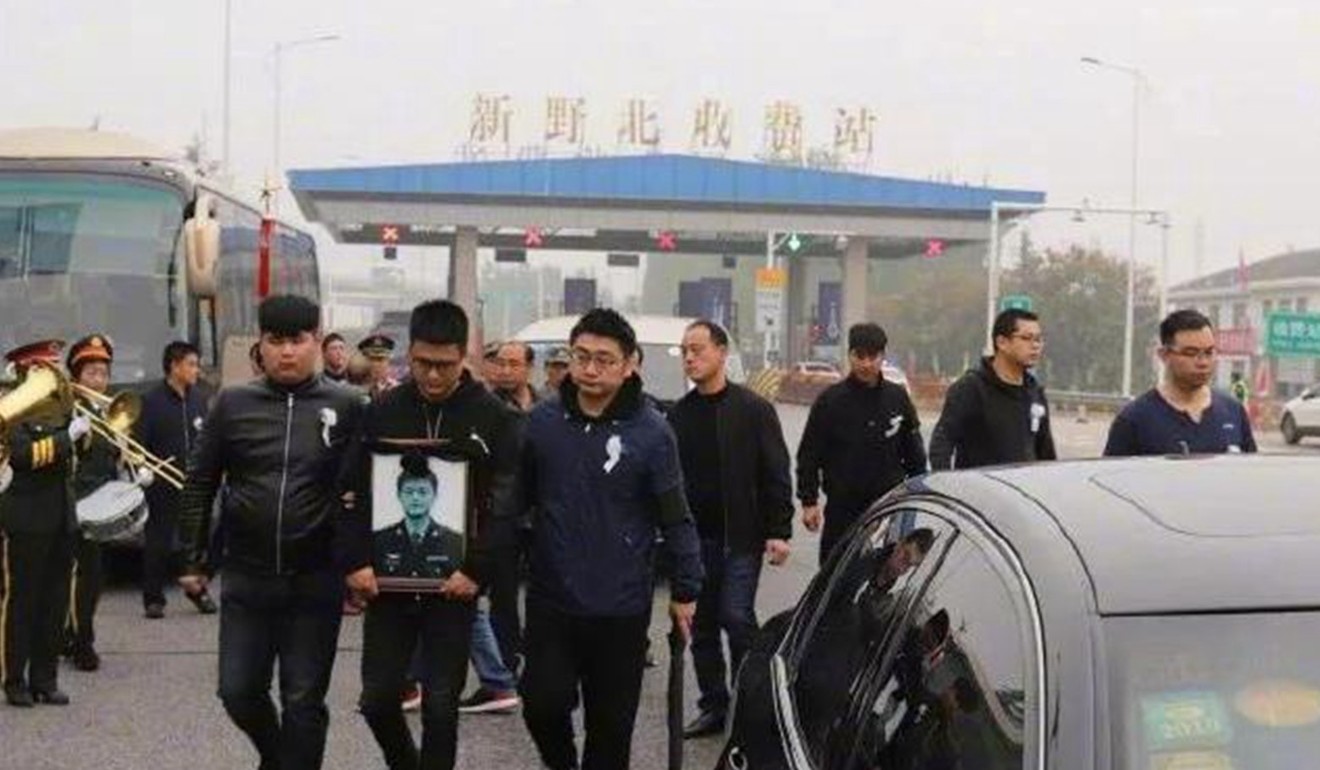
Local television reports named pilot Gong Dachuan, 33, and 37-year-old engineer Wen Weibin, as two of this killed in the crash. The third victim was later named as Luo Wei, from Luzhou in Sichuan, by an online mourning website.

A memorial for Gong was held by the local government in Xinye County last Tuesday.

“The three people were conducting some tests on the helicopter,” said a local source who declined to disclose where the crash happened and the nature of the test.

Xinye county government in Henan province held a memorial to honour the dead pilot. Photo: Handout

Media reports said that Gong had flown in this year’s National Day parade in Beijing, while Wen had been decorated for his participation in the 2015 parade in Beijing to mark the 70th anniversary of victory over Japan in World War II.

The three dead airmen have been designated as martyrs, the reports added.

The second accident happened eight days later on the Tibetan Plateau where a J-10 fighter jet on a low-altitude flying drill crashed into the mountain.

“Fortunately, the pilot ejected safely in time, but the J-10 crashed into the mountain,” said an informed source, who requested anonymity since no official announcement about the accident has been made.

“Preliminary investigations indicated that the accident had something to with the Russian-made AL-31 engine on board the J-10,” the source said.

Military analysts said the air force needs to improve the durability of its aircraft and training for pilots.

Hong Kong-based military expert Song Zhongping suggested that problems with engines and flight control systems were also key reasons behind some of the fatal crashes.

Wen Weibin, 37, also died in the crash. Photo: Handout

Two J-15  fighter jets crashed in April 2016, resulting in one death and one serious injury. Investigations into the two crashes pointed to problems with the flight control system.

A source from the Chinese air force said that, unlike their American counterparts, PLA pilots generally lack training in avionics engineering and had little flying experience before enlistment.

“PLA pilots may be strong and courageous, and they are motivated to make sacrifices,” the air force source said. “But they don’t have as much experience as American pilots – many of [whom] have a lot of experience in flying civilian aircraft before they join the air force.”

Source: SCMP

20/10/2019

Discover China: Erlitou Relic Museum opens in central China

CHINA-HENAN-LUOYANG-ERLITOU RELIC MUSEUM-OPEN (CN)

A visitor views an exhibit at the Erlitou Relic Museum in Luoyang, central China’s Henan Province, Oct. 19, 2019. The Erlitou Relic Museum, which exhibits the history of ancient China’s first recorded dynasty of Xia (2070-1600 B.C.), opened Saturday in Luoyang. It exhibits over 2,000 items, including bronze wares, pottery wares and jade wares. Covering an area of 32,000 square meters, the museum exhibits the history of the Xia Dynasty, the first dynasty recorded in ancient China. Construction of the museum cost 630 million yuan (about 89 million U.S. dollars). The Erlitou Relics date back to 3,500 to 3,800 years ago in ancient China’s late Xia or early Shang (1600-1046 B.C.) dynasties. (Xinhua/Li An)

ZHENGZHOU, Oct. 19 (Xinhua) — The Erlitou Relic Museum opened Saturday in Luoyang city in central China’s Henan Province, unveiling the history and culture of ancient China’s first recorded dynasty of Xia (2070-1600 B.C.).

Covering an area of 32,000 square meters, the museum exhibits over 2,000 items, including bronze wares, pottery wares and jade wares.

Construction of the museum cost 630 million yuan (about 89 million U.S. dollars).

The Erlitou Relics date back to 3,500 to 3,800 years ago in ancient China’s late Xia or early Shang (1600-1046 B.C.) dynasties.

Discovered in 1959 in Luoyang by historian Xu Xusheng, Erlitou was identified by Chinese archaeologists as the relics of the capital city of the middle and late Xia Dynasty.

Over the past 60 years, archaeologists have excavated over 10,000 items out of a total area of 40,000 square meters from the site.

Zhao Haitao from the Chinese Academy of Social Sciences (CASS) Erlitou archaeological team, said that China’s earliest palace complex, bronze ware workshop and urban road network were all found at the site.

The museum has three display areas where visitors can experience and better understand the archaeological achievements of the Xia Dynasty, and probe into the history and culture of the Xia Dynasty via various kinds of projects, such as virtual reality, embossment and sand tables.

Li Boqian, a professor with the School of Archaeology and Museology of Peking University, said the Erlitou Relic Museum presents daily utensils, manufacturing tools and decorations for visitors to understand the social development, history and culture of the Xia Dynasty.

The museum will help people around the world learn about ancient Chinese history and culture, said Liu Yuzhu, director of China’s National Cultural Heritage Administration, at the opening ceremony.

In addition, the museum will become a demonstration site for the protection, preservation and exhibition of China’s major cultural heritage sites and a research center for the origin of Chinese civilization.

Source: Xinhua

Law of Unintended Consequences

continuously updated blog about China & India

ChiaHou's Book Reviews

continuously updated blog about China & India

What's wrong with the world; and its economy

continuously updated blog about China & India