Chindia Alert: You’ll be Living in their World Very Soon
aims to alert you to the threats and opportunities that China and India present. China and India require serious attention; case of ‘hidden dragon and crouching tiger’.
Without this attention, governments, businesses and, indeed, individuals may find themselves at a great disadvantage sooner rather than later.
The POSTs (front webpages) are mainly 'cuttings' from reliable sources, updated continuously.
The PAGEs (see Tabs, above) attempt to make the information more meaningful by putting some structure to the information we have researched and assembled since 2006.
Chinese military takes aim at operations by American warships near the Spratly and Paracel islands
US says sweeping maritime claims in the area pose a threat to freedom of the seas
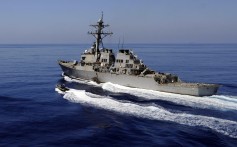
The USS Bunker Hill (front) and the USS Barry have been conducting operations in the South China Sea. Photo: US Navy
The Chinese military called the United States a “troublemaker” in the disputed South China Sea on Thursday, stressing that China was on “high alert” to safeguard its interests in the contested waters.
The two powers, already mired in a dispute over the handling of the coronavirus pandemic, have engaged in tense stand-offs over the South China Sea, with two back-to-back operations by the US to challenge China’s expansive claims in the region in the last few days.
The US’ guided-missile cruiser USS Bunker Hill conducted a “freedom of navigation operation” in the Spratly Islands on Wednesday, a day after the guided-missile destroyer USS Barry conducted a similar operation near the Paracel Islands.
The US 7th Fleet said the operations were in response to “unlawful and sweeping maritime claims in the South China Sea [that] pose a serious threat to the freedom of the seas, including the freedoms of navigation and overflight and the right of innocent passage of all ships”.
More footage emerges from 2018 near collision of US and China warships in South China Sea
And last week, an Australian frigate joined US warships in a joint exercise in the South China Sea after the Chinese research ship Haiyang Dizhi 8, accompanied by a Chinese coastguard vessel, tailed a Malaysian state oil company ship conducting exploration in the area.
China’s defence ministry spokesman Wu Qian said China had been “closely watching and on high alert” against the activities by the US and Australian militaries.
“The frequent military operations in the South China Sea by extra-regional countries like the US and Australia are not conducive to the peace and stability in the South China Sea and we resolutely oppose them,” Wu said.
“Time and again, the US has proven itself to be the biggest force in pushing militarisation in the South China Sea and a troublemaker in preventing peace and stability in the region.”
China military lashes out at US warship’s ‘intrusion’ in South China Sea
29 Apr 2020
On Tuesday, the People’s Liberation Army’s Southern Theatre Command said the
The command said it scrambled air and sea patrols to “track, monitor, verify, identify and expel” the American vessels.
Also on Thursday, Wu rejected a US report that China had secretly conducted an underground nuclear test.
Citing a report from the US State Department, The Wall Street Journal reported two weeks ago that Washington was concerned by an increase in activity at China’s Lop Nur test site in the far western region of Xinjiang, including extensive excavations that raised the suspicion of an explosion.
“The report by the US is fabricated and nonsense,” Wu said. “China, unlike the US, has always kept its promise on international arms control.”
City at centre of outbreak finally able to declare itself clear of disease after months in lockdown and thousands of deaths
Risk of infection remains, however, with some patients testing positive for coronavirus that causes disease without showing symptoms
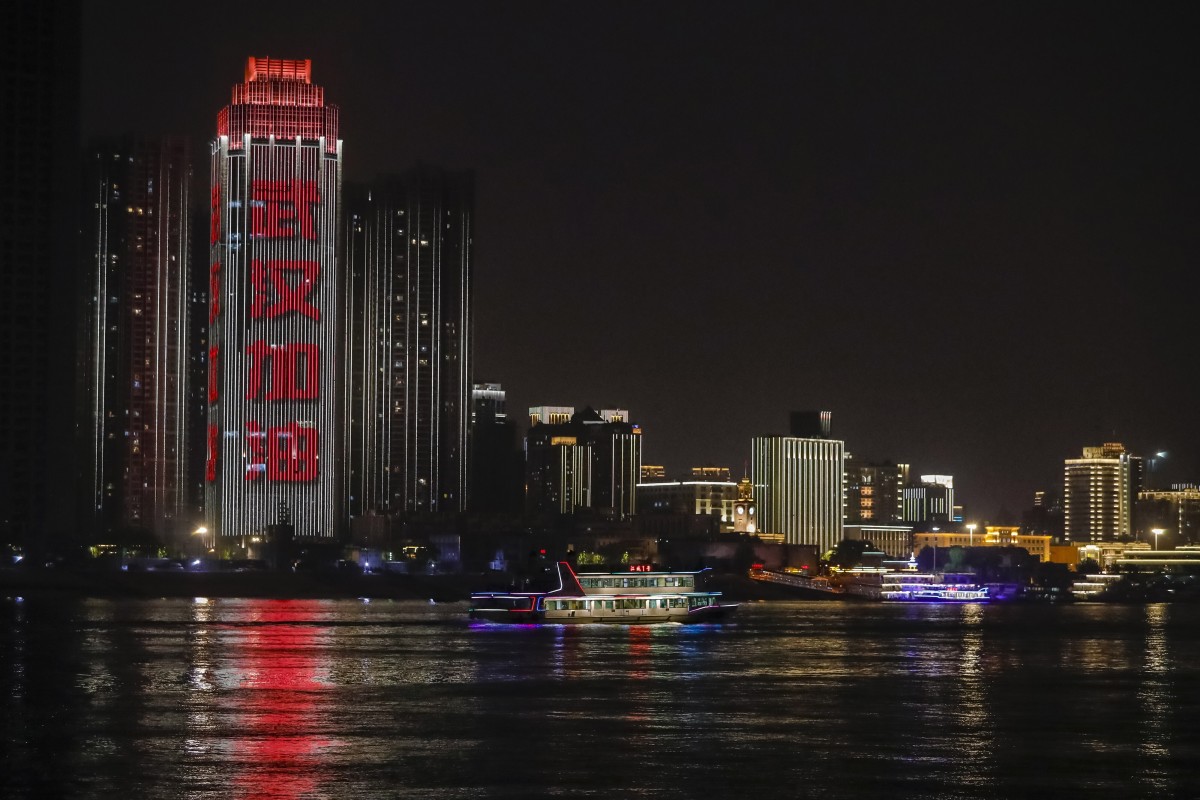
Ferries and other public transport services resumed in Wuhan last week. Photo: Xinhua
The city of Wuhan, the initial epicentre of the coronavirus pandemic, no longer has any Covid-19 patients in hospital after the last 12 were discharged on Sunday.
Their release ended a four-month nightmare for the city, where the disease was first detected in December. The number of patients being treated for Covid-19, the disease caused by a new coronavirus, peaked on February 18 at 38,020 – nearly 10,000 of whom were in severe or critical condition.
“With the joint efforts of Wuhan and the national medical aid given to Hubei province, all cases of Covid-19 in Wuhan were cleared as of April 26,” Mi Feng, a spokesman for the National Health Commission said on Sunday afternoon.
The announcement came only one day after the city discharged the last patient who had been in a severe condition. That patient also was the last severe case in Hubei province.
The last patient discharged from Wuhan Chest Hospital, a 77-year-old man surnamed Ding, twice tested negative for Sars-CoV-2, the virus that causes Covid-19, and was released at noon on Sunday.
“I missed my family so much!” Ding told Changjing Daily.
Another unidentified patient exclaimed as he left the hospital: “The air outside is so fresh! The weather is so good today!”
Wuhan faced a long journey to bring its patient count down to zero.
The city of 11 million, the capital of Hubei province and a transport hub for central China, was put under a strict lockdown on January 23 that barred anyone from entering or exiting the city without official approval for 76 days until it was officially lifted on April 8.
Coronavirus: Wuhan, Los Angeles officials discuss getting back to work after lockdown
22 Apr 2020
Residents were ordered to stay in their apartments as the city stopped public transport and banned private cars from city streets. As the epidemic worsened, more than 42,000 medical staff from across the country were sent to the city and to Hubei province to help ease the burden on the local health care system.
Wuhan was the hardest hit city in China, accounting for 50,333 of the 82,827 locally transmitted Covid-19 cases recorded in China. More than 4,600 died in the country from the disease.
On March 13, the city reported for the first time that there were no new suspected cases of the infection, and five days later there were no confirmed cases.
The number of discharged patients bottomed out at 39.1 per cent at the end of February, gradually climbing to 92.2 per cent by last Thursday.
“Having the patients in the hospital cleared on April 26 marks a major achievement for the city’s Covid-19 treatment,” the Wuhan Health Commission said in a statement.
However, having no severe cases in hospital does not mean all the discharged patients will require no further treatment as they may still need further care.
“Clearing all the severe cases marks a decisive victory for the battle to safeguard Wuhan,” health minister Ma Xiaowei told state broadcaster China Central Television on Saturday.
“Some patients who have other conditions are being treated in specialised hospitals. It has been properly arranged.”
Coronavirus: Chinese writer hit by nationalist backlash over diary about Wuhan lockdown
18 Apr 2020
Ten patients aged between 42 and 85 who have been declared coronavirus-free are still in intensive care at the city’s Tongji Hospital where they are being treated for kidney problems and other complications arising from Covid-19. Some still need ventilators to help them breathe.
These 10 patients are under 24-hour care, with 190 nurses on four-hour rotations. There are other patients in a similar condition in two other hospitals in Wuhan, according to the Hubei Broadcasting and Television Network.
However, the discharge of the last batch of Covid-19 patients does not mean that the risk of infection is gone.
The city reported 20 new cases of people testing positive for Sars-CoV-2, the official name for the coronavirus that causes the disease, but who do not yet show symptoms.
There are 535 such carriers under medical observation. Past data shows some of these asymptomatic carriers will develop symptoms, and so will be counted as Covid-19 patients under China’s diagnosis and treatment plan.
China’s coronavirus infection curve has flattened out with about 694 imported cases of Covid-19 on top of about 800 locally transmitted ones now under treatment.
The national health commission spokesman warned that people still need to be on high alert as the virus is continuing to spread around the globe, with no sign yet of a slowdown.
“[We] must not drop our guard and loosen up. [We] must discover cases in time and deal with them quickly,” Mi said, citing the continued pressure from cases imported by people returning from overseas.
“The next step will be to implement the requirements of the central government and continue to guard against imported cases and a rebound of domestic transmitted cases.”
on Thursday, just a week after President Tsai Ing-wen angered Beijing by saying the island was an independent country.
According to Taiwan’s defence ministry, the formation, which included a KJ-500 early warning and control aircraft and an H-6 bomber, passed through the Bashi Channel near Taiwan’s Orchid Island en route to the western Pacific Ocean.
It did not say how many aircraft were involved but said they had taken off from different airbases in southern China.
“They returned to their airbases from their morning flight path after a long-haul exercise,” the ministry said in a statement.
The ministry urged the public not to be alarmed by the aircraft’s presence, saying it constantly monitored the activities of the People’s Liberation Army (PLA), both in the air and at sea.
Taiwan’s armed forces would also remain on high alert over the Lunar New Year
holiday, which starts on Friday, it said.
“There is no holiday for national security,” it said.
The PLA exercise came just a week after Tsai said on January 15 that Beijing needed to face the reality of Taiwan’s independence.
“We don’t have a need to declare ourselves an independent state,” she said in an interview with the BBC. “We are an independent country already and we call ourselves the Republic of China, Taiwan.”
Tsai urges mainland China to review strained ties
21 Jan 2020
Tsai’s comments came just days after she secured a second term as president with a record 8.2 million votes.
In her victory speech, she promised to continue to stand up to Beijing’s intimidation, while also strengthening Taiwan’s defences, partly by developing more home-grown military equipment, including submarines.
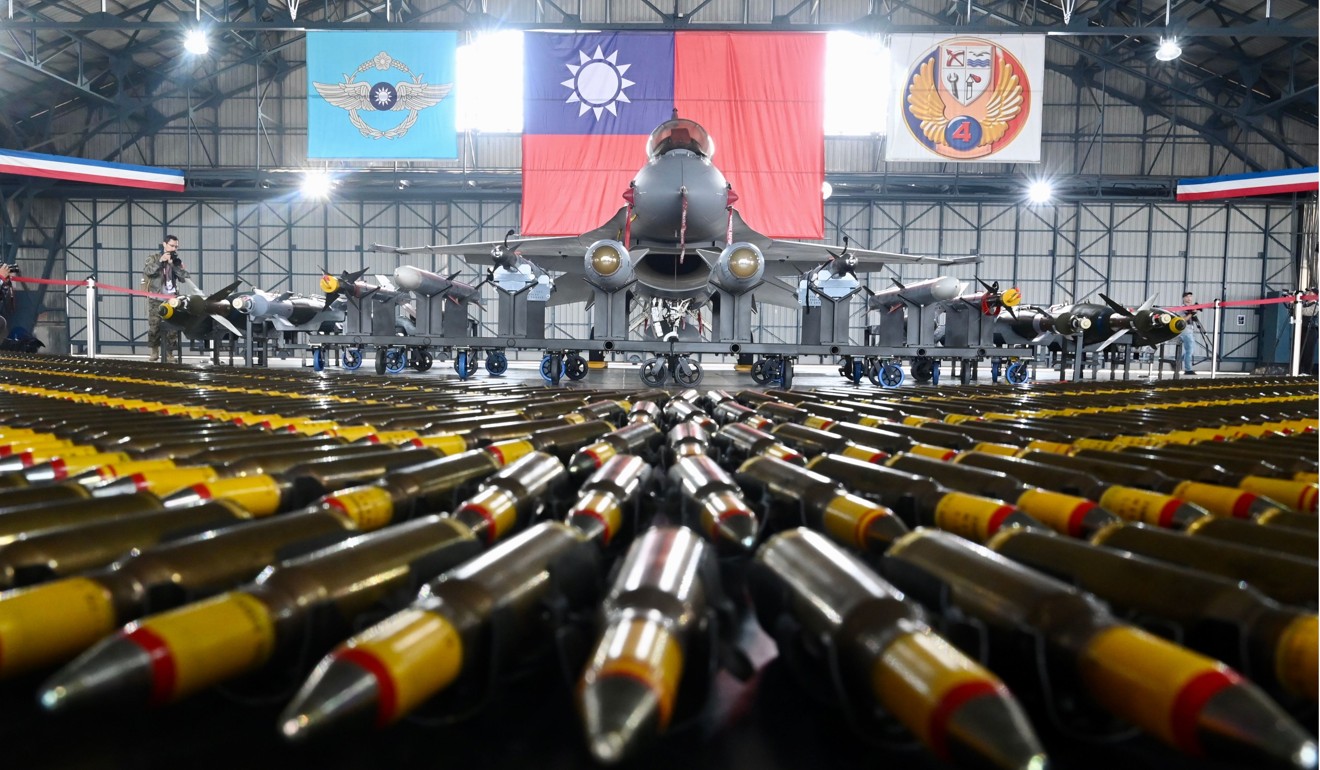
US-made F-16V fighters took part in a show of Taiwan’s military might last week. Photo: AFP
In response to Tsai’s “independent country” comments, Ma Xiaoguang, a spokesman for the mainland’s Taiwan Affairs Office, said: “We firmly attack and counter various forms of Taiwan independence and separatist activities to maintain overall peace and stability in the Taiwan Strait.”
Beijing regards Taiwan as part of its territory awaiting reunification, by force if necessary. Official ties between the two sides have been suspended since Tsai took office in 2016 and refused to accept the one-China principle – the political understanding that there is only one China with ambiguity over whether it is governed by Taipei or Beijing.
Over the past four years Beijing has ramped up the pressure on the island, by poaching its diplomatic allies and staging military drills.
Taiwanese Minister of National Defence Yen Te-fa said earlier that the mainland staged about 2,000 bomber patrols a year near the Taiwan Strait.
For their part, Taiwan’s army and air force last week gave two demonstrations of their readiness to defend the island against attack.
The NDRF and the Indian Coast Guard have been put on high alert and placed at the disposal of the state governments concerned.
INDIAUpdated: Apr 29, 2019 14:37 IST
HT Correspondent
New Delhi
Representational Image(REUTERS File)
The NDRF and the Indian Coast Guard have been put on high alert and fishermen asked not to venture into the sea, the Home Ministry said Monday.
According to the India Meteorological Department (IMD), its landfall over Tamil Nadu and Andhra Pradesh is ruled out. However, the possibility of landfall in Odisha is under continuous watch.
On Monday morning, it was located at 880 km of South-East of Chennai and it will continue to move North-West and change its path to North-East from Wednesday.
The National Disaster Response Force (NDRF) and the Indian Coast Guard have been put on high alert and placed at the disposal of the state governments concerned. Regular warnings have been issued since April 25 to fishermen not to venture into the sea and asking those at sea to return to coast, it said.
Prime Minister Narendra Modi is closely monitoring the situation and has directed Cabinet Secretary P K Sinha to convene a meeting of the National Crisis Management Committee (NCMC) to take stock of the situation with the state governments and the central ministries and agencies concerned to ensure necessary preparations to deal with the situation.
The IMD has been issuing three hourly bulletins with latest forecast to all the states concerned and the home ministry is also in continuous touch with the state governments and the central agencies concerned, the statement said.






 CHINDIA ALERT: You'll be living in their world, very soon