Chindia Alert: You’ll be Living in their World Very Soon
aims to alert you to the threats and opportunities that China and India present. China and India require serious attention; case of ‘hidden dragon and crouching tiger’.
Without this attention, governments, businesses and, indeed, individuals may find themselves at a great disadvantage sooner rather than later.
The POSTs (front webpages) are mainly 'cuttings' from reliable sources, updated continuously.
The PAGEs (see Tabs, above) attempt to make the information more meaningful by putting some structure to the information we have researched and assembled since 2006.
Visit to beauty spot spoiled as tourists ordered off the bus to spend, spend, spend
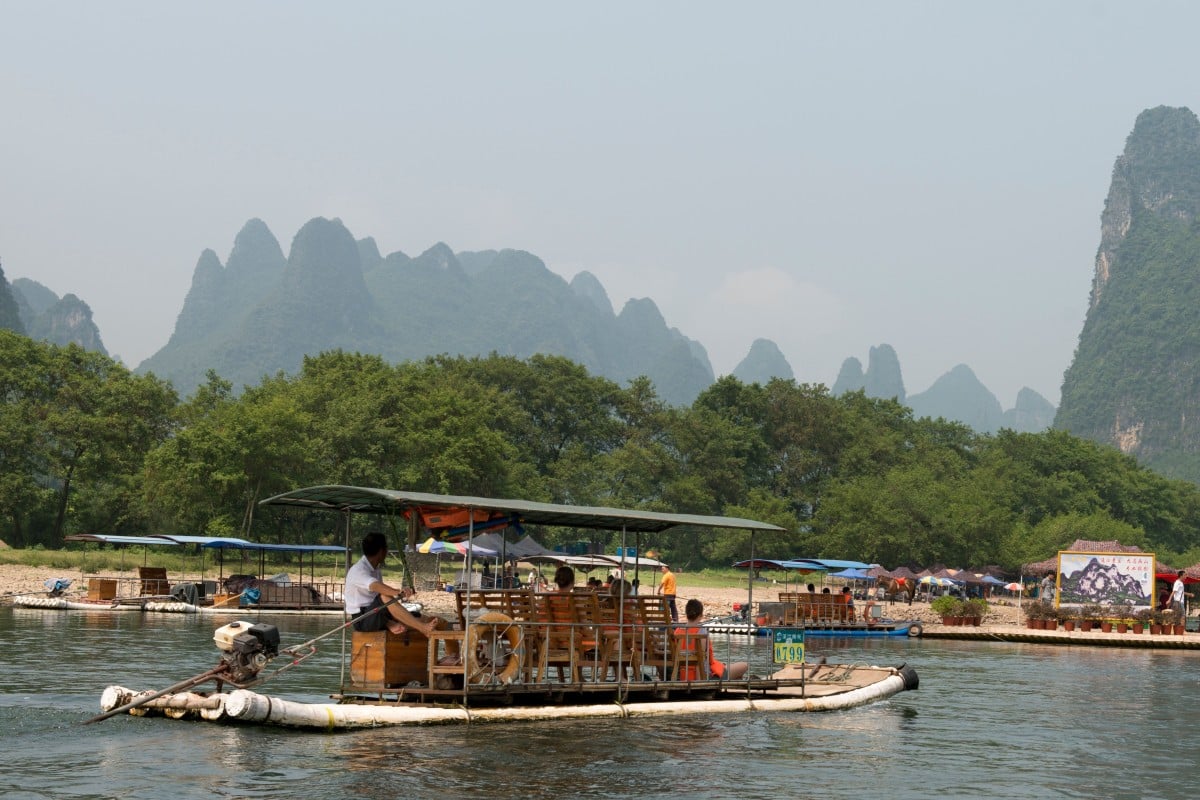
Guilin is renowned for its scenic cruises along the Li River, through magnificent karst mountains. But one tour group was forced on an unexpected shopping trip. Photo: Alamy
A tour guide in the scenic city of Guilin in southern China has been stripped of her licence after forcing tourists to spend at least 20,000 yuan (US$2,900) in local shops.
The tour guide, surnamed Zhao, was captured on video telling her customers they had an hour to spend the money and she would accept no excuses.
The short clip, which has been circulating widely on Chinese social media this week, was filmed on June 1, according to online news portal QQ.com.
“You might have thousands of reasons to refuse me, such as you already have this stuff at home,” Zhao said in the video. “I don’t care why you have come to Guilin. Now you have chosen this group … get off the bus and spend 20,000 yuan [in] an hour.”
Tiffany loses its shine with Chinese tourists as US sales fall 25 per cent
Some of the tourists can be heard on the video murmuring “how can it be like this?”
The 55 members of the tour group, from Hunan province in central China, had travelled to Guilin in the Guangxi Zhuang autonomous region from May 30 to June 2. According to their itinerary, they were supposed to visit three shops on the day the incident happened, but instead visited six, the QQ.com report said.
The Guilin tourism bureau said on Tuesday it had ordered Zhao to apologise to the group, and had revoked her tour guide licence.
In its statement on microblogging platform Weibo, the authority also said it was investigating her employer.
Ferrying tourists along China’s Yellow River
Tour guides are banned from forcing tourists to shop or join programmes charging extra fees. A State Council regulation issued two years ago set a 10,000-50,000 yuan penalty for individuals violating the rule, and a further 100,000-500,000 yuan fine for their tour company.
Despite the crackdown in recent years, it is not uncommon for Chinese tourists to be coerced by tour guides into extra spending during their trips. China’s authorities have repeatedly reminded the public to be wary of companies that lure potential tourists with extremely low group fees.
In July last year, a group of 300 elderly people, from the central province of Henan, were reportedly forced to buy jewellery from a shop in Hong Kong. The tour agency charged them just 380 yuan for the whole package and promised there would be no forced shopping activity, according to Henan TV.
But, despite the assurance, they were taken to a jewellery shop where their tour guide told them, “Henan people, spend some money to earn face for your Henan folks.”
Those who did not spend as they were urged had to wait in the shop for hours and were cursed by the tour guide, according to the television report. It is not clear if the tour guide or the agency received any penalty.
BEIJING, June 10 (Xinhua) — China’s border check agencies saw about 6.13 million inbound and outbound trips made during the three-day Dragon Boat Festival holiday, up 6.3 percent year on year, the National Immigration Administration (NIA) said Monday.
During the holiday that ended Sunday, Chinese mainland residents made more than 3.2 million entries and exits, up 11.3 percent from the previous year, NIA data showed. Entries and exits made by residents from Hong Kong, Macao and Taiwan stood on a par with the same period last year at about 2.1 million.
Entries and exits made by foreign citizens increased by 5.3 percent to 812,000, according to the NIA.
Compared with major airports in places such as Beijing, Shanghai and Guangzhou, some small and medium-sized airports reported an obvious rise in their trans-border passenger volumes during the holiday this year, said the NIA, citing that of an airport in the port city of Tianjin surging 28.6 percent.
Unveiled in Shandong, prototype will be a first step towards ground-breaking high-speed travel that will rival passenger jets, project engineer says
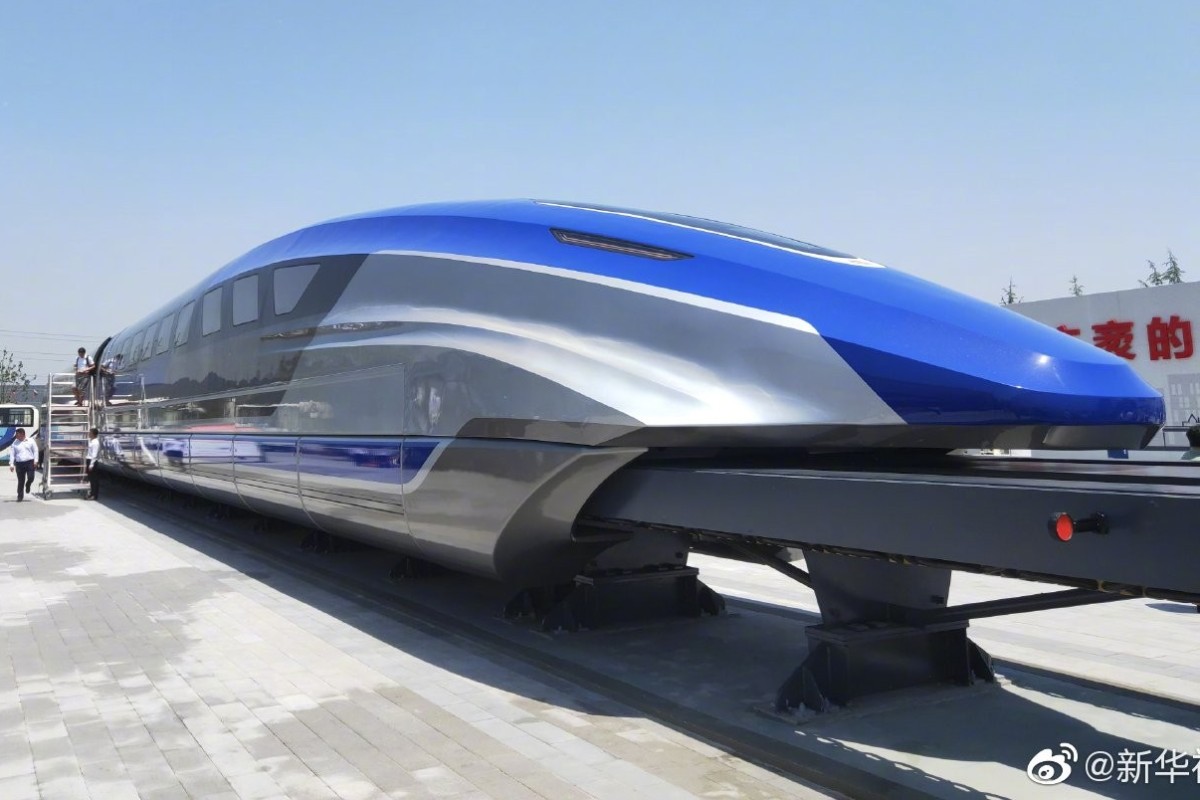
One possible future for rapid transport in China is unveiled in the form of a magnetic levitation train at Qingdao in Shandong province. Photo: Weibo
An experimental magnetic levitation train capable of travelling at 600km/h went on show at Qingdao in eastern Shandong province on Thursday, state media said.
Powerful electromagnets hold the Qingdao prototype at a thumb’s width from the rail, giving a quiet, smooth ride at speeds close to those involved in air travel, developers said.
While China operates the world’s fastest conventional train service, which can reach a speed of 350km/h, the Shanghai Maglev has been in commercial operation since the end of 2002 and can reach a top speed of 430km/h. It operates on one 30-kilometre (19-mile) line between two stations.
Ding Sansan, deputy chief engineer with developer the CRRC Sifang Corporation, said China achieved breakthroughs in maglev technology during the “three-year-battle” to build the new train that involved cooperation between more than 30 enterprises, universities and government research institutes.
The construction of a train body with ultra-lightweight, high-strength materials was a challenge, Ding said. Complex physical problems created by high speeds also needed to be solved in new ways if the Qingdao prototype was to reach peak performance.
China was a leader in technologies that included suspension, guidance, control and high-powered traction, Ding told Qingdao Daily.
“The test vehicle has been powered up and is in good order,” Ding was quoted by the newspaper as saying.
Chinese maglev train capable of travelling at 600km/h on track for 2020 test run as design completed
The prototype promised to eliminate the advantages jet passenger planes had over ground vehicles over a distance of 1,500km, he said.
Taking Beijing-to-Shanghai by plane as an example, Ding suggested: “It takes about four-and-a-half hours by plane including preparation time for the journey; about five-and-a-half hours by high-speed rail, and [would] only [take] about three-and-a-half hours by maglev.”
While earlier reports suggested the prototype was expected to begin full-scale testing by 2020, it was unclear what Thursday’s unveiling meant for this timetable.
China’s latest prototype high-speed maglev train factors the comfort of paying customers into its test operations. Photo: Weibo
More maglevs would join the development project in the coming months, the team leader was quoted as saying, while mass production of the technology was likely by 2021.
In contrast to the optimism of the team at Qingdao, Chen Peihong, professor of economics at Beijing Jiaotong University and a transport analyst, was more circumspect about the future of maglev trains.
“The market has to be bigger. Technology alone cannot make [the concept] a success,” she said.
Plane or train: as high-speed rail link connects Hong Kong to 44 mainland Chinese cities, what are cheapest and fastest ways to get where you are going?
Public transport relied heavily on economies of scale, Chen said. Chinese cities including Jinan, Hangzhou and Chongqing were considering maglev lines, but even the longest – from Jinan to Taian – would not exceed 50 kilometres.
Chen said that electromagnetic fields from maglevs were greater than those from the lines that powered high-speed trains, while environmental worries might keep maglevs out of densely-populated areas.
There was a debate in China in the early 2000s about the benefits of a developing a maglev compared to high-speed rail, researchers on that project said. Rail was preferred by the government because it was an established technology and one that was cheaper to realise.
By the end of last year, China’s high-speed rail network extended to most of the country at a distance in excess of 29,000 kilometres, according to government figures, twice as long as the rest of the world’s high-speed rail lines combined. Spain’s high-speed AVE network was the second-longest at 3,100km.
Elsewhere, researchers in Chengdu, Sichuan province, said a vehicle inside a vacuum tube powered by a superconductor coil from a maglev train – a hyperlink – was in development. They expected the vehicle to reach speeds in excess of 1,000km/h as air was pumped from the tube and resistance to the speeding object gradually eliminated.
Tsai meets leaders of 1989 pro-democracy movement to bolster credentials for protecting island’s democracy
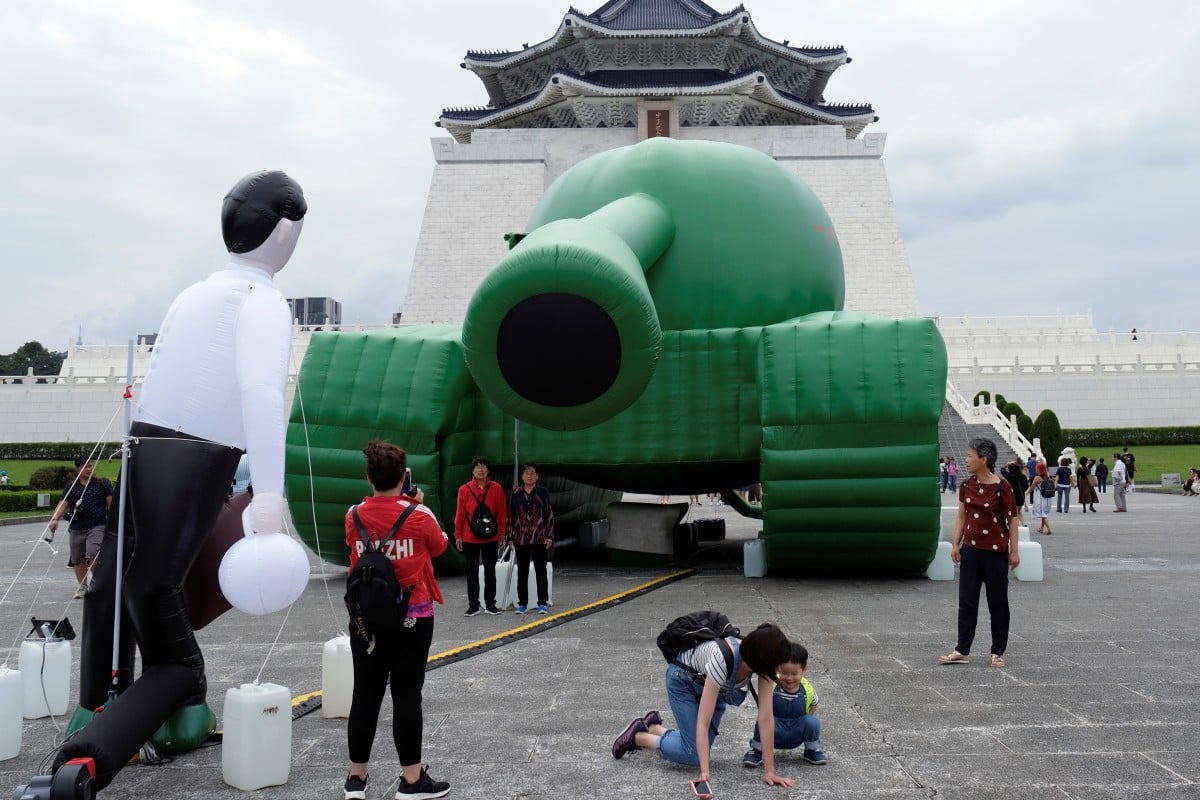
An installation recreating the celebrated Tank Man photograph in Taipei’s liberty square. Photo: Reuters
Taiwanese President Tsai Ing-wen met a group of exiled Tiananmen protesters on Thursday, a move that further burnishes her credentials for standing up to Beijing.
She said the bloody crackdown on the student protesters in 1989 should remind Taiwan that it must firmly reject the “one country, two systems” formula put forward by Beijing for reunification to safeguard its sovereignty, freedom and democracy.
“We don’t want to mislead the other side into making a wrong judgment nor do we want to let down those who support democracy and freedom as a result of an ambiguous answer by a Taiwanese president,” Tsai told her visitors.
“There is no room for ambiguity or dodging when the ‘one country, two systems’ proposal was raised, and we must clearly state that this is not a proposal that we, who have enjoyed freedom, democracy and human rights, could accept.”
The group of mainland émigrés included former Tiananmen student leaders such as Wang Dan, Wang Juntao, Deng Biao, Zhou Fengsuo and Fang Zheng, who were visiting Taiwan for a three-day international forum held to mark the 30th anniversary of the crackdown.
At the start of the year Chinese President Xi Jinping proposed that the two sides should start cross-strait unification talks under the one country, two systems model used to reunite Hong Kong and Macau with the mainland – a model that Tsai flatly rejected saying the two cities had no real autonomy.
In a statement issued by the presidential office, Tsai also noted the different course Taiwan and mainland China had taken over the past 30 years, with the island developing a fully fledged democracy while Beijing has tightened its curbs on freedom of speech.
She also accused Beijing of infiltrating free societies and undermining others’ freedoms using disinformation or hi-tech and commercial weapons.
Taiwanese President Tsai Ing-wen says the 1989 killings highlight the importance of standing up to Beijing. Photo: EPA-EFE
In the meeting, Tsai sharply criticised Chinese Communist leaders for suppressing the pro-democracy student movement in 1989 and failing to restore the activists’ rights.
Teng Biao, one of the visitors, said it was the first time Tsai had set up a meeting with so many pro-democracy activists.
Despite her sharply worded comments, Tsai and her independence-leaning Democratic Progressive Party have generally kept their distance from the Tiananmen exiles, some of whom support cross-strait unification.
Since the DPP’s first election victory in 2000, increasing numbers of people on the island have identified themselves primarily or exclusively as Taiwanese rather than Chinese, and events to mark the 1989 crackdown have dwindled.
On the 20th anniversary of the June 4 killing more than 200,000 people took part in a memorial event in Hong Kong, a sharp contrast to the handful of people who marked the event in Taiwan.
“I guess that might be because we no long cared that much about the [1989] incident over the years. June 4 is just a symbol we use to justify our push for further democracy in Taiwan,” said Chen Wei-ting, a former leader of the Sunflower movement that formed in 2014 to protest against a cross-strait trade deal with the mainland.
Analysts said Tsai hoped the Tiananmen anniversary would remind people of the need to reject the mainland’s overtures to protect Taiwan’s hard-won democracy.
“By reiterating her stand against one country, two systems, Tsai has built up her image as being the leader who is willing to defend Taiwan’s sovereignty despite mounting pressure from Beijing,” said Wang Kung-yi, a professor of political science at Chinese Culture University in Taipei.
Tsai, who is running for a second four-year term in January, has seen her approval rating rebound recently to around 40 per cent from a low of 20 per cent after the DPP’s humiliating defeat in last year’s local government elections.
The mainland-friendly Kuomintang made a string of gains at the DPP’s expense to punish it for unpopular labour and pension reforms and the economy’s poor performance.
SHENZHEN, May 25 (Xinhua) — A southern Chinese trade hub boasting special links with Hong Kong is hoping the enhanced efforts to build the g will revitalize its tourism industry and local economy.
Chung Ying Street, or “Sino-British Street,” straddles the Hong Kong Special Administrative Region and the mainland city of Shenzhen and has been a special zone where local residents from both sides are allowed to cross the border freely.
It was once a boomtown popular among mainland visitors, who entered with a special permit to snatch duty-free goods from Hong Kong, but fell into decline after travel to Hong Kong was made easier for mainlanders.
The street derived from a small village, which was divided by the “Sino-British” borderline after Hong Kong became a British colony in the 19th century.
Sha Jintao, a 73-year-old resident, remembers how the street became a boomtown as China opened up and tightened links between the mainland and Hong Kong.
“When I was a child, there were only a few farmers and fishermen living on the mainland side of the street, while the Hong Kong side bustled with shops and businesses,” Sha said.
But as Shenzhen rose as a forefront of China’s reform and opening up starting in the late 1970s, the street became the center of changes. New shops and factories propped up with the inflow of Hong Kong investments, and the fancy commodities from its Hong Kong stores wooed in large numbers of mainland tourists.
Historical records show the number of tourists flocking into the 250-meter-long street peaked at 100,000 a day in the 1980s. As many as 89 jewelry stores opened in its heyday and sold 5 tonnes of gold jewelry in half a year.
SURVIVAL CRISIS
The heyday was however short-lived. After Hong Kong returned to the motherland in 1997, the street began to lose its appeal, as shopping in Hong Kong was made much easier for mainland tourists. Its daily visitors dropped below 10,000 after 2003, when mainlanders were allowed to independently travel to Hong Kong.
Many stores closed due to a loss of customers, and some survived by selling fake jewelry, winning the street much notoriety, recalled Sha, who then headed the local neighborhood committee.
Sha said the ephemeral boom was limited to the era when most Chinese had limited access to the outside world, so as the country opened its door wider, the street’s function as a “window” faced an inevitable doom.
“Now with a smartphone, a consumer could easily buy goods from across the globe,” he said, referring to China’s cross-border e-commerce boom. “So if is just for the purpose of shopping, why take the trouble of traveling to the Chung Ying Street?”
The street is now more of a cultural site, dotted with relics and museums displaying its history, but locals are hopeful that the ongoing construction of the Guangdong-Hong Kong-Macao Greater Bay Area will usher in another golden era for their neighborhood.
China has planned to turn the greater bay area, which encompasses Hong Kong, Macao and nine cities in Guangdong Province, into the world’s largest bay area in terms of GDP by 2030.
Earlier this month, the city government of Shenzhen said it will upgrade its ports with Hong Kong to boost the greater bay area development. The Shatoujiao Subdistrict, where the Chung Ying Street is located, was reserved for a new cooperation zone featuring tourism and consumption.
Optimism is running high in the community. New industries like artificial intelligence (AI), health and high-end shipping service have taken root in Yantian District, which administers Shatoujiao, and Sha is buzzing around to connect business people from Hong Kong and Shenzhen.
“Shatoujiao and its Chung Ying Street have boasted the one-of-the-kind advantage in Shenzhen-Hong Kong cooperation. We’ll work hard to turn the blueprint of the greater bay area into a reality here,” said Chen Qing, party secretary of Yantian.
Man says his pay packet takes a hit every time cabbies flick butts onto the street
Zhengzhou city management says supervisors are too zealous with staff fines
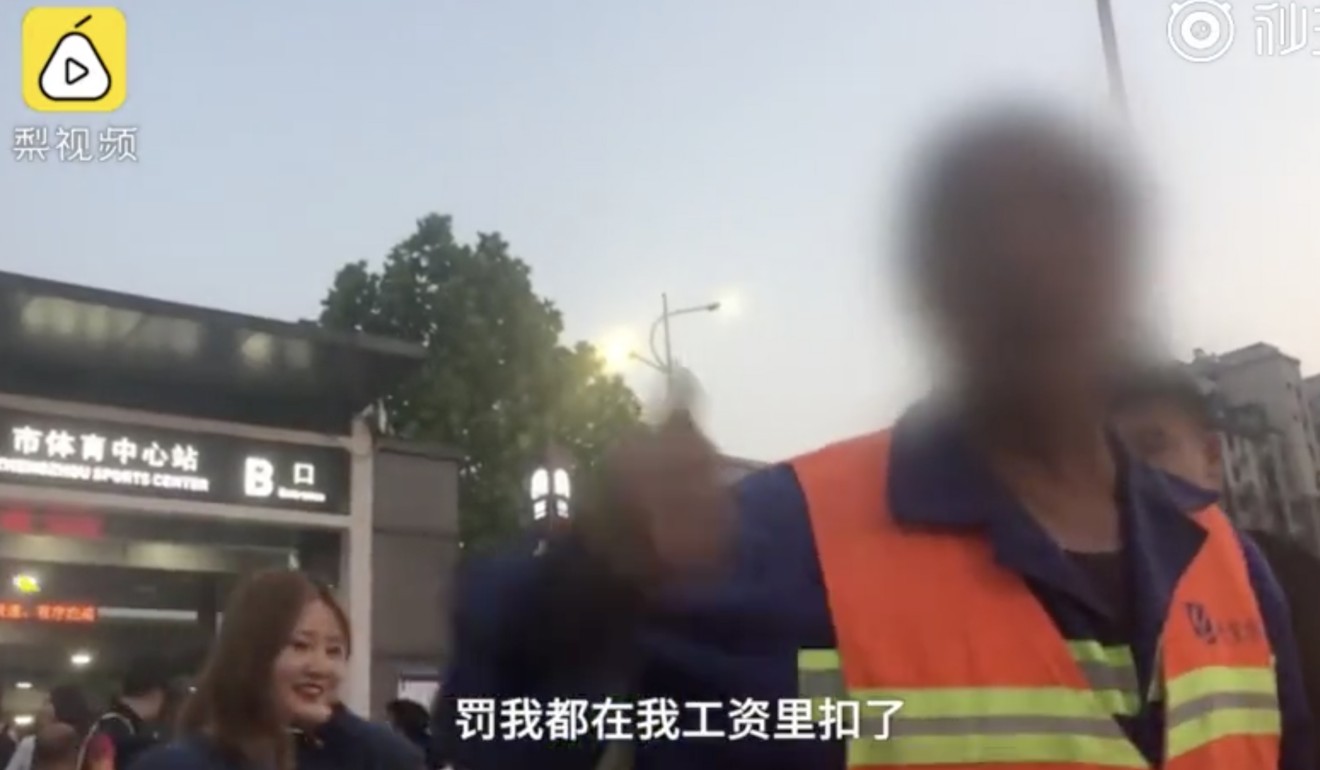
Local authorities say a street cleaner in Henan province fined for the cigarette butts left by smokers on his beat may be the victim of a zealous supervisor. Photo: Weibo
A street cleaner in eastern China who was filmed complaining about the hefty fines he had to pay for the cigarette ends found littering his section of road has won a hearing for his case and the support of internet users, social media site Pear Video said on Tuesday.
In the video taken on Saturday, the elderly man from Zhengzhou in Henan province claimed that he was once fined 260 yuan (US$38) – 7 yuan (about US$8) per cigarette end – from an 86 yuan per day pay packet.
“Today, I had to clean up five or six thousand cigarette butts,” the man said in the video while working outside a subway station.
“All the fines come out of my salary. This month they docked me a few hundred yuan.”
The Zhengzhou street cleaner says he can pick up thousands of cigarette ends off the street each day but the littering in his section does not stop. Photo: Weibo
The man blamed littering on unauthorised taxi drivers who throw cigarette ends into the street.
“These black cab drivers come here every day, again and again. They never stop coming here,” the cleaner was quoted as saying.
Pear Video spoke to other street cleaners in Zhengzhou, who confirmed that they were fined 7 yuan per cigarette butt found after cleaning.
It’s a dirty job, but don’t treat them like trash: Hong Kong’s cleaners are an aged, overlooked group
However, city authorities denied that the penalty system was strictly enforced and blamed overzealous monitoring officers.
“[Management patrol] will say things like this because they want to supervise the street cleaners. But there are no detailed written guidelines, and this was never formally implemented,” a representative from the Zhengzhou City Management Command Centre was quoted as saying in the report.
“It is just for the purpose of verbal supervision and encouragement.”
The Zhengzhou official said the centre would investigate further and speak to the street cleaners about fines.
In response to the cleaner’s complaints, city authorities in Zhengzhou say they will investigate and speak to staff about fines. Photo: Weibo
The video stirred up angry reactions on Weibo, China’s Twitter-like platform.
“When [Pear Video] investigated they say it hasn’t been implemented. If they didn’t investigate, they would have just carried on giving fines,” read one comment that attracted more than 17,000 likes.
Street cleaners in China often earn meagre salaries for gruelling manual labour for long periods of time.
Last month, it emerged that more than 500 street cleaners in the city of Nanjing were ordered to wear GPS tracking bracelets that would alert authorities if they stayed in the same place for more than 20 minutes. The manufacturer removed the feature after a backlash inside and outside China.
US paper mills are expanding capacity to take advantage of a glut of cheap waste materials
Some facilities that previously exported plastic or metal to China have retooled so they can process it themselves
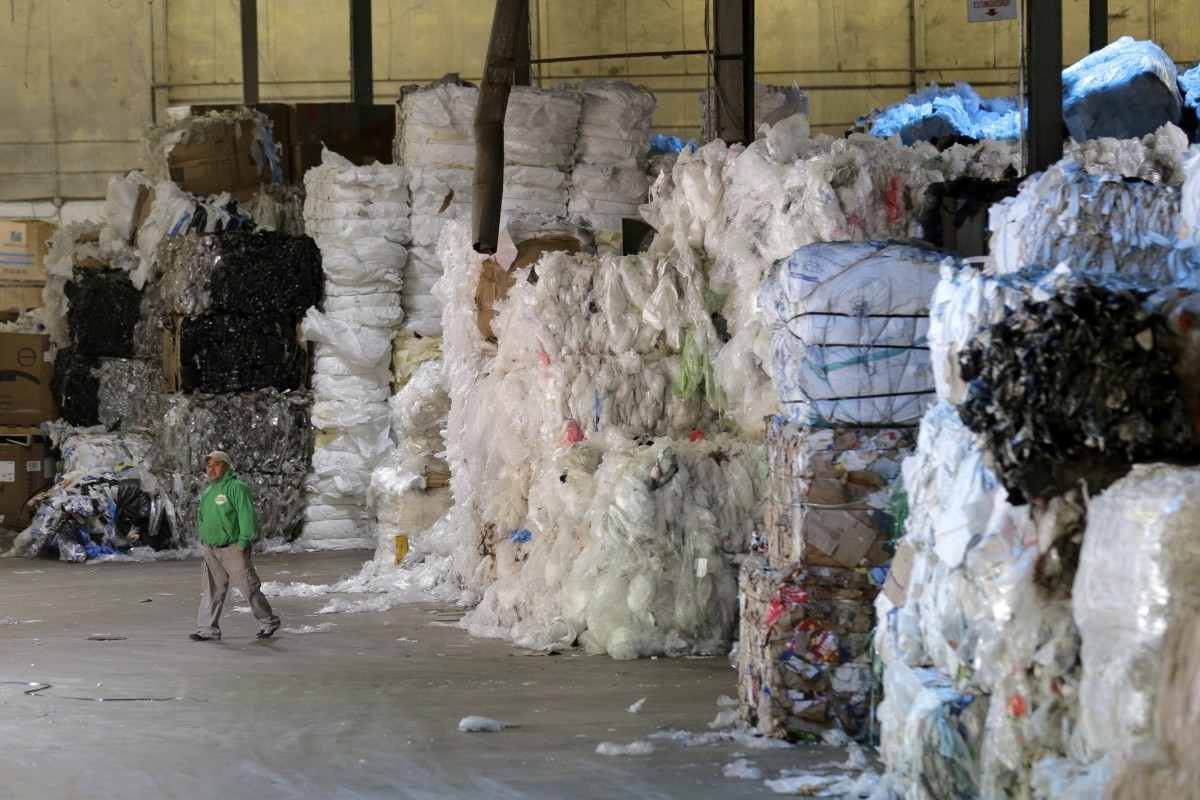
China phased in import restrictions on scrap paper and plastics in January last year. Photo: AP
The halt on China’s imports of waste paper and plastic that has disrupted US recycling programmes has also spurred investment in American plants that process recyclables.
US paper mills are expanding capacity to take advantage of a glut of cheap scrap. Some facilities that previously exported plastic or metal to China have retooled so they can process it themselves.
And in a twist, the investors include Chinese companies that are still interested in having access to waste paper or flattened bottles as raw material for manufacturing.
“It’s a very good moment for recycling in the United States,” said Neil Seldman, co-founder of the Institute for Local Self-Reliance, a Washington-based organisation that helps cities improve recycling programmes.
Global scrap prices plummeted in the wake of China’s ban. Photo: AP
China, which had long been the world’s largest destination for paper, plastic and other recyclables, phased in import restrictions in January last year.
Global scrap prices plummeted, prompting waste-hauling companies to pass the cost of sorting and baling recyclables on to municipalities. With no market for the waste paper and plastic in their blue bins, some communities scaled back or suspended kerbside recycling programmes. But new domestic markets offer a glimmer of hope.
How China’s ban on plastic waste imports became an ‘earthquake’
About US$1 billion in investment in US paper processing plants has been announced in the past six months, according to Dylan de Thomas, a vice-president at The Recycling Partnership, a non-profit organisation that tracks and works with the industry.
Hong Kong-based Nine Dragons, one of the world’s largest producers of cardboard boxes, has invested US$500 million over the past year to buy and expand or restart production at paper mills in Maine, Wisconsin and West Virginia.
Brian Boland, vice-president of government affairs and corporate initiatives for ND Paper, Nine Dragons’ US affiliate, said that as well as making paper from wood fibre, the mills would add production lines turning more than a million tonnes of scrap into pulp to make boxes.
“The paper industry has been in contraction since the early 2000s,” he said. “To see this kind of change is frankly amazing. Even though it’s a Chinese-owned company, it’s creating US jobs and revitalising communities like Old Town, Maine, where the old mill was shuttered.”
Hong Kong-based Nine Dragons has invested US$500 million in paper mills in Maine, Wisconsin and West Virginia. Photo: Handout
:
The Northeast Recycling Council said in a report last autumn that 17 North American paper mills had announced increased capacity to handle recyclable paper since the Chinese cut-off.
Another Chinese company, Global Win Wickliffe, is reopening a closed paper mill in Kentucky. Georgia-based Pratt Industries is constructing a mill in Wapakoneta, Ohio that will turn 425,000 tonnes of recycled paper per year into shipping boxes.
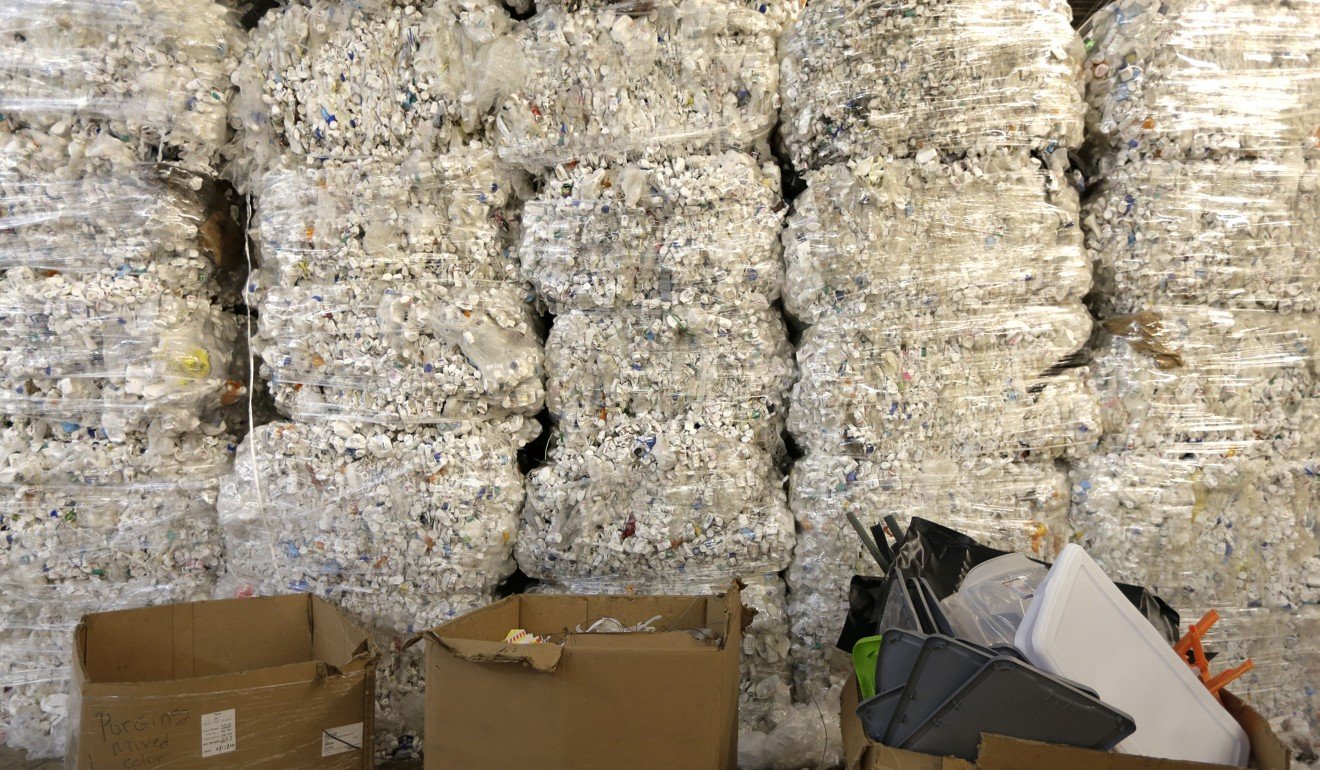
Plastics also had a lot of capacity coming online, de Thomas said, noting new or expanded plants in Texas, Pennsylvania, California and North Carolina that turned recycled plastic bottles into new bottles.
Chinese companies were investing in plastic and scrap metal recycling plants in Georgia, Indiana and North Carolina to make feedstocks for manufacturers in China, he said.
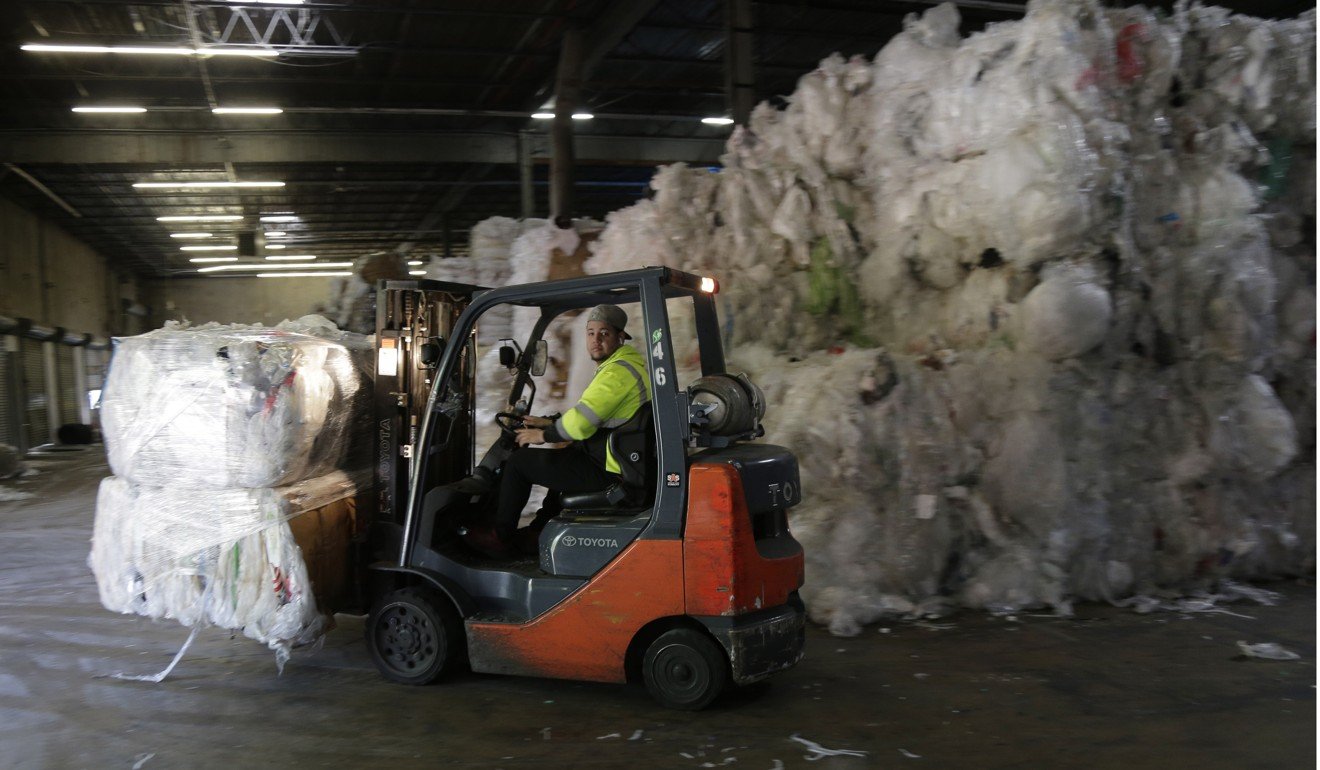
GDB International processes bales of scrap plastic film into pellets to make garbage bags and plastic pipe. Photo: AP
In New Brunswick, New Jersey, the recycling company GDB International exported bales of scrap plastic film such as pallet wrap and grocery bags for years. But when China started restricting imports, company president Sunil Bagaria installed new machinery to process it into pellets he sells profitably to manufacturers of garbage bags and plastic pipe.
The imports cut-off that China called “National Sword” was a much-needed wake-up call to his industry, he said.
“The export of plastic scrap played a big role in easing recycling in our country,” Bagaria said. “The downside is that infrastructure to do our own domestic recycling didn’t develop.”
China to suspend checks on US scrap metal shipments, halting imports
That was now changing, but he said far more domestic processing capacity would be needed as a growing number of countries restricted scrap imports.
“Ultimately, sooner or later, the society that produces plastic scrap will become responsible for recycling it,” he said.
It has also yet to be seen whether the new plants coming on line can quickly fix the problems for municipal recycling programmes that relied heavily on sales to China to get rid of piles of scrap.
About US$1 billion in investment in US paper processing plants has been announced in the past six months, according to a non-profit group that tracks the industry. Photo: AP
“Chinese companies are investing in mills, but until we see what the demand is going to be at those mills, we’re stuck in this rut,” said Ben Harvey, whose company in Westborough, Massachusetts, collects trash and recyclables for about 30 communities.
He had a car park filled with stockpiled paper a year ago after China closed its doors, but eventually found buyers in India, Korea and Indonesia.
China to collect applications for scrap metal import licences from May
Keith Ristau, chief executive of Far West Recycling in Portland, Oregon, said most of the recyclable plastic his company collected used to go to China but now most of it went to processors in Canada or California.
To meet their standards, Far West invested in better equipment and more workers at its material recovery facility to reduce contamination.
In Sarepta, Louisiana, IntegriCo Composites is turning bales of hard-to-recycle mixed plastics into railroad ties. It expanded operations in 2017 with funding from New York-based Closed Loop Partners.
“As investors in domestic recycling and circular economy infrastructure in the US, we see what China has decided to do as very positive,” said Closed Loop founder Ron Gonen.
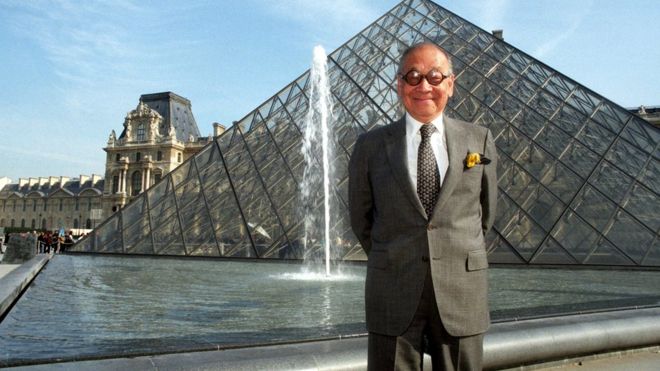
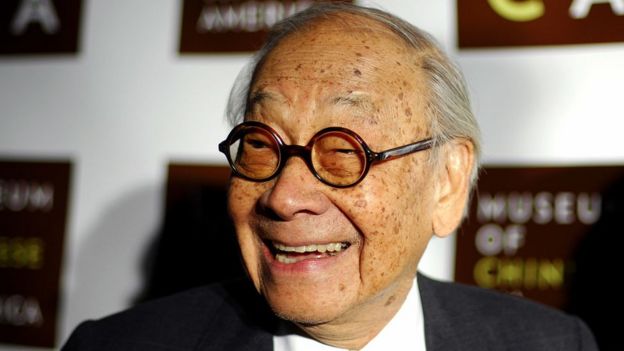
One of the 20th Century’s most prolific architects, he has designed municipal buildings, hotels, schools and other structures across North America, Asia and Europe.
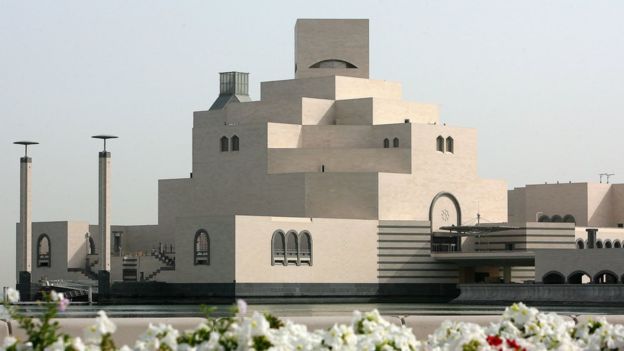
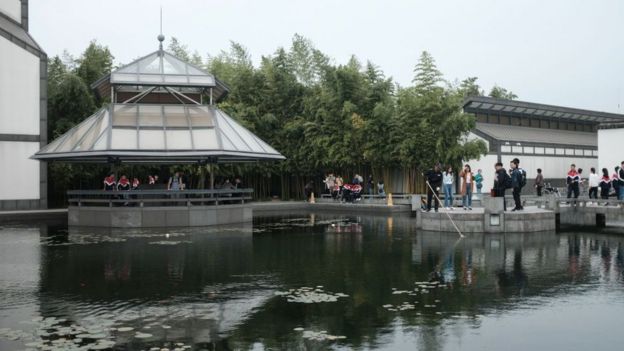
Image copyright GETTY IMAGESImage caption Qatar’s Islamic Museum of Art is one of Pei’s most famous designsImage copyright AFP/GETTYImage caption The architect also designed the Suzhou Museum in China, which was completed in 2006
His style was described as modernist with cubist themes, and was influenced by his love of Islamic architecture. His favoured building materials were glass and steel, with a combination of concrete.
Pei sparked controversy for his pyramid at the Louvre Museum. The glass structure, completed in 1989, is now one of Paris’ most famous landmarks.
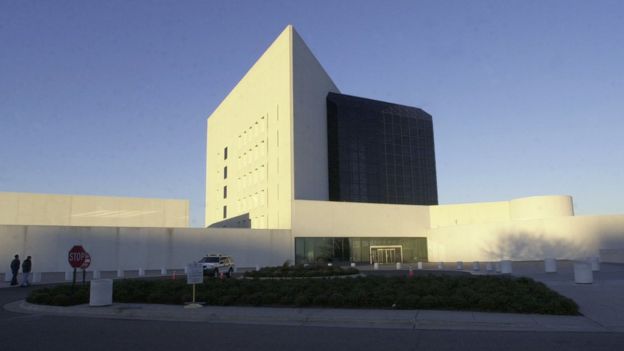
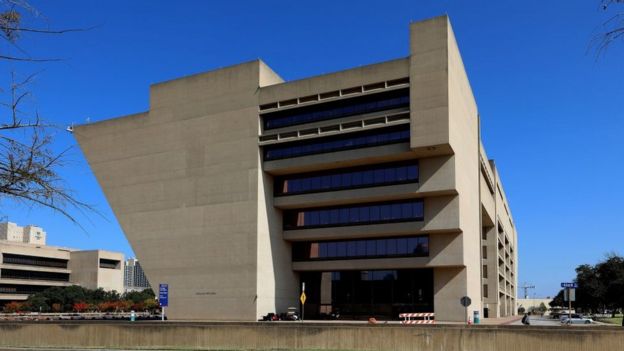
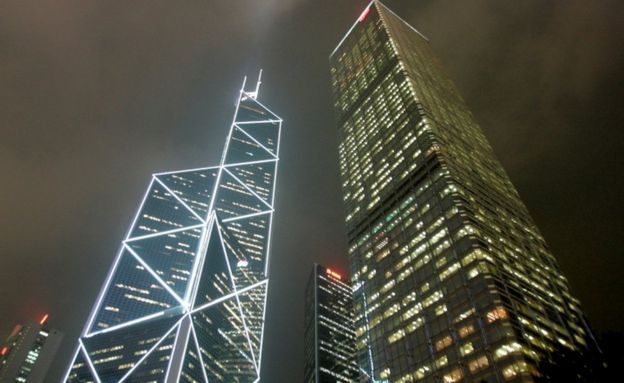
Image copyright GETTY IMAGESImage caption Pei designed Boston’s John F Kennedy Library and MuseumImage copyright GETTY IMAGESImage caption I M Pei designed Dallas City Hall with fellow architect Theodore J MushoImage copyright REUTERSImage caption I M Pei’s Bank of China tower (L) in Hong Kong
His other work includes Dallas City Hall and Japan’s Miho Museum.
“I believe that architecture is a pragmatic art. To become art it must be built on a foundation of necessity,” he once said.
He was won a variety awards and prizes for his buildings, including the AIA Gold Medal, the Praemium Imperiale for Architecture.
In 1983 Pei was given the prestigious Pritzker Prize. The jury said he had he “has given this century some of its most beautiful interior spaces and exterior forms”.
He used his $100,000 prize money to start a scholarship fund for Chinese students to study architecture in America.
Xi’s message talks of promoting ‘peaceful development’ as Reiwa era begins in Japan
Analysts see diplomacy as latest steps towards bringing an end to bitter rivalry
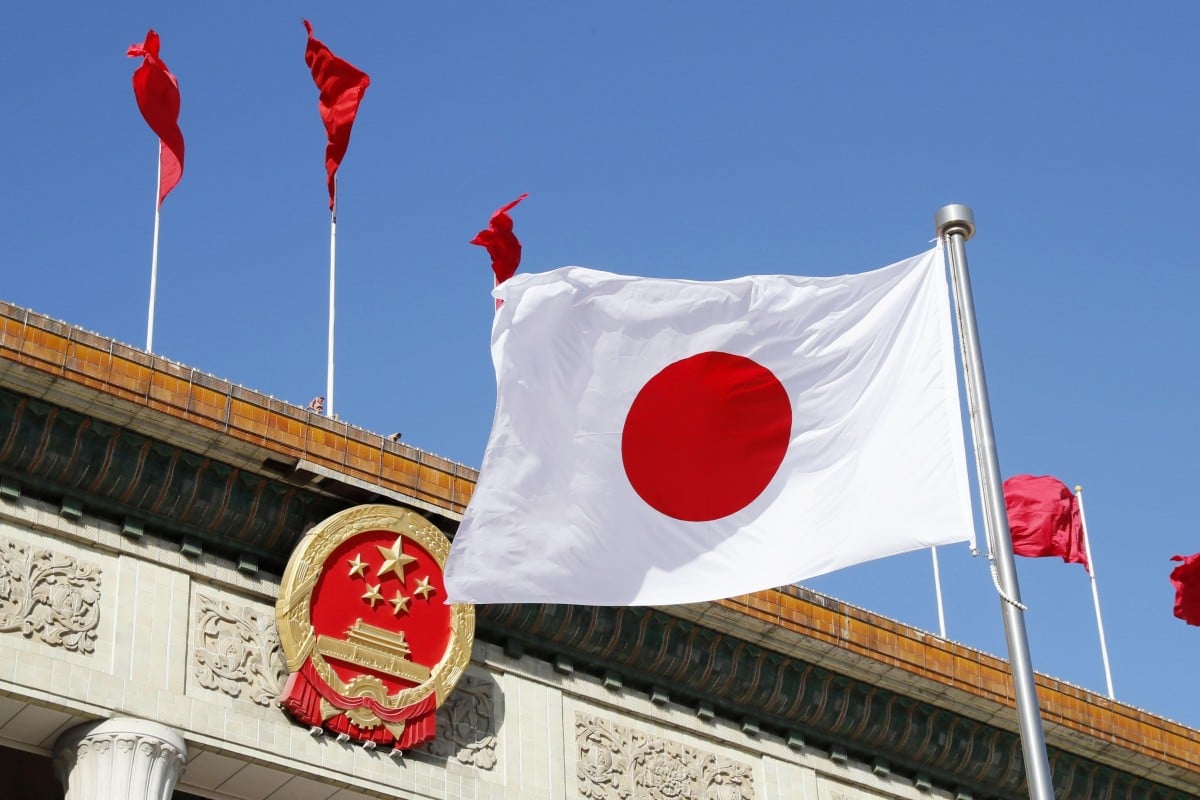
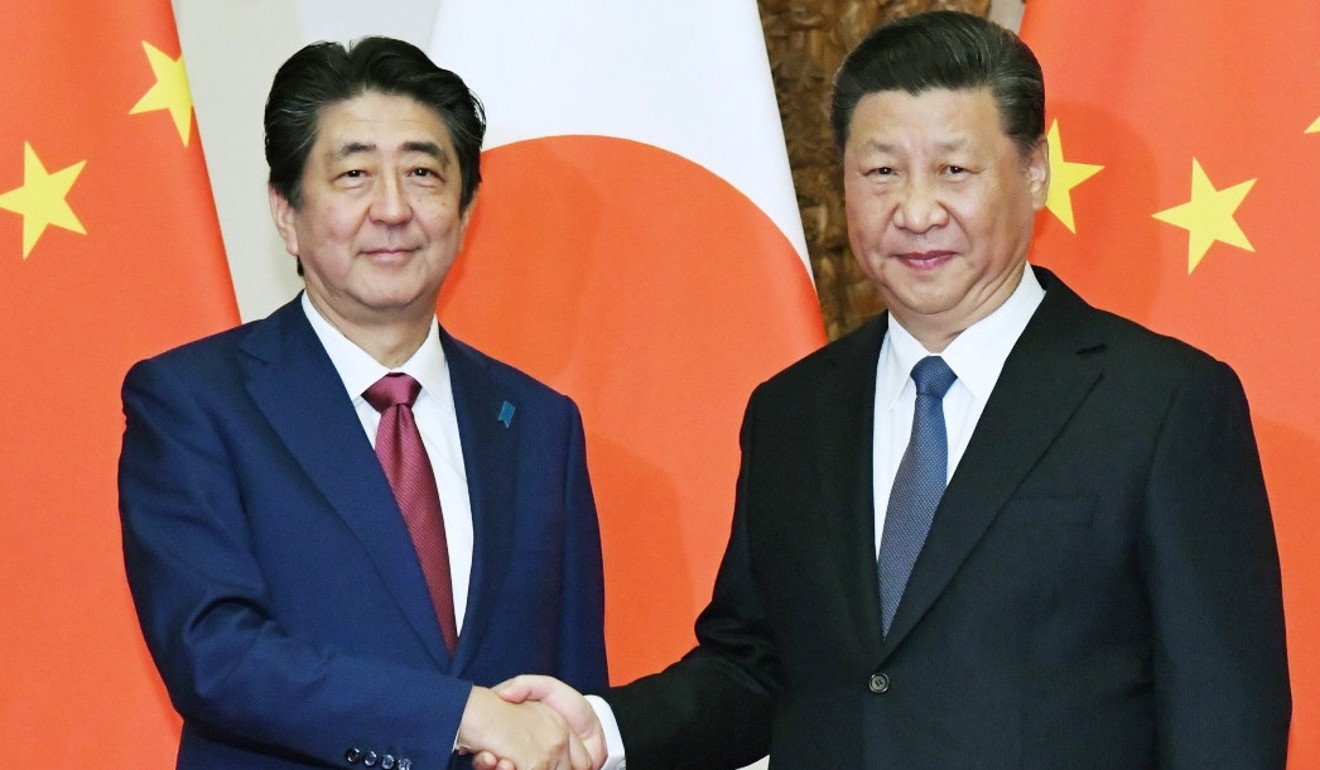
The Japanese flag flies at the Great Hall of the People in Beijing on October to mark the visit of Japanese Prime Minister Shinzo Abe to China. Photo: Kyodo
Chinese President Xi Jinping congratulated Emperor Naruhito on his ascent to the throne of Japan in an effort to strengthen China’s ties with its neighbour and competitor as Beijing’s trade dispute with the United States went on.
Xi sent greetings on Wednesday in which the president stressed the importance of relations between Beijing and Tokyo, China’s state-run Xinhua news agency reported.
The two countries should “work together to promote peaceful development and create a bright future for bilateral relations”, Xi said.
The president also sent a message to Akihito, now Japan’s emperor emeritus, and “expressed his greetings and wishes”, Xinhua said.
Akihito, 85, relinquished the throne to his son at midnight on Tuesday, bringing the Heisei era that spanned his 30-year reign to an end.
Naruhito took the Chrysanthemum Throne to begin the Reiwa era with a pledge to become a “symbol of unity”.
Xi’s message came as China and Japan tried to repair relations damaged by disputes over the East China Sea and the bitter legacy of the second world war.
Washington was locked in a trade tariff war with Beijing, and President Donald Trump’s America First policy had prompted fears about the US’ commitment to Asia at the highest levels of Japanese government. These have pushed Beijing and Tokyo closer and, in October, Japanese Prime Minister Shinzo Abe visited Beijing.
China set to appoint new ambassador to Japan, as Xi Jinping prepares for June visit
Xi was expected to attend a Group of 20 summit to be held in Osaka in June. A source said officials were considering whether Xi would dovetail a state visit to Japan with the summit.
Felix Wiebrecht, a China researcher at the Chinese University of Hong Kong, said in the international environment China was more willing to put a deep-seated rivalry aside and take Japan as a partner.
“Facing increasing tensions with the US, China is naturally turning towards other potential opportunities for cooperation,” Wiebrecht said.
“Xi is indeed very likely to visit Japan this year since it seems that both he and Abe are interested in strengthening their cooperation. A visit this year could be seen as a culmination in normalising their relationship and comes at the right time for China as its conflict with the US intensifies”.
Ryo Hinata-Yamaguchi, a visiting professor at Pusan National University in South Korea and an adjunct fellow at the Pacific Forum foreign policy research institute, said Xi’s message could be seen as Beijing’s expectation on Tokyo to keep relations positive.
“[But] this would raise questions in Japan, particularly regarding regional and bilateral security issues, as well as the trade issues between the US and China,” he said.
As Japan prepares to mark end of an era, a look back at how China started the system
“The big question is whether China – as well as the US – expects Japan to work as some kind of mediator between Beijing and Washington, causing dilemmas for the Japanese government”.
Some observers remarked on the possibility of sideline meeting between the two leaders at Osaka.
“Xi could meet with Abe [at G20] in a bilateral context too,” Zhang Baohui director of the Centre for Asian Pacific Studies at Lingnan University in Hong Kong, said.
He also felt that Xi may make a separate state visit to Japan, after the G20 meeting closed.
“Japan is reportedly interested in having a second and separate visit by Xi later in the year … The Japanese efforts are part of a broader attempt by the Abe administration to improve relations with China,” Zhang said.
“A separate state visit would cement the full recovery of Sino-Japanese relations since the 2012 Diaoyu Islands dispute,” Zhang said.
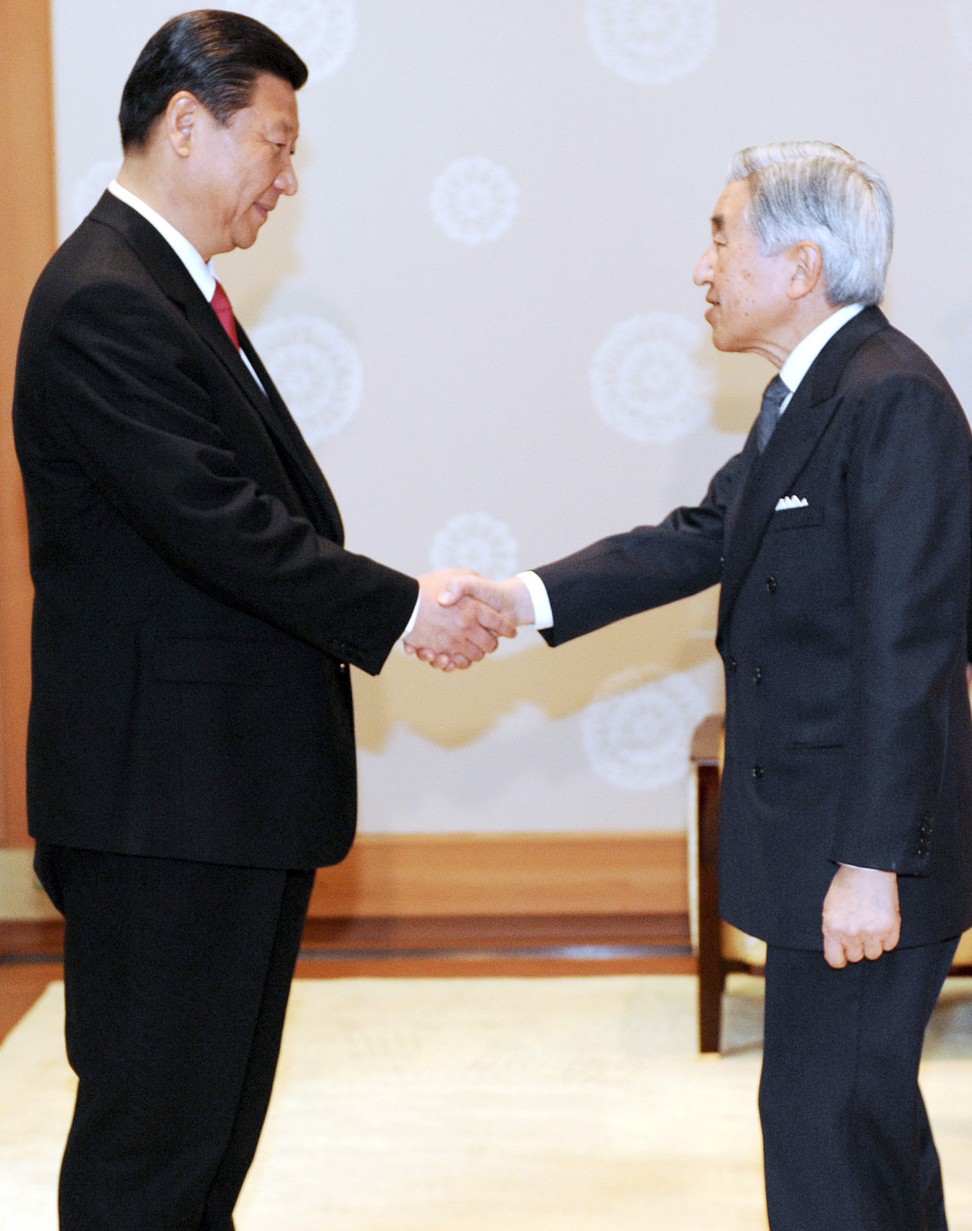
Xi Jinping, then Chinese Vice-President, meets Emperor Akihito in Tokyo in December 2009. Photo: Xinhua
Japan and China both claim the territorial rights over the Senkaku Islands – also known as the Diaoyu Islands – in the East China Sea.
In 2012, Japanese government purchased three of the disputed islands from private owners, which prompted large-scale protests in China. In the following year, Beijing set up the East China Sea Air Defense Identification Zone which included the islands, requiring all aircraft entering the zone to file a flight plan, further intensifying the conflict between the two countries.
Efforts this summer to intensify diplomacy “should bring greater stability to the East China Sea and may even lead to greater Sino-Japanese cooperation on regional issues like economic integration”, Zhang said.
“But Japan’s concern for a rising China and China’s expanding maritime activities in the East China Sea will continue,” Zhang added, noting that Japan has also expanded its military capabilities in disputed areas such as the South China Sea.
Chinese President Xi Jinping and Japanese Prime Minister Shinzo Abe are likely to continue their diplomacy during and after June’s G20 summit in Osaka. Photo: EPA
HONG KONG (Reuters) – Thousands of people marched on Hong Kong’s parliament on Sunday to demand the scrapping of proposed extradition rules that would allow people to be sent to mainland China for trial – a move which some fear puts the city’s core freedoms at risk.
Opponents of the proposal fear further erosion of rights and legal protections in the free-wheeling financial hub – freedoms which were guaranteed under the city’s handover from British colonial rule to Chinese sovereignty in 1997.
Early estimates suggested several thousand people had joined the march along Hong Kong Island from Causeway Bay to the council in the Admiralty business district.
Veteran Hong Kong activist and former legislator Leung Kwok-hung said the government’s move risked removing Hong Kongers’ “freedom from fear”.
“Hong Kong people and visitors passing by Hong Kong will lose their right not to be extradited into mainland China,” he said. “They would need to face an unjust legal system on the mainland.”
Some younger marchers said they were worried about travelling to China after the move, which comes just as the government encourages young people to deepen ties with the mainland and promotes Hong Kong’s links with southern China.
The peaceful marchers chanted demands for Hong Kong’s Executive Carrie Lam to step down, saying she had “betrayed” Hong Kong. Some sported yellow umbrellas – the symbol of the Occupy civil disobedience movement that paralysed parts of Hong Kong for 11 weeks in 2014.
The proposed changes have sparked an unusually broad chorus of concern from international business elites to lawyers and rights’ groups and even some pro-establishment figures.
Chris Patten, the last British governor of Hong Kong who handed the city back to Chinese rule in 1997, on Saturday described the move “as an assault on Hong Kong’s values, stability and security”, government-funded broadcaster RTHK reported.
Chief Executive Lam and other government officials are standing fast by their proposals, saying they are vital to plug long-standing loopholes.
Under the changes, the Hong Kong leader would have the right to order the extradition of wanted offenders to China, Macau and Taiwan as well as other countries not covered by Hong Kong’s existing extradition treaties.
As a safeguard such orders, to be issued case-by-case, could be challenged and appealed through the city’s vaunted legal system.
Government officials have said no-one at risk of the death penalty or torture or facing a political charge could be sent from Hong Kong. Under pressure from local business groups, they earlier exempted nine commercial crimes from the new provisions.
The proposals could be passed into law later in the year, with the city’s pro-democratic camp no longer holding enough seats to block the move.
The government has justified the swift introduction of the changes by saying they are needed so a young Hong Kong man suspected of murdering his girlfriend in Taiwan can be extradited to face charges there.
The government’s assurances are not enough for Lam Wing-kee, a former Hong Kong political bookseller who said in 2016 he was abducted by mainland agents in the city.
Lam left Hong Kong for Taiwan last week, saying he feared being sent back to the mainland under the new laws and his experienced showed he could have no trust in China’s legal system.
A group of 33 followers of Falun Gong, a religious sect banned in China, flew from Taiwan to Hong Kong on Saturday to join the march but were refused entry to Hong Kong, RTHK reported.
Sunday’s march comes amid renewed calls for deeper electoral reforms stalled five years ago after Occupy protests.
Four leaders of the movement were last week sentenced to jail terms ranging from eight to 16 months, part of a group of nine activists found guilty after a near month-long trial.









 CHINDIA ALERT: You'll be living in their world, very soon