29/05/2020
- Tsai Ing-wen visited exiled Hong Kong bookseller a day after NPC voted in favour of legislation
- Lam Wing-kee said fleeing Hongkongers saw Taiwan as a step towards applying for asylum in the West
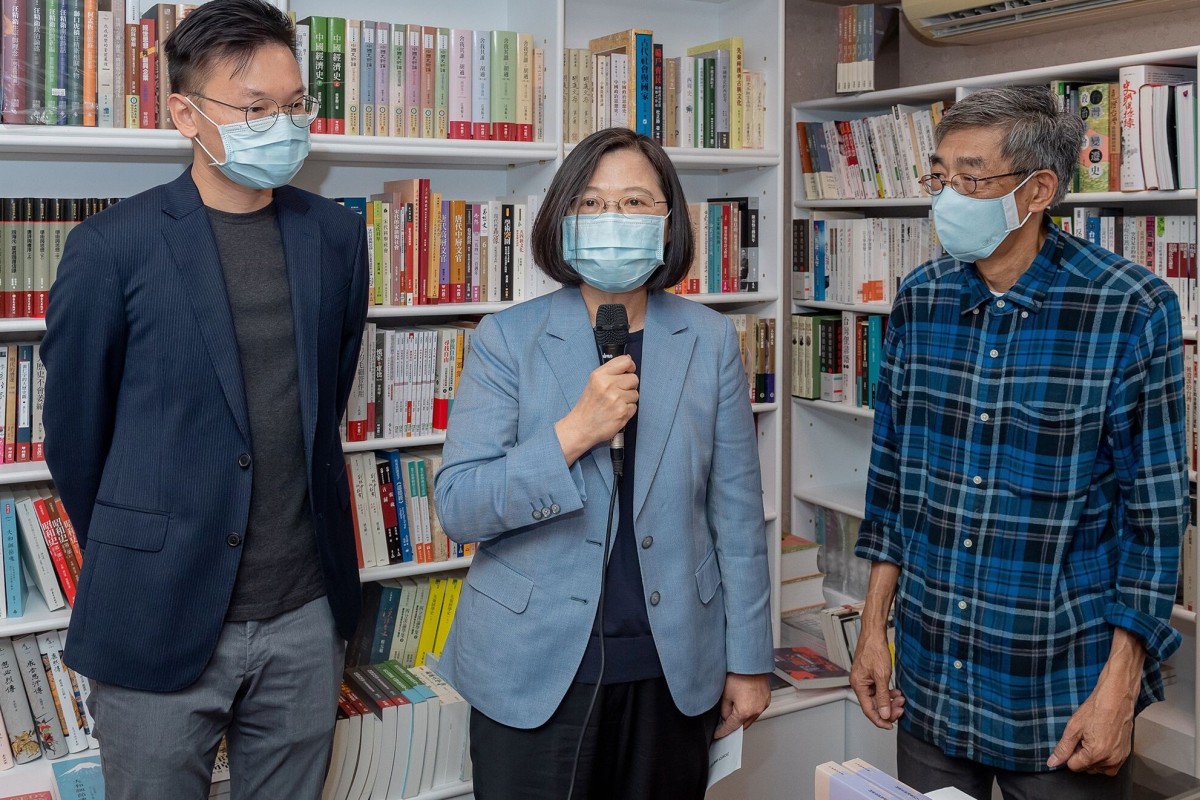
President Tsai Ing-wen (centre) shows her support for Hong Kong bookseller Lam Wing-kee (right) with Lin Fei-fan, deputy secretary general of the ruling Democratic Progressive Party. Photo: Taiwan presidential office/AFP
Taiwan’s President Tsai Ing-wen visited
exiled Hong Kong bookseller Lam Wing-kee
on Friday in a show of support for Hongkongers amid Beijing’s plan to introduce a controversial
national security law.
Her visit came a day after China’s legislature, the National People’s Congress, voted in favour of a resolution to initiate the legal process for a national security law to be imposed on Hong Kong, despite concerns from the United States, the European Union and elsewhere that the move would erode human rights, freedom and autonomy in the city.
Tsai said on behalf of all Taiwanese people, she welcomed Lam to stay in Taiwan where he could bolster the island’s efforts to further freedom and democracy.
Hongkongers who want to flee to Taiwan ‘will go through strict screening’
Lam, one of the five shareholders and staff at Hong Kong’s Causeway Bay Books, fled to Taiwan in April last year after he was detained by Chinese agents for eight months in 2015 for selling books critical of the Chinese leadership.
between October and December that year and it emerged they had been detained on the Chinese mainland.
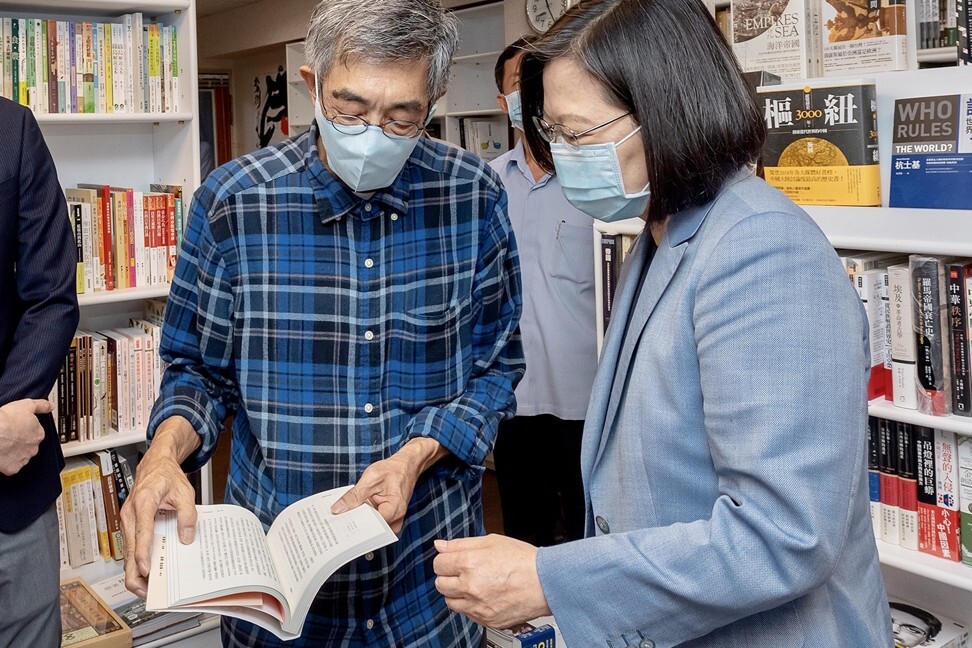
President Tsai Ing-wen looks at a book while visiting Lam Wing-kee on Friday. Photo: Taiwan presidential office/AFP
Lam later said he had been detained and blindfolded by police after crossing the border into mainland China from Hong Kong in October 2015.
The case triggered a huge controversy and raised fears of growing Chinese control in the city.
Seeing Lam as a representative of Hongkongers fleeing to Taiwan to avoid political persecution, Tsai said she wanted to understand what challenges these exiles faced and what help they needed during their stay on the self-ruled island.
“I want to tell Boss Lam [Wing-kee] and our Hong Kong friends that the government here has set up an ad hoc committee to offer help to them very soon,” she said.
On Wednesday, Tsai called for the government to set up an ad hoc committee to work out a “humanitarian help action plan” for Hong Kong people seeking to live in Taiwan or immigrate to the island. It was borne out of concern they would be arrested or prosecuted for taking part in months of anti-government protests triggered last year by the now-shelved extradition bill.
Chen Ming-tong, head of the Mainland Affairs Council, the island’s top mainland policy planner, said on Thursday his council would draft the measures for cabinet’s approval in a week.
Under the plan, the Mainland Affairs Council would issue special measures and coordinate with the island’s authorities on how to help Hongkongers relocate to Taiwan and take care of them.
Bookseller Lam told Tsai what Hongkongers needed most was to have their stay in Taiwan extended.
Lam said that currently, because of the absence of a political asylum law, Hongkongers could only apply to live in Taiwan through study, work, investment, their professional skills or close relatives.
He said fleeing Hongkongers usually came to Taiwan on tourist permits, which at most allowed them to stay for up to six months, giving them not enough time to apply for long-term residence in Taiwan.
“It would be better if they can stay for nine months and preferably one year,” he said.
Lam said some fleeing Hongkongers saw Taiwan as an intermediary base as they hoped to apply for asylum in the West, but it took a long time for Western countries to screen and approve their asylum requests.
Meanwhile, Premier Su Tseng-chang said Article 18 of the Laws and Regulations Regarding Hong Kong and Macau Affairs was good enough to deal with the current crisis in the absence of a political asylum law in Taiwan.
That article states that “necessary help shall be provided to Hong Kong or Macau residents whose safety and liberty are immediately threatened for political reasons”.
Source: SCMP
Posted in action plan, ad hoc committee, applying, asylum, autonomy, Beijing’s, blindfolded, bookseller, challenges, Chinese mainland, concerns, Democracy, Democratic Progressive Party, detained, European Union, exiled, extradition bill, favour, fleeing, Freedom, Government, Hong Kong, Hong Kong and Macau Affairs, Hong Kong Causeway Bay, Hongkongers, Human rights, humanitarian help, imposed, Lam Wing-kee, legislation, Mainland Affairs Council, National People’s Congress, national security law, NPC, Political asylum, political persecution, President, residents, security law, self-ruled island, shadow, supporting, Taiwan, thanks, Tsai Ing-wen, Uncategorized, under, United States, visited, voted, West |
Leave a Comment »
06/04/2020
- Embassy says those flown back must pay for themselves, and praises the US health system, in a departure from the war of words with Washington
- More than a million Chinese students remain overseas, but China is on alert against the threat of imported infections
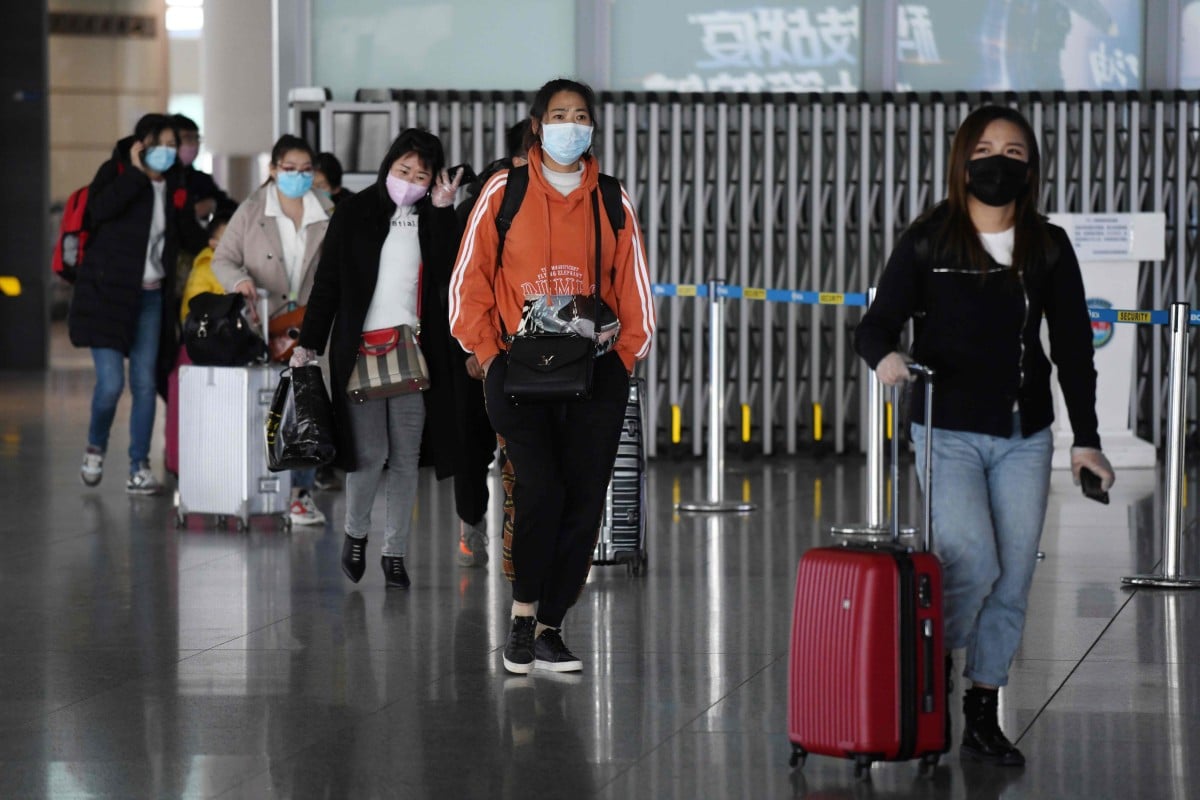
China has drastically cut flights to try to prevent people who arrive from abroad importing the coronavirus. Photo: AFP
Chinese students could be flown home from
coronavirus hotspots such as the United States but will have to pay their own expenses, amid efforts by Beijing to persuade some to remain overseas rather than risk bringing the infection with them.
A statement posted on the website of China’s Washington embassy on Monday said that the Chinese government was aware that many school and university students had encountered difficulties in travelling back to China and was taking steps to arrange charter flights for those who needed to return urgently.
With the initial coronavirus outbreak appearing to have been largely contained in mainland China, some Chinese students have travelled home despite soaring air ticket prices and the requirement that those who have been overseas enter quarantine.
Students brought back on charter flights would still need to pay for the ticket and the costs of the mandatory 14-day quarantine upon arrival in China.
Trump says US approaching a ‘horrendous’ time as coronavirus death toll rises
More than 1.6 million Chinese are studying overseas, including about 410,000 in the US. At least 1.42 million Chinese students remained overseas, vice foreign minister Ma Zhaoxu said on Thursday.
Having initially boasted of its success in stopping the virus, Beijing has become notably cautious in recent weeks about welcoming overseas students back home, especially with imported cases continuing to rise.
China’s foreign ministry and its overseas missions have urged students considering travelling home to exercise caution. The embassy in the US issued a notice on Friday speaking highly of the American medical system and its response to the pandemic, in a marked departure from Beijing’s narrative, which has included pinning the blame for the pandemic on the United States.
Friday’s embassy notice also dismissed rumours that Chinese students had been targeted because of the coronavirus during the closures of universities, and pledged help if students had trouble communicating with universities about campus accommodation.
China advises foreign diplomats to stay away from Beijing until May 15
3 Apr 2020
Ma said that most overseas students had heeded his government’s advice and chosen not to go back to China, but an online survey late last month that was cited by Caixin magazine on Saturday showed nearly 60 per cent of Chinese students in the US wanted to return home.
Most of the 4,000 students polled said they were unable to make the trip because of concerns about contracting the coronavirus during the journey and air fares that had more than doubled recently. Both China and the US have drastically cut back long-haul international flights.
After weeks stranded in Peru, 65 Hongkongers return home
Students under 18 years of age who want to return to China are required by the embassy to register online.
The initial evacuation plan announced on Monday proposed to prioritise school-age children whose parents were not in the US with them. The proposed arrangement appeared to include students from Hong Kong, Macau and Taiwan.
Source: SCMP
Posted in air ticket, American medical system, Beijing, Beijing’s, Caixin magazine, campus accommodation, charter flights, China’s Foreign Ministry, chinese government, Chinese students, coronavirus, coronavirus outbreak, declined, difficulties, embassy, encountered, foreign diplomats, Home, Hong Kong, Hongkongers, hotspots, infections, long-haul international flights, Macau, Mainland China, marked departure, narrative, offers, overseas, overseas missions, own expenses, pandemic, Peru, pinning the blame, prices, quarantine, requirement, school, students, Taiwan, to fly, travelling, Trump, Uncategorized, United States, university, urgently, US, US health system, Washington |
Leave a Comment »
26/08/2019
- Kunming tests support for new rules that demand travellers wear earphones when using noisy electronic devices
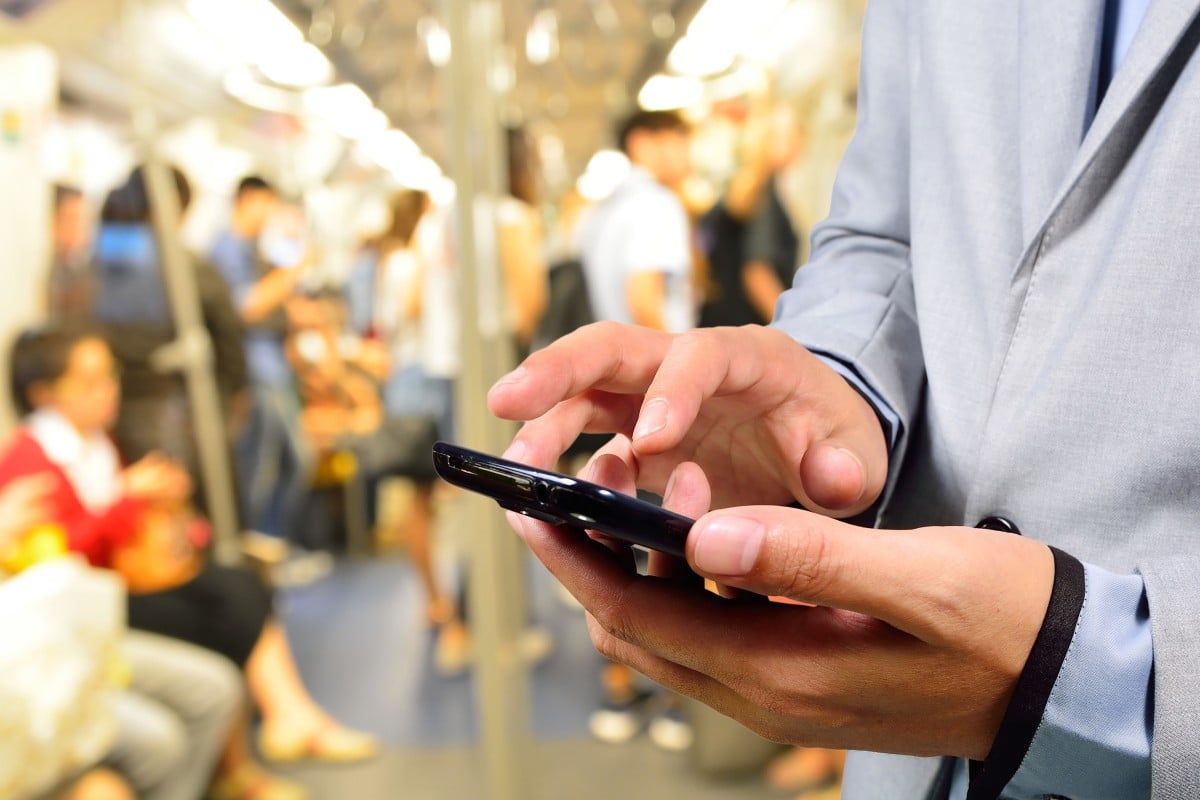
Cities across China are listening to the complaints of commuters and ordering owners of noisy mobile phones and music devices to turn them down and wear earphones. Photo: Shutterstock
Kunming, the capital of southwestern Yunnan province, plans to become the third mainland Chinese city to ban public transport users from listening to loud music, watching noisy videos or talking loudly on phones.
Acting on complaints from passengers, the city is testing public support for a change to its subway passenger code of conduct that would ban excessive noise, the municipal transport bureau said last week.
At least two other cities, Beijing and Lanzhou – the capital of northwestern Gansu province – have barred travellers from talking loudly or turning up their electronic devices on the underground.
Kunming’s proposed amendment includes a ban on loud conversation, with administrative penalties for people found breaking the rules. The public have until September 5 to give feedback on the proposal.
“Some passengers ignore other people and play their electronic devices with the sound on, causing a great disturbance to others. Such behaviour needs to be regulated,” the bureau said.
The proposal was popular on social media.
“I’d suggest operators of high-speed trains and civil aviation also adopt this ban,” one user of the Weibo microblogging service wrote. “Don’t you have the money to buy earphones?”
Some Hongkongers have phones checked for protest photos at mainland China border amid anti-government unrest
“I’m strongly in favour – the most effective way to improve our manners is to give clear rules,” another user said.
Lanzhou, which opened its first subway line in June, banned on passengers from playing devices without wearing headphones from the day the first train rolled.
Also in June, Beijing issued a code of conduct for public transport passengers that included a ban on excessive noise. Penalties there included personal credit system demerits, black marks that could be removed by working as a subway volunteer for an hour.
Source: SCMP
Posted in Beijing, Gansu Province, Hongkongers, Kunming, Lanzhou, subway line, Uncategorized, Yunnan Province |
Leave a Comment »





 CHINDIA ALERT: You'll be living in their world, very soon