Archive for ‘Indian governments’

23/04/2020

Locked-down Indian economy in its worst quarter since mid-1990s: Reuters poll

BENGALURU (Reuters) – The Indian economy is likely to suffer its worst quarter since the mid-1990s, hit by the ongoing lockdown imposed to stem the spread of coronavirus, according to a Reuters poll, which predicted a mild and gradual recovery.

Over 2.6 million people tmsnrt.rs/3aIRuz7 have been infected by the coronavirus worldwide and more than 180,000 have died. Business and household lockdowns have disrupted supply chains globally, bringing growth to a halt.

The April 17-22 Reuters poll predicted the economy expanded at an annual pace of 3.0% last quarter but will shrink 5.2% in the three months ending in June, far weaker than expectations in a poll published last month for 4.0% and 2.0% growth, respectively.

The predicted contraction would be the first – under any gross domestic product calculation, which has changed a few times – since the mid-1990s, when official reporting for quarterly data began.

“The extended lockdown until early May adds further downside risk to our view of a 5% year-on-year GDP fall in the current quarter, the worst in the last few decades,” said Prakash Sakpal, Asia economist at ING.

“We don’t consider economic stimulus as strong enough to position the economy for a speedy recovery once the pandemic ends,” he said.

(Graphic: Reuters poll graphic on coronavirus impact on the Indian economy IMAGE link: here)

The Indian government announced a spending package of 1.7 trillion rupees in March to cushion the economy from the initial lockdown, which has been extended until May 3.

In an emergency meeting last week, the Reserve Bank of India cut its deposit rate again, after reducing it on March 27 and lowering the main policy rate by 75 basis points. It also announced another round of targeted long-term repo operations to ease liquidity.

But even with those measures, 40% of economists, or 13 of 32 – who provided quarterly figures – predicted an outright recession this year. Only one had expected a recession last month.

In the worst case, a smaller sample of respondents predicted, the economy would contract 9.3% in the current quarter. That compares with 0.5% growth in the previous poll’s worst-case forecast in late March, underscoring how rapidly the outlook has deteriorated.

The latest poll’s consensus view still shows the economy recovering again slowly in the July-September quarter, growing 0.8%, then 4.2% in October-December and 6.0% in the final quarter of the fiscal year, in early 2021.

But that compares with considerably more optimistic near-term forecasts of 3.3%, 5.0% and 5.6%, respectively, in the previous poll.

“A rebound in economic activity following the disruption is expected, but the low starting point of growth implies a gradual recovery,” said Upasana Chachra, chief India economist at Morgan Stanley.

“Indeed, before disruptions related to COVID-19, growth was slowing, with domestic issues of risk aversion in financial sector … (and) those concerns will likely stay after the COVID-19 disruptions have passed unless the policy response is much larger than expected,” she said.

The unemployment rate has tripled to 23.8% since the lockdown started on March 25, according to the Centre for Monitoring Indian Economy, a Mumbai-based research firm.

The Indian economy was now forecast to expand 1.5% in the fiscal year ending on March 31, 2021 – the weakest since 1991 and significantly lower than 3.6% predicted in late March. It probably grew 4.6% in the fiscal year that just ended.

Under a worst-case scenario, the median showed the economy shrinking 1.0% this fiscal year. That would be the first officially reported economic contraction for a 12-month period since GDP was reported to have contracted for calendar year 1979.

“Unless fiscal policy is also loosened aggressively alongside monetary policy, there is a big risk the drastic economic slowdown currently underway morphs into an annual contraction in output and that the recovery is hampered,” said Shilan Shah, senior India economist at Capital Economics.

All 37 economists who answered a separate question unanimously said the RBI would follow up with more easing, including lowering the repo and reverse repo rates and expanding the new long-term loans programme.

The RBI was expected to cut its repo rate by another 40 basis points to 4.00% by the end of this quarter. Already lowered twice over the past month by a cumulative 115 basis points, the reverse repo rate was forecast to be trimmed by another 25 points by end-June to 3.50%.

Source: Reuters
11/04/2020

Coronavirus: The children struggling to survive India’s lockdown

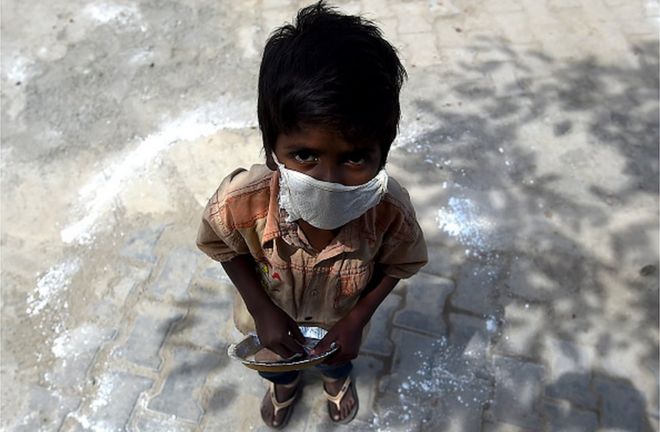
A street kid in India during coronavirusImage copyright GETTY IMAGES
Image caption Thousands of street children are being impacted by India’s lockdown

The sudden imposition of a 21-day lockdown in India to stop the spread of the coronavirus has thrown the lives of millions of children into chaos.

Tens of thousands are calling helplines daily while thousands are going to bed hungry as the country shuts down to battle the pandemic.

With 472 million children, India has the largest child population in the world and campaigners say the lockdown has impacted around 40 million children from poor families.

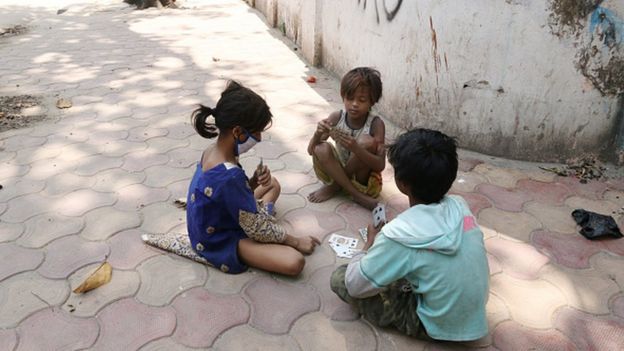
These include those working in farms and fields in rural areas, as well as children who work as ragpickers in cities or sell balloons, pens and other knick-knacks at traffic lights.

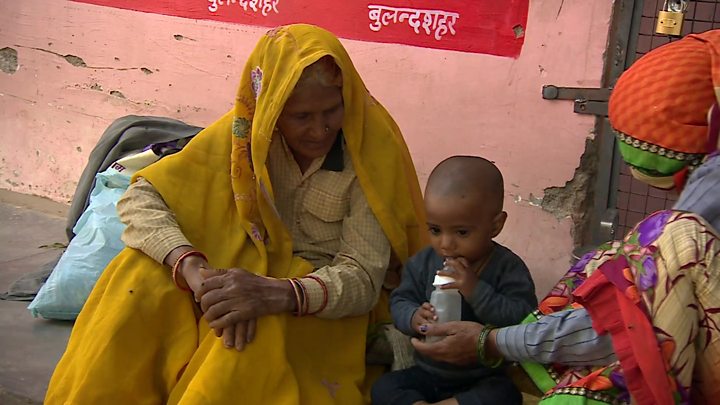
Sanjay Gupta, director of Chetna, a Delhi-based charity that works with child labourers and street children, says the worst affected are the millions of homeless children who live in cities – on streets, under flyovers, or in narrow lanes and bylanes.

“During the lockdown everyone has been told to stay home. But what about the street children? Where do they go?” he asks.

According to one estimate, Delhi has more than 70,000 street children. But Mr Gupta says that number is really much higher.

And these children, he says, are usually very independent.

“They look for their own means of survival. This is the first time they need assistance.

“But they are not in the system and they are not easy to reach out to, especially in the present circumstances. Our charity workers cannot move around unless they have curfew passes,” he says.

And passes are hard to obtain, because charities like Chetna are not considered essential services.

So, Mr Gupta says, they have been using innovative ways to keep in touch with the children.

“Many of these children have mobile phones, and because they generally stay in groups, we send them messages or TikTok videos about how to keep safe and what precautions they must take.”

In return, he’s also been receiving video messages from the children, some of which he’s forwarded to me. They give a sense of the dread and uncertainty that has taken hold of their lives.

There are testimonies from worried children talking about their parents losing their jobs, wondering how they will pay the rent now or where would they find the money to buy rations?

Then, there are videos from children who have to fend for themselves.

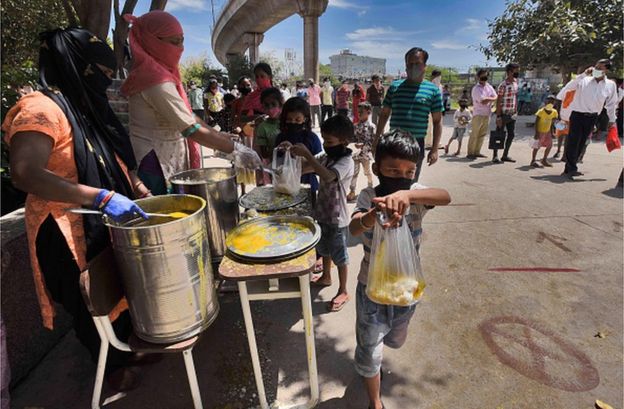
Street children being given food by a charity in Delhi during the coronavirus lockdownImage copyright GETTY IMAGES
Image caption Indian governments and charities are distributing food, but thousands are not being covered by the drive

In one of them, a boy who lives on the street says, “Sometimes people come and distribute food. I have no idea who they are, but it’s very little. We only get to eat once in two-three days.”

Because of the lockdown, he says, they are not even allowed to go fetch water or firewood. “I don’t know how we can survive like this? The government must help us,” he pleads.

The authorities say they are providing help – the Delhi Commission for Protection of Child Rights has been distributing food to street children and vulnerable families in the Indian capital. In many other cities too, local governments and charities have been distributing food to children and homeless people.

But the scale of the problem is daunting.

Mr Gupta says since it’s a complete lockdown, the government must ensure that the children are fed three meals a day.

Then, there are those he describes as “invisible children, the ones who live away from the main roads, in areas that are not easily accessible”.

“There are thousands of them and we are still not reaching them,” he says.

Banner image reading 'more about coronavirus'
Banner

And it is not just the very poor who are affected. Others too are experiencing anxiety amid the stress of the shutdown.

In fact, a 24-hour emergency phone helpline for children, provided by the Indian government, has seen a massive spike in the number of daily calls ever since the lockdown began on 24 March.

In the first seven days of the shutdown, Childline India Foundation’s number – 1098 (ten-nine-eight) – received about 300,000 calls as against a weekly average of 200,000.

The helpline, that works in 569 of India’s 718 districts and at 128 railway stations, fields thousands of daily calls about child abuse, violence against children, and cases of runaway or missing children.

Now, officials say, hundreds of these daily calls are queries about the pandemic.

The callers, who can either be children themselves or an adult calling on their behalf, sometimes ask for food, but most want to know the symptoms of the infection or where they can get medical assistance in case they are infected. Many children also call to talk about their anxieties or fears about Covid-19.

Street children in India during coronavirusImage copyright GETTY IMAGES
Image caption Street children in cities are unable to find any work during the shutdown

Child rights activist Bharti Ali says older children are worried because many are stuck in the middle of important school exams and there is no clarity on what will happen next.

Those under 14 are worried, she says, because “parents have gone into this whole mode of don’t touch this, don’t touch that, wash your hands, use sanitiser,” and they are curious and trying to make sense of this.

Dr Preeti Verma, member of Uttar Pradesh State Commission for Protection of Child Rights, says children read and hear about the coronavirus all the time so even if they have just a minor cough or cold, they worry they have got the infection.

“They enjoyed the first few days as it was a break from school and homework, but now as the lockdown continues and the numbers of infections rise in India, many are beginning to fret.

“Now they are stuck at home, isolated from friends and the wider society, so they are beginning to show signs of boredom and even panic.”

In this situation, Dr Verma says, the parents’ responsibility is enhanced, they have to speak to the children and reassure them.

You may also be interested in…

Media caption As cases of coronavirus rise and the virus hits India’s congested slums, will the country cope?

Source: The BBC

Law of Unintended Consequences

continuously updated blog about China & India

ChiaHou's Book Reviews

continuously updated blog about China & India

What's wrong with the world; and its economy

continuously updated blog about China & India