Archive for ‘Indian Ocean’

18/01/2020

Myanmar, China ink deals to accelerate Belt and Road as Xi courts an isolated Suu Kyi

NAYPYITAW (Reuters) – China and Myanmar inked dozens of deals on Saturday to speed up infrastructure projects in the Southeast Asian nation, as Beijing seeks to cement its hold over a neighbour increasingly isolated by the West.

But no major new projects were agreed during the two-day visit by President Xi Jinping, the first of any Chinese leader in 19 years. Analysts said Myanmar was generally cautious of investments by Beijing and was also being careful ahead of elections later this year.

Still, Xi and Myanmar leader Aung San Suu Kyi signed 33 agreements shoring up key projects that are part of the flagship Belt and Road Initiative, China’s vision of new trade routes described as a “21st century silk road”.

They agreed to hasten implementation of the China Myanmar Economic Corridor, a giant infrastructure scheme worth billions of dollars, with agreements on railways linking southwestern China to the Indian Ocean, a deep sea-port in conflict-riven Rakhine state, a special economic zone on the border, and a new city project in the commercial capital of Yangon.

They did not address a controversial $3.6 billion Beijing-backed mega dam, where work has been stalled since 2011, reflecting the contentiousness of Chinese investment in Myanmar, where many are uncomfortable with the sway Beijing has over its smaller neighbour.

“While a large number of different agreements have been signed, there is no Big Bang here,” said Richard Horsey, a Yangon-based analyst with the International Crisis Group.

“The overall impression is that Myanmar is being cautious about Chinese investment, especially ahead of elections planned later in the year, he said.

“China will be hoping that this is an incremental step towards realizing its mega-infrastructure goals, and that further progress can be locked in over the coming months,” he said.

‘DERAILED’ BY WEST

At a welcoming ceremony on Friday, Xi hailed a “new era” of relations between the countries.

“We are drawing a future roadmap that will bring to life bilateral relations based on brotherly and sisterly closeness in order to overcome hardships together and provide assistance to each other,” Xi said. He was scheduled to leave later on Saturday.

Suu Kyi called China “a great country playing an important role in the international affairs and the world economy” but urged for economic projects that avoid environmental degradation and benefit locals.

Xi also met leaders from political parties in ethnic areas riven with civil conflict where Chinese infrastructure projects are underway.

Sai Kyaw Nyunt, joint-secretary of the Shan Nationalities League for Democracy, one of the ethnic politicians invited to meet Xi, said it was only a handshake.

“Our country is very small and powerless,” he said, “So they treat us that way.”

The two countries have historically had a fraught relationship, but have moved closer since 2017, when Myanmar was internationally condemned for its treatment of minority Rohingya Muslims in Rakhine state.

More than 730,000 Rohingya were forced to flee western Myanmar after a military crackdown that the United Nations has said was executed with “genocidal intent”. China has defended the country on the global stage and is viewed as the biggest obstacle to a prosecution of its leaders at an international war crimes tribunal.

An article in Chinese state media ahead of the state visit said Myanmar had been “derailed” by its engagement with the West and only China was willing to “pull Myanmar from the sludge”.

“But after some turbulence, Myanmar realized there were double standards in the approach Western countries had taken on human rights issues and began to turn to China for diplomatic and economic help,” the article in the Global Times said.

Source: Reuters

21/09/2019

China, Russia, Iran ‘plan joint naval drill in international waters’

  • Iranian news outlet quotes military official as saying exercise will be held soon, but Chinese media silent on reported manoeuvres
An Iranian news source says China, Russia and Iran are planning a joint naval exercise soon. Photo: Xinhua
China, Russia and Iran are planning a joint naval drill in the Sea of Oman and northern Indian Ocean “soon” a semi-official Iranian news outlet reported on Saturday, just days after the United States blamed Iran for a drone attack on Saudi Arabian oil facilities.
General Ghadir Nezami Pour, head of international affairs and defence diplomacy of the Iranian Armed Forces General Staff, said the drill would take place in international waters, Iran Press news agency reported.
“The exercises have different goals including the exchange of tactical and military experiences and sometimes they seek political goals which show a kind of convergence between participants,” he was quoted as saying.

“Officials at the level of defence minister, chief of staff of the armed forces and commanders of the armed forces will come to Iran in the near future and these actions reflect Iran’s active defence diplomacy.”

The comments came in the aftermath of the September 14 missile strikes on Saudi Arabia’s Abqaiq and Khurais oil facilities.

Washington accused Tehran of masterminding the attacks, allegations that Iran denied.

Tehran warned that any military action by the United States or Saudi Arabia would result in “all-out war”.

US Secretary of State Mike Pompeo initially condemned the attacks on the oil facilities as an “act of war” but later said the US was seeking a peaceful solution to the crisis.

On Friday, Chinese President Xi Jinping condemned the attacks during a phone conversation with Saudi Arabia’s King Salman, adding that he hoped the incident would receive a full and fair investigation.

There was no report of the joint drill plan in Chinese media.

Analysts said the exercise was possible as China might want to show support for Iran.

“The timing of the joint exercise might be a bit sensitive and some might take it as a show of China’s support for Iran should there be any military conflicts between countries,” Beijing-based naval expert Li Jie said.

“But it might well be a regular military exchange between the countries if it is held in international waters and without targeting another country.”

China calls for calm in aftermath of drone strikes on Saudi oil facilities

Ni Lexiong, a military specialist and professor at Shanghai University of Political Science and Law, said the drill was to send the message that China would side with Iran “in extreme scenarios”.

“I don’t see things will go that far, but the navy drill is to send the intimidating message,” Ni said.

Two years ago China and Iran conducted a joint naval exercise near the Strait of Hormuz in the Persian Gulf after Washington accused ­Tehran of sending fast attack boats to harass US warships passing through the area.

Major General Mohammad Baqeri, Chief of Staff of the Iranian Armed Forces, was in Beijing for a three-day visit earlier this month and agreed that the two countries would have more visits with senior military officials and advance cooperation in training.

China still accounts for more than half of Iran’s oil exports, according to the United States, complicating Washington’s efforts to economically isolate Tehran in its “maximum pressure campaign”.

Source: SCMP

04/07/2019

Sri Lanka could help Chinese manufacturers offset trade war impact

  • Development minister leads high-level investment forum in Beijing
  • Points to free trade agreements and preferential duty deals to offset trade war pressures for Chinese factories
Sri Lankan Minister for Development Strategies and International Trade Malik Samarawickrama at the Sri Lanka Investment Forum in Beijing on Wednesday. Photo: Simon Song
Sri Lanka is wooing Chinese manufacturers, urging them to make use of its preferential duty-free treatment by the US and Europe as a way to offset the growing tariff pressure of the trade war.
The country’s development minister, Malik Samarawickrama, was in Beijing on Wednesday as part of an investment forum at the Sri Lankan embassy attended by dozens of Chinese businesspeople.
“China has invested heavily in infrastructure and they are assisting us to invest in ports, roads, railways, water supplies and so on. Now we would like China to get involved in setting up their manufacturing plants in Sri Lanka, primarily for the purpose of exports,” he said.
“They can make use of the preferential market access we have – we have duty free access to the European Union countries and we have free trade agreements with Pakistan, Singapore and India. And, since the cost of manufacturing in China is going up, we would like the Chinese to look at Sri Lanka for their manufacturing and we want it to be exported back to China.”
Sri Lanka, bruised from Easter bombings, seeks US$1 billion loan from China
Along with trade officials and diplomats, Samarawickrama, one of Sri Lanka’s most senior government ministers, was also keen to boost investor confidence following the deadly Easter Sunday bombings in Colombo which killed 253 people.
“Let me assure you, absolutely, Sri Lanka is safe for investment,” he told the dozens of representatives from Chinese state-owned and private companies who attended the forum.

“We must bring to your notice that none of the industries have been affected as a result of the bombings and none of the export orders were cancelled or delayed. This is a testament to the resilience of the economy.”

China is one of Sri Lanka’s largest trading partners and – sometimes controversially – the largest financier of its booming new infrastructure. Other big lenders to the island nation are the Asian Development Bank and Japan.

Earlier this year the Sri Lankan government signed a US$989.5 million loan agreement with China’s Export-Import Bank for a major new motorway project. And last month Sri Lanka’s finance ministry confirmed it was in talks with the China-led Asian Infrastructure Investment Bank (AIIB) for a further loan of nearly US$1 billion for energy and motorways.

Did Japan and India just launch a counter to China’s Belt and Road?
The surge of Chinese investment has raised concerns that Sri Lanka could become caught up in the rivalry between China and India as Beijing seeks to expand its influence in South Asia and the Indian Ocean.
Last month, Sri Lanka signed an agreement with India and Japan to jointly develop the East Container Terminal at the Port of Colombo, which some observers said could become a competitor to the China-funded Hambantota Port, and was perhaps a sign that the island nation was seeking to neutralise the growing influence of China.
Samarawickrama denied claims the involvement of Japan and India in Sri Lanka’s biggest port project was to counter China’s influence.
Under the agreement, he said, the terminal was owned by Sri Lanka Port Authority, with a 51 per cent stake, while Japan and India would develop the remaining 49 per cent.
“We need the expertise from Japan,” Samarawickrama said. “We need the Indians to get involved in the operation because 75 per cent of the transshipment cargoes in the Colombo port come from India and India is extremely important to us.
“They are the operators of the terminal and they are not building any ports.”
Source: SCMP
25/04/2019

China to promote space cooperation for UN sustainable development

CHANGSHA, April 24 (Xinhua) — China will promote international space cooperation to contribute to sustainable development goals set by the United Nations, a senior official with the China National Space Administration (CNSA) said here Wednesday.

“China is to build a new type of cooperative and win-win relationship with other space agencies and international organizations around the world, to jointly enhance the role of space industries in facilitating sustainable development,” said CNSA deputy director Wu Yanhua at the United Nations/China Forum on Space Solutions: Realizing the Sustainable Development Goals.

Over the years, the use of space has been recognized as one of the key components to successfully achieve the 17 Sustainable Development Goals (SDGs) of the 2030 Agenda for Sustainable Development adopted by the UN, according to Simonetta Di Pippo, director of United Nations Office for Outer Space Affairs.

In order to quantify the impact, a dedicated study was published in early 2018 and shows that around 40 percent of the 169 targets underpinning the 17 SDGs benefit from the use of geo-location and earth observation satellites, said Simonetta at the forum.

Committed to better service for countries along the Belt and Road Initiative, especially developing countries, China is constructing a space information corridor and sharing satellite resources, according to Wu.

“China’s earth observation satellites have actively supported the construction of the Belt and Road spatial information corridor, vigorously developed space international cooperation,” said Wang Cheng, a researcher from the CNSA.

FY-2H, the meteorological satellite located over the Indian Ocean, can fill the observation gap and provide weather monitoring service to countries along the Belt and Road, said Tang Shihao from China Meteorological Administration.

The unique strength of satellites in supporting telemedicine, epidemic prevention and control, and distance education, social security services can be improved, Wu said.

Independently constructed and operated by China, the BeiDou Navigation Satellite System has been widely used in many countries and regions. “The system started to provide RNSS (Radio Navigation Satellite System) services worldwide last December,” said Gao Weiguang from China Satellite Navigation Project Center.

Wu Yanhua said that China was developing a space economy and supporting commercial space development by pushing forward the commercialization of space technologies.

As the provider of Long March launch services, the China Great Wall Industry corporation (CGWIC) has performed 48 dedicated launch services and 17 piggyback launch services for international clients with high successful rate and competitive pricing, according to Zhou Yuanying from CGWIC.

Wu said that China would undertake monitoring and research of global climate change by taking advantage of satellites, to achieve the goals outlined in the Paris Agreement.

By pushing forward international space cooperation, China is also committed to joint efforts to tackle contemporary issues with global impact including poverty, hunger, natural disasters and environmental pollution, Wu added.

Many countries, in particular developing countries, need to make the best possible use of space assets to support the SDGs. At the same time, a lot of space agencies and companies are struggling to find partners/users to which they can offer their particular space solutions, Simonetta said.

“This Forum will build on previous UN workshops and symposiums to provide a unique platform for users and space solution providers to forge partnerships and thus contribute concretely to the achievement of the SDGs.” Simonetta said.

Also on Wednesday, the CNSA inked agreements on space cooperation separately with the UN Office for Outer Space Affairs, Turkey, Ethiopia and Pakistan.

Since 2016, China has set April 24 as the country’s Space Day. Activities on Space Day have become a window for the Chinese public and the world to gain a better understanding of China’s aerospace progress.

The theme this year is to “pursue space dreams for win-win cooperation.”

Source: Xinhua

22/04/2019

Five Chinese still missing after Sri Lanka bombings as tourists return home

  • Embassy officials have contacted families of two Chinese nationals who were killed in the blasts on Easter Sunday, and visited five who were injured
  • Four of the missing were travelling to the Indian Ocean on a study trip
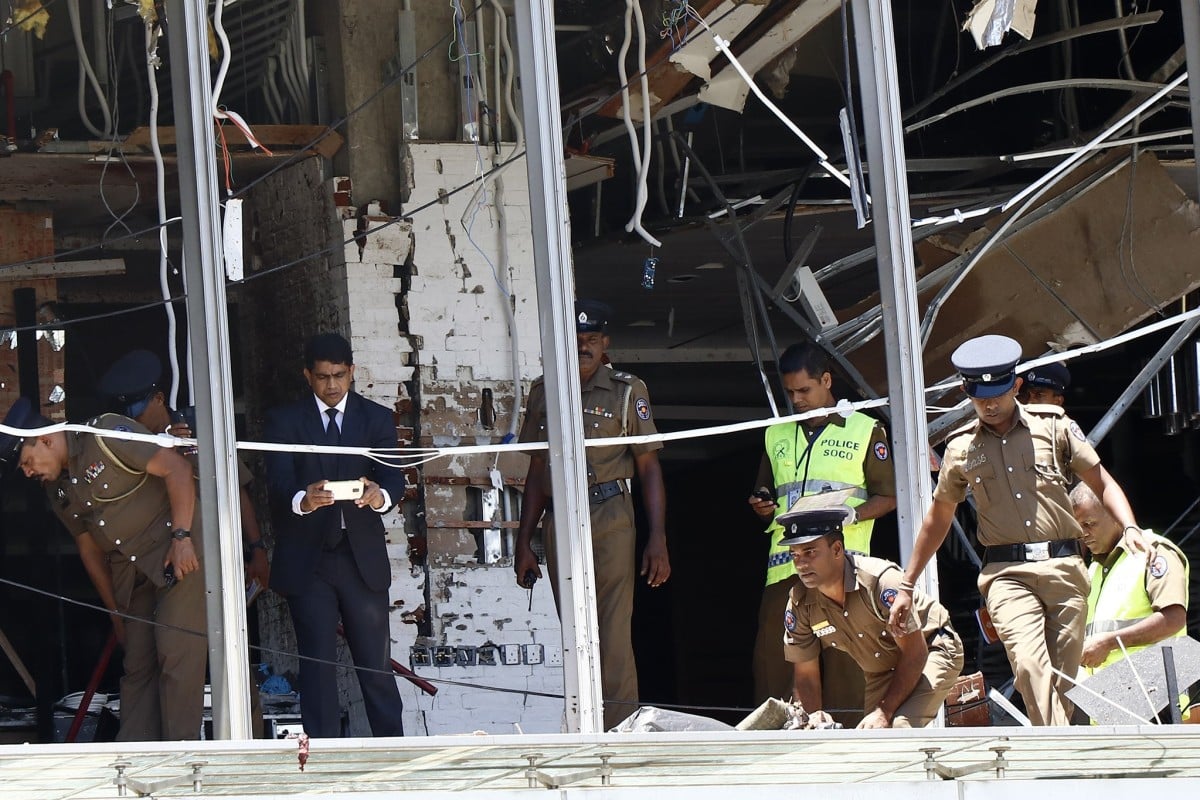
Police and investigators work at the Shangri-La Hotel blast scene in Colombo on Sunday, where the two Chinese were killed. Photo: Xinhua
Five Chinese nationals remain missing following a series of suicide bombings in hotels and churches in Sri Lanka on Easter Sunday that claimed the lives of 
two other Chinese

and injured five more.

At least 290 people were killed and more than 500 others injured in the blasts, according to a Sri Lankan government official on Monday, who said a local militant group was behind the attacks.
The Chinese embassy in Colombo had contacted the families of the two deceased Chinese and was awaiting police confirmation on the fate of the five still missing, state-run People’s Daily reported.
Two Chinese nationals sustained serious injuries in the blasts and three others minor ones. Embassy officials had visited them several times in hospital, the report said.
“The embassy will closely monitor the situation, urge Sri Lankan police to confirm the whereabouts of the missing persons and assist Chinese citizens and families to properly handle the aftermath,” the embassy was quoted as saying.
The two Chinese who died, cousins surnamed Tan, were caught in a blast at the Shangri-La Hotel in Colombo, Red Star News quoted a Chinese businesswoman in the Sri Lankan capital as saying.
“Their families identified them at the scene,” she said.
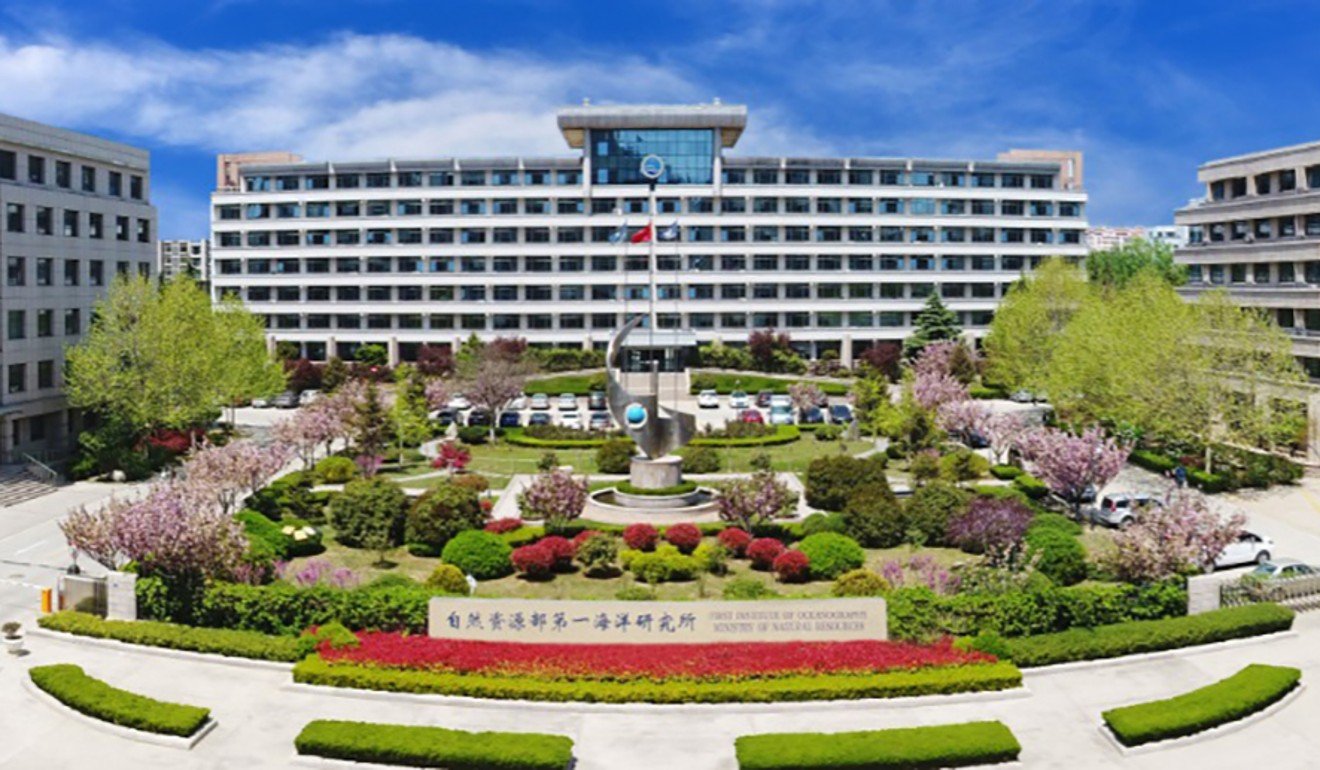
Four of the missing Chinese are students from the First Institute of Oceanography at the Ministry of Natural Resources. Photo: FIO

Four of the missing Chinese – Li Dawei, Li Jian, Pan Wenliang and Wang Liwei – are students from the Ministry of Natural Resources’ First Institute of Oceanography who were going to take part in a study in the Indian Ocean, an institute staff member told Red Star News.

The institute has sent staff to 

Sri Lanka

to handle the emergency.

Four of the five injured are students from the Chinese Academy of Sciences’ South China Sea Institute of Oceanology, who were en route to a study trip in the eastern Indian Ocean.

“It is an annual scientific expedition programme and they were on the way to replace the 10 others who had completed their rotation,” a staff member told The Beijing News. “Some sustained bruising on their legs and one could hardly hear after the blast.”

Tourists who returned to Shanghai and Chengdu, Sichuan province, told the newspaper that their trip had to be cut short as shops were closed and a curfew imposed amid tight security.

“All the private cars, coaches, vans and buses had to open their doors for inspection. There were checkpoints every 10 metres,” said one tour guide from Chengdu.

A traveller from the same city said airport security had also been stepped up. “There was a bombing 20 minutes after we left a restaurant and another one outside the airport when we were waiting there. We had to pass through three or four very strict security checks at the airport,” she said.

Back in Shanghai, another woman said: “We were not scared there but we are very glad to be back home.”

Source: SCMP

14/02/2019

Pakistan and China build friendship ties at Aman – 19 multinational naval exercise but no room for India on the guest list

  • Chinese naval commander says war games strengthened mutual understanding and trust
  • Drills included protection of strategic projects such as China-Pakistan economic corridor
PUBLISHED : Thursday, 14 February, 2019, 8:02pm
UPDATED : Thursday, 14 February, 2019, 8:02pm

Pakistan’s multinational naval drill involving 46 nations has wrapped up in the Indian Ocean and, once again, India was not invited.

The Pakistan Navy has hosted the Aman – which means “peace” – exercises every two years since 2007 to promote regional cooperation and stability. India has never been invited, in a sign of the long history of strained ties between the neighbours.

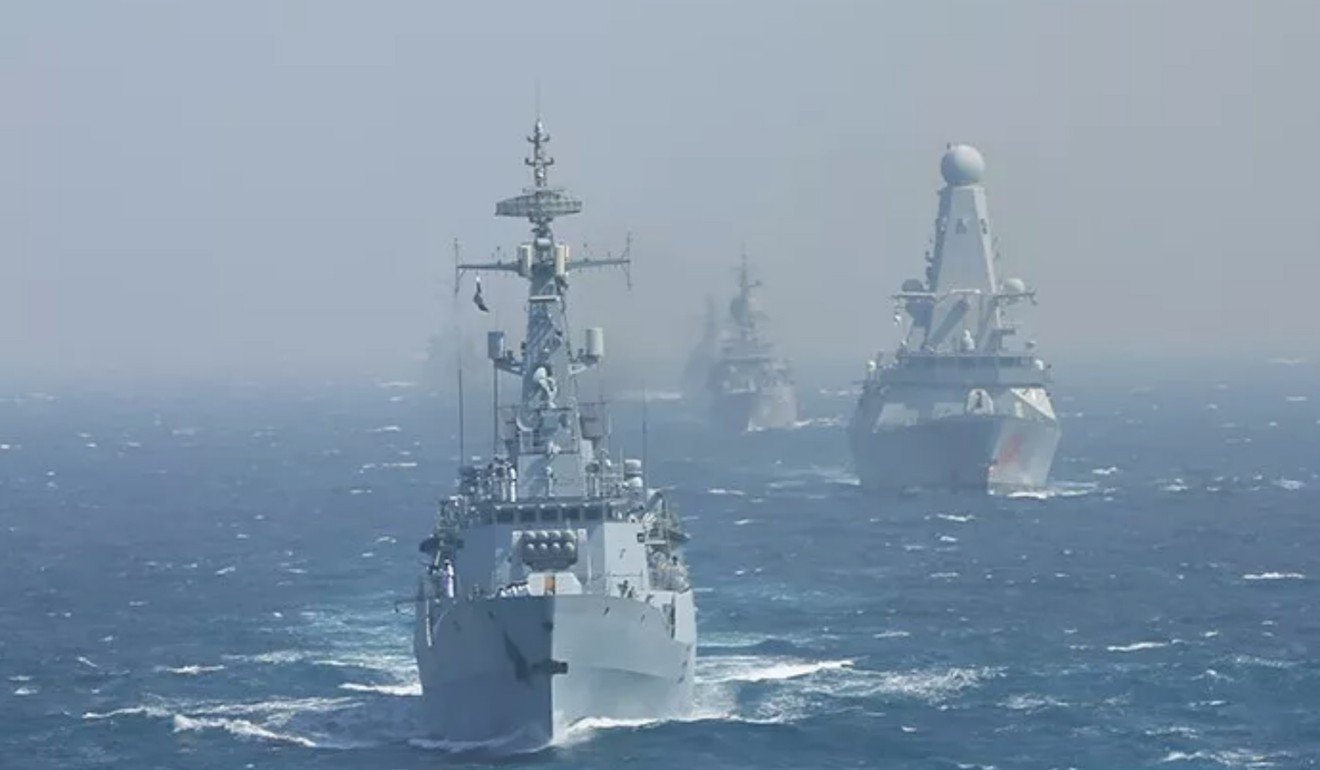
China, Japan and the United States were among the countries taking part in Aman-19, from February 8 to 12, which included maritime conferences, seminars and cross-ship visits, as well as 23 sea operations with main-gun firing, formation movement and replenishment-at-sea.

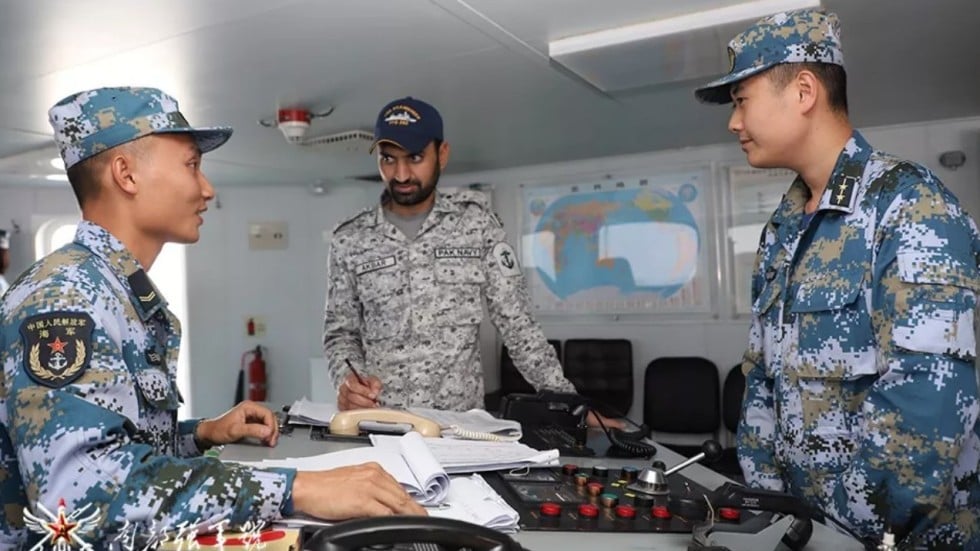
Shao Shuguang, commander of the People’s Liberation Army Navy’s 998 Fleet, was quoted on a Chinese military social media account as saying the exercise had strengthened mutual understanding and trust between the participating navies.

China sent one of its biggest warships, the Kunlun Shan amphibious landing vessel, to the exercise, signalling its close relationship with Pakistan and the key role both nations hold in the Indian Ocean, according to analysts.

“The Pakistan-China relationship is very strong, and this is one more illustration of the strength of the Pakistan-China relationship,” said Madhav Das Nalapat, honorary director of the department of geopolitics and international relations at Manipal University in India.

“China is also now becoming an important maritime power, especially in the Indo-Pacific. By aligning with China, Pakistan hopes to get the synergy of that.

“India by itself cannot have any primacy in the Indian Ocean. But along with the United States, the two countries together can have primacy in the Indian Ocean. India is positioning itself to be allied with the US, but has not yet reached there.”

Tridivesh Singh Maini, assistant professor with the Jindal School of International Affairs in India, said the exercises should be a cause for alarm for India. “They will keep an eye on what’s going on, but they don’t need to be too concerned,” he said.

The military exercise also centred on maritime security to protect strategic economic projects such as the China-Pakistan Economic Corridor, as well as sea lanes from the Persian Gulf.

The US$62 billion China-Pakistan Economic Corridor (CPEC) is designed to connect China’s far west region of Xinjiang with Gwadar Port in Pakistan via a network of motorways, railways, oil pipelines and trading hubs.

The project is expected to be finished by 2030, and will provide China with an important trading route to the Middle East and Africa.

“India has very strenuously objected to the name CPEC being given to the part that goes through Pakistan-occupied Kashmir, but so far nothing has been done,” Nalapat said.

Kashmir has long been a hotbed for competing territorial claims between India and Pakistan. The two countries have fought three wars against each other since their independence from Britain in 1947, and two of those conflicts have centred on the Kashmir territorial dispute.

Source: SCMP

Law of Unintended Consequences

continuously updated blog about China & India

ChiaHou's Book Reviews

continuously updated blog about China & India

What's wrong with the world; and its economy

continuously updated blog about China & India