Archive for ‘intellectual property protection’

29/10/2019

Donald Trump, Xi Jinping set for November 17 meeting in Chile to sign interim trade war deal: source

  • Chinese President Xi Jinping and US President Donald Trump set to meet on the sidelines of the Apec summit in Chile next month, a source says
  • The two state leaders are expected to sign an interim trade deal ‘if everything goes smoothly’
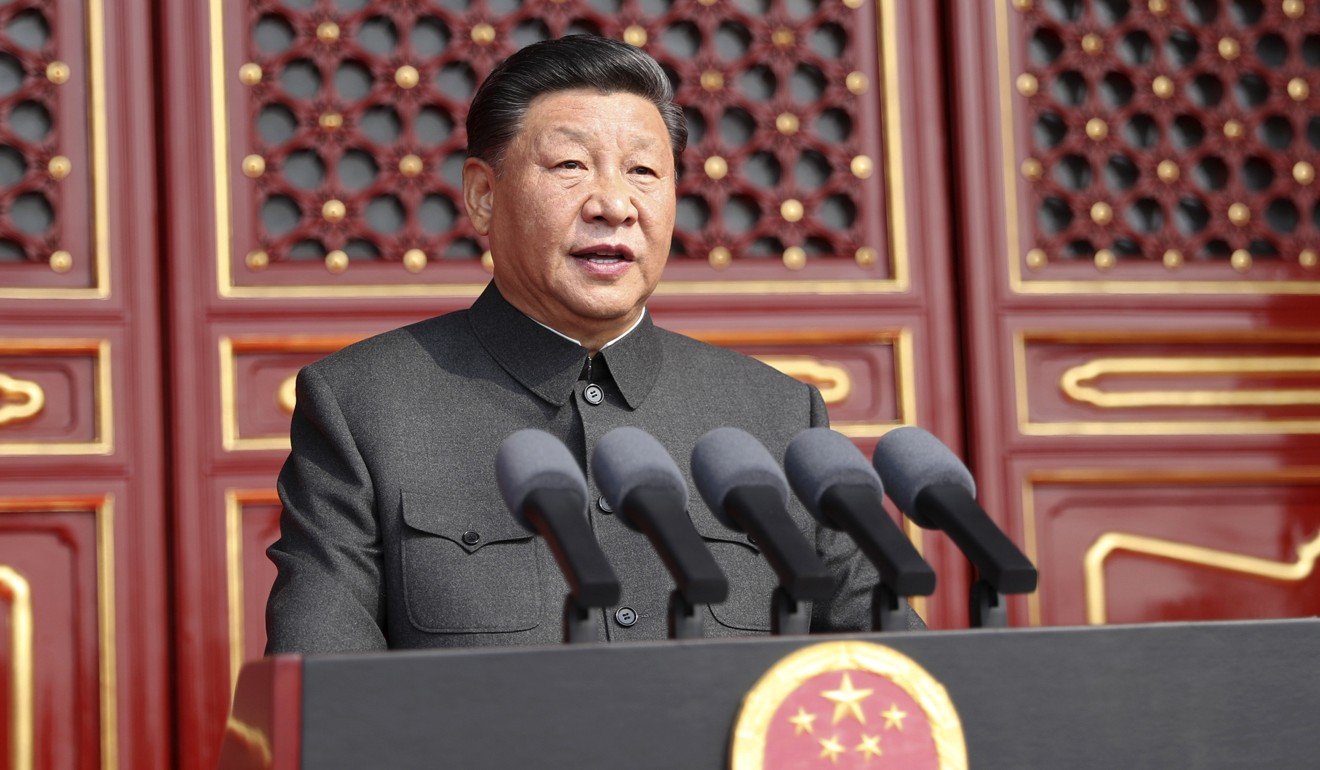
Chinese President Xi Jinping and US President Donald Trump have met twice already over the course of the 16-month trade war. Photo: AP

Chinese President Xi Jinping and US President Donald Trump are tentatively expected to meet on November 17 with the aim of signing an interim trade deal, a source briefed on the arrangements told the South China Morning Post.

The two leaders are expected to come face-to-face immediately after the Asia-Pacific Economic Cooperation (Apec) summit in Santiago, Chile, with a trade truce signed “if everything goes smoothly”, said the person, who declined to be identified.

Trade envoys from Beijing and Washington are still finalising the text for the two leaders to sign, but both sides have expressed optimism that Trump’s so-called phase one trade deal can be completed in time for the meeting.

Trump said on Monday that negotiations on the interim deal were running “ahead of schedule”.

“We are looking probably to be ahead of schedule to sign a very big portion of the China deal, and we’ll call it phase one but it’s a very big portion,” Trump said. “That would take care of the farmers. It would take care of some of the other things. It will also take care of a lot of the banking needs.

“So we’re about, I would say, a little bit ahead of schedule, maybe a lot ahead of schedule,” the president said, adding the deal would “probably” be signed.

Top trade negotiators for the two countries – US Treasury Secretary Steven Mnuchin, US trade representative Robert Lighthizer and Chinese Vice-Premier Liu He – spoke by telephone last Friday. The Office of the US Trade Representative released a statement after the call saying that the two sides “made headway on specific issues” and “are close to finalising some sections of the agreement”.

China’s official Xinhua News Agency said on Saturday negotiators have “agreed to properly resolve core concerns of each other” and had “basically completed technical discussions about parts of the text”. In particular, China would lift the current ban on US poultry imports and recognise the American public health certification system for meat product imports, Xinhua said.

The top trade envoys are expected to hold another conference call in the near future.
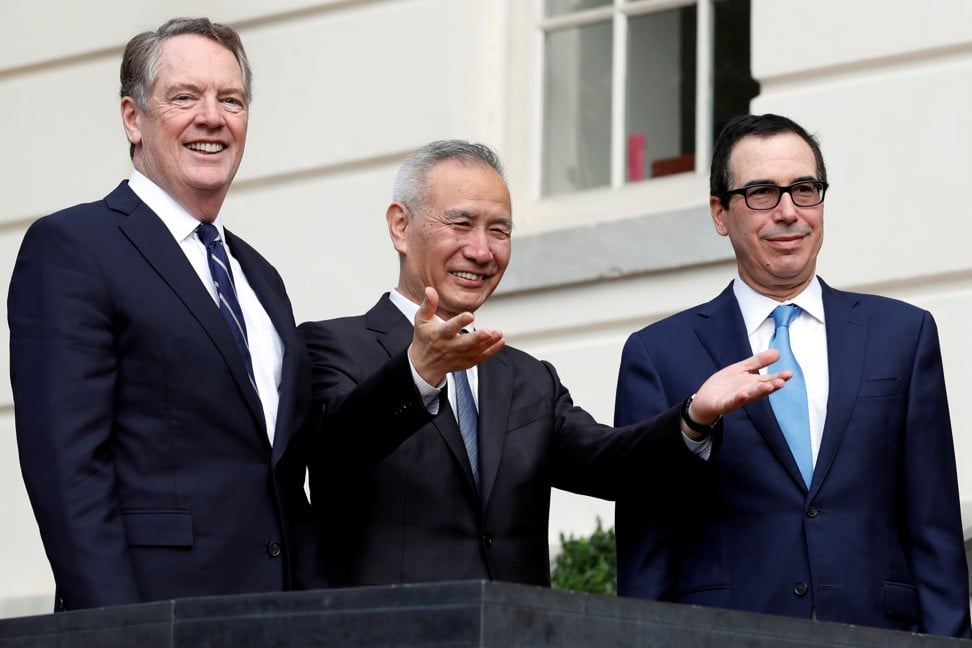
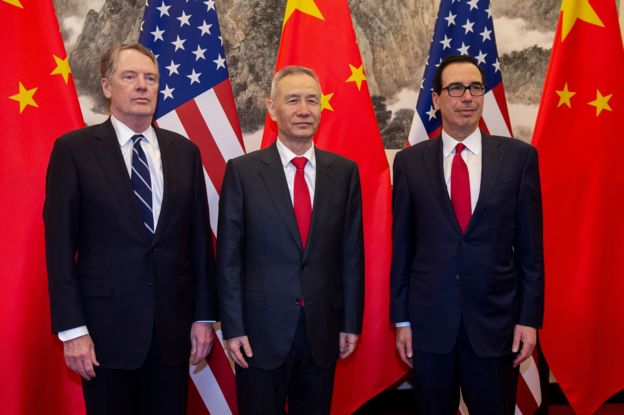
China's Vice-Premier Liu He between US trade representative Robert Lighthizer (left) and US Treasury Secretary Steve Mnuchin during trade negotiations in Washington this month. Photo: Reuters
China’s Vice-Premier Liu He between US trade representative Robert Lighthizer (left) and US Treasury Secretary Steve Mnuchin during trade negotiations in Washington this month. Photo: Reuters

Taoran Notes, an account on Chinese social media platform WeChat run by the official Economic Daily newspaper, wrote over the weekend that Beijing and Washington had moved a step closer to agreement on a “temporary deal”.

“According to past experiences and practises, the negotiation will enter the stage of translation and legal review after the technical completion of the text,” the account said.

Geng Shuang, a Chinese foreign ministry spokesman, said that technical negotiations about part of the deal were finished but deputy-level talks were ongoing. “China hopes both sides can find a trade solution based upon mutual respect and benefits,” Geng said at a regular press conference on Tuesday.

If it goes ahead as planned, the summit between Trump and Xi in Chile next month would be the third time the two leaders have sat down to talk about ending the nearly 16-month-long trade war.

Last December, the two leaders met on the sidelines of the G20 Leaders’ Summit in the Argentinian capital Buenos Aires and agreed to a three-month tariff truce to allow time for the countries’ trade envoys to work out a comprehensive deal. But the talks collapsed in early May with the US blaming China for reneging on promises it made in negotiations, while China blamed the US for attempting to infringe on its economic sovereignty.

The pair met again in late June in the Japanese city of Osaka, where they agreed to restart trade negotiations.

A minor ceasefire was reached in October when Beijing promised to buy US$40 billion to US$50 billion worth of American agricultural products in exchange for Washington postponing indefinitely a tariff increase on US$250 billion of Chinese goods to 30 per cent from 25 per cent on October 15.

Analysts expect fresh 15 per cent duties on about US$160 billion of Chinese imports – including popular products like smartphones and consumer electronics – that are due to go into effect mid-December will also be postponed if a deal is signed, though this has not been officially confirmed.

The interim deal is also expected to contain a provision on intellectual property protection, a key US demand. China has taken steps to improve IP protection, including setting up a system to punish and compensate instances of infringement, and improve settlement disputes. But how well these measures will be implemented remains in question.

China and the US would also agree to avoid allowing currency devaluations to gain trade advantages, codifying a commitment both countries made as part of a G20 agreement several years ago. A currency agreement – similar to provisions in the yet-to-be-ratified US-Mexico-Canada Agreement – could pave the way for the US to remove its designation of China as a “currency manipulator”.

The deal may include a new dispute resolution mechanism to ensure both sides live up to commitments. The system, which will give both sides equal standing, would replace a contentious US-proposed enforcement mechanism that was a key reason for trade talks breaking down in May after China felt the demands too intrusive and one-sided. It is unclear how effective the proposal would be, but the US has insisted since talks began that a similar mechanism be implemented to ensure China did not backslide on promises as it had in the past.

In addition to large purchases of farm products, the interim agreement may contain commitments by China to buy US-built aircraft and energy products, particularly liquefied natural gas.

China will also agree to lift foreign ownership limits on Chinese financial firms under the deal, changes which are already underway.

However, the interim deal will not address broader US complaints about China’s economic model, particularly allegations that foreign firms are treated unfairly and heavy government subsidies favour some domestic industries. Nor will it contain any break for telecommunications equipment maker Huawei and other Chinese tech companies that were blacklisted by the US on national security concerns.

Source: SCMP

19/10/2019

China’s door will ‘only open wider’, Xi Jinping tells delegates at Qingdao Multinationals Summit

  • ‘Only when China is good, can the world get better,’ president says in congratulatory letter read out at launch of event to promote global trade
  • Summit opens two weeks after South Korean giant Samsung closes its last factory in mainland China with the loss of thousands of jobs
Xi Jinping has praised multinational companies for the role they have played in China’s opening up over the past four decades. Photo: AFP
Just a day after China reported its slowest ever quarterly economic growth,

President Xi Jinping

on Saturday reiterated his promise to keep opening up the nation’s markets to companies and investors from around the world.

“The door of China’s opening up will only open wider and wider, the business environment will only get better and better, and the opportunities for global multinational companies will only be more and more,” he said in a congratulatory letter read out by Vice-Premier Han Zheng at the inaugural Qingdao Multinationals Summit in the east China city.
The two-day event, which ends on Sunday, was organised by China’s commerce ministry and the provincial government of Shandong with the aim, according to its website, of giving multinational companies “the opportunity to articulate their business values and vision” and “promote cooperation with host countries”.

In his letter, Xi praised multinational companies for the role they had played in China’s opening up and reform over the past four decades, describing them as “important participants, witnesses and beneficiaries”.

China was willing to continue opening up to benefit not only itself but the world as a whole, he said.

“Only when the world is good, China is good. Only when China is good, can the world get better.”

Despite its upbeat tone, Xi’s message comes as Beijing is facing intense scrutiny from the international business community over its state-led economic model – one of the main bones of contention in its trade war with the US – and its attempts to prevent foreign firms from speaking out on issues it deems too sensitive, from Hong Kong to human rights.
Foreign firms have also long complained about the barriers they face when trying to access China’s markets and the privileged treatment it gives to state-owned enterprises. Even though Beijing has promised to reform its state sector, foreign businesses have complained of slow progress, and just last month the European Union Chamber of Commerce urged the EU to take more defensive measures against China’s “resurgent” state economy.
Xi promised “more and more” opportunities for global firms. Photo: AP

Sheman Lee, executive director of Forbes Global Media Holding and CEO of Forbes China, said at the Qingdao summit that foreign firms were facing a difficult trading environment in the world’s second-largest economy.

“Multinationals have seen their growth in China slow in recent years because of the growing challenge from local firms, a gradually saturating market and rising operation costs,” he said.

Craig Allen, president of the US-China Business Council, said that many multinational companies were reluctant to release their best products in China out of fear of losing their intellectual property.

China still not doing enough to woo foreign investment

In his letter, Xi said that over the next 15 years, the value of China’s annual imports of goods would rise beyond US$30 trillion, while the value of imported services would surpass US$10 trillion a year, creating major opportunities for multinational companies.

China would also reduce tariffs, remove non-tariff barriers and speed up procedures for customs clearance, he said.

Commerce Minister Zhong Shan said at the opening ceremony that China would also continue to improve market access and intellectual property protection.

The country supported economic globalisation and would safeguard the multilateral trade system, he said, adding that it was willing to work with the governments of other countries and multinational corporations to promote economic globalisation.

Xi Jinping says the value of China’s annual goods imports will rise beyond US$30 trillion over the next 15 years. Photo: Bloomberg
The promise to continue to open up China’s markets came after the State Council
– the nation’s cabinet – made exactly the same pledge at its weekly meeting on Wednesday.
After the latest round of trade war negotiations in Washington, Beijing said it had achieved “substantive progress” on intellectual property protection, trade cooperation and technology transfers, all of which have been major bones of contention for the United States.
Despite its pledge to welcome multinational companies into its market, China is in the process of creating a list of “unreliable foreign entities” it considers damaging to the interests of Chinese companies. The roster, which is expected to include FedEx, is seen as a response to a similar list produced earlier by the United States.
Xi’s gesture would also appear to have come too late for South Korean multinational 
Samsung Electronics

, which announced on October 4 it had ended the production of smartphones at its factory in Huizhou, Guangdong province – its last in China – with the loss of thousands of jobs.

Source: SCMP
10/05/2019

Trade war: Trump raises tariffs on $200bn of Chinese goods

The US has more than doubled tariffs on $200bn (£153.7bn) worth of Chinese products, in a sharp escalation of the countries’ damaging trade war.

Tariffs on affected Chinese goods have risen to 25% from 10%, and Beijing has vowed to retaliate.

China says it “deeply regrets” the move and will have to take “necessary counter-measures.”

It comes as high-level officials from both sides are attempting to salvage a trade deal in Washington.

Only recently, the US and China appeared to be close to ending months of trade tensions.

China’s Commerce Ministry confirmed the latest US tariff increase on its website.

“It is hoped that the US and the Chinese sides will work together… to resolve existing problems through co-operation and consultation,” it said in a statement.

Tariffs are taxes paid by importers on foreign goods, so the 25% tariff will be paid by American companies who bring Chinese goods into the country.

Chinese stock markets rose on Friday, with the Hang Seng index up less than 1% and the Shanghai Composite more than 3% higher.

However, earlier in the week stock markets had fallen after US President Donald Trump flagged the tariff rise on Sunday.

The US imposed a 10% tariff on $200bn worth of Chinese products – including fish, handbags, clothing and footwear – last year.

The tariff was due to rise at the start of the year, but the increase was delayed as negotiations advanced.

What will be the impact of the tariff rise?

The US-China trade war has weighed on the global economy over the past year and created uncertainty for businesses and consumers.

Even though Mr Trump has downplayed the impact of tariffs on the US economy, the rise is likely to affect some American companies and consumers as firms may pass on some of the cost, analysts said.

Deborah Elms, executive director at the Asian Trade Centre, said: “It’s going to be a big shock to the economy.

“Those are all US companies who are suddenly facing a 25% increase in cost, and then you have to remember that the Chinese are going to retaliate.”

China's Vice Premier Liu He (C) poses for a photo with US Treasury Secretary Steven Mnuchin (R) and US Trade Representative Robert Lighthizer (L) at Diaoyutai State Guesthouse in Beijing on March 29, 2019Image copyright GETTY IMAGES
Image caption US and Chinese officials have held several round of talks in an attempt to strike a deal to end the trade war.

In a statement, the American Chamber of Commerce in China said it was committed to helping both sides find a “sustainable” solution.

“While we are disappointed that the stakes have been raised, we nevertheless support the ongoing effort by both sides to reach agreement on a strong, enforceable deal that resolves the fundamental, structural issues our members have long faced in China.”

French Finance Minister Bruno Le Maire warned that the trade dispute escalation threatened jobs across Europe.

“There is no greater threat to world growth,” Mr Le Maire told CNews. “It would mean that trade tariffs go up, fewer goods would circulate around the world… and jobs in France and in Europe would be destroyed.”

Presentational grey line

‘Serious escalation’ of the trade war

Analysis box by Karishma Vaswani, Asia business correspondent

No breakthrough, and no deal – just, more tariffs.

With this move, US President Donald Trump has effectively dealt a fresh blow to not just the Chinese economy – as he had presumably hoped – but also to US’s.

The previous set of tariffs of 10% on $200bn of Chinese goods have to some extent been absorbed by American importers, but economists say a 25% tariff will be much harder for them to stomach.

They will almost certainly have to pass on that cost to American consumers – and that means higher prices.

Make no mistake, this is a serious escalation – and the trade war between the world’s two largest economies is back on.

This means the rest of us should be prepared for more pain ahead.

Presentational grey line

How will the tariff increase affect negotiations?

Despite this week’s escalation in tensions, talks were held between Chinese Vice-Premier Liu He, US Trade Representative Robert Lighthizer and Treasury Secretary Steven Mnuchin on Thursday.

A White House spokesman said US officials had agreed with the vice-premier to resume talks on Friday morning, according to media reports.

Even though there had been growing optimism about progress in trade talks recently, sticking points have persisted throughout.

These have included issues around intellectual property protection, how fast to roll back tariffs and how to enforce a deal.

Analysts say the Chinese are still willing to negotiate to retain the moral high ground and because they recognise the importance of solving the trade war.

“A trade war will be bad for China, both the real economy and the financial markets. It will also be bad for the world economy,” said Gary Hufbauer of the Peterson Institute for International Economics.

“Better for China to play the role of conciliatory statesman than angry retaliator.”

Why are the US and China at odds?

China has been a frequent target of Donald Trump’s anger, with the US president criticising trade imbalances between the two countries and Chinese intellectual property rules, which he says hobble US companies.

Some in China see the trade war as part of an attempt by the US to curb its rise, with Western governments increasingly nervous about China’s growing influence in the world.

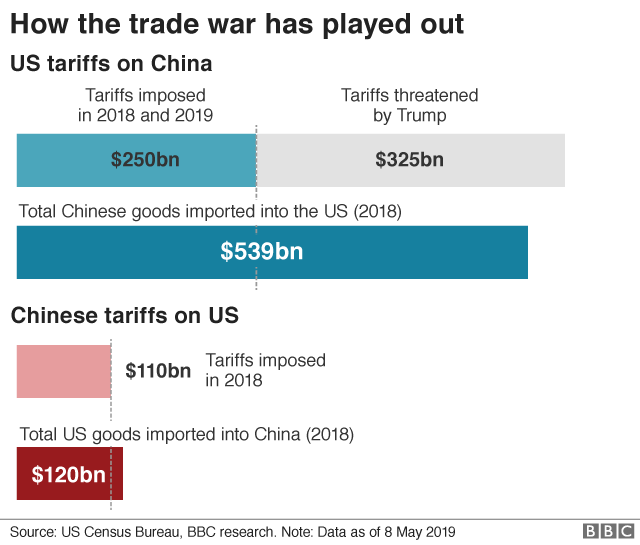
Both sides have already imposed tariffs on billions of dollars worth of one another’s goods. The situation could become worse still, as Mr Trump has also warned he could “shortly” introduce 25% duties on $325bn of Chinese goods.

What exactly sparked the US president’s latest actions, which apparently took China by surprise, is unclear.

Ahead of the discussions, Mr Trump told a rally China “broke the deal” and would pay for it.

How the trade war has played out

The International Monetary Fund said the row poses a “threat to the global economy”.

“As we have said before, everybody loses in a protracted trade conflict,” the body which aims to ensure global financial stability said in a statement, calling for a “speedy resolution”.

Source: The BBC

05/03/2019

China to comprehensively strengthen intellectual property protection

(TWO SESSIONS)CHINA-BEIJING-LI KEQIANG-NPC-OPENING (CN)

Chinese Premier Li Keqiang delivers a government work report at the opening meeting of the second session of the 13th National People’s Congress at the Great Hall of the People in Beijing, capital of China, March 5, 2019. (Xinhua/Pang Xinglei)

BEIJING, March 5 (Xinhua) — China will strengthen intellectual property (IP) protection across the board, improve the system of punitive compensation for IP infringements, and promote invention and creation and their industrial application, says a government work report.

The report was delivered by Premier Li Keqiang at the second annual session of the 13th National People’s Congress that opened in Beijing Tuesday.

Source: Xinhua

25/02/2019

Trump to delay further tariffs on Chinese goods

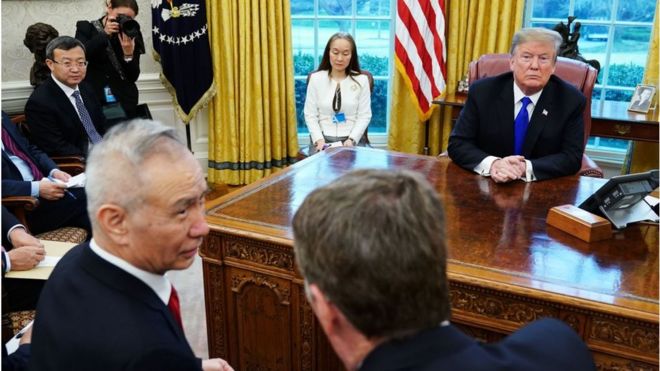
Donald Trump and China's Vice Premier Liu He in the Oval OfficeImage copyrightAFP
Image captionPresident Trump met China’s Vice Premier Liu He on Friday

President Donald Trump has announced that the US will delay imposing further trade tariffs on Chinese goods.

The rise in import duties on Chinese goods from 10% to 25% was due to come into effect on 1 March.

Mr Trump said both sides had made “substantial progress” in trade talks, which sent Chinese stocks up nearly 5%.

He added that he was planning a summit with Chinese President Xi Jinping in Florida to cement the trade deal if more progress was made.

A report from China’s official news agency Xinhua also noted “substantial progress” on specific issues such as technology transfer, intellectual property protection and agriculture.

Mr Trump’s decision to delay tariff increases on $200bn (£153bn) worth of Chinese goods was seen as a sign that the two sides are making progress on settling their damaging trade war.

Last week, Mr Trump noted progress in the latest round of negotiations in Washington, including an agreement on currency manipulation, though no details were disclosed.

Sources told CNBC on Friday that China had committed to buying up to $1.2 trillion in US goods, but there had been no progress on the intellectual property issues.

What has happened in the trade war so far?

Mr Trump initiated the trade war over complaints of unfair Chinese trading practices.

That included accusing China of stealing intellectual property from American firms, forcing them to transfer technology to China.

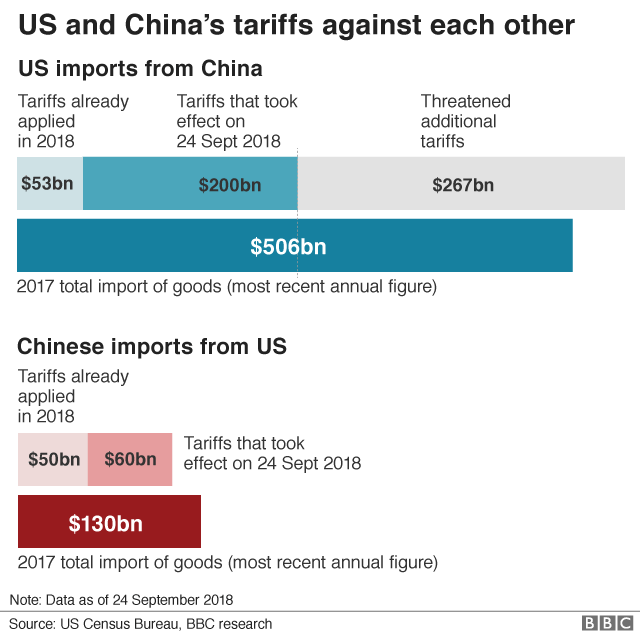
The US has imposed tariffs on $250bn worth of Chinese goods, and China has retaliated by imposing duties on $110bn of US products.

Mr Trump has also threatened further tariffs on an additional $267bn worth of Chinese products – which would see virtually all of Chinese imports into the US become subject to duties.

US and China's tariffs against each other

The trade dispute has unnerved financial markets, risks raising costs for American companies and is adding pressure to a Chinese economy that is already showing signs of strain.

It has also stoked fears about the impact on the global economy.

Last year, the International Monetary Fund warned the trade war between the US and China risked making the world a “poorer and more dangerous place”.

Source: The BBC

Law of Unintended Consequences

continuously updated blog about China & India

ChiaHou's Book Reviews

continuously updated blog about China & India

What's wrong with the world; and its economy

continuously updated blog about China & India