Chindia Alert: You’ll be Living in their World Very Soon
aims to alert you to the threats and opportunities that China and India present. China and India require serious attention; case of ‘hidden dragon and crouching tiger’.
Without this attention, governments, businesses and, indeed, individuals may find themselves at a great disadvantage sooner rather than later.
The POSTs (front webpages) are mainly 'cuttings' from reliable sources, updated continuously.
The PAGEs (see Tabs, above) attempt to make the information more meaningful by putting some structure to the information we have researched and assembled since 2006.
Members of Chinese medical team attend a ceremony at Jiangbei International Airport in southwest China’s Chongqing, May 13, 2020. The Chinese government will send a team of medical experts to Algeria to help the country fight the COVID-19 pandemic. These experts, specializing in areas including respiratory diseases, intensive care, infectious diseases, and laboratory testing, will fly to Algeria on early Thursday morning. (Xinhua/Liu Chan)
CHONGQING, May 13 (Xinhua) — The Chinese government will send a team of medical experts to Algeria to help the country fight the COVID-19 pandemic.
The team, organized by the National Health Commission, consists of 20 medical experts, including 15 from southwest China’s Chongqing Municipality and five from China’s Macao Special Administrative Region.
These experts, specializing in areas including respiratory diseases, intensive care, infectious diseases, and laboratory testing, will fly to Algeria on early Thursday morning.
Upon arrival, the team will exchange experience with their Algerian counterparts and offer training for medics on the prevention, control, diagnosis, and treatment of the COVID-19 virus.
The team will also carry urgently needed medical supplies donated by Chongqing, including medical masks and medical protective clothing.
City at centre of outbreak finally able to declare itself clear of disease after months in lockdown and thousands of deaths
Risk of infection remains, however, with some patients testing positive for coronavirus that causes disease without showing symptoms
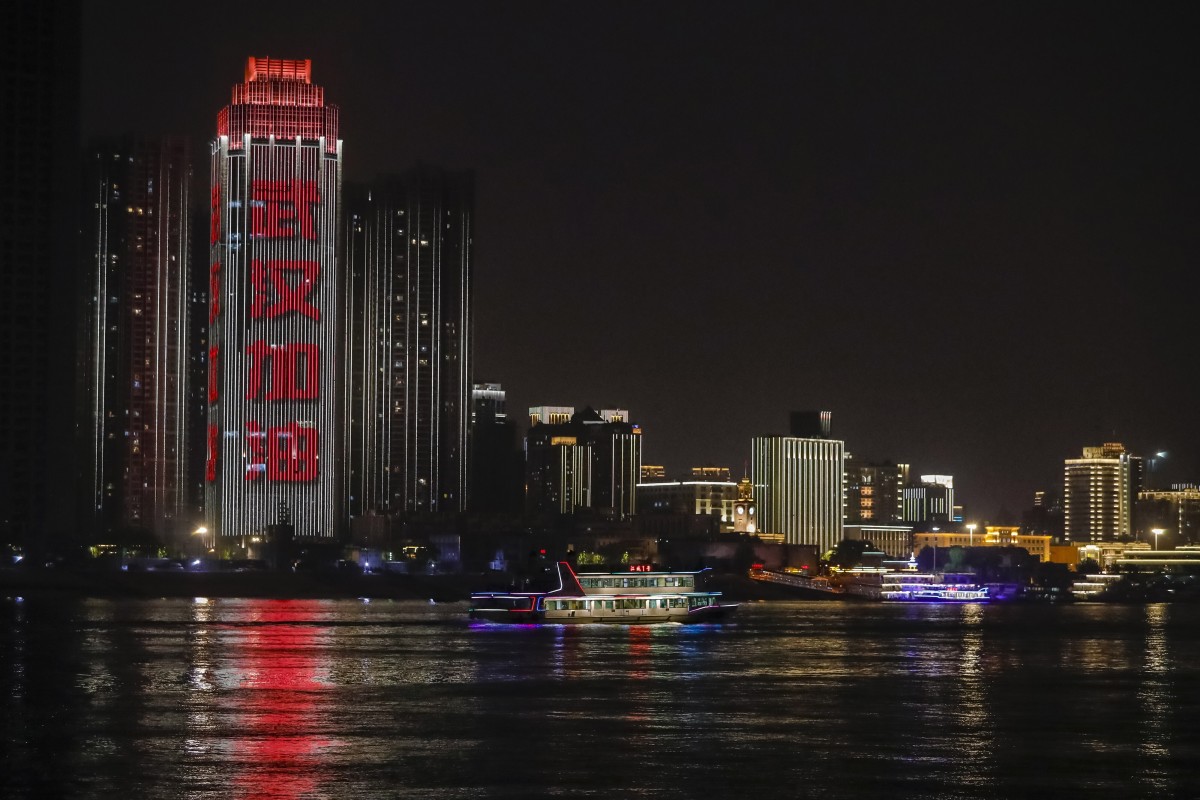
Ferries and other public transport services resumed in Wuhan last week. Photo: Xinhua
The city of Wuhan, the initial epicentre of the coronavirus pandemic, no longer has any Covid-19 patients in hospital after the last 12 were discharged on Sunday.
Their release ended a four-month nightmare for the city, where the disease was first detected in December. The number of patients being treated for Covid-19, the disease caused by a new coronavirus, peaked on February 18 at 38,020 – nearly 10,000 of whom were in severe or critical condition.
“With the joint efforts of Wuhan and the national medical aid given to Hubei province, all cases of Covid-19 in Wuhan were cleared as of April 26,” Mi Feng, a spokesman for the National Health Commission said on Sunday afternoon.
The announcement came only one day after the city discharged the last patient who had been in a severe condition. That patient also was the last severe case in Hubei province.
The last patient discharged from Wuhan Chest Hospital, a 77-year-old man surnamed Ding, twice tested negative for Sars-CoV-2, the virus that causes Covid-19, and was released at noon on Sunday.
“I missed my family so much!” Ding told Changjing Daily.
Another unidentified patient exclaimed as he left the hospital: “The air outside is so fresh! The weather is so good today!”
Wuhan faced a long journey to bring its patient count down to zero.
The city of 11 million, the capital of Hubei province and a transport hub for central China, was put under a strict lockdown on January 23 that barred anyone from entering or exiting the city without official approval for 76 days until it was officially lifted on April 8.
Coronavirus: Wuhan, Los Angeles officials discuss getting back to work after lockdown
22 Apr 2020
Residents were ordered to stay in their apartments as the city stopped public transport and banned private cars from city streets. As the epidemic worsened, more than 42,000 medical staff from across the country were sent to the city and to Hubei province to help ease the burden on the local health care system.
Wuhan was the hardest hit city in China, accounting for 50,333 of the 82,827 locally transmitted Covid-19 cases recorded in China. More than 4,600 died in the country from the disease.
On March 13, the city reported for the first time that there were no new suspected cases of the infection, and five days later there were no confirmed cases.
The number of discharged patients bottomed out at 39.1 per cent at the end of February, gradually climbing to 92.2 per cent by last Thursday.
“Having the patients in the hospital cleared on April 26 marks a major achievement for the city’s Covid-19 treatment,” the Wuhan Health Commission said in a statement.
However, having no severe cases in hospital does not mean all the discharged patients will require no further treatment as they may still need further care.
“Clearing all the severe cases marks a decisive victory for the battle to safeguard Wuhan,” health minister Ma Xiaowei told state broadcaster China Central Television on Saturday.
“Some patients who have other conditions are being treated in specialised hospitals. It has been properly arranged.”
Coronavirus: Chinese writer hit by nationalist backlash over diary about Wuhan lockdown
18 Apr 2020
Ten patients aged between 42 and 85 who have been declared coronavirus-free are still in intensive care at the city’s Tongji Hospital where they are being treated for kidney problems and other complications arising from Covid-19. Some still need ventilators to help them breathe.
These 10 patients are under 24-hour care, with 190 nurses on four-hour rotations. There are other patients in a similar condition in two other hospitals in Wuhan, according to the Hubei Broadcasting and Television Network.
However, the discharge of the last batch of Covid-19 patients does not mean that the risk of infection is gone.
The city reported 20 new cases of people testing positive for Sars-CoV-2, the official name for the coronavirus that causes the disease, but who do not yet show symptoms.
There are 535 such carriers under medical observation. Past data shows some of these asymptomatic carriers will develop symptoms, and so will be counted as Covid-19 patients under China’s diagnosis and treatment plan.
China’s coronavirus infection curve has flattened out with about 694 imported cases of Covid-19 on top of about 800 locally transmitted ones now under treatment.
The national health commission spokesman warned that people still need to be on high alert as the virus is continuing to spread around the globe, with no sign yet of a slowdown.
“[We] must not drop our guard and loosen up. [We] must discover cases in time and deal with them quickly,” Mi said, citing the continued pressure from cases imported by people returning from overseas.
“The next step will be to implement the requirements of the central government and continue to guard against imported cases and a rebound of domestic transmitted cases.”
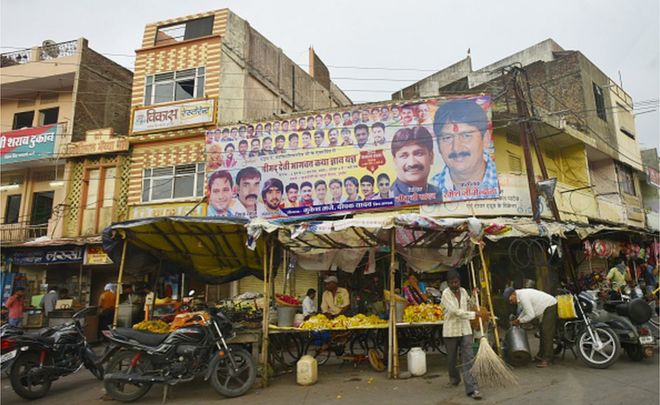
Image copyright GETTY IMAGESImage caption Indore is a bustling commercial city
In early March, 40-year-old Ravi Dosi, a chest specialist in India, saw a baffling surge in patients with respiratory problems at outpatient clinics.
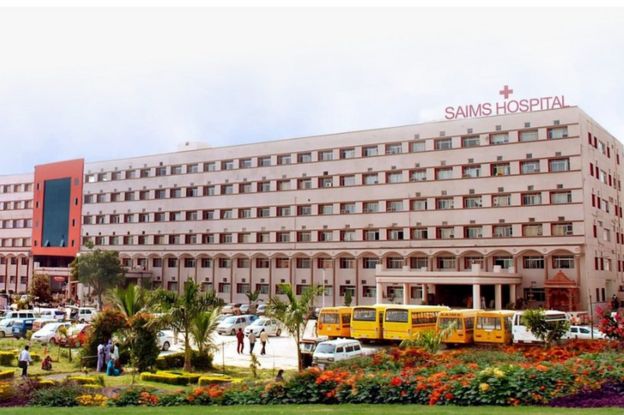
“There was almost a 50% jump in patients with upper respiratory issues and sore throat. They were not responding to antibiotics. Testing was still low and we didn’t really know what was going on,” Dr Dosi, who works at Sri Aurobindo Institute of Medical Sciences, a 1,156-bed private medical college in the central city of Indore, told me.
Less than a fortnight later, Dr Dosi began seeing an uptick in admissions of Covid-19 patients. Around the end of March, the hospital was receiving 28 infected patients every day.
They had dry cough, fever, and difficulty breathing. Their blood oxygen levels were low. They were reporting loss of taste and smell.
In the first wave of patients, nearly a dozen came from far-flung districts, more than 150km (93 miles) from Indore, a bustling commercial city in Madhya Pradesh state. The state has now become a hotspot, with nearly 400 confirmed infections out of the more than 6,400 infections and nearly 200 deaths across the country so far.
By the second week of April, Dr Dosi and his team of 100 doctors and nearly an equal number of nursing staff working 24/7 in three shifts, were treating 144 Covid-19 patients. (Thirty-one had been treated and sent home already.)
A total of 38 patients were in intensive care. Twenty-one of them were critical. There had been seven deaths. “We are handling the largest number of Covid-19 patients in India,” Vinod Bhandari, a surgeon and chairman of the hospital, told me.
Doctors now believe that the infection was spreading in the community long before the government admitted to it, and testing slowly ramped up. Until two weeks ago, Indian health authorities had been denying community transmission.
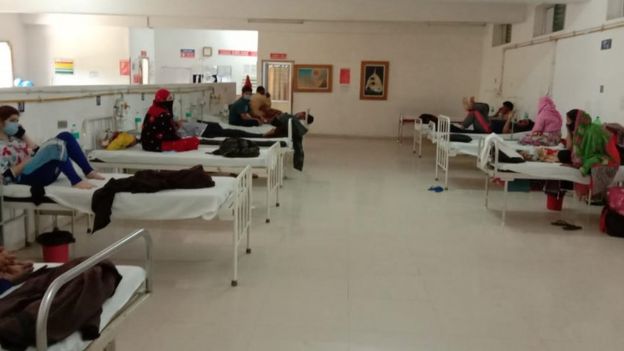
Image caption The hospital in Indore has more than 140 patients
Now a new study by Indian Council of Medical Research (ICMR) using surveillance data from 41 labs in the country has hinted at community transmission: 52 districts in 20 states and union territories reported Covid-19 patients. Some 40% of the cases did not report any history of international travel or contact with a known case. (The survey was based on swabs collected from nearly 6,000 patients who tested positive between 15 February and 19 March.)
Back in the hospital in Indore, the doctors are battling the surge in infections.
Three isolation wards spread over two floors floors are stacked with patients. (The hospital has earmarked 525 beds for Covid-19 patients.) Isolation wards have younger patients with mild infection, while elderly patients with more severe symptoms are in intensive care. The oldest patient is a 95-year-old man, and the youngest is a four-month-old boy.
The team of doctors handling patients includes chest specialists, anaesthetists, microbiologists, and dermatologists. There are patients with a lot of underlying medical conditions – diabetes, hypertension, even cancer – so all the specialists have been called in to help with the treatment.
Dr Dosi wakes up early, puts on protective gear – scrubs, face masks and shields, N95 masks, gowns, double gloves and shoe covers – before going on his rounds of the patients. Doctors say they are not facing a shortage of gear yet.
They are using 22 ventilators to help the critical patients breathe, and also providing oxygen supplies to others using nasal cannulas (nose prongs).
In the isolation wards, patients are given oral medication – antibiotics and hydroxychloroquine (commonly known as HCQ), an anti-malarial drug – and directed to maintain social distancing and wash their hands regularly.
Image caption The isolation wards are packed with patients
“I have never seen a challenge and crisis like this in my career. I have heard stories about an outbreak of plague in Surat [in 1994]. But this seems to be much bigger. The biggest challenge is to keep hopes alive and be positive,” says Dr Dosi.
Keeping hopes up for patients in isolation can be taxing. Three tests, say doctors, are being done for the infection – if the first test comes out positive, the patient remains in isolation for two weeks, and is tested twice on two days after the quarantine period. If the last two tests come back negative, the patient is discharged. If not, the patient has to stay in isolation for another two weeks. “It is a tough grind, mentally,” says one doctor.
For the last three weeks, Dr Dosi has been living in the hospital, away from his wife, two sons and parents. His father is a retired pathologist. They communicate via hurried video calls, between his frantic trips to the isolation wards and intensive care.
I ask him when does he expect this to “get over”, so that he can go home.
“In a couple of weeks,” he says. “The lockdown should have helped to slow down the infection.”
Dr Dosi is alluding to the strict 21-day lockdown India imposed on 24 March to halt the spread of the infection.
Image copyright GETTY IMAGESImage caption Health officials have been denying community transmission
Things are getting better, he says.
“I am getting 10 patients for admission in isolation wards, and two patients severe enough for intensive care every day now. Earlier this week, it was 50:50.”
It is possibly too early to hazard a guess about when admissions will slow down to single digits. As more people are tested, the number of patients can easily rise again.
It’s been unrelenting, Dr Dosi says.
Early, on Friday, I sent him a text to find out what was going on.
Airport staff unload medical materials donated by China to Laos from a chartered plane at the Wattay International Airport in Vientiane, Laos, March 29, 2020. A team of Chinese medical experts, along with medical materials, arrived in Lao capital Vientiane by a chartered plane Sunday morning to assist Laos to fight the COVID-19 pandemic. (Photo by Kaikeo Saiyasane/Xinhua)
VIENTIANE, March 29 (Xinhua) — A team of Chinese medical experts, along with medical materials, arrived in Lao capital Vientiane by a chartered plane Sunday morning to assist Laos to fight the COVID-19 pandemic.
Somdy Douangdy, Lao deputy prime minister and chair of the Task Force Committee for COVID-19 Prevention and Control, and Chinese Ambassador to Laos Jiang Zaidong received the Chinese medical experts at the Wattay International Airport in Vientiane.
The Chinese medical team includes experts in various fields such as infection prevention and control, intensive care, epidemics, and laboratory testing. They also brought along with medical supplies.
The team came to Laos less than five days after the Lao side announced its first two confirmed COVID-19 cases and asked for assistance from China.
Laos has detected eight confirmed COVID-19 cases as of Saturday afternoon.
When welcoming the Chinese experts, Lao Deputy Prime Minister Somdy said that the Lao side is heartfully grateful for the Chinese medical expert team’s coming only in five days after Laos confirmed COVID-19 cases. China’s gesture reflects the profound friendship from the Chinese side to the Lao people, he said.
The medical team, made up of top experts in China’s southwestern Yunnan Province, brought Chinese experiences and solutions to Laos’ epidemic prevention and control, said the Lao deputy prime minister, adding that the Lao government will coordinate and ensure all possible conveniences for the Chinese medical expert team.
Somdy said the Lao side will make full use of the intellectual support and material assistance brought by the Chinese side, and will try its best to prevent COVID-19 from spreading.
“A friend in need is a friend indeed,” Jiang Zaidong said, adding that China will not forget in the early days of the outbreak, Laos donated money and multiple batches of anti-epidemic materials to China, and tried its best to successfully organize the China-ASEAN Special Foreign Ministers’ Meeting on Coronavirus Disease in Vientiane.
The Chinese people are always ready to return the kindness, sand Jiang. Currently, the number of confirmed cases in Laos is increasing, and the pressure on prevention and control is rising. As a community with a shared future, China will go through the difficulties with the Lao people, jointly strengthen epidemic prevention and control, and steadily push forward bilateral cooperation, the ambassador said.
Huang Xingli, the head of the Chinese medical expert team, said to Xinhua on arrival that the main tasks of the expert team are to share experiences and exchange with Lao local hospitals and experts, to introduce China’s anti-epidemic experience, to provide consultation to the Lao side on epidemic prevention and control, diagnosis and treatment and laboratory work, and to provide training and guidance for the Lao medical staff and community staff.
Along with the team also came medical treatment, protective supplies and a batch of Chinese and Western medicines donated by China’s Yunnan Province.
Laos announced it had detected the first two confirmed COVID-19 cases on March 24. The total number has risen to eight till Saturday.







 CHINDIA ALERT: You'll be living in their world, very soon