Archive for ‘International Olympic Committee’

25/03/2020

Coronavirus: Wuhan to ease lockdown as world battles pandemic

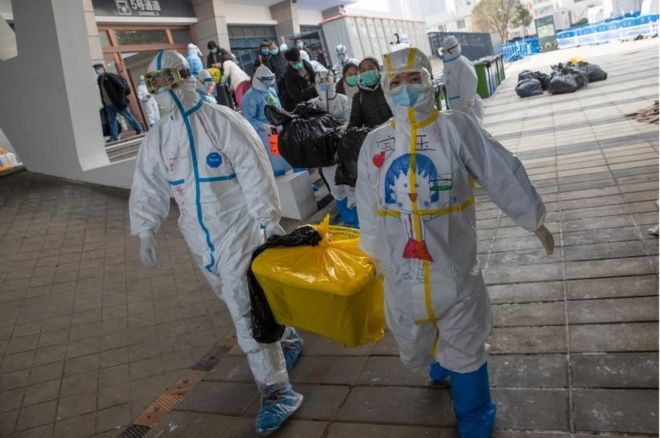
Medical staff clean up the empty hospital after all patients were discharged at Wuchang Fangcang hospital, a temporary hospital set up at Hongshan gymnasium to treat people infected with the coronavirus and Covin-19 disease, in Wuhan, Hubei Province, China, 10 March 2020 (issued 11 March 2020)Image copyright EPA
Image caption Wuhan has been sealed off since mid-January

The lockdown in Wuhan, the Chinese city where the global coronavirus outbreak began, will be partially lifted on 8 April, officials say.

Travel restrictions in the rest of Hubei province, where Wuhan is located, will be lifted from midnight on Tuesday – for residents who are healthy.

A single new case of the virus was reported in Wuhan on Tuesday following almost a week of no reported new cases.

Countries around the world have gone into lockdown or imposed severe curbs.

The UK is getting to grips with sweeping new measures to tackle the spread of coronavirus, including a ban on public gatherings of more than two people and the immediate closure of shops selling non-essential goods.
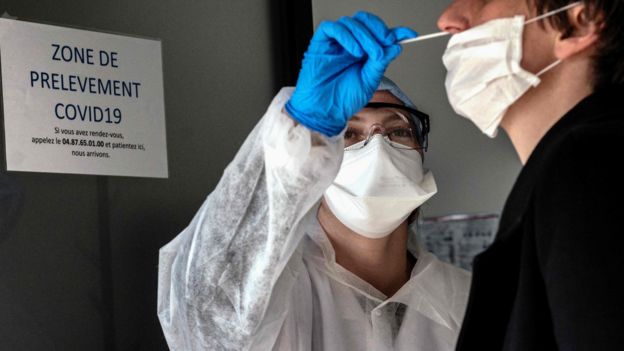
A person is tested for the Covid-19 virus in Villeurbanne, France (23 March 2020)Image copyright AFP
Image caption The WHO has urged the G20 group of nations to boost production of protective equipment

Meanwhile, health experts say Americans must limit their social interactions or the number of infections will overwhelm the health care system in the US.

Spanish soldiers helping to fight the coronavirus pandemic have found elderly patients in retirement homes abandoned and, in some cases, dead in their beds, the defence ministry has said.

An ice rink in Madrid is to be used as a temporary mortuary for Covid-19 victims.

The World Health Organization (WHO) has warned that the pandemic is accelerating, with more than 300,000 cases now confirmed. It is urging countries to adopt rigorous testing and contact-tracing strategies.

Wuhan has been shut off from the rest of the world since the middle of January. But officials now say anyone who has a “green” code on a widely used smartphone health app will be allowed to leave the city from 8 April.

Earlier, the authorities reported a new case of coronavirus in Wuhan, ending a five-day run of no reported new cases in the city.
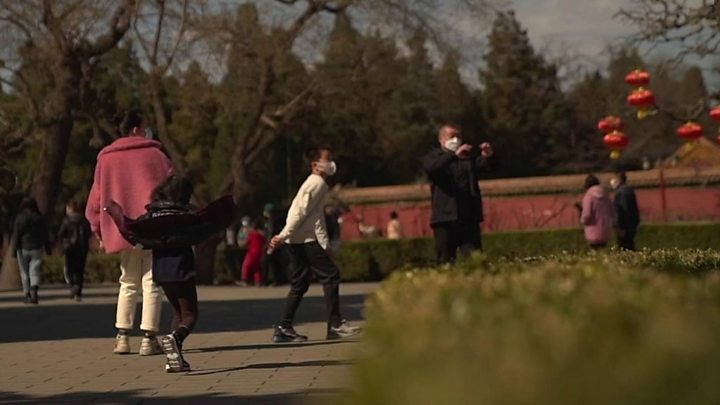
Media caption Coronavirus: People in Beijing begin to head outdoors

It comes after health officials there confirmed that they were not counting cases of people who were positive but had not been admitted to hospital or did not show any symptoms of the disease.

Official government figures say there have been 78 new cases reported on the Chinese mainland in the last 24 hours. All but four of them were caused by infected travellers arriving from abroad.

This so-called “second wave” of imported infections is also affecting countries like South Korea and Singapore, which had been successful in stopping the spread of disease in recent weeks.

South Korea has been seeing a drop in its daily tally of new cases. On Tuesday it reported its lowest number since 29 February.

Presentational grey line

China looks to repair its reputation

By Robin Brant, BBC News, Shanghai

China considers itself to be – very nearly – a “post corona” country.

In the last week we’ve heard Wuhan medics warning the UK and others that they need to do more to protect frontline health workers, citing the mistakes they made early on when some treated patients without wearing proper protective clothing.

But there’s also been reporting in state media of the reported death toll in Italy surpassing that in China. This has been combined with some commentary from prominent media figures that has appeared distasteful, almost triumphalist.

At the same time there is a panic about the threat of a second wave from imported cases – travellers arriving from abroad. This has fuelled the view – right or wrong – that some other countries aren’t taking the threat seriously because they aren’t doing what China did. (Almost all the cases in Beijing that have been made public are of Chinese nationals returning home).

Meanwhile, well away from senior leaders, there are some high-profile diplomatic figures using international-facing social media to spread theories that the US may have weaponised and dumped the virus in China. Or that Italy had cases that may have been Covid-19 earlier than China. China is sowing seeds of doubt and questioning assumed truths as it looks to repair its reputation.

Presentational grey line
Banner image reading 'more about coronavirus'
Banner

What’s the latest from around Asia?

  • Almost all of India with its 1.3bn people is under lockdown. Buses, trains and other forms of public transport are suspended. On Monday, the authorities said domestic flights would also stopped. The country has reported 485 cases and nine people have died. Prime Minister Narendra Modi will address the nation again this evening.
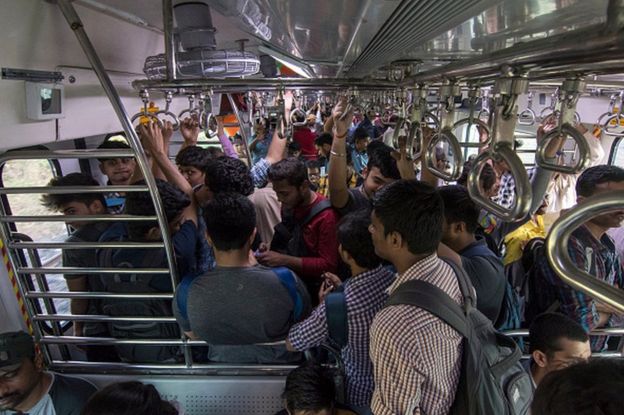
People travel in Central Railway's first air-conditioned EMU local train, on January 30, 2020, in Mumbai, India.Image copyright GETTY IMAGES
Image caption Mumbai’s suburban train network carries eight million passengers a day
  • Neighbouring Pakistan has almost twice as many confirmed cases – 878 as of Monday evening. Sweeping restrictions are in place although the government has stopped short of imposing a nationwide lockdown. However, several provinces have announced them independently. The army is being brought in to help enforce the restrictions.
  • Bangladesh, which has reported 33 cases and three deaths, is also deploying its armed forces to help maintain social distancing and boost Covid-19 preventive measures. The soldiers will also monitor thousands of quarantined expatriate returnees. Across South Asia, there are concerns that the actual number of cases could be much higher than is being reported.
  • Indonesia, which has 49 confirmed Covid-19 deaths – the highest in South-East Asia – has converted an athlete’s village built for the 2018 Asian Games into a makeshift hospital for coronavirus patients. A state of emergency was declared in Jakarta on Monday.
  • In Thailand, a month-long state of emergency which will include curfews and checkpoints will begin on Thursday. The government has been criticised for failing to take strong action so far. Four people have died and nearly 900 tested positive.
  • Talks between the Japanese PM and the International Olympic Committee are expected this evening.
  • The most populous country that was without a case until now – Myanmar – has announced two cases.

Europe’s battle against virus intensifies

UK Prime Minister Boris Johnson announced on Monday night that, with immediate effect, “people will only be allowed to leave their home…for very limited purposes”. They include shopping for basic necessities, taking one form of exercise per day, fulfilling any medical need, or travelling to work if working from home is impossible.
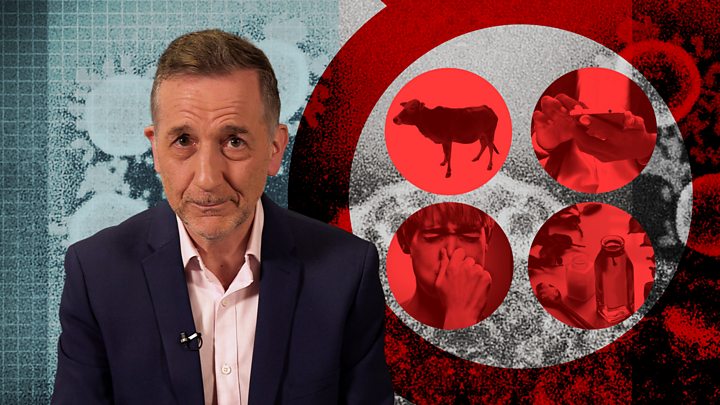
Media caption Reality Check tackles misleading health advice being shared online

The number of people who have died in the UK rose to 335 on Monday.

In Italy, the worst-hit country in the world, the authorities said 602 people with Covid-19 had died in the past 24 hours, bringing the total death toll there to 6,077.

But the daily increase in cases was the smallest since Thursday, raising hope that the stringent restrictions imposed by the government were starting to have an effect.

Spain, however, said on Tuesday that its death toll had risen by 514 to 2,696. Nearly 40,000 are infected, about 5,400 of them healthcare workers.
Source: The BBC

25/03/2020

Coronavirus: India enters ‘total lockdown’ after spike in cases

People panicked after the prime minister said everyone should “forget about” leaving their homes for any reason

India’s Prime Minister Narendra Modi has imposed a nationwide lockdown in an attempt to slow the spread of the coronavirus.

The restrictions came into force at midnight local time (18:30 GMT) and will be enforced for 21 days.

“There will be a total ban on venturing out of your homes,” Mr Modi said in a televised address.

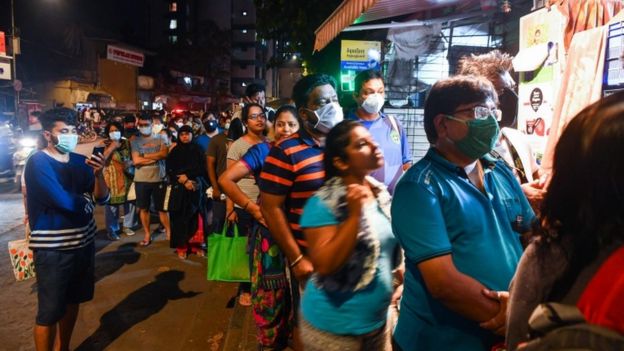
He appealed for people not to panic – but crowds quickly mobbed stores in the capital, Delhi, and other cities.

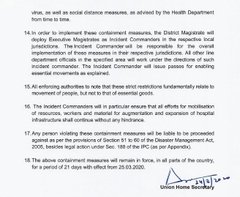
Correspondents say it is not clear how – or even if – people will now be allowed out to buy food and other essentials.

The new measures follow a sharp increase in cases in recent days. There have been 519 confirmed cases across India and 10 reported deaths.

India – which has a population of 1.3bn – joins a growing list of countries that have imposed similar measures.

Nearly 400,000 people have tested positive for the virus worldwide, and around 17,000 have died.

Banner image reading 'more about coronavirus'
Banner

“The entire country will be in lockdown, total lockdown,” Mr Modi said on Tuesday.

He added: “To save India, to save its every citizen, you, your family… every street, every neighbourhood is being put under lockdown.”

Mr Modi warned that if India does not “handle these 21 days well, then our country… will go backwards by 21 years”.

“This is a curfew,” he said. “We will have to pay the economic cost of this but [it] is the responsibility of everyone.”

Media caption We explain why staying in is a matter of life and death

Mr Modi later warned that panic-buying would only spread the disease. He said the government would ensure supplies.

But in Delhi and the financial capital, Mumbai, people fearing shortages quickly thronged shops and pharmacies.

“I have never witnessed such a chaos in my life,” the owner of one store in the Shakarpur district of Delhi said, quoted by the Press Trust of India.

“All our stocks, including rice, flour, bread, biscuits, edible oils, have been sold out.”

Police in the busy city of Ghaziabad, in Uttar Pradesh state, patrolled the streets with megaphones to tell residents to stay indoors.

People line up outside a store in Mumbai on March 24, 2020.Image copyright AFP
Image caption People in Mumbai rushed to stock up on essentials following Mr Modi’s address

Under the new measures, all non-essential businesses will be closed but hospitals and other medical facilities will continue to function as normal. Schools and universities will remain shut and almost all public gatherings will be banned.

Anyone flouting the new rules faces up to two years in prison and heavy fines.

In his address, Prime Minister Modi also:

  • Stressed that the 21-day lockdown was “very necessary to break the chain of coronavirus”
  • Emphasised the seriousness of the situation and said that even developed countries had faced problems in combating it
  • Said that “social distancing was the only way to stop” the virus spreading
  • Announced that nearly $2bn (£1.8bn) would be made available to boost the country’s health infrastructure
  • Called on people not to “spread rumours” and to follow instructions

His announcement came after several Indian states introduced measures of their own, such as travel restrictions and the closure of non-essential services.

India has already issued a ban on international arrivals and grounded domestic flights. The country’s rail network has also suspended most passenger services.

Presentational grey line
Analysis box by Rajini Vaidyanathan, South Asia correspondent

Many parts of India, including cities such as Delhi and Mumbai, are already under tight restrictions. But this move extends those provisions to every corner of the country.

An earlier one-day curfew, which was seen as a trial, was flouted by many.

Mr Modi called on Indians to clap and cheer the emergency services from their balconies on Sunday. But many misunderstood the call and congregated in the streets as they danced and chanted.

“It’s impossible to fathom the cost that India may have to pay if such irresponsible behaviour continues,” Mr Modi warned at the time. “Social distancing is the only option to combat coronavirus.”

The implications of a total lockdown in India are huge, not just economically, but socially.

This is a nation where community is everything. Going to worship at a temple, mosque or church is an essential part of daily life for so many.

This is a seismic cultural shift but – like the rest of the world facing similar restrictions – a necessary one.Presentational grey line

What’s the latest from around Asia?

  • Neighbouring Pakistan has almost twice as many confirmed cases – 878 as of Monday evening. Sweeping restrictions are in place although the government has stopped short of imposing a nationwide lockdown. However, several provinces have announced them independently. The army is being brought in to help enforce the restrictions
  • Bangladesh, which has reported 33 cases and three deaths, is also deploying its armed forces to help maintain social distancing and boost Covid-19 preventive measures. The soldiers will also monitor thousands of quarantined expatriate returnees. Across South Asia, there are concerns that the actual number of cases could be much higher than is being reported.
  • Indonesia, which has 49 confirmed Covid-19 deaths – the highest in South East Asia – has converted an athlete’s village built for the 2018 Asian Games into a makeshift hospital for coronavirus patients. A state of emergency was declared in Jakarta on Monday
  • In Thailand, a month-long state of emergency which will include curfews and checkpoints will begin on Thursday. The government has been criticised for failing to take strong action so far. Four people have died and nearly 900 tested positive
  • The most populous country that was without a case until now – Myanmar – has announced two cases

And what about the rest of the world?

  • Elsewhere, governments are continuing to work to stem the spread of the virus which has now affected more than 190 countries worldwide
  • More than 2.6 billion people are in lockdown now India has introduced its new measures, according to a tally by the AFP news agency
Media caption Reality Check tackles misleading health advice being shared online
  • Europe remains at the epicentre of the pandemic. On Tuesday, the death toll jumped by 514 in a single day in Spain and other European countries also reported sharp increases
  • Italy is the worst affected country in the world in terms of deaths. The virus has killed almost 7,000 people there over the past month
  • The UK, meanwhile, is spending its first day under tight new restrictions. Prime Minister Boris Johnson announced unprecedented measures on Monday and ordered the immediate closure of shops selling non-essential goods
  • And in the US, New York’s governor has said the federal government is not sending enough equipment to combat the crisis. The state has been hit especially hard by the virus
  • The World Health Organization (WHO) has warned that the US has the potential to become the new epicentre of the pandemic
  • In other developments, Japanese Prime Minister Shinzo Abe said the International Olympic Committee has agreed that the 2020 Tokyo Olympics should be postponed by a year
  • Source: The BBC
15/02/2019

Seizing on Huawei’s troubles, Samsung bets big on network gear

SEOUL (Reuters) – Samsung Electronics is pouring resources into its telecom network equipment business, aiming to capitalize on the security fears hobbling China’s Huawei, according to company officials and other industry executives.

Those efforts include moving high-performing managers and numerous employees to the network division from its handset unit, two Samsung sources said.
Potential customers are taking notice of Samsung’s efforts to reinvent itself as a top-tier supplier for 5G wireless networks and bridge a big gap with market leader Huawei and industry heavyweights Ericsson and Nokia.
French carrier Orange’s chief technology officer, Mari-Noëlle Jégo-Laveissière, visited Japan last year and was impressed with the pace of 5G preparations using alternative equipment makers including Samsung, a company representative told Reuters.

Orange, which operates in 27 markets and counts Huawei as its top equipment supplier, will run its first French 5G tests with Samsung this year.

Underscoring the growing importance of the business, South Korean Prime Minister Lee Nak-yeon visited Samsung’s network division in January. In a closed-door meeting during that visit, Samsung heir Jay Y. Lee asked for government help with recruiting high-level engineers.
Huawei is battling allegations by the United States and some other Western countries that its equipment could enable Chinese spying and should not be used in 5G networks, which will offer higher speeds and a host of new services.
Australia and New Zealand have joined the United States in effectively barring Huawei from 5G, and many other countries, especially in Europe, are considering a ban. Huawei denies that its gear presents any security risk.
Its woes have presented Samsung with a rare opportunity. Telecom firms would ordinarily stick with their 4G providers for 5G upgrades as they can use existing gear to minimize costs, but many firms may now be under political pressure to switch.

“We’re bolstering our network business to seize market opportunities arising at a time when Huawei is the subject of warnings about security,” said one of the Samsung sources.

The sources, who did not disclose specific figures for the employee moves, declined to be identified as they were not authorized to speak on the matter.

Keen to seek new growth, particularly as sales of its mainstay chips and smartphones have begun to drop, Samsung plans to invest $22 billion in 5G mobile technology and other fields over three years. It declined to break down how much will go to 5G and the other areas – artificial intelligence, biopharma and automotive electronic parts.

“Samsung is focused on building trust with our partners and leading the global 5G markets, regardless of other companies,” it said in an emailed statement to Reuters.

Asked about Samsung’s big push into network equipment, Huawei said in a statement that it welcomed competition in the market.

INDIA OPPORTUNITY

In India, Samsung is now in talks with Reliance Jio to upgrade its network to 5G, looking to build on what has perhaps been its biggest network success – becoming the key supplier for the upstart carrier.

“We don’t think 5G is far away in India,” a Samsung official with direct knowledge of the matter told Reuters. He declined to be named due to the sensitivity of the matter.

Samsung’s clients include U.S. firms AT&T Inc, Verizon Communications Inc and Sprint Corp and it has 5G network contracts with all three, though it was not clear how extensive those contracts are. It also sells to South Korean carriers and has partnered with Japanese mobile carriers to test its 5G equipment.

In many cases, Samsung supplies only small pieces of networks. According to market tracker Dell’Oro Group, the South Korean firm holds just 3 percent of the global telecom infrastructure market compared with 28 percent for Huawei.

Its network business made 870 billion won ($775 million) in operating profit last year, according to Eugene Investment & Securities. Filings show Nokia’s network business made about 1.2 billion euros ($1.4 billion) while Ericsson’s network operations made 19.4 billion Swedish crowns ($2.1 billion). Figures for Huawei were not available.

FINDING THE PEOPLE

One major hurdle for Samsung will be attracting talent amid a dearth of software engineers in South Korea.

“We need more software engineers and want to work with the government to find that talent,” Lee was quoted as saying by government officials at his meeting with the prime minister.

Samsung’s network business unit employs roughly 5,000 people, according to a government official in the southern city of Gumi where Samsung operates its manufacturing plants.

Kim Young-woo, an analyst at SK Securities, expects Samsung to hire 1,000-1,500 people for 5G network equipment this year. Samsung declined to comment on network employee levels and hiring plans.

But Samsung’s bet remains risky as the long-term nature of telecom network investment means change comes slowly.

Sweden’s Ericsson and Finland’s Nokia, which acquired the remnants of once-powerful network equipment companies Alcatel-Lucent and Nortel, have as yet seen little sales growth from Huawei’s problems, company executives said.

Both are in cost-cutting mode, even in the face of the 5G opportunity and the problems confronting their biggest rival.

Indeed, some network operators in Europe are warning that a Huawei ban – now under consideration in France, the UK, Germany and other countries – could push back deployment of 5G by as much as three years.

Others warn Samsung may struggle to develop a global sales and support organization.

“The way telcos purchase products and services from their suppliers demand a lot of time and resources, which is why Ericsson and Nokia have around 100,000 employees and Huawei almost twice as many,” said Bengt Nordstrom, CEO of telecom consultancy Northstream.

But Samsung is taking the long view. In December, it agreed to extend its Olympic partnership with the International Olympic Committee through to 2028 and expand its sponsorship to 5G technology.

The company did not want to leave its sponsorship spot open to Chinese rivals, a separate source with knowledge of the matter said.

“If Samsung dropped the top mobile sponsorship for the Olympic games beyond 2020, then who would have taken that spot? It would only have been China, Huawei.”

($1 = 1,122.8000 won)

Source: Reuters

Law of Unintended Consequences

continuously updated blog about China & India

ChiaHou's Book Reviews

continuously updated blog about China & India

What's wrong with the world; and its economy

continuously updated blog about China & India