23/06/2019
- Leader will arrive on Thursday, ahead of G20 summit in Osaka, foreign ministry says
- He is expected to hold talks with Donald Trump on sidelines of meeting
China has confirmed that President Xi Jinping will travel to japan this week. Photo: AFP
China on Sunday confirmed that President Xi Jinping will attend the G20 summit in Osaka this week.
Xi will spend three days in Japan – his first visit to the country since coming to power in 2013 – the foreign ministry said.
He will travel to Japan on Thursday and is expected to meet his US counterpart Donald Trump on the sidelines of the meeting of leading and emerging economies, which runs from Friday to Saturday, it said.
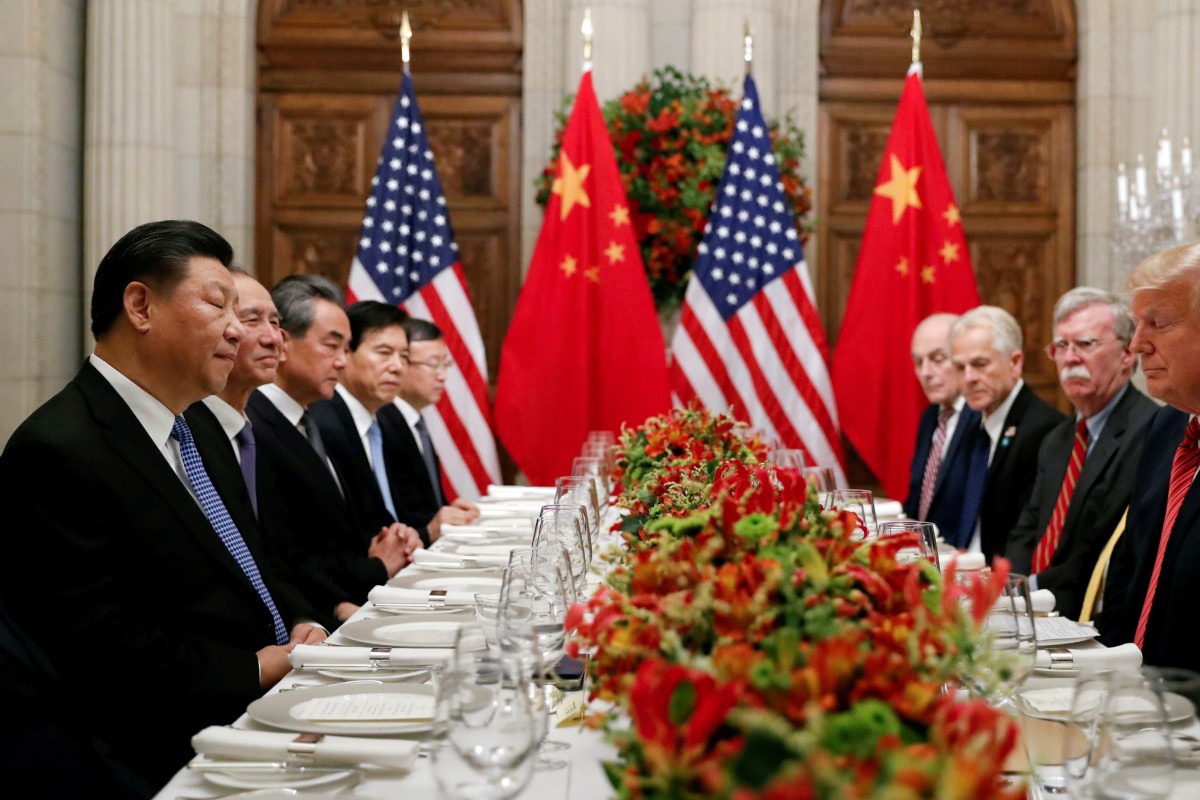
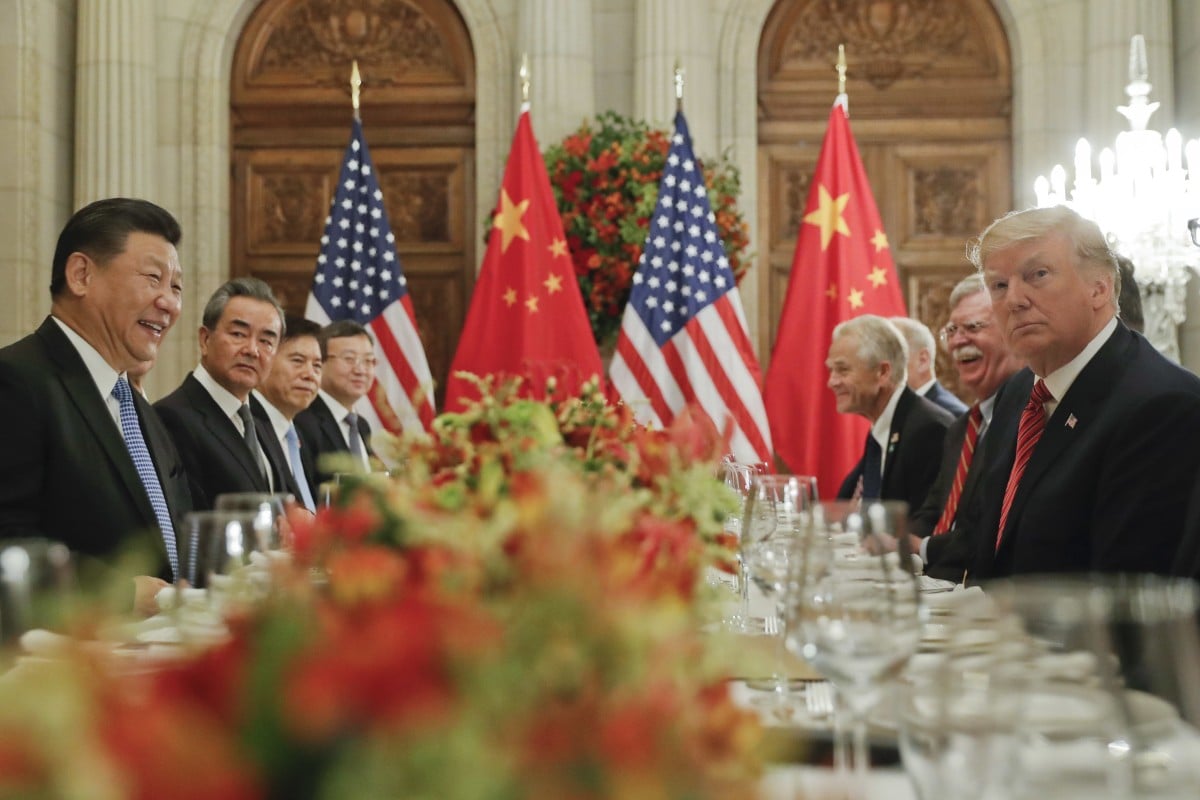
It is possible the pair will hold formal negotiations over dinner, as they did in Argentina in December at the last G20 summit.
Presidents Xi and Trump are expected to hold talks over dinner, as they did in Argentina in December. Photo: Kyodo
On Saturday, People’s Daily, the mouthpiece of China’s Communist Party said in a commentary that the trade war between China and the US could be resolved only through “equal conversation”.
“For the talks to resume … the key is to address the primary concern of the other side. The tariffs already in place must be revoked,” it said.
Trade deal ‘within reach if Xi and Trump show courage’
Meanwhile, state broadcaster CCTV on Friday criticised Washington’s decision to add five Chinese companies to its list of entities considered a threat to national security.
“The US made this move to put more pressure China ahead of the trade talks,” it said, adding that it might produce a result opposite to the one desired by Washington.
The report came after the US commerce department said it had added five Chinese firms that manufacture supercomputers and their components to the entity list, restricting their ability to do business with the US.
The blacklist effectively bars American firms from selling technology to the Chinese organisations without government approval. Last month, the commerce ministry added telecoms giant
to the list, heightening tensions with Beijing.
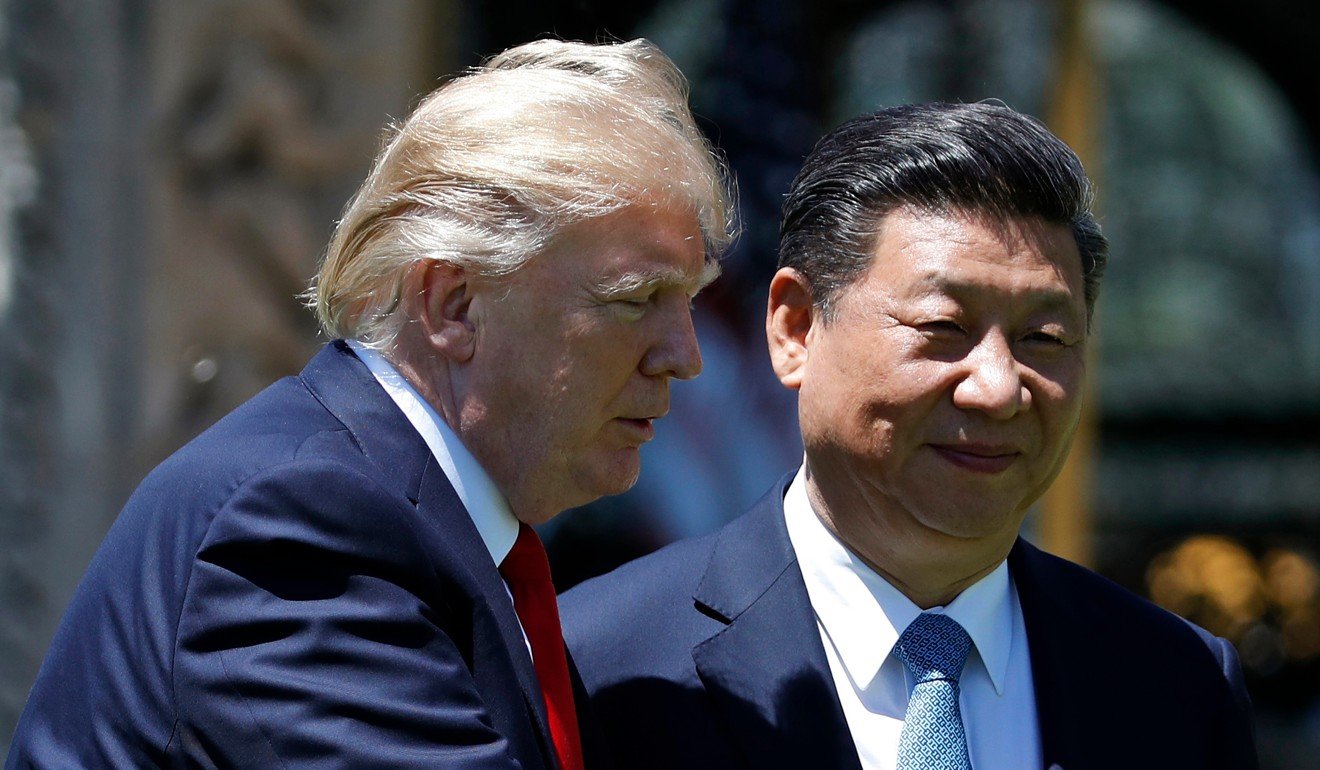
Xi told Trump on Tuesday he was willing to meet in Japan. Photo: AP
In a telephone conversation on Tuesday, Xi told Trump he was willing to meet in Japan and said he “agreed that the two countries’ trade delegations should keep communications going to solve their differences”, CCTV reported.
Kong Xuanyou, China’s new envoy to Japan, said on Friday that he hoped Xi would make an official visit to the country soon, ideally during the cherry blossom season next spring. The foreign ministry statement made no mention of such a visit.
Source: SCMP
Posted in CCTV, China confirms, China’s new envoy to Japan, Commerce Ministry, equal conversation, Foreign Ministry, G20 summit, Huawei, Japan, mouthpiece of China’s Communist Party, Osaka, People’s Daily, President Donald Trump, President Xi Jinping, revoked, tariffs, three-day trip, Uncategorized, Washington |
Leave a Comment »
19/06/2019
- Osaka summit intended to pull bilateral ties away from brinkmanship that has dragged relations to lowest point in decades
- Trade war just one of the items on the agenda, analysts say, along with principles of relationship, North Korea, and Huawei
The last time the US President Donald Trump and China’s President Xi Jinping met was in Buenos Aires in December. Analysts are confident that their meeting at the G20 Summit in Osaka this month can yield a freeze in the escalation of the trade war. Photo: Reuters
When Chinese President Xi Jinping meets his US counterpart Donald Trump in Japan at the end of the month they are expected to discuss a broad range of issues, including the trade war, in an effort to stop the relationship from tilting towards sustained confrontation, analysts said.
Neither side has provided an agenda for the meeting on the sidelines of the G20 leaders summit in Osaka, despite confirmation coming from both sides that it was to take place, after weeks of speculation.
A summary of Tuesday’s phone conversation between Xi and Trump published by Xinhua, however, implied that the leaders would cover more strategic issues, leaving the nuts and bolts of a trade deal to their negotiating teams. Meanwhile, China’s foreign ministry spokesperson Lu Kang said at a regular press conference on Wednesday that the two leaders would discuss the overall direction of bilateral relations, but he did not elaborate further.
Both China and the United States have confirmed that their leaders will meet in Osaka at the end of June, at a time when US-China relations have nosedived. Photo: AP
, a former vice-minister at China’s Ministry of Commerce, predicted that Beijing would use the meeting to make clear a few principles regarding the bilateral relationship.
“It’s inevitable [for China and the US] to have problems in certain fields, but both sides should resolve the problems through dialogue on an equal footing rather than opting for a trade war, a tech war, or a financial war,” said Wei, now a vice-chair at the state-backed China Centre for International Economic Exchanges, a think tank.
He added that China would try to convince the US that it had no intention of challenging its global hegemony, but that China’s own “core interests”, including its sovereignty, territorial rights and room to develop, “must be respected”.
A government official in Beijing, who declined to be identified, said China was pinning its hopes on the leaders’ summit to ease general tensions between Beijing and Washington, even though the chances of the leaders reaching any concrete agreements in Osaka was small.
“Without a leaders’ summit, it would be difficult to push ahead the work [to reach agreements] at the ministerial or lower levels,” the source said.
Wei Jianguo, a former vice-minister at China’s Ministry of Commerce, predicted that Beijing would use the meeting to make clear a few principles regarding the bilateral relationship. Photo: Handout
The last summit between Trump and Xi in Buenos Aires in December resulted in a tariff truce and negotiations that continued until early-May. But the talks failed to achieve a deal to end the conflict, resulting in the US more than doubling tariffs on US$200 billion of Chinese imports and threatening tariffs on almost all remaining Chinese imports, valued at US$300 billion by the US government.
Tuesday’s telephone call, in which
he was willing to exchange views with Trump on “the fundamental issues” affecting China-US relations, came at a low point in recent China-US relations.
The tariff increase followed the collapse of trade talks in early-May, while hostile rhetoric has spread into the political and military spheres. The US labelled China a “strategic competitor” and accused Beijing of conducting sustained espionage to impede US’s national security, while China blamed the US for trying to thwart China’s development by targeting Huawei and infringing on China’s sovereignty over Taiwan and Hong Kong.
Zhou Rong, a senior fellow from the Chongyang Institute for Financial Studies at the Renmin University of China, said the two leaders have a long list of issues to talk about this time in addition to trade, including Taiwan, the South China Sea, as well as the treatment of Chinese companies in the US. China can offer to help on some issues but “the US should not force China to swallow bitter fruit it cannot digest”, Zhou said.
Ni Feng, a specialist in Sino-US relations at the Chinese Academy of Social Sciences, said they would discuss the “overall direction” of their bilateral relationship, including where the two nations could engage in “competition and cooperation”.
He added that North Korea may be on the agenda because “China and the US share the same goal of the denuclearisation of the Korean peninsula.”
a two-day state visit to Pyongyang on Thursday.
Another source in the Chinese government, who wished to remain anonymous, said Xi was very likely to bring up the US’ blacklisting of Huawei, China’s leading technology firm. Washington has effectively banned American companies from providing key components to the Shenzhen-based company.
Meng Wanzhou, Huawei’s chief financial officer and the daughter of founder Ren Zhengfei, is currently on bail in Canada awaiting extradition to the US to face charges that both she and Huawei violated US sanctions on Iran.
During Tuesday’s call, Xi told Trump that China “hopes the US side can treat Chinese businesses fairly”, Xinhua reported.
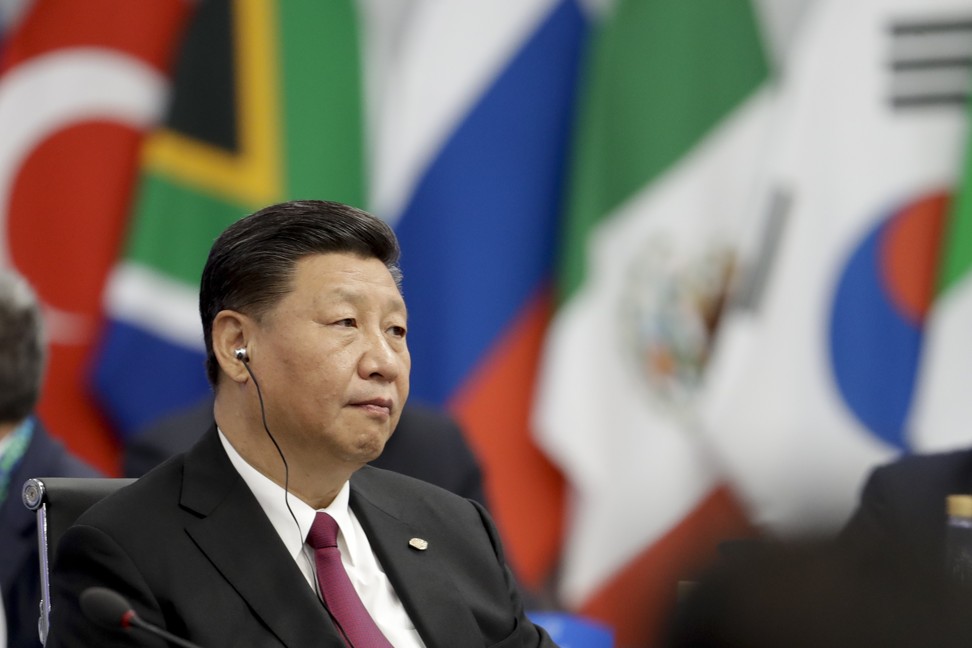
China’s President Xi Jinping waits for the start of the G20 summit in Buenos Aires, Argentina, Friday, Nov. 30, 2018. Photo: AP
At the same time, Trump and Xi agreed that the two countries’ trade negotiators would start to talk again before the meeting in Japan, raising prospects for a second truce in the trade war, or even a deal to end the conflict.
Matthew Goodman, a researcher at the Centre for Strategic and International Studies in Washington, wrote in a note that a Trump-Xi deal on trade-in Osaka “is certainly possible”.
The most likely outcome is similar to the one reached in Buenos Aires in December last year, when Trump and Xi “agreed to a temporary truce while trade negotiators work to hammer out a deal”, Goodman wrote. “This would postpone the worst effects of the current escalation but is unlikely to solve the deepening and dangerous rift in US-China relations”.
The South China Morning Post previously reported that the Osaka summit meeting, which is likely to take place on Saturday June 29, could also be a sit-down dinner between Trump, Xi and their top economic and security aides, as occurred in Buenos Aires. Trump tweeted Tuesday night that he would have an “extended” meeting with Xi in Japan.
Source: SCMP
Posted in Beijing, broaden agenda, Buenos Aires, Centre for Strategic and International Studies, China Centre for International Economic Exchanges, China’s Ministry of Commerce, Chinese Academy of Social Sciences (CASS), Chongyang Institute for Financial Studies, G20 summit, Japan, North Korea, Osaka, President Donald Trump, President Xi Jinping, south china morning post, Uncategorized, US-China trade war, Washington |
Leave a Comment »
17/06/2019
- It is expected the two leaders will meet in Japan at the end of June
- Analysts see an increasing caution from China amid low expectations of any deal
Chinese President Xi Jinping and US President Donald Trump last met in Argentina in December on the sidelines of the G20 summit. Photo: AP
China’s relative silence in response to comments by US President Donald Trump in relation to the trade war is due to Beijing redoubling its efforts to take a cautious approach ahead of future talks amid “low expectations” of a quick deal after negotiations collapsed last month, analysts said.
Trump has openly threatened to levy tariffs on additional Chinese products if a meeting with counterpart Xi Jinping does not take place at the G20 summit in Japan at the end of the month, while also urging Beijing to return to talks based on terms negotiated earlier in the year.
“It’s me right now that’s holding up the deal,” Trump said on Tuesday. “And we’re going to either do a great deal with China or we’re not going to do a deal at all.”
China, though, has remained tight-lipped on both a meeting and also the prospects of future talks, with the foreign ministry yet to confirm whether there will be a summit between
in Osaka. The South China Morning Post reported this week that the two leaders could share a more formal dinner, similar to the scene witnessed on the sidelines of the G20 summit in Argentina in December.
That meeting produced a ceasefire and more than five months of negotiations until early May when the talks broke down and the US more than doubled tariffs on US$200 billion in Chinese imports to 25 per cent.
Shi Yinhong, an international relations expert from Renmin University of China, said China had very low expectations ahead of the G20 summit in Japan due to the current level of strained bilateral relations.
Trump’s open threats had put Xi “in a very disadvantageous position”, as any agreement “would be seen as being weak or surrendering to US pressure”, he said.
Instead, the two sides were likely to reach “piecemeal deals” on smaller issues such as people-to-people exchanges and relaxation of visa restrictions, according to Shi, which in turn might help to build a friendlier atmosphere to pave the way for more substantive talks in the future.
It’s me right now that’s holding up the deal. And we’re going to either do a great deal with China or we’re not going to do a deal at all: Donald Trump
China’s state-controlled media outlets have maintained their criticism of the US for starting the trade war, although editorials carried by Xinhua and the People’s Daily have not given concrete information about Beijing’s demands, instead, in its latest editorial, Xinhua urged “US politicians to treat China’s rise with reasonable sense”.
Geng Shuang, a foreign ministry spokesman, said last week that China was aware of hopes emerging from the US side of a meeting between Trump and Xi in Osaka, but that China had no information to disclose on that subject, reiterating government statements from previous days.
Amid a war of words between Beijing and Washington over which side is to blame for the stalled trade talks, both sides have showcased their willingness to talk as long as the conditions are appropriate. Commerce vice-minister Wang Shouwen said at the start of June that China “is always sincere” about negotiating with the US, but the talks must be conducted with mutual respect.
“Otherwise, the negotiation would be meaningless. Even if there’s negotiation, there won’t be an enforceable and sustainable agreement,” Wang said.
Xi said at an economic forum in Russia last week that he did not want to see a decoupling of the US and China and believed that “my friend” Trump did not want that either.
“Trump’s stance that he is unlikely to make any concessions is very clear. So, China should be very cautious when arranging a bilateral meeting with him,” said Liu Weidong, a China-US affairs expert from the Chinese Academy of Social Sciences, a state think tank
Scott Kennedy, a senior adviser at the Centre for Strategic and International Studies in Washington, said Trump and Xi may reach “some sort of truce” as they did in Buenos Aires so that “both sides agree to put on hold their various actions against the other and not further escalate”, but added that the chance was small.
Source: SCMP
Posted in Argentina, Beijing, Chinese Academy of Social Sciences, Chinese President Xi Jinping, fiery rhetoric, G20 meeting, Japan, Osaka, President Donald Trump, Renmin University of China, south china morning post, trade talk demands, Uncategorized, Washington |
Leave a Comment »
15/06/2019
- In the last half of the 20th century US worries about a rising Japan led to tariffs and technology mistrust
- Differences in the Chinese experience may predict a different outcome
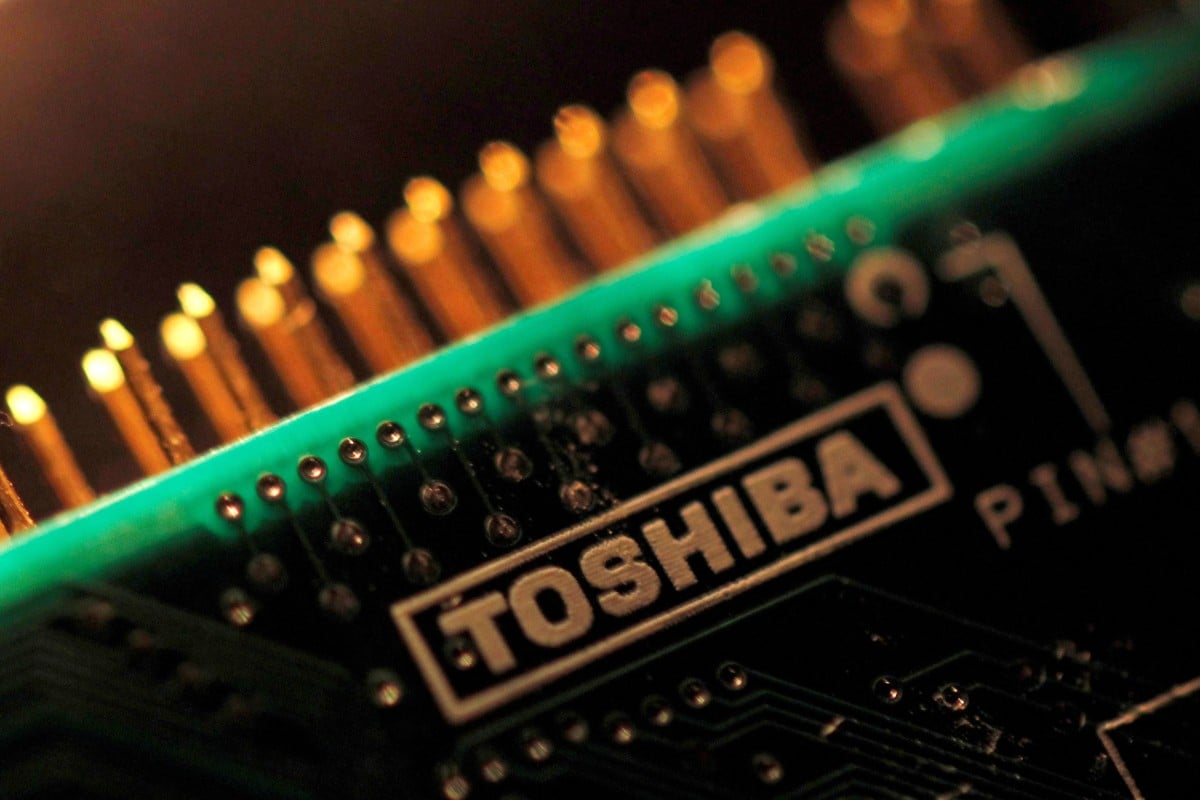
Toshiba was one of the companies affected by US actions to prevent the rise of Japan in a trade war that echoes in today’s tensions between the US and China. Photo: Reuters
If history is a mirror to the future, the similarities between the spiralling technology stand-off between China and the US and the economic wars waged by the US with Japan – which peaked in the 1980s and 1990s – may be instructive. But there are differences between the two which may predict a different outcome.
The US-Japan economic tensions started in the 1950s over textiles, extended to synthetic fibres and steel in the 1960s, and escalated – from the 1970s to 1990s – to colour televisions, cars and semiconductors, as Japan’s adjusted industrial policy and technology development moved it up the industrial chain.
Boosted by government support, Japan’s semiconductor industry surpassed the US as the world’s largest chip supplier in the early 1980s, causing wariness and discontent in the US over national security risks and its loss of competitiveness in core technologies.
The Reagan administration regarded Japan as the biggest economic threat to the US. Washington accused Tokyo of state-sponsored industrial policies, intellectual property theft from US companies, and of dumping products on the American market.
The US punished Japanese companies for allegedly stealing US technology and illegally selling military sensitive products to the Soviet Union. It also forced Japan to sign deals to share its semiconductor technologies and increase its purchases of US semiconductor products.
“The Trump administration is using similar tactics against China that were used against Japan in the 1980s and 1990s,” said an adviser to the Chinese government, on condition of anonymity, adding that the US was continuing its hegemony to curtail China’s tech development and was trying to mobilise its allies to follow suit.
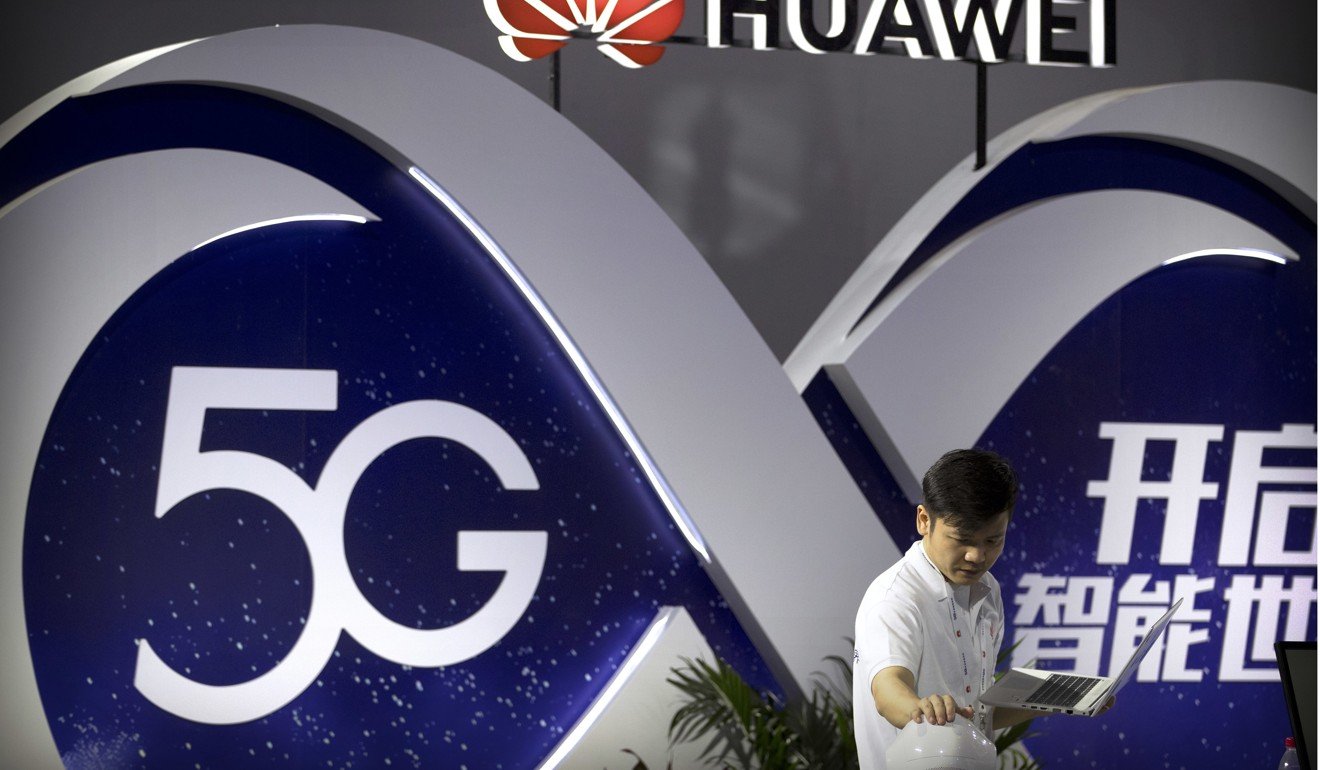
After talks to end the US-China trade faltered last month, Huawei – a global leader in the 5G market – is now standing at centre stage of a protracted technology stand-off between Beijing and Washington, which has grown increasingly wary of the rising competitiveness of Chinese tech companies.
Zhang Monan, a researcher with the Beijing-based China Centre for International Economic Exchanges, does not foresee an easing of the rivalry between the US and China.
“The current US-China conflicts are more complicated than those between the US and Japan,” she said.
“The US will only get more intense in its containment of China and the tech rivalry won’t ease, even if China and the US could reach a deal to de-escalate the trade tensions.”
Huawei is at the centre of a technology stand-off between Beijing and Washington. Photo: AP
Back in 1982, the US justice department charged senior officials at Hitachi with conspiracy to steal confidential computer information from IBM and take it back to Japan. IBM also sued Hitachi. The two companies settled the case out of court and Hitachi paid 10 billion yen (US$92.3 million) to IBM in royalties in 1983, while accepting IBM inspections of its new software products for the next five years.
Toshiba, a major electronics producer in Japan, and Norway’s Kongsberg Vaapenfabrikk secretly sold sophisticated milling machines to the Soviet Union from 1982 to 1984, helping to make its submarines quieter and harder to detect. This transfer of sensitive military technology in the middle of an arms race between the US and the Soviet Union was not revealed until 1986.
The US issued a three-year ban on Toshiba products in 1987 and the company ran full-page advertisements in more than 90 American newspapers apologising for its actions.
In 1985, the US imposed 100 per cent tariffs on Japanese semiconductors. A year later, in its five-year semiconductor deal with the US, Japan agreed to monitor its export prices, increase imports from the US, and submit to inspections by the Office of the United States Trade Representative.
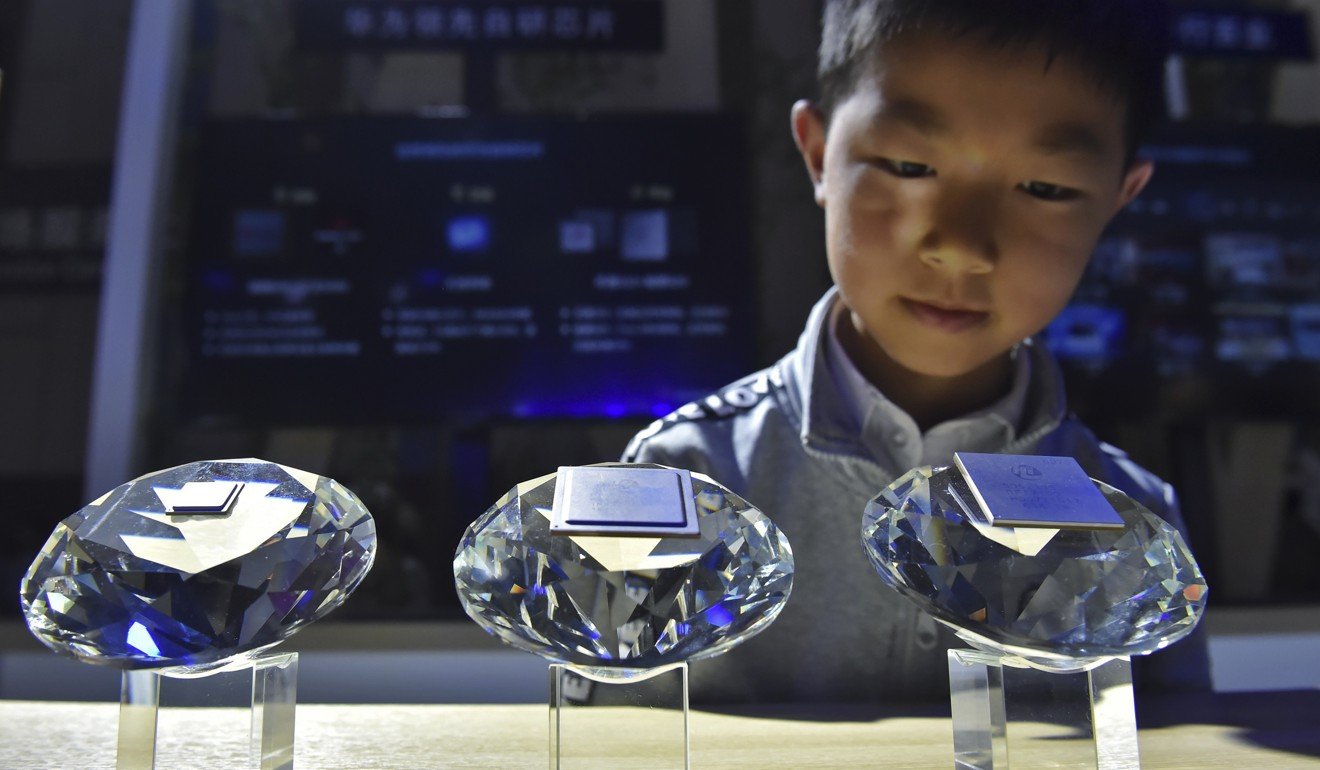
A display of chips designed by Huawei for 5G base stations on show at the China International Big Data Industry Expo. Photo: AP
This was followed by a second five-year semiconductor deal in 1991, in which Japan agreed to double the US market share in Japan to 20 per cent. In yet another bilateral semiconductor deal in 1989 Japan was required to open its semiconductor patents to the US.
Meanwhile, the US government boosted its efforts to help American businesses cement their industrial leverage in the chip sector and unveiled rules to protect its domestic chip industry.
The two countries were irreconcilable in 1996 on how to measure their respective market share. Overall market circumstances had also changed by then, with the US becoming competitive in microprocessing, and South Korea and Taiwan emerging as strong rivals to Japan.
Its dominance in semiconductors lost, Japan reached out to Europe for a range of cooperative technology deals.
Cooperate, don’t confront: academic advises Beijing on trade war tactics
“History can tell that high technology matters greatly to national security strategies. It is not a process of mere market competition. It follows the law of the jungle,” Zhang said.
The US has intensified its investment scrutiny by rolling out the Foreign Investment Risk Review Modernisation Act last year, which extends the regulation to key industrial technology sectors.
Zhang predicted the US would continue to contain China’s technological development in key sectors such as AI, aerospace, robots and nanotechnology – all of which are of great importance to Beijing.
The US has said Chinese tech giants Huawei and ZTE present a national security risk. Last April it cut US supplies to ZTE, citing violations of sanctions against Iran and North Korea. The ban was removed three months later after ZTE paid US$1.4 billion in fines.
It was a wake-up call for China to develop its own core technologies. The subsequent US ban on Huawei added to the urgency to do so, observers said.
Wang Yiwei, a professor in international relations with Renmin University, said China had to develop its own hi-tech know-how while continuing the opening up process.
“China has paid a price to learn whose globalisation it is,” he said.
“We may see some extent of disengagement with the US in technology and dual-use sectors, but China can speed up cooperation with European countries, and other countries such as Israel, to offset the risks from the US.”
In December, the US filed criminal charges against Huawei and its chief financial officer Sabrina Meng Wanzhou, alleging bank fraud, obstruction of justice and technology theft.
The squeeze continued last month with the US blacklisting Huawei, restricting its access to American hi-tech supplies and putting pressure on its allies to freeze the company out of the 5G market. So far, those allies, including Germany and Japan, have remained hesitant about meeting the US request and refrained from siding with either country.
Chinese foreign ministry spokesman Geng Shuang said on Monday that Huawei had obtained 46 commercial contracts in 30 countries as of June 6, “including some US allies and some European countries that the US has been working hard to persuade out of the contracts”.
For Zhang, the differences between Japan’s experience of US concerns of technological advancement and China’s may offer some hope for Chinese ambitions.
“Dependent on US for security protection, Japan was limited in [its ability to] push back and was already a developed country,” she said.
“But China has huge domestic market potential to address the imbalance [between] economic and technology development. This remains a big attraction to multinational companies, which would enable China to integrate into global innovation and technology cooperation, but China has to figure out how to dispel the doubts on its growth model.”
Source: SCMP
Posted in Beijing, China alert, China Centre for International Economic Exchanges, China International Big Data Industry Expo, Foreign Investment Risk Review Modernisation Act, Hitach, Huawei, IB, IBM, iran, Israel, Japan, Japan experience, Kongsberg Vaapenfabrikk, learn, Lessons, North Korea, Norway, Office of the United States Trade Representative, Reagan administration, Renmin University, Toshiba, trade war, Trump administration, Uncategorized, Washington, ZTE |
Leave a Comment »
12/06/2019
- Observers will be watching to see if General Wei Fenghe holds talks with his American counterpart
- Forum comes as Beijing and Washington are at odds over issues ranging from security to trade
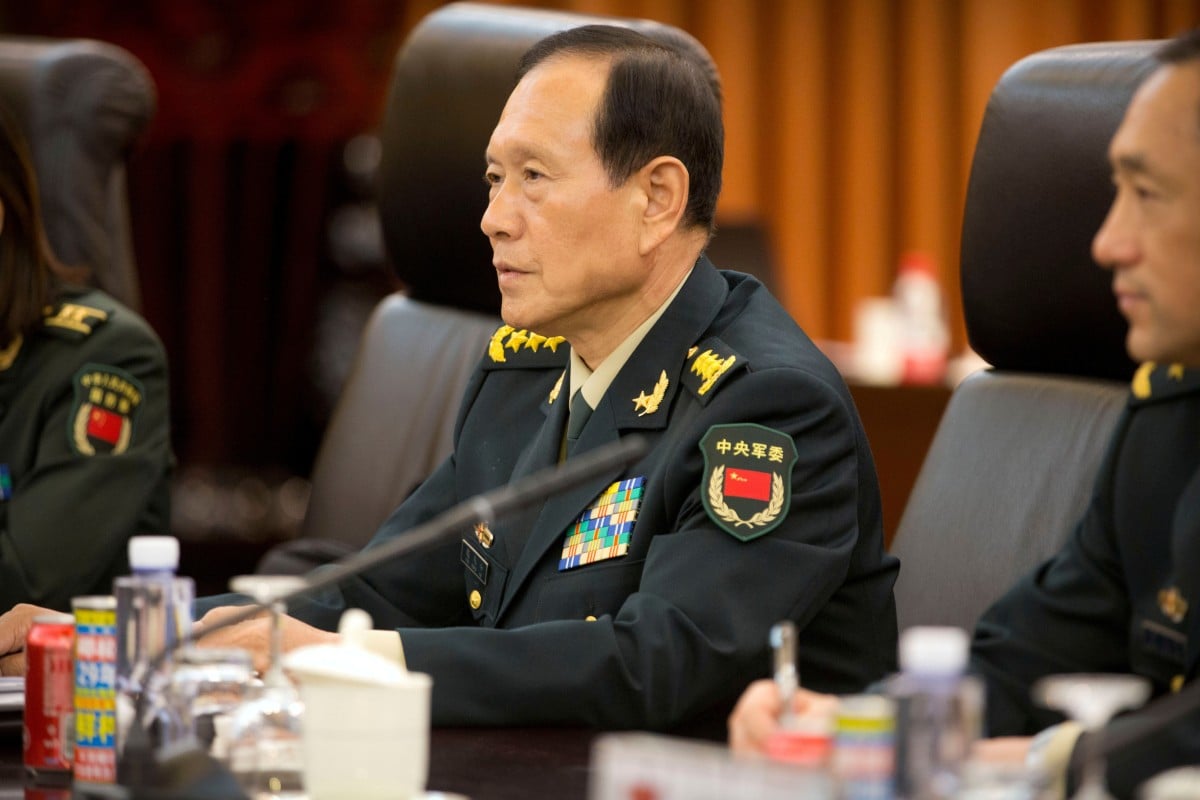
General Wei Fenghe will be the first Chinese defence minister to attend the Shangri-La Dialogue in eight years. Photo: Reuters
China is sending its defence minister to a leading Asian security forum next week, the first time in eight years that a high-ranking Chinese general will represent the country at the conference.
General Wei Fenghe, a State Councillor and China’s defence minister, will speak at the three-day Shangri-La Dialogue in Singapore, a gathering that comes as Beijing and Washington are at odds over issues ranging from security to trade.
“In a highly anticipated speech, General Wei Fenghe will speak on China’s role in the Indo-Pacific at a pivotal time for the region,” the International Institute for Strategic Studies, an organiser of the conference, said on Monday night.
Chinese military sources said that Wei would lead a “relatively big” delegation to the gathering, which starts on May 31 and is co-organised by the Singaporean government.
South China Sea stand-offs ‘a contest of wills’
The last time Beijing sent a high-ranking officer to the event was in 2011 when General Liang Guanglie, then the defence minister, attended.
Acting US secretary of defence Patrick Shanahan will also attend the conference and deliver a speech.
The spoils of trade war: Asia’s winners and losers in US-China clash
Beijing-based military specialist Zhou Chenming said observers would be watching to see whether the two senior defence officials held talks.
“The whole world will keep a close eye on any possible encounters between the Chinese and the Americans … At least now China has shown its sincerity in sending Wei to attend the conference, who is of equal standing as Shanahan, if the latter is willing to hold talks with him in good faith,” Zhou said.
But he said a meeting between Wei and Shanahan would be difficult because of the current distance between Beijing and Washington on major issues.
How Trump’s tweets bested China in the trade war publicity battle
“It’s not realistic to expect they will make a breakthrough because both sides will just sound their own bugles. The … mistrust between China and the US is actually growing every day,” Zhou said.
Just on Sunday, the USS Preble, an Arleigh Burke-class guided missile destroyer, sailed within 12 nautical miles of the Scarborough Shoal, an area in the South China Sea claimed by both China and the Philippines.
The
by strongly urging “the US to stop such provocative actions” and saying it would “take all necessary measures” to protect its “national sovereignty”.
Military analysts said the size of the Chinese delegation at the conference would underscore the importance of the People’s Liberation Army (PLA) attached to the event this year.
One military insider said the delegation would also include Lieutenant General He Lei, former vice-president of the Academy of Military Science, who headed China’s delegation in 2017 and 2018; and Senior Colonel Zhou Bo, director of the defence ministry’s Centre for Security Cooperation. In addition, the PLA would send a number of Chinese academics to speak at various sessions of the forum.
China tries to go one on one with Malaysia to settle South China Sea disputes
Singaporean Prime Minister Lee Hsien Loong will deliver a keynote speech on the opening day of the annual dialogue.
Japan and South Korea are also sending their defence ministers, according to a report by The Korean Times on Tuesday. The report also said South Korean Defence Minister Jeong Kyeong-doo was keen to hold one-on-one meetings with his Chinese and Japanese counterparts on the sidelines of the conference.
Source: SCMP
Posted in Academy of Military Sciences, Beijing, China alert, defence minister, defence ministry’s Centre for Security Cooperation, General Wei Fenghe, guided missile destroyer, Japan, Jeong Kyeong-doo, Lee Hsien Loong, Lieutenant General He Lei, Malaysia, Patrick Shanahan, People's Liberation Army (PLA), Philippines, Scarborough Shoal, Security Conference, Shangri-La Dialogue, Singapore, Singaporean Prime Minister, South China Sea, South Korea, South Korean Defence Minister, State Councillor, tensions, The Korean Times, Uncategorized, US, US secretary of defence, USS Preble, Washington |
Leave a Comment »
12/06/2019
- Radar expert Liu Yongtan says surface wave system could track ships and planes from hundreds of kilometres away and is protected from anti-radiation missiles
Stealth aircraft like the US F-35 are less well protected against high-frequency surface wave radars. Photo: AP
China has developed a radar system that could detect stealth fighters from a long distance, its creator has told state media.
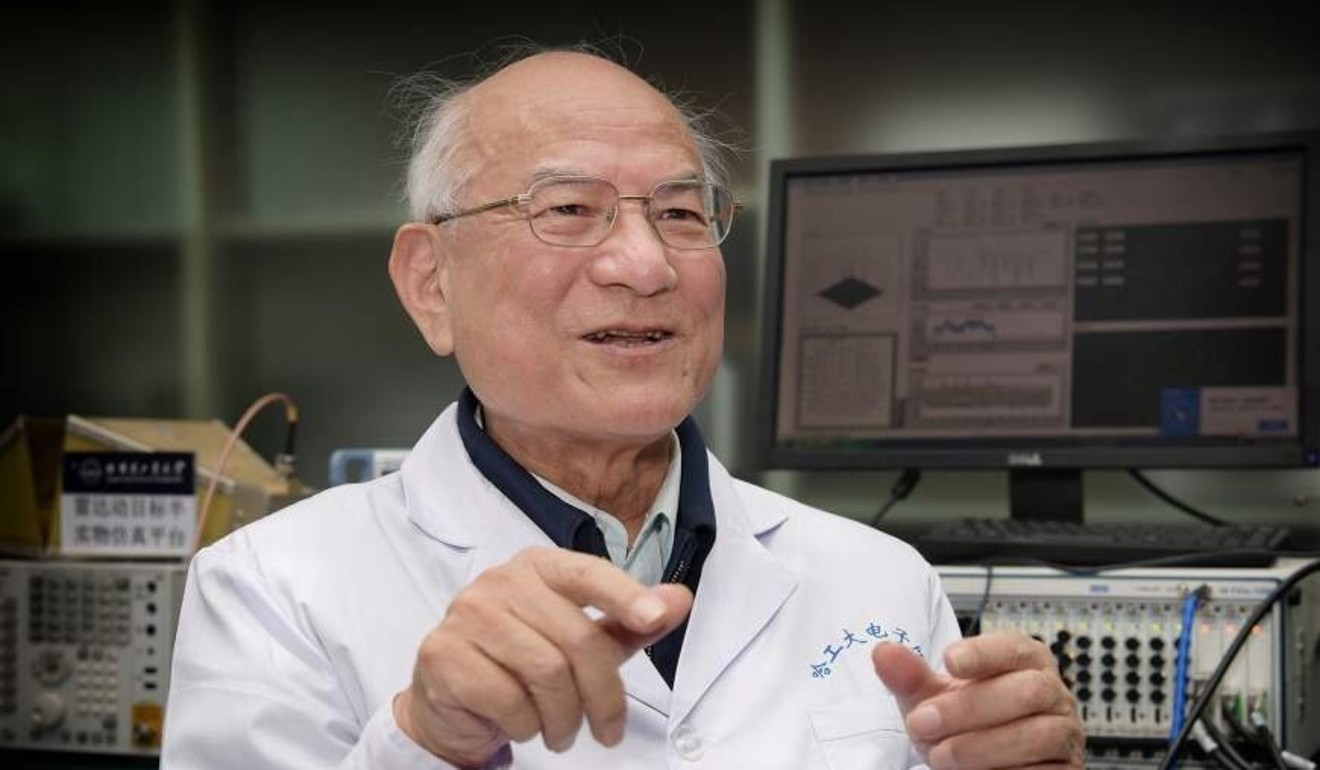
Liu Yongtan, a member of the Chinese Academy of Sciences, told Naval and Merchant Ships that the new high-frequency surface wave radar (HFSWR) was also masked from anti-radiation missiles which can detect and destroy radio waves from other early warning systems.
The interview with the monthly magazine, which is published by the China Shipbuilding Engineering Academy, was reprinted by state-owned tabloid Global Times on Monday.
Liu, an 83-year-old who has dedicated his life to studying radar systems, said the new radar features “high-frequency electromagnetic waves that have long wavelengths and wide beams”.
Unlike microwave or skywave signals, surface waves travel along the spherical surface of the earth.
“A land-based version of the system can detect naval and aerial hostile objects from hundreds of kilometres away, which helps expand the range of China’s maritime early warning and defence systems,” Liu said.
He also said the long wavelength could help detect stealth aircraft, which use special protective materials and designs to make them “invisible” to microwave radars, but have no such protection against high-frequency surface waves.
Chinese navy’s new ‘compact’ radar will allow it to keep watch over an area the size of India
Another advantage of the maritime radar system is what Global Times described as “immunity” to attack from anti-radiation missiles, which track and destroy the origin of the electromagnetic waves.
Liu said that anti-radiation missiles would need huge antennas to track high-frequency surface waves because their beams are too wide for the antennas currently in use to track.
Plenty of practical challenges – such as signal loss and noise interference – need to be overcome to use high-frequency surface waves in radar.
Liu Yongtan was given China’s top scientific honour for his work on the radar. Photo: Weibo
However, Shi Lao, a Shanghai-based military commentator, said Liu’s team must have overcome those challenges.
Shi said he believed that as Liu’s technology developed it could be used as a low-cost coastal monitoring system that could protect the coastline within a range of 400km (250 miles).
Japan boosts island radar surveillance to catch Chinese, North Korean ships
The technology can also be used in conjunction with skywave radar systems, which usually have a longer monitoring range of 1,000km (621 miles).
“HFSWR could work 24 hours in all weathers, which would be much cheaper than operating early warning aircraft,” Shi said.
“They can be deployed relatively quickly with high mobility if they are mounted on vehicles, and may be loaded onto warships in the future.”
State broadcaster CCTV has previously reported that China has built a high-frequency surface wave radar test centre in Weihai, on China’s east coast in Shandong province.
In January
, China’s highest award for scientists which includes prize money of 8 million yuan (US$1.2 million), for his work on the radar system.
Source: SCMP
Posted in antennas, anti-radiation missiles, CCTV, China Shipbuilding Engineering Academy, China’s maritime early warning and defence systems, Chinese Academy of Sciences, Chinese navy, creator, electromagnetic waves, Global Times, high-frequency radar system, high-frequency surface wave radar (HFSWR), India alert, invisible, Japan, long distance, microwave radars, Naval and Merchant Ships, North Korean ships, shandong province, spot, State Pre-eminent Science and Technology Award, stealth aircraft, surface wave system, Uncategorized, Weihai |
Leave a Comment »
09/06/2019
TOKYO, June 9 (Xinhua) — Cai Qi, member of the Political Bureau of the Communist Party of China (CPC) Central Committee and secretary of the CPC Beijing Municipal Committee wrapped up a visit to Japan on Sunday, with both sides expressing willingness to maintain the good momentum of bilateral relations and further enhance cooperation and communication.
At the invitation of the Liberal Democratic Party and the Komeito Party, Cai led a delegation of the CPC to Japan from Thursday to Sunday. During the visit, he met with Secretary-General of the ruling Liberal Democratic Party Toshihiro Nikai and other party leaders and government officials.
Cai said that currently Sino-Japanese relations are returning to the right track and showing positive development momentum. The Chinese side is ready to work with Japan to implement the important consensus reached by the two leaders of the states, strengthen high-level exchanges, enhance political mutual trust, tighten public opinion ties, increase inter-party, local and Olympic exchanges and cooperation, and jointly open up new prospects for bilateral relations.
He also stated China’s stance on the trade frictions between China and the United States, saying that China and Japan should strengthen communication and coordination, jointly address the challenges of protectionism and unilateralism, promote the construction of an open world economy, and make important contributions to promoting the development and prosperity of Asia and the world.
The Japanese side said that Japan attaches great importance to Chinese President Xi Jinping’s upcoming attendance at the G20 Summit in Osaka and hopes to take this opportunity to achieve positive results in promoting free trade and raise bilateral relations to a new level.
Japan is willing to continue to deepen exchanges and cooperation with China in political parties, localities, the Olympics, youth and other fields, and inject new impetus into the improvement and development of bilateral relations, the Japanese side added.
Source: Xinhua
Posted in China alert, Chinese President Xi Jinping, communication, cooperation, express willingness, Japan, Komeito Party, Liberal Democratic Party, member of the Political Bureau of the Communist Party of China (CPC) Central Committee, Olympic exchanges, secretary of the CPC Beijing Municipal Committee, to enhance, Uncategorized |
Leave a Comment »
19/05/2019
- Experts win reprieve for two out of three heritage houses but fear their success is only temporary
- Authorities plan public cultural facilities for the site
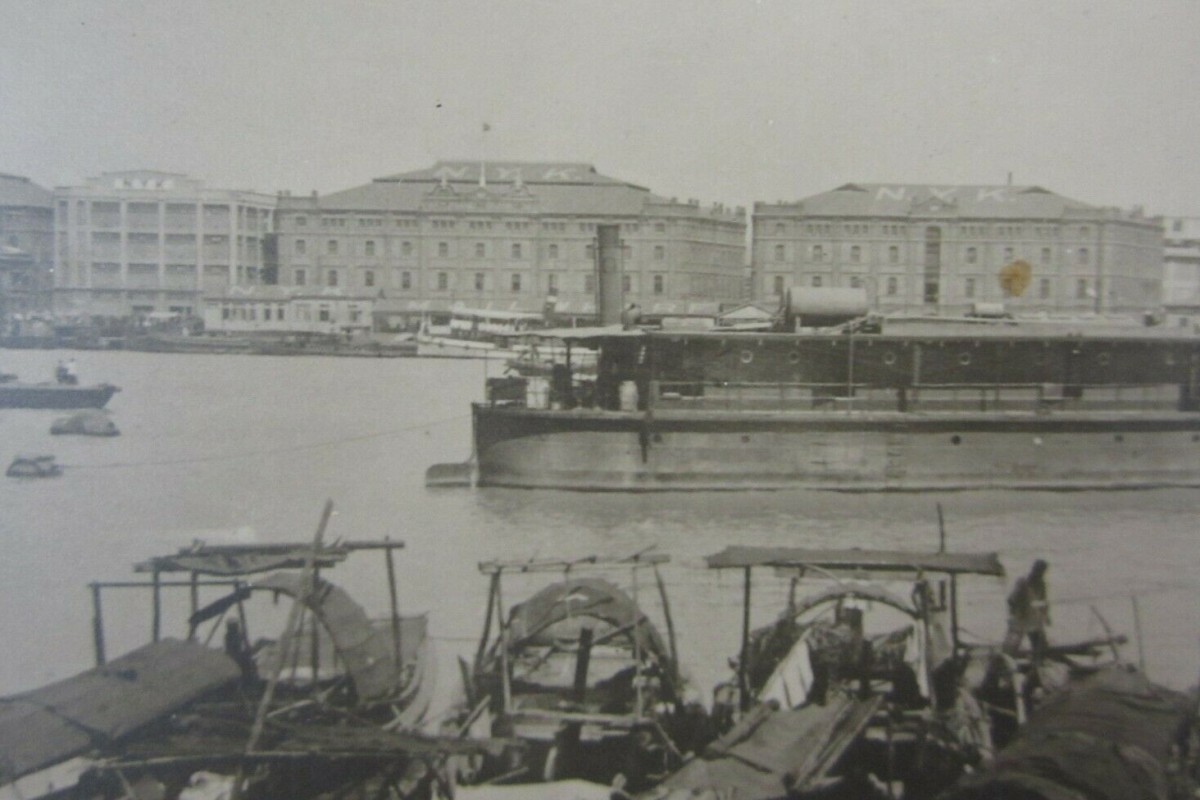
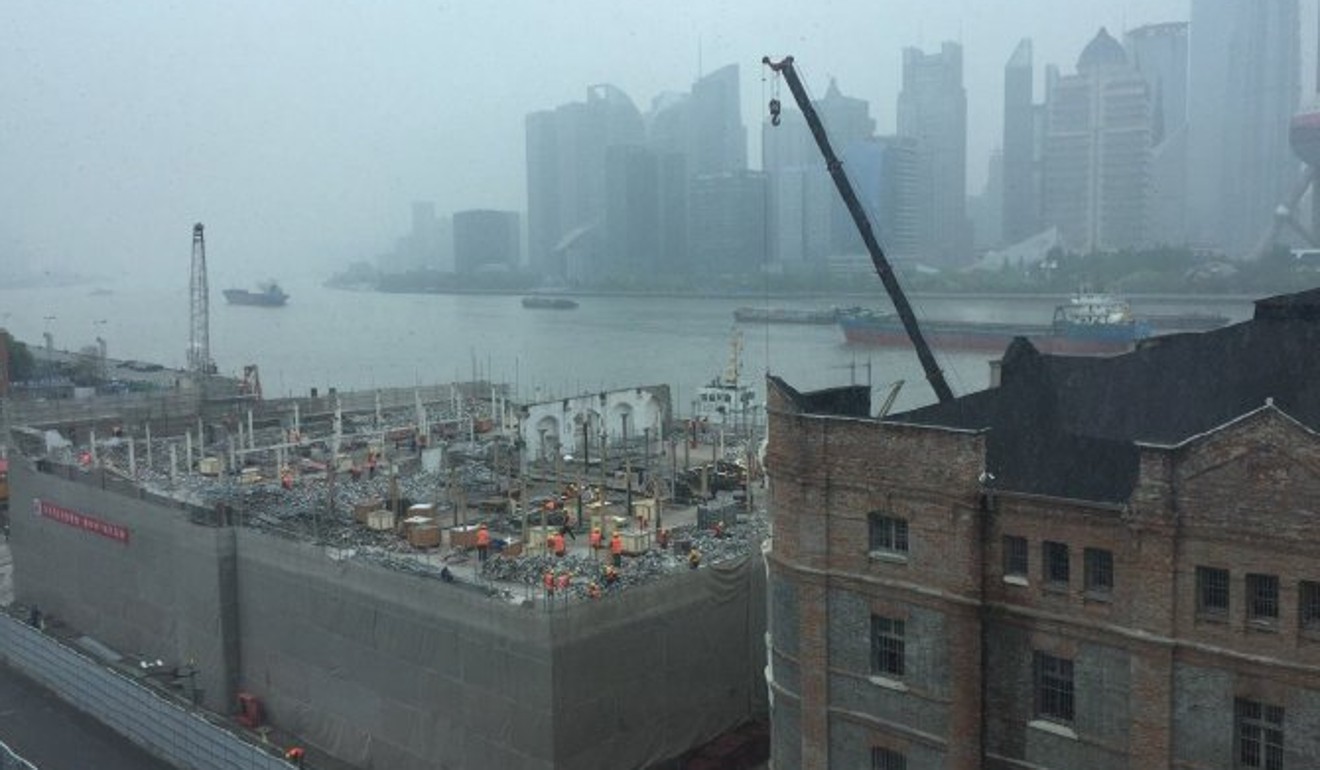
The historic buildings on Shanghai’s Bund in the 1930s. One of the three structures has already been demolished but authorities have temporarily suspended plans to knock down the other two. Photo: Handout
Two historic buildings on Shanghai’s famous Bund have temporarily escaped demolition after a group of experts appealed to the government to conserve the heritage sites, but the intervention was too late to save a third.
About 15 architecture, history and culture experts based in Shanghai banded together to write an article on social media app WeChat last month, calling on the city’s government to “protect the city’s memories” by preserving three houses on Huangpu Road.
A few days after the article was published one of the buildings was demolished as part of a plan to build public cultural facilities on the site. But authorities suspended work on the other two and are considering removing only the interior structure while preserving the external walls, according to the group.
The houses, which date back to 1902, witnessed the city’s boom in the first half of the 20th century when it became one of the world’s most important, and famous, ports, the experts said.
The demolition project on The Bund, Shanghai has been suspended, but not before one of the three historic buildings was demolished. Photo: Urban China magazine
All three of the properties originally belonged to Japanese shipping company Nippon Yusen Kaisha Group and were later used as storage facilities for Japan’s military forces during the second world war, according to Yu Hai, a sociologist from Shanghai’s Fudan University.
“These buildings, along with the nearby Yangzijiang port on the Huangpu River, represented Shanghai’s wharf culture and port culture,” Yu said. “They are historically significant as they witnessed Shanghai grow prosperous through shipping and trade industries about a century ago.”
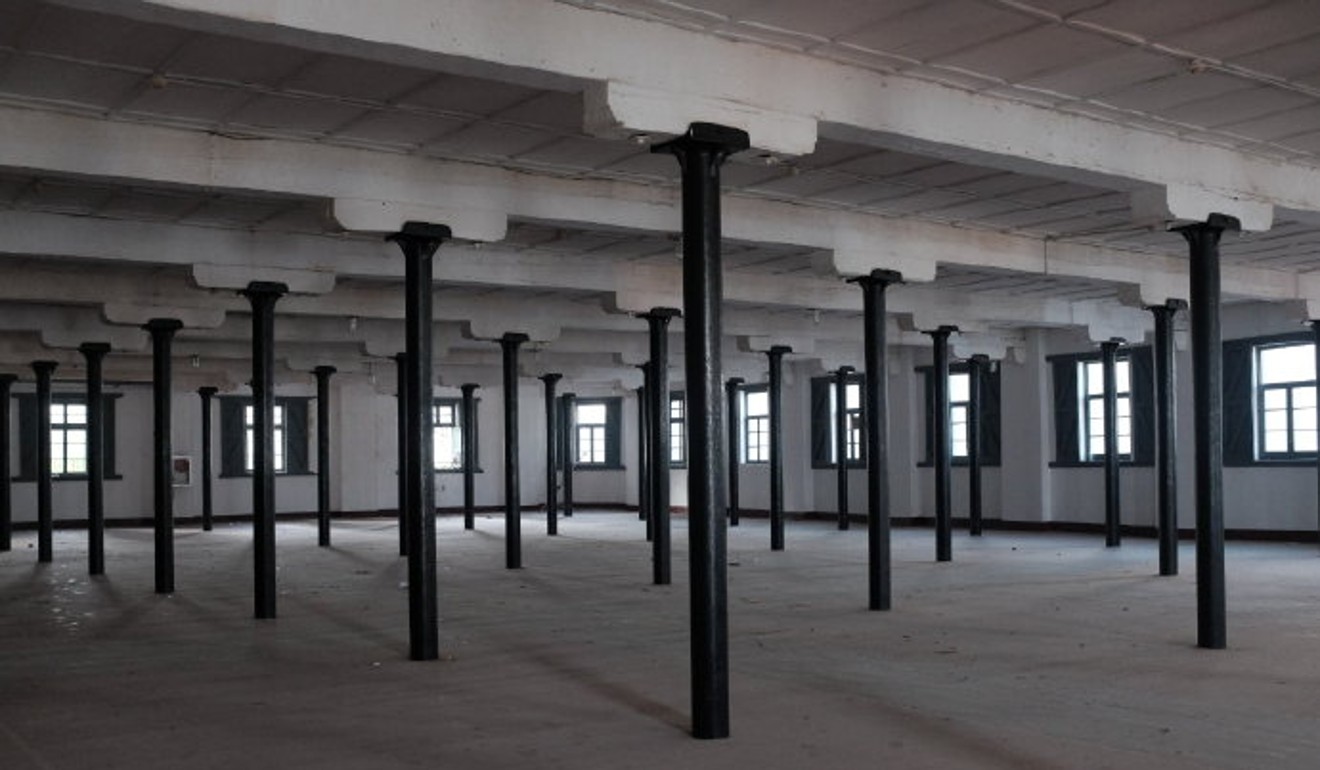
Although the two remaining buildings are safe for now, the experts argue their interiors are also worth preserving.
Liu Gang, an architecture professor at Shanghai’s Tongji University, said the properties featured big wooden beams supported by black iron pillars, which were prominent architectural features of industrial buildings dating back to the 19th century.
“We guess it was hard to move these giant beams with vehicles at the beginning of the 20th century. Quite possibly they were transported on the river. We guess that the wood was chopped down and processed in places across the Pacific [from North America] and shipped to Shanghai.”
In the WeChat article, Liu called for the protection of the interior structure of the buildings. “Without solid research, we cannot simply take them down to be replaced by new ones.”
Yu agreed, saying: “The building with a new inside structure would be a fake and this plan will destroy historical heritage.”
Experts say the interiors of the historic buildings are also worth preserving. Photo: Urban China magazine
Huangpu Road, where these houses sit, is rich with history. It features the Garden Bridge of Shanghai – the city’s first steel bridge, built in 1907 – and was once home to the consulates of the United States, Russia, Japan, Germany, Denmark and the Austro-Hungarian empire.
Other notable landmarks on the road include the Astor House Hotel, built in 1846, where Charlie Chaplin, Albert Einstein and George Bernard Shaw stayed in the 1920s and 1930s. The hotel is still there.
“History happened here,” Yu said. “But it’s a pity that most of the old buildings in this area no longer exist.”
Despite their success in winning a stay of execution for the two buildings, the experts are cautious in their expectations.
“The demolition work was suspended, but that does not mean they have accepted our proposals. We are not optimistic,” Yu said.
About two weeks ago as part of their effort to save the buildings, Yu and three other scholars approached officials from Shanghai’s Planning and Natural Resources Bureau, the government body behind the demolition project.
“Officials emphasised the difficulties of keeping the completeness of the old buildings and we just pointed out the damage to their historical values,” Yu said.
The Shanghai bureau did not immediately reply to a request for comment.
Shanghai nightclub king opens new art space – in disused oil tanks
Appeals by the public to conserve historical buildings have generally not been successful. Shenyuli, a typical Shanghai residential community built in the 1930s, was included in the city’s protected list of historical buildings in 2004.
The listing was not enough to prevent its demolition eight years later to make way for a public green land space.
Three years ago, the Shanghai government announced it was suspending the planned demolition of a former sex slavery station used by Japanese soldiers during the second world war, following media reports and a public outcry.
However, the building was later demolished, according to Su Zhiliang, history professor from Shanghai Normal University and a researcher on sex slavery, who predicts a similar outcome for this latest conservation effort.
“I think the government is just using the same tactic to postpone their plan. After the public’s attention is over, they will continue demolishing,” Su said.
Source: SCMP
Posted in Albert Einstein, architecture professor, Astor House Hotel, Austro-Hungarian empire, big wooden beams, black iron pillars, Bund, century, Charlie Chaplin, consulates, demolition, Denmark, Fudan University, Garden Bridge, George Bernard Shaw, Germany, heritage houses, historic building, history professor, Huangpu Road, Japan, Japan’s military forces, Japanese shipping company, Liu Gang, Nippon Yusen Kaisha Group, North America, Pacific, Planning and Natural Resources Bureau, postpone, predicts, public cultural facilities, researcher, residential community, Russia, saved, second world war, sex slavery, Shanghai, Shanghai Normal University, Shenyuli, shipping, sociologist, storage facilities, Su Zhiliang, Tongji University, trade industries, Uncategorized, United States, WeChat, Yangzijiang port, Yu Hai |
Leave a Comment »
17/05/2019
- Police in Shenzhen look for clues to accident in driver’s medical records
- Motorist complains of ‘sudden attack’ at time of accident
Police in Shenzhen, Guangdong province, are investigating a driver’s medical history after a fatal accident on Thursday. Photo: Weibo
Police in southern China have detained a motorist after three people were killed and seven injured in a car accident on Thursday night.
Officers said a car went out of control and struck pedestrians on a road in Nanshan district in Shenzhen, Guangdong province, at about 7.20pm. The 23-year-old driver, surnamed Liu, was taken into custody.
In a statement online, the Shenzhen public security bureau said blood and urine tests showed the driver was sober and drug-free. They said medicine for epilepsy was found in the vehicle.
Two dead, six injured in Japan after bus drives through pedestrians in Kobe
During questioning, Liu told officers he lost control of car because he had had “a sudden attack”, but did not elaborate.
Police said they were examining Liu’s medical records.
In China, people with epilepsy are not allowed to apply for a driving licence, according to regulations from the Ministry of Public Security.
Source: SCMP
Posted in accidents, blood and urine tests, chinese police, detain, driver, epilepsy, fatal accident, guangdong province, Japan, Kobe, medical records, Ministry of Public Security, mowed down, Nanshan district, pedestrians, Police, Public Security Bureau, roadside, Shenzhen, Uncategorized |
Leave a Comment »
13/05/2019
- Three-day visit comes ahead of Chinese President’s planned attendance at G20 summit in Osaka next month
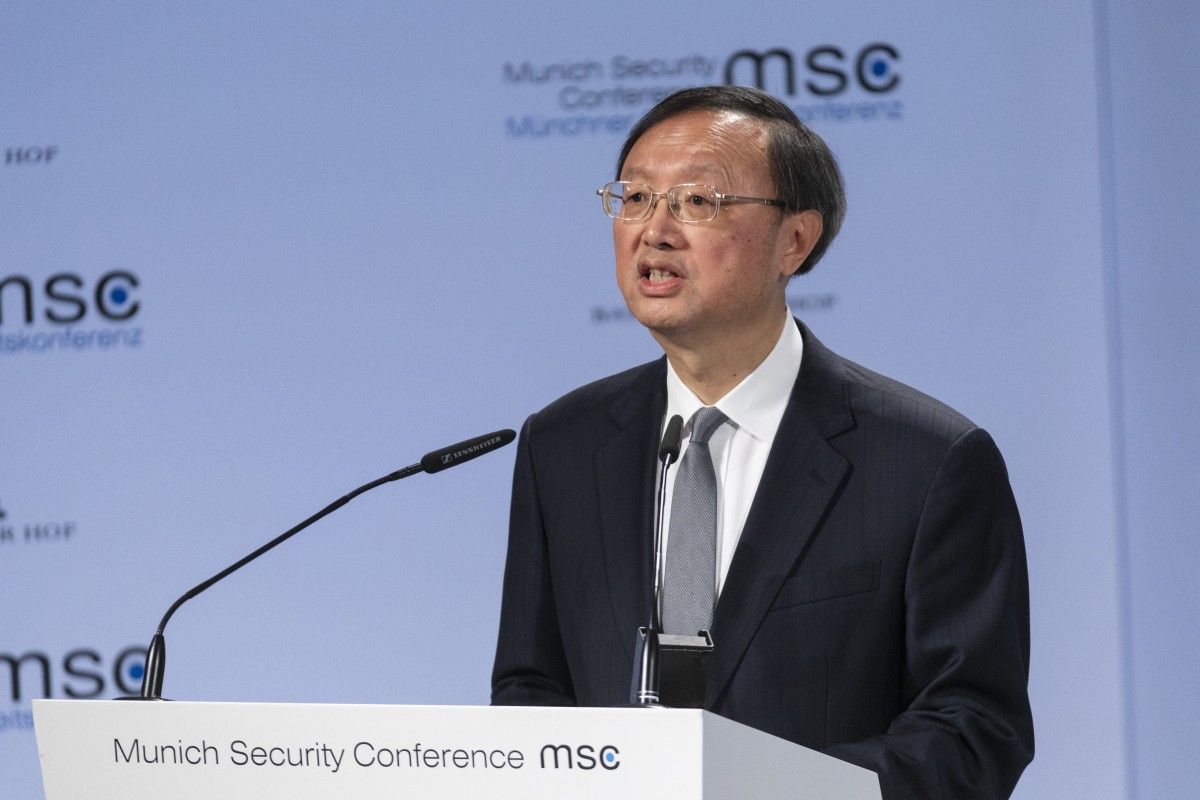
Yang Jiechi’s three-day visit to Japan starts on Thursday. Photo: Bloomberg
China’s top diplomat Yang Jiechi will visit Japan for three days from Thursday, the Chinese Foreign Ministry said on Monday.
The visit is likely to work out details of President Xi Jinping’s planned visit to Japan for this year’s summit of the Group of 20 major economies in Osaka in late June, sources familiar with bilateral relations had said last week.
Yang, a member of the Political Bureau of the Chinese Communist Party’s Central Committee, is likely to meet the country’s national security adviser Shotaro Yachi on Thursday and Prime Minister Shinzo Abe the following day, according to the sources.
Xi’s visit, if it goes ahead, would be his first since he came to power in 2013 and the first by a Chinese head of state since Hu Jintao in November 2010.
Yang and Yachi will also hold the sixth China-Japan high-level political dialogue.
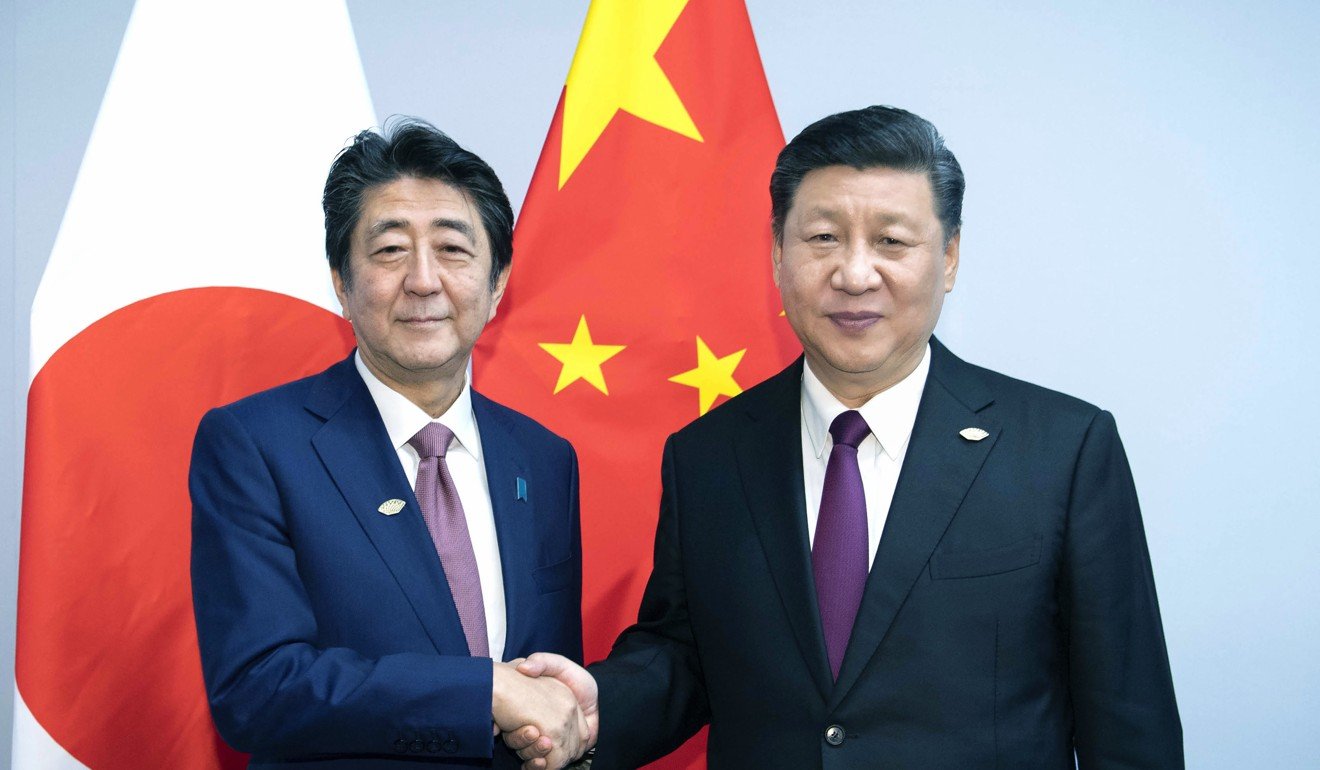
Chinese President Xi Jinping and Japanese Prime Minister Shinzo Abe pictured at the G20 summit in Argentina last year. Photo: AP
At this dialogue, which is an annual consultation plan agreed on by the two sides, the two sides will exchange views on China-Japan relations and issues of common concern, Chinese Foreign Ministry spokesperson Geng Shuang said at a regular press briefing.
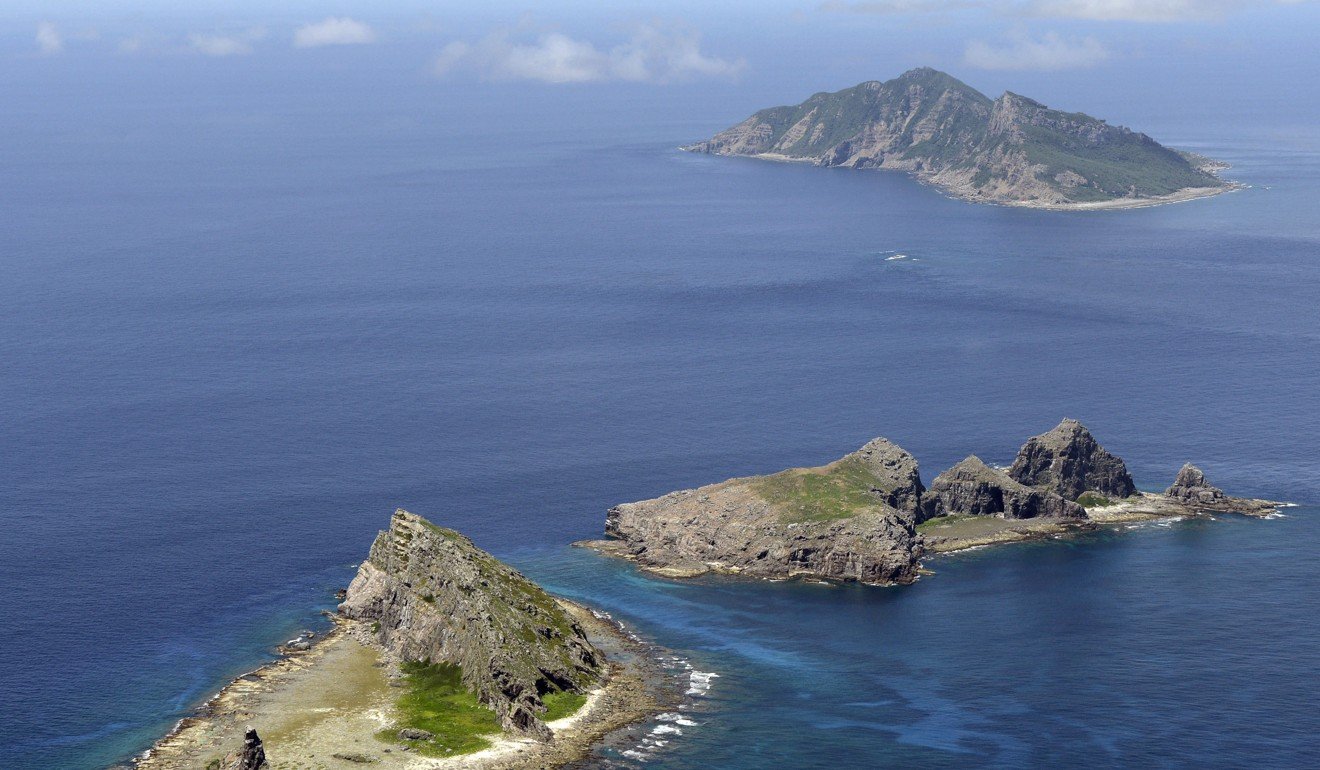
For years, the two neighbours have been mired in a territorial dispute over the Senkaku Islands in the East China Sea. The group of uninhabited islets, which are called Diaoyu in Chinese, are controlled by Japan but claimed by China.
But Sino-Japanese ties have been markedly improving recently, with 2018 – the 40th anniversary of the signing and entering into force of the bilateral Treaty of Peace and Friendship – serving as an incentive to forge better relations.
The dispute over the Senkaku – or Diaoyu – Islands is a long-standing barrier to better relations. Photo: Kyodo
In an interview with Japanese media, Chinese vice foreign minister Kong Xuanyou said the relationship between China and Japan has just returned to normal after going through ups and downs over the years, and both sides need to treasure the development.
“China is willing to work with Japan to further promote China-Japan relations,” he was quoted as saying in a Chinese foreign ministry transcript.
Kong also rejected suggestions that ties between China and Japan have become closer because of the China-US trade war – which pushed Beijing to seek support from its neighbours.
“Putting the relations between China, Japan and the US at opposite from each other is a zero-sum game and cold war mentality. China does not agree with it,” he said. “The friendly relationship among these two nations can be developed in parallel. This is welcomed by the region and the world”.
Source: SCMP
Posted in Beijing, China-US trade war, China’s top diplomat, Chinese vice foreign minister, Diaoyu, East China Sea, Geng Shuang, Japan, Japanese Prime Minister, Japanese Prime Minister Shinzo Abe, Kong Xuanyou, Osaka, Senkaku Islands, Sino-Japanese ties, Treaty of Peace and Friendship, Uncategorized, Vice-President Hu Jintao, Xi JinPing, Yang Jiechi |
Leave a Comment »





 CHINDIA ALERT: You'll be living in their world, very soon