19/04/2020
- Faced with a backlash from the West over its handling of the early stages of the pandemic, Beijing has been quietly gaining ground in Asia
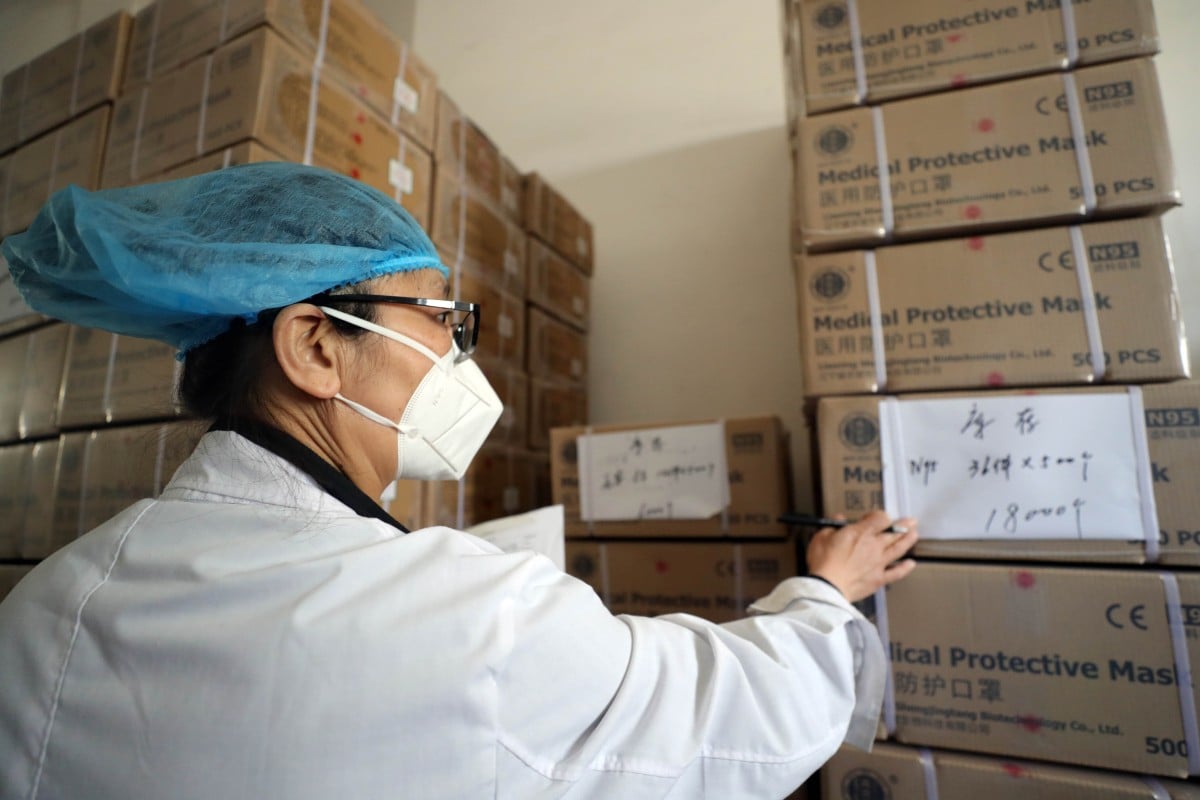
- Teams of experts and donations of medical supplies have been largely welcomed by China’s neighbours
Despite facing some criticism from the West, China’s Asian neighbours have welcomed its medical expertise and vital supplies. Photo: Xinhua
While China’s campaign to mend its international image in the wake of its handling of the
coronavirus health crisis has been met with scepticism and even a backlash from the US and its Western allies, Beijing has been quietly gaining ground in Asia.
Teams of experts have been sent to Cambodia, the Philippines, Myanmar, Pakistan and soon to Malaysia, to share their knowledge from the pandemic’s ground zero in central China.
Beijing has also donated or facilitated shipments of medical masks and ventilators to countries in need. And despite some of the equipment failing to meet Western quality standards, or being downright defective, the supplies have been largely welcomed in Asian countries.
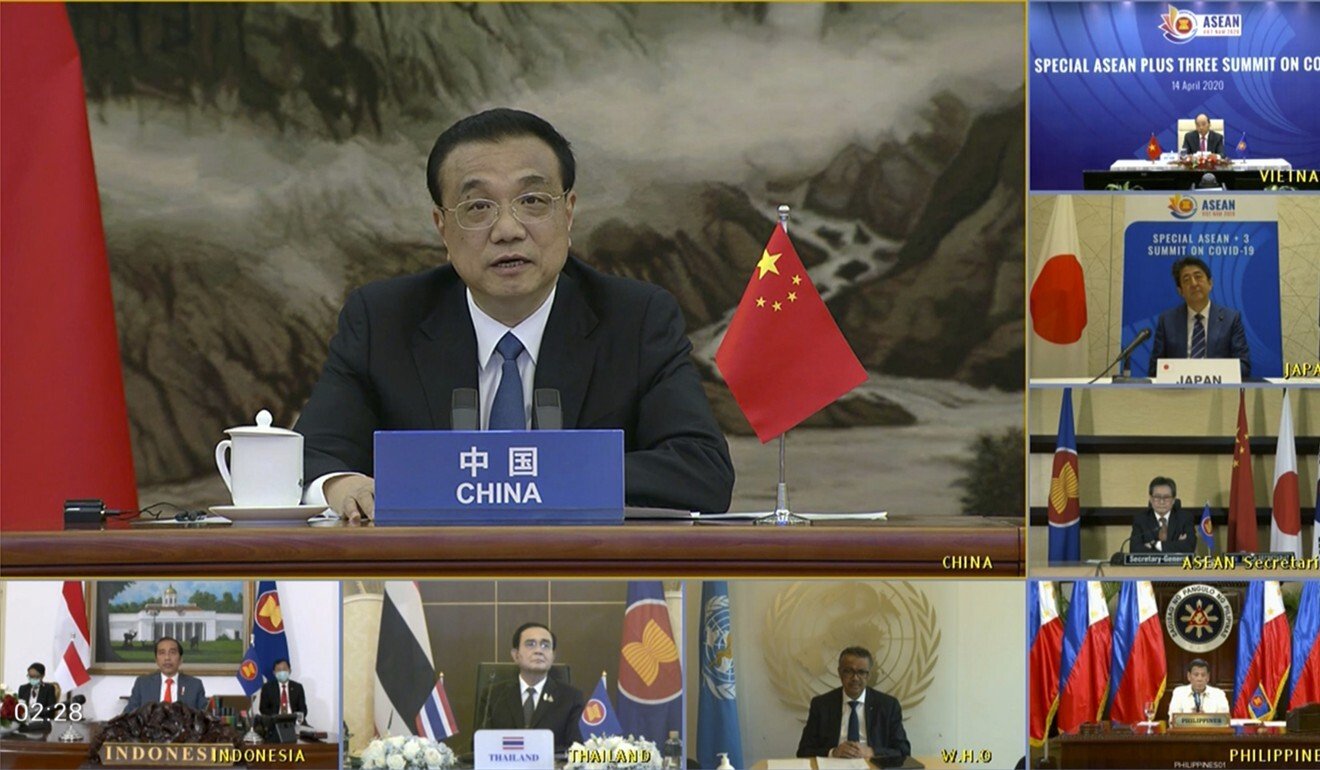
China has also held a series of online “special meetings” with its Asian neighbours, most recently on Tuesday when Premier Li Keqiang discussed his country’s experiences in combating the disease and rebooting a stalled economy with the leaders of the Association of Southeast Asian Nations (Asean), Japan and South Korea.
Chinese Prime Minister Li Keqiang speaks to Asean Plus Three leaders during a virtual summit on Tuesday. Photo: AP
Many Western politicians have publicly questioned Beijing’s role and its subsequent handling of the crisis but Asian leaders – including Philippine President Rodrigo Duterte and Japanese Prime Minister Shinzo Abe – have been reluctant to blame the Chinese government, while also facing criticism at home for not closing their borders with China soon enough to prevent the spread of the virus.
An official from one Asian country said attention had shifted from the early stages of the outbreak – when disgruntled voices among the public were at their loudest – as people watched the virus continue its deadly spread through their homes and across the world.
“Now everybody just wants to get past the quarantine,” he said. “China has been very helpful to us. It’s also closer to us so it’s easier to get shipments from them. The [medical] supplies keep coming, which is what we need right now.”
The official said also that while the teams of experts sent by Beijing were mainly there to observe and offer advice, the gesture was still appreciated.
Another Asian official said the tardy response by Western governments in handling the outbreak had given China an advantage, despite its initial lack of transparency over the outbreak.
“The West is not doing a better job on this,” he said, adding that his government had taken cues from Beijing on the use of propaganda in shaping public opinion and boosting patriotic sentiment in a time of crisis.
“Because it happened in China first, it has given us time to observe what works in China and adopt [these measures] for our country,” the official said.
Experts in the region said that Beijing’s intensifying campaign of “mask diplomacy” to reverse the damage to its reputation had met with less resistance in Asia.
Why China’s ‘mask diplomacy’ is raising concern in the West
“Over the past two months or so, China, after getting the Covid-19 outbreak under control, has been using a very concerted effort to reshape the narrative, to pre-empt the narrative that China is liable for this global pandemic, that China has to compensate other countries,” said Richard Heydarian, a Manila-based academic and former policy adviser to the Philippine government.
“It doesn’t help that the US is in lockdown with its domestic crisis and that we have someone like President Trump who is more interested in playing the blame game rather than acting like a global leader,” he said.
Shahriman Lockman, a senior analyst with the foreign policy and security studies programme at Malaysia’s Institute of Strategic and International Studies, said that as the US had withdrawn into its own affairs as it struggled to contain the pandemic, China had found Southeast Asia a fertile ground for cultivating an image of itself as a provider.
China’s first-quarter GDP shrinks for the first time since 1976 as coronavirus cripples economy
Beijing’s highly publicised delegations tasking medical equipment and supplies had burnished that reputation, he said, adding that the Chinese government had also “quite successfully shaped general Southeast Asian perceptions of its handling of the pandemic, despite growing evidence that it could have acted more swiftly at the early stages of the outbreak in Wuhan”.
“Its capacity and will to build hospitals from scratch and put hundreds of millions of people on lockdown are being compared to the more indecisive and chaotic responses seen in the West, especially in Britain and the United States,” he said.
Coronavirus droplets may travel further than personal distancing guidelines
Lockman said Southeast Asian countries had also been careful to avoid getting caught in the middle of the deteriorating relationship between Beijing and Washington as the two powers pointed fingers at each other over the origins of the new coronavirus.
“The squabble between China and the United States about the pandemic is precisely what Asean governments would go to great lengths to avoid because it is seen as an expression of Sino-US rivalry,” he said.
“Furthermore, the immense Chinese market is seen as providing an irreplaceable route towards Southeast Asia’s post-pandemic economic recovery.”
Aaron Connelly, a research fellow in Southeast Asian political change and foreign policy with the International Institute for Strategic Studies in Singapore, said Asian countries’ dependence on China had made them slow to blame China for the pandemic.
“Anecdotally, it seems to me that most Southeast Asian political and business elites have given Beijing a pass on the initial cover-up of Covid-19, and high marks for the domestic lockdown that followed,” he said.
“This may be motivated reasoning, because these elites are so dependent on Chinese trade and investment, and see little benefit in criticising China.”
China and Vietnam ‘likely to clash again’ as they build maritime militias
The cooperation with its neighbours as they grapple with the coronavirus had not slowed China’s military and research activities in the disputed areas of the
South China Sea – a point of contention that would continue to cloud relations in the region, experts said.
Earlier this month an encounter in the South China Sea with a Chinese coastguard vessel led to the sinking of a fishing boat from Vietnam, which this year assumed chairmanship of Asean.
And in a move that could spark fresh regional concerns, shipping data on Thursday showed a controversial Chinese government survey ship, the Haiyang Dizhi 8, had moved closer to Malaysia’s exclusive economic zone.
The survey ship was embroiled in a months-long stand-off last year with Vietnamese vessels within Hanoi’s exclusive economic zone and was spotted again on Tuesday 158km (98 miles) off the Vietnamese coast.
Source: SCMP
Posted in 10, 13, 15, 16, 17, 18, 1976, 27, 44, 50%, 54, according, across the world, again, against, April, areas, arriving, ASEAN, Asian, Association of Southeast Asian Nations (ASEAN), ASYMPTOMATIC CASES, at, authorities, avoid, ‘mask diplomacy’, battling, Beijing, Beijing’s, biggest, blame, blame game, borders, Britain, build, burnished, cabinet, cases, cautioning, central, central district, chairmanship, China, China's, China’s National Health Commission, Chinese capital, chinese government, Chinese market, City, clinical, closer, closing, coast, coastguard vesse, coastguard vessel, combating, compensate, confirmed, confirmed cases, considered, contain, contention, control, controversial, coronavirus, coronavirus cases, cough, countries, country’s, COVID-19, COVID-19 outbreak, cripples, crisis, criticism, cross infections, Data, day, deadly spread, death toll, deaths, declines, delegations, despite, destabilising, Disease, disputed areas, districts, domestic, down, earlier, eastern, economic recovery, economically, economy, elsewhere, embroiled, epicentre, epidemic, everybody, exclusive economic zones, experiences, eyes, facing, fall, family gatherings, fever, first time, fishing boat, flare-up, foreign policy and security studies programme, Friday, from, GDP, global leader, global pandemic, Government, Guangzhou, Haiyang Dizhi 8, handling, Hanoi’s, Harbin, health commission, Heilongjiang, high-risk, Home, hospitals, However, hubei province, hundreds, imported, imported infections, including, infected, Institute of Strategic and International Studies, interested, International Institute for Strategic Studies, investigations, irreplaceable, Japan, Japanese Prime Minister, Japanese Prime Minister Shinzo Abe, Jiaozhou, km, last, leaders, local, locally, lockdown, low-risk, lowest, mainland, Mainland China, Major, Malaysia’s, March, medical equipment and supplies, medium-risk, miles, military and research activities, millions, months-long, moved, narrative, new, nine, Northeastern, Notably, now, number, off, Official, officials, on guard, outbreak, patients, People, perceptions, Philippine, playing, political, politicians, Post, post-pandemic, pre-empt, Premier Li Keqiang, present, President Trump, prevent, previous, province, provincial capital, provincial government, publicly, published, punished, quarantine, questioned, quickly, quoted, reached, rebooting, rebound, recent, reluctant, remaining, reported, reporting, reputation, research fellow, reshape, resurgence, role, route, Russia, Saturday, saying, scratch, seen, senior analyst, shandong province, shipping data, showed, shrinks, since, Singapore, sinking, Sino-US rivalry, slow, social media, socially, soon enough, South China Sea, South Korea, Southeast Asia, Southeast Asian political change and foreign policy, southern city, spotted, spread, squabble, stalled, stand-off, State Council, statement, stood, stop, subsequent, Suifenhe, Sunday, surge, survey ship, symptoms, tally, task, test positive, Three, Thursday, Total, towards, transmitted, Transparency, travellers, Tuesday, two, Uncategorized, United States, vice governor, vice mayor, Vietnam, Vietnamese, Vietnamese vessels, virtual summit, Virus, Washington, website, weeks, were, Western, within, Wuhan, year |
Leave a Comment »
29/02/2020

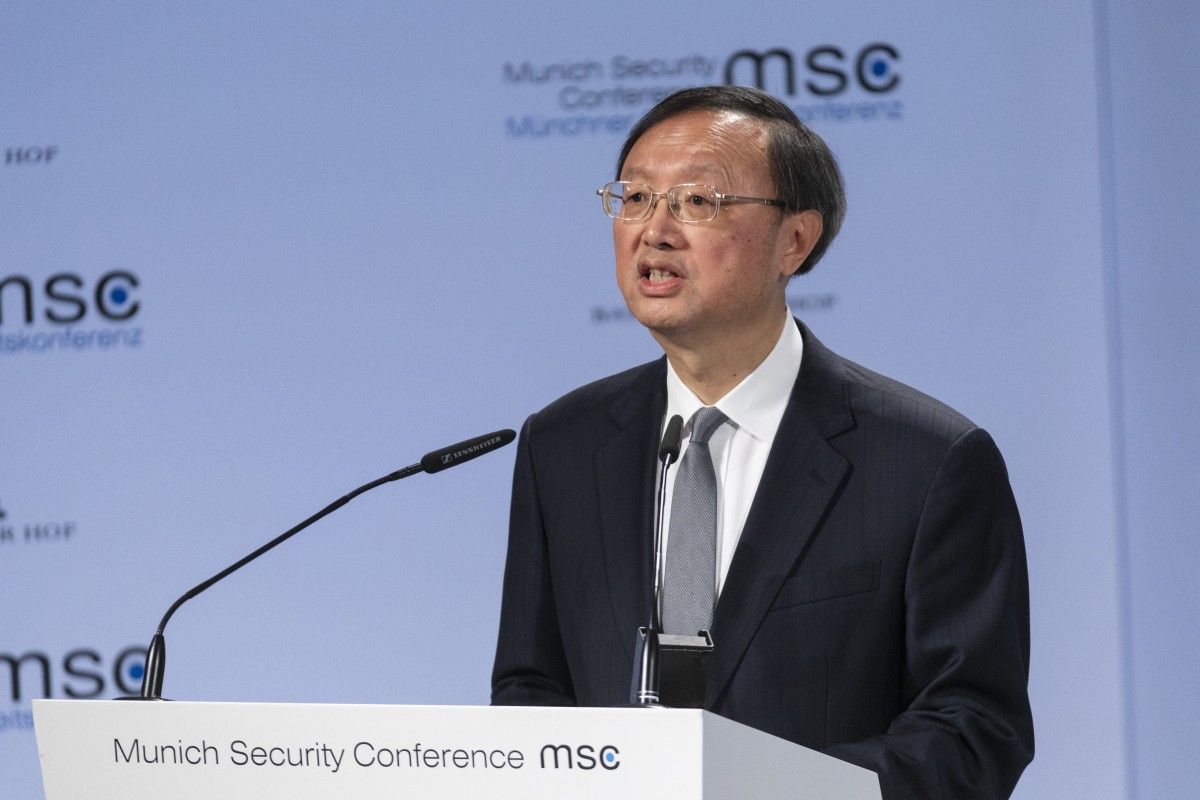
Japanese Prime Minster Shinzo Abe (R, front) meets with Yang Jiechi (L, front), a member of the Political Bureau of the Communist Party of China (CPC) Central Committee and director of the Office of the Foreign Affairs Commission of the CPC Central Committee, in Tokyo, Japan, Feb. 28, 2020. (Xinhua/Gang Ye)
TOKYO, Feb. 28 (Xinhua) — China and Japan agreed on Friday to step up public health cooperation to contain the outbreak of the novel coronavirus (COVID-19) epidemic.
The pledge was made during a meeting between Japanese Prime Minister Shinzo Abe and Yang Jiechi, a member of the Political Bureau of the Communist Party of China (CPC) Central Committee and director of the Office of the Foreign Affairs Commission of the CPC Central Committee.
During the meeting, Yang said China and Japan assisted each other in the fight against COVID-19 and worked together to overcome the difficulties, thus deepening the friendship between the two countries.
China sincerely thanks Japan for its precious support, and is willing to continue providing support and help for Japan’s fight against the epidemic, strengthen bilateral and multilateral medical and health cooperation, so as to jointly safeguard the health and wellbeing of the peoples of the two countries and the world, he said.
Yang said the China-Japan relations have maintained a sound momentum of development. He noted that Chinese President Xi Jinping and Abe held two successful meetings last year, leading efforts in building China-Japan relations in line with the requirements of the new era.
China is ready to work with Japan to implement the important consensus reached by the leaders of the two countries, respect each other, seek common ground while reserving differences, and work together to build a new pattern of bilateral relations featuring joint cooperation, win-win and mutual benefit, said Yang.
Xi’s upcoming state visit to Japan is of great significance and China is ready to maintain close communication with Japan and make preparations for the visit, he said.
China firmly supports Japan in successfully hosting the Tokyo Olympic Games, he added.
For his part, Abe said Xi’s upcoming state visit to Japan this year is of great importance and Japan will make careful preparations to ensure the success and fruitful results of the visit.
The peoples of Japan and China have shown friendly feelings in their joint fight against the COVID-19 epidemic, Abe said.
He said Japan speaks highly of China’s positive achievements in the fight against the virus and is ready to strengthen exchanges and cooperation with China in information sharing and epidemic prevention and control, and send a positive signal to the international community of jointly tackling the challenges to global public health security.
Also on Friday Yang attended the eighth China-Japan high-level political dialogue with head of Japan’s national security council Shigeru Kitamura and met with Japanese Foreign Minister Toshimitsu Motegi.
Source: Xinhua
Posted in China, China-Japan relations, Chinese President Xi Jinping, cooperation, COVID-19 epidemic, fighting, Japan, Japanese, Japanese Foreign Minister, Japanese Prime Minister, Japanese Prime Minister Shinzo Abe, member of the Political Bureau of the Communist Party of China (CPC) Central Committee, Office of the Foreign Affairs Commission of the CPC Central Committee, pledge, Uncategorized, Yang Jiechi |
Leave a Comment »
23/12/2019
- Summit between Chinese, South Korean and Japanese leaders could yield results for future of Korean peninsula, analyst says
North Korea has promised an unwelcome “Christmas present” if the US does not show the “right attitude” for talks. Photo: KCNA
Chinese President Xi Jinping has again stressed the need for tensions on the Korean peninsula to be resolved through dialogue, as the deadline looms in North Korea’s threat to give the United States an
unwelcome “Christmas gift”
.
With just over a week to go until Pyongyang’s year-end deadline for Washington to change what it says a policy of hostility, Xi held separate talks with South Korean President Moon Jae-in and Japanese Prime Minister Shinzo Abe in Beijing on Monday.
Moon and Abe will also join Chinese Premier Li Keqiang for a trilateral summit in Chengdu, Sichuan province, on Tuesday.
The first trilateral leadership talks took place in 2008, but were not held in 2013 and 2014, or in 2016 and 2017.
Xi said China and South Korea “both insist on maintaining peace and stability on the peninsula, and advocate solving problems through dialogue and consultation”, state news agency Xinhua reported on Monday.
“China supports South Korea in continuing to improve its relationship with
and injecting impetus for the Korean peninsula peace talks,” the report said.
Moon said the suspension of talks between the US and North Korea and heightened tensions along the peninsula “are not beneficial to both our countries and North Korea”, according to South Korean news agency Yonhap.
Moon also said that China had played an “important role” in efforts for the denuclearise the peninsula, the report said.
North Korea has signalled impatience over the stalled talks with the US, and the fading hopes for an end to Washington’s economic sanctions.
In April, North Korean leader Kim Jong-un said that he would “wait” until the end of the year to decide whether the US had the “right attitude” to allow a resumption of negotiations, but no signs of further talks have emerged.
Then earlier this month Pyongyang warned that Washington would receive a “Christmas gift”, and US actions would determine whether the present would be good or bad.
In an apparent sign of frustration with the US, North Korean news agency KCNA reported on Sunday that Kim held a meeting of the Workers’ Party of Korea to “bolster the overall armed forces of the country” to deal with the “the fast-changing situation”.
The US imposed crippling sanctions on North Korea’s economy in 2017, though many countries, including China, South Korea and Japan, have also tightened measures against the North.
South Korea and Japan both scaled back people-to-people links in 2016, China banned coal exports to the North in 2017. Earlier this year, Trump thanked China and Russia for maintaining sanctions against Pyongyang.
As diplomats make last-ditch attempts to stop renewed confrontation, US special envoy for North Korea Stephen Biegun shuttled around the region last week, meeting senior officials in China, South Korea and Japan. Biegun urged North Korea to return to negotiations, and said the US “does not have a deadline” for talks.
China and Russia also proposed last week that the United Nations Security Council
, saying it was necessary to break the deadlock.
Xi’s meeting with Moon also comes as Beijing tries to mend ties with Seoul to prevent neighbouring nations from getting closer to Washington.
Relations between China and South Korea deteriorated in 2017 after Seoul deployed a US-led missile defence system known as THAAD, which Beijing deemed as a security threat to its own territory.
On Monday, both Xi and Moon said in their meeting that they looked forward to improving relations between their countries.
“We have been friends and partners that have continued close cooperation,” Xi said. “We have a wide range of common understandings in various fields, including on further developing bilateral relations, facilitating regional peace, stability and prosperity, and defending multilateralism and a free trade system.”
Sun Xingjie, a North Korea specialist at Jilin University, said the US signal was “very clear” in Beigun’s comments.
“They still want to continue discussions,” he said.
Sun also said the talks in Chengdu on Tuesday would likely play an important role in the future of resolving problems on the Korean peninsula.
“After returning to the platform these last couple years, I believe this will become an important, normalised place for discussions. Whatever problems they run into, the platform should continue to move forward,” Sun said.
Source: SCMP
Posted in Beijing, Chengdu, China alert, Chinese, Chinese premier Li Keqiang, Chinese President Xi Jinping, deadline, denuclearise, frustration, Japanese, Japanese Prime Minister, Japanese Prime Minister Shinzo Abe, Jilin University, Korean peninsula, leaders, North Korea, nuclear talks, President Moon Jae-in, presses, Pyongyang, Russia, sichuan province, South Korean, South Korean President, Trump, Uncategorized, United Nations Security Council, United Nations Security Council (UNSC), United States, US, Washington |
Leave a Comment »
14/12/2019
NEW DELHI (Reuters) – Violent clashes erupted in Delhi between police and hundreds of university students on Friday over the enactment of a new citizenship law that critics say undermines India’s secular foundations.
The unrest has already led Japanese Prime Minister Shinzo Abe to cancel a planned visit to India from Sunday.
The new law offers a way to Indian citizenship for six minority religious groups from neighbouring Bangladesh, Pakistan and Afghanistan including Hindus and Christians, but not Muslims.
Police fired tear gas and used baton charges to disperse scores of students demonstrating at Jamia Millia Islamia university in the heart of Delhi over the law.
Protesters attacked cars in the capital, and several people were injured and taken to hospital.
Zakir Riyaz, a PhD student in social work, said the new law made a mockery of India’s religious openness.
“It goes against the whole idea of a secular India,” he said, speaking by phone from the Holy Family Hospital in New Delhi where 15 of his fellow students were admitted after being injured in a police baton charge.
Police barricades were knocked down and streets were strewn with shoes and broken bricks. An official at the university dispensary said that more than 100 students had been brought in with injuries but all had been discharged.
Parvez Hashmi, a local politician who went to the protest site to speak to police, said about 50 students had been detained.
Students said it was meant to be a peaceful protest, with them trying to go from Jamia University to Parliament Street to show their opposition to the legislation. But police pushed them back, leading to clashes.
Critics of Prime Minister Narendra Modi’s government say it is promoting a Hindu-first agenda for India and that the citizenship law excluding Muslims showed a deep-seated bias against India’s 170 million Muslims.
Imran Chowdhury, a researcher, said “either give citizenship to refugees of all religions or none at all. The constitution is being tampered with in the name of religion.”
Modi’s ruling Bharatiya Janata Party denies any religious bias but says it is opposed to the appeasement of one community. It says the new law is meant to help minority groups facing persecution in the three nearby Muslim countries.
ABE CANCELS
The United Nations human rights office voiced concern that the new law is “fundamentally discriminatory in nature”, and called for it to be reviewed.
Two people were killed in India’s Assam state on Thursday when police opened fire on mobs torching buildings and attacking railway stations in protest at the new citizenship rules signed into law on Thursday.
Japan’s Prime Minister Shinzo Abe cancelled a trip to Assam for a summit with his Indian counterpart Narendra Modi that had been due to begin on Sunday.
Japan has stepped up infrastructure development work in Assam in recent years, which the two sides were expected to highlight during the summit. Abe had also planned to visit a memorial in the nearby state of Manipur where Japanese soldiers were killed in World War Two.
“With reference to the proposed visit of Japanese PM Abe Shinzo to India, both sides have decided to defer the visit to a mutually convenient date in the near future,” Indian foreign ministry spokesman Raveesh Kumar said in a tweet.
Japan’s Chief Cabinet Secretary Yoshihide Suga said both countries would decide on the appropriate timing for the visit although nothing has been decided yet.
A movement against immigrants from Bangladesh has raged in Assam for decades. Protesters there say granting Indian nationality to more people will further strain the state’s resources and lead to the marginalisation of indigenous communities.
Source: Reuters
Posted in admitted, Afghanistan, agenda, Assam, attacked, Bangladesh, barricades, baton charges, Bharatiya Janata Party, broken bricks, cancel, cancels, capital, cars, Christians, citizenship, citizenship law, clashes, Critics, Delhi, demonstrating, discharged, dispensary, disperse, erupt, erupted, excluding Muslims, fired, foundations, Government, heart, Hindu-first, Hindus, Holy Family Hospital, Hospital, India, India’s, injured, injuries, Jamia Millia Islamia university i, Jamia University, Japan, Japanese, Japanese Prime Minister, Japanese Prime Minister Shinzo Abe, Japanese soldiers, Law, legislation, Manipur, minority groups, minority religious groups, mockery, Muslims, new, New Delhi, Openness, opposition, Pakistan, Parliament Street, People, planned visit, PM, Police, Prime minister, Prime Minister Narendra Modi’s, Prime Minister Shinzo Abe, promoting, protesters, religious, religious bias, secular, shoes, Social work, streets, strewn, students, tear gas, Uncategorized, undermines, United Nations human rights office, university students, unrest, used, violent clashes, visit, World War Two |
Leave a Comment »
26/11/2019
Japanese Prime Minister Shinzo Abe meets with Chinese State Councilor and Foreign Minister Wang Yi in Tokyo, Japan, Nov. 25, 2019. (Xinhua/Du Xiaoyi)
TOKYO, Nov. 25 (Xinhua) — Japanese Prime Minister Shinzo Abe and Chinese State Councilor and Foreign Minister Wang Yi on Monday agreed that both sides should work together to further improve bilateral ties and strengthen people-to-people exchanges.
Japan and China have witnessed frequent high-level exchanges and positive progress in the improvement of bilateral relations recently, said Abe, adding that the Japanese side is eagerly looking forward to Chinese President Xi Jinping’s state visit next spring and believes that it will be a major opportunity for promoting bilateral relations in the new era.
A stable Japan-China relationship is the cornerstone of peace and prosperity in Asia, and is also crucial to addressing current global challenges. Japan is ready to work with China to usher in a new future of bilateral relations, he said.
Japan welcomes the launch of the high-level consultation mechanism on people-to-people exchanges between the two countries and stands ready to work with China to continuously boost the affinity between the two peoples and properly handle sensitive differences so as to create a favorable atmosphere and conditions for the improvement and development of bilateral relations, he added.
Abe also said he is looking forward to further in-depth communication with Chinese leaders on bilateral ties during his visit to China next month to attend the China-Japan-ROK (Republic of Korea) leaders’ meeting.
Wang, for his part, said that with the political guidance of the two leaders and joint efforts of both sides, China-Japan relations have returned to the right track and have seen a sound momentum of improvement and development. The top leaders of the two countries had a successful meeting in Osaka in June and reached important consensus on building bilateral relations that meet the requirements of the new era.
The China-Japan relations have gone through twists and turns and the present situation has not come easily and should be doubly cherished, Wang said.
The two sides should push for continuous improvement and development of China-Japan relations from a longer-term and broader perspective, he said.
He called on the Japanese side to meet China halfway, take more positive actions, properly manage and handle differences so as to create a favorable atmosphere and conditions for the proposed major political and diplomatic agenda of the two countries.
The improvement and development of China-Japan relations not only conform to the interests of the two countries and peoples but also has great positive significance to regional peace and stability, injecting stability into the current world situation which is full of uncertainty, said Wang.
The Chinese side welcomes Abe to attend the China-Japan-ROK leaders’ meeting in China next month. China is willing to work with Japan to give full play to the role of the high-level consultation mechanism on people-to-people exchanges, usher in a new era of exchanges between our peoples, localities and youth, and create a brighter future for bilateral relations, he said.
Source: Xinhua
Posted in agree, Asia, China alert, China-Japan-ROK (Republic of Korea), Chinese President Xi Jinping's, Chinese State Councilor and Foreign Minister Wang Yi, cornerstone, improve ties, Japan, Japan-China relationship, Japanese Prime Minister, Japanese Prime Minister Shinzo Abe, Osaka, peace, people-to-people exchanges, prosperity, State visit, Tokyo, Uncategorized |
Leave a Comment »
13/05/2019
- Three-day visit comes ahead of Chinese President’s planned attendance at G20 summit in Osaka next month
Yang Jiechi’s three-day visit to Japan starts on Thursday. Photo: Bloomberg
China’s top diplomat Yang Jiechi will visit Japan for three days from Thursday, the Chinese Foreign Ministry said on Monday.
The visit is likely to work out details of President Xi Jinping’s planned visit to Japan for this year’s summit of the Group of 20 major economies in Osaka in late June, sources familiar with bilateral relations had said last week.
Yang, a member of the Political Bureau of the Chinese Communist Party’s Central Committee, is likely to meet the country’s national security adviser Shotaro Yachi on Thursday and Prime Minister Shinzo Abe the following day, according to the sources.
Xi’s visit, if it goes ahead, would be his first since he came to power in 2013 and the first by a Chinese head of state since Hu Jintao in November 2010.
Yang and Yachi will also hold the sixth China-Japan high-level political dialogue.
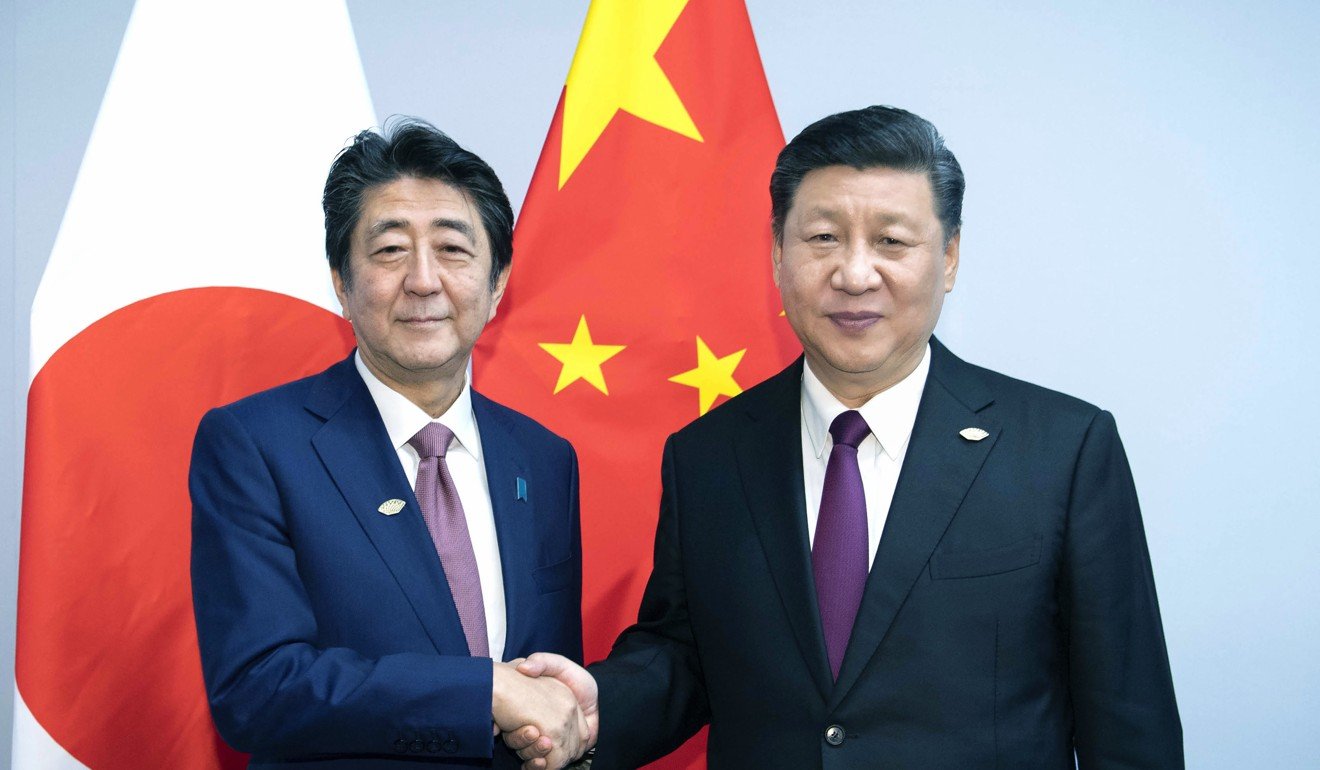
Chinese President Xi Jinping and Japanese Prime Minister Shinzo Abe pictured at the G20 summit in Argentina last year. Photo: AP
At this dialogue, which is an annual consultation plan agreed on by the two sides, the two sides will exchange views on China-Japan relations and issues of common concern, Chinese Foreign Ministry spokesperson Geng Shuang said at a regular press briefing.
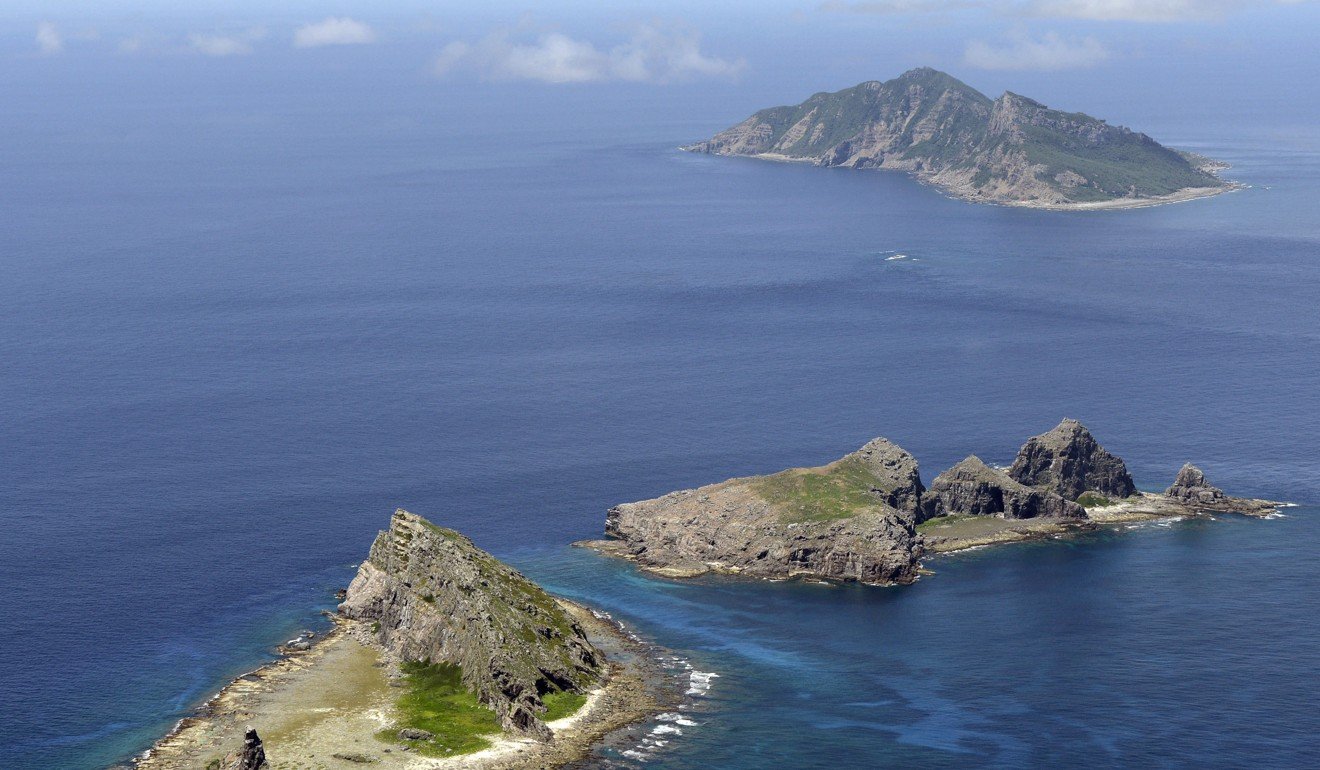
For years, the two neighbours have been mired in a territorial dispute over the Senkaku Islands in the East China Sea. The group of uninhabited islets, which are called Diaoyu in Chinese, are controlled by Japan but claimed by China.
But Sino-Japanese ties have been markedly improving recently, with 2018 – the 40th anniversary of the signing and entering into force of the bilateral Treaty of Peace and Friendship – serving as an incentive to forge better relations.
The dispute over the Senkaku – or Diaoyu – Islands is a long-standing barrier to better relations. Photo: Kyodo
In an interview with Japanese media, Chinese vice foreign minister Kong Xuanyou said the relationship between China and Japan has just returned to normal after going through ups and downs over the years, and both sides need to treasure the development.
“China is willing to work with Japan to further promote China-Japan relations,” he was quoted as saying in a Chinese foreign ministry transcript.
Kong also rejected suggestions that ties between China and Japan have become closer because of the China-US trade war – which pushed Beijing to seek support from its neighbours.
“Putting the relations between China, Japan and the US at opposite from each other is a zero-sum game and cold war mentality. China does not agree with it,” he said. “The friendly relationship among these two nations can be developed in parallel. This is welcomed by the region and the world”.
Source: SCMP
Posted in Beijing, China-US trade war, China’s top diplomat, Chinese vice foreign minister, Diaoyu, East China Sea, Geng Shuang, Japan, Japanese Prime Minister, Japanese Prime Minister Shinzo Abe, Kong Xuanyou, Osaka, Senkaku Islands, Sino-Japanese ties, Treaty of Peace and Friendship, Uncategorized, Vice-President Hu Jintao, Xi JinPing, Yang Jiechi |
Leave a Comment »







 CHINDIA ALERT: You'll be living in their world, very soon