28/05/2020
WASHINGTON/NEW DELHI (Reuters) – U.S. President Donald Trump said on Wednesday he had offered to mediate a standoff between India and China at the Himalayan border, where soldiers camped out in a high-altitude region have accused each other of trespassing over the disputed border.
“We have informed both India and China that the United States is ready, willing and able to mediate or arbitrate their now raging border dispute,” Trump said in a Twitter post.
The standoff was triggered by India’s construction of roads and air strips in the region as it competes with China’s spreading Belt and Road initiative, involving infrastructure development and investment in dozens of countries, Indian observers said on Tuesday.
Both were digging defences and Chinese trucks have been moving equipment into the area, the officials said, raising concerns about an extended standoff.
There was no immediate response from either India or China to Trump’s offer. Both countries have traditionally opposed any outside involvement in their matters and are unlikely to accept any U.S. mediation, experts said.
China’s ambassador to India, Sun Weidong, struck a conciliatory note, saying the two Asian countries should not let their differences overshadow the broader bilateral relationship.
“We should adhere to the basic judgment that China and India are each other’s opportunities and pose no threat to each other. We need to see each other’s development in a correct way and enhance strategic mutual trust,” he said, speaking in a webinar on China’s experience of fighting COVID-19.
“We should correctly view our differences and never let the differences shadow the overall situation of bilateral cooperation.”
The two countries are engaged in talks to defuse the border crisis, an Indian government source said. “These things take time, but efforts are on at various levels, military commanders as well as diplomats,” the source said.
The Chinese side has been insisting that India stop construction near the Line of Actual Control or the de facto border. India says all the work is being done on its side of the border and that China must pull back its troops.
Trump in January offered to “help” in another Himalayan trouble spot, the disputed region of Kashmir that is at the center of a decades-long quarrel between India and Pakistan.
But the U.S. offer triggered a political storm in India, which has long bristled at any suggestion of third-party involvement in tackling Kashmir which it considers an integral part of the country.
Source: Reuters
Posted in accused, adhere, air strips, ambassador to India, arbitrate, Asian countries, Belt and Road Initiative, bilateral cooperation, bilateral relationship, border, broader, China, Chinese, competes, conciliatory, Construction, countries, COVID-19, de facto border, decades-long, defences, development, differences, digging, diplomats, dispute, disputed, Dozens, equipment, high-altitude region, Himalayan, Himalayan border, India, Indian, indian government, Infrastructure, Investment, involving, judgment, Kashmir, Line of Actual Control, military commanders, moving, New Delhi, note, observers, opportunities, overshadow, Pakistan, quarrel, raging, ready, willing and able, roads, soldiers, spreading, standoff, to mediate, trespassing, trouble spot, trucks, Twitter, U.S. President Donald Trump, Uncategorized, United States, Washington |
Leave a Comment »
05/09/2019
- When Kazakh actress Reyizha Alimjan arrived in Shanghai last month wearing jeans and a camisole it reignited a long-running debate over who gets a say on how Chinese women should dress
- Fashion choices that would be regarded as unremarkable in Europe or North America are often seen as outrageous in the world’s most populous nation
Kazakh actress Reyizha Alimjan’s fashion choices sparked a social media storm in China last month. Photo: Weibo
When Li Xiang broke up with her boyfriend over a selfie she posted on social media, it was not just about a woman letting a man know he wasn’t entitled to tell her how to dress in public, but a matter of personal freedom, social norms and cultural tradition.
A few weeks ago, the 24-year-old media worker from Shanghai shared a photo on WeChat that showed her posing at her bedroom door in a camisole and mini shorts. Her boyfriend said it made him very “uncomfortable”, and they quarrelled.
“‘Look how scantily clad you are, and [if] that is not enough, you shared it online,’ he said,” Li recalled.
“I got mad when he said, ‘You should go and ask other men if they’d like their girlfriends to dress like that’, as if he should decide what I wear – as if I were his appendage,” she said, referring to the archaic notion that a woman is secondary to a man in their relationship.
What clothes Chinese women should or should not wear has been the subject of intense online debate in recent weeks. Photo: EPA
Their argument was not unusual in China, especially over the past month when the online world became embroiled in a war of words about women’s freedom to dress as they please.
The controversy erupted when an article defending Reyizha Alimjan – the Kazakh actress criticised for showing too much flesh when she arrived at an airport in Shanghai in late July wearing jeans and a camisole – appeared on a WeChat movie review account called Staff of the 3rd Hall on August 12.
Reyizha Alimjan was criticised for her outfit on Chinese social media. Photo: Weibo
While that perspective was supported by many women online, others disagreed and said that society was open and tolerant but that people had the right to disagree.
By coincidence, a poll about women wearing camisoles in public was launched on August 10 by a WeChat account called Cicada Creativity. About 70 per cent of the nearly 14,000 respondents said they did not dare to do so.
More than 40 per cent avoided doing so for reasons such as thinking they were “not thin enough”, but a quarter said they said no because either their boyfriends disapproved or would not allow it, or they feared they would be harassed.
Chinese women spurn Victoria’s Secret for home-grown lingerie brands
Joy Lin, a feminist from Shanghai, said the debate was so fierce because it was not just about dress.
“It’s more about people’s judgment about one’s character and morals behind what she wears,” Lin said. “If you wear revealing clothes, they would say you are asking for harassment. If you show a little skin, you are frigid. And if you are casual, they call you ‘dama’ [Chinese slang, often derogatory, for middle-aged and elderly women].”
Some women say they are often judged by the clothes they wear. Photo: AP
In her experience, Lin said that if she appeared on the streets of Shanghai – the most cosmopolitan city in China – without a bra, there would be judgmental looks from passers-by before she had walked 10 metres (33 feet).
In contrast, she did just that in Paris in July, and, “no one stared at me or came near me at all”.
“Usually, when it comes to comments about what we wear, they’re not about whether the dress matches the hairstyle or things like that, but about our bodies, whether we’re slim or not and stuff like that,” she said. “Some [comments] can be very malicious and insulting.”
#MeToo rally accuses Hong Kong police of sexual violence against protesters
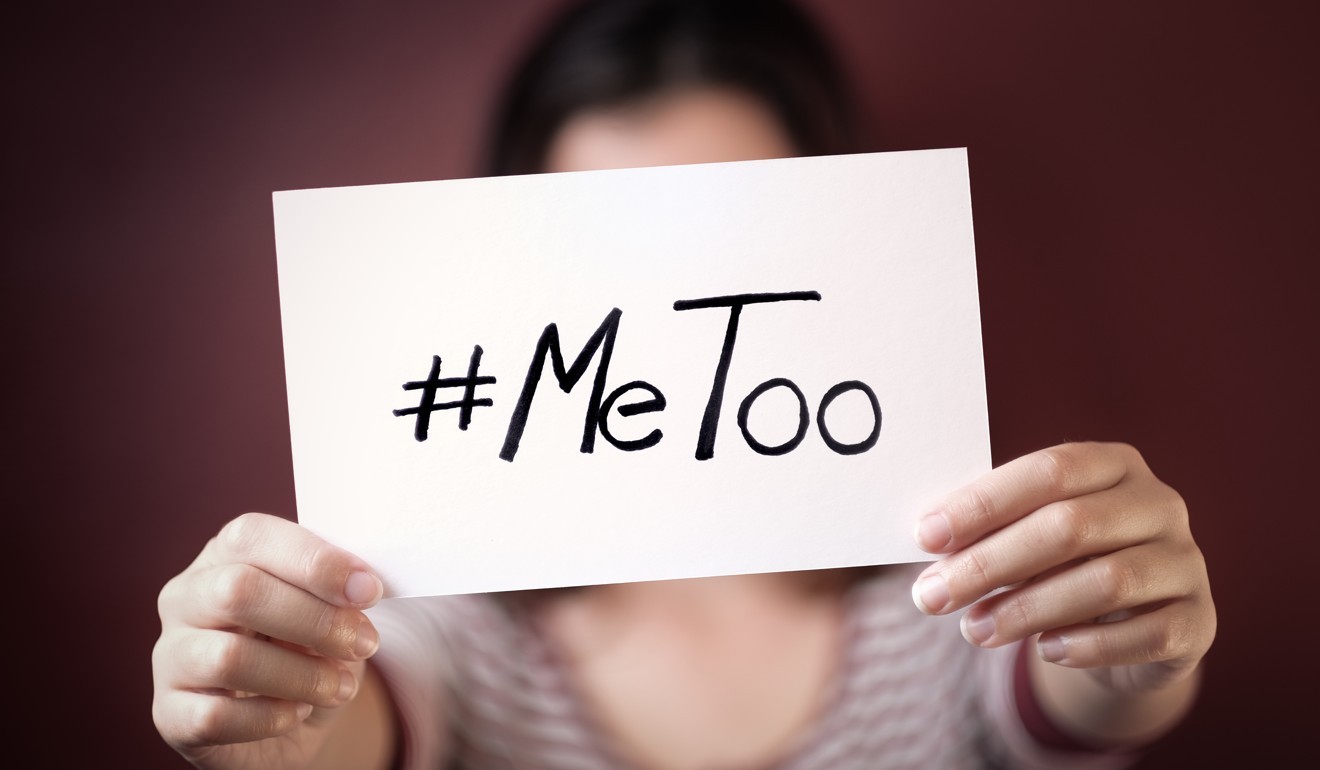
While shaming women for their clothing choices has been an issue for many years, it reached peak public awareness in China after the #MeToo movement took off in the US.
The social media campaign went viral in 2017 when dozens of women accused American film producer Harvey Weinstein of sexual assaults over a period of nearly 30 years.
The #MeToo movement took off in the US in 2017 after dozens of women accused film producer Harvey Weinstein of sexual assault. Photo: Shutterstock
Lu Peng, a researcher from the Shanghai Academy of Social Sciences, said the online debate helped encapsulate conflicts between a growing desire for freedom, gender norms and generations of tradition.
“There will hardly be a consensus on such a question about whether women have the freedom to dress,” he said. “But if this discussion can make people realise that men, not just women, also face restrictions in dressing, then it’s bringing progress.”
The simplest example was to dress for the occasion, which applies to both sexes.
“We have never been free in dressing. We’re only free within a certain extent … About what to wear in public, I don’t think we should emphasise freedom only and ignore the local culture and society,” Lu said.
Keeping a low profile has long been part of the Chinese philosophy. Photo: Xinhua
In China, there is no law banning states of dress or undress in public, nor do the Han people, who make up most of the population, have religious beliefs that restrict their mode of dress. But keeping a low profile and avoiding unwanted attention has long been part of the Chinese philosophy.
“My father will also ask me not to be ‘overexposed’, because he believes it’s increasing the risk of being harassed,” Li, the Shanghai media worker, said.
“They think they mean well, but I just want to be myself. I’m not breaking any law. I want to make my own contribution in changing this culture,” she said.
Source: SCMP
Posted in #MeToo, actress, American film producer, archaic notion, battle, bedroom door, between, bra, brands, camisole, casual, Chinese women, Cicada Creativity, City, cosmopolitan, debate, derogatory, dress, elderly women, Europe, Fashion choices, feminist, fierce, Freedom, frigid, harassment, Harvey Weinstein, home-grown, Hong Kong police, insulting, jeans, judgment, judgmental looks, Kazakh, lingerie, long-running, malicious, middle-aged, mini shorts, morals, most populous nation, North America, one’s character, outrageous, Paris, passers-by, posing, public awareness, quarrelled, reignited, relationship, reveals, Reyizha Alimjan, scantily, secondary, sexual assaults, sexual violence, shaming women, Shanghai, Shanghai Academy of Social Sciences, social media storm, tradition, Uncategorized, uncomfortable, unremarkable, US, Victoria's Secret, wear, wearing, WeChat |
Leave a Comment »
18/02/2019
A Pakistani military court sentenced Kulbhushan Jadhav to death in April 2017 on charges of spying and terrorism after having claimed to have arrested him from its restive province Baluchistan in March 2016.
INDIA Updated: Feb 18, 2019 16:50 IST
Former Indian navy officer Kulbhushan Sudhir Jadhav is seen on a screen during a news conference at the Ministry of Foreign Affairs in Islamabad, Pakistan on December 25, 2017. (Reuters)
India on Monday said its national Kulbhushan Jadhav was sentenced to death by a farcical trial by a Pakistan military court without giving him consular access to India in breach of international law and convention.
Senior lawyer Harish Salve, appearing for India at the International Court of Justice that will hear the case for four days, said Pakistan has no substantive defence in the case and hadn’t even divulged fundamental details of the so-called offences for which Kulbhushan Jadhav had been convicted.
The face off comes against the backdrop of the Pulwama terror attack last week. Over 40 CRPF jawans were killed in the suicide bombing in south Kashmir that has led to national outrage and provoked Delhi to scrap the most favoured nation status to Pakistan.
The world court had stayed Jadhav’s execution in a unanimous order in May 2017 after it was approached by New Delhi. India and Pakistan have submitted written pleadings on several occasions last year.
Jadhav, a former Navy officer, had started a business and was reported to be in Iran in this connection when, according to India, he was kidnapped in March 2016. He turned up in Pakistan a few weeks later in custody of the Pakistani military that claimed to have arrested him from Baluchistan and accused him of spying and espionage.
Salve, a former solicitor general, told the UN court that India had sent 13 reminders for consular access to Jadhav on various dates but had received no positive response from Pakistan.
Also Read : Kulbhushan Jadhav’s story amounts to a déjà vu of India-Pakistan diplomatic lows
He told the court that Pakistan also didn’t share any details of the investigation and the alleged “confession” was obtained from Jadhav even before registering an FIR.
“Considering the trauma he (Jadhav) has been subjected to over the past three years, it would be in the interest of justice of making human rights a reality, to direct his release,” Salve told the 15-judge court.
Also Read: Pakistan will present evidence against Kulbhushan Jadhav in ICJ : FM Qureshi
“India seeks relief in declaring that the trial by the military court in Pakistan… hopelessly fails to satisfy even minimum standards of due process and should be declared unlawful,” he said, attacking the Pakistani government to use the case as a means of propaganda.
Pakistan will present its arguments at the ICJ on February 19. India will reply to Pakistan’s argument on February 20. Pakistan will make its closing submission on February 21.
The ICJ is expected to deliver its judgment a few months later.
Source: Hindustan Times
Posted in Baluchistan, consular access, CRPF, Harish Salve, ICJ, India alert, Islamabad, judgment, Kulbhushan Jadhav, Lawyer, military court, Ministry of Foreign Affairs, Navy officer, Pakistan, propaganda tool, UN court, Uncategorized |
Leave a Comment »






 CHINDIA ALERT: You'll be living in their world, very soon