Archive for ‘Kong Xuanyou’

13/05/2019

China’s top diplomat Yang Jiechi to visit Japan ahead of possible Xi Jinping trip

  • Three-day visit comes ahead of Chinese President’s planned attendance at G20 summit in Osaka next month
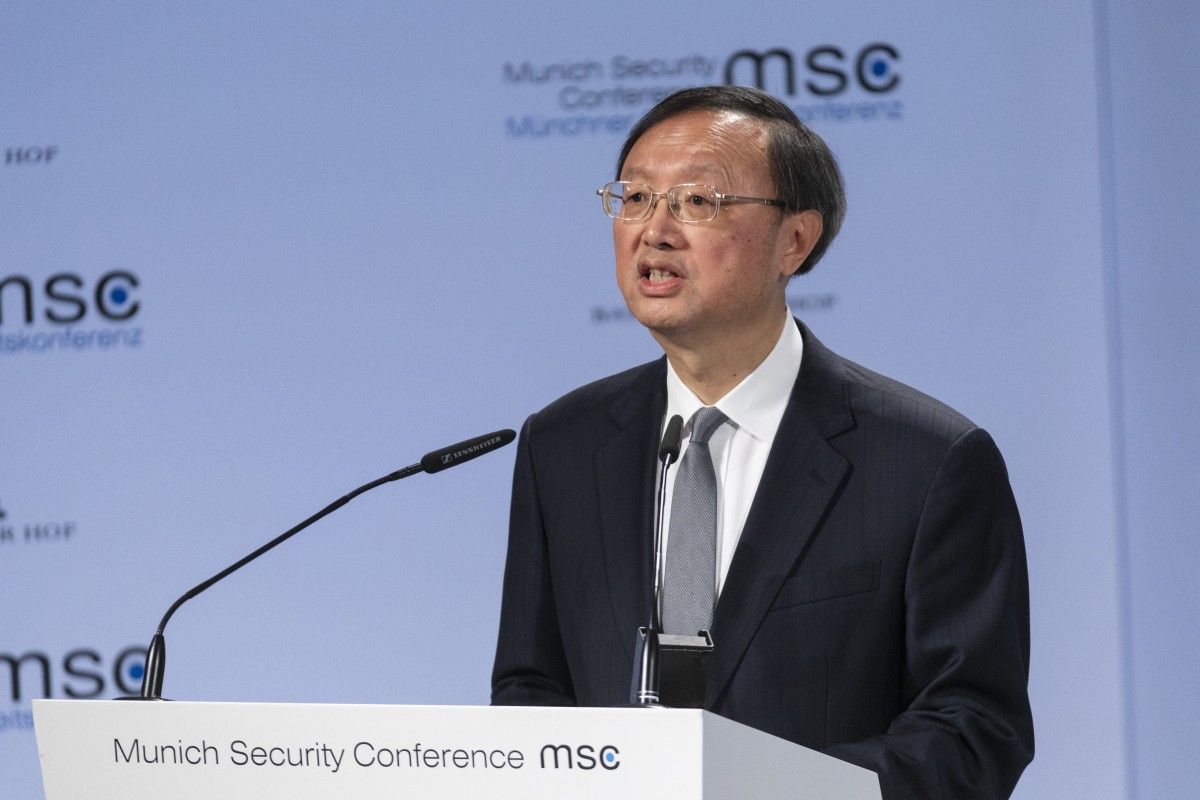
Yang Jiechi’s three-day visit to Japan starts on Thursday. Photo: Bloomberg
China’s top diplomat Yang Jiechi will visit Japan for three days from Thursday, the Chinese Foreign Ministry said on Monday.
The visit is likely to work out details of President Xi Jinping’s planned visit to Japan for this year’s summit of the Group of 20 major economies in Osaka in late June, sources familiar with bilateral relations had said last week.
Yang, a member of the Political Bureau of the Chinese Communist Party’s Central Committee, is likely to meet the country’s national security adviser Shotaro Yachi on Thursday and Prime Minister Shinzo Abe the following day, according to the sources.
Xi’s visit, if it goes ahead, would be his first since he came to power in 2013 and the first by a Chinese head of state since Hu Jintao in November 2010.
Yang and Yachi will also hold the sixth China-Japan high-level political dialogue.
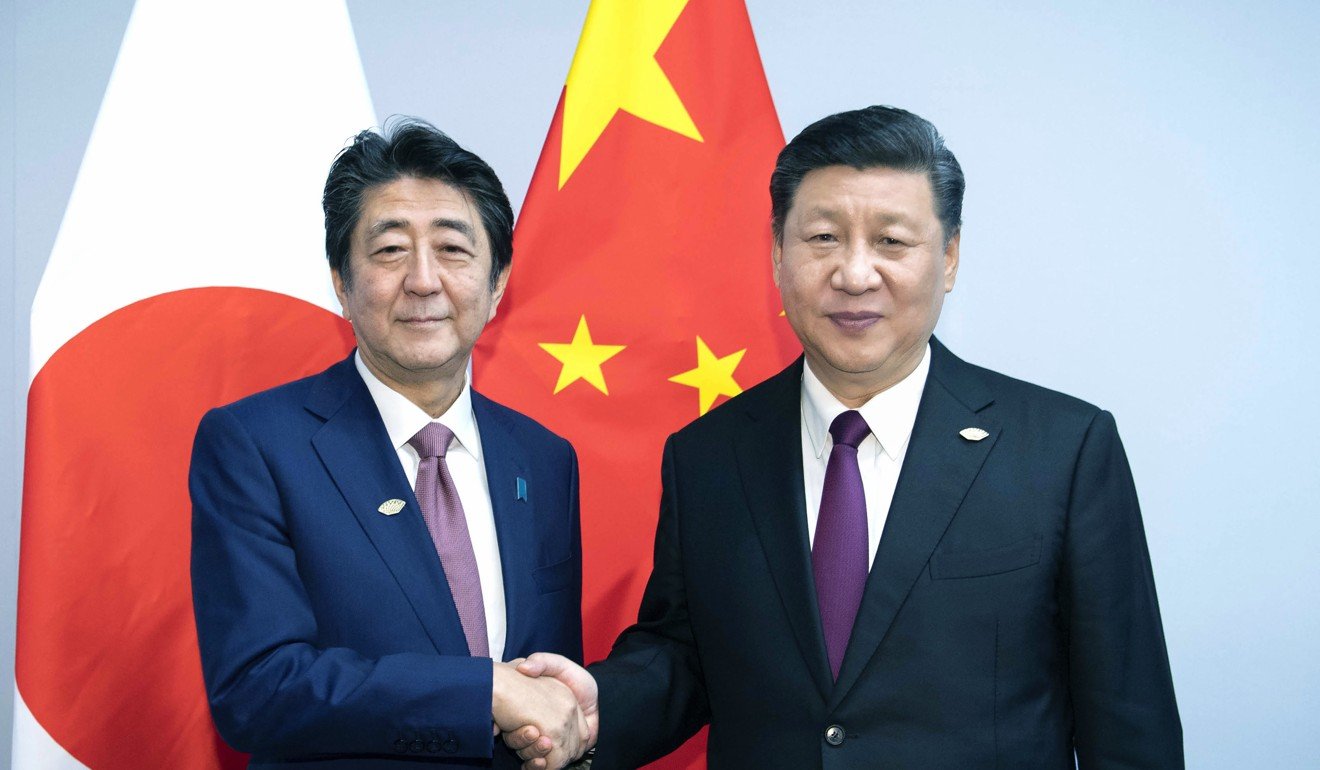
Chinese President Xi Jinping and Japanese Prime Minister Shinzo Abe pictured at the G20 summit in Argentina last year. Photo: AP

At this dialogue, which is an annual consultation plan agreed on by the two sides, the two sides will exchange views on China-Japan relations and issues of common concern, Chinese Foreign Ministry spokesperson Geng Shuang said at a regular press briefing.

For years, the two neighbours have been mired in a territorial dispute over the Senkaku Islands in the East China Sea. The group of uninhabited islets, which are called Diaoyu in Chinese, are controlled by Japan but claimed by China.

But Sino-Japanese ties have been markedly improving recently, with 2018 – the 40th anniversary of the signing and entering into force of the bilateral Treaty of Peace and Friendship – serving as an incentive to forge better relations.
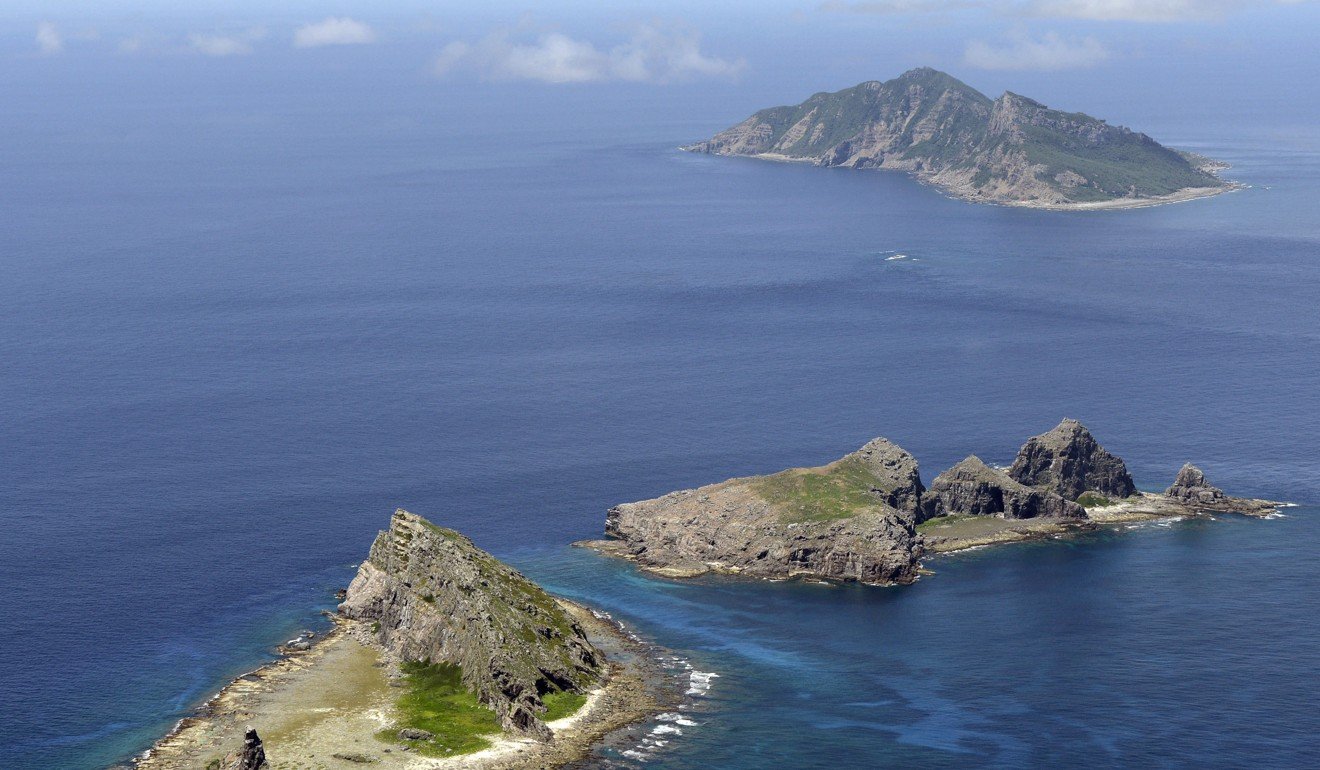
The dispute over the Senkaku – or Diaoyu – Islands is a long-standing barrier to better relations. Photo: Kyodo

In an interview with Japanese media, Chinese vice foreign minister Kong Xuanyou said the relationship between China and Japan has just returned to normal after going through ups and downs over the years, and both sides need to treasure the development.

“China is willing to work with Japan to further promote China-Japan relations,” he was quoted as saying in a Chinese foreign ministry transcript.

Kong also rejected suggestions that ties between China and Japan have become closer because of the China-US trade war – which pushed Beijing to seek support from its neighbours.

“Putting the relations between China, Japan and the US at opposite from each other is a zero-sum game and cold war mentality. China does not agree with it,” he said. “The friendly relationship among these two nations can be developed in parallel. This is welcomed by the region and the world”.

Source: SCMP
20/04/2019

Indian foreign secretary heads to China for talks amid tense relations

  • Vijay Keshav Gokhale is expected to meet Chinese deputy foreign minister Kong Xuanyou and Foreign Minister Wang Yi during two-day visit
  • Beijing’s refusal to sanction a Pakistani militant leader and its belt and road push in the disputed Kashmir region have strained ties
Indian Foreign Secretary Vijay Keshav Gokhale will visit China as part of “regular exchanges” between the two countries. Photo: AFP
Indian Foreign Secretary Vijay Keshav Gokhale will travel to Beijing on Sunday amid tensions between India and China over Beijing’s refusal to sanction a Pakistani militant leader and its infrastructure push in the disputed Kashmir region.
Gokhale’s two-day visit is part of “regular exchanges” between the two nations, the Indian embassy in Beijing said on Saturday.
During his stay, Gokhale is expected to meet Chinese deputy foreign minister Kong Xuanyou and Foreign Minister Wang Yi.

He will return to India on Monday, three days before the second Belt and Road Forum begins in the Chinese capital. Forty foreign leaders will attend the summit on Beijing’s global trade and infrastructure scheme, the “Belt and Road Initiative”, but India is not taking part.

Wang on Friday called on India, and other countries sceptical of the initiative, to join up, dismissing claims that it is a geopolitical tool. He also said China was ready to hold a leaders’ summit with India like the informal meeting held between Chinese President Xi Jinping and Indian Prime Minister Narendra Modi in Wuhan, Hubei province last year.

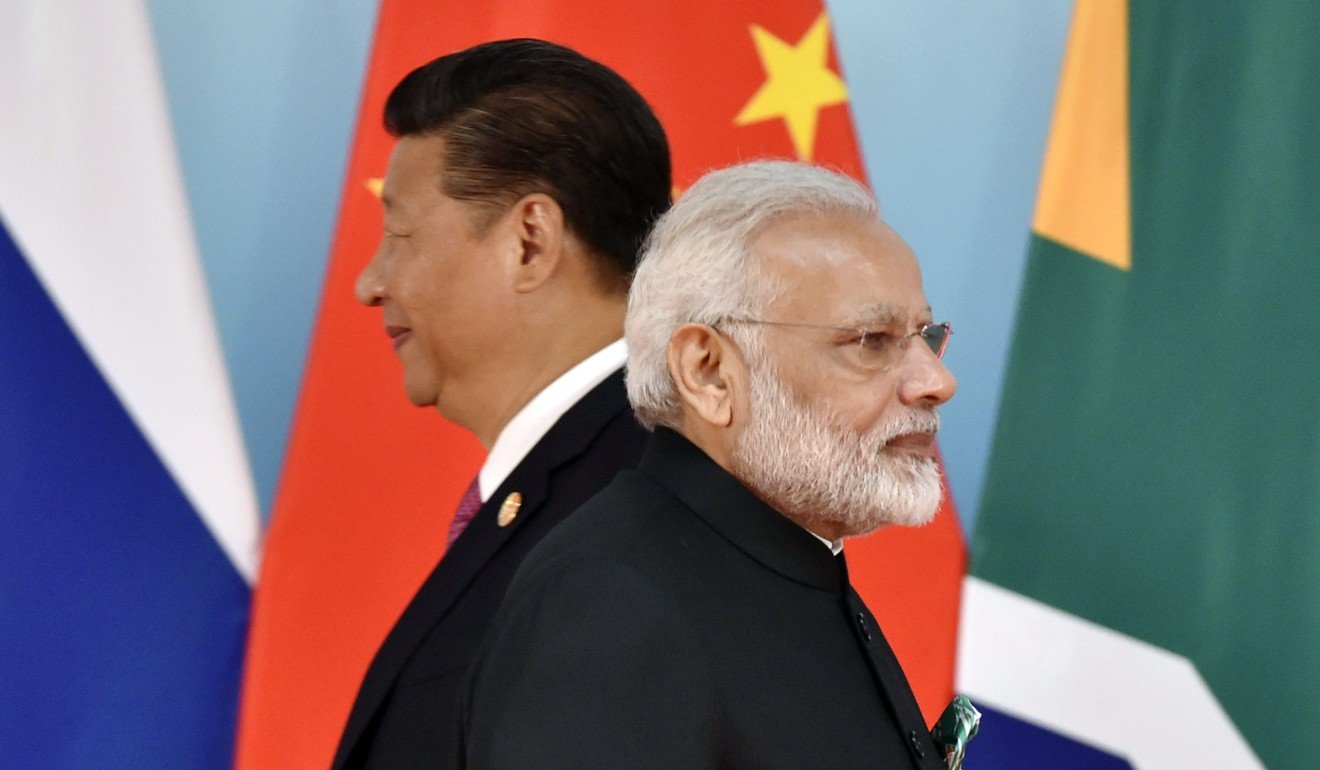
A summit between Xi Jinping (left) and Narendra Modi in Wuhan last year was seen as a breakthrough in China-India relations after the Doklam border dispute. Photo: AFP

Gokhale visited Beijing in February last year, and the Wuhan summit happened two months later. That meeting was seen as a breakthrough in the

China-India relationship

after a 73-day military stand-off over the Doklam plateau.

But the progress was overshadowed in February after a terror strike on Indian security forces in the Jammu and Kashmir province, which killed 40 Indian soldiers. The Pakistan-based Jaish-e-Mohammed group claimed responsibility for the attack. India has long wanted to designate its leader, Masood Azhar, as a terrorist under international law, but China has opposed the move.

During a visit to Pakistan in March, Kong said Beijing and Islamabad were all-weather strategic partners and would support each other on issues to do with their core interests.

What ‘Wuhan spirit’? Kashmir suicide attack reopens Modi’s China wound

Wang Dehua, head of the Institute for South and Central Asia Studies at the Shanghai Municipal Centre for International Studies, said China and India were looking to prevent their bilateral relations from deteriorating further.

“Both nations will elaborate on their stance on this matter, and China will probably deliver a message that the China-India relationship should not be affected by the dispute over Masood Azhar,” he said. “The positive sentiment out of Wuhan has been affected, and the two sides are seeking ways to continue the spirit of that informal summit.”

Du Youkang, director of Fudan University’s Pakistan Study Centre in Shanghai, said preparations for another informal summit of the nations’ leaders would only begin after India’s general election was over. Polling is being held in seven phases ending on May 19.

Gokhale’s trip would mainly be a chance to see how the two nations can push forward bilateral ties amid their disputes, Du said.

In addition to Azhar, India is also dismayed that some of China’s belt and road projects pass through the Pakistan-administered section of the disputed Kashmir region.

But Wang told reporters on Friday that the initiative did not target any third country, and that relations between China and India had improved after the Wuhan summit.

Source: SCMP

07/03/2019

China praises Pakistan for ‘restraint’ with India, Islamabad says thank you

The Chinese foreign ministry on Thursday released a statement in Chinese following the visit of vice-foreign minister Kong Xuanyou to Pakistan, lauding Islamabad’s response.

WORLD Updated: Mar 07, 2019 16:42 IST

Sutirtho Patranobis
Sutirtho Patranobis
Hindustan Times, Beijing
China,Pakistan,Islamabad
Kong visited Pakistan as Islamabad faced pressure from global powers to act against groups carrying out attacks in India, including Jaish-e-Mohammed (JeM), which claimed responsibility for the February 14 attack that killed 40 CRPF personnel in Pulwama.(REUTERS File Photo)

China has praised Pakistan for its handling of the tense situation with India, appreciating Islamabad’s “restraint” in the aftermath of the Pulwama terror attack in Jammu and Kashmir in February.

The Chinese foreign ministry on Thursday released a statement in Chinese following the visit of vice-foreign minister Kong Xuanyou to Pakistan, lauding Islamabad’s response.

“China has paid close attention to the present situation between Pakistan and India, and appreciates Pakistan remaining calm and exercising restraint from the beginning, and persisting in pushing to lower the temperature with India via dialogue,” the foreign ministry statement said.

It paraphrased Kong’s discussions with Pakistan’s leadership comprising Prime Minister Imran Khan, army chief General Qamar Javed Bajwa and foreign minister Shah Mehmood Qureshi.

Kong visited Pakistan as Islamabad faced pressure from global powers to act against groups carrying out attacks in India, including Jaish-e-Mohammed (JeM), which claimed responsibility for the February 14 attack that killed 40 CRPF personnel in Pulwama.

The Pulwama suicide attack – the worst in Kashmir in decades – led to the most serious conflict in years between the nuclear-armed neighbours with India carrying out a strike on a JeM camp in Balakot and then a dogfight over the skies of Kashmir.

Kong was quoted as telling the Pakistani leadership that China maintains that the sovereignty and territorial integrity of all countries should be earnestly respected and that Beijing is unwilling to see acts that violate the norms of international relations.

The statement quoted Kong as saying that China calls on Pakistan and India to refrain from taking actions to aggravate the situation, show goodwill and flexibility, launch dialogue as soon as possible, and work together to maintain regional peace and stability.

According to the statement, the Pakistani leaders appreciated China’s objective and fair position on the situation in Pakistan and India and thanked China for its efforts to promote the cooling of the situation.
It added that the Pakistani side reiterated that it is unwilling to see an escalation of the situation and is willing to resolve the contradictions and differences between the two sides through dialogue and peacefully, and welcomes China and the international community to play an active role in this regard.
Source: Hindustan Times
Law of Unintended Consequences

continuously updated blog about China & India

ChiaHou's Book Reviews

continuously updated blog about China & India

What's wrong with the world; and its economy

continuously updated blog about China & India