15/05/2020
- Hungarian Foreign Minister Peter Szijjarto tells Chinese counterpart, Wang Yi, that his country ‘always upholds the one China principle’
- Wang also speaks to foreign ministers of Estonia and Bosnia and Herzegovina ahead of World Health Assembly, which starts on Monday
Chinese Foreign Minister Wang Yi spoke to three European foreign ministers on Thursday. Photo: AP
Hungary supports Beijing’s efforts to prevent
Taiwan taking part in the upcoming World Health Assembly (WHA), according to a Chinese statement issued after a telephone conversation between the two countries’ foreign ministers.
China’s Foreign Minister Wang Yi called his European counterpart, Peter Szijjarto, on Thursday, the foreign ministry in Beijing said.
During the call, Szijjarto told Wang that Budapest would not support Taiwan’s accession to the World Health Organisation (WHO) ahead of the annual gathering of health ministers from around the world that starts in Geneva on Monday and which Taipei is keen to attend.
Hungary “always upholds the one China principle”, Szijjarto was quoted as saying.
A report about the ministers’ call by the Hungarian foreign ministry, however, made no mention of Taiwan.
It said that Szijjarto thanked Wang for the medical supplies China had sent to Hungary board 121 flights since the start of the Covid-19 pandemic.
The pair also discussed cooperation on 5G and the development of a rail project between Budapest and the Serbian capital, Belgrade, it said.
Beijing opposes Taiwan’s involvement in the WHO. Photo: EPA-EFE
As well as speaking to Szijjarto, Wang called the foreign ministers of Estonia and Bosnia and Herzegovina on Thursday to discuss the Covid-19 pandemic, but Taiwan was not mentioned, the Chinese statement said.
Taipei donated 80,000 face masks to Estonia in April, and last week, Urmas Paet, an Estonian member of the European parliament urged Budapest to support Taiwan’s membership of the WHO and “not allow itself to be manipulated by China”.
Taiwan has long campaigned to regain observer status at the WHO and has ramped up those efforts since the start of the global health crisis. Despite the devastation caused by Covid-19,
Taiwan has reported just 440 confirmed cases and seven deaths.
Taiwan attended the WHA meetings as an observer between 2009 and 2016, unopposed by Beijing as at the time the island was led by president Ma Ying-jiu from the mainland-friendly Kuomintang.
However, relations between Taipei and Beijing have soured since 2016 and the election of
President Tsai Ing-wen, from the pro-independence Democratic Progressive Party, who won a second term of office in January.
WHO put nations at risk by excluding Taiwan from knowledge sharing, US report says
13 May 2020
Taiwan has not been alone in its campaign to regain its WHO status, with the United States, Australia, New Zealand, Canada and several European countries backing the move.
Last week, US Secretary of State Mike Pompeo called on all nations to support Taipei’s participation as an observer at the WHA, and urged WHO director general Tedros Adhanom Ghebreyesus to allow it.
Despite the support, Taiwan’s Vice-Premier Chen Chien-jen said on Thursday that because of the pressure from Beijing there was now little chance of Taiwan attending the WHA.
China’s foreign ministry spokesman Zhao Lijian said last week it was “resolutely opposed” to New Zealand’s support for Taiwan.
In his calls to Europe, Wang also said that cooperation between Beijing and 17 central and eastern European nations – under the “17+1” banner – would not be affected by the health crisis and that further talks would be held once it had been brought under control.
Source: SCMP
Posted in 5G, around the world, Australia, Beijing, Belgrade, Bosnia, Budapest, canada, cooperation, Covid-19 pandemic, Democratic Progressive Party, development, Estonia, European countries, foreign ministers, Geneva, health ministers, Herzegovina, Hungarian Foreign Minister, Hungary, Kuomintang, medical supplies, membership, Mike Pompeo, New Zealand, one-China principle, opposing, President Tsai Ing-wen, pro-independence, rail project, Serbian capital, stands, Taipei, Taiwan’s, Uncategorized, United States, US Secretary of State, Wang Yi, World Health Assembly, World Health Organisation |
Leave a Comment »
29/04/2020
- Hardline politicians want president to fulfil promise to overhaul constitution to reflect the self-ruled island’s political reality
- A petition calls for two referendums on the issue – proposing it either be replaced with a new one or revised
The push for constitutional change could lead to a cross-strait conflict. Photo: Handout
Taiwanese President Tsai Ing-wen is under growing pressure from the hardline camp to push for constitutional change to reflect the self-ruled island’s independent status – something observers say could provoke a cross-strait conflict.
With Tsai due to be sworn in for a second four-year term next month after a landslide victory in January’s election, hardline pro-independence politicians want her to fulfil a 2015 campaign promise: to overhaul the constitution so that it reflects Taiwan’s political reality. The process has been stalled since Tsai’s first term, which began in 2016.
Leading the charge is the Taiwan New Constitution Foundation, a group formed last year by a Tsai adviser and long-time independence advocate Koo Kwang-ming.
The foundation launched a petition at the end of March calling for two referendums on the constitution – proposing that it either be replaced with a new one or revised.
The existing constitution was adopted when Kuomintang leader Chiang Kai-shek and the KMT fled to Taiwan and set up an interim government in 1949 following their defeat by Mao Zedong’s communists in mainland China.
Drawn up in 1947, the constitution still puts the mainland and Mongolia under the Republic of China jurisdiction – Taiwan’s official name for itself. In reality, its jurisdiction extends only to Taiwan and its outlying islands of Penghu, Matsu and Quemoy, which is also known as Kinmen.
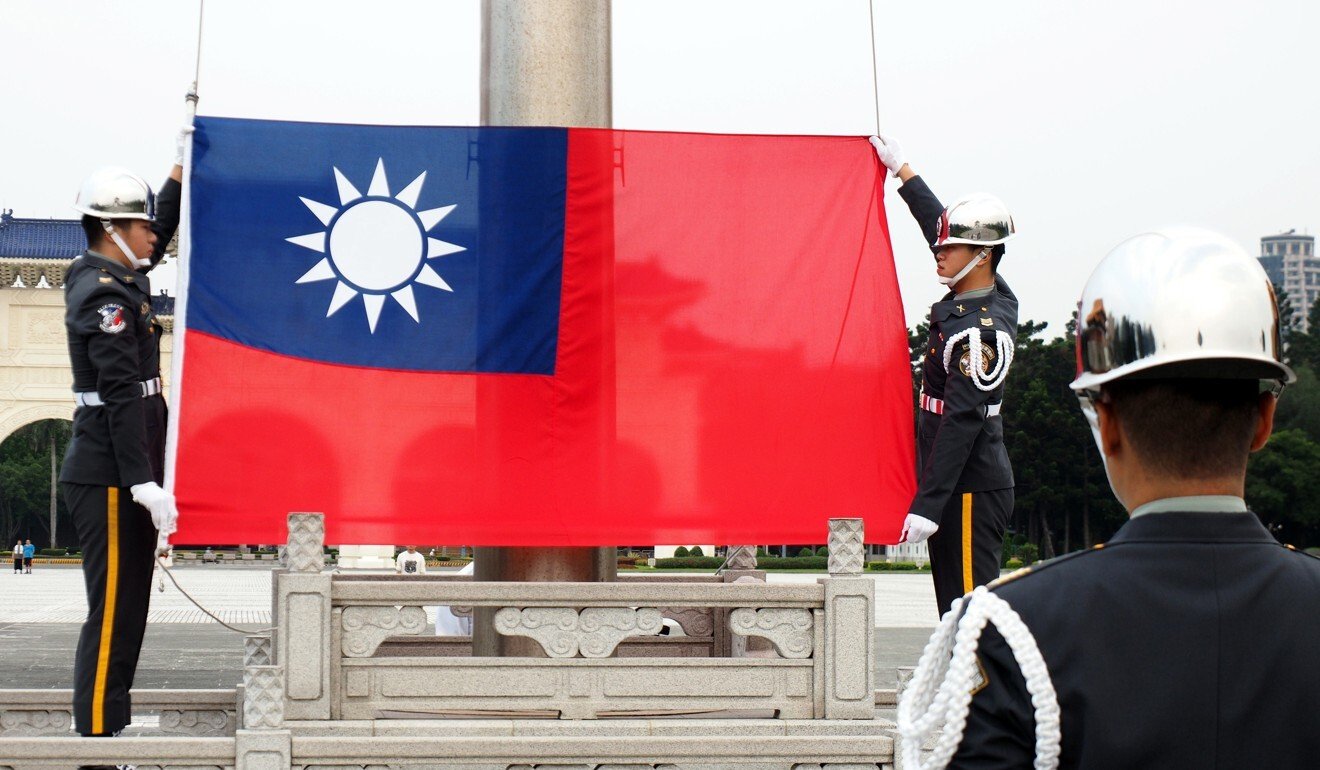
Taiwan’s constitution was adopted when KMT leader Chiang Kai-shek fled to the island in 1949. Photo: Handout
“We have garnered more than 3,000 signatures from the public for the first phase of initiating the proposals to hold two referendums asking the president to push for constitutional change,” Lin Yi-cheng, executive director of the Taiwan New Constitution Foundation, said on Wednesday.
He said they would propose that voters be asked two questions in the referendums: “Do you support the president in initiating a constitutional reform process for the country?”
And: “Do you support the president in pushing for the establishment of a new constitution reflecting the reality of Taiwan?”
“We’re ready to send the two referendum proposals to the Central Election Commission on Thursday,” he said.
Confusion prompts call for China Airlines name change in Taiwan, but at what cost?
Under Taiwan’s Referendum Act, the process for holding a referendum involves three stages: a proposal, endorsement and voting.
Lin said there should be no problem for the commission to approve the proposal stage since they had gathered far more than the minimum 1,931 signatures needed under the act.
The endorsement stage requires a minimum of 290,000 signatures, and if the referendum is held, they will need at least 5 million votes.
Lin said if the process went smoothly, he expected a referendum could be held in August next year, allowing time for review and making the necessary arrangements.
He said if the referendum questions got enough public support, Tsai would need to deal with the issue.
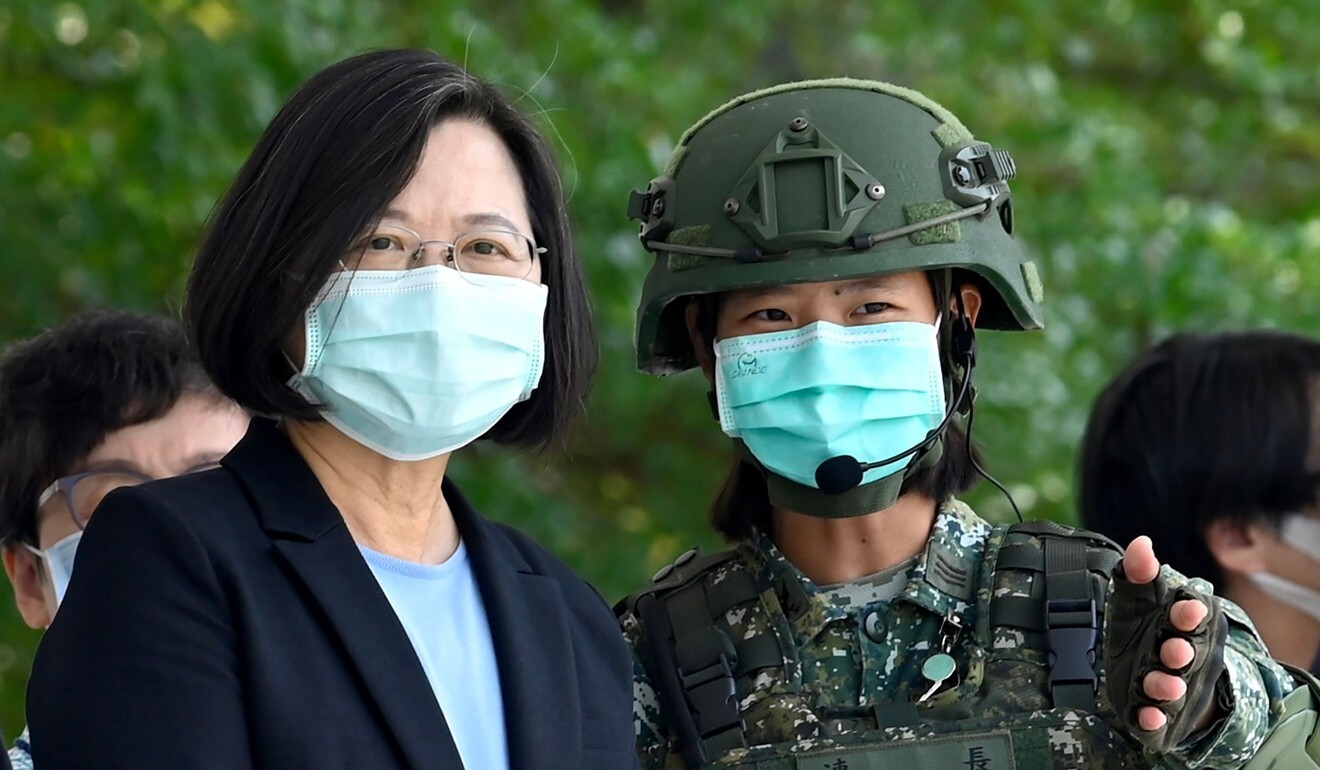
Tsai Ing-wen visits a military base in Tainan earlier this month. The pressure for constitutional change creates a dilemma for the president. Photo: AFP
Tsai’s Democratic Progressive Party government has been tight-lipped over the constitutional change issue, which Beijing sees as a move for the island to declare formal independence from the mainland.
Beijing considers Taiwan a wayward province that must be returned to the mainland fold, by force if necessary, and it has warned Tsai against declaring formal independence.
A DPP official said the foundation’s push would put Tsai in a difficult position.
“If she ignores the referendums, she will come under constant pressure from the hardline camp, and if she seriously considers taking action and instituting a new Taiwan constitution, she will risk a confrontation with Beijing, the consequence of which could be a cross-strait conflict,” said the official, who requested anonymity.
On Tuesday, Zhu Fenglian, a spokeswoman for the mainland’s Taiwan Affairs Office, warned the island against holding any referendum on constitutional revision, saying it would be doomed to end in an impasse and would ultimately fail.
“It will only push Taiwan towards an extremely dangerous abyss and bring disasters to Taiwanese compatriots,” she said.
Chinese air force’s drill ‘aimed at signalling deterrent around Taiwan’
But according to Wang Kung-yi, a political science professor at Chinese Culture University in Taipei, Tsai should not be too worried about the hardline camp move.
“The hardline camp has been marginalised greatly in the past several years as reflected by the poor showing in the legislative elections in January,” Wang said, adding that he expected Tsai to continue her relatively moderate cross-strait policy of not sharply provoking the mainland.
Source: SCMP
Posted in 1949, 2015, 2016, also known as, amid, August, be replaced, Beijing, by force, call for, calls for, campaign, Central Election Commission, Change, Chiang Kai-shek, China Airlines, Communists, confusion, considers, Constitution, constitutional, creates, cross-strait conflict, declare, defeat, Democratic Progressive Party, dilemma, earlier, either, Election, endorsement, fled, formal independence, four-year term, Hardline politicians, independent, island, islands, issue, January’s, jurisdiction, Kinmen, KMT, Kuomintang, mainland, Mainland China, Mao Zedong’s, March, marginalised, Matsu, military base, Mongolia, move for, name change, necessary, new one, next month, next year, observers, outlying islands, overhaul, Penghu, Petition, political reality, political science professor, politicians, President, pressure, pro-independence, promise, prompts, proposal, proposing, provoke, push for, Quemoy, Referendum Act, referendums, Republic of China, returned, revised, second, sees, self-ruled, status, sworn, Tainan, Taipei, Taiwan, Taiwan Affairs Office, Taiwan New Constitution Foundation, Taiwanese President, this month, Thursday, tight-lipped, to fulfil, to reflect, Tsai, Tsai Ing-wen, two, Uncategorized, under pressure, Voting, warned, wayward province |
Leave a Comment »
25/03/2020
- Large-scale drills conducted across island in what defence ministry describes as test of combat-readiness
- Exercise follows US Navy live-fire exercise last month and a series of incursions by Chinese warplanes in recent weeks
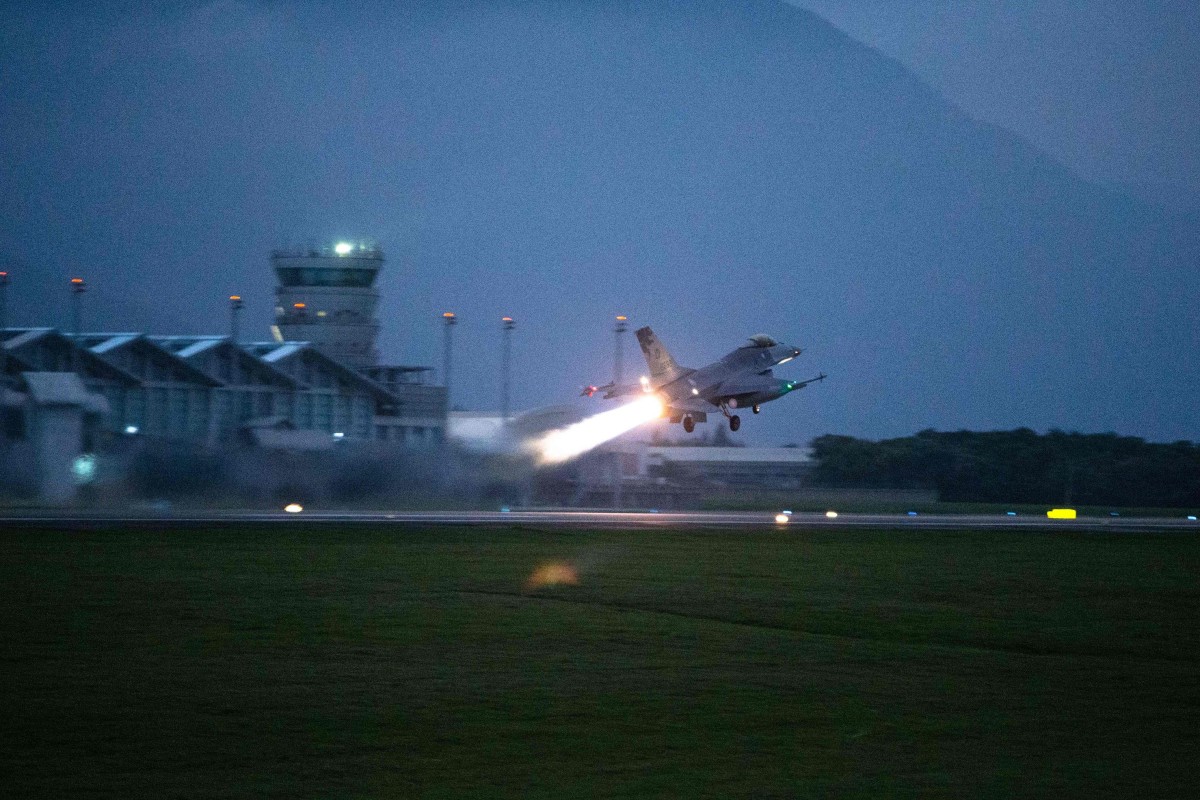
An F-16 fighter takes off from Hualien air base in eastern Taiwan. Photo: Military News Agency/ AFP
Taiwan has staged large-scale military drills throughout the island, including an exercise to repel an invading force, against a backdrop of rising tensions with Beijing.
The exercises, dubbed “Lien Hsiang,” involved the air force, army and the navy and were conducted on Tuesday from various military bases and strongholds in Taiwan, the island’s defence ministry said in a statement.
“The drills were designed to test the combat readiness of our forces and their responses to an all-out invasion by the enemy,” the ministry said, referring to the People’s Liberation Army, which has threatened to attack the self-ruled island.
The exercise follows a live-fire US drill in the region last week.
Taipei says Chinese military aircraft flew night exercise across Taiwan Strait
Eight F-16 fighter jets took off from the air force base in the eastern county of Hualien at dawn on Tuesday, simulating an emergency mission to scramble and intercept enemy warplanes entering the island’s airspace, the defence ministry said.
Elsewhere on the island, F-16 and other fighter jets were spotted taking off from other air force bases in the southwestern county of Chiayi, the northern county of Hsinchu, Ching Chuan Kang in central Taiwan and the southern city of Tainan, according to Taiwanese media.
The exercises also involved operations testing cyberwarfare capabilities, while the air force ground crew simulated an emergency repair of the aircraft runway, the ministry said.
Anti-air units of both the army and the navy also joined the air force in the drills, while various types of naval warships, including Kidd-class destroyers, plus Perry and Kang Ding-class frigates, were deployed near Taiwan’s coast for separated training drills, it added.
The ministry said the training mission, carried out without live ammunition, was also designed to test the military response and make improvements based on the results.
Hundreds of Taiwanese to return from coronavirus centre after Beijing and Taipei reach deal
Beijing considers Taiwan a wayward province that must be returned to the mainland fold, by force if necessary.
Beijing has staged a series of war games close to the island and poached seven of Taiwan’s diplomatic allies to heap pressure on President Tsai Ing-wen, from the independence-leaning Democratic Progressive Party, who was re-elected in January.
The exercises came after recent missions by PLA warplanes which briefly crossed the midpoint of the Taiwan Strait into the Taiwanese side in what analysts saw as testing the response from Taiwan and the US.
Three separate groups of warplanes approached Taiwan on their way to the western Pacific over the Bashi Channel for long-distance training exercises before returning home over the Miyako Strait to the northeast of Taiwan on February 9, 10 and 28.
Coronavirus threat shows ‘unacceptability’ of Beijing isolating Taiwan, US official says
On March 17, another flight of PLA warplanes approached Taiwan in a rare exercise which analysts said was aimed at showing off their night navigation and all-weather capabilities.
Taiwan’s air force scrambled fighter jets to shadow, intercept and disperse the PLA warplanes through radio warnings during each approach by the mainland’s planes, according to the ministry.
Those actions also prompted the US to send two B-52 bombers on southbound flights off Taiwan’s east coast, while a transport plane flew over the Taiwan Strait, the defence ministry said.
On Tuesday, the US Navy’s 7th Fleet also revealed that the US Navy had carried out live-fire missile tests in the Philippine Sea last week, in what analysts said was a message that it was up to the challenge of the Chinese military’s new systems.
DPP legislator Wang Ting-yu asked the Tsai government to take note of developments in the South China Sea, saying the US actions indicated that Washington must have learned “certain information suggesting that the Chinese government is planning certain military activities” or the 7th Fleet would not have made such a bold move.
Posted in 7th Fleet, air force, aircraft runway, army, ‘unacceptability’, B-52 bombers, Bashi Channel, Beijing, Chiayi, Chinese warplanes, Ching Chuan Kang, coronavirus, cyberwarfare capabilities, Democratic Progressive Party, emergency repair, exercise, F-16 fighter, fight off, Hsinchu, Hualien air base, incursions, isolating, Kidd-class destroyers, Kuomintang, Military, Miyako Strait, mock invasion, naval warships, navy, Pacific, Perry and Kang Ding-class frigates, PLA warplanes, President Tsai Ing-wen, stages, Taipei, Taiwan, Taiwan Strait, Taiwanese, threat, Uncategorized, US Navy live-fire exercise, Washington, wayward province |
Leave a Comment »
28/12/2019
BEIJING (Reuters) – China’s largely rubber stamp parliament revised a law on Saturday to simplify investment procedures for Taiwan companies, in another attempt by Beijing to show goodwill to the Chinese-claimed island ahead of elections there on Jan. 11.
China, with its 1.3 billion people, is Taiwan’s favourite investment destination with Taiwan companies investing more than $100 billion there since China began landmark economic reforms in the late 1970s, drawn by a common culture and low costs.
China has extended what it views as olive branches to Taiwan in the run-up to the election, including opening further sectors to Taiwanese investors, with the ultimate goal of enticing the island to accept Beijing’s control.
Taiwan’s government has warned against falling for China’s inducements and has called on China instead to grant its own people democracy and freedom of speech. China has never renounced the use of force to bring Taiwan under its control.
The revised law removes several layers of bureaucracy to simplify procedures for investment from Taiwan, with the aim of encouraging more of it.
Chinese commerce ministry official Jiang Chenghua told reporters the central government “paid great attention” to protecting and encouraging Taiwan investment and it had support from the highest levels, including President Xi Jinping.
“Although the revised clauses are not many, they are of great significance and are conducive to optimising the investment environment for Taiwan compatriots in the mainland and to further expand economic and trade exchanges and cooperation between the two sides,” Jiang added.
The revision is designed to dovetail with a new foreign investor law which comes into force on Jan. 1. Chinese Commerce Minister Zhong Shan said this week he wanted “our Taiwan compatriots to share the benefit of this great change”.
Taiwan says China has been stepping up its efforts to sway electors and is planning an anti-infiltration law to counter Chinese influence efforts, which could pass next week.
Next month’s elections pit President Tsai Ing-wen of the pro-independence Democratic Progressive Party against Han Kuo-yu of the main opposition party the Kuomintang, which favours close ties with China.
China is Taiwan’s top trading partner, with trade totalling $226 billion in 2018. Taiwan runs a large trade surplus with China.
Taiwan has been trying to wean itself off its reliance on China and to encourage Taiwan companies to come back home or to shift their investments to other parts of the world, notably Southeast Asia.
Taiwan’s economy has benefited from its firms moving manufacturing back to the island to escape higher tariffs from the China-U.S. trade war, though the dispute has also caused some disruption for Taiwan’s economy.
Source: Reuters
Posted in Beijing, China alert, China-U.S. trade war, Chinese Commerce Minister, Democratic Progressive Party, Kuomintang, new, offers, pre-election inducement, President Tsai Ing-wen, President Xi Jinping, revised law, Taiwan, Uncategorized |
Leave a Comment »
28/05/2019
- Tsai meets leaders of 1989 pro-democracy movement to bolster credentials for protecting island’s democracy
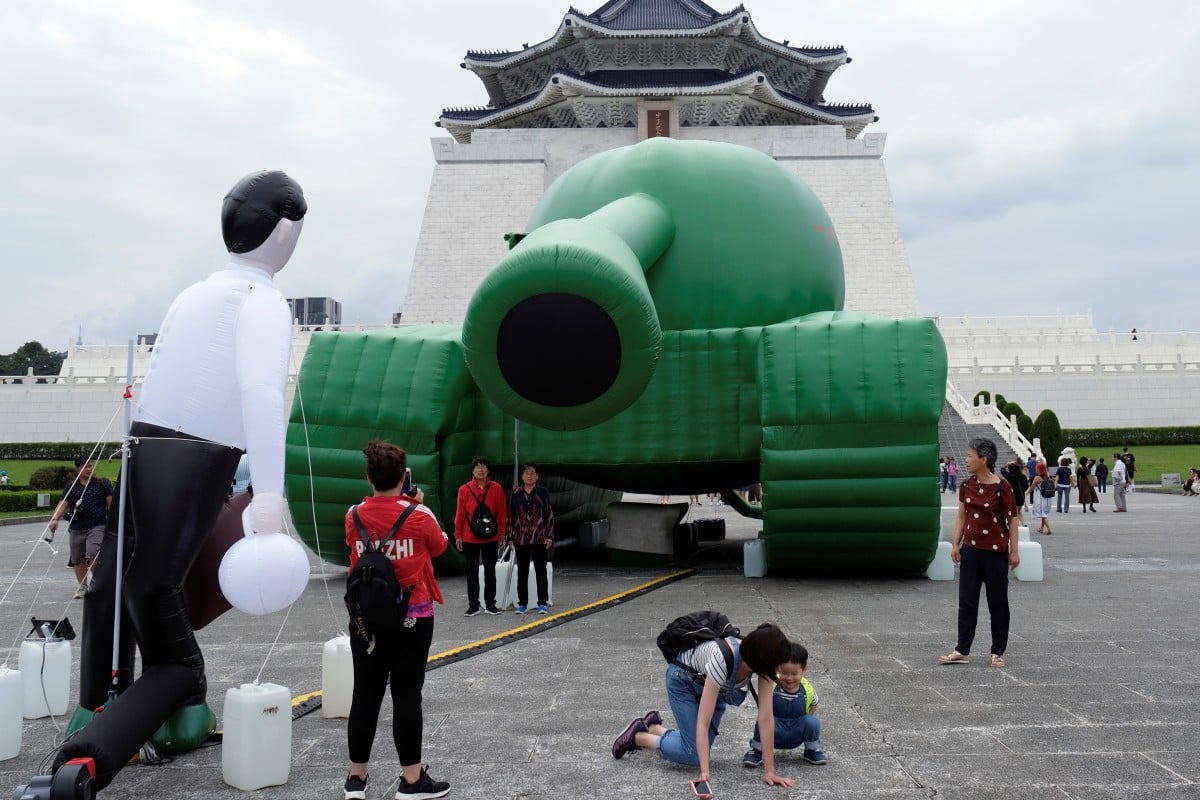
An installation recreating the celebrated Tank Man photograph in Taipei’s liberty square. Photo: Reuters
Taiwanese President Tsai Ing-wen met a group of exiled Tiananmen protesters on Thursday, a move that further burnishes her credentials for standing up to Beijing.
She said the bloody crackdown on the student protesters in 1989 should remind Taiwan that it must firmly reject the “one country, two systems” formula put forward by Beijing for reunification to safeguard its sovereignty, freedom and democracy.
“We don’t want to mislead the other side into making a wrong judgment nor do we want to let down those who support democracy and freedom as a result of an ambiguous answer by a Taiwanese president,” Tsai told her visitors.
“There is no room for ambiguity or dodging when the ‘one country, two systems’ proposal was raised, and we must clearly state that this is not a proposal that we, who have enjoyed freedom, democracy and human rights, could accept.”
The group of mainland émigrés included former Tiananmen student leaders such as Wang Dan, Wang Juntao, Deng Biao, Zhou Fengsuo and Fang Zheng, who were visiting Taiwan for a three-day international forum held to mark the 30th anniversary of the crackdown.
At the start of the year Chinese President Xi Jinping proposed that the two sides should start cross-strait unification talks under the one country, two systems model used to reunite Hong Kong and Macau with the mainland – a model that Tsai flatly rejected saying the two cities had no real autonomy.
In a statement issued by the presidential office, Tsai also noted the different course Taiwan and mainland China had taken over the past 30 years, with the island developing a fully fledged democracy while Beijing has tightened its curbs on freedom of speech.
She also accused Beijing of infiltrating free societies and undermining others’ freedoms using disinformation or hi-tech and commercial weapons.
Taiwanese President Tsai Ing-wen says the 1989 killings highlight the importance of standing up to Beijing. Photo: EPA-EFE
In the meeting, Tsai sharply criticised Chinese Communist leaders for suppressing the pro-democracy student movement in 1989 and failing to restore the activists’ rights.
Teng Biao, one of the visitors, said it was the first time Tsai had set up a meeting with so many pro-democracy activists.
Despite her sharply worded comments, Tsai and her independence-leaning Democratic Progressive Party have generally kept their distance from the Tiananmen exiles, some of whom support cross-strait unification.
Since the DPP’s first election victory in 2000, increasing numbers of people on the island have identified themselves primarily or exclusively as Taiwanese rather than Chinese, and events to mark the 1989 crackdown have dwindled.
On the 20th anniversary of the June 4 killing more than 200,000 people took part in a memorial event in Hong Kong, a sharp contrast to the handful of people who marked the event in Taiwan.
“I guess that might be because we no long cared that much about the [1989] incident over the years. June 4 is just a symbol we use to justify our push for further democracy in Taiwan,” said Chen Wei-ting, a former leader of the Sunflower movement that formed in 2014 to protest against a cross-strait trade deal with the mainland.
Analysts said Tsai hoped the Tiananmen anniversary would remind people of the need to reject the mainland’s overtures to protect Taiwan’s hard-won democracy.
“By reiterating her stand against one country, two systems, Tsai has built up her image as being the leader who is willing to defend Taiwan’s sovereignty despite mounting pressure from Beijing,” said Wang Kung-yi, a professor of political science at Chinese Culture University in Taipei.
Tsai, who is running for a second four-year term in January, has seen her approval rating rebound recently to around 40 per cent from a low of 20 per cent after the DPP’s humiliating defeat in last year’s local government elections.
The mainland-friendly Kuomintang made a string of gains at the DPP’s expense to punish it for unpopular labour and pension reforms and the economy’s poor performance.
Source: SCMP
Posted in Beijing, Chen Wei-ting, Chinese Culture University, DPP, highlights, Hong Kong, Kuomintang, local government elections, professor of political science, Sunflower movement, Taipei, Taiwanese President, Tiananmen crackdown, Tsai Ing-wen, Uncategorized, Wang Kung-yi |
Leave a Comment »
27/02/2019
- Different social systems should not be ‘a barrier to unification or an excuse for separation’, according to mainland’s cross-strait affairs office
- After Quemoy began importing water from Fujian in August, preliminary research has been done to supply water to Matsu chain and electricity to both
Taiwan-controlled Quemoy Island – which is just 2km from Xiamen – began importing water from the mainland in August. Photo: Weibo
Beijing says it is prepared to supply electricity and water to islands controlled by Taipei in the Taiwan Strait despite escalating tensions between the two sides.
An Fengshan, spokesman for the Taiwan Affairs Office in Beijing, also said their different social systems should not be “an excuse” to separate the country, and any deal between the mainland and Taipei should be struck in the interests of a “peaceful unification” agenda.
Speaking at a monthly press briefing on Wednesday, An said the mainland could supply power and water to meet the needs of residents on Quemoy, also known as Kinmen, and the Matsu island group. Controlled by Taipei, the islands are located off the mainland’s southeastern Fujian coast – Quemoy is just 2km from Xiamen – and have been on the front line of cross-strait tensions since 1949.
Taiwan’s cold war island begins to thaw
“The people of the Quemoy and Matsu islands have long hoped that the mainland could help to resolve the difficulties they face with power and water shortages, and they have made numerous appeals for gas and bridge connections [with the mainland],” An said.
“Our attitude is very clear – that in regards to these demands, the mainland will make every effort to provide opportunities and conditions to help them achieve bigger and better development.”
An said Fujian province authorities had completed preliminary research and planning to supply electricity to the Quemoy and Matsu islands, as well as water to the Matsu chain. Plans to supply gas and build bridges were expected in the future, he said, without elaborating.
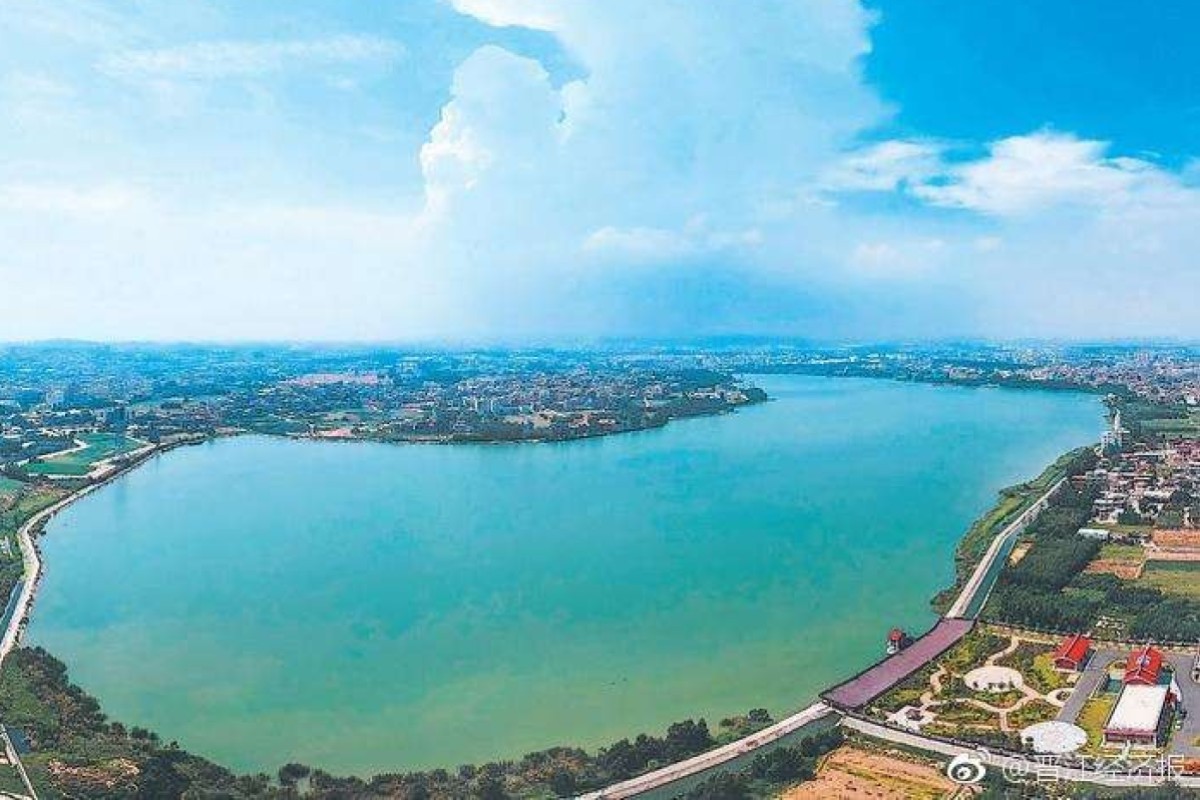
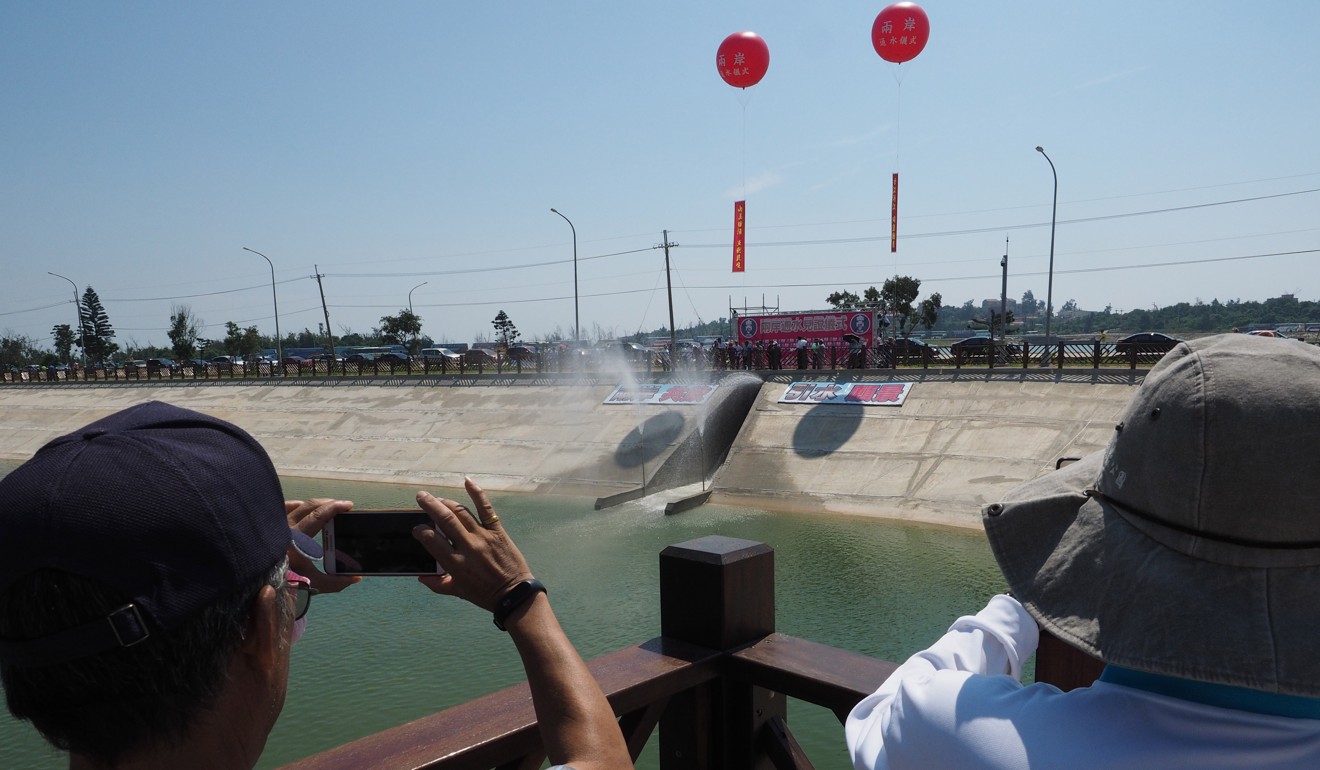
Water is released into the Tianbu Reservoir on Quemoy island in August when the mainland supply began. Photo: EPA-EFE
Quemoy began importing water from Fujian to ease its water shortage in August, three years after it signed a 30-year agreement with the mainland province to supply water via an undersea pipeline.
Beijing sees Taiwan as a breakaway province subject to eventual reunification, by force if necessary. Relations across the strait soured after Tsai Ing-wen, of the independence-leaning Democratic Progressive Party, became president in 2016 and refused to accept the one-China principles.
Since then, mainland China has stepped up pressure on Taiwan, suspending official communications with the Tsai government, poaching its diplomatic allies and staging war games near the self-ruled island, which is edging closer to Washington.
In an interview with CNN last week, Tsai said she would seek re-election next year and there would be no peace deal with the mainland unless Beijing ruled out using force against Taiwan.
On Wednesday, An said the different social systems across the strait should not be a barrier to unification, which President Xi Jinping sees as part of his Chinese dream of national rejuvenation but has been rejected by Tsai.
“Peaceful unification and ‘one country, two systems’ are the basic policies for us to resolve the Taiwan issues, and the best way to realise the motherland’s unification,” An said.
He was referring to a
speech by Xi in January calling for Beijing and Taipei to start talks on “one country, two systems” in Taiwan – first proposed by late paramount leader Deng Xiaoping in the 1980s – as the path to bring the island back into the China fold.
“The differences in the systems should not be a barrier to unification or an excuse for separation,” An said.
China protests against US ‘provocation’ after two American warships pass through Taiwan Straits.
Asked about Beijing-friendly Kuomintang chairman Wu Den-yih’s recent remarks that Taipei would sign a peace deal with the mainland if his party won the election in 2020, An said the two sides could explore a deal “as long as it benefits and safeguards the peace of the Taiwan Strait, increases the peaceful development of relations and pushes the peaceful unification process of the motherland”.
Posted in An Fengshan, Beijing, China alert, CNN, Democratic Progressive Party, Fujian, gas and bridge connections, Kuomintang, Matsu, motherland, One country, two systems, power and water shortages, President Xi Jinping, Quemoy, Taipei, Taiwan, Taiwan Affairs Office, Taiwan Straits, Tianbu Reservoir, Tsai Ing-wen, Uncategorized, undersea pipeline, unification, war games, Washington, Wu Den-yih, Xiamen |
Leave a Comment »









 CHINDIA ALERT: You'll be living in their world, very soon