Chindia Alert: You’ll be Living in their World Very Soon
aims to alert you to the threats and opportunities that China and India present. China and India require serious attention; case of ‘hidden dragon and crouching tiger’.
Without this attention, governments, businesses and, indeed, individuals may find themselves at a great disadvantage sooner rather than later.
The POSTs (front webpages) are mainly 'cuttings' from reliable sources, updated continuously.
The PAGEs (see Tabs, above) attempt to make the information more meaningful by putting some structure to the information we have researched and assembled since 2006.
Image copyright PRESS INFORMATION BUREAUImage caption The area has become a hotspot in part because of a road India has built
The armies of the world’s two most populous nations are locked in a tense face-off high in the Himalayas, which has the potential to escalate as they seek to further their strategic goals.
Officials quoted by the Indian media say thousands of Chinese troops have forced their way into the Galwan valley in Ladakh, in the disputed Kashmir region.
Indian leaders and military strategists have clearly been left stunned.
The reports say that in early May, Chinese forces put up tents, dug trenches and moved heavy equipment several kilometres inside what had been regarded by India as its territory. The move came after India built a road several hundred kilometres long connecting to a high-altitude forward air base which it reactivated in 2008.
The message from China appears clear to observers in Delhi – this is not a routine incursion.
“The situation is serious. The Chinese have come into territory which they themselves accepted as part of India. It has completely changed the status quo,” says Ajai Shukla, an Indian military expert who served as a colonel in the army.
China takes a different view, saying it’s India which has changed facts on the ground.
Reports in the Indian media said soldiers from the two sides clashed on at least two occasions in Ladakh. Stand-offs are reported in at least three locations: the Galwan valley; Hot Springs; and Pangong lake to the south.
India and China share a border more than 3,440km (2,100 miles) long and have overlapping territorial claims. Their border patrols often bump into each other, resulting in occasional scuffles but both sides insist no bullet has been fired in four decades.
Their armies – two of the world’s largest – come face to face at many points. The poorly demarcated Line of Actual Control (LAC) separates the two sides. Rivers, lakes and snowcaps mean the line separating soldiers can shift and they often come close to confrontation.
The current military tension is not limited to Ladakh. Soldiers from the two sides are also eyeball-to-eyeball in Naku La, on the border between China and the north-eastern Indian state of Sikkim. Earlier this month they reportedly came to blows.
And there’s a row over a new map put out by Nepal, too, which accuses India of encroaching on its territory by building a road connecting with China.
Why are tensions rising now?
There are several reasons – but competing strategic goals lie at the root, and both sides blame each other.
“The traditionally peaceful Galwan River has now become a hotspot because it is where the LAC is closest to the new road India has built along the Shyok River to Daulet Beg Oldi (DBO) – the most remote and vulnerable area along the LAC in Ladakh,” Mr Shukla says.
India’s decision to ramp up infrastructure seems to have infuriated Beijing.
Image copyright AFPImage caption There have been protests in Nepal against Indi’s new road link
“According to the Chinese military, India is the one which has forced its way into the Galwan valley. So, India is changing the status quo along the LAC – that has angered the Chinese,” says Dr Long Xingchun, president of the Chengdu Institute of World Affairs (CIWA), a think tank.
Michael Kugelman, deputy director of the Asia programme at the Wilson Center, another think tank, says this face-off is not routine. He adds China’s “massive deployment of soldiers is a show of strength”.
The road could boost Delhi’s capability to move men and material rapidly in case of a conflict.
Differences have been growing in the past year over other areas of policy too.
The new federally-administered Ladakh included Aksai Chin, an area India claims but China controls.
Senior leaders of India’s Hindu-nationalist BJP government have also been talking about recapturing Pakistan-administered Kashmir. A strategic road, the Karakoram highway, passes through this area that connects China with its long-term ally Pakistan. Beijing has invested about $60bn (£48bn) in Pakistan’s infrastructure – the so-called China Pakistan Economic corridor (CPEC) – as part of its Belt and Road Initiative and the highway is key to transporting goods to and from the southern Pakistani port of Gwadar. The port gives China a foothold in the Arabian Sea.
In addition, China was unhappy when India initially banned all exports of medical and protective equipment to shore up its stocks soon after the coronavirus pandemic started earlier this year.
How dangerous could this get?
“We routinely see both armies crossing the LAC – it’s fairly common and such incidents are resolved at the local military level. But this time, the build-up is the largest we have ever seen,” says former Indian diplomat P Stobdan, an expert in Ladakh and India-China affairs.
“The stand-off is happening at some strategic areas that are important for India. If Pangong lake is taken, Ladakh can’t be defended. If the Chinese military is allowed to settle in the strategic valley of Shyok, then the Nubra valley and even Siachen can be reached.”
In what seems to be an intelligence failure, India seems to have been caught off guard again. According to Indian media accounts, the country’s soldiers were outnumbered and surrounded when China swiftly diverted men and machines from a military exercise to the border region.
This triggered alarm in Delhi – and India has limited room for manoeuvre. It can either seek to persuade Beijing to withdraw its troops through dialogue or try to remove them by force. Neither is an easy option.
“China is the world’s second-largest military power. Technologically it’s superior to India. Infrastructure on the other side is very advanced. Financially, China can divert its resources to achieve its military goals, whereas the Indian economy has been struggling in recent years, and the coronavirus crisis has worsened the situation,” says Ajai Shukla.
What next?
History holds difficult lessons for India. It suffered a humiliating defeat during the 1962 border conflict with China. India says China occupies 38,000km of its territory. Several rounds of talks in the last three decades have failed to resolve the boundary issues.
China already controls the Aksai Chin area further east of Ladakh and this region, claimed by India, is strategically important for Beijing as it connect its Xinjiang province with western Tibet.
Image copyright GETTY IMAGESImage caption India and China have a long history of border disputes
In 2017 India and China were engaged in a similar stand-off lasting more than two months in Doklam plateau, a tri-junction between India, China and Bhutan.
This time, too, talks are seen as the only way forward – both countries have so much to lose in a military conflict.
“China has no intention to escalate tensions and I think India also doesn’t want a conflict. But the situation depends on both sides. The Indian government should not be guided by the nationalistic media comments,” says Dr Long Xingchun of the CIWA in Chengdu. “Both countries have the ability to solve the dispute through high-level talks.”
Chinese media have given hardly any coverage to the border issue, which is being interpreted as a possible signal that a route to talks will be sought.
Pratyush Rao, associate director for South Asia at Control Risks consultancy, says both sides have “a clear interest in prioritising their economic recovery” and avoiding military escalation.
“It is important to recognise that both sides have a creditable record of maintaining relative peace and stability along their disputed border.”
India has formally divided the state of Jammu and Kashmir into two new federally-administered territories.
In the new arrangement, Jammu and Kashmir is one territory, and Ladakh, which borders China, is separate.
The two new union territories are now ruled directly from the capital Delhi.
It’s part of a controversial move announced in August to tighten the Indian government’s control over the part of Kashmir it administers.
R K Mathur and Girish Chandra Murmu were sworn in as lieutenant governors of Ladakh and Jammu and Kashmir respectively on Thursday.
“Now the real participation of co-operative federalism will be seen. New highways, new railway lines, new schools, new hospitals will take the development of the people of Jammu and Kashmir to new heights,” Prime Minister Narendra Modi said at a public rally in the western state of Gujarat.
Union territories have far less autonomy from the federal government than states do.
The former state has long been one of the world’s most dangerous flashpoints and is a highly militarised area.
India and Pakistan both claim Kashmir in full, but control only parts of it.
How does this affect the people there?
Almost 98% of the state’s population will be in the union territory of Jammu and Kashmir, comprising two regions – the Muslim-majority Kashmir valley, which has about eight million people, and the Hindu-majority Jammu, which has about six million.
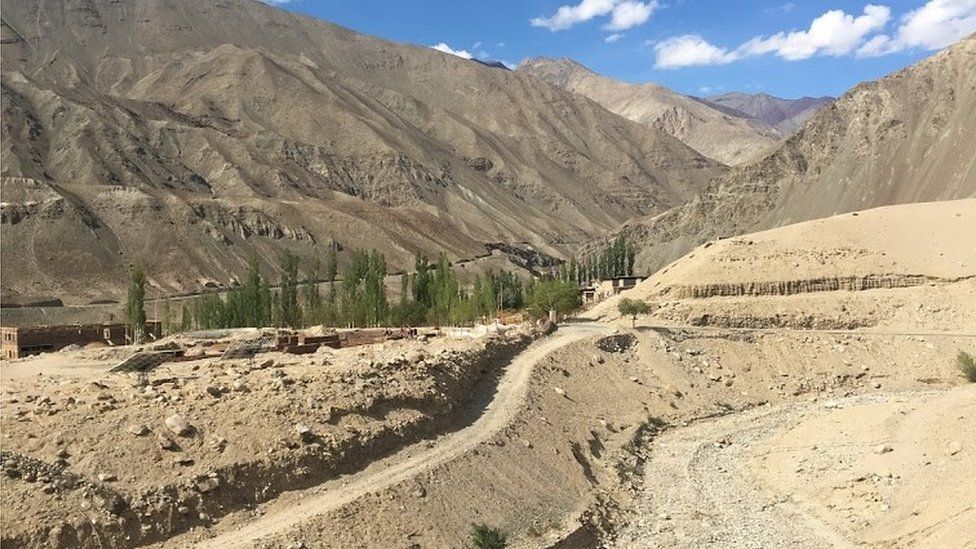
The third region, the newly created union territory of Ladakh, is a high-altitude desert inhabited by 300,000 people, with almost equal numbers of Muslims and Buddhists.
Workers from the previous state government will continue to retain their jobs in the new territories, the government said.
What’s the background?
On 5 August, the government revoked Kashmir’s special status, sparking protests in the Muslim-majority valley.
Article 370, as the constitutional provision guaranteeing special status was known, allowed the region a certain amount of autonomy, including special privileges in property ownership, education and jobs. This provision had underpinned India’s often fraught relationship with Kashmir.
Before the Bharatiya Janata Party-led government announced its decision to scrap the special status, it put the region under lockdown – mobile phone networks, landlines and the internet were cut off; and regional political leaders were placed under house arrest.
Media caption The children being ‘tortured’ in Kashmir
The region also witnessed protests where security forces often clashed with civilians. Thousands of activists and others were believed to have been picked up from their homes in the days that followed the surprise move.
Almost three months later, the situation is still far from normal.
On Tuesday, militants killed five migrant labourers in Kulgam district. Just a day before, a truck driver from outside the region was killed in Anantnag district.
Earlier this month, the Indian government restored mobile services 72 days after they were suspended.
But internet services continue to be suspended and most businesses remain closed – some in protest against the government, and others for fear of reprisals from militants opposed to Indian rule.
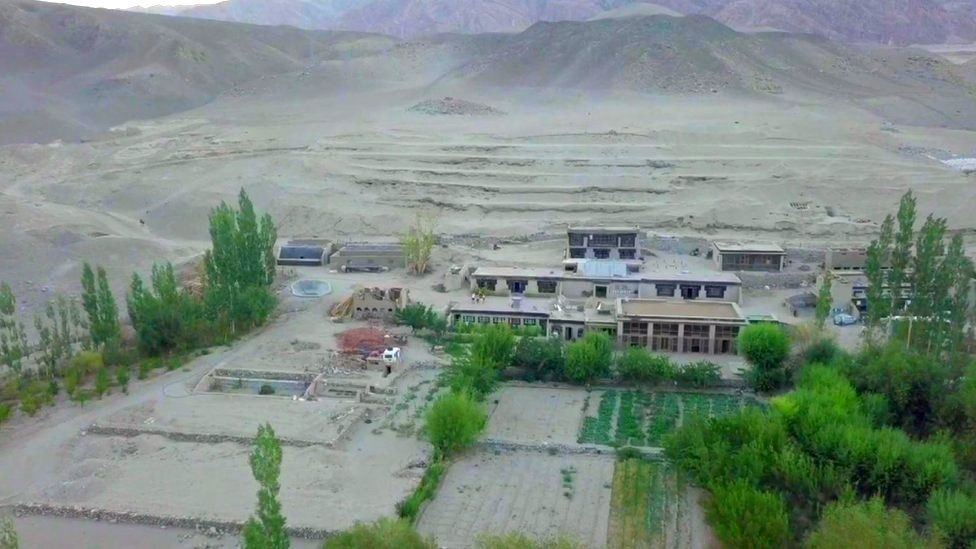
Image captionThe school’s surrounding mountainous landscape is almost devoid of vegetation as it is above the tree line
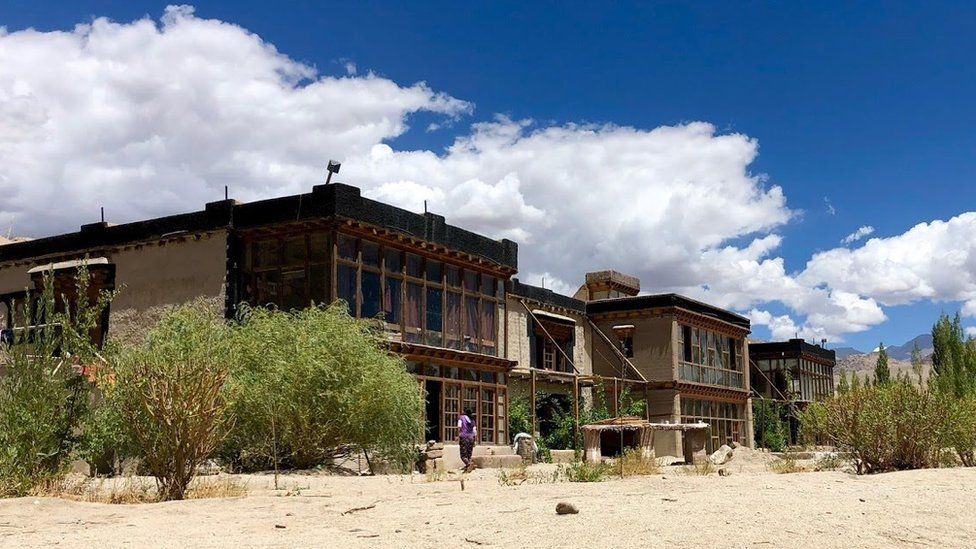
Secmol is a school pioneering practical green education in one of the world’s harshest environments.
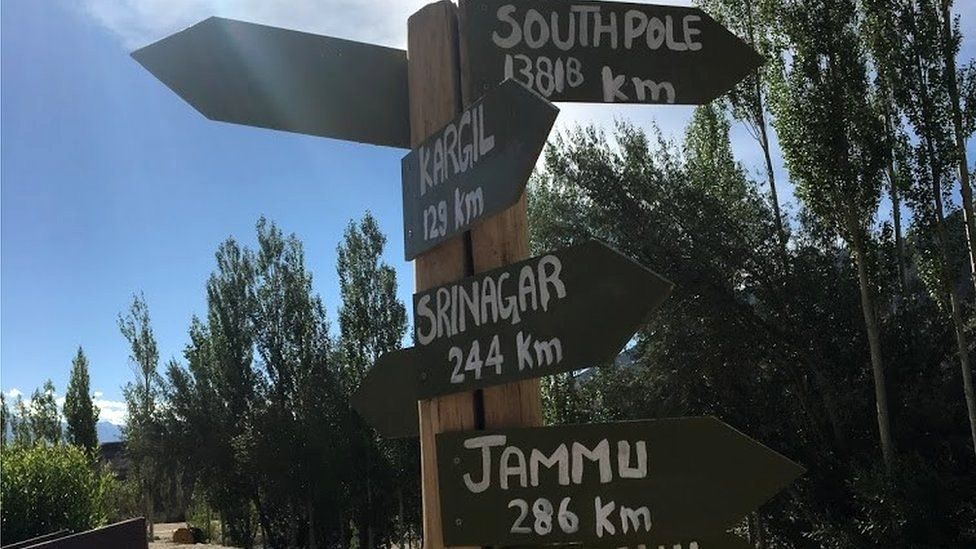
Its campus is perched nearly 11,000ft (3,350m) up in the pre-Himalayan mountains along the Indus River in Ladakh, in the Indian state of Jammu and Kashmir.
The teenage pupils at Secmol (Students’ Educational and Cultural Movement of Ladakh) lack wi-fi and almost all phone coverage, in an area only accessible by air during the long harsh winter when deep snow renders roads out of the province impassable.
The surrounding mountainous landscape is almost devoid of vegetation as it is above the tree line.
Image copyrightSUMEDH CHAPHEKAR
The school even sets its own time zone to maximise sunlight, which also reminds every student and visitor that when they pass the gates they are entering a different world.
Pupils are all from the regular Ladakhi school system and only those who have failed their year 10 exams are permitted to attend. There are also a number of university students who form a core part of the community along with the teachers.
School director Konchok Norgay explained to the BBC that the students learn about the environment for an hour or two each day.
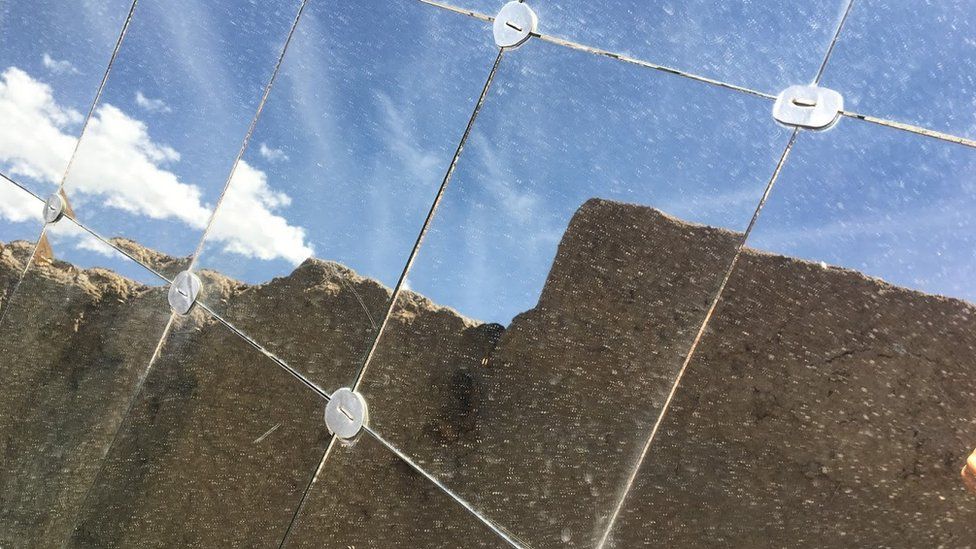
In a typical maths lesson, they may calculate if the water from the spring is enough for tree planting, or work out the efficiency of the solar cooker that they use for heating water.
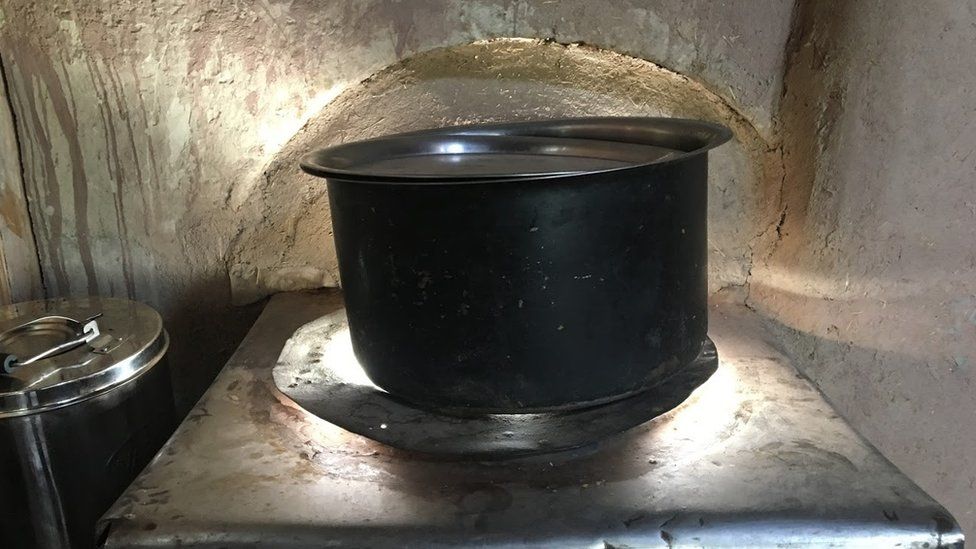
The solar cooker looks impressive, with mirrors crafted to catch the harsh sunlight, focusing their power to create intense heat.
But it is currently only used to boil water for tea.
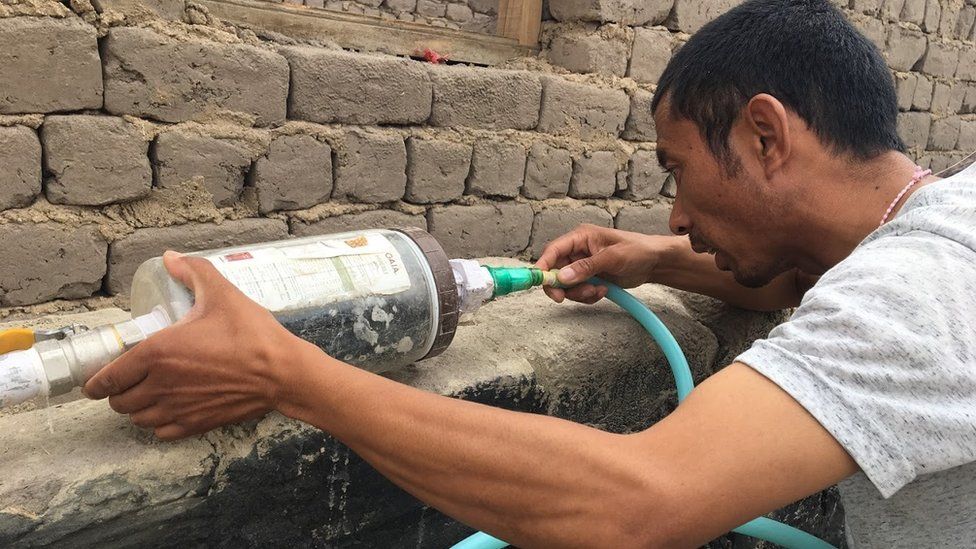
Norgay proudly showed off his experimental biogas methane digester, which is powered by slurry.
Dung is mixed with water and then placed in a long tube and left for several days.
The gas rises to the top, and is filtered through steel wool to ensure the gas does not corrode the oven, before reaching a plastic inflatable reserve tank.
“It’s fantastic as not only do you use less commercial gas, but you use natural materials instead,” student Stanzin Sungrab says. “And we can use the slurry waste as fertiliser in the kitchen garden.”
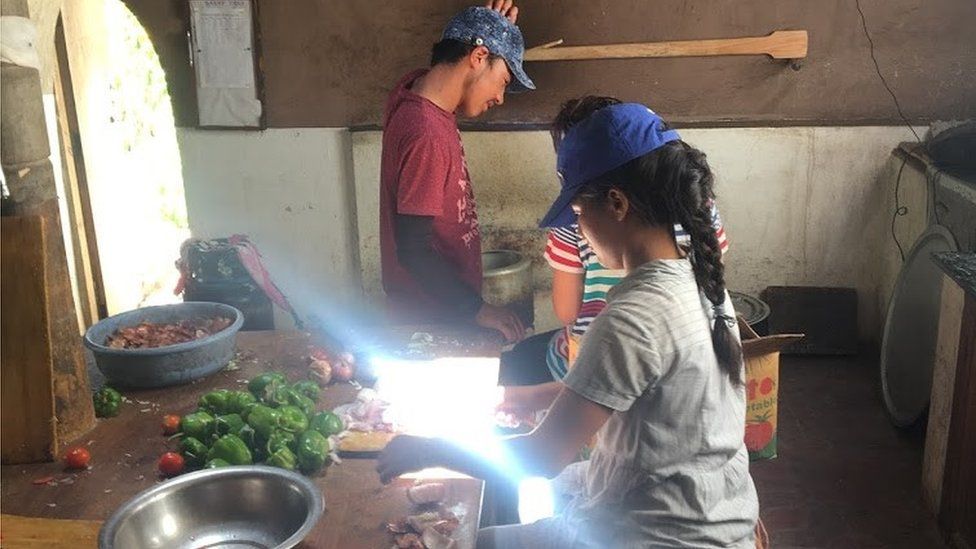
Each student must perform daily responsibility shifts and develop their confidence with nightly presentations to the rest of the school and visitors.
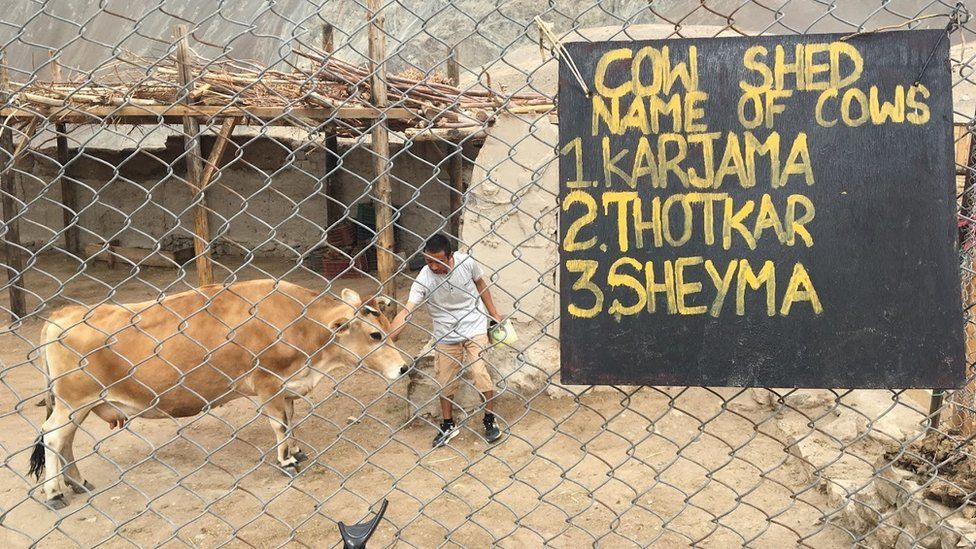
Stanzin has spent many hours developing relationships with Karjama, Thotkar and Sheyma, the campus cows.
When students are not on the 04:00 breakfast preparation shift, the day starts at 07:00 with a seven-minute group meditation.
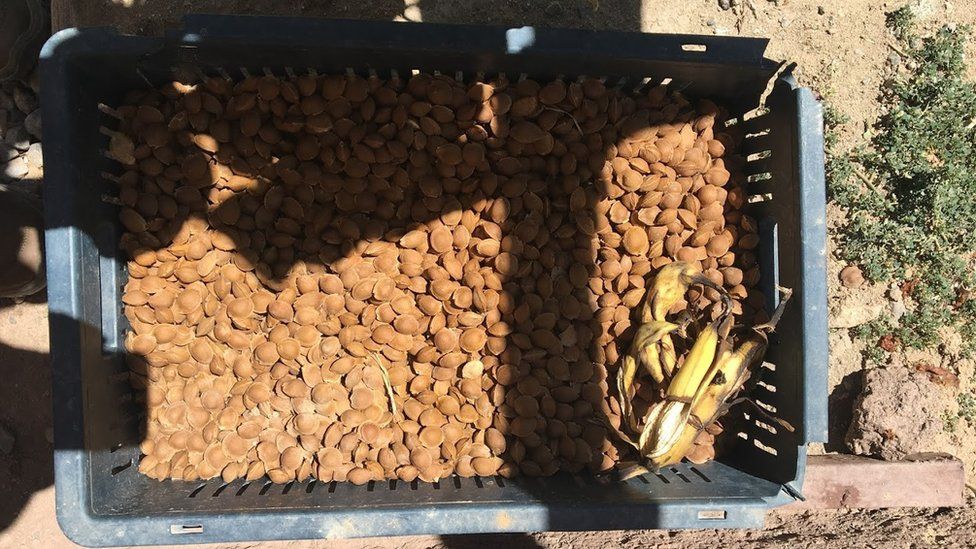
Students are encouraged to focus on goals for the day over a meal of cold roti bread and homemade apricot jam.
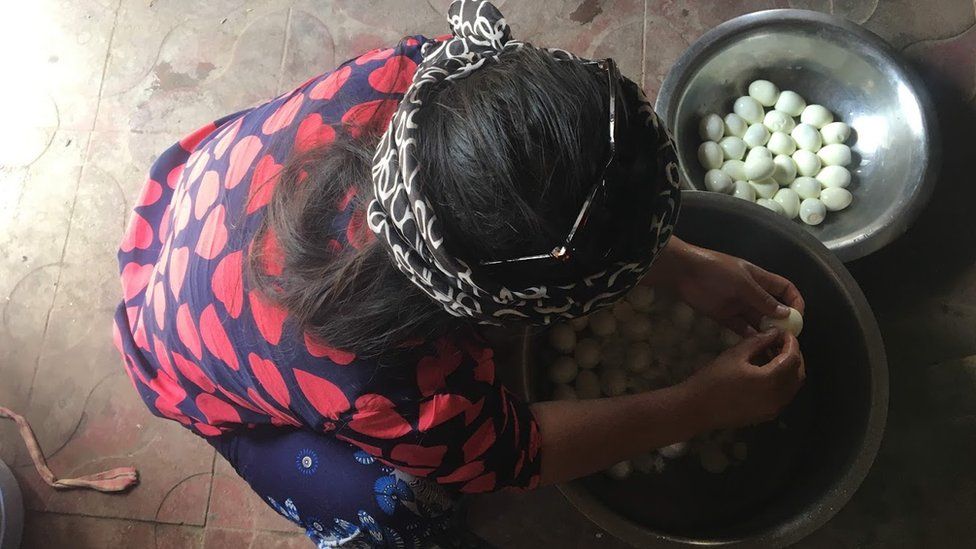
The apricot stones are sent to a neighbouring monastery, where the kernels are recycled into apricot oil.
Innovation is hard-wired into the architecture of the campus, challenged by an environment where winter temperatures typically reach -15C to -25C, and summer can often peak at 30C.
Ladakh has longstanding environmental credentials – even if the recent sprouting of large concrete hotels and increasing pollution in the capital Leh are challenging its green record.
“We banned plastic bags here 30 years ago,” says Sonam Gatso, who operates a local green organisation.
Sonam also believes local Buddhist culture helps promote environmental awareness. “We try to be compassionate as we believe in Karma – cause-and-effect. If you do wrong to anyone else or the environment, wrong will come to you.”
Secmol is an impressive school, but how far can its lessons extend beyond its innovative but isolated campus?
Urgain Nurbu, a former Secmol student who is now living on campus again, has been so inspired by what he learnt that he organised an environmental youth camp in his remote village.
The camp-goers make rain jackets from old plastic, and Urgain invites environmental speakers to inspire the young people.
One graduate has started her own eco-travel company, another makes environmentally-themed films.
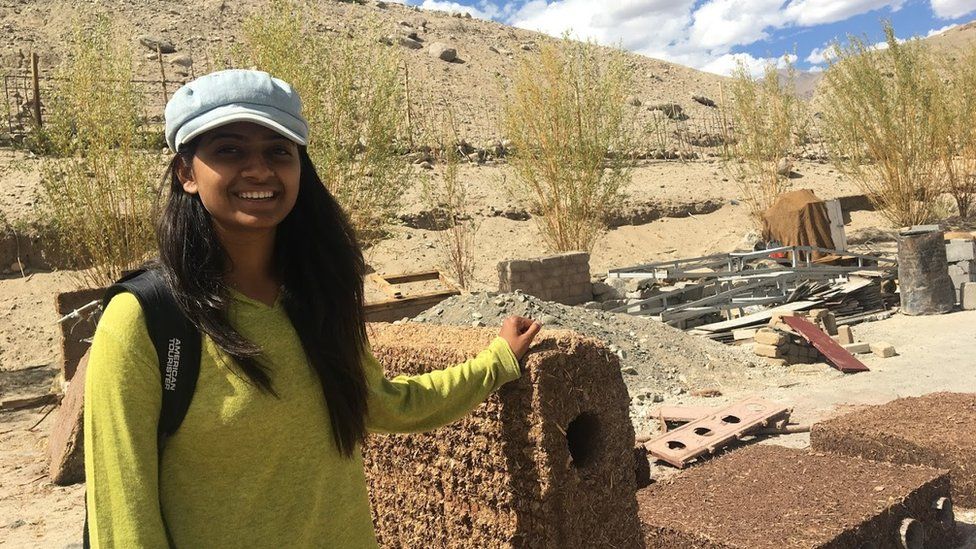
Shara, an architectural student, is now experimenting with creating pre-fabricated building blocks from mud, wood shavings and straw.
She is part of a team designing a new university in the area which plans to teach eco-tourism and green architecture, scaling the influence of ideas nurtured in Secmol’s pioneering atmosphere.
For now, the school’s impact is achieved by transforming individual mindsets to create a sense of shared responsibility.
“My grandfather told me how quiet and beautiful our village used to be and there were fish in the river,” student Padma Doma told the BBC.
“That’s why it’s so important to me to protect our precious environment. In the future, maybe it can be like that again.
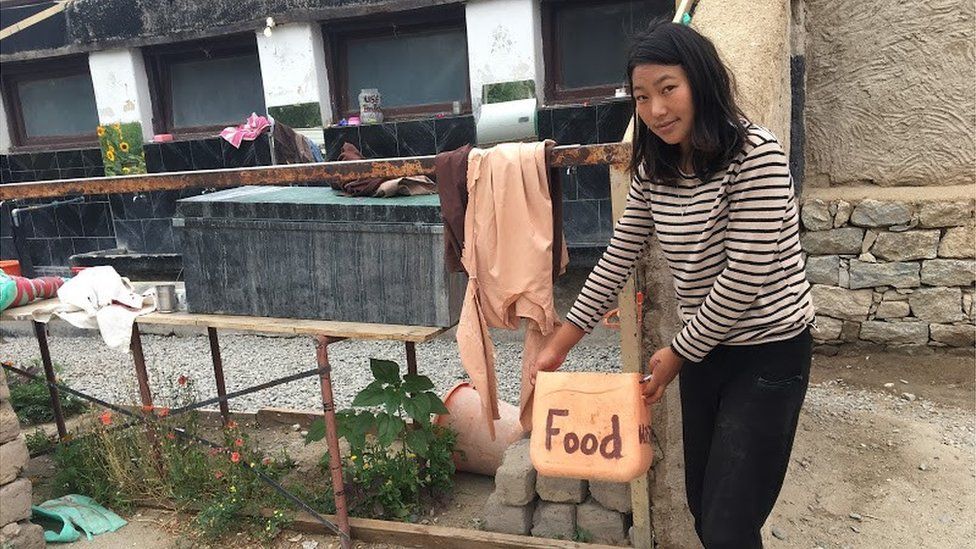
“I want to go home and convince my family to segregate their garbage. Will they listen? Perhaps not, but I will try, and if I see somebody throwing away a packet, I will pick it up.”
Stanzin feels this is “a really critical time for our planet”.
“In our homes we throw away garbage but here we recycle. In our homes we throw away plastic but here we use it for insulation.”
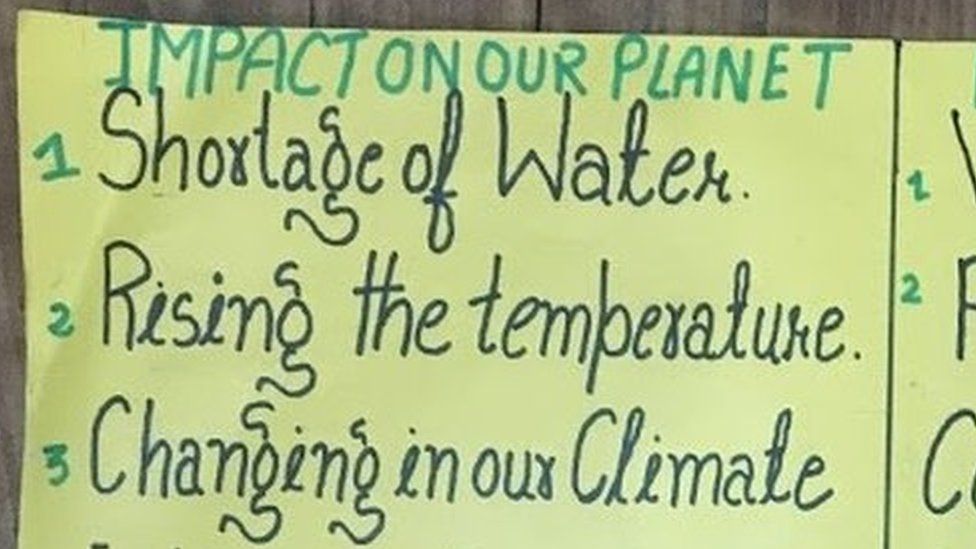
As the environment is so harsh, Ladakhis are very conscious of subtle changes in the weather, and have become increasingly aware of climate change, he says.
“Last year, we didn’t have much snow so there’s not enough snowmelt in the springtime. Because we are so high up and everything must be treasured, you learn to understand the value of the smallest drop of water.”
All photos Emily Kasriel unless indicated. Subject to copyright.


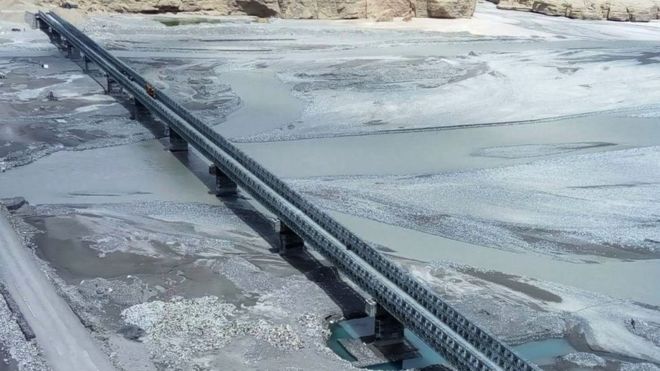 Image copyright PRESS INFORMATION BUREAU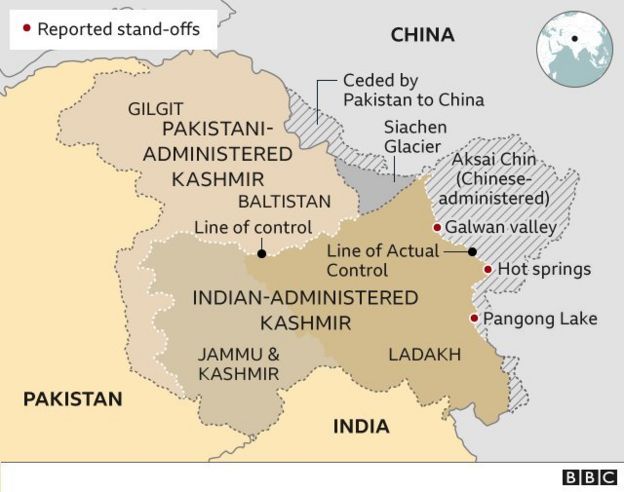
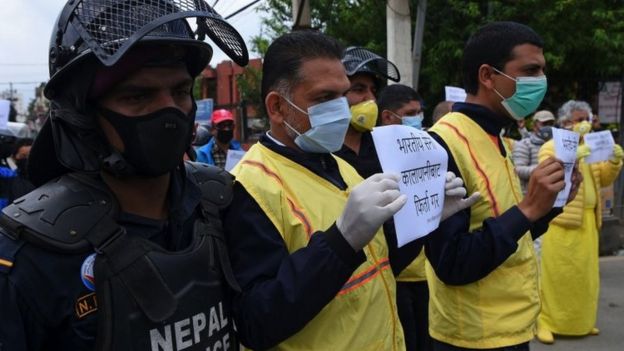 Image copyright AFP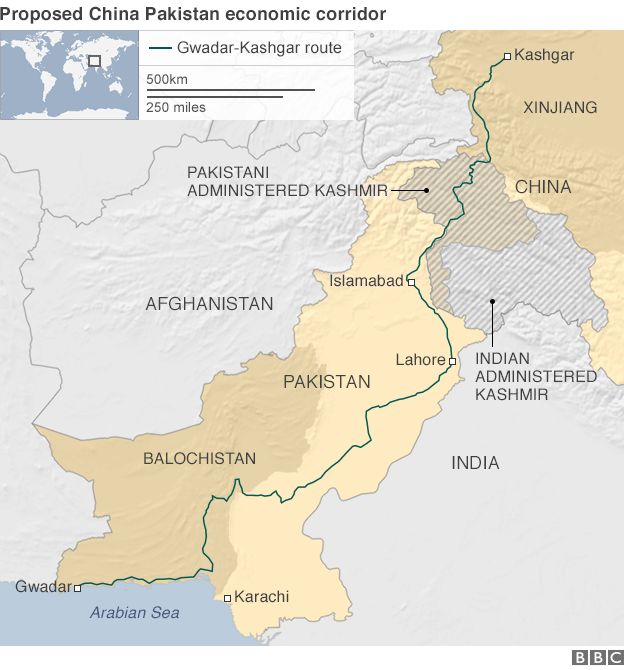
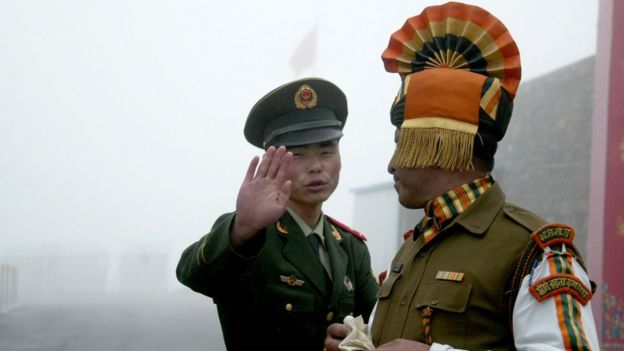 Image copyright GETTY IMAGES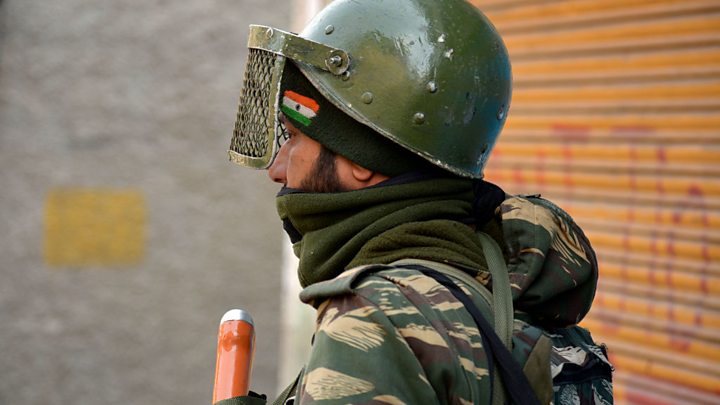


 CHINDIA ALERT: You'll be living in their world, very soon