Archive for ‘Laos’

01/04/2020

Chinese province bars citizens from leaving the country to stop coronavirus spread

  • Authorities in Yunnan limit land and river ports to cargo traffic, locking down border communities
  • Province on alert for imported cases of Covid-19
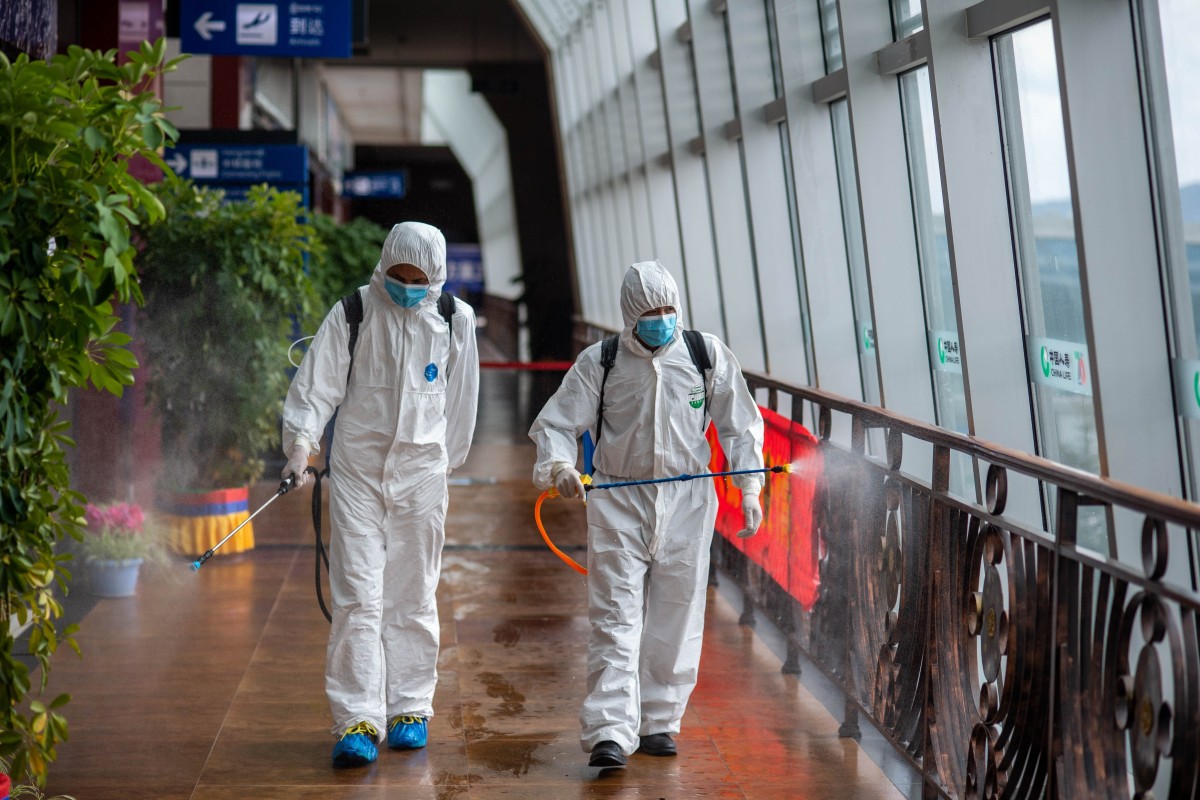
Yunnan is on alert for imported cases of the coronavirus. Photo: Xinhua
The southwestern province of Yunnan has banned Chinese citizens from leaving the country via its more than 30 land and river ports to stop the spread of the coronavirus epidemic through returning nationals.
Yunnan, which borders Vietnam, Laos and Myanmar, had restricted its 19 land ports and 14 river ports to cargo, the provincial government said on Tuesday.
The authorities said that from Tuesday night, all departures by Chinese citizens via the checkpoints would be suspended, with exemptions granted for approved foreign aid, technical support or emergency medical workers.
China closed its borders to foreign travellers and residency holders

on Saturday. But non-Chinese residents of border areas who have permits to cross into Yunnan could still enter the province, according to a previous report by China News Service.

Those permit holders can still cross into Yunnan but will be discouraged from doing so. Under the new restrictions, they will need to test negative for two nucleic acid tests and one antibody test before being put in seven days of centralised isolation and another seven days of home isolation, all at their own expense.

Coronavirus: Decoding Covid-19
Residents in border cities and counties will be restricted to the village and community level to prevent entry and exit of outsiders. They would also be encouraged to report illegal immigrants, the government said.
Yunnan, which recorded 174 local coronavirus cases including two deaths, said all patients in its initial wave were discharged by March 14. The province is now on alert for imported cases, with eight patients who travelled to the province from overseas being treated as of Tuesday.

Xiao Xian, a professor of international relations from Yunnan University, said some permit holders could be deterred from crossing into Yunnan by the cost of tests and quarantine.

Xiao also said that banning Chinese citizens from crossing the border would affect border trade and tourism, but it was necessary to stop transmission of the coronavirus.

“The need to prevent the spread of an infectious disease outweighs trade and tourism. It is understandable since it is the country’s top priority now,” Xiao said.

Source: SCMP

30/03/2020

Chinese medical team arrives in Laos to help fight COVID-19

LAOS-VIENTIANE-COVID-19-CHINESE MEDICAL TEAM-ARRIVAL

Airport staff unload medical materials donated by China to Laos from a chartered plane at the Wattay International Airport in Vientiane, Laos, March 29, 2020. A team of Chinese medical experts, along with medical materials, arrived in Lao capital Vientiane by a chartered plane Sunday morning to assist Laos to fight the COVID-19 pandemic. (Photo by Kaikeo Saiyasane/Xinhua)

VIENTIANE, March 29 (Xinhua) — A team of Chinese medical experts, along with medical materials, arrived in Lao capital Vientiane by a chartered plane Sunday morning to assist Laos to fight the COVID-19 pandemic.

Somdy Douangdy, Lao deputy prime minister and chair of the Task Force Committee for COVID-19 Prevention and Control, and Chinese Ambassador to Laos Jiang Zaidong received the Chinese medical experts at the Wattay International Airport in Vientiane.

The Chinese medical team includes experts in various fields such as infection prevention and control, intensive care, epidemics, and laboratory testing. They also brought along with medical supplies.

The team came to Laos less than five days after the Lao side announced its first two confirmed COVID-19 cases and asked for assistance from China.

Laos has detected eight confirmed COVID-19 cases as of Saturday afternoon.

When welcoming the Chinese experts, Lao Deputy Prime Minister Somdy said that the Lao side is heartfully grateful for the Chinese medical expert team’s coming only in five days after Laos confirmed COVID-19 cases. China’s gesture reflects the profound friendship from the Chinese side to the Lao people, he said.

The medical team, made up of top experts in China’s southwestern Yunnan Province, brought Chinese experiences and solutions to Laos’ epidemic prevention and control, said the Lao deputy prime minister, adding that the Lao government will coordinate and ensure all possible conveniences for the Chinese medical expert team.

Somdy said the Lao side will make full use of the intellectual support and material assistance brought by the Chinese side, and will try its best to prevent COVID-19 from spreading.

“A friend in need is a friend indeed,” Jiang Zaidong said, adding that China will not forget in the early days of the outbreak, Laos donated money and multiple batches of anti-epidemic materials to China, and tried its best to successfully organize the China-ASEAN Special Foreign Ministers’ Meeting on Coronavirus Disease in Vientiane.

The Chinese people are always ready to return the kindness, sand Jiang. Currently, the number of confirmed cases in Laos is increasing, and the pressure on prevention and control is rising. As a community with a shared future, China will go through the difficulties with the Lao people, jointly strengthen epidemic prevention and control, and steadily push forward bilateral cooperation, the ambassador said.

Huang Xingli, the head of the Chinese medical expert team, said to Xinhua on arrival that the main tasks of the expert team are to share experiences and exchange with Lao local hospitals and experts, to introduce China’s anti-epidemic experience, to provide consultation to the Lao side on epidemic prevention and control, diagnosis and treatment and laboratory work, and to provide training and guidance for the Lao medical staff and community staff.

Along with the team also came medical treatment, protective supplies and a batch of Chinese and Western medicines donated by China’s Yunnan Province.

Laos announced it had detected the first two confirmed COVID-19 cases on March 24. The total number has risen to eight till Saturday.

Source: Xinhua

20/02/2020

China, Vietnam vow to promote ties, jointly advance Lancang-Mekong cooperation

LAOS-VIENTIANE-WANG YI-VIETNAM-MEETING

Chinese State Councilor and Foreign Minister Wang Yi meets with Vietnamese Deputy Prime Minister and Minister for Foreign Affairs Pham Binh Minh in Vientiane, Laos, Feb. 19, 2020. (Photo by Kaikeo Saiyasane/Xinhua)

VIENTIANE, Feb. 19 (Xinhua) — Chinese State Councilor and Foreign Minister Wang Yi met here Wednesday with Vietnamese Deputy Prime Minister and Minister for Foreign Affairs Pham Binh Minh, with both sides pledging to further promote bilateral ties and jointly advance Lancang-Mekong cooperation.

Wang is in Vientiane, capital of Laos, for the Special ASEAN-China Foreign Ministers’ Meeting on Coronavirus Disease and the fifth Lancang-Mekong Cooperation Foreign Ministers’ Meeting.

During the meeting with Pham Binh Minh, Wang said that under the strong leadership of the Communist Party of China Central Committee with Xi Jinping at the core, the whole party and the whole country are rallying together to counter the COVID-19 epidemic.

Thanks to the arduous efforts, China’s measures to prevent and control the epidemic have been achieving visible progress, he noted.

It is necessary for China and the Association of Southeast Asian Nations (ASEAN), linked by mountains, rivers and waters and sharing weal and woe, to timely share information and work together to tackle the epidemic so as to safeguard people’s health of China and ASEAN countries, Wang said.

Vietnam, as the ASEAN chair, has made active response to China’s proposal to hold the Special ASEAN-China Foreign Ministers’ Meeting on Coronavirus Disease, Wang said, noting that it testifies to the fine tradition of their shared spirit of “good neighbor, good friend, good comrade and good partner” as well as supporting and helping each other, he said.

Wang expressed belief that the Special ASEAN-China Foreign Ministers’ Meeting on Coronavirus Disease to be held Thursday will achieve success, thus sending out an explicit message that China and ASEAN countries will overcome difficulties with concerted efforts.

This year marks the 70th anniversary of the establishment of the diplomatic relations between China and Vietnam, Wang said, noting that the China-Vietnam comprehensive strategic cooperative partnership has entered into a critical phase of inheriting the past and ushering in the future.

He called on the two sides to carry forward the friendly cause initiated by past generations of leaders of both sides, implement the important consensus reached by leaders of the two countries, maintain high-level strategic communication and advance exchanges and cooperation across the board and at sub-national levels.

He also said that the two countries should properly manage and control differences, steadily promote practical cooperation in various fields and well uphold the common strategic interests of the two socialist countries.

China attaches great importance to the Lancang-Mekong cooperation, Wang said, adding that China stands ready to work together with the Vietnamese side to actively develop greater synergy between the Lancang-Mekong cooperation and the construction of the “new land-sea corridor” so as to give a boost to the economic development of the Mekong River areas.

Pham Binh Minh, for his part, said Vietnam speaks highly of the efforts China has made in the fight against the COVID-19 epidemic, believing that the Chinese government and the Chinese people will tide over the difficulties and win the fight.

Minh told Wang that those in Vietnam affected by the virus have almost recovered.

He said his country is willing to work together with China to ensure that the Special ASEAN-China Foreign Ministers’ Meeting on Coronavirus Disease will be held successfully here on Thursday.

Noting that the development of bilateral relations has maintained good momentum for the time being, Minh hoped that the two sides will boost strategic coordination, jointly hold activities to celebrate the 70th anniversary of the establishment of the diplomatic ties between the two countries and promote the cooperation in all fields so as to make greater achievements.

He said Vietnam is willing to strengthen mutual political trust with China, properly handle maritime issues and encourage the cooperation between localities of the two countries, especially in the border areas.

Minh also said his country is willing to strengthen coordination and cooperation with China within the framework of multilateralism.

Vietnam applauds the achievements made in Lancang-Mekong cooperation and is ready to join hands with China to advance the mechanism, he added.

Source: Xinhua

08/12/2019

Participants visit Shanghai before attending South-South Human Rights Forum

CHINA-SHANGHAI-PARTICIPANTS OF SOUTH-SOUTH HUMAN RIGHTS FORUM-VISIT (CN)

Participants learn about the construction of Shanghai West Bund in Shanghai, east China, Dec. 7, 2019, before attending the upcoming 2019 South-South Human Rights Forum. (Photo by Wang Xiang/Xinhua)

SHANGHAI, Dec. 7 (Xinhua) — Officials and scholars from more than 70 Asian, African and Latin American developing countries, as well as the United Nations, visited Shanghai on Saturday before attending the upcoming 2019 South-South Human Rights Forum.

The forum, hosted by the State Council Information Office and the Ministry of Foreign Affairs, will be held in Beijing from Dec. 10 to 11.

According to the Beijing Declaration issued at the first South-South Human Rights Forum held in Beijing in 2017, participants agreed that the right to subsistence and the right to development were the primary basic human rights.

During the one-day trip in Shanghai, the officials and scholars, from countries including Laos, Brunei, South Africa, Mexico and Mauritius, visited the city’s financial district and the World Expo Museum, snapped pictures of local residents’ life scenes on the bank of the Huangpu River, and investigated the progress of waste sorting in ordinary residential streets. They were impressed by the prosperous and orderly development of the mega city.

“I think China is becoming more open and confident about human rights. The changes I saw here are examples of the great improvements in the Chinese people’s rights to subsistence and development,” said Davina Sigauta Rasch, director of Corporate Service of the Ombudsman Office in Samoa, who studied international economics and trade from 2009 to 2013 at the Southwestern University of Finance and Economics in Chengdu, Sichuan Province.

She said that compared with 10 years ago, China has made significant progress in the emerging fields such as high-speed railways and mobile payments, which directly improved people’s lives. China is not only developing itself, but also helping other developing countries, she said.

Her idea was echoed by Lionel Vairon, CEO of CEC Consulting in Luxembourg and also a senior research member of the Charhar Institute, a private think tank in China.

Over the past 70 years since the founding of the People’s Republic of China, great achievements which have attracted worldwide attention have been made, he said, adding that the international community should not ignore China’s progress in human rights out of ideological misunderstanding and prejudice.

“In the future, global governance must make a choice between the policy of strong-power hegemony and the path of a community with a shared future for humanity. And the latter is the wisdom China has contributed to the world,” he said.

Source: Xinhua

07/11/2019

China’s top political advisor to visit Egypt, Oman, Laos

BEIJING, Nov. 7 (Xinhua) — China’s top political advisor Wang Yang will pay official visits to Egypt, Oman and Laos, Foreign Ministry spokesperson Geng Shuang announced here Thursday.

Invited by Speaker Ali Abdel-Aal of the Egyptian Parliament and Chairman Yahya bin Mahfoudh Al Manthri of State Council of Oman, Wang Yang, chairman of the National Committee of the Chinese People’s Political Consultative Conference (CPPCC), will pay official visits to Egypt and Oman from Nov. 10 to 16, Geng said.

Invited by member of the Political Bureau of the LPRP Central Committee and President of the Lao Front for National Construction Saysomphone Phomvihane, Wang, also a member of the Standing Committee of the Political Bureau of the Communist Party of China (CPC) Central Committee, will pay an official visit to Laos from Nov. 16 to 19, Geng added.

Source: Xinhua

24/09/2019

China Focus: China, ASEAN embrace shared future along Belt and Road

NANNING, Sept. 23 (Xinhua) — The Belt and Road Initiative (BRI) provides momentum for regional economic integration and connectivity, helping China and ASEAN forge a closer community of shared future, said Cambodian Deputy Prime Minister Hor Nam Hong.

Hor made the remarks Saturday at the opening ceremony of the 16th China-ASEAN Expo themed “Building the Belt & Road, Realizing Our Vision for a Community of Shared Future.”

The deputy vice prime minister envisioned that the China-ASEAN strategic partnership and the BRI will further deepen the cooperation between the two sides in the joint pursuit of shared prosperity.

Statistics show that China has signed cooperation agreements with more than 130 countries across the globe and 30 international organizations on jointly building the Belt and Road, benefiting people of the involved nations.

Highlighting regional economic cooperation, this year’s China-ASEAN expo is expected to lift the practical and comprehensive cooperation between China, ASEAN and other countries participating in the BRI to new heights.

The expo has served as a crucial platform for promoting investment and trade in Asia over the past 16 years, setting an example of friendly cooperation between China and ASEAN, said Luhut Binsar Pandjaitan, special envoy of the Indonesian president and coordinating minister for maritime affairs.

As the Country of Honor for this year’s expo, Indonesia will showcase its high-quality products from more than 100 Indonesian enterprises.

Speaking highly of the BRI, Luhut said cooperation under the China-proposed initiative will boost infrastructure construction and trade among members of ASEAN to facilitate the building of the ASEAN Community.

To push China-ASEAN ties to new heights, both sides are making joint efforts in constructing the Belt and Road and implementing the Master Plan on ASEAN Connectivity 2025 under the guidance of the China-ASEAN Strategic Partnership Vision 2030.

The BRI accelerates regional connectivity and improves people’s livelihoods, said Thai Deputy Prime Minister and Minister of Commerce Jurin Laksanawisit, adding that Thailand had formulated plans to contribute to the completion of the Regional Comprehensive Economic Partnership, alleviate volatility of the global economy and trade, and inject momentum into sustainable development.

Two-way investment between China and ASEAN countries grew robustly to reach 230 billion U.S. dollars in the first eight months of this year, with the establishment of 25 economic and trade cooperation zones creating over 100,000 jobs.

Meanwhile, the cooperation between China and ASEAN in fields including international production capacity, the digital economy and e-commerce is also leaping forward.

Hailing the achievements of cooperation under the BRI, Lao Deputy Prime Minister Sonexay Siphandone said Laos will take an active role in building the Belt and Road.

Citing the China-Laos railway, the largest cooperation project between the two sides so far, Sonexay said it will promote regional peace, prosperity and sustainable development.

Apart from prospering bilateral trade and investment, recent years have seen the deepening of China-ASEAN cooperation in various other fields. ASEAN has become the largest destination for Chinese tourists, with the number of personal exchanges hitting 57 million in 2018 and nearly 4,000 flights traveling between both sides every week.

Holding similar viewpoints, Myanmar’s Vice President U Myint Swe said the BRI provides opportunities for developing trade and cross-border exchanges and bridging infrastructure gaps.

Looking forward to shared prosperity, Jurin said Thailand, as well as ASEAN, will collaborate with China to strive for sustainable development.

Source: Xinhua

31/07/2019

China claims progress towards world’s biggest trade deal, but India remains biggest roadblock to RCEP

  • China suggests good progress made in Regional Comprehensive Economic Partnership talks after marathon 10-day negotiations in Zhengzhou
  • Indian Commerce Minister Piyush Goyal has opted to skip the upcoming high-level meetings, adding fuel to rumours that the country could be removed
The Association of Southeast Asian Nations (Asean) has overtaken the US to become China’s second-largest trading partner in the first half of 2019. Photo: AP
China has claimed “positive progress” towards finalising the world’s largest free-trade agreement by the end of 2019 after hosting 10 days of talks, but insiders have suggested there was “never a chance” of concluding the deal in Zhengzhou.
The 27th round of the Regional Comprehensive Economic Partnership (RCEP) negotiations closed on Wednesday in the central Chinese city. 
The 10-day

working level conference brought over 700 negotiators from all 16 member countries to Henan province, with China keen to push through a deal which has proven extremely difficult to close.

If finalised, the agreement, which involves the 10 Asean nations, as well as China, Japan, South Korea, Australia, New Zealand, and India, would cover around one-third of the global gross domestic product, about 40 per cent of world trade and almost half the world’s population.
“This round of talks has made positive progress in various fields,” said assistant minister of commerce Li Chenggang, adding that all parties had reaffirmed the goal of concluding the deal this year. “China will work together with the RCEP countries to proactively push forward the negotiation, strive to resolve the remaining issues as soon as possible, and to end the negotiations as soon as possible.”
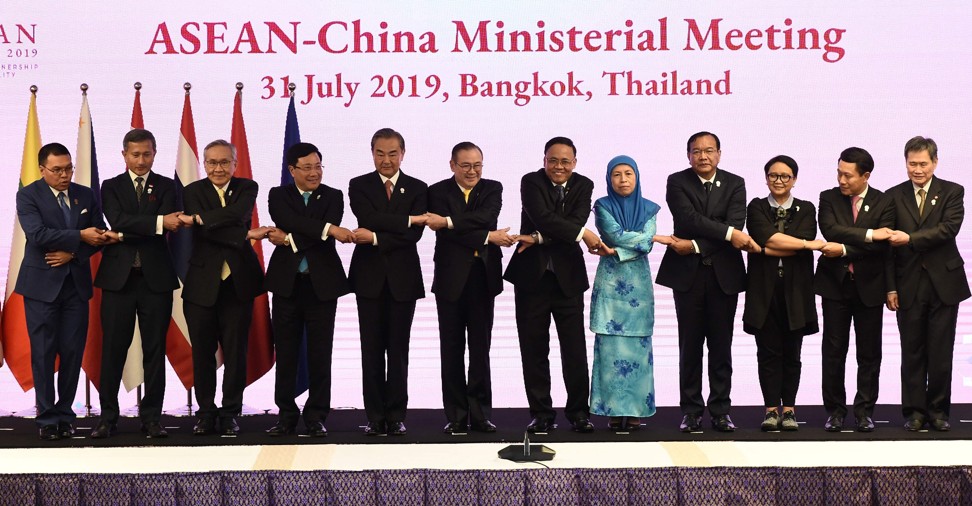
China's Foreign Minister Wang Yi (fifth left) poses with foreign ministers from the Association of Southeast Asian Nations (Asean) countries during the ASEAN-China Ministerial Meeting in Bangkok. Photo: AFP
China’s Foreign Minister Wang Yi (fifth left) poses with foreign ministers from the Association of Southeast Asian Nations (Asean) countries during the ASEAN-China Ministerial Meeting in Bangkok. Photo: AFP

China is keen to complete a deal which would offer it a buffer against the United States in Asia, and which would allow it to champion its free trade position, while the US pursues protectionist trade policy.

The RCEP talks took place as Chinese and American trade negotiators resumed face-to-face discussions in Shanghai, which also ended on Wednesday, although there was little sign of similar progress.

As the rivalry between Beijing and Washington has intensified and bilateral trade waned, the Association of Southeast Asian Nations (Asean) overtook the US to become China’s second-largest trading partner in the first half of 2019. From January to June, the trade volume between China and the 10-member bloc reached US$291.85 billion, up by 4.2 per cent from a year ago, according to government data.

The Asean bloc is made up of Indonesia, Thailand, Malaysia, Singapore, Philippines, Vietnam, Myanmar, Cambodia, Brunei and Laos.

China will work together with the RCEP countries to proactively push forward the negotiation, strive to resolve the remaining issues as soon as possible, and to end the negotiations as soon as possible. Li Chenggang

RCEP talks will now move to a higher level ministerial meeting in Beijing on Friday and Saturday, but trade experts have warned that if material progress is not made, it is likely that the RCEP talks will continue into 2020, prolonging a saga which has already dragged on longer than many expected. It is the first time China has hosted the ministerial level talks.
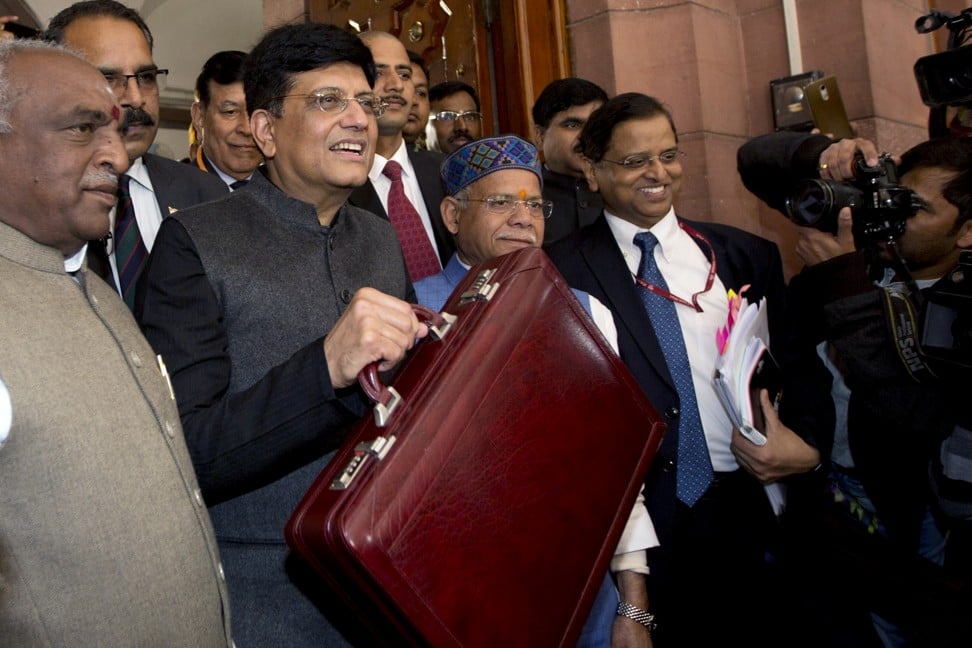
But complicating matters is the fact that India’s Commerce Minister, Piyush Goyal, will not attend the ministerial level talks, with an Indian government official saying that he has to participate in an extended parliamentary session.
India is widely viewed as the biggest roadblock to concluding RCEP, the first negotiations for which were held in May 2013 in Brunei. Delhi has allegedly opposed opening its domestic markets to tariff-free goods and services, particularly from China, and has also had issues with the rules of origin chapter of RCEP.
China is understood to be “egging on” other members to move forward without India, but this could be politically explosive, particularly for smaller Asean nations, a source familiar with talks said.
Deborah Elms, executive director of the Asian Trade Centre, a Singapore-based lobby group, said that after the last round of negotiations in Melbourne between June 22 to July 3 – which she attended – there was “frustration” at India’s reluctance to move forward.
She suggested that in India’s absence, ministers in China could decide to move forward through a “pathfinder” agreement, which would remove India, but also potentially Australia and New Zealand.
India’s Commerce Minister, Piyush Goyal, will not attend the ministerial level talks this week in Beijing. Photo: Bloomberg

This “Asean-plus three” deal would be designed to encourage India to come on board, Elms said, but would surely not go down well in Australia and New Zealand, which have been two of the agreement’s biggest supporters.

New Zealand has had objections to the investor protections sections of RCEP, and both countries have historically been pushing for a more comprehensive deal than many members are comfortable with, since both already have free trade agreements with many of the other member nations.

However, their exclusion would be due to “an unfortunate geographical problem, which is if you’re going to kick out India, there has always been an Asean-plus three concept to start with”. Therefore it is easier to exclude Australia and New Zealand, rather than India alone, which would politically difficult.

A source close to the negotiating teams described the prospect of being cut out of the deal at this late stage as a “frustrating rumour”, adding that “as far as I know [it] has no real basis other than a scare tactic against India”.

There was “never a chance of concluding [the deal during] this round, but good progress is being made is what I understand. The key issues remain India and China”, said the source, who wished to remain anonymous.

Replacing bilateral cooperation with regional collaborations is a means of resolving the disputesTong Jiadong

However, Tong Jiadong, a professor of international trade at the Nankai University of Tianjin, said Washington’s refusal to recognise India as a developing country at the World Trade Organisation could nudge the world’s second most populous nation closer to signing RCEP.

“That might push India to the RCEP, accelerating the pace of RCEP,” Tong said, adding that ongoing trade tensions between Japan and South Korea could also be soothed by RCEP’s passage.

“Replacing bilateral cooperation with regional collaborations is a means of resolving the disputes between the two countries,” Tong said.

Although the plan was first proposed by the Southeast Asian countries, China has been playing an increasingly active role, first as a response to the now defunct US-backed Trans-Pacific Partnership (TPP), and more recently as a means of containing the impact of the trade war.

China’s vice-commerce Minister, Wang Shouwen, told delegates last week that RCEP was “the most important free trade deal in East Asia”. He called on all participants to “take full advantage of the good momentum and accelerating progress at the moment” to conclude a deal by the end of the year.

Source: SCMP

01/05/2019

China Focus: Xi holds talks with Lao president to promote ties

CHINA-BEIJING-XI JINPING-LAO PRESIDENT-TALKS (CN)

Xi Jinping (R), general secretary of the Communist Party of China (CPC) Central Committee and Chinese president, holds talks with Lao President Bounnhang Vorachit, who is also general secretary of the Lao People’s Revolutionary Party Central Committee, in Beijing, capital of China, April 30, 2019. (Xinhua/Li Xueren)

BEIJING, April 30 (Xinhua) — Xi Jinping, general secretary of the Communist Party of China (CPC) Central Committee and Chinese president, held talks here Tuesday with Lao President Bounnhang Vorachit, who is also general secretary of the Lao People’s Revolutionary Party Central Committee.

The two leaders agreed to forge ahead with the efforts in building a community with a shared future for the two countries and work together to usher in a new era for bilateral ties.

After the talks, the two leaders inked an action plan between the CPC and the Lao People’s Revolutionary Party on building a community with a shared future for the two countries.

Noting that this year marks the 10th anniversary of the establishment of the comprehensive strategic cooperative partnership between China and Laos, Xi said as bilateral ties now stand at the best stage in history, China will work with Laos to take the opportunity of signing the action plan to jointly cultivate the bilateral relationship in the new era.

Xi said China and Laos should take strengthening the leadership of the CPC and the Lao People’s Revolutionary Party as guidance and grasp the correct direction of the development of bilateral ties in the new era.

He said the two parties must strengthen their strategic self-confidence and sense of urgency, uphold party leadership and ensure the long-term stability of the two countries, so as to contribute to the development of the socialist cause.

Noting the two sides should maintain close high-level exchanges, Xi said he would like to carry on the good tradition of conducting annual meetings with Bounnhang.

Xi also called on the two sides to deepen theoretical exchanges and strengthen exchanges between their cadres.

China and Laos should accelerate the synergy of each other’s development strategies, promote the construction of economic corridors, expand the radiation and demonstration effects of major projects such as the China-Laos railway, so as to contribute more to regional connectivity, common development and prosperity, Xi said.

The two sides should also closely coordinate and cooperate within multilateral mechanisms such as the United Nations, East Asian cooperation and the Lancang-Mekong cooperation, said the Chinese president.

Bounnhang spoke highly of China’s great achievements in Party and state building and hailed China’s successful experience in poverty alleviation.

He said it is an unshakable policy of Laos to develop its traditional friendship with China. Laos appreciates China’s long-term support and will work with China to give further play to the leading role of the inter-party ties in the development of the state-to-state relationship, and maintain regular high-level meetings between the two parties.

Regarding the Belt and Road initiative, Bounnhang said Laos will continue to accelerate cooperation in major projects, so as to further promote the prosperity of the two countries and the region.

Concerning the action plan, Xi said this is the first time for China and Laos to sign a cooperation document on building a community with a shared future on the bilateral level, which will not only benefit the two parties, countries and peoples, but also serve as a significant exploration in advancing humanity.

Bounnhang said the signing of the action plan will further promote the building of a community with a shared future for humanity.

The two leaders also watched the signing of a series of cooperation documents after the talks.

Source: Xinhua

27/04/2019

Chinese top legislator meets Lao president

(BRF)CHINA-BEIJING-LI ZHANSHU-LAO PRESIDENT-MEETING (CN)

Li Zhanshu (R), a member of the Standing Committee of the Political Bureau of the Communist Party of China Central Committee and chairman of the Standing Committee of the National People’s Congress, meets with General Secretary of the Lao People’s Revolutionary Party Central Committee and Lao President Bounnhang Vorachit, who is attending the Second Belt and Road Forum for International Cooperation, in Beijing, capital of China, April 26, 2019. (Xinhua/Yin Bogu)

BEIJING, April 26 (Xinhua) — Li Zhanshu, chairman of the Standing Committee of the National People’s Congress (NPC), on Friday met with Lao President Bounnhang Vorachit, who is attending the Second Belt and Road Forum for International Cooperation in Beijing.

Li, also a member of the Standing Committee of the Political Bureau of the Communist Party of China Central Committee, said that China is willing to strengthen high-level contacts between the two countries and push forward the bilateral relations.

Li said that the NPC is willing to enhance exchanges and cooperation with the Lao National Assembly.

Bounnhang, also general secretary of the Lao People’s Revolutionary Party Central Committee, said Laos is ready to work closely with China to make new progress in building a community with a shared future for the two countries.

Source: Xinhua

20/04/2019

Xi to address Belt and Road forum next week: FM

CHINA-BEIJING-BRF-PRESS BRIEFING (CN)

Chinese State Councilor and Foreign Minister Wang Yi (C) speaks during a press briefing for the second Belt and Road Forum for International Cooperation (BRF) in Beijing, capital of China, April 19, 2019. The second Belt and Road Forum for International Cooperation will be held from April 25 to 27 in Beijing, Wang Yi announced Friday. (Xinhua/Zhai Jianlan)

BEIJING, April 19 (Xinhua) — Chinese President Xi Jinping will deliver a keynote speech at the second Belt and Road Forum for International Cooperation (BRF) to be held from April 25 to 27 in Beijing, State Councilor and Foreign Minister Wang Yi announced Friday.

Leaders including heads of state and government from 37 countries will attend the forum’s roundtable summit, Wang told a press briefing.

Wang said 12 thematic forums and a CEO conference would be held on April 25, the opening ceremony and a high-level meeting on April 26, and the leaders’ roundtable on April 27.

Xi will attend the opening ceremony and deliver a keynote speech. He will also chair the leaders’ roundtable and brief media from home and abroad about the outcomes after the roundtable, Wang said, adding that Xi and his wife Peng Liyuan will also hold a welcoming banquet for the leaders and representatives.

According to Wang, the 37 countries are Austria, Azerbaijan, Belarus, Brunei, Cambodia, Chile, Cyprus, Czech Republic, Djibouti, Egypt, Ethiopia, Greece, Hungary, Indonesia, Italy, Kazakhstan, Kenya, Kyrgyzstan, Laos, Malaysia, Mongolia, Mozambique, Myanmar, Nepal, Pakistan, Papua New Guinea, the Philippines, Portugal, Russia, Serbia, Singapore, Switzerland, Tajikistan, Thailand, the United Arab Emirates, Uzbekistan and Vietnam.

The secretary-general of the United Nations and the managing director of the International Monetary Fund will attend the forum, Wang said, adding that senior representatives of France, Germany, Britain, Spain, Japan, the Republic of Korea and the European Union will also participate.

Noting that the BRF is the top-level platform for international cooperation under the framework of the Belt and Road Initiative, Wang said the conference next week would be of landmark significance.

The theme of the second BRF is “Belt and Road Cooperation, Shaping a Brighter Shared Future.” Wang said the main purpose is to promote the high-quality development of Belt and Road cooperation, which is the common aspiration of countries participating in the initiative.

Speaking highly of the fruitful results yielded since the initiative was launched in 2013, Wang said the second BRF was greatly welcomed worldwide with some 5,000 participants from more than 150 countries and 90 international organizations having confirmed their attendance, covering areas from five continents and different walks of life such as government, civil society, business and academia.

According to Wang, this year’s forum will have 12 thematic forums, twice of that during the first forum in 2017, and the CEO conference will be held for the first time. A joint communique will be released after the leaders’ roundtable and other consensus reached during the forum will be issued in a report.

The Belt and Road Initiative, proposed by Xi in 2013, aims at enhancing all-around connectivity through infrastructure construction, exploring new driving force for the world economic growth, and building a new platform for world economic cooperation, according to Wang.

Stressing that Xi and leaders from other countries blueprinted the initiative in 2017, Wang said the progress in the past two years shows that the initiative conforms to the trend of the times featuring peace, development, cooperation and win-win and accords with the common aspiration of openness and joint development of all countries.

“As the host country, we will maintain close communication and coordination with all parties to prepare for the forum with openness, inclusiveness and transparency, upholding the principle of consultation and cooperation for shared benefits,” Wang said.

He said the forum would voice the firm support for multilateralism and an open world economy, enrich the principles of cooperation of the Belt and Road Initiative, build a network of partnership, and establish more mechanisms for high-quality development.

Bilateral, trilateral and multilateral cooperation has been reinforcing each other under the initiative, laying a solid foundation for a closer and more wide-ranging partnership, he said.

Wang said China will showcase the outcomes and introduce the measures of its reform and opening-up to the world, adding that this will allow China to share the dividends of its economic growth, promote the Belt and Road Initiative, and bring more opportunities to the development of all countries as well as the building of the Belt and Road.

“I believe that the forum will inject stronger impetus into the world economy, open even broader horizon for the development of the countries, and contribute to the building of a community with a shared future for humanity, ” said Wang.

Source: Xinhua

Law of Unintended Consequences

continuously updated blog about China & India

ChiaHou's Book Reviews

continuously updated blog about China & India

What's wrong with the world; and its economy

continuously updated blog about China & India