Archive for ‘Li Keqiang’

19/03/2020

Coronavirus: China and the virus that threatens everything By John Sudworth

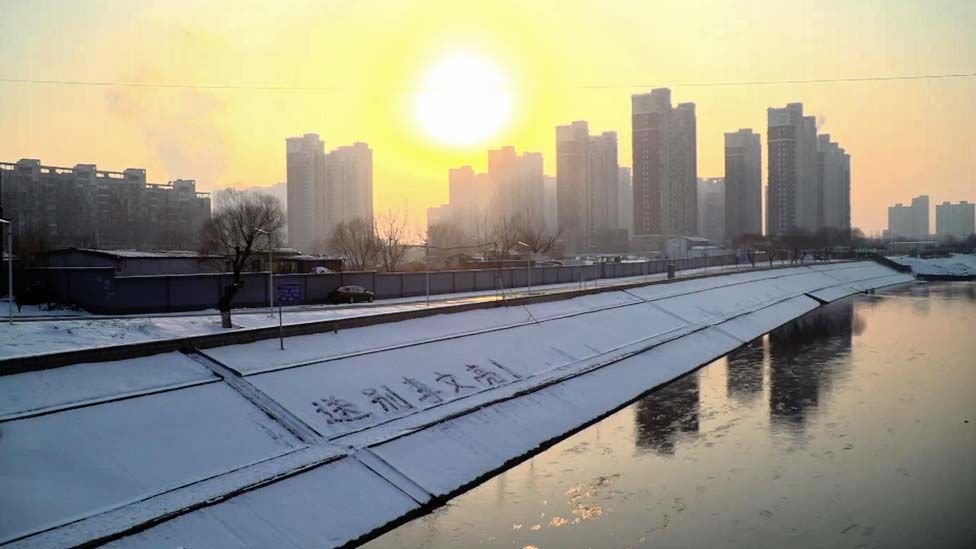
Chinese characters in the snow on the banks of the Tonghui river in Beijing read "Goodbye Li Wenliang!"
Image caption A message written in the snow alongside the Tonghui river reads “Goodbye Li Wenliang!”

On a cold Beijing morning, on an uninspiring, urban stretch of the Tonghui river, a lone figure could be seen writing giant Chinese characters in the snow.

The message taking shape on the sloping concrete embankment was to a dead doctor.

“Goodbye Li Wenliang!” it read, with the author using their own body to make the imprint of that final exclamation mark.

Five weeks earlier, Dr Li had been punished by the police for trying to warn colleagues about the dangers of a strange new virus infecting patients in his hospital in the Chinese city of Wuhan.

Now he’d succumbed to the illness himself and pictures of that frozen tribute spread fast on the Chinese internet, capturing in physical form a deep moment of national shock and anger.
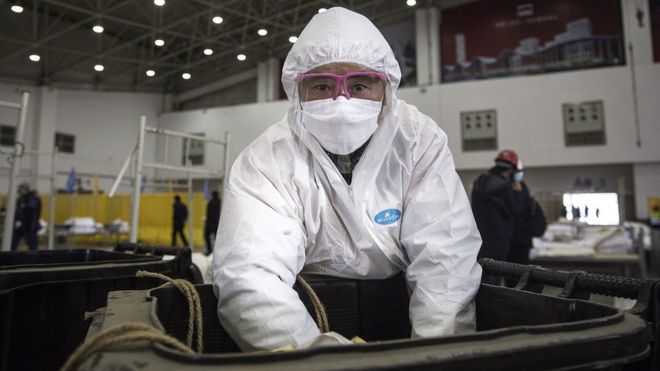
A worker wears a protective mask while cleaning construction waste at WuhanKeting on February 4th.2020 in Wuhan.Hubei Province,China.Image copyright GETTY IMAGES
Image caption A worker in a Chinese factory wears a protective mask

There’s still a great deal we don’t know about Covid-19, to give the disease caused by the virus its official name. Before it took its final fatal leap across the species barrier to infect its first human, it is likely to have been lurking inside the biochemistry of an – as yet unidentified – animal. That animal, probably infected after the virus made an earlier zoological jump from a bat, is thought to have been kept in a Wuhan market, where wildlife was traded illegally.

Beyond that, the scientists trying to map its deadly trajectory from origin to epidemic can say little more with any certainty.

But while they continue their urgent, vital work to determine the speed at which it spreads and the risks it poses, one thing is beyond doubt. A month or so on from its discovery, Covid-19 has shaken Chinese society and politics to the core.

That tiny piece of genetic material, measured in ten-thousandths of a millimetre, has set in train a humanitarian and economic catastrophe counted in more than 1,000 Chinese lives and tens of billions of Chinese yuan. It has closed off whole cities, placing an estimated 70 million residents in effective quarantine, shutting down transport links and restricting their ability to leave their homes. And it has exposed the limits of a political system for which social control is the highest value, breaching the rigid layers of censorship with a tsunami of grief and rage.

The risk for the ruling elite is obvious.

It can be seen in their response, ordering into action the military, the media and every level of government from the very top to the lowliest village committee.
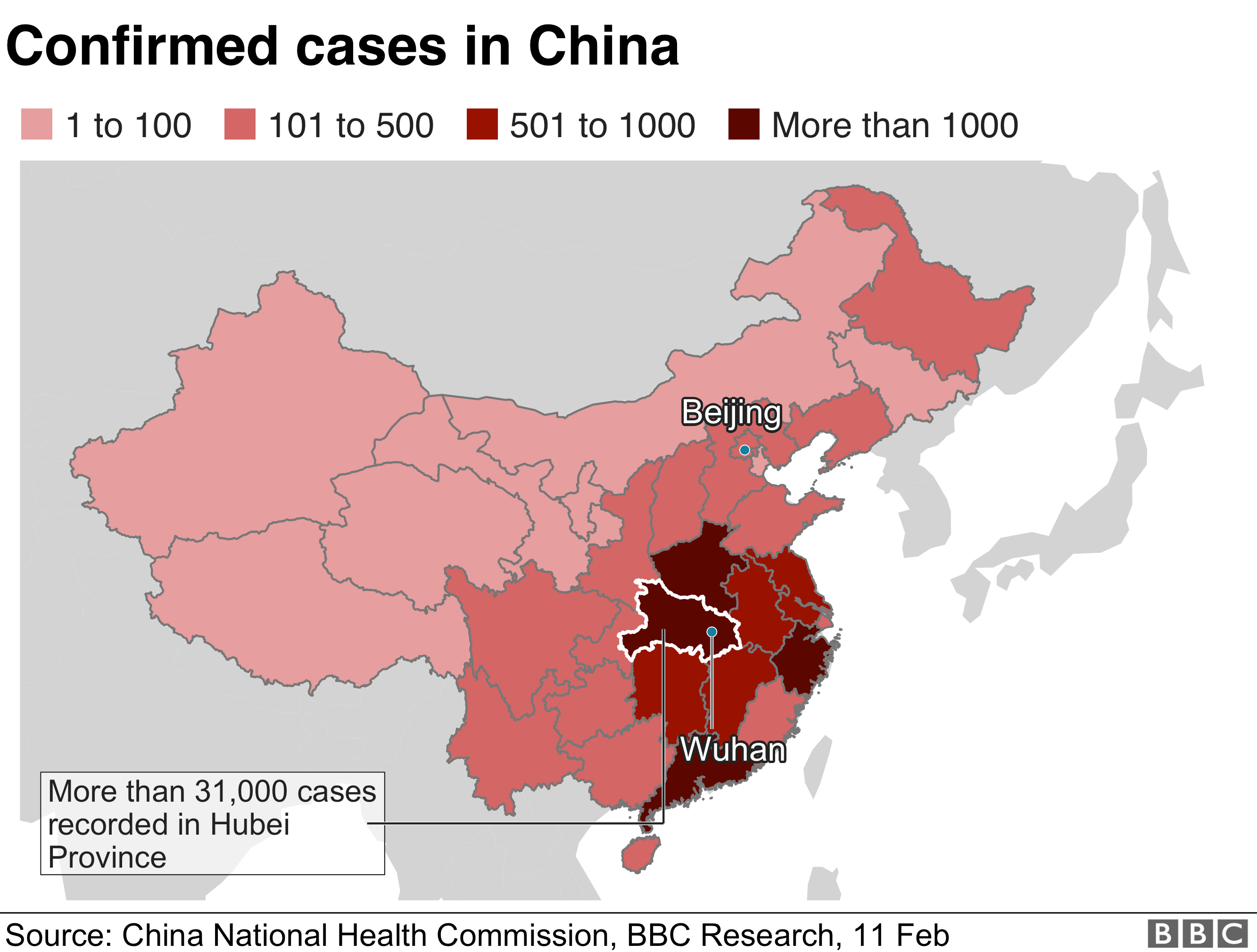
Map showing confirmed cases in China

The consequences are now entirely dependent on questions no one knows the answers to; can they pull off the complex task of bringing a runaway epidemic under control, and if so, how long might it take?

Across the world, people seem unsure how to respond to the small number of cases being detected in their own countries. The public mood can swing between panic – driven by the pictures of medical workers in hazmat suits – to complacency, brought on by headlines that suggest the risk is no worse than flu. The evidence from China suggests that both responses are misguided. Seasonal flu may well have a low fatality rate, measured in fractions of 1%, but it’s a problem because it affects so many people around the world.

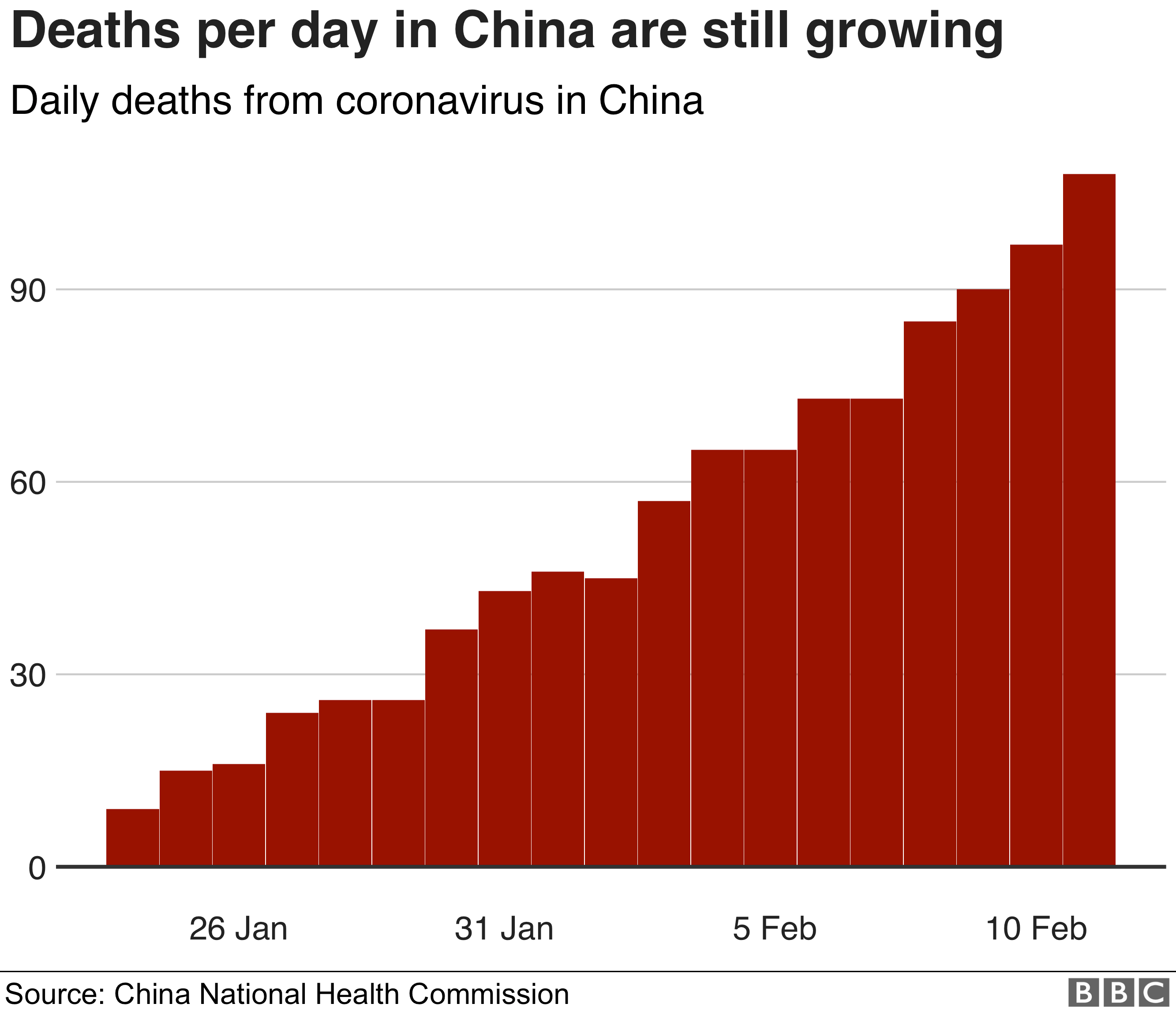
Graphic showing rising number of coronavirus deaths in China

The tiny proportion killed out of the many, many millions who catch it each year still numbers in the hundreds of thousands – individually tragic, collectively a major healthcare burden.

Very early estimates suggested the new virus may be at least as deadly as flu – precisely why so much effort is now going into stopping it becoming another global pandemic. But one new estimate suggests it could prove even deadlier yet, killing as many as 1% of those who contract it. For any individual, that risk is still relatively small, although it’s worth noting such estimates are averages – just like flu, the risks fall more heavily on the elderly and already infirm.
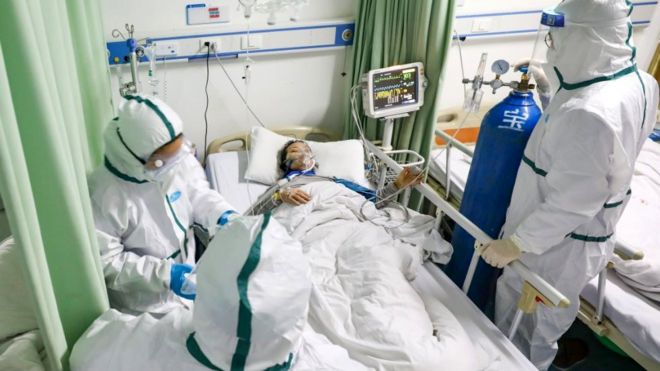
Patient in hospital bed in WuhanImage copyright REUTERS
Image caption Despite the death toll, an increasing number of patients are recovering

But China’s experience of this epidemic demonstrates two things. Firstly, it offers a terrifying glimpse of the potential effect on a healthcare system when you scale up infections of this kind of virus across massive populations. Two new hospitals have had to be built in Wuhan in a matter of days, with beds for 2,600 patients, and giant stadiums and hotels are being used as quarantine centres, for almost 10,000 more.

Despite these efforts, many have still struggled to find treatment, with reports of people dying at home, unregistered in the official figures. Secondly, it highlights the importance of taking the task of containing outbreaks of new viruses extremely seriously. The best approach, most experts agree, is one based on transparency and trust, with good public information and proportionate, timely government action.

But in an authoritarian system, with strict censorship and an emphasis on political stability above all else, transparency and trust are in short supply.
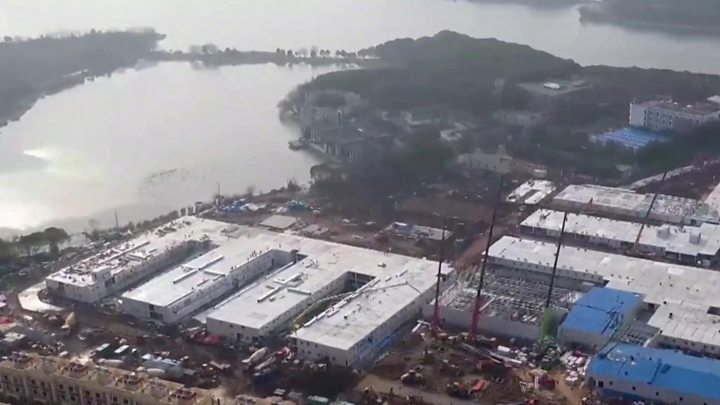
Media caption Aerial time-lapse shows Wuhan hospital construction

China’s response may have sometimes looked like panic – with what’s been called the “biggest quarantine in history” and harsh enforcement against those who disobey.

But those measures have become necessary only because its initial response looked like the very definition of complacency.

There’s ample evidence that the warning signs were missed by the authorities, and worse, ignored. By late December, medical staff in Wuhan were beginning to notice unusual symptoms of viral pneumonia, with a cluster linked to the market trading in illegal wildlife. On 30 December, Dr Li Wenliang, an ophthalmologist working in Wuhan’s Central Hospital, posted his concerns in a private medical chat group, advising colleagues to take measures to protect themselves. He’d seen seven patients who appeared to be suffering with an illness similar to Sars – another coronavirus that began in an illegal Chinese wildlife market in 2002 and went on to kill 774 people worldwide.

A few days later, he was summoned by the police.

Dr Li was made to sign a confession, denouncing the messages he’d posted as “illegal behaviour”.

The case received national media attention, with a high-profile state-run TV report announcing that in total, eight people in Wuhan were being investigated for “spreading rumours”. The authorities, though, were well aware of the outbreak of illness. The day after Dr Li posted his message, China notified the World Health Organization, and the day after that, the suspected source – the market – was closed down.

But despite the multiplying cases and the concerns among medics that human-to-human transmission was taking place, the authorities did little to protect the public. Doctors were already setting up quarantine rooms and anticipating extra admissions when Wuhan held its important annual political gathering, the city’s People’s Congress.

In their speeches, the Communist Party leaders made no mention of the virus. China’s National Health Commission continued to report that the number of infections was limited and that there was no clear evidence that the disease could spread between humans.

And on 18 January the Wuhan authorities allowed a massive community banquet to take place, involving more than 40,000 families. The aim was to set a record for the most dishes served at an event. Two days later, China finally confirmed that human-to-human transmission was indeed taking place.

Delicacies from Wuhan banquet
Image caption Images from Chinese state TV show the large banquet in Wuhan

Most remarkable of all perhaps, the following day, Wuhan held a Lunar New Year dance performance, attended by senior officials from across the surrounding province of Hubei. A state media report of the event, since hurriedly deleted but captured here, says the performers, some with runny noses and feeling unwell, “overcame the fear of pneumonia… winning praise from the leaders”.

By the time the national authorities had woken up to the impending disaster, and closed the city down on 23 January, it was too late – the epidemic was out of control. Before Wuhan’s transport links were cut, an estimated five million people had left the city for the Lunar New Year break, travelling across China and the world.

Some have begun calling the disaster “China’s Chernobyl”.

The parallels in failures to pass bad news up the chain of command and the incentives to put the short-term interests of political stability ahead of public safety, seem all too apparent. Li Wenliang, who’d gone back to work after being warned to keep quiet, soon discovered he’d also been infected.

He died earlier this month, leaving a five-year-old son and a pregnant wife.

Anger was already simmering over the authorities’ failure to issue timely warnings, with the crisis now being aired in full view. Wuhan’s politicians were blaming senior officials for failing to authorise the release of the information; senior officials appeared to be preparing to hang Wuhan’s politicians out to dry.

But the death of a man, silenced for simply trying to protect his colleagues, burst open the dam with a wave of online fury directed not just at individuals, but at the system itself. So great was the public outrage, China’s censors appeared unsure what to censor and what to let through. The hashtag #Iwantfreedomofspeech was viewed almost two million times before it was blocked. Aware of the tide of emotion, the Party began paying its own tributes to Dr Li.

It quickly hailed him a national hero.
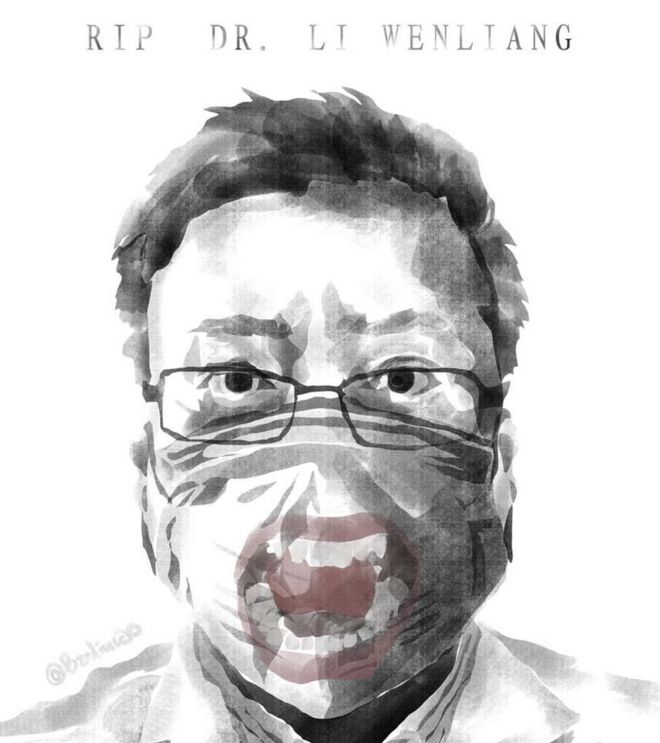
Doctor Li Wenliang tried to warn authorities about the new virus and died after contracting itImage copyright COURTESY BADIUCAO
Image caption Doctor Li Wenliang tried to warn authorities about the new virus and died after contracting it

China’s rulers, untroubled by the inconveniences of the ballot box, have far deeper and older fears of what might sweep them from office. The wars, famines and diseases that shook the dynasties of old have given them their inheritance; an acute historical sense of the danger of the unforeseen crisis. They will also know well what Chernobyl did for the legitimacy of the ruling Communist Party in the former USSR.

“It’s impossible to know if Li Wenliang’s death will serve as the catalyst for something bigger,” Jude Blanchette, an expert on Chinese politics at the Center for Strategic and International Studies in Washington, tells me. “But the raw emotion that surged when news of his condition broke indicates deep levels of frustration and anger exist within the country.”

Precisely because it feels the weight of history, however, the Communist Party has made holding onto power a living obsession, and it has an ever more formidable domestic security apparatus to help it to do so. Over the past few decades it has proven nothing if not resilient, enduring through political chaos, devastating earthquakes and man-made disasters.

But one sign that might hint at an awareness of just how great the current risks are comes in the role being played by China’s President Xi Jinping. This week – for the first time since the crisis began – he ventured out to meet health workers involved in the fight, visiting a hospital and a virus control centre in Beijing.

In contrast, his premier, Li Keqiang, has been sent to the front lines in Wuhan and appointed head of a special working group to tackle the epidemic.

While it is common for the premier to be the face of reassurance during national disasters, some observers see another reason why Mr Xi might be wise to be seen to delegate.
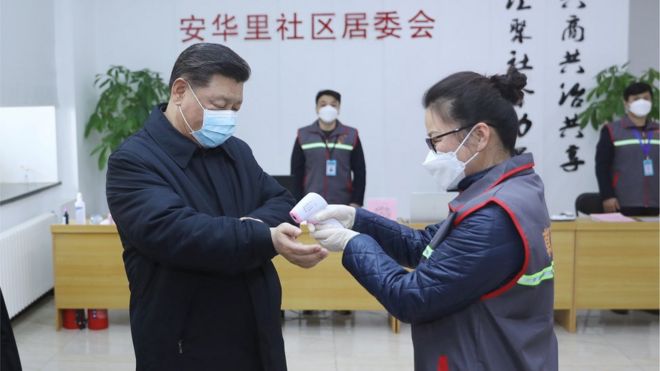
Chinese president Xi Jinping has his temperature recorded during a trip to a hospital in Beijing (10 February)Image copyright EPA
Image caption China’s president has kept a low profile since the outbreak began

“Xi’s absence from this crisis is yet another demonstration that he doesn’t so much lead as he does command,” Mr Blanchette says. “He’s clearly worried that this crisis will blow up in his face, and so he’s pushed out underlings to be the public face of the CCP’s response.”

Already there are signs that the censorship is being ratcheted up once again, with Mr Xi ordering senior officials to “strengthen the control over online media”.

A few days ago, I spoke by phone to the lawyer and blogger, Chen Qiushi, who’d travelled to Wuhan in an attempt to provide independent reporting about the situation. Videos from Mr Chen, and a fellow activist, Fang Bin, have been widely watched, showing not the ranks of patriotic soldier-medics and the building of hospitals that fill state media coverage, but overcrowded waiting rooms and body bags.

He told me he was unsure how long he’d be able to carry on. “The censorship is very strict and people’s accounts are being closed down if they share my content,” he said.

Mr Chen has since gone missing.

Friends and family believe he’s been forced into Wuhan’s quarantine system, in an attempt to silence him.

China’s leaders now find their fate linked to the daily charts of infection rates, published city by city, province by province. There are some signs that the extraordinary quarantine measures may be having an effect – outside of Hubei Province, the worst affected area, the number of new daily infections is falling.

But with the need to try to restart the economy – all but frozen now for over a week – the country has begun a slow return to work.

Media caption “Wuhan, add oil!”: Watch residents shouting to boost morale in quarantined city

Strict quarantine measures will remain in force in the worst affected areas, but workers from other parts of the country are trickling back to the cities, with the task of monitoring and managing their movements being handed to local neighbourhood committees.

It will be a difficult balancing act.

Too tough an approach risks further choking off business activity, commerce and travel in a consumer environment already suffocating under the deep psychological fear of contagion. Too lax, and any one of the many potential reservoirs of infection, now scattered across the country, could explode into another, separate epidemic.

That would require further harsh action, knocking domestic confidence and prolonging the international border closures and flight restrictions put in place at such enormous economic cost.

China is insisting that it is a fight well on the way to being won with “unconquerable will” and that lessons have been learned and “shortcomings in preparedness” identified.

Questions about the systemic failings behind the disaster are dismissed as foreign “prejudice”, as the propaganda machine cranks into overdrive, channelling the narrative and muting the criticisms.

But the devastating scale and scope of China’s world-threatening catastrophe have already revealed something important. The thousands who have lost family members, the millions living under the quarantine measures and the workers and businesses bearing the financial costs have been asking those difficult questions too.
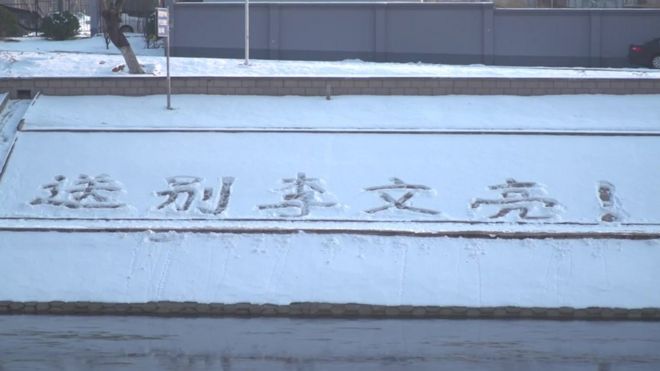
Chinese characters in the snow on the banks of the Tonghui river in Beijing read "Goodbye Li Wenliang!"
Image caption A tribute in snow to doctor Li Wenliang

On the snowy banks of the Tonghui river, the giant tribute to Li Wenliang remains intact. When we visited, a few locals were taking photos and talking quietly to each other.

A police car crawled slowly by.

Soon, with the warming weather, the characters will be gone.

Source: The BBC

18/02/2020

China may adjust 2020 GDP growth target due to coronavirus, government policy adviser say

  • China was widely expected to announce a gross domestic product (GDP) growth target for 2020 of ‘around 6 per cent’ following 6.1 per cent growth in 2019
  • Zhang Yansheng, who is an adviser to China’s economic policymakers, says ‘there will definitely be adjustments’
(190305) -- BEIJING, March 5, 2019 (Xinhua) -- Xi Jinping (C, front), Li Keqiang (3rd R, front), Wang Yang (3rd L, front), Wang Huning (2nd R, front), Zhao Leji (2nd L, front), Han Zheng (1st R, front) and Wang Qishan (1st L, front) attend the opening meeting of the second session of the 13th National People's Congress at the Great Hall of the People in Beijing, capital of China, March 5, 2019. (Xinhua/Li Xueren)
(190305) — BEIJING, March 5, 2019 (Xinhua) — Xi Jinping (C, front), Li Keqiang (3rd R, front), Wang Yang (3rd L, front), Wang Huning (2nd R, front), Zhao Leji (2nd L, front), Han Zheng (1st R, front) and Wang Qishan (1st L, front) attend the opening meeting of the second session of the 13th National People’s Congress at the Great Hall of the People in Beijing, capital of China, March 5, 2019. (Xinhua/Li Xueren)

China may revise down its annual economic growth target for 2020 in response to the impact of the coronavirus outbreak, but will still not give up the overall target of maintaining economic growth “in a reasonable range”, according to a Chinese government researcher.

The Chinese government has never officially published its goal for 2020, but it is widely expected that the specific gross domestic product (GDP) growth target for 2020

 would be “around 6 per cent”, marking a potential slight slowdown from 6.1 per cent growth in 2019 but enough to achieve Beijing’s grand goal of doubling the size of its economy in 2020 from 2010.
China’s 2020 growth target was originally to be released during Premier Li Keqiang’s government work report at the National People’s Congress, but the March 5 annual parliamentary meeting is set to be postponed due to the coronavirus outbreak.
“There will definitely be adjustments. For the central government, it hasn’t defined what the ‘reasonable range’ should be after the outbreak of coronavirus. People are still watching how the outbreak will develop and influence the economy,” Zhang Yansheng, the chief research fellow at the Beijing-based think tank, the China Centre for
International Economic Exchanges, told the South China Morning Post on Tuesday.

As for the final GDP target figure, we have to be true to facts. The GDP target was not a compulsory requirement but a soft forecast figureZhang Yansheng

“As for the final GDP target figure, we have to be true to facts. The GDP target was not a compulsory requirement but a soft forecast figure – strictly speaking, a forecast figure could be revised three or four times in a year.”
Zhang, though, referenced the fact that 29 of China provincial-level regions, out of a total of 31, had published their 2020 economic growth targets at the Central Economic Work Conference in December.

“The direction and the goals are clear. It’s not the case that people have not known what they should do this year,” added Zhang, who is an adviser to China’s economic policymakers.

President Xi Jinping

has repeatedly said over the last two weeks that China will still strive to achieve its economic and social development goals for 2020 despite the outbreak, which has claimed over 1,800 lives and infected over 70,000 people, and remain on course to build the country into a “comprehensively well-off society”.

China to postpone the year’s biggest political gathering amid coronavirus outbreak
One key aspect of that vision is that China will double the size of its GDP in 2020 from 2010, which would require a minimum 5.6 per cent growth rate in 2020, although Beijing has never clearly defined the full details of the goal.

On Tuesday, Ren Hongbin, vice-chairman of the State-owned Assets Supervision and Administration Commission of the State Council, said that the annual production goals and reform tasks set earlier in the year for state-owned enterprises would also not change despite the outbreak.

“The impact of the epidemic is temporary and phased, will not change the long-term positive fundamentals of the Chinese economy,” he said.

We should neither view 6 per cent as a red line nor take doubling the GDP size as a bottom line Song Xiaowu

Before the country fell into an economic standstill around the extended Lunar New Year holiday as the virus spread from the city of Wuhan, economists and analysts have been engaged in a heated debate over whether China needs to keep its growth rate above 6 per cent in 2020.

Song Xiaowu, former president of the China Society of Economic Reform, a state-backed think tank, said at a forum on Saturday that China’s GDP growth rate could drop to 3 per cent in the first quarter and 5 per cent for the whole of 2020.

“We should neither view 6 per cent as a red line nor take doubling the GDP size as a bottom line,” said Song, in a speech published by the China Development Research Foundation, who organised the forum.

Source: SCMP

23/01/2020

Xi Focus: Xi stresses racing against time to reach Chinese Dream

CHINA-BEIJING-CPC CENTRAL COMMITTEE-STATE COUNCIL-RECEPTION (CN) Chinese President Xi Jinping, also general secretary of the Communist Party of China (CPC) Central Committee and chairman of the Central Military Commission, addresses a Chinese Lunar New Year reception at the Great Hall of the People in Beijing, capital of China, Jan. 23, 2020. The CPC Central Committee and the State Council held the reception on Thursday in Beijing. (Xinhua/Yao Dawei)

BEIJING, Jan. 23 (Xinhua) — Chinese President Xi Jinping on Thursday stressed racing against time and keeping abreast with history to reach the Chinese Dream of national rejuvenation.

“Time and history wait for no one as they are both on the side of hard workers,” said Xi, also general secretary of the Communist Party of China (CPC) Central Committee and chairman of the Central Military Commission.

Xi made the remarks while addressing a Chinese Lunar New Year reception held at the Great Hall of the People in Beijing.

Under the strong leadership of the CPC, all members of the Party, armed forces and people of all ethnic groups must fear no wind or wave, rise up to challenges and keep marching toward the glorious goal of national rejuvenation and the great prospect of building a community with a shared future for humanity, Xi said.

At the reception, held by the CPC Central Committee and the State Council, Xi extended Lunar New Year’s greetings to Chinese people of all ethnic groups, compatriots in Hong Kong, Macao and Taiwan and overseas Chinese.

Party and state leaders Li Keqiang, Li Zhanshu, Wang Yang, Wang Huning, Zhao Leji, Han Zheng and Wang Qishan were among the more than 2,000 people attending the reception. Li Keqiang chaired the event.

Xi noted in his speech that new and significant progress has been made in the past year toward building a moderately prosperous society in all respects.

He mentioned major events during the year, including the fourth plenary session of the 19th CPC Central Committee, celebrations marking the 20th anniversary of Macao’s return to the motherland and resolute efforts to safeguard the prosperity and stability of Hong Kong and Macao, as well as celebrations marking the 70th founding anniversary of the People’s Republic of China.

A campaign themed “staying true to our founding mission” was also carried out to demand the more than 90 million Party members remember to always stay with the people.

“In the new year, we must secure a decisive victory in building a moderately prosperous society in all respects and fighting poverty,” Xi said, adding that achieving this first centenary goal is a milestone in the process of realizing the Chinese Dream of national rejuvenation.

The results, Xi said, must be recognized by the people and stand the test of time.

Xi said the Chinese nation, with a civilization stretching back over 5,000 years, has made indelible contributions to the civilization and progress of mankind. But the nation was held back for too long by various internal and external troubles in modern times.

That is why, Xi said, the Chinese people have always had an extraordinary sense of urgency and appreciation of the underlying trend of the times.

From now to the middle of this century, the Chinese people will strive to build China into a great modern socialist country. It will be a great era in which a new splendid chapter of the Chinese civilization will be written, he said.

Every Chinese person must feel proud of living in such a great era, Xi said.

“We must maintain strategic direction and resolve, stay united, work hard and forge ahead against all odds,” Xi said.

Source: Xinhua

19/11/2019

China needs to divert more water to north to fight risk of drought, says premier

  • Li Keqiang tells senior officials to step up efforts to channel water from Yangtze River to arid regions
  • Impact of pollution and rising population has prompted increased efforts to improve efficiency and supply
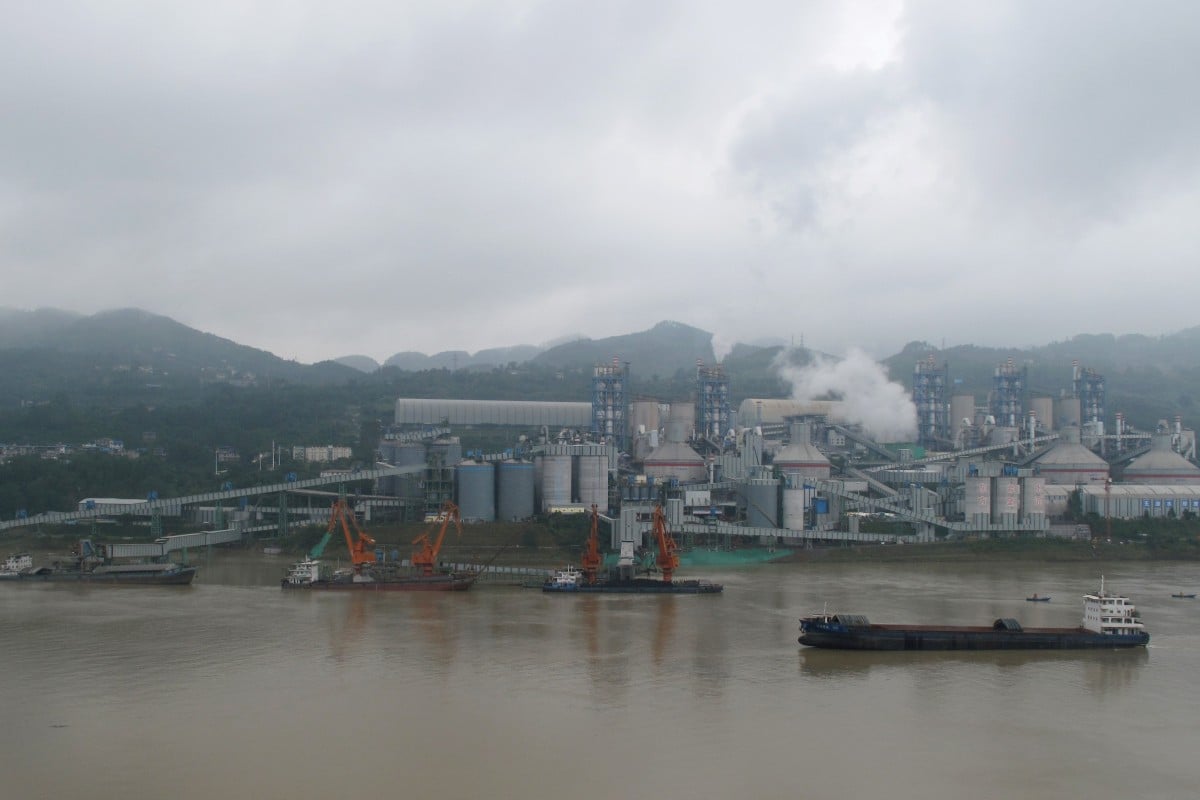
A cement plant on the banks of the Yangtze in Chongqing. The authorities are now trying to stop further development along the river. Photo: Reuters

China needs to divert more water to its arid northern regions and invest more in water infrastructure as shortages get worse because of pollution, overexploitation and rising population levels, Premier Li Keqiang has said.

China’s per capita water supplies are around a quarter of the global average. With demand still rising, the government has sought to make more of scarce supplies by rehabilitating contaminated sources and improving efficiency.

Water remained one of China’s major growth bottlenecks, and persistent droughts this year underlined the need to build new infrastructure, Li told a meeting of senior Communist Party officials on Monday. An account of the meeting was published by China’s official government website.

Local government bonds should be “tilted” in the direction of water infrastructure, he said, and innovative financing tools were also needed.

He also called for research into new pricing policies to encourage conservation.

Li said China’s water supply problems had been improved considerably as a result of the South-North Water Diversion Project, a plan to divert billions of cubic metres of water to the north by building channels connecting the Yangtze and Yellow rivers.

World ‘woefully unprepared’ for climate change’s effects on drinking water supplies drawn from mountains

He said opening up more channels to deliver water to regions north of the Yangtze River Delta would support economic and social development and optimise China’s national development strategy, according to a summary of the meeting on the government website.

China is in the middle of a wide-reaching programme to clean up the Yangtze River, its biggest waterway, and put an end to major development along its banks.

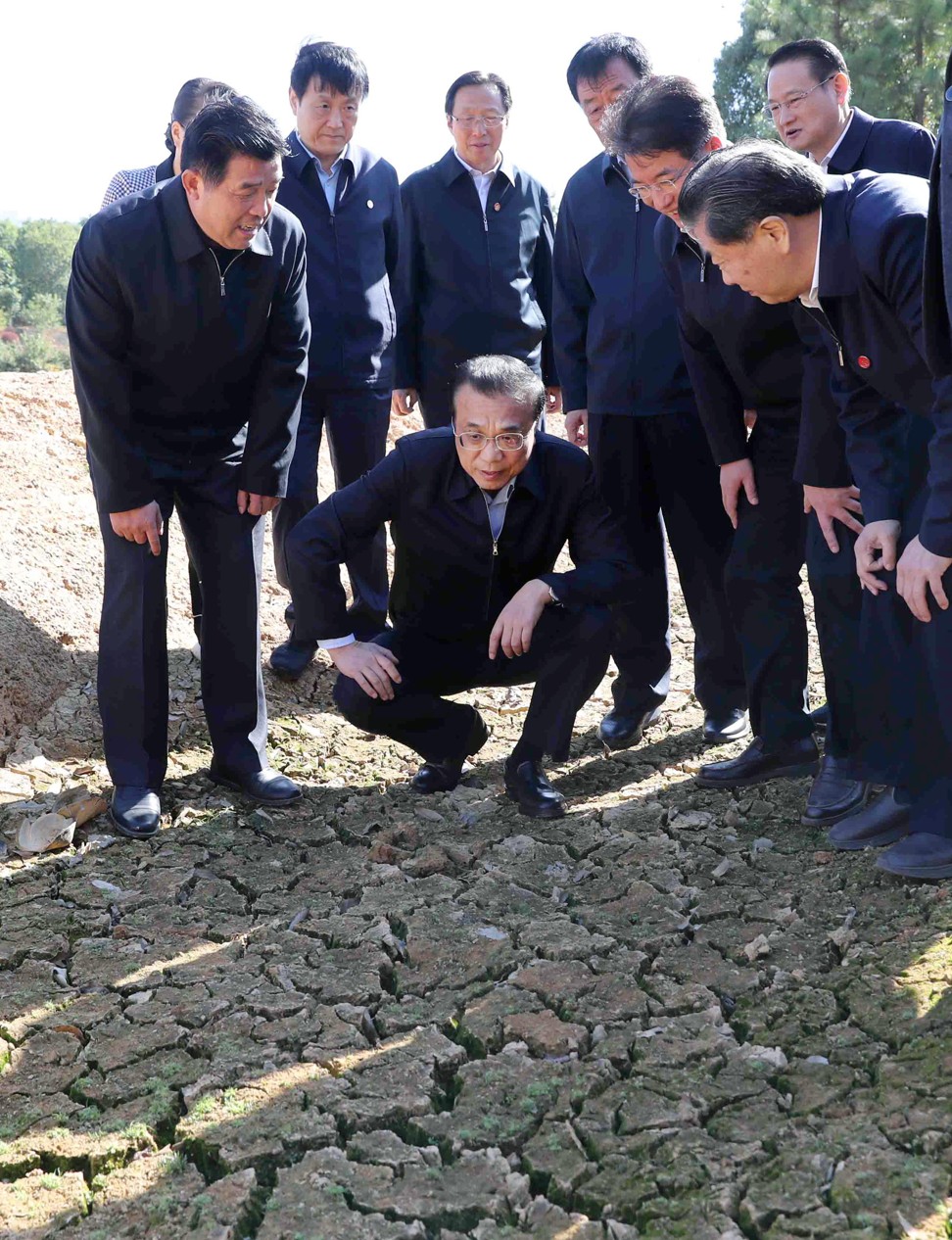
Chinese Premier Li Keqiang inspects an empty reservoir during a visit to Jiangxi province last week. Photo: Xinhua

Local governments have been under pressure to dismantle dams, relocate factories and even ban fishing and farming in ecologically fragile regions.

But experts say the ongoing campaign to divert the course of the Yangtze to other regions is still causing long-term damage to the river’s environmental health.

Many cities that had polluted their own water sources had drawn replacement supplies from the Yangtze, exceeding the river’s environmental capacity, said Ma Jun, founder of the Institute of Public and Environmental Affairs, which monitors water pollution.

Beijing already relied on diversion channels from the Yangtze to supply 70 per cent of its water, but had done little to improve conservation or reduce per capita consumption, which was higher than many Western countries, he said.

“[Diversion] has caused so much suffering and needs so many dams to keep up supply, and that has impacted biodiversity,” he said.

Source: SCMP

07/09/2019

Hong Kong protests: China’s premier backs government to end ‘chaos’

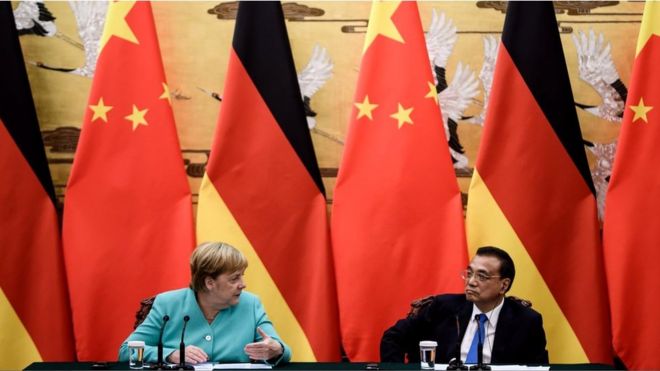
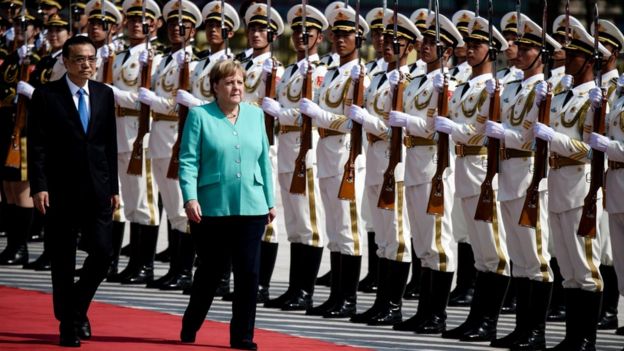
Angela Merkel and Li KeqiangImage copyright EPA
Image caption Ms Merkel calls for dialogue while Mr Li says China can handle its own matters

China’s Premier Li Keqiang has said Beijing supports the Hong Kong government “to end the violence and chaos”.

He is the most senior Chinese official to comment on the unrest which has rocked Hong Kong for months.

His comments came during a joint press conference with German Chancellor Angela Merkel in Beijing.

Hong Kong has seen months of often-violent protests calling for democracy and less influence from China.

The protests were sparked by changes to a law that would allow extradition to mainland China, but have since widened to include calls for an independent inquiry into police brutality and demands for greater democracy.

Li Keqiang and Angela MerkelImage copyright EPA
Image caption Hong Kong activists hope for Western support

On Wednesday, embattled Chief Executive Carrie Lam withdrew the controversial extradition bill but that has failed to appease the activists.

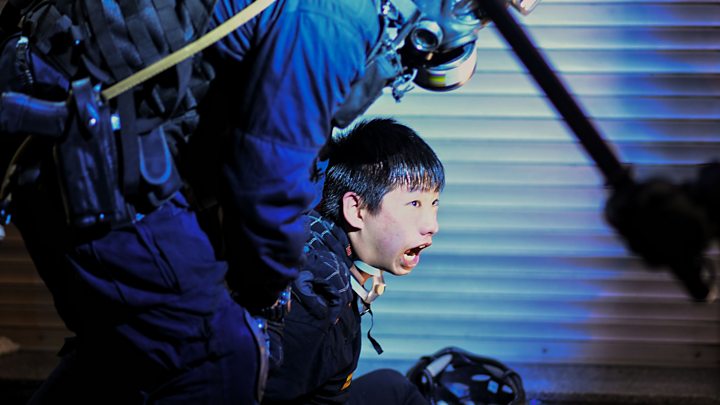
Instead, protests continued on Friday evening, when clashes erupted between police and the demonstrators outside a subway station on the Kowloon peninsula.

Riot police fired both tear gas and rubber bullets at protesters before clearing the nearby streets as the crowd of protesters was forced to retreat.

What did the Chinese premier say?

In August, China had likened to protests to terrorism, warning activists not to “underestimate the firm resolve” of the Beijing government.

Li Keqiang, China’s second highest-ranking leader, told reporters on Friday: “The Chinese government unswervingly safeguards ‘one country, two systems’ and ‘Hong Kong people govern Hong Kong people’.”

He said China backed Hong Kong “to end the violence and chaos in accordance with the law, to return to order, which is to safeguard Hong Kong’s long-term prosperity and stability”.

He said the world “needs to believe that the Chinese people have the ability and wisdom to handle their own matters well”.

Merkel calls for dialogue

German Chancellor Angela Merkel said a peaceful solution was needed for Hong Kong, urging that “in the current situation, violence must be prevented”.

Media caption How Hong Kong got trapped in a cycle of violence

She said there were signs Ms Lam would invite the necessary dialogue.

“I hope that materialises and that demonstrators have the chance to participate within the frame of citizens’ rights.”

She also stressed that the “rights and freedoms” for the people of Hong Kong “have to be granted”.

Soyrce: The BBC

03/09/2019

Xi calls on Red Cross Society of China to make new contributions

CHINA-BEIJING-XI JINPING-RCSC-11TH GENERAL CONGRESS (CN)

Chinese President Xi Jinping, also general secretary of the Communist Party of China (CPC) Central Committee and chairman of the Central Military Commission, meets with representatives to the 11th general congress of the Red Cross Society of China (RCSC) at the Great Hall of the People in Beijing, capital of China, Sept. 2, 2019. Li Keqiang and Wang Huning, both members of the Standing Committee of the Political Bureau of the CPC Central Committee, were present at the meeting. Vice President Wang Qishan attended the meeting and the opening of the congress. (Xinhua/Xie Huanchi)

BEIJING, Sept. 2 (Xinhua) — President Xi Jinping on Monday called on the Red Cross Society of China (RCSC) to make new and greater contributions to the development of the Red Cross cause.

Xi, also general secretary of the Communist Party of China (CPC) Central Committee and chairman of the Central Military Commission, made the remarks when meeting with representatives to the 11th general congress of the RCSC at the Great Hall of the People in Beijing.

Extending sincere greetings and warm congratulations to the representatives, Xi encouraged them to champion the spirit of humanity, compassion and dedication, and pursue reform and innovation with great endeavor.

Xi and the representatives took group pictures.

Li Keqiang and Wang Huning, both members of the Standing Committee of the Political Bureau of the CPC Central Committee, were present at the meeting. Vice President Wang Qishan attended the meeting and the opening of the congress.

Addressing the opening ceremony, Vice Premier Sun Chunlan urged the RCSC to uphold the leadership of the Party, protect lives and health, carry out international assistance, and serve the country and the people.

Li Hong, a registered nurse and vice president of Fujian Provincial Hospital who won the Florence Nightingale Medal for 2019, as well as 32 groups and 10 individuals working for the RCSC were awarded for their outstanding achievements at Monday’s congress.

Source: Xinhua

27/04/2019

Xi hosts banquet for guests attending Belt and Road forum

(BRF)CHINA-BEIJING-BELT AND ROAD FORUM-XI JINPING-BANQUET (CN)

Chinese President Xi Jinping addresses a banquet hosted by him and his wife Peng Liyuan in honor of guests attending the Second Belt and Road Forum for International Cooperation in Beijing, capital of China, April 26, 2019. (Xinhua/Huang Jingwen)

BEIJING, April 26 (Xinhua) — Chinese President Xi Jinping and his wife Peng Liyuan hosted a banquet Friday evening in honor of guests attending the Second Belt and Road Forum for International Cooperation in Beijing.

“On behalf of the Chinese government and Chinese people, my wife and also in my own name, let me extend warm welcome to all guests,” Xi said while proposing a toast at the banquet.

“Today’s gathering makes us recall the beautiful memories in our hearts,” Xi said, adding that “no matter how the international environment changes, the sincere friendship will last forever and the mutually beneficial cooperation will be the eternal melody in our hearts.”

The occasion inspires the participants via exchanges of ideas and insights, he said, calling for fostering global partnerships and creating a bright future of common development.

“Today’s gathering reminds us of the heavy responsibilities on our shoulders,” Xi told the guests that as the world is now undergoing profound changes unseen in a century, “may we all live up to our missions and the times.”

“We should all have faith that people of all countries deserve a better future, and the joint building of the Belt and Road will surely bring about a better world,” he said.

Li Keqiang, Li Zhanshu, Wang Yang, Wang Huning, Zhao Leji, Han Zheng and Wang Qishan also attended the banquet.

After the banquet, Xi and his wife accompanied the guests in watching a gala.

Source: Xinhua

10/03/2019

Xi stresses implementation of rural revitalization strategy

(TWO SESSIONS)CHINA-BEIJING-XI JINPING-NPC-DELIBERATION (CN)

Chinese President Xi Jinping, also general secretary of the Communist Party of China (CPC) Central Committee and chairman of the Central Military Commission, joins deliberation with deputies from central China’s Henan Province at the second session of the 13th National People’s Congress in Beijing, capital of China, March 8, 2019. (Xinhua/Xie Huanchi)

BEIJING, March 8 (Xinhua) — Chinese President Xi Jinping on Friday called for more efforts to implement the rural revitalization strategy with the chief goal to modernize agriculture and rural areas.

“The top task for implementing the rural revitalization strategy is to ensure supply of important farm produce, grain in particular,” said Xi, also general secretary of the Communist Party of China Central Committee and chairman of the Central Military Commission.

He made the remarks when joining deliberation with deputies from Henan Province at the second session of the 13th National People’s Congress, China’s national legislature.

Efforts should be made to promote the supply-side structural reform in the agricultural sector to achieve food security while building a modern and efficient agriculture, Xi added.

Xi also called for enhanced protection of agriculture ecological environment and prevention and treatment of pollution in rural areas.

Xi stressed strict penalties on crimes involving food safety so as to ensure safe farm produce for the public.

Efforts should be made to strengthen the leadership of grassroots Party units in the rural areas, Xi said, noting that the practices of rural residents’ self-governance should be further explored.

Xi also called for measures to promote two-way flow and equal exchange of factors, including human resources, lands and capital, between urban and rural areas.

“The task to eradicate extreme poverty must be fulfilled by 2020,” Xi stressed.

Implementation of the rural revitalization strategy and seeking progress in work related with agriculture, rural areas and farmers should be taken into consideration and promoted in the overall economic and social development, Xi said.

Li Keqiang, Wang Huning and Han Zheng — members of the Standing Committee of the Political Bureau of the CPC Central Committee — on Friday also separately joined deliberation with NPC deputies.

Premier Li Keqiang stressed building a business environment that is fair and convenient for enterprises under all forms of ownership, when joining a deliberation with deputies from Hubei Province.

He called for efforts to fully carry out the reforms of tax and fee cuts and further stimulate the market vitality.

Wang Huning, a member of the Secretariat of the CPC Central Committee, asked deputies from central China’s Hunan Province to take bigger steps in pushing forward high-quality development.

He also called for taking a people-centered approach to further live up to people’s new expectations for their cultural lives.

Joining the deliberation of the Beijing delegation, Vice Premier Han Zheng underlined deepening the coordinated development of the Beijing-Tianjin-Hebei region to further relieve Beijing of functions nonessential to its role as the capital.

Source: Xinhua

08/03/2019

Xi stresses perseverance in fight against poverty

(TWO SESSIONS)CHINA-BEIJING-XI JINPING-NPC-DELIBERATION (CN)

Chinese President Xi Jinping, also general secretary of the Communist Party of China (CPC) Central Committee and chairman of the Central Military Commission, joins deliberation with deputies from Gansu Province at the second session of the 13th National People’s Congress in Beijing, capital of China, March 7, 2019. (Xinhua/Ju Peng)

BEIJING, March 7 (Xinhua) — Chinese President Xi Jinping on Thursday called for perseverance in the fight against poverty as there are only two years left for the country to meet its goal of eradicating extreme poverty by 2020.

“There should be no retreat until a complete victory is won,” said Xi, also general secretary of the Communist Party of China (CPC) Central Committee and chairman of the Central Military Commission.

He made the remarks when deliberating with deputies from Gansu Province at the second session of the 13th National People’s Congress (NPC), China’s national legislature.

Decisive progress has been achieved in the country’s tough fight against poverty over the past years, marking a new chapter in the poverty reduction history of mankind, said Xi, stressing that the goal to eradicate extreme poverty must be achieved on time.

He warned that the tasks ahead remain arduous and hard as those still in poverty are the worst stricken.

Explaining the criteria of lifting people out of poverty, Xi said they should no longer need to worry about food and clothing while enjoying access to compulsory education, basic medical care and safe housing.

The practices of formalities for formalities’ sake and bureaucratism hamper the effective advancement of poverty reduction, he said, stressing a firm hand in rectifying malpractices in poverty relief.

Xi asked Party committees and governments at all levels to shoulder their responsibilities in the critical battle against poverty.

He ordered efforts to redress undesirable conduct of officials in a timely manner, as well as special campaigns to target corruption and bad conduct in poverty reduction.

Li Keqiang, Li Zhanshu, Wang Yang, Wang Huning, Zhao Leji and Han Zheng — members of the Standing Committee of the Political Bureau of the CPC Central Committee — on Thursday also separately joined deliberation with NPC deputies.

Premier Li Keqiang spoke of the need to replace old growth drivers with new ones and improve people’s wellbeing to advance high-quality development.

NPC Standing Committee Chairman Li Zhanshu called for efforts to adhere to green, high-quality development and link poverty alleviation with rural vitalization strategy.

Wang Yang, chairman of the National Committee of the Chinese People’s Political Consultative Conference, urged high-quality poverty alleviation work to make sure that nobody is left behind in the course of building a moderately prosperous society in all respects.

Wang Huning, a member of the Secretariat of the CPC Central Committee, said he expects Shanghai to continue to lead the reform and opening-up and to elevate the coordinated development of the Yangtze River Delta to a higher level.

Zhao Leji, secretary of the CPC Central Commission for Discipline Inspection, spoke of the need for Tianjin to take advantage of the period of strategic opportunity, enhance the capacity of innovation, and focus on developing real economy.

Vice Premier Han Zheng stressed the full implementation of the national strategy of the coordinated development of the Yangtze River Delta.

Source: Xinhua

07/03/2019

Chinese leaders stress high-quality development

(TWO SESSIONS)CHINA-BEIJING-LI KEQIANG-NPC-PANEL DISCUSSIONS (CN)

Chinese Premier Li Keqiang, also a member of the Standing Committee of the Political Bureau of the Communist Party of China (CPC) Central Committee, joins panel discussions by deputies from Guangxi Zhuang Autonomous Region at the second session of the 13th National People’s Congress in Beijing, capital of China, March 6, 2019. (Xinhua/Ding Lin)

BEIJING, March 6 (Xinhua) — Senior Chinese leaders on Wednesday urged for more efforts to advance high-quality development.

Li Keqiang, Wang Yang and Han Zheng — members of the Standing Committee of the Political Bureau of the Communist Party of China Central Committee — made the remarks at the annual “two sessions” of the country’s top legislative and political advisory bodies.

Joining panel discussions by deputies to the 13th National People’s Congress (NPC) from southwest China’s Guangxi Zhuang Autonomous Region, Premier Li Keqiang stressed following the guidance of Xi Jinping Thought on Socialism with Chinese Characteristics for a New Era as China’s development faces more and graver risks and challenges in 2019.

He called for efforts to keep the economic growth within an appropriate range and promote high-quality development, and urged solid implementation of the planned tax and fee cuts to reduce burden on the real economy.

At the joint panel discussions of political advisors from economy and agriculture sectors, Wang Yang, chairman of the Chinese People’s Political Consultative Conference National Committee, told them to focus on major and difficult tasks, such as high-quality development and supply-side structural reform, and to deepen their investigations and researches. Wang also urged the advisors to guide the people in correctly interpreting the changes in economy and boost their confidence in development.

Vice Premier Han Zheng joined the panel discussions by lawmakers from Hong Kong. He expressed the support to Hong Kong’s bid to build itself into an international innovation and technology hub, and encouraged the people of Hong Kong, especially the youth, to start up businesses and work in the Guangdong-Hong Kong-Macao Greater Bay Area.

Han also joined panel discussions by lawmakers from Macao. He said that Macao will be supported in its efforts to expand new development space, and to develop its tourism and exhibition industries.

Source: Xinhua

Law of Unintended Consequences

continuously updated blog about China & India

ChiaHou's Book Reviews

continuously updated blog about China & India

What's wrong with the world; and its economy

continuously updated blog about China & India