Archive for ‘Liaoning province’

08/07/2019

Six dead after freak tornado tears through town in northern China

  • Homes destroyed and trees uprooted as destructive forces rips area apart in 15 minutes
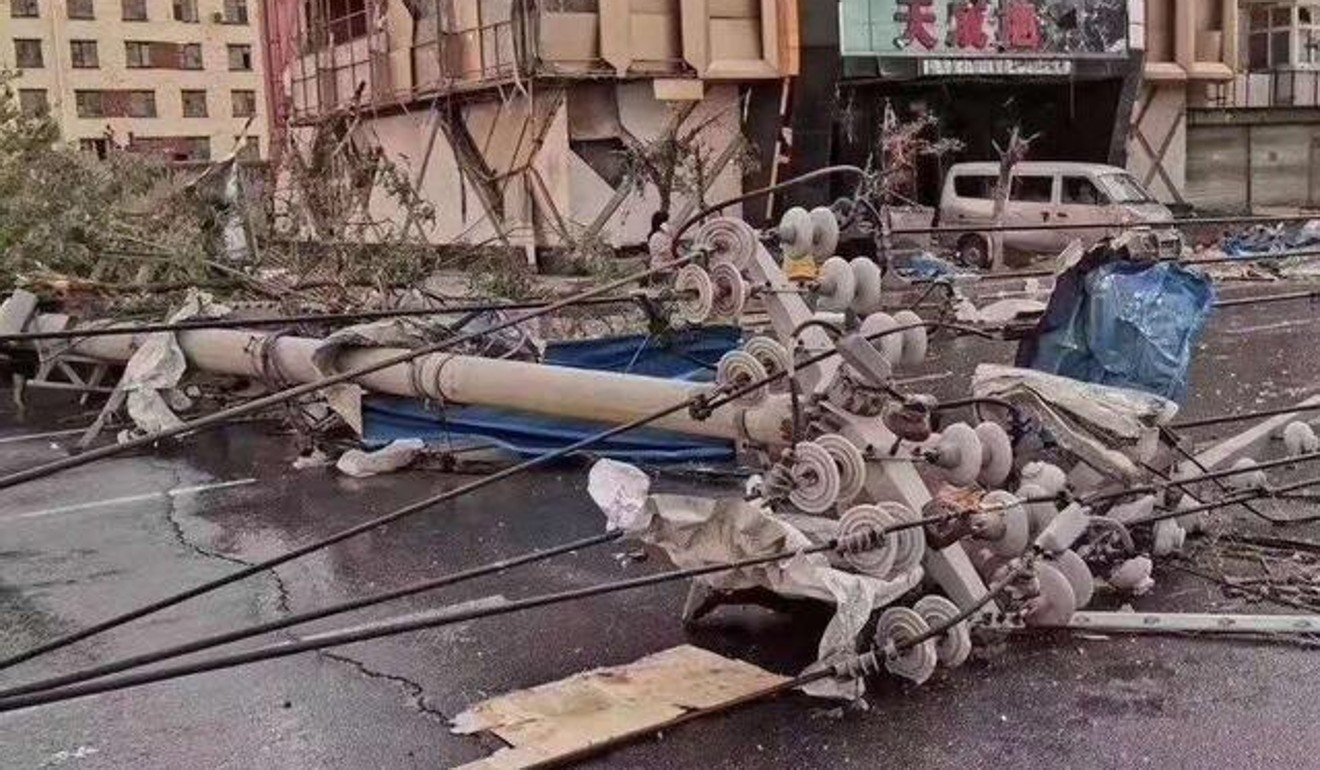
Residents try to pick up the pieces after a deadly tornado destroyed homes and factories in Kaiyuan, Liaoning province, on Wednesday afternoon. Photo: Weibo
At least six people died and 190 were injured when a tornado struck a city in northeastern China on Wednesday, according to police.
The freak tornado formed in Jingouzi township in Kaiyuan, Liaoning province, at about 5pm, reaching speeds of about 23 metres per second before weakening after roughly 15 minutes, state news agency Xinhua reported.
A tornado carves a path of destruction through Kaiyuan in Liaoning province on Wednesday. Photo: Xinhua
It tore through the township, demolishing homes, uprooting trees, and stripping factories of cladding in the city’s economic development zone, according to a Beijing News video posted online.
The Beijing Times website quoted a resident as saying that she saw at least one car tossed into the air and buildings smashed by the tornado.
Kaiyuan in Liaoning province is counting the toll of destruction from a deadly tornado on Wednesday. Photo: Weibo

“Power went off in surrounding areas as the tornado went by. About two or three minutes later there was thunder and then it hailed,” Red Star News quoted a high school student as saying.

Kaiyuan issued an emergency alert and sent about 800 police officers, firefighters and medical personnel to the area.

Two children killed as bouncy castle destroyed by tornado in China
By Thursday, about 210 people had been rescued and some 1,600 evacuated, The Beijing News said. About 10,000 people were also “displaced”.

“There are 63 people in hospital now with 15 in critical condition,” Beijing Times quoted Yu Shuxin, director of Kaiyuan’s emergency management bureau, as saying.

“Communication systems have recovered in most areas. Electricity infrastructure was severely damaged but we’ll try our best to get the power supply back up.”

The wild weather brought down power lines and cut communications in some areas. Photo: Weibo

Tornadoes are so rare in China, particularly the country’s north, that it does not have a specific alarm for it, according to a website backed by the China Meteorological Administration.

In 2016, 99 people died and more than 800 others were injured in a tornado in Funing county, Jiangsu province.

Source: SCMP

04/07/2019

Samsung and other South Korean companies’ exodus from China sets an example to Western firms fleeing trade war tariffs

  • Lotte, Kia and Hyundai are also gradually winding down their China business due to political risks, tariffs and losing market share
  • Western companies fleeing Donald Trump’s tariffs may not have luxury of a managed exit, but should look at the South Korean case studies closely, experts say
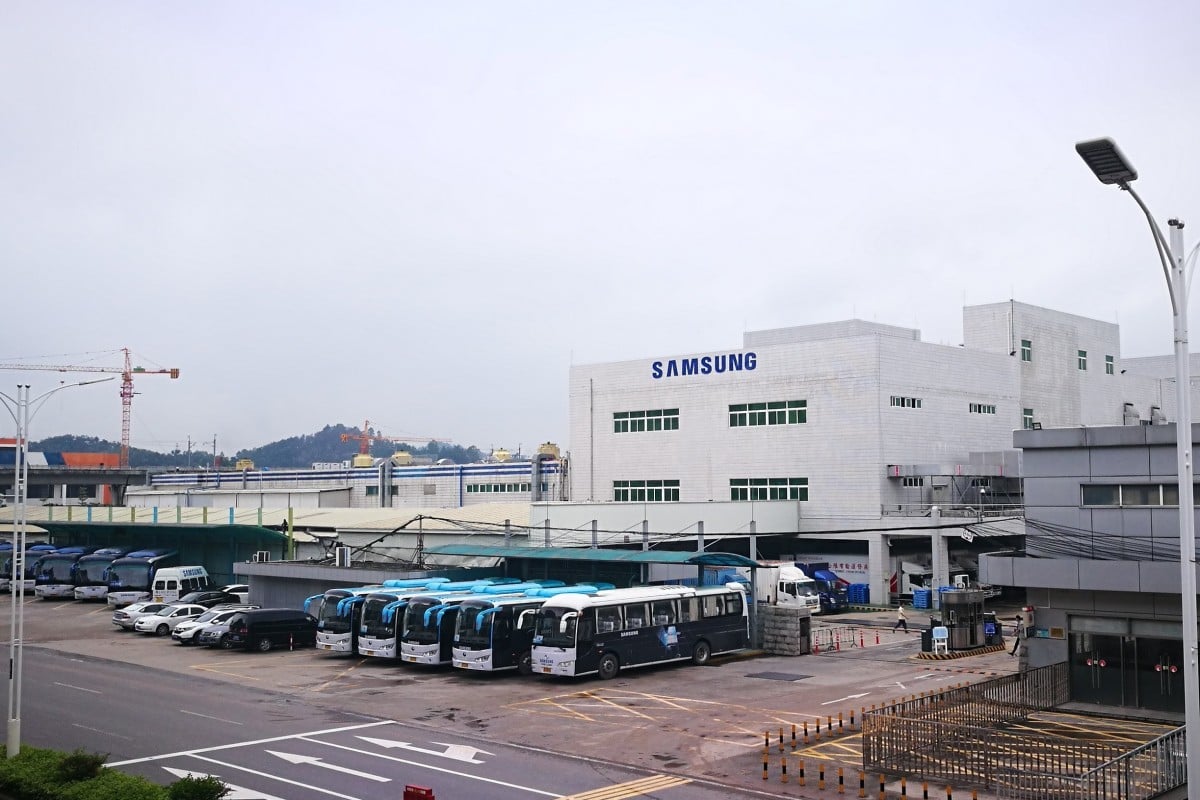
Samsung’s last mobile phone production line remaining in China in Huizhou is winding down, implementing a voluntary retirement programme. Photo: He Huifeng
Upon landing in Australia in 2017 to attend a seminar, a senior politician with South Korea’s parliamentary defence committee was greeted by Julie Bishop, then Australia’s foreign minister, who had a burning question: “How are you dealing with the China threat?”
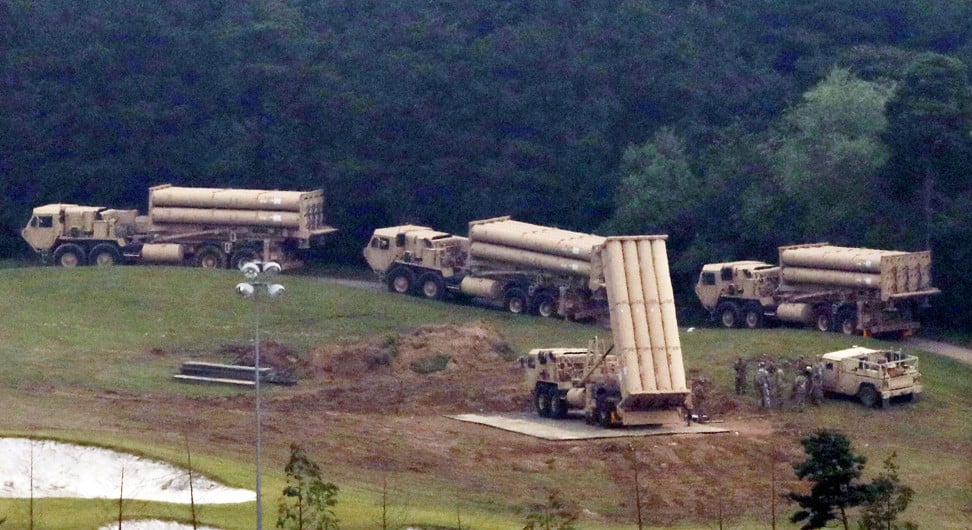
Bishop was referring to the treatment of South Korean firms in China, which escalated after Seoul agreed in 2016 to a long-standing request from the United States to allow the deployment of the Terminal High Altitude Area Defence system (THAAD) on South Korean soil.
Lotte Corporation, one of Korea’s chaebol conglomerates that dominate its economy, had sold a plot of land in Seongju county to the South Korean government, on which the system’s radar and interceptor missiles were set up. While both Washington and Seoul said it was meant to counter threats from North Korea, Beijing viewed THAAD as a security risk, since its radar had the range to monitor China’s nearby military facilities.
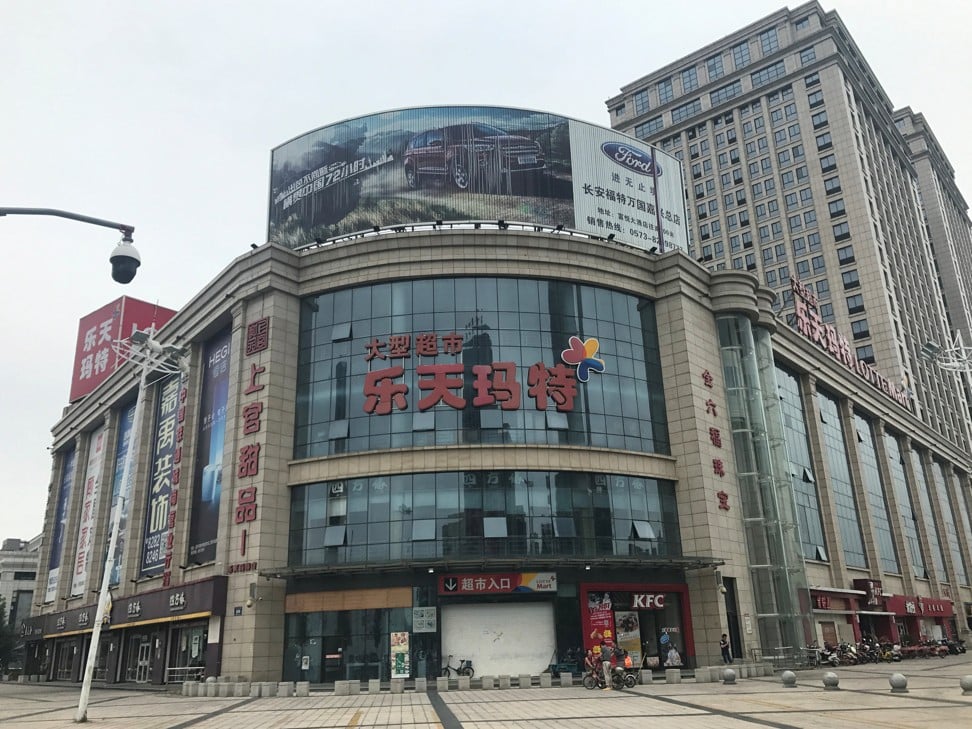
After it was deployed in 2017, THAAD triggered widespread boycotts of Lotte’s retail operations in China, with the state-owned media acting as aggressive cheerleaders. The company was sanctioned by Beijing, with its expansion plans in China grinding to a halt on the orders of the Chinese government.
The Terminal High Altitude Area Defence (THAAD) arrived in Seongju in September 2017. Photo: Reuters

Australia – like South Korea – is heavily dependent on trade with China, but is also closely bound to the US in defence and political terms, and Bishop feared that should Australia fall out of favour with Beijing, Australian companies could face similar risks, and so she sought the counsel of the politician, who asked not to be named.

The case of Canadian canola and meat exports being banned from China, reportedly in retaliation for the arrest of Huawei chief financial officer Meng Wanzhou, also known as Sabrina Meng and Cathy Meng, is an example of how third nations can be drawn into the modern day superpower rivalry.

Many analysts say the efforts of South Korean firms in China should be essential study material for Western governments and businesses about the political risks of doing business in the mainland, which are growing as the US-China trade war threatens to draw in other nations and expand into a broader geopolitical struggle.

But large South Korean firms have been gradually withdrawing from China for a number of years – even before the THAAD crisis – and have been able to leave on a managed basis. They are leaving to avoid a repeat of the political crisis that ruined Lotte’s China business, and to avoid tariffs on exports of their China-made products to the US.

Lotte have been forced to close retail operations in China. Photo: Reuters

But they are also leaving because Chinese firms have become much more competitive in the domestic market that South Korean companies had found so fruitful for more than a decade – a fate that could easily befall Western companies that are eyeing China’s burgeoning middle-class consumer market. Now, while American firms are considering exiting China and setting up in nations that have lower tariff access to the US, South

Korean competitors have had a few years’ head start.

“In a way, all the problems that some South Korean companies had since 2017 might be a blessing in disguise. It meant that they started all of this [supply chain shift] two years before all the other companies,” said Andrew Gilholm, Seoul-based director of analysis for China and Korea at political risk advisory, Control Risks.

Another chaebol, Samsung Electronics, opened its first plant in Vietnam in 2008 and this long-term presence has enabled it to build a supply chain of South Korean companies, which in turn makes it easier for other South Korean firms to establish a base in the Southeast Asian nation.

We have experienced some of the worst situations in China over the past few years and learnt that the political risk there wouldn’t just simply go away overnight Ex-Lotte Shopping manager

As a result, South Korean investment into Vietnam climbed to US$1.97 billion in the first half of 2018, exceeding the country’s investment in China of US$1.6 billion over the same period for the first time, according to the Export-Import Bank of Korea.

Overall in 2018, South Korea’s total investment to the Southeast Asian country totalled US$3.2 billion. Its exports to Vietnam also increased to US$48.6 billion, 121 times that of 1992, when the two countries established diplomatic relations, and the trend is expected to continue.

“We have experienced some of the worst situations in China over the past few years and learnt that the political risk there wouldn’t just simply go away overnight,” said a former manager of Lotte Shopping, the chaebol’s retail arm, who spoke on condition of anonymity.

“China may pass all the legislation ensuring the safety of foreign investments and the rights of multinational companies, but the chance of it swinging away again when there is another political confrontation is just too high … we cannot afford to take any more risk.”

China eventually lifted its economic sanctions on Lotte in April, and the municipal government of Shenyang, the capital of Liaoning province in Northeastern China, gave the company permission in May to resume work on the US$2.6 billion Lotte Town shopping and leisure development.

But according to a person close to the project, Lotte is considering selling the complex after its completion, as it does not wish to continue its retail business in China. A Lotte spokesman declined to comment, saying the situation is “complicated”.

On one hand, its eagerness to leave China reflects the volatility in the market, but on the other, its decision to complete the construction of project before leaving suggests an unwillingness to burn bridges in the process, analysts said.

Samsung is another South Korean giant downsizing its Chinese manufacturing presence after it closed its Shenzhen production line in May 2018, followed by its Tianjin factory in December.

Samsung has been very aware of the potential issues around those closuresJason Wright

Its last remaining mobile phone production line in

China, in Huizhou, is also winding down,

implementing a voluntary retirement programme. Samsung is also considering moving some television manufacturing from China to Vietnam, according to a company insider.

However, it too, is carefully managing its exit strategy, said Jason Wright, founder of Hong Kong-based intelligence firm Argo Associates, who is advising a growing number of South Korean companies seeking to leave China. Samsung is still a large supplier of microchips to Chinese companies like Huawei, and to exit on negative terms could disrupt its ongoing business.
“Samsung has been quite generous in the packages that have been offered [to workers in the factories that it has closed],” Wright said. “Samsung has been very aware of the potential issues around those closures.”
As well as the political risks and tariffs, Samsung has seen its mainland market share in several product queues shrink dramatically due to competition from Chinese rivals. Its share of China’s smartphone market, for example, fell from 20 per cent in 2013 to just 0.8 per cent last year, according to Strategy Analytics, a market research firm.
Over the same period, it has been moving its supply chain out of China in a “subtle and imperceptible” way, according to Julien Chaisse, a professor of trade law at City University of Hong Kong who has advised, among others, Lotte on its plans to relocate to Vietnam.
Samsung Electronics opened its first plant in Vietnam in 2008. Photo: Cissy Zhou
As stories emerged in June that Apple was considering a partial exit of China, it was impossible not to see parallels. iPhone sales in China fell 30 per cent in the first quarter of 2019, according to research firm Canalys, while smartphones will be among those facing a potential tariff of up to 25 per cent, although this has been at least delayed after the trade war truce agreed by

US President Donald Trump

and Chinese President Xi Jinping at the

G20 summit in Osaka.

Meanwhile, South Korean car companies Kia and Hyundai’s combined market share in China fell to 2.7 per cent last year, from about 10 per cent at the beginning of the decade. Both companies, which have shared ownership, are downsizing their Chinese operations.

“In the past, China was just a great market, but for Korea, now China has become a competitor. So that is really a change in the dynamic over the last five years. China was not really able to compete with Korea in most areas,” said Wright from Argo Associates.

City University of Hong Kong professor Chaisse traces the exodus of South Korean firms back to 2014, before THAAD and before the trade war, and highlighted an arcane arbitration case at the United Nations’ dispute settlement courts as a turning point. After that case, South Korean companies in China faced an increasingly hostile environment.

Filed in 2014 and settled in 2017, the case emerged after South Korean company Ansung Housing had been forced to sell a golf resort it was developing in Eastern China after a change in the country’s real estate legislation.

Ansung took the case to an arbitration panel, claiming it breached a Sino-Korean investment treaty. The company won – only the second defeat for China in two decades of participation in the court, but this ushered in a “change in atmosphere” for South Korean firms.

“My take is that while the Korean case is unique for a number of reasons, it highlights what is going to happen to many other foreign companies operating in China,” Chaisse said.

“I think very soon even European companies will be reconsidering their businesses in China. Every time it will be a different story: different countries, different companies, in different economic sectors will have different reaction times and the magnitude of their withdrawal may vary.”

But for those now fleeing trade war tariffs, they may not have the luxury of long-term planning that companies like Samsung and Lotte have had, said Gilholm from Control Risks.

“Long term, I think the Korean firms that are moving out of China have had it easier because they haven’t had to do it under quite such pressured and scrutinised circumstances as a company which starts to move things now,” he said.

Source: SCMP

02/07/2019

Chinese premier stresses reform, opening-up in revitalizing NE China

CHINA-LIAONING-DALIAN-LI KEQIANG-INSPECTION (CN)

Chinese Premier Li Keqiang, also a member of the Standing Committee of the Political Bureau of the Communist Party of China Central Committee, hears a briefing on development driven by the opening-up of Liaoning’s coastal areas while inspecting the Liaoning Port Group in Dalian, northeast China’s Liaoning Province, July 1, 2019. Li on Monday went on an inspection tour to Dalian. (Xinhua/Liu Weibing)

DALIAN, July 1 (Xinhua) — Implementing the policy of reform and opening-up is a crucial step toward the revitalization of northeast China, Chinese Premier Li Keqiang said Monday.

Li, a member of the Standing Committee of the Political Bureau of the Communist Party of China (CPC) Central Committee, made the remarks during his tour in Dalian, a coastal city in northeast China’s Liaoning Province.

The province should maximize the market’s decisive role in allocating resources while strengthening governmental regulation, Li said, calling for more efforts to improve the business environment by reducing administrative burdens and enhancing services.

Hailing Liaoning’s excellent geographic conditions for opening-up, Li said it should be dedicated to deepening domestic and international cooperation and pioneering the revitalization of the northeastern region.

In his visit to an innovation center for major equipment manufacturing, Li emphasized the significance of innovation in revitalizing northeast China, encouraging scientific researchers to produce more market-oriented products and push forward the upgrading of the industry.

At Dalian University of Technology, Li stressed the employment of university graduates and urged Chinese universities to place more emphasis on vocational training and education.

Source: Xinhua

23/06/2019

Xi Jinping’s state visit to North Korea aims for ‘new impetus’ in ties

  • Stalled denuclearisation talks also expected to be on the agenda when Chinese president meets Kim Jong-un this week
  • Analysts say Korean peninsula has become intense diplomatic battleground between Beijing and Washington
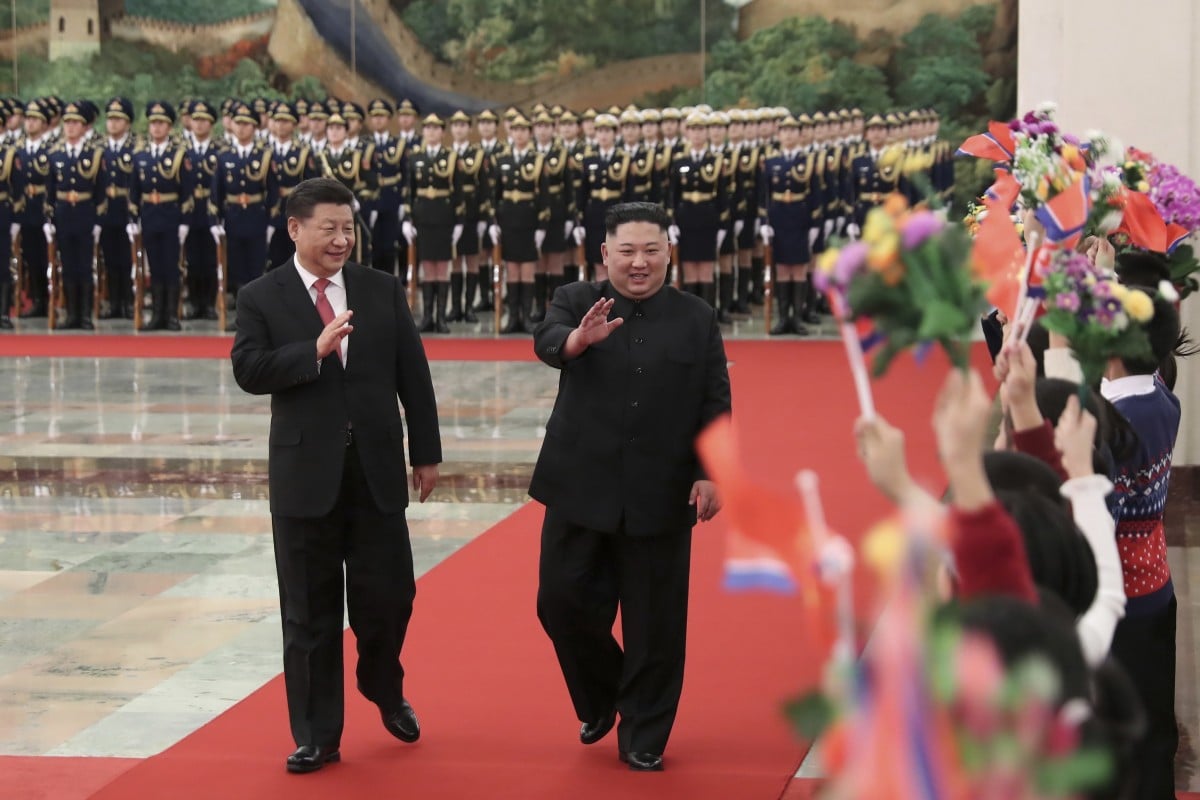
North Korean leader Kim Jong-un (right) attends a welcome ceremony in Beijing with Chinese President Xi Jinping in January. Xi will begin a visit to Pyongyang on Thursday. Photo: AP
Xi Jinping’s upcoming trip to 
North Korea

will be a state visit – a higher status than the last trip to the hermit kingdom by a Chinese president, highlighting the close bilateral ties between Beijing and Pyongyang.

Xi’s two-day trip, which 
begins on Thursday

, is the first by a Chinese president to North Korea in 14 years and comes just a week before he is due to meet US President Donald Trump for talks on the sidelines of the Group of 20 summit in Japan.

“Leaders of the two countries will review the development of the bilateral relationship and carry out an in-depth exchange of opinions on the development of Sino-North Korean relations in the new era, and chart the future course of development,” state news agency Xinhua reported on Tuesday.
Xi’s predecessor, Hu Jintao, went to North Korea in October 2005 on a three-day trip described as an “official goodwill” visit.
Speaking at a regular press briefing in Beijing on Tuesday, foreign ministry spokesman Lu Kang said Xi’s visit aimed to “inject new impetus” into relations in the year the two countries marked the 70th anniversary of establishing diplomatic ties, and to give stalled denuclearisation talks a much needed push.
“Regarding the progress on denuclearisation, as I said, the result of the Hanoi leaders’ meeting in February was indeed a little unexpected. But after that, everyone actually looks forward to the resumption of dialogue in a good direction,” Lu said, referring to the failed talks between Trump and North Korean leader Kim Jong-un in the Vietnamese capital four months ago.

Trump hinted at the possibility of another meeting with Kim after receiving what he called “a beautiful letter” from the North Korean leader last week. On Tuesday, South Korea’s chief nuclear negotiator, Lee Do-hoon, said the US had been in contact with the North.

Life in North Korea the ‘admiration and envy’ of others, state media says

Washington will also send US Special Representative for North Korea Stephen Biegun to South Korea next week, days after Xi’s visit to Pyongyang, to fully align its position on North Korea with its ally.

Meanwhile, Trump confirmed he would meet Xi for talks in Osaka next week, saying in a tweet on Tuesday they had “a very good telephone conversation” and would hold “an extended meeting” at the G20 summit, where they are

expected to try to cool tensions

over an almost year-long trade war.

Donald J. Trump

@realDonaldTrump

Had a very good telephone conversation with President Xi of China. We will be having an extended meeting next week at the G-20 in Japan. Our respective teams will begin talks prior to our meeting.

Analysts said the Korean peninsula had become an intense diplomatic battleground between Beijing and Washington.
Cha Du-hyeogn, a visiting research fellow at the Asan Institute for Policy Studies in Seoul, said China and the US were competing for influence over the peninsula.
“The US and China are seeking a greater sphere of influence in the region. After the Singapore summit between Trump and Kim last year, the US and North Korea are the only key players on peninsula matters. China may want to restore its influence and become a major player,” Cha said.
“But China is less likely to have a so-called strategic competition with the US – that is to say, it won’t challenge the US-led sanctions regime and its goal in achieving North Korea’s denuclearisation. In fact, it is likely to persuade Kim to come to the negotiating table for complete denuclearisation.”
Chinese tourists flood North Korea as Beijing remains Pyongyang’s key ally

Pyongyang has demanded the lifting of sanctions imposed on the regime following its nuclear and missile tests, while Beijing has said the livelihoods of North Koreans should not be affected. But Washington insists full sanctions should remain in place.

The US has also voiced scepticism about Chinese compliance with the sanctions. At a security summit in Singapore earlier this month, US acting Pentagon chief Patrick Shanahan – who on Wednesday stepped down from his role 

amid domestic abuse claims

– presented his Chinese counterpart Wei Fenghe with photographs and satellite images of North Korean ships transferring oil near China’s coast.

Analysts said Xi would seek to use the visit to boost China’s diplomatic leverage on the North Korean nuclear front, strengthening its hand in dealing with the US.
Exports from North Korea to China, which account for the bulk of its trade, plunged 87 per cent last year from 2017, and the country has faced other economic problems at a time when Kim has vowed to deliver on the economy.
A diplomatic source said China was expected to offer a large amount of humanitarian assistance, such as food and fertiliser, to North Korea, which could weaken the impact of sanctions.

China’s goal of denuclearisation on the Korean peninsula is unwavering and will not changeLu Chao, North Korean affairs expert at Liaoning Academy of Social Sciences

Communist Party mouthpiece People’s Daily on Tuesday said via its social media account that Xi would discuss economic and trade cooperation with Kim during the visit.

Quoting Zheng Jiyong, director of the Centre for Korean Studies at Fudan University in Shanghai, the newspaper said Pyongyang had taken steps to reform its economy and introduced China’s industrial manufacturing blueprint.

In September, Beijing proposed building a rail link from the city of Dandong, in China’s northeastern Liaoning province, to Pyongyang and then on to Seoul and Busan in the South, as well as a new road between Dandong and Pyongyang through Sinuiju.

Lu Chao, a North Korean affairs expert at the Liaoning Academy of Social Sciences, said large-scale economic cooperation between China and North Korea was unlikely because of the sanctions, but smaller moves were possible.

Chinese tourists flood North Korea as Beijing remains Pyongyang’s key ally

“For example, China may export daily necessities to North Korea. And if it’s needed, China is very likely to provide [food] assistance to North Korea,” Lu said. “I believe the UN sanctions on North Korea should change, because it has shown a more substantive approach to [achieving] denuclearisation.”

But analysts said Beijing remained firm on the need for Pyongyang to honour its pledges so that denuclearisation could be achieved.

“China’s goal of denuclearisation on the Korean peninsula is unwavering and will not change … China supports [North Korea] and the US continuing to hold talks,” Lu said.

Beijing also had an important part to play in the peace process, according to Boo Seung-chan, an adjunct professor at the Yonsei Institute for North Korean Studies in Seoul.

“China can have a positive role as a mediator to facilitate the peace process on the Korean peninsula,” Boo said.

Source: SCMP

04/06/2019

Could caped dinosaur found in China glide like Batman?

  • 163-million-year-old fossil represents something new in evolutionary history
  • Researchers say discovery is extraordinary
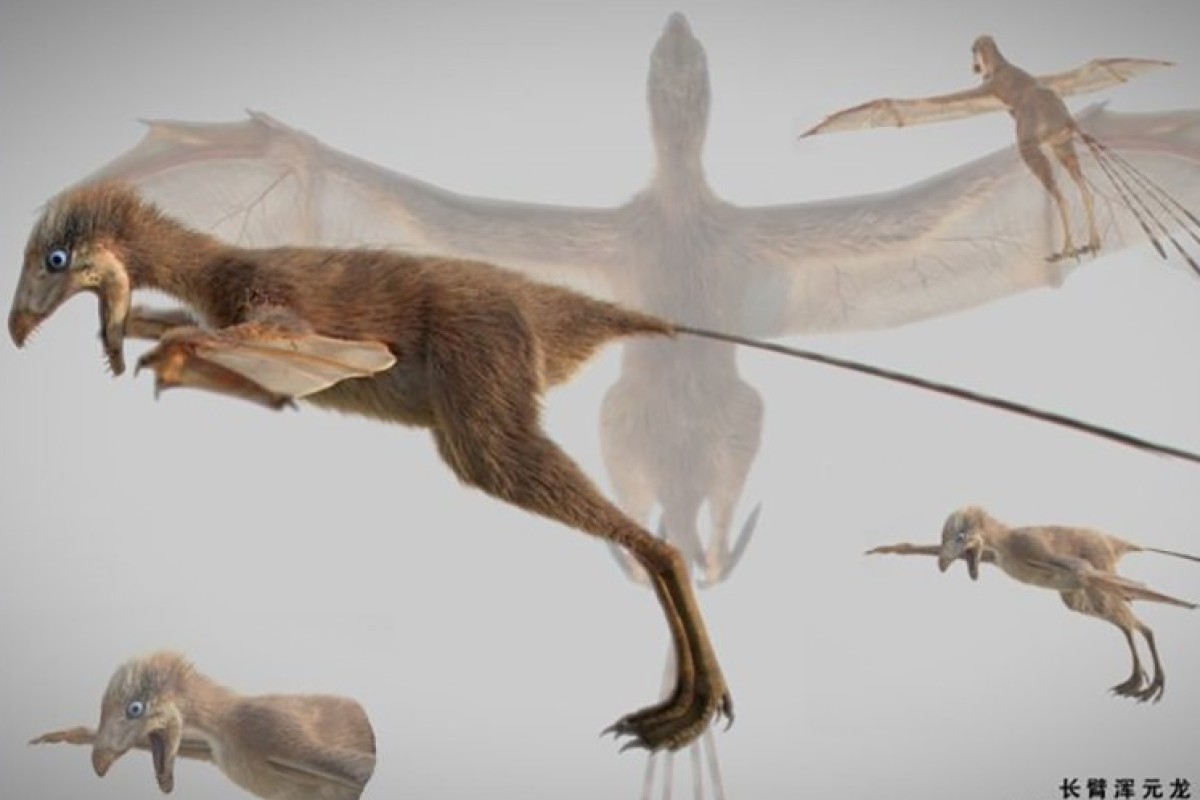
A small, tree-climbing dinosaur discovered in China has overturned evolutionary history with its cape-like membrane. Photo: Handout
Chinese scientists have discovered a new dinosaur species which appears to have been equipped – like Batman – with a cape that may have given it the ability to glide.

Researchers say the finding is extraordinary, representing something new in evolutionary history.

The little tree-climbing dinosaur – about the size of a magpie – was equipped with a soft, smooth membrane draped over its long, strong forearms that may have looked like the wings of a bat when spread.

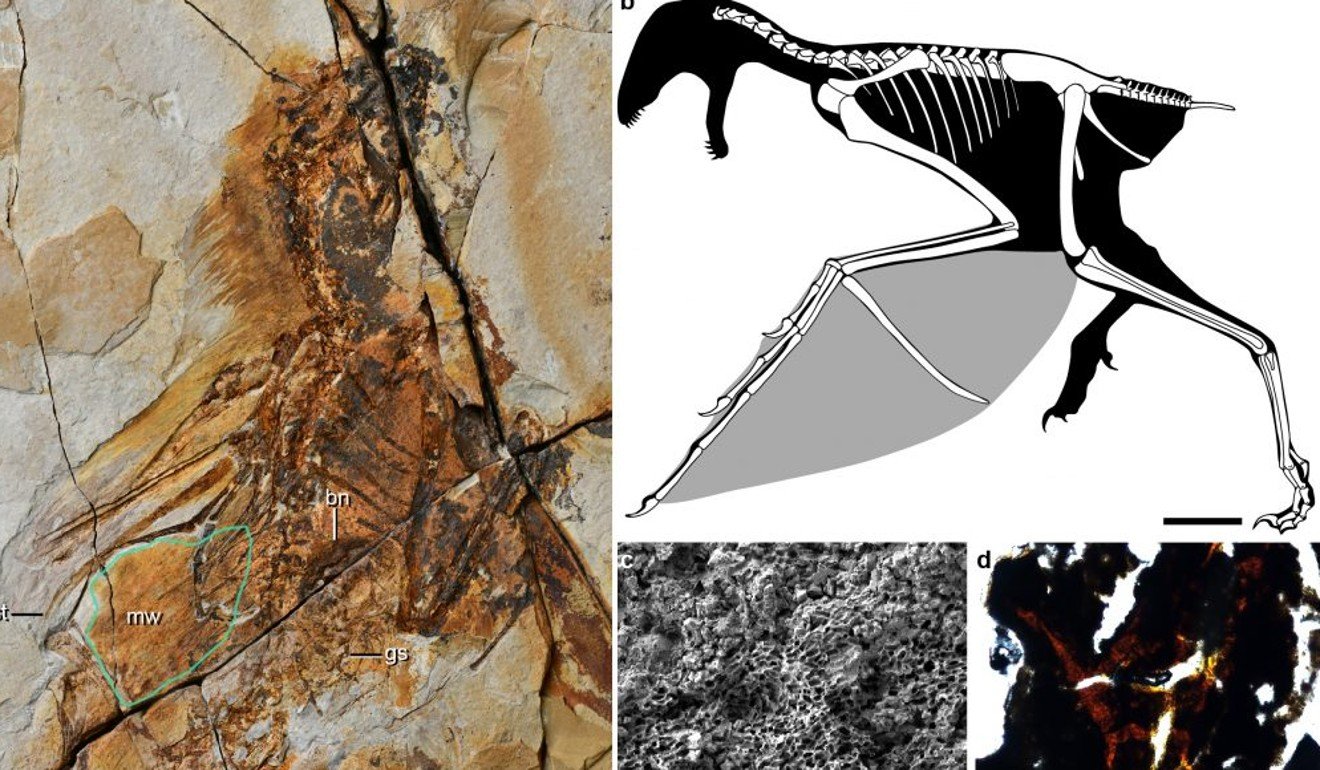
The 163-million-year-old fossil has been named Ambopteryx longibrachium and was found at Wubaiding village, Liaoning province, northeast China, in 2017, according to a paper published in the journal Nature on Thursday.
The 163-million-year-old fossil found in eastern China showed long, strong forearms draped in a smooth cape-like membrane. Photo: Handout

Lead author Dr Wang Min, a researcher with the Chinese Academy of Sciences’ Institute of Vertebrate Palaeontology and Palaeoanthropology in Beijing, said quite a number of dinosaurs had birdlike feathers and some eventually evolved into birds.

“But bat-like wings? The idea has not been widely accepted,” he said.

The possibility was first raised a few years ago when a close relative of the newly discovered dinosaur was found, also in China, with a finger bone which had never before been seen in dinosaurs.

Scientists discover ‘nightmare’ crab with cartoon eyes
A small number of researchers suspected the bone could have been used to hold membrane, but the mainstream scientific community remained sceptical.

Why on earth, some critics argued, would a dinosaur need membrane when it already had feathers?

In the 2008 film “The Dark Knight”, Batman uses his cape to glide among the skyscrapers of Hong Kong. Researchers believe the new dinosaur may have used its cape-like membrane in a similar way. Photo: Handout

Ambopteryx longibrachium, nonetheless, had the same peculiar finger bone, only this time scientists were also able to observe a large membrane and a thick layer of hair over its head, neck and shoulders.

The hair and membrane was not an efficient combination for flight aerodynamics. But “in evolution, nothing is impossible”, Wang said.

The tiny T. rex cousin that humans could look down on

The dinosaur lived in thick forest and could have been easy prey to large predators. But its wings might have given it the ability to hop from tree to tree, and they could also have been useful when hunting.

The dinosaur had a slim body about the size of a magpie, with a soft, smooth membrane draped over its forearms like a cape. Photo: Handout

Wang and his colleagues found traces of small bones in the remnant of its stomach. While a tree-climbing dinosaur’s main diet should have been fruit, it could sometimes hunt as well, according to the researchers.

An absence of a large chest bone suggested the dinosaur could not fly at will, like a bird or bat. It remains unclear how long the species survived, but it eventually vanished, probably because of competition from better-equipped winged animals with all-feather or all-membrane wings.

Source: SCMP

05/04/2019

Decade on from failed Chinese well-digging project, poor farmers wait for water

  • Poverty busting project in northern China was meant to increase cultivation of green vegetables
  • Instead, more than 100 inadequate wells have been abandoned
More than 100 wells dug by a local government in northern China have been abandoned and covered over because they failed to produce any water. Photo: Weibo
More than 100 wells dug by a local government in northern China have been abandoned and covered over because they failed to produce any water.
Built in 2000, the wells were part of a poverty alleviation programme in Xiuyan county, Liaoning province, looking to spur cultivation of green vegetables, CCTV’s Half-hour Economy programme reported on Thursday.
The problem was first exposed in 2015 by the same programme, and most of the wells have now been filled in to prevent people from tripping into or over them.
“This well does not have any water, it’s just for show. All of the ones here are like that,” Li Guoyi, a county resident told CCTV.
One of the abandoned wells dug as part of a poverty busting programme in China’s northern Liaoning province. Photo: Weibo

Li’s farmland is next to one of the abandoned wells. He said he cannot grow as many square metres of vegetables as he would like as they require more water.

Instead, he cultivates hardy crops that fetch lower prices, like potatoes and corn. He has had to buy a pump and transport water from a source 200 metres away for irrigation, according to the report.

“I still hope we can have working wells,” Li, 71, said. “If I can live for another 10 years and make 18,000 yuan (US$2,680) a year, I can reduce my children’s burden a lot.”

A villager who helped dig the wells said the project had failed to follow protocols that would have produced wells fit for irrigation.

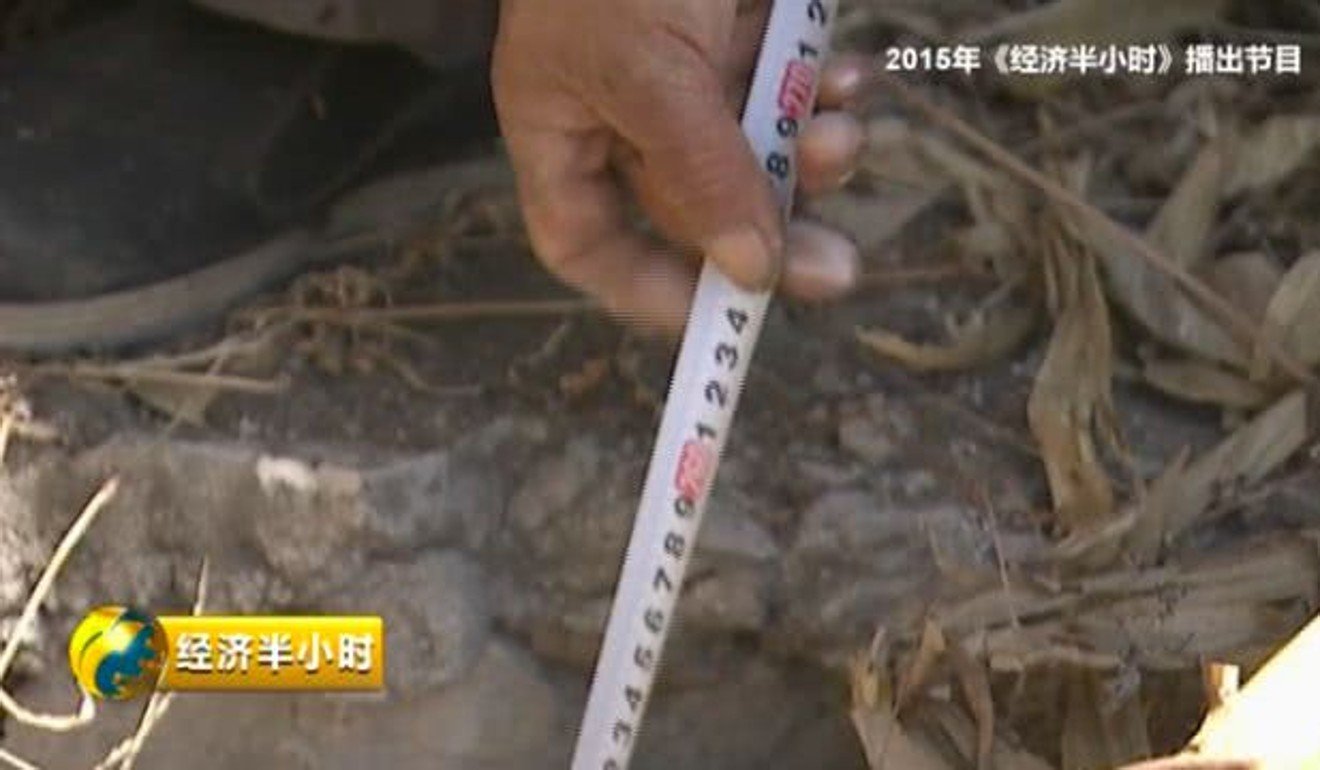
Dong Ensheng, who also wrote a 2015 report into the failed project, said the wells were only required to be dug to a depth where water was visible. In addition, some of the wells had openings as small as 40cm in diameter – not even big enough to fit a water pump.

A 2015 report found some of the wells had openings too small to fit a water pump. Photo: Weibo

In his report Dong said the wells fell way below established standards. “At the very least, they should be able to sustain several hours of water pumping. The well we dug was pumped dry in minutes,” he wrote.

When confronted with the issue of the failed wells this year, county officials refused to take responsibility and declined to provide records of the 2015 investigation, launched in response to the previous exposé, according to CCTV.

“This happened more than 10 years ago. You want to follow up on this now, you won’t be able to find it,” Wei Tianhui, the deputy director of Xiuyan county’s economy bureau, was quoted as saying.

“The staff has changed a lot. The structure of the county government has changed a lot. Where do we start looking?”

The programme drew angry reactions from internet users on China’s Twitter-like Weibo, who criticised the local government.

“They just keep passing the ball, thinking it’s not my fault so why should I bear the responsibility?” a user from Shandong province, eastern China, wrote. “Are these the civil servants of the new era? These are the so-called civil servants in service of the people?”

Source: SCMP

Law of Unintended Consequences

continuously updated blog about China & India

ChiaHou's Book Reviews

continuously updated blog about China & India

What's wrong with the world; and its economy

continuously updated blog about China & India