Chindia Alert: You’ll be Living in their World Very Soon
aims to alert you to the threats and opportunities that China and India present. China and India require serious attention; case of ‘hidden dragon and crouching tiger’.
Without this attention, governments, businesses and, indeed, individuals may find themselves at a great disadvantage sooner rather than later.
The POSTs (front webpages) are mainly 'cuttings' from reliable sources, updated continuously.
The PAGEs (see Tabs, above) attempt to make the information more meaningful by putting some structure to the information we have researched and assembled since 2006.
Young people starting out in the jobs market face a hit to their prospects that could endure years after the Covid-19-induced downturn has run its course
A generation of angry youth raises the spectre of political instability
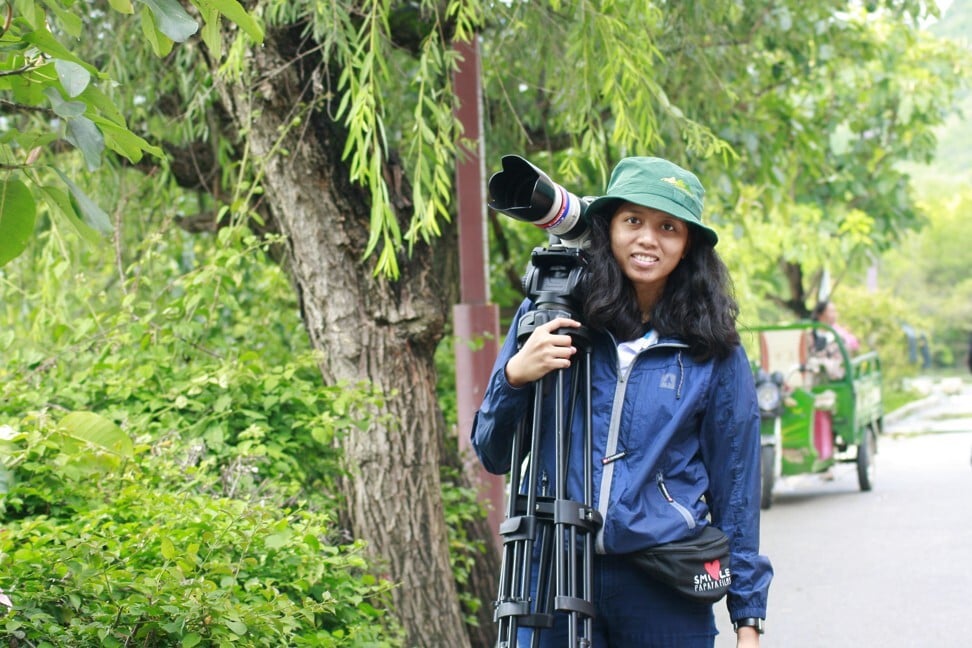
Freelance filmmaker Anita Reza Zein had grown used to jam-packed production schedules requiring her to put in long hours and run on little sleep. Until Covid-19 struck.
Today, the talented Indonesian is suddenly free. With five projects on hold and many more potentially cancelled, she now spends her time working on a personal project, doing research for her work and occasionally going for a ride on a bicycle.
“I feel calm and patient although I’m jobless. Maybe because it’s still the third week [of social distancing] and I still have enough savings from my previous work,” said the 26-year-old, who is from Yogyakarta. “But I imagine life will become tougher in the next few months if the situation gets worse.”
Like her, millions of youths are now part of a job market in Southeast Asia that has been ravaged by the coronavirus pandemic. They are the unlucky cohort of 2020 whose fortunes have changed so drastically, so quickly.
Freelance filmmaker Anita Reza Zein now spends most of her time at home as her projects have all been frozen due to the spread of Covid-19. Photo: Anita Reza Zein
Just three months ago, many eager graduates were about to partake in a strong economy and possibly land decent pay cheques.
Today, job offers are being withdrawn and hiring halted, leading to a spike in regional youth unemployment in the short term. In the long term, the effects on the Covid-19 cohort could lead to wider social and political problems.
JOB MARKETS SHUT
The virus’ impact on economies and the job market in the region has been swift and devastating. Borders have been slammed shut, workers ordered to stay at home, and thousands of companies closed every week.
The biggest problem is the lack of certainty about how long this will last – the longer the governments keep their countries on lockdown, the worse the economic impact.
In Indonesia, for example, the virus has caused almost 2.8 million people to lose their jobs, according to the Manpower Ministry and the Workers Social Security Agency. Likewise, in Malaysia, an estimated 2.4 million people are expected to lose their jobs, going by data from the Malaysian Institute of Economic Research (MIER).
is bracing itself for a 5.3 per cent contraction in GDP for the full year, the worst since the Asian financial crisis in 1997.
“We think about seven million jobs have been lost already, and the figure will hit 10 million if the outbreak drags on for two to three more months,” said Kalin Sarasin, council member and head of the Thai Chamber of Commerce.
Lockdown for 34 million people in capital Jakarta as Indonesia fights surge in coronavirus deaths
For young jobseekers, the outbreak of the Covid-19 pandemic could hurt even more, with companies unwilling to open up new jobs for them.
“My clients who were open to fresh graduates previously have realigned searches [for candidates] who have at least one year of experience, as it’s a lot faster for someone with experience to scale up quickly and contribute,” said Joanne Pek, a recruiter at Cornerstone Global Partners’ Singapore office.
For many small and medium-sized enterprises (SMEs) such as Singapore-based restaurant chain The Soup Spoon, saving jobs – rather than recruiting – is the priority.
“We don’t want to let anyone go during this period, so we’re focused on protecting jobs,” said co-founder and director Benedict Leow, who employs some 250 workers.
THE COVID-19 COHORT
The looming economic downturn could have distinct consequences for the Class of 2020 that will outlast the economic downturn itself.
For one thing, the paucity of jobs could result in the Covid-19 cohort becoming a “lost generation” of sorts, said Achim Schmillen, a senior economist at the World Bank Social Protection and Jobs Global Practice.
“Research from around the globe shows that graduating in a recession can have significant and long-lasting impacts that can affect the entire career. In particular, it can lead to large initial earnings losses which only slowly recede over time,” he said.
Coronavirus: why there’s no quick fix for a Covid-19 vaccine
12 Apr 2020
Economics professor Jeff Borland of the University of Melbourne said that international studies showed that what happened to people when they first entered the labour market would affect them for the rest of their working lives.
“Many international studies have shown that trying to move into employment during a major economic downturn cuts the probability of employment and future earnings for a decade or more.
“Why this occurs is less well-established. Reasons suggested include being forced to take lower-quality jobs, losing skills and losing psychological well-being,” he said in a piece published on The Conversation website.
Malaysia sets up Covid-19 test zones in the capital to hunt for ‘hidden’ coronavirus cases
This could create “lasting scarring” on the graduates this year, said labour economist Walter Theseira.
“If their careers start badly, it would affect their earnings for a number of years because they would lack the same experience as peers who started in a more secure position,” the associate professor of economics at Singapore University of Social Sciences said.
Shrinking salaries and the downsizing of companies mean that graduates might have to seek out professions outside their areas of study to survive, said Grace Lee Hooi Yean, head of the Economics Department at Monash University, Malaysia.
She said youth unemployment in the country, which stands at 11.67 per cent, could rise sharply.
“This looming crisis could trap a generation of educated and capable youth in a limbo of unmet expectations and lasting vulnerability if the graduates are not ready to face reality and adapt to the new challenges,” she said.
How long will a coronavirus vaccine take? A Q&A with Jerome Kim
12 Apr 2020
This is fast becoming the reality for final-year medical student Rebecca K. Somasundaram, who has been left without a job due to the pandemic.
After being offered a residency programme at a top specialist hospital in Kuala Lumpur, she was notified a month ago that her placement had been made void until further notice. This has thrown the 24-year-old’s plans into disarray as she was hoping to enter the workforce soon to pay off her student debts. Her plans to get married next year have also been put on hold temporarily.
“I am in constant talks with the hospital to see if there is any way I can join them soon but seeing how things are unfolding so quickly, I am slowly losing hope,” she said.
Over in Indonesia, the pandemic will trigger job losses on a national scale. To combat this, the government would need to introduce strong fiscal measures and beef up its social protection policies, said the country’s former minister of finance Muhamad Chatib Basri.
Many people on lower incomes tend to work in the extraction industry, such as mining and palm oil, and these are the first industries hit due to the global slowdown.
“The rich will be able to brave the storm, but the poor have no means to do so,” he said.
Singapore migrant workers under quarantine as coronavirus hits dormitories
SPECTRE OF 1997
With partial lockdowns imposed in the capital of Jakarta, more needs to be done to ensure that vulnerable citizens have access to food and financial support.
Without government intervention, economic woes could soon translate into political instability, a scenario last seen in the Asian financial crisis.
In 1997, waves of discontent sparked racial riots in Indonesia that toppled the country’s long-time strongman Suharto, while in Thailand a political crisis created the conditions for populist leader Thaksin Shinawatra to rise.
Rising discontent could have serious implications at the ballot boxes, warned Basri, who said young voters were a key voting bloc for President Joko “Jokowi” Widodo.
Coronavirus: food security, Asia’s next battle in a post-Covid world
6 Apr 2020
In last year’s general elections, Jokowi proved a hit among the lower-educated youth who had benefited from the creation of largely unskilled jobs during his tenure.
“With more young people expected to become unemployed in the coming months, things will only get worse from here,” said Basri, who added that the country’s youth unemployment stood at almost 20 per cent in 2018.
Indonesia, which has 268 million people and is Southeast Asia’s largest economy, had 133 million workers as of last August, according to official data.
Close to 10 per cent or about 12.27 million are university graduates but among this group, about 5.67 per cent or some 730,000 were unemployed. This was higher than the country’s overall unemployment rate at that time, which was 5.28 per cent.
‘Ghosts’ deployed to scare Indonesians into staying home to slow spread of the coronavirus
GETTING IT RIGHT
Economists say, however, that all is not lost. Much will depend on policy and how governments focus on battling the virus on the public health and economic fronts. They point to Singapore, which has launched a robust response to the crisis.
On April 6, the Singapore government announced its third budget in two months to help companies and households tide over the crisis. In all, Singapore’s total stimulus package, which aims to save jobs and keep funds flowing to companies, will cost the government a massive S$59.9 billion (US$42 billion).
The Singapore government was also preparing for a labour market that would be reluctant to hire fresh graduates on a full-time basis, said Theseira.
“There are plans to implement large-scale subsidised traineeships, which may be more palatable to companies which are worried about taking on permanent headcount this year,” he noted. “As the economic situation improves, they can be converted to permanent positions.”
The next coronavirus: how a biotech boom is boosting Asian defences
4 Mar 2020
While jobs were being created for fresh graduates, many would still have to temper their expectations, such as taking jobs with lower starting pay, said DBS Bank economist Irvin Seah.
“There are still some jobs to go around. There are still some companies that may need workers. But they will need to be realistic,” he said.
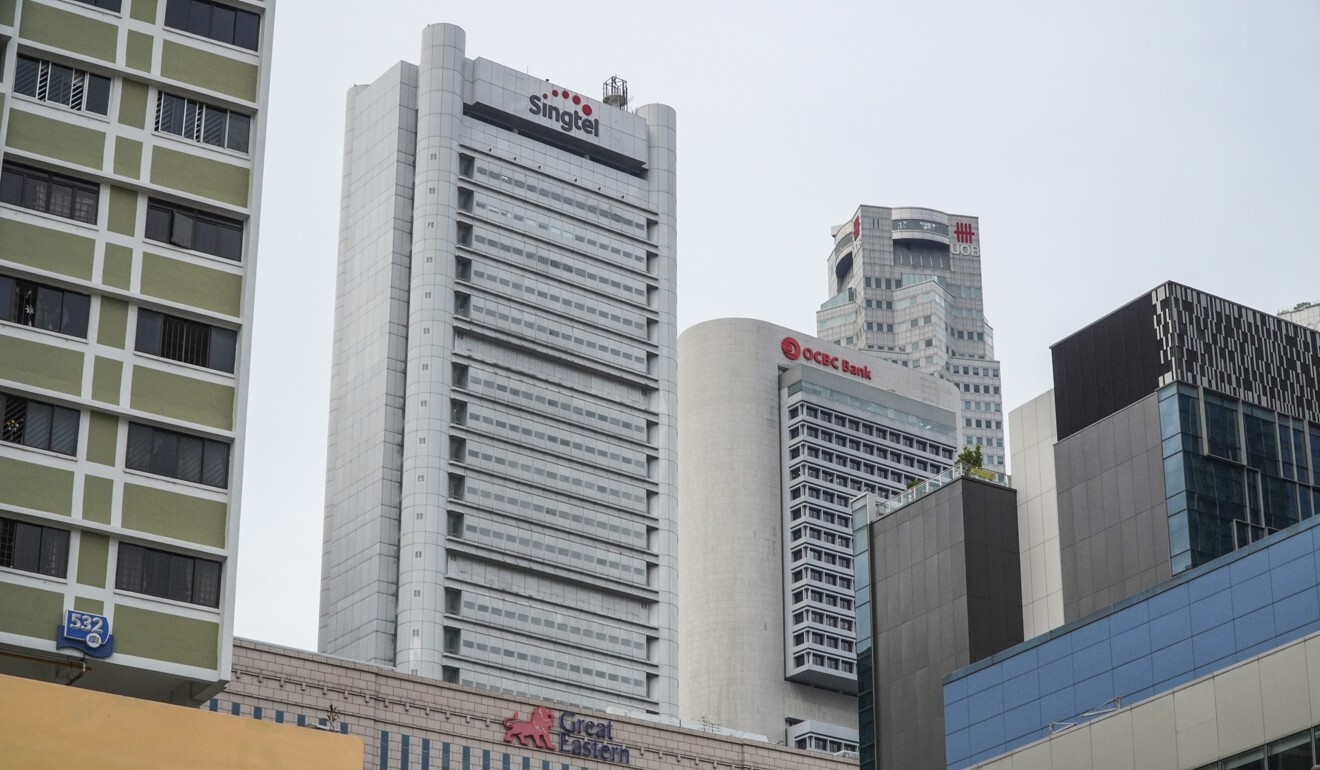
For instance, despite the downturn, Singapore telco Singtel expects to recruit over 300 fresh graduates for various permanent positions this year, according to Aileen Tan, the company’s Group Chief Human Resources Officer. Many of the new hires will be in new growth areas such as the Internet of Things, analytics and cloud.
The Singtel Comcentre building in Singapore. Photo: Roy Issa
Other companies that continue to hire include those in tech across the region, including e-commerce giant Shopee, food-delivery service Foodpanda and Amazon.
In Australia, Borland suggested helping young people to remain plugged into the labour market through government-funded paid internships, or even offering them loans to go for further studies and prevent a spell of unemployment.
For now, while some young jobseekers are taking a wait-and-see approach, the reality is hitting hard for others.
Final-year National University of Singapore student H.P. Tan had all but secured a job at a public relations firm last month, after three rounds of interviews.
The Faculty of Arts and Social Sciences undergraduate was rejected via an email from the agency, which said that they could no longer hire after Covid-19 started to drastically cut business.
“When I got that rejection, it was a turning point. I didn’t think I would be directly impacted,” said the 23-year-old.
“I also applied to a few other agencies but the response has been slow, so I am now freaking out at the possibility of not being able to find a job after graduation.”
Image copyright FRANKIE HUANGImage caption The Giant salamander is ironically referred to as a “baby fish” in China
What do you get when you cross a baby with a fish?
It’s not the start of a dad joke, but one of a series of pictures drawn by Shanghai-based illustrator Frankie Huang.
Chinese is already one of the most pictorial languages in the world, but she’s taking it to the next level – by literally turning words into pictures. Her series, Putong Animals, re-imagines animals according to what they’re called in Mandarin Chinese – or Putonghua – the official language of China.
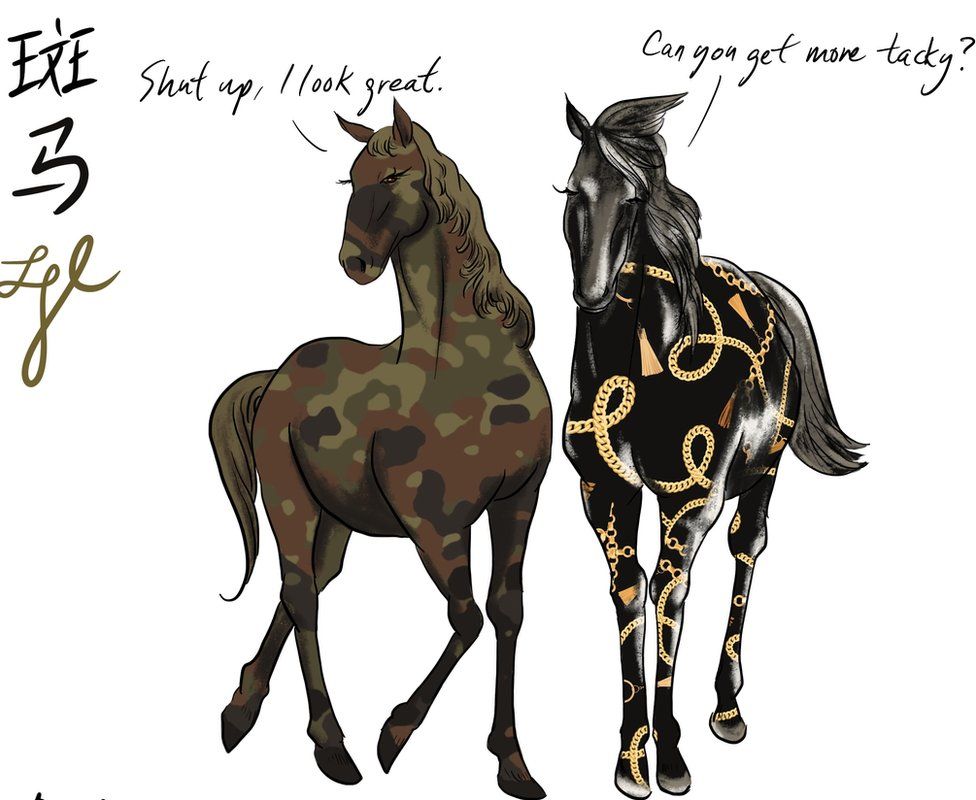
In Mandarin a zebra, for example, is literally a “patterned horse”. The dolphin has unflatteringly been turned into a “sea pig”.
Image copyright FRANKIE HUANGImage caption The Zebra is referred to literally as a “patterned horse” in Mandarin
Frankie says she came up with the idea for the series after seeing people on Twitter discussing how some animals had “really funny names when you translate them literally”.
“I realised no-one had done a series of this and I thought to myself ‘I suppose it’s time then’,” she told the BBC. “I wanted to create something that was not just pretty but also interesting.”
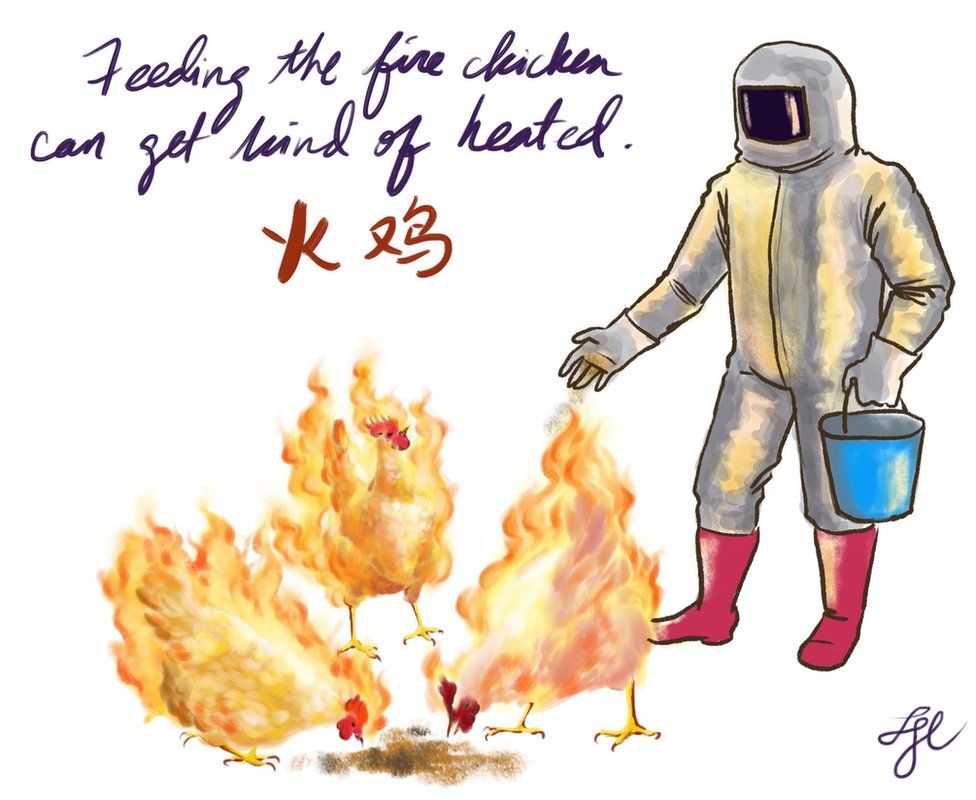
Image copyright FRANKIE HUANGImage caption Turkeys are “fire chickens” in Mandarin
“The turkey – or fire chicken – was the first one I drew. It was just a bunch of chickens on fire and a guy in a hazmat suit feeding them,” she said. “You can see that my technique actually developed as I got more into it.”
Frankie was born in the Chinese capital, Beijing, but grew up in the US, exposing her to both English and Mandarin from a young age.
“I’m both an outsider and insider [to the Chinese language] because of my upbringing, I think sometimes you need to be an outsider in order to really appreciate something,” said the illustrator.
Image copyright FRANKIE HUANGImage caption The celestial lobster is known as a “dragon prawn”
Another one of Frankie’s favourite illustrations is the “dragon prawn” – or lobster.
“I wanted to make it look really majestic and godlike,” said Frankie. “Someone commented that it’s a celestial crustacean, I thought that was such a nice name for it.”
Image copyright FRANKIE HUANGImage caption While the dolphin is given the less than graceful name of “sea pig”
It takes Frankie around three hours to produce one illustration, from conceptualisation to sketching it out and eventually colouring it in.
She has for now completed her series on Putong Animals, but she is looking into turning the animals into characters of their own.
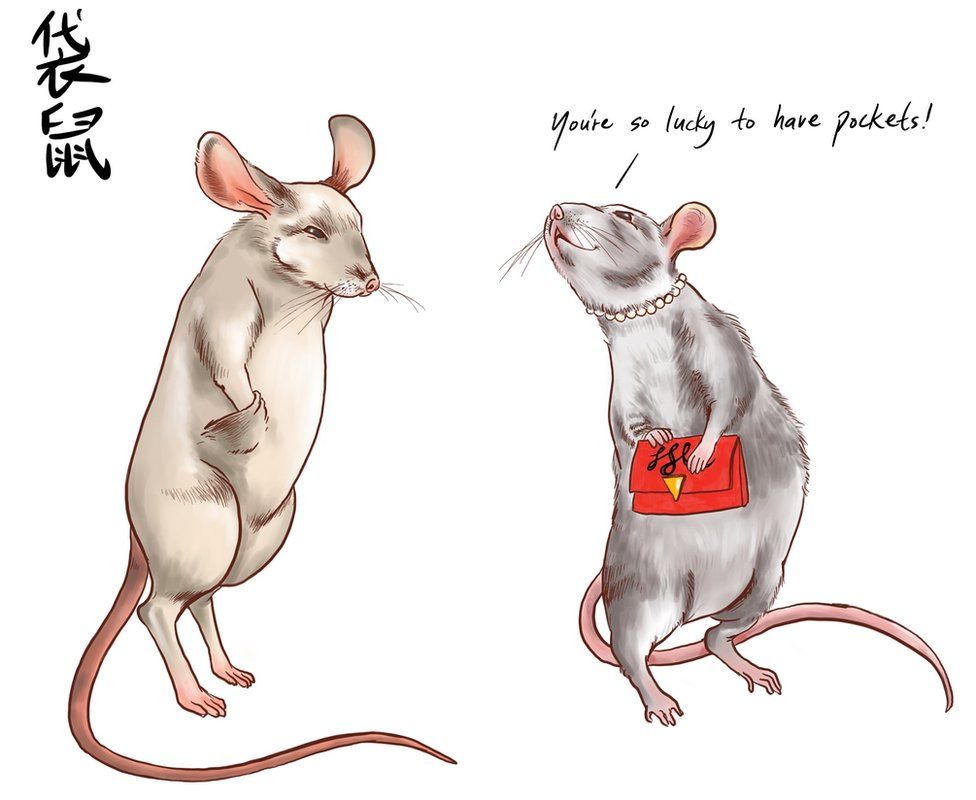
Image copyright FRANKIE HUANGImage caption Kangaroos are known as “pocket mice”, though they are far from tiny
“Even as far back as ancient Greece with Aesop’s fables, people were telling stories through animals,” she said.
“I actually started to write a story about the lives of the fire chicken. They’re on a planet where people use them in their lives, [like] putting them under their beds during winter to keep them warm. I want to eventually give them more personality.”
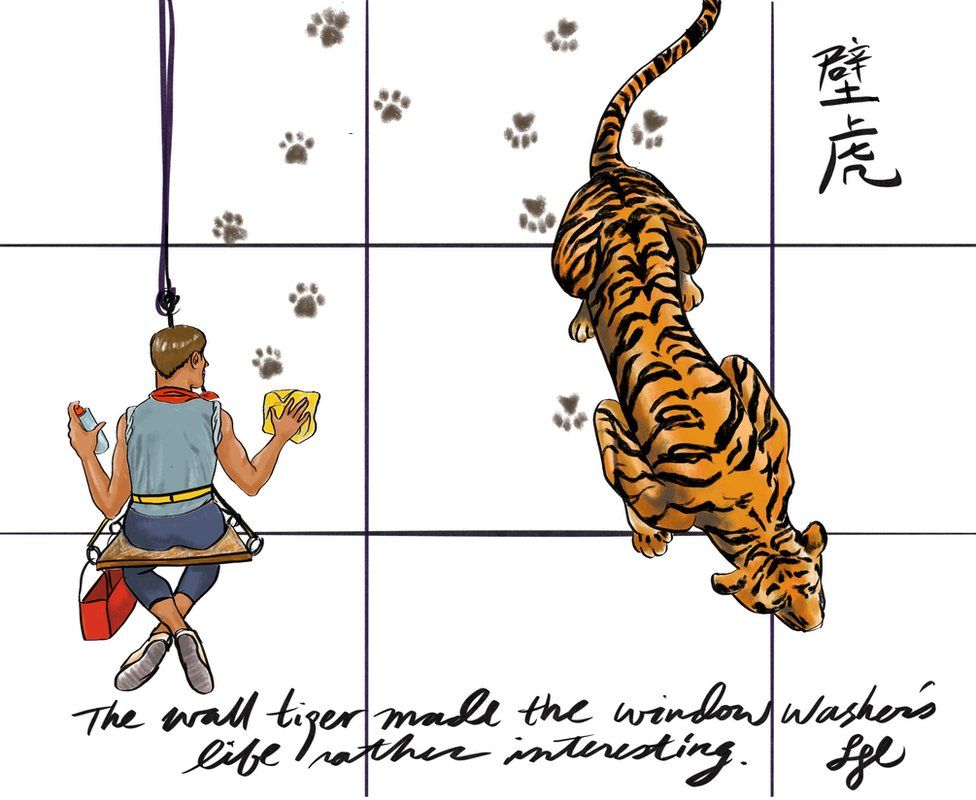
Image copyright FRANKIE HUANGImage caption The tiny gecko on the other hand, has earned the imposing name of “Wall Tiger”
But it’s not just animals that she illustrates – she’s also delved into Chinese phrases.
This picture showing a cat in a pipe is meant to illustrate the Chinese phrase “xi mao”, which literally translated, means to “inhale cat”.
Image copyright FRANKIE HUANGImage caption If someone is addicted to cats, they are “inhaling cat”
It’s a phrase that’s spread across young people in China, to describe someone who is a cat addict.
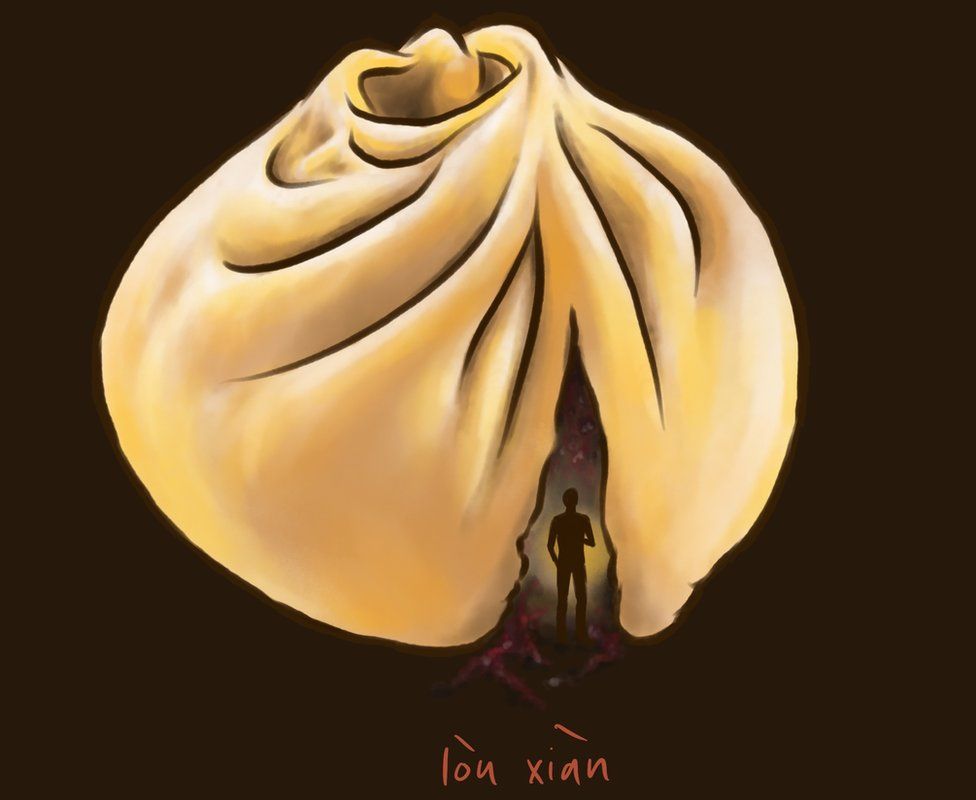
Another one she’s done shows stuffing spilling out of a dumpling – a literal translation of the Chinese phrase “lou xian”, or “for stuffing to leak out”. The phrase refers to a situation where truth is revealed.
“If you look closer, you’ll actually see some tentacles coming out of the dumpling, because I drew it after I watched Stranger Things 3,” Frankie laughingly admits.
Image copyright FRANKIE HUANGImage caption And the stuffing is out on this one
But she’s of course not the first person to have put a clever play on Chinese words – and sometimes others have done so for more political reasons.
Social media in China is heavily censored, and it’s not uncommon for social media companies in China to remove “sensitive” content. This was one of the obstacles that #MeToo – the movement that encouraged people to openly talk about their experiences of sexual harassment – faced in China.
The phrase #MeToo was heavily censored but to get around this, many instead began posting the Chinese words “rice bunny”, which is pronounced “mi tu” in Mandarin.
“One of the things that made me look more closer into pulling together and dissecting the Chinese language was the [phrase] mi tu,” said Frankie.
“The censorship forces [Chinese people] to constantly stay ahead of the government so they come up with these wonderful creations, sort of like how diamonds are created under enormous pressure. All these gems of wit are found on the Chinese internet.”
This is part of what Frankie hopes her illustrations will do – help people to recognise “humour and wit of the Chinese culture”.
“I want to hopefully reach more people to help them be interested in the Chinese language and culture,” she said.
“In this day and age, China is in the press constantly. [I want to show] there’s so much more to China than just the politics.
“I want to be independent of all these things and show people that you can love and enjoy the culture without all the politics. The politics are new, but this [language] is not.”
People make satellite models in ecological and meteorological house during the “World Meteorological Organization Honorary Day” theme event held as part of the Beijing International Horticultural Exhibition in Yanqing District in Beijing, capital of China, May 11, 2019. (Xinhua/Ju Huanzong)
BEIJING, May 11 (Xinhua) — World Meteorological Organization (WMO) “honor day” kicked off at the ongoing International Horticultural Exhibition in Beijing Saturday.
Zhang Wenjian, assistant secretary-general of the WMO, said a majority of the natural disasters in 2018 related to extreme weather and environmental degradation, which affected nearly 62 million people.
As global warming and climate change have increasing influence on the society and economy, WMO is devoted to providing operational, accessible and authoritative information and service on the changing earth system, Zhang told a press conference on the “honor day” event.
The ecological and meteorological exhibition area at the expo was supported jointly by the WMO, China Meteorological Administration and Beijing Meteorological Service, focusing on the relationship between meteorology, horticulture and life.
The exhibition area not only interpreted how climate change closely related to human civilization but also established the eco-meteorological observing station which was capable of providing real-time observation data on meteorology.
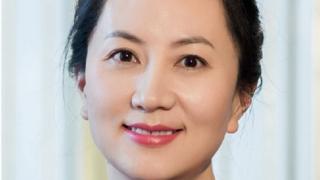
Image copyrightREUTERSImage captionMeng Wanzhou was arrested in Vancouver on 1 December
A high-flying Chinese executive has been caught in the centre of a growing geo-political dispute between two of the world’s largest economies.
Meng Wanzhou is the chief financial officer of Huawei and the elder daughter of the telecom giant’s founder.
She was arrested in Canada last week for allegedly breaking US sanctions on Iran and faces extradition to the US.
China and Huawei insist that she has not broken any laws but she could be jailed for up to 30 years if found guilty.
So who is she?
Ms Meng, also known as Sabrina Meng and Cathy Meng, has risen up the ranks of Huawei, China’s largest private company.
The 46-year-old started her career as a receptionist in 1993, and after graduating with a master’s degree in accountancy from the Huazhong University of Science and Technology in 1999, she joined Huawei’s finance department.
She became the company’s chief finance officer (CFO) in 2011 and was promoted to vice-chair a few months before her arrest.
In 2018, she was ranked 12th on Forbes’ list of top Chinese businesswomen, four spots lower than where she ranked the year before.
Image captionMs Meng has met world leaders like Russia’s Vladimir Putin in 2014
Ms Meng’s links to her father, billionaire Ren Zhengfei, were not known to the public until a few years ago.
At the age of 16, in a practice highly unusual in Chinese tradition, she took the surname of her mother, Meng Jun, who was Mr Ren’s first wife.
What is she charged with?
Ms Meng was taken into custody in Vancouver while she was changing planes on 1 December.
Prosecutors say she conspired to defraud banks by telling banks a Huawei subsidiary was a separate company – thereby helping Huawei circumvent US trade bans.
The US has been investigating the world’s largest smartphone maker since 2016, which it believes used a subsidiary to bring US manufacturing equipment and millions of dollars in transactions to Iran.
Ms Meng’s arrest has now sparked an escalating diplomatic incident between China, Canada and the US.
Life revealed in court
In documents filed in the Supreme Court of British Columbia, where Ms Meng’s case is being heard, details have emerged revealing the CFO’s personal life.
She is a thyroid cancer survivor who suffers from hypertension and a sleep disorder, her lawyers said, in need of daily doses of medication.
“I continue to feel unwell and I am worried about my health deteriorating while I am incarcerated,” she said in the filing. “I currently have difficulty eating solid foods and have had to modify my diet to address those issues.”
Her lawyers are seeking bail for the mother of four, who, they say, is not a flight risk because of her “strong roots” in Vancouver.
She told the court she was a Canadian resident until 2009, after which she returned to China.
Image captionMs Meng and her husband have put up two homes in Vancouver as collateral for bail
However, she bought a six-bedroom house with her second husband in the city and would return regularly to visit him and her children, some of whom attended Canadian schools until 2012.
That home is now reported to be worth C$5.6m (£3.3m, $4.2m), according to property records and an affidavit Ms Meng read out in court.
In 2016, the couple bought a second property, a mansion worth C$16.3m – both homes have been put up as collateral for bail.
Why Vancouver?
The court papers give a fascinating insight into the life of a senior Chinese executive, says BBC World Service Asia-Pacific editor Michael Bristow.
“Vancouver has for some years been a destination of choice for wealthy Chinese people; as a place to live, educate their children, or as an insurance policy against the uncertainties of life back in China.
“People will be intrigued to find out Ms Meng has not one but two homes in Vancouver, and wonder at how she was able to hold seven passports at the same time.”
How does she have seven passports?
This remains somewhat of a mystery.
According to media reports, the tech boss has at least four Chinese passports and three Hong Kong passports.
“In the past 11 years, Meng has been issued no fewer than seven different passports from both China and Hong Kong,” a letter from the US Department of Justice to Canada read, claiming she was a flight risk. It also listed the numbers of the seven passports.
Chinese rules dictate that if citizens want to get a passport from another country or region, they must give up their Chinese one.
Hong Kong immigration officials would not comment on Ms Meng’s case but stated no passport holder would be “in possession of more than one” at a time.
According to arrival and departure records of US Customs and Border Protection, Ms Meng used three different HK passports to enter the US on 33 occasions between 2014 and 2017.
Her second son is said to be studying at a school in Massachusetts but Ms Meng has not been back to the US since March 2017.
Canadian police told the court Huawei executives appeared to have “altered their travel plans” to avoid the US, since becoming aware of a criminal investigation into the company in April 2017.










 CHINDIA ALERT: You'll be living in their world, very soon