13/09/2019
- US National Security Adviser recently said an unnamed Chinese fighter ‘looks a lot like the F-35 … because it is the F-35’
- The PLA’s only active stealth fighter the J-20 looks rather different to its US counterpart, but the FC-31 prototype may be closer to the mark
A Chinese FC031 stealth fighter pictured during a test flight in November 2014. Photo: Xinhua
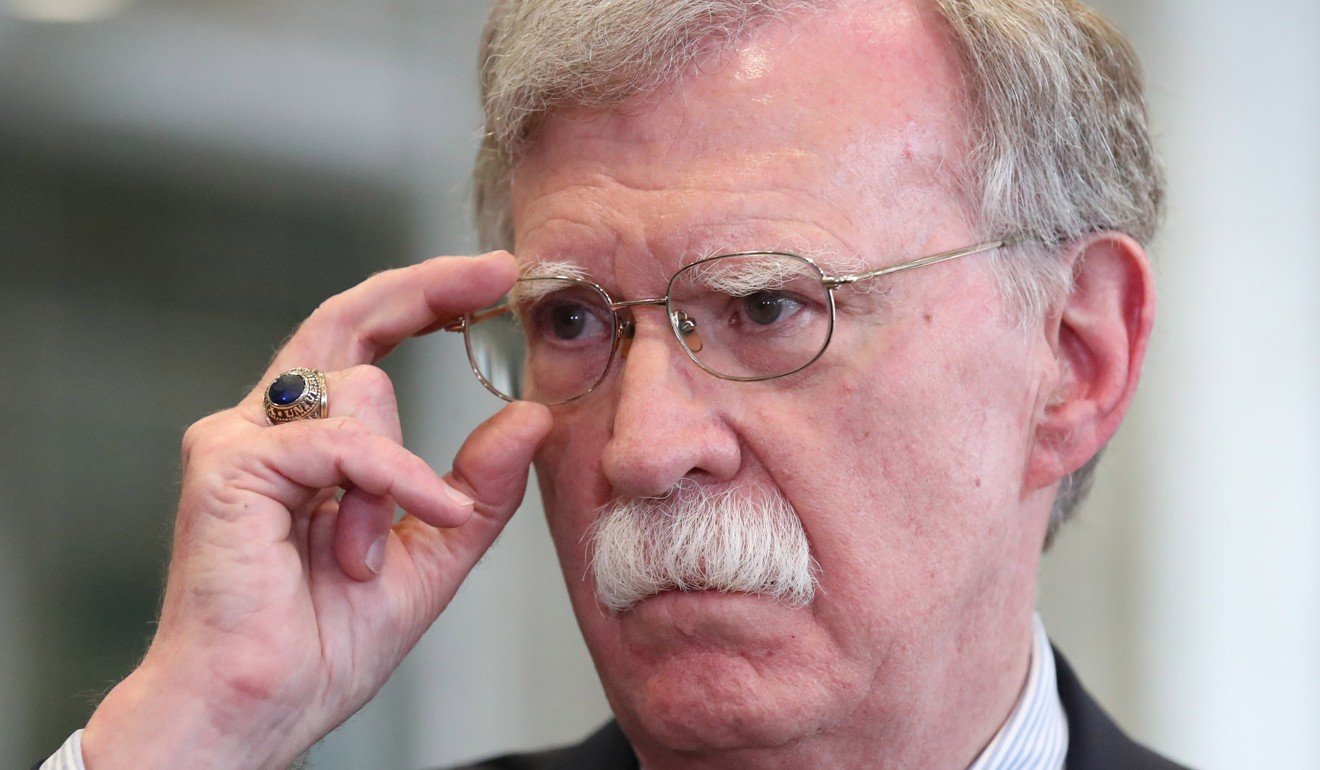
US National Security Adviser John Bolton recently accused China of stealing US technology to make a stealth fighter, a charge Beijing has denied.
On a visit to Ukraine last week, Bolton said an unnamed fifth-generation aircraft “looks a lot like the F-35, that’s because it is the F-35. They just stole it”.
At present China’s only active stealth fighter, the J-20 or Mighty Dragon, looks very different to the F-35 because it has two nose canards – which are not found on any modern US fighters – and it is larger and around 50 per cent heavier.
However, Bolton might have had another fighter in mind – the Shenyang FC-31 Gyrfalcon, which is still in the prototype phase.
John Bolton said China “just stole” the F-35 for its own fighter. Photo: EPA-EFE
The FC-31 is made by the Shenyang Aircraft Design and Research Institute, a branch of the state-owned Aviation Industry Corporation of China.
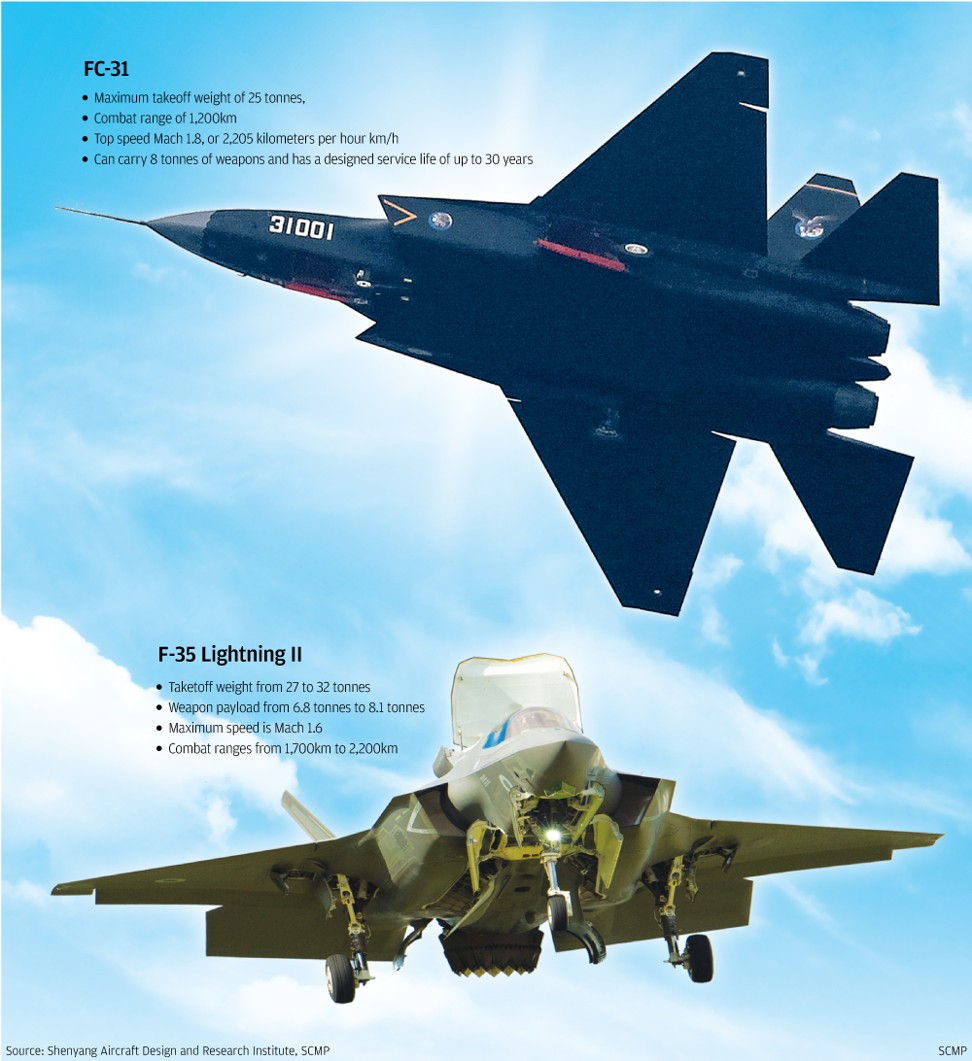
The aircraft, which made its maiden flight in 2012, has broadly similar specifications to the F-35 although it does have twin engines rather than the American jet’s single engine.
The Chinese fighter has a maximum take off weight of 25 tonnes, a combat range of 1,200km (746 miles) and a top speed of Mach 1.8, or 2,205km/h (1,370mph), whereas the US fighter’s take-off weight varies between 27 and 32 tonnes, has a top speed of Mach 1.6 and a range of up to 2,200km (1,367 miles).
The FC-31 has a weapons payload of 8 tonnes, compared with 6.8 to 8.1 tonnes for the different varieties of F-35, and a service life of up to 30 years.
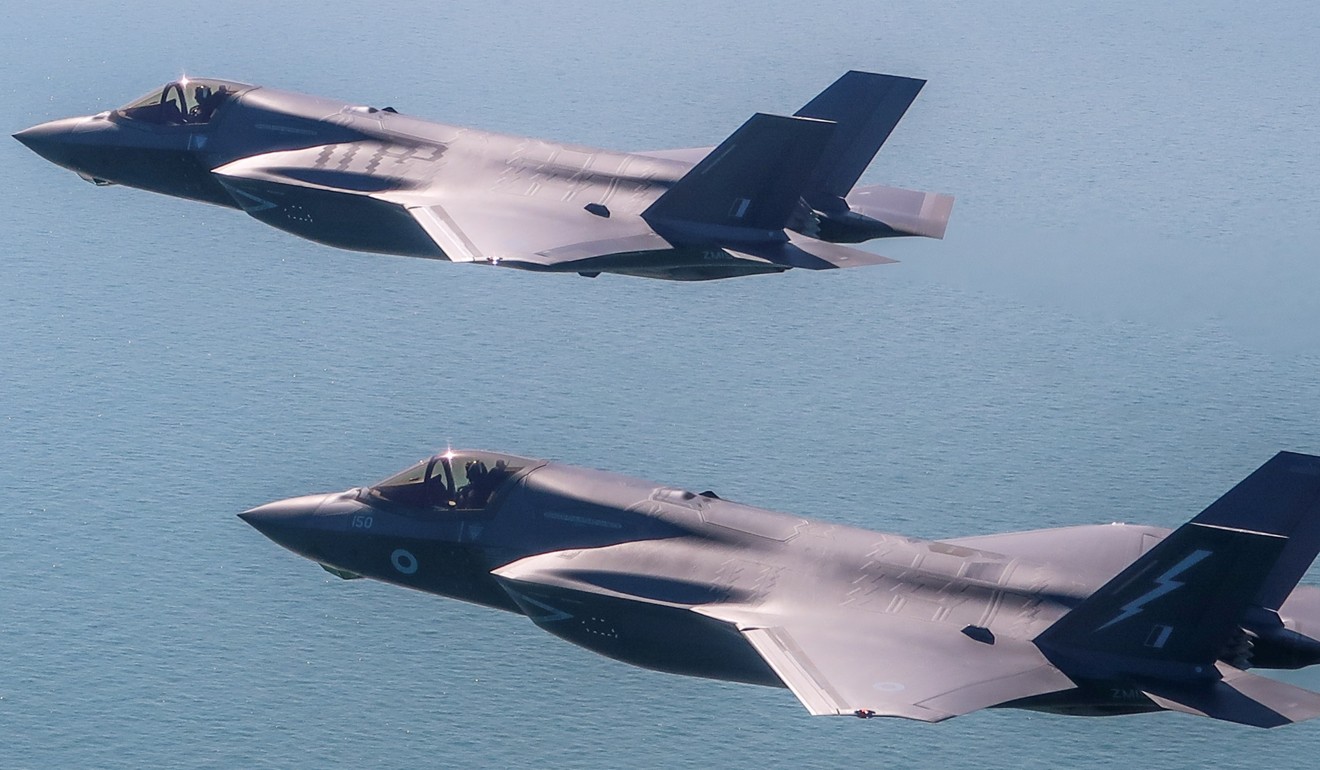
Lockheed Martin, which makes the American stealth fighter, has produced three different varieties – the land-based f-35A and two for use on ships: the vertical jump F-35B and catapult-assisted F-35C.
While the Chinese jet was primarily designed for the use of the air force, its light weight also means it could be adapted for use on carriers.
It was reported to have been in the running to be used on China’s next-generation aircraft carriers, but military sources recently said it would lose out to the J-20 because of its slow pace of development and reports of technological problems.
The US currently restricts sales of the F-35 to its closest allies: Photo: EPA-EFE/ USAF
However, the Chinese manufacturer is already actively marketing the fighter to other countries and a model of the plane appeared at the Paris Air Show in June.
One official from the Aviation Industry Corporation of China who attended the Air Show told state media that the firm hoped to “seize some share in the military aircraft market of developed nations”.
One area where the plane does have a definite advantage over its American counterpart is price. The price of a single FC-31 is expected to be about US$70 million, significantly less than the F-35 which has a price tag of around US$100 million per unit.
The US also restricts sales of the fighter to its allies, leaving a potential gap in the market for China to exploit when the fighter is ready for use.
Source: SCMP
Posted in accuses, air force, Aviation Industry Corporation of China, Beijing, China alert, F-35 technology, John Bolton, Lockheed Martin, make, Mighty Dragon, military aircraft market, Paris Air Show, Shenyang Aircraft Design and Research Institute, Shenyang FC-31 Gyrfalcon, stealing, stealth fighter, two nose canards, Ukraine, Uncategorized, US National Security Adviser |
Leave a Comment »
10/06/2019
- With a defence budget second only to the US, China is amassing a navy that can circle the globe and developing state-of-the-art autonomous drones
- The build-up is motivating surrounding countries to bolster their own armed forces, even if some big-ticket military equipment is of dubious necessity
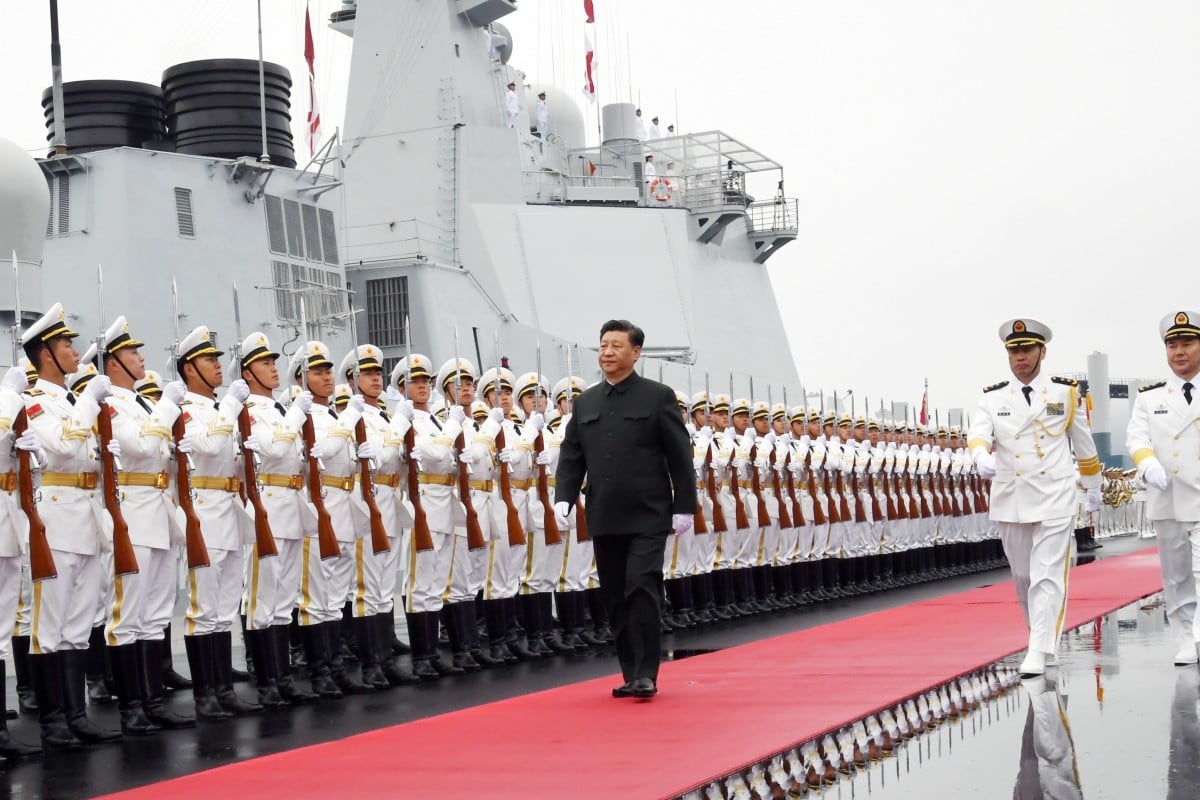
Chinese President Xi Jinping reviews an honour guards before a naval parade in Qingdao. Photo: Xinhua
The Asia-Pacific region is one of the fastest-growing markets for arms dealers, with economic growth, territorial disputes and long-sought military modernisation propelling a 52 per cent increase in defence spending over the last decade to US$392 billion in 2018, according to the Stockholm International Peace Research Institute.
The region accounts for more than one-fifth of the global defence budget and is expected to grow. That was underscored last week by news of
’s bid to strike a
to purchase US tanks and missiles.
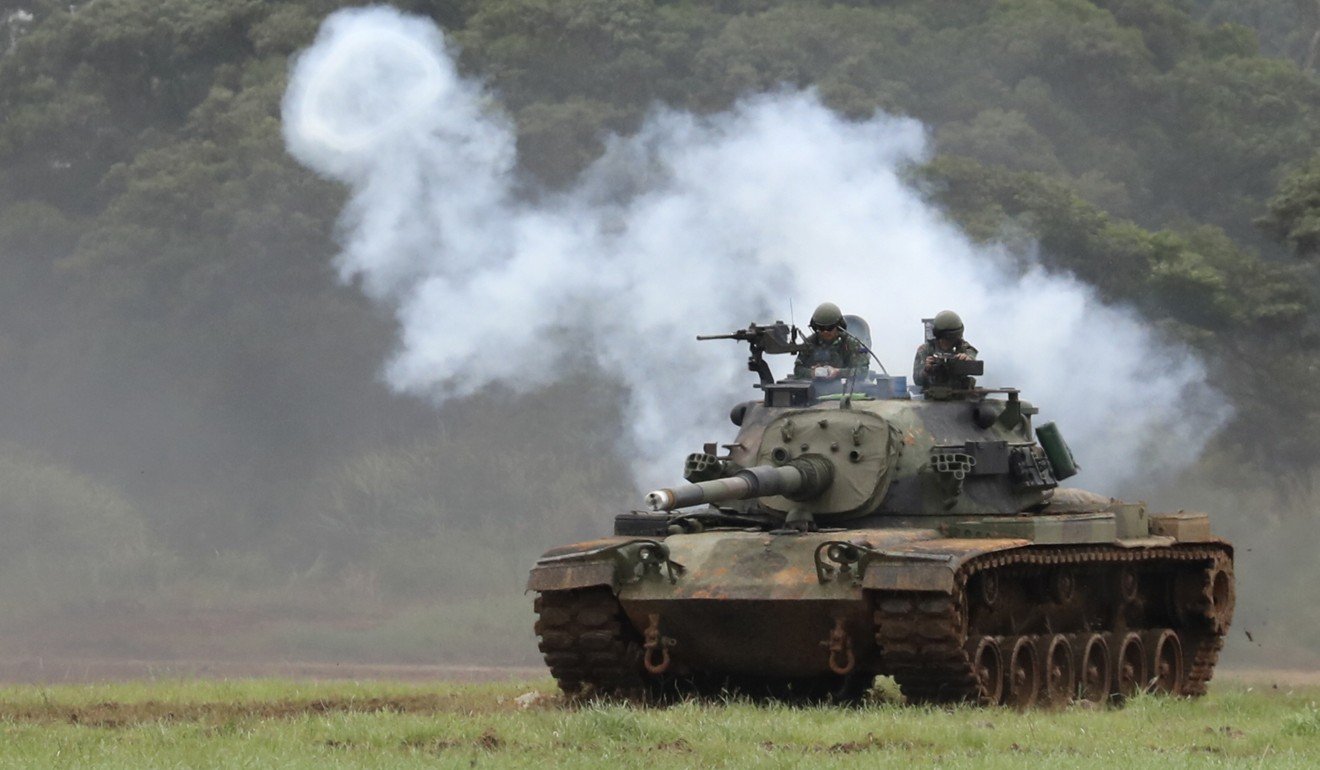
Taiwanese Soldiers on a CM11 battle tank, jointly developed with US arms manufacturer General Dynamics. Photo: EPA
The biggest driver in arms purchases, however, is
– responsible for 64 per cent of military
spending in the region. With a defence budget that is second only to the
, China is amassing a navy that can circle the globe and developing state-of-the-art autonomous drones. The build-up is motivating surrounding countries to bolster their armed forces too – good news for purveyors of submarines, unmanned vehicles and warplanes.
It is no coincidence that the recent
in
, a security conference attended by
chiefs, was sponsored by military contractors including Raytheon,
and
.
Opinion: How the Shangri-La Dialogue turned into a diplomatic coup for China
Kelvin Wong, a Singapore-based analyst for Jane’s, a trade publication that has been covering the defence industry for 121 years, has developed a niche in infiltrating China’s opaque defence industry by attending obscure trade shows that are rarely advertised outside the country.
He said the US is eager to train allies in Asia and sell them arms, while also stepping up its “freedom of navigation” naval operations in contested waters in the
and Taiwan Strait. It has lifted a ban on working with
’s special forces over atrocities committed in
. And it is considering restarting arms sales to the
.
In his speech at the Shangri-La Dialogue, acting US Defence Secretary Patrick Shanahan touted American advancements in technology “critical to deterring and defeating the threats of the future” and said any partner could choose to win access to that technology by joining the US defence network.
Wong said the message was clear: “Buy American.”
Analysts say Chinese soldiers have less training, motivation and lower morale than their Western counterparts. Photo: Reuters
The analyst said there is a growing admission among the Chinese leadership that the
has an Achilles’ heel: its own personnel.
He said one executive at a Chinese defence firm told him: “The individual Chinese soldier, in terms of morale, training, education and motivation, (cannot match) Western counterparts. So the only way to level up is through the use of unmanned platforms and
To that end, China has developed one of the world’s most sophisticated drone programmes, complete with custom-built weapon systems. By comparison, Wong said,
US drones rely on weapons originally developed for helicopters.
Wong got to see one of the Chinese drones in action two years ago after cultivating a relationship with its builder, the state-owned China Aerospace Science & Technology Corporation. He viewed a demonstration of a 28-foot-long CH-4 drone launching missiles at a target with uncanny ease and precision.
“Everyone knew they had this,” Wong said. “But how effective it was, nobody knew. I could personally vouch they got it down pat.”
China unveils its answer to US Reaper drone – how does it compare?
That is what Bernard Loo Fook Weng, a military expert at Singapore’s S. Rajaratnam School of International Studies, told the author Robert Kaplan for his 2014 book, Asia’s Cauldron, about simmering tensions in the South China Sea.
He was describing the competition for big-ticket military equipment of dubious necessity.
is littered with examples of such purchases.
owns an aircraft carrier without any aircraft. Indonesia dedicated about one-sixth of its military budget to the purchase of 11
Su-35 fighter jets. And
splurged on two
submarines it could not figure out how to submerge.
“It’s keeping up with the Joneses,” Wong said. “There’s an element of prestige to having these systems.”
Submarines remain one of the more debatable purchases, Wong said. The vessels aren’t ideal for the South China Sea, with its narrow shipping lanes hemmed in by shallow waters and coral reefs. Yet they provide smaller countries with a powerful deterrence by enabling sneak attacks on large ships.
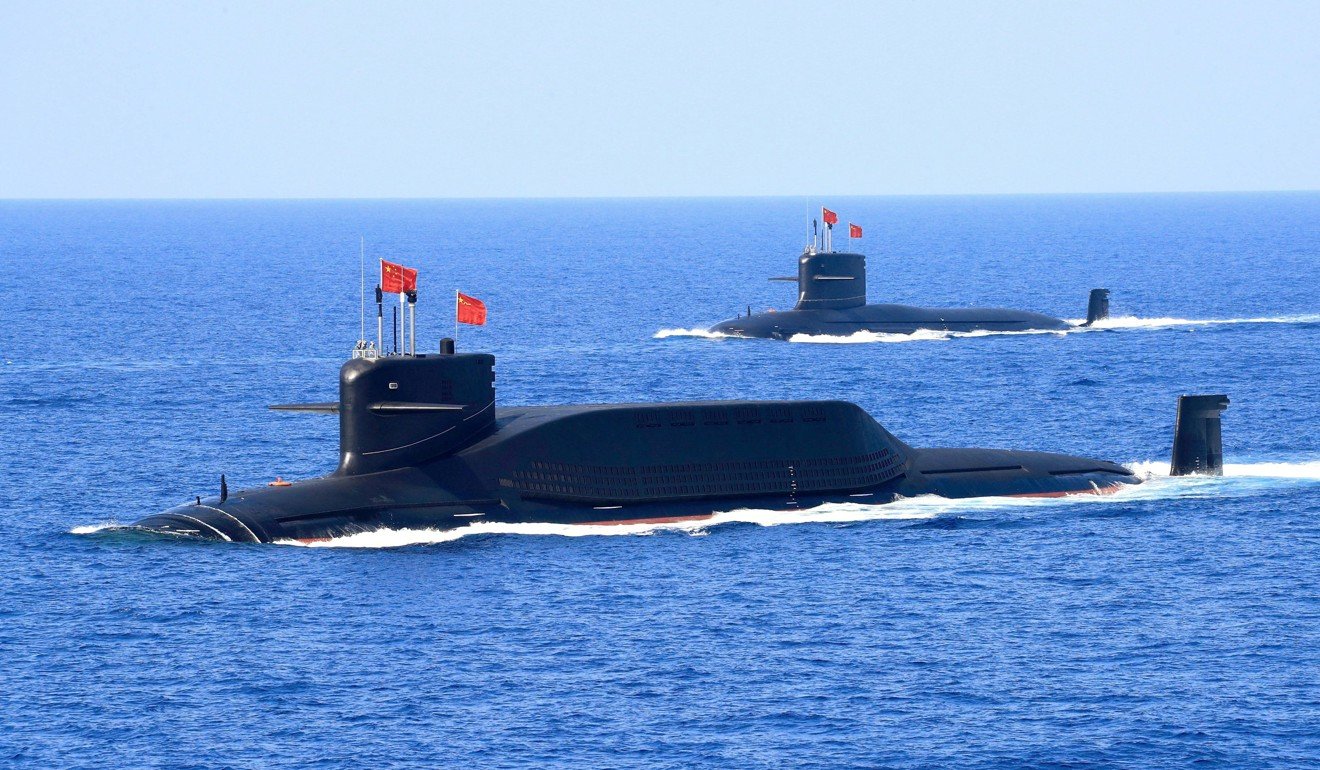
Nuclear-powered PLA Navy ballistic missile submarines in the South China Sea. Photo: Reuters
Asia and
are home to 245 submarines, or 45 per cent of the global fleet, according to the US-based naval market intelligence firm AMI International.
The Philippines remains one of the last coastal nations in the region without a sub – though it is in talks with Russian builders to acquire some.
Singapore recently received the first of four advanced
Type 218 submarines with propulsion systems that negate the need to surface more frequently. If the crew did not need to eat, the submarine could stay under water for prolonged periods. Wong said the craft were specially built for Asian crews.
“The older subs were designed for larger Europeans so the ergonomics were totally off,” he said.
Singapore, China deepen defence ties, plan larger military exercises
Tiny Singapore plays a crucial role securing the vital sea lanes linking the Strait of Malacca with the South China Sea. According to the
the country dedicates 3.3 per cent of its gross domestic product to defence, a rate higher than that of the United States.
State-of-the-art equipment defines the Singapore Armed Forces. Automation is now at the centre of the country’s military strategy, as available manpower is shrinking because of a rapidly ageing population.
Wong said Singapore is investing in autonomous systems and can operate frigates with 100 crew members – 50 fewer than they were originally designed for.
“We always have to punch above our weight,” he said.
Source: SCMP
Posted in artificial intelligence (AI), Asia, Asia-Pacific region, Australia, autonomous drones, BAE Systems, China Aerospace Science & Technology Corporation, East Timor, French, frigates, German, Indonesia, Lockheed Martin, Malaysia, military spending, naval parade, navy, People’s Liberation Army, President Xi Jinping, Qingdao, Raytheon Co, ripple effect, Russian, Shangri-La Dialogue, Singapore, Singapore Armed Forces, South China Sea, Southeast Asia, Stockholm International Peace Research Institute, Strait of Malacca, submarines, Taiwan Strait, Thailand, the Philippines, Uncategorized, unmanned vehicles, US Reaper drone, warplanes, World Bank |
Leave a Comment »
05/04/2019
NEW DELHI (Reuters) – Pakistan’s F-16 combat jets have all been accounted for, U.S.-based Foreign Policy magazine said, citing U.S. officials, contradicting an Indian air force assessment that it had shot down one of the jets in February.
India and Pakistan engaged in an aerial battle over the disputed region of Kashmir a day after Indian jets crossed over into Pakistan to attack a suspected camp of anti-India militants.
An Indian jet was brought down during the fight and its pilot captured when he ejected on the Pakistani side of the border. India said it, too, had shot down a Pakistani aircraft and the air force displayed pieces of a missile that it said had been fired by a Pakistani F-16 before it went down.
Foreign Policy said in a report published on Thursday two U.S. defence officials with direct knowledge of the matter said U.S. personnel had done a count of Pakistan’s F-16s and found none missing.
The F-16s are made by Lockheed Martin and, under an end-user agreement, the United States required the host country to allow for regular inspections to ensure they were accounted for and protected, Foreign Policy said.
“Truth always prevails,” Pakistan’s army spokesman said in a Tweet. “Time for India to speak truth about false claims & actual losses on their side.”
Details of the India-Pakistan air engagement have not been provided by either side. If the U.S. report turns out to be true, it would be a further blow to Prime Minister Narendra Modi’s claim that India had taught Pakistan a lesson.
The success of Indian air strikes on a camp of the Jaish-e-Mohammed militant group in northwestern Pakistan has also been thrown into doubt after satellite images showed little sign of damage.
High-resolution satellite images reviewed by Reuters last month showed that a religious school run by Jaish appeared to be still standing days after India claimed its warplanes had hit the Islamist group’s training camp on the site and killed a large number of militants.
Modi’s ruling Bharatiya Janata Party, heading into a tight election next week, is campaigning on a platform of tough national security, especially with regard to arch foe Pakistan. New Delhi blames Pakistan for stoking a 30-year revolt in Muslim-majority Kashmir but Islamabad denies any involvement.
Foreign Policy said Pakistan had invited U.S. officials to physically count the F-16 planes after the incident. Some of the aircraft were not immediately available for inspection due to the conflict, so it took U.S. personnel several weeks to account for all of the jets, one of the officials was quoted as saying.
The count had now been completed and all aircraft “were present and accounted for”, the official was quoted as saying.
India has separately asked the United States for its view on whether the use of the F-16s by Pakistan was a violation of the end-user agreement.
Source: Reuters
Posted in F-16s, India alert, Indian battle, Lockheed Martin, Pakistan, Uncategorized, US |
Leave a Comment »



 CHINDIA ALERT: You'll be living in their world, very soon