Chindia Alert: You’ll be Living in their World Very Soon
aims to alert you to the threats and opportunities that China and India present. China and India require serious attention; case of ‘hidden dragon and crouching tiger’.
Without this attention, governments, businesses and, indeed, individuals may find themselves at a great disadvantage sooner rather than later.
The POSTs (front webpages) are mainly 'cuttings' from reliable sources, updated continuously.
The PAGEs (see Tabs, above) attempt to make the information more meaningful by putting some structure to the information we have researched and assembled since 2006.
Image copyright GETTY IMAGESImage caption Delhi’sair quality has improved remarkably during the shutdown
When India shut down last month and suspended all transport to contain the spread of coronavirus, the skies over its polluted cities quickly turned an azure blue, and the air, unusually fresh.
As air pollution plummeted to levels unseen in living memory, people shared pictures of spotless skies and even Himalayan peaks from cities where the view had been obscured by fog for decades.
On one social messaging group, a resident of the capital, Delhi, which regularly records some of the foulest air in the world, celebrated the city’s “alpine weather“. Politician and author Shashi Tharoor wrote that the “blissful sight of blue skies and the joy of breathing clean air provides just the contrast to illustrate what we are doing to ourselves the rest of the time”.
Media caption India coronavirus lockdown cleans up Ganges river
Less than six months ago, Delhi was gasping for breath. Authorities said air quality had reached “unbearable levels”. Schools were shut, flights were diverted, and people were asked to wear masks, avoid polluted areas and keep doors and windows closed.
Delhi and 13 other Indian cities feature on a list of the world’s 20 most polluted. It is estimated that more than a million Indians die every year because of air pollution-related diseases. Industrial smoke, vehicular emissions, burning of trash and crop residue, and construction and road dust are the major contributors.
As urban Indians gazed at the skies and breathed clean air inside their homes, researchers hunkered down to track data on how the grinding lockdown – now extended to 3 May – was impacting air pollution across the country.
Image copyright GETTY IMAGESImage caption Lucknow is another city on the top 20 world’s most polluted list
“This was an unprecedented opportunity for us to take a close look at how air pollution levels have responded to an extraordinary development,” Sarath Guttikunda, who heads Urban Emissions, an independent research group that provides air quality forecasts, told me.
Dr Guttikunda and his team of researchers looked at the data spewed out by the 100-odd air quality monitoring stations all over India. They decided to concentrate on the capital Delhi and its suburbs – a massive sprawl called the National Capital region, where more than 20 million people live. Last winter, air pollution here had reached more than 20 times the World Health Organization’s safe limit.
Image copyright HINDUSTAN TIMESImage caption The financial capital Mumbai also seems very different
The deadliest particle in Delhi’s foul air is the tiny but deadly PM 2.5, which increases the likelihood of respiratory and cardiovascular diseases. They primarily come from combustion – fires, automobiles and power plants.
Urban Emissions found the levels of PM 2.5 in Delhi during the lockdown plummeted to 20 micrograms per cubic metre with a 20-day average of 35.
To put this into context, between 2017 and 2019, the monthly average of PM 2.5 in the capital was up to four times higher. (The national standard is set at 40, and the WHO has an annual average guideline of just 10 micrograms per cubic metre.)
“If 35 is the average lowest available PM2.5 with limited local emissions, it means that at least 70% of the pollution is locally generated,” Mr Guttikunda told me.
Media caption India coronavirus lockdown cleans up Ganges river
His study also found a marked dip in PM 10, caused mainly by road and construction dust, and nitrogen dioxide, which comes mainly from vehicular emissions, and nearly 90% of vehicles are off the road.
“The current crisis has shown us that clear skies and breathable air can be achieved very fast if concrete action is taken to reduce burning of fossil fuels,” says Sunil Dahiya, of the Centre for Research on Energy and Clean Air, which has also been tracking air pollution levels during the lockdown.
But will this prompt change? After all, urban Indians’ and the media’s panic and outrage during the deadly winter pollution every year soon gets lost in the fog of summer heat and concerns over monsoon rains and droughts.
“We don’t yet have a democratic demand for clean air,” Arunabha Ghosh, Chief Executive Officer of the Council on Energy, Environment and Water, a leading climate think tank, told me. Orders to clean up the air have almost always come from the courts, responding to pleas by NGOs.
Image copyright GETTY IMAGESImage caption Pollution in Delhi peaks during winter
However, Dr Ghosh still hopes that “the experience of blue skies and fresh air could be a trigger to create a democratic demand for clean air in India”.
Crises often trigger life changing reforms. A fatal four-day “pea-souper” that engulfed London in 1952 and killed thousands provoked the passing of the Clean Air Act to reduce the use of smoky fuels.
China tried to clean up its air several times before hosting marquee international events – like the Beijing Olympics in 2008, the World Expo in Shanghai and the Guangzhou Asian Games in 2010 – before sliding back to grey, smoky skies.
But many believe the 2014 Apec meeting in Beijing, when China hosted 21 heads of Asia-Pacific economies, was a turning point. The rare blue skies over Beijing spawned the phrase ‘Apec blue‘. In a rush to clean its air, China introduced a set of far-reaching measures. Over the next four years, this resulted in a 32% drop in average pollution across major Chinese cities.
So could a lockdown to prevent the spread of a pandemic, which has imperilled the health and livelihoods of millions, trigger similar policy changes to clean up India’s air?
Image copyright GETTY IMAGESImage caption The movement for clean air has been sporadic and mainly pushed by NGOs
Could it move to a shift in reducing traffic on the road by asking people to work from home in shifts now that millions have experienced clean air for the first time in years? (Facing energy shortages after the loss of the Fukushima nuclear power plant, Japan unleashed a Cool Biz campaign to cut down air conditioning in workplaces and reduce carbon emissions by asking office workers to shed their suits.)
Or can India use some of the money from an inevitable stimulus to help kick-start the economy go towards helping green industries? Renewables, experts say, creates more jobs than coal: India has already created nearly 100,000 jobs in solar and wind energy firms.
Can the country use the windfall revenues accruing from the steep decline in oil prices – most of India’s oil is imported – to provide rebates to polluting factories to set up much-needed emission control equipment?
“We have to learn lessons to deploy the economic recovery from the pandemic. We need growth, jobs and sustainable development,” says Dr Ghosh. Cleaning up the air could be the key. For too long, India – and Indians – have ignored their right to breathe easy.
What’s more, if China can reduce air pollution by 32% in four-and-a-half years, why can’t India pledge to reduce pollution by 80% in 80 cities by 2027, which is our 80th anniversary of Independence? asks Dr Ghosh.
LUCKNOW, India (Reuters) – India, the world’s second-biggest gold consumer, has discovered gold fields with reserves of over 3,000 tonnes in its most populous northern state, a government official said on Saturday.
India mines between 2 to 3 tonnes of gold annually, relying on expensive imports to fulfil nearly all of its demand, which averaged 843 tonnes per year over the past 10 years.
Its hunger for gold – used extensively in jewellery, as offerings to Gods and in lavish weddings – cost India more than $31 billion on imports last year, making the metal its second-biggest import item after crude oil.
Federal and state departments have discovered traces of gold in northern Uttar Pradesh’s Sonbhadra district after surveying the area for more than 10 years, said Roshan Jacob, the head of the mining department in Uttar Pradesh state.
“In Son Pahadi we have found 2,940 tonne… in the Hardi Pahadi area 646 kilogram of ore has been traced,” Jacob told Reuters, referring to the two areas where gold ore had been discovered.
The state is now seeking forest and environment clearances after which it will open up the reserves for bidding, Jacob said.
The concentration level of gold in the area is about 3 grams per tonne of ore and the state is working with the Geological Survey of India to determine how much gold can be extracted from the fields, she added.
India has time and again considered a plan to revive a cluster of colonial-era gold mines in southern Karnataka state but the project has failed to take off due to predictions of low output and high costs involved.
LUCKNOW (Reuters) – U.S. President Donald Trump vowed to “drain the swamp” of lobbyists and elites in Washington D.C. Now, one Indian city is racing to clean up a stagnant river as he prepares to visit.
Trump arrives in India on Feb. 24 on a maiden two-day trip that aims to repair bilateral relations hurt by a trade spat.
He plans to visit the western city of Ahmedabad and India’s capital New Delhi, as well as Agra, where he will view the famed monument to love, the Taj Mahal, at sunset.
In the city, authorities are on a clean-up drive, including the polluted waters of the Yamuna river, that backs on to the monument complex.
Jal Singh Meena, an officer with the Agra Ganga Nahar, the government body that manages the canal network that feeds into the Yamuna in Agra, said on Thursday an additional 17 million litres of water are being released from three locks in the week preceding Trump’s visit on Monday- more than double the usual amount.
The extra flow had been ordered “to keep it clean and remove the foul smell,” he told Reuters.
On Thursday, workers scrubbed walls and fountains at the monument, commissioned in 1632 by Mughal emperor Shah Jahan in memory of his late wife Mumtaz, TV channels showed.
India’s best-known attraction, the Taj Mahal is visited by nearly seven million tourists a year, according to official data, but has been blighted by overcrowding and pollution.
Along with polluted water, authorities are battling some of the world’s filthiest air that stains the white marble of the monument, and increasingly aggressive troops of monkeys that have been known to attack visitors.
District authorities have denied local media reports they have relocated some of the more troublesome primates for the visit, and that a bridge on a proposed route taken by Trump will be unable to bear the weight of his armour-plated limousine known as “The Beast”.
LUCKNOW (Reuters) – U.S. and European defence firms backed Indian Prime Minister Narendra Modi’s military modernisation drive at a defence exhibition on Friday, despite a lengthy procurement process running into years and limited funds.
Airbus SE (AIR.PA) and U.S.-based Lockheed Martin Corp (LMT.N) and Boeing Co. (BA.N) are eying multi-billion dollar deals under Modi’s aim to upgrade an ageing fleet of aircraft and enhance local arms manufacturing to cut imports.
“I feel encouraged overall,” Anand Stanley, President and managing director of Airbus India and South Asia, told Reuters.
“Every year the government is doing capital allocation. They are spending,” he said.
The military is also looking to buy submarines, warships and battlefield communication systems. But these have made little headway.
Airbus is offering to set up an assembly line in India in partnership with the Tata Group to produce the C295W military transport aircraft as a replacement for Indian Air Force’s Avro fleet.
The 120 billion rupee Avro replacement programme has been in the pipeline for almost a decade.
Airbus on Thursday signed a memorandum of understanding (MoU) with India’s Adani Aerospace and Defence, part of the diversified Adani Group, for aircraft services in India and South Asia.
Boeing, which has pitched its F/A-18 Block III Super Hornet fighter for the India air force and navy and is competing with Lockheed Martin’s F-21, said it plans to push India’s armed forces’ drive for modernisation through a suite of five products – the Super Hornet, KC-46 tanker, P-8I aircraft, AH-64E Apache and CH-47(I) Chinook helicopters.
The company said it wants to build a global defence and aerospace ecosystem “that creates jobs and industrial capacity with Make in India,” said Salil Gupte, president, Boeing India in a statement during the exhibition.
Boeing and Lockheed will be competing with Sweden’s Saab AB (SAABb.ST) with its Gripen fighter and France’s Dassault Aviation SA (AVMD.PA) Rafale and Russian fighter aircraft.
Lockheed Martin, as part of its fighter jet F-21 proposal for the Indian Air Force, signed an MoU with Bharat Electronics Ltd (BAJE.NS) on Friday to explore industrial opportunities around the F-21 fleet, which is essentially building up a spare and supply ecosystem.
The three aerospace giants, with huge displays at the Defence Expo 2020 held in the northern city of Lucknow, displayed miniaturised versions of the latest aircraft and helicopters that they have pitched to India.
Another French defence firm, Dassault (DAST.PA), which recently delivered its first Rafale aircraft to the government in October under a contract to supply 36 units, said it is developing its facility in central India to make the Rafale jets in the subcontinent.
MOSCOW (Reuters) – Russia will begin delivering S-400 surface-to-air missile systems to India by the end of 2021, agency RIA Novosti on Wednesday quoted a Russian official as saying.
India signed a $5 billion deal for S-400 missiles in 2018, drawing warnings from the United States that such an acquisition would trigger sanctions as part of a wider programme against Russia.
“The contract is being implemented on schedule. The first shipment is due by the end of 2021,” Deputy Director of the Federal Service for Military-Technical Cooperation (FSMTC), Vladimir Drozhzhov, said at Defence Expo 2020 in Lucknow, India, according to RIA.
In November, the same agency cited the general director of Russian state arms exporter Rosoboronexport, Alexander Mikheev, as saying deliveries would start in September 2021.
LUCKNOW, India (Reuters) – Police shot dead a man holding around 20 women and children hostage at his house in northern India after a 10-hour standoff, state officials said on Friday.
The hostages who were held at gunpoint were safe, principal secretary home Awanish Kumar Awasthi said after the raid at the house in a village in Farrukhabad in Uttar Pradesh state.
The hostage taker was serving a life sentence for murder and was out on parole, he added.
Two policemen and a villager were injured in the rescue operation.
After the siege, a group of incensed villagers stormed the house where the children had been kept and attacked the hostage-taker’s wife, Awasthi said. The woman died from her injuries early on Friday, he said.
The abduction took place after the man had invited some children and women from the village to his house, saying he was throwing a birthday party for his daughter.
Police said his motive for holding the children was not clear.
LUCKNOW, India (Reuters) – Heavy rains have killed at least 113 people in India’s Uttar Pradesh and Bihar states over the past three days, officials said on Monday, as flood waters swamped a major city, inundated hospital wards and forced the evacuation of inmates from a jail.
India’s monsoon season that begins in June usually starts to retreat by early September, but heavy rains have continued across parts of the country this year, triggering floods.
An official said that at least 93 people had died in most populous Uttar Pradesh since Friday after its eastern areas were lashed by intense monsoon showers.
Rising water levels forced authorities to shift 900 inmates from a prison in eastern Ballia district, police officer Santosh Verma said.
In neighbouring Bihar, an impoverished agrarian region that was hit by floods earlier this year, the death toll from the latest bout of rain had reached 20 on Monday, a state government official said.
Bihar’s capital city of Patna, home to around 2 million, has been badly hit, with waist-deep flood waters across many streets, and entering homes, shops, and even the wards of a major hospital. In some parts, authorities deployed boats to rescue residents.
“The rains have stopped but there is waterlogging in many areas,” Bihar’s Additional Secretary in the Disaster Relief Department Amod Kumar Sharan said.
In its bulletin on Monday, India’s Meteorological Department said the intensity of rainfall over Bihar was very likely to reduce. Showers in Uttar Pradesh are also expected to abate this week.
Weather department officials said this month that monsoon rains were likely to be above average for the first time in six years. [nL3N26B1MD]
One Sleeper Coach passenger bus travelling from Lucknow to Delhi met with an accident on Yamuna Expressway. It fell into the side fall about 15 feet deep.
20 passengers rescued so far. Efforts are on for the rest.
About 900 people have been killed on the road since it opened in 2012, according to authorities.
Road accidents in India are usually blamed on badly maintained vehicles, poor driving and the state of the roads.
Correspondents say buses in rural India are often old and rickety. Many also do not follow or enforce basic safety measures – it’s not uncommon to see people crowding into buses or even travelling on the roof if they cannot find a seat inside.
Prime Minister Narendra Modi on Friday condemned in strong words the attack on a group of Kashmiri merchants in Lucknow by a group of right-wing men, assuring that those behind the attack will be dealt with sternly by the Uttar Pradesh government.
SNS Web | New Delhi | March 8, 2019 4:48 p
Prime Minister Narendra Modi on Friday condemned in strong words the attack on a group of Kashmiri merchants in Lucknow by a group of right-wing men, assuring that those behind the attack will be dealt with sternly by the Uttar Pradesh government.
Addressing a rally in Kanpur, located 80 kilometres from Lucknow, the PM said, “Desh mein ekta ka vatavaran banaye rakhna bahut ahem hai. Lucknow mein kuch sirphire logo ne hamare Kashmiri bhaiyon ke sath jo harkatein ki thi uss par UP sarkar ne turanth karwayi ki (There is an environment of unity across the country. (But) Some crazy people in Lucknow attacked our Kashmiri brothers. The UP government has taken prompt action on them),” he said.
“I will also urge other state governments to take strict action whenever wherever they try to do such an act,” PM Modi added.
On 6 March, two Kashmiri street vendors were attacked by a group of men from a fringe right-wing group on a busy road in the Uttar Pradesh capital.
In a video shot by one of the accused, the men clad in saffron shirts were seen with sticks in their hands and thrashing the vendors. The men were heard saying that they were assaulting the vendors because they were from Kashmir. The vendors were rescued after several locals intervened.
As the video of the incident went viral on social media, the BJP and the state government came in for severe criticism from across the political spectrum.
The police arrested a man identified as Bajrang Sonkar. An FIR has been registered against unidentified men.
Union Home Minister Rajnath Singh, too, condemned the incident and requested chief ministers of all the states to protect and love Kashmiri students.
“I want to convey a message to the entire country. I heard of a few incidents against Kashmiri children. Kashmiris are, were and will remain our people,” Rajnath Singh said.
Earlier on February 20, two Kashmiri shawl vendors claimed they were beaten up and called “stone pelters” by unidentified men on a train, forcing them to cut short their business trip to Rohtak.
The incidents come amid reports of some Kashmiri people claiming they were being targeted in many parts of the country in the aftermath of the February 14 terror attack on a CRPF convoy in Pulwama that left over 44 personnel dead.
LUCKNOW, India (Reuters) – Priyanka Gandhi Vadra, the latest entrant into politics from India’s Nehru-Gandhi dynasty, made her debut on Monday with a roadshow drawing thousands to see her in the most populous state, months before a general election due to be held by May.
Congress President Rahul Gandhi pulled a surprise last month by appointing his younger sister a party general secretary. She will also be its face in Uttar Pradesh, the state that sends the highest number of lawmakers to the lower house of parliament and is currently dominated by Prime Minister Narendra Modi’s ruling Bharatiya Janata Party (BJP).
But a string of BJP defeats in state elections late last year and rising discontent over a weak farm economy and lacklustre jobs growth have weakened Modi’s position, which an increasingly aggressive Congress is looking to capitalize on.
The 47-year-old Priyanka – she is usually referred to by just her first name – bears a striking resemblance to her grandmother, former Prime Minister Indira Gandhi, and is known for her gifts as a speaker able to connect with voters.
Congress hopes that the eyeballs she’s able to generate will turn into votes.
“It’s like Indira Gandhi has come back,” said Fuzail Ahmed Khan, 45, a Congress supporter. “The state’s farmers want Rahul Gandhi to be prime minister, Priyanka to be chief minister.”
Indira Gandhi, India’s only woman prime minister and known as the “Iron Lady”, was criticised for suspending civil liberties for nearly two years starting in 1975. The Hindu nationalist BJP calls Priyanka’s appointment an extension of Congress’s “dynastic politics”.
Posters of Priyanka lined the streets of the state capital, Lucknow, and hundreds of Congress supporters, accompanied by drummers, chanted her name as she emerged from the airport with her brother.
The siblings continuously waved at supporters from atop a bus and then later from an SUV during the drive from the airport to their state office.
At a stopover, Rahul Gandhi grabbed a microphone and said the appointments of Priyanka and lawmaker Jyotiraditya Scindia as state party leaders were aimed at beyond the general election and bringing Congress into power in Uttar Pradesh.
“If there is a heart of the country, it is Uttar Pradesh,” he said to loud cheers, Priyanka standing by his side. “They’re definitely focused on the parliamentary election but the aim also is to form a government in the state. We’ll bring a government of youth, poor and peasants.”
But it won’t be easy for the brother-sister combination in Uttar Pradesh, a poor state of 220 million people where two regional caste-based parties now compete for power with the BJP and Congress is only a marginal player.
The BJP won 73 of the 80 seats in the state in the last general election. BJP President Amit Shah said last week the party would win 74 seats there this year.
Although Priyanka has helped manage elections for her brother and her mother, former Congress chief Sonia Gandhi, she has never held an official party post until now.
“I hope that we can together start a new kind of politics,” she said in an audio message shared by Congress, but she did not make a speech in Lucknow amid fears, political analysts say, she could overshadow her brother.
Since the announcement of Priyanka’s entry into politics, India’s financial crime-fighting agency Enforcement Directorate has questioned her husband, Robert Vadra, in a case relating to alleged ownership of 1.9 million pounds of undisclosed assets abroad. His lawyer and Congress have dismissed the charges as politically motivated.
Priyanka, who drew more 78,000 followers soon after joining Twitter on Monday and even before sending a single tweet, will spend three days in Lucknow meeting workers from more than 40 constituencies.
From 21 seats in the 2009 general election in Uttar Pradesh, Congress’ tally fell to just two in 2014.


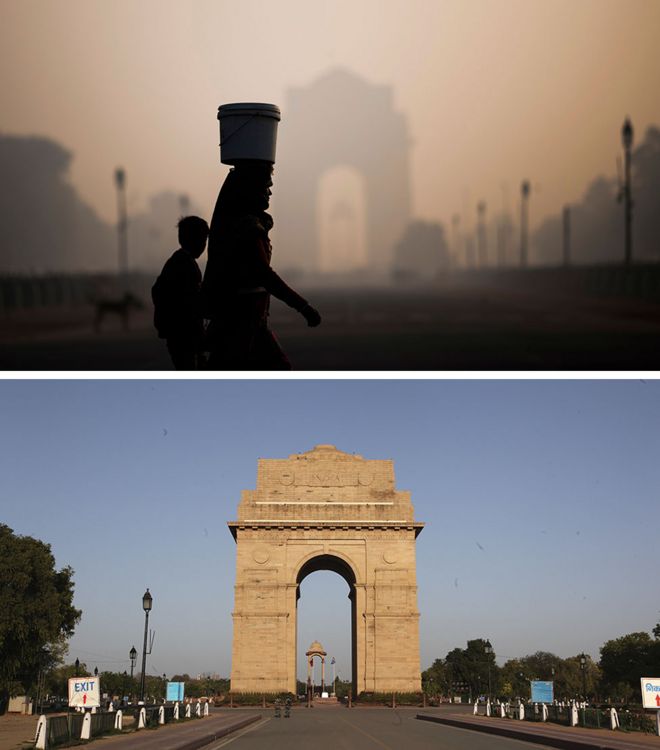 Image copyright GETTY IMAGES
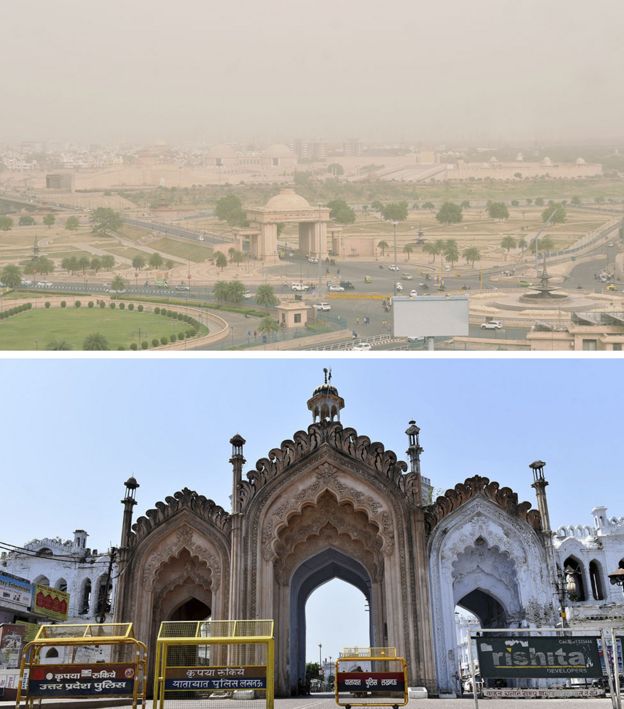 Image copyright GETTY IMAGES
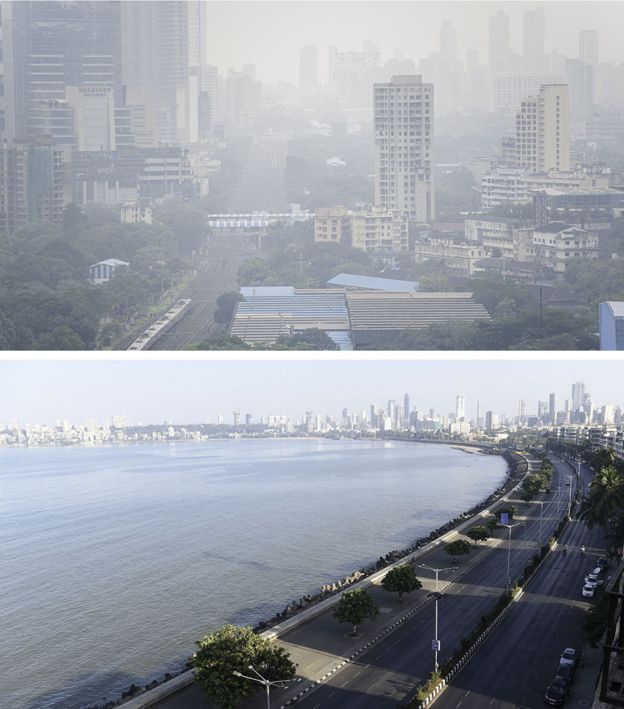 Image copyright HINDUSTAN TIMES
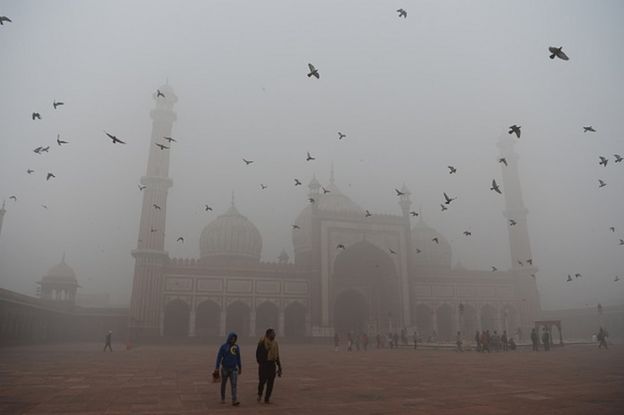 Image copyright GETTY IMAGES
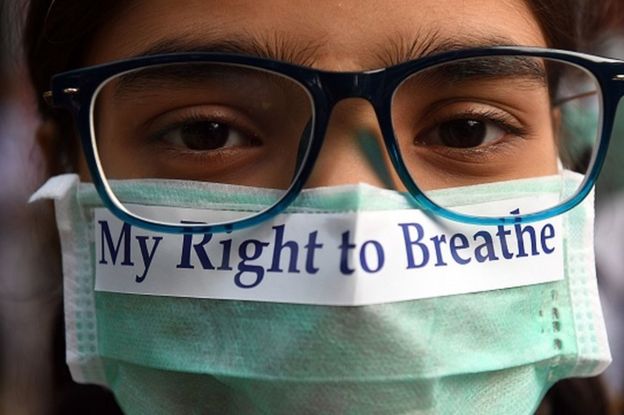 Image copyright GETTY IMAGES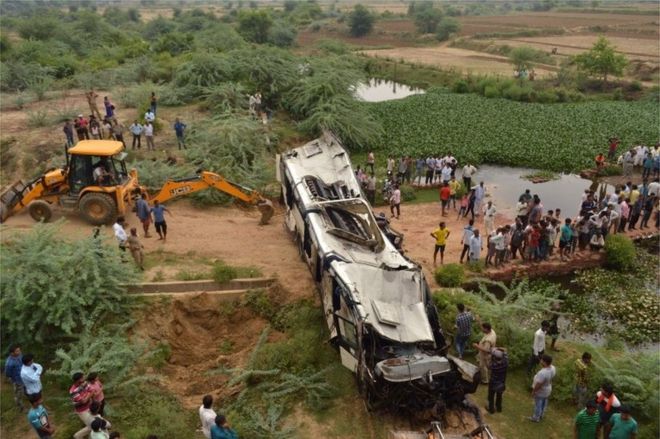


 CHINDIA ALERT: You'll be living in their world, very soon