Chindia Alert: You’ll be Living in their World Very Soon
aims to alert you to the threats and opportunities that China and India present. China and India require serious attention; case of ‘hidden dragon and crouching tiger’.
Without this attention, governments, businesses and, indeed, individuals may find themselves at a great disadvantage sooner rather than later.
The POSTs (front webpages) are mainly 'cuttings' from reliable sources, updated continuously.
The PAGEs (see Tabs, above) attempt to make the information more meaningful by putting some structure to the information we have researched and assembled since 2006.
An antibody engineered from the animal’s immune system was found to neutralise the virus that causes Covid-19
American and Belgian researchers hope the discovery may help protect humans from the deadly illness
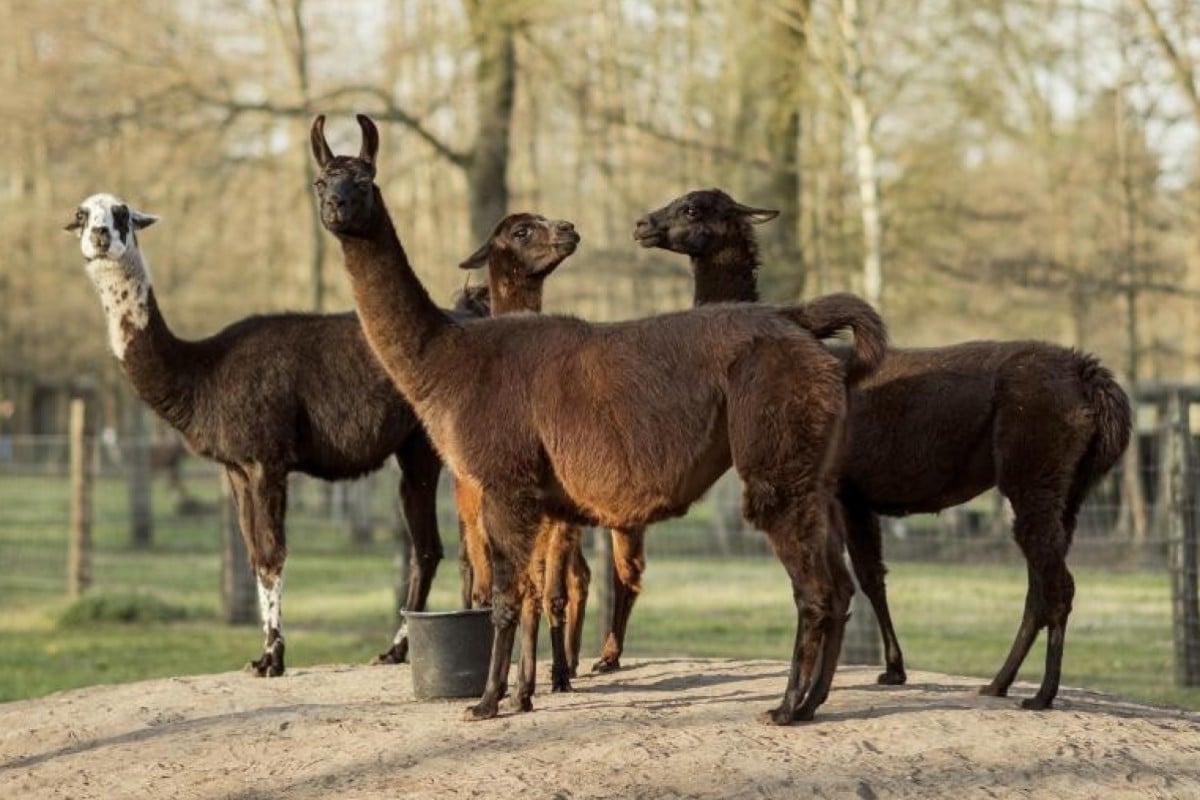
Winter the llama (front) lives on a farm operated by Ghent University’s Vlaams Institute for Biotechnology. Photo: Tim Coppens
A Belgian llama could hold the key to producing an antibody that neutralises the coronavirus that causes Covid-19.
More studies and clinical trials are needed to see if it can be used in humans to treat Covid-19, but the team of American and Belgian scientists who engineered the antibody said they were encouraged by their preliminary findings, which will be published in the journal Cell next week.
Jason McLellan, from the University of Texas at Austin and co-author of the study, described it as one of the “first antibodies known to neutralise Sars-CoV-2”, the official name for the virus.
“With antibody therapies, you’re directly giving somebody the protective antibodies and so, immediately after treatment, they should be protected,” he wrote in a press release.
“The antibodies could also be used to treat somebody who is already sick to lessen the severity of the disease.”
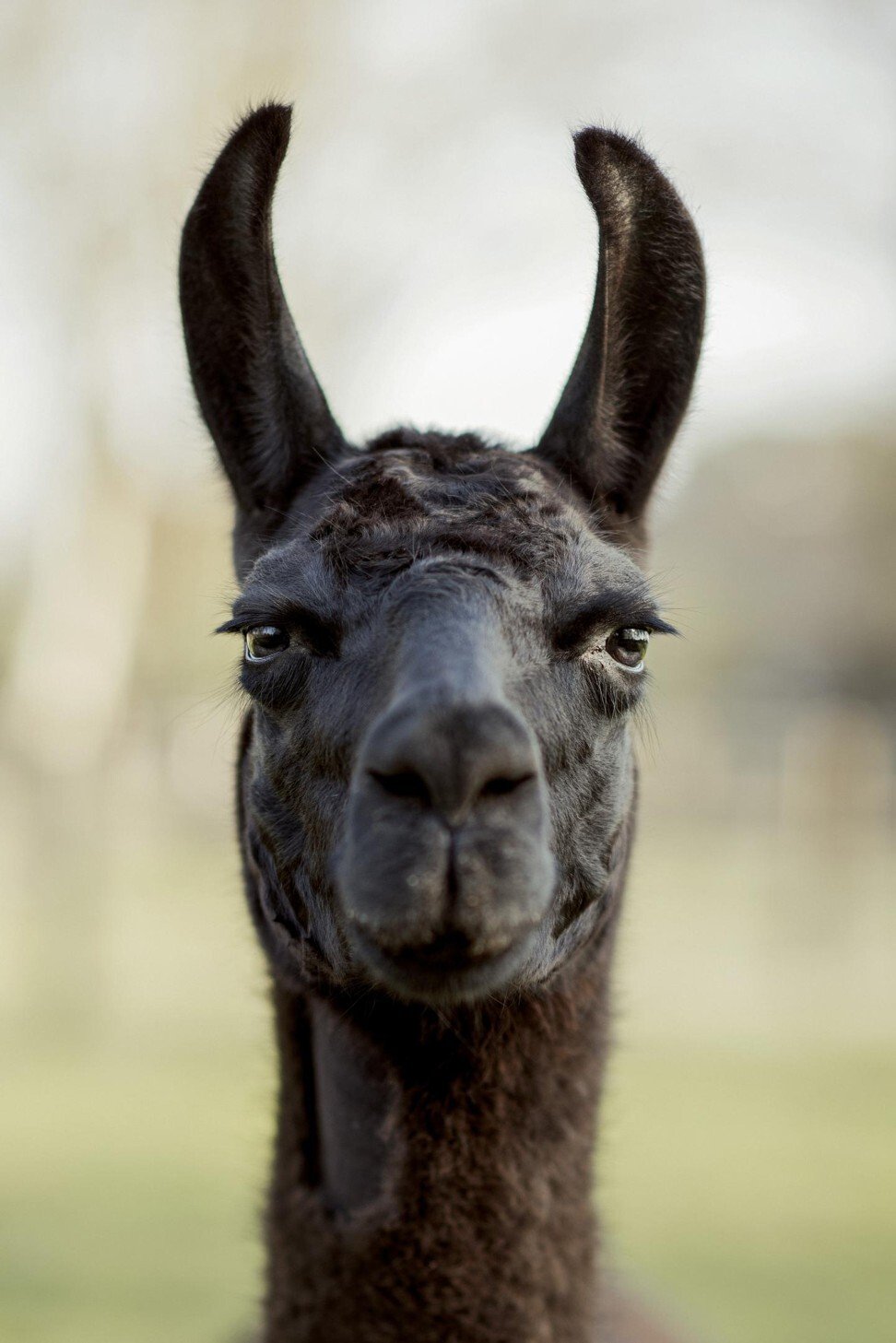
Winter the llama produced antibodies that proved effective against the Sars-CoV-2 virus. Photo: Tim Coppens
The scientists have been working on coronaviruses – including severe acute respiratory syndrome (Sars) and Middle East respiratory syndrome (Mers) – for years.
In 2016 they injected the llama, named Winter, with Sars and Mers in the hope of developing a treatment for the diseases.
“I thought this would be a small side project,” said Dorien De Vlieger from Ghent University in Belgium, who helped to isolate antibodies against coronaviruses from the llamas.
China’s race for a Covid-19 vaccine hits a hurdle – no outbreak at home
1 May 2020
“Now the scientific impact of this project became bigger than I could ever expect. It’s amazing how unpredictable viruses can be.”
A llama’s immune system produces two types of antibodies when it detects pathogens, one similar to human antibodies and one that is about a quarter of the size.
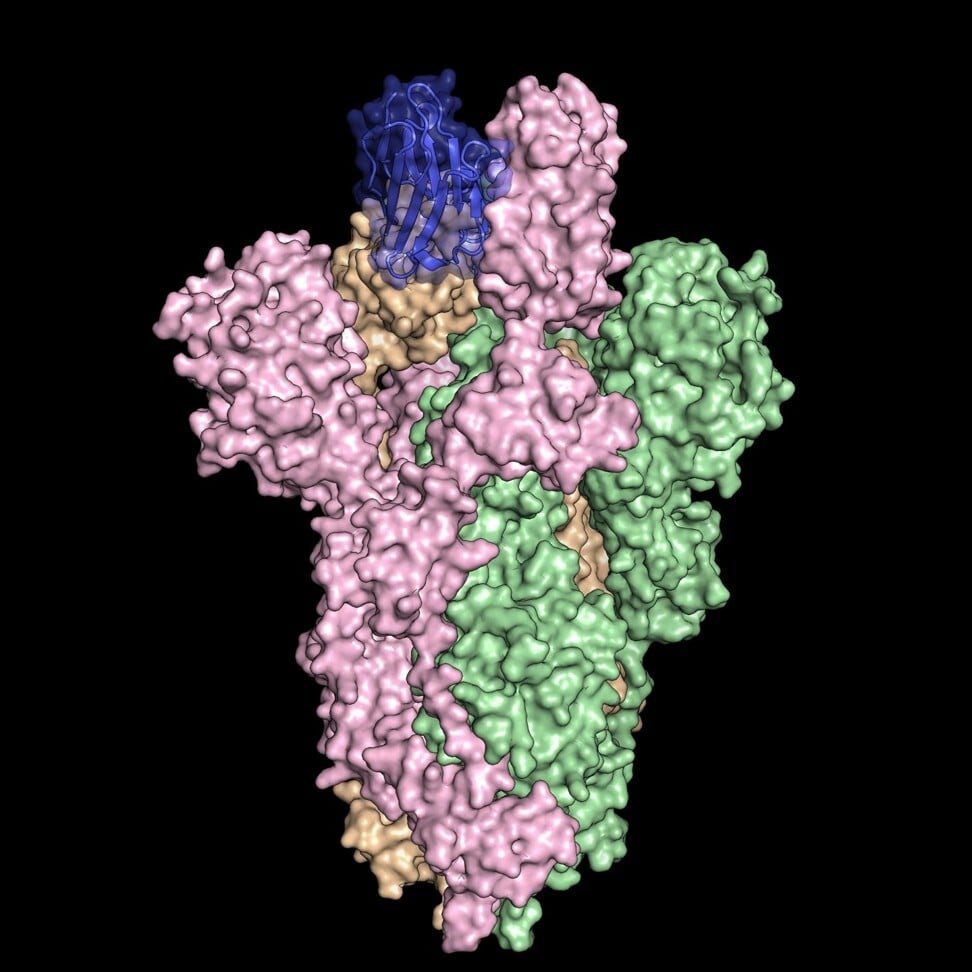
The antibodies produced by Winter were found to be effective in targeting the Sars virus’s spike protein, which allows it to bind to human cells.
Chinese firm ready to make 100 million Coronavirus vaccine doses if trials are successful
This year they decided to test the antibodies Winter had produced during the Sars experiment to see if it could prove effective against Covid-19.
Although it did bind itself to the Sars-CoV-2 virus it did so “weakly”, so the team then linked two copies of the antibody together to make it bind more effectively.
Oxford vaccine effective in monkeys, heading for mass production in India
30 Apr 2020
“That was exciting to me because I’d been working on this for years. But there wasn’t a big need for a coronavirus treatment then. This was just basic research,” said Daniel Wrapp from the University of Texas, a co-author of the study.
The smaller type of antibodies produced by llamas, called single-domain antibodies or nanobodies, can be used in an inhaler, according to Wrapp.
“That makes them potentially really interesting as a drug for a respiratory pathogen because you’re delivering it right to the site of infection,” said Wrapp.
Researchers created an antibody dubbed VHH-72Fc (blue) that binds tightly to the Sars-CoV-2 spike protein (pink, green and orange), blocking the virus from infecting cells. Photo: University of Texas at Austin
The researchers are preparing for more trials with hamsters or primates to further test the antibody, before taking it to human trials.
The main subject of the study, Winter the llama, is now four years old and lives on a farm operated by Ghent University’s Vlaams Institute for Biotechnologym which said it has around 130 other llamas and alpacas at the facility.
Six animals inoculated with vaccine candidate then exposed to virus did not catch Covid-19 after 28 days
Up to 60 million doses could be produced by Serum Institute of India this year
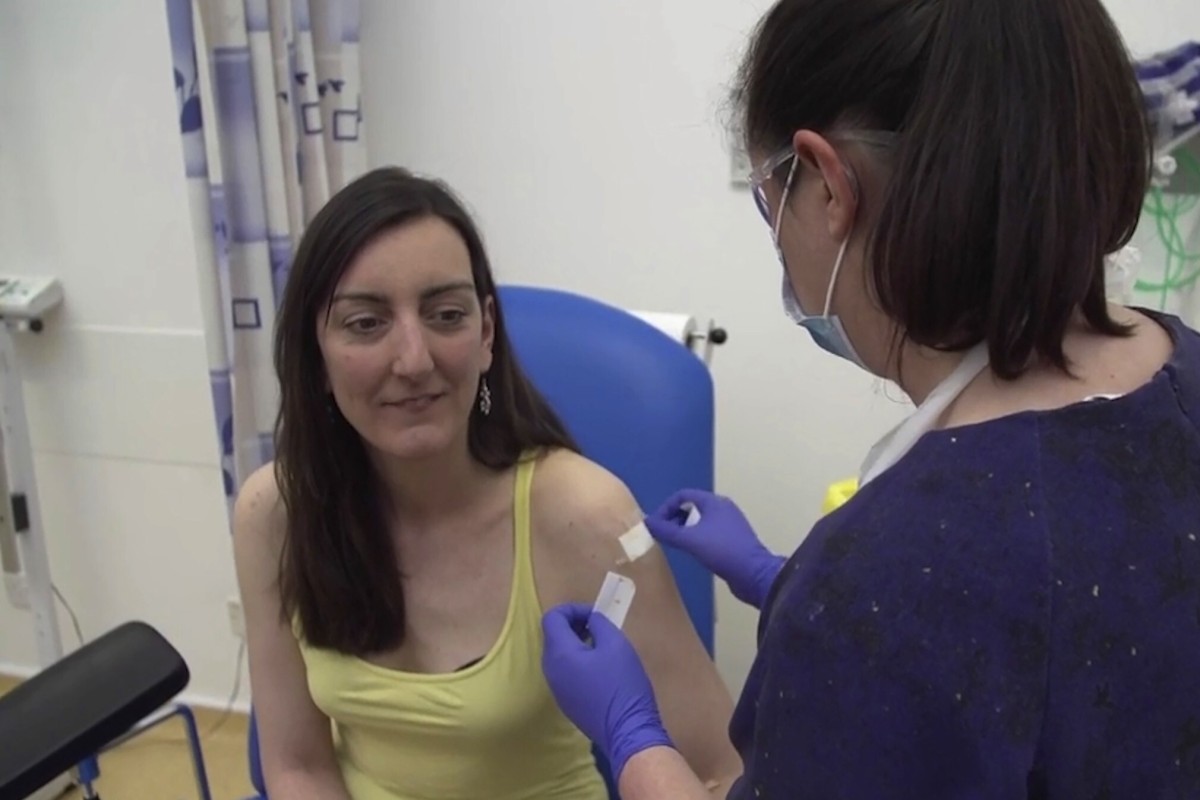
Microbiologist Elisa Granato gets an injection on Thursday as part of the first human trials in Britain for a potential coronavirus vaccine. Photo: University of Oxford via AP
A leading candidate for a Covid-19 vaccine has shown promising results in animal trials, and is expected to see mass production in India within months.
The Serum Institute of India, the world’s largest maker of vaccines by volume, said on Tuesday that it plans this year to produce up to 60 million doses of a potential vaccine developed by the University of Oxford, which is under clinical trial in Britain.
While the vaccine candidate, called “ChAdOx1 nCoV-19”, is yet to be proven to work against Covid-19, Serum decided to start manufacturing it as it had shown success in animal trials and had progressed to tests on humans, Serum Chief Executive Adar Poonawalla said.
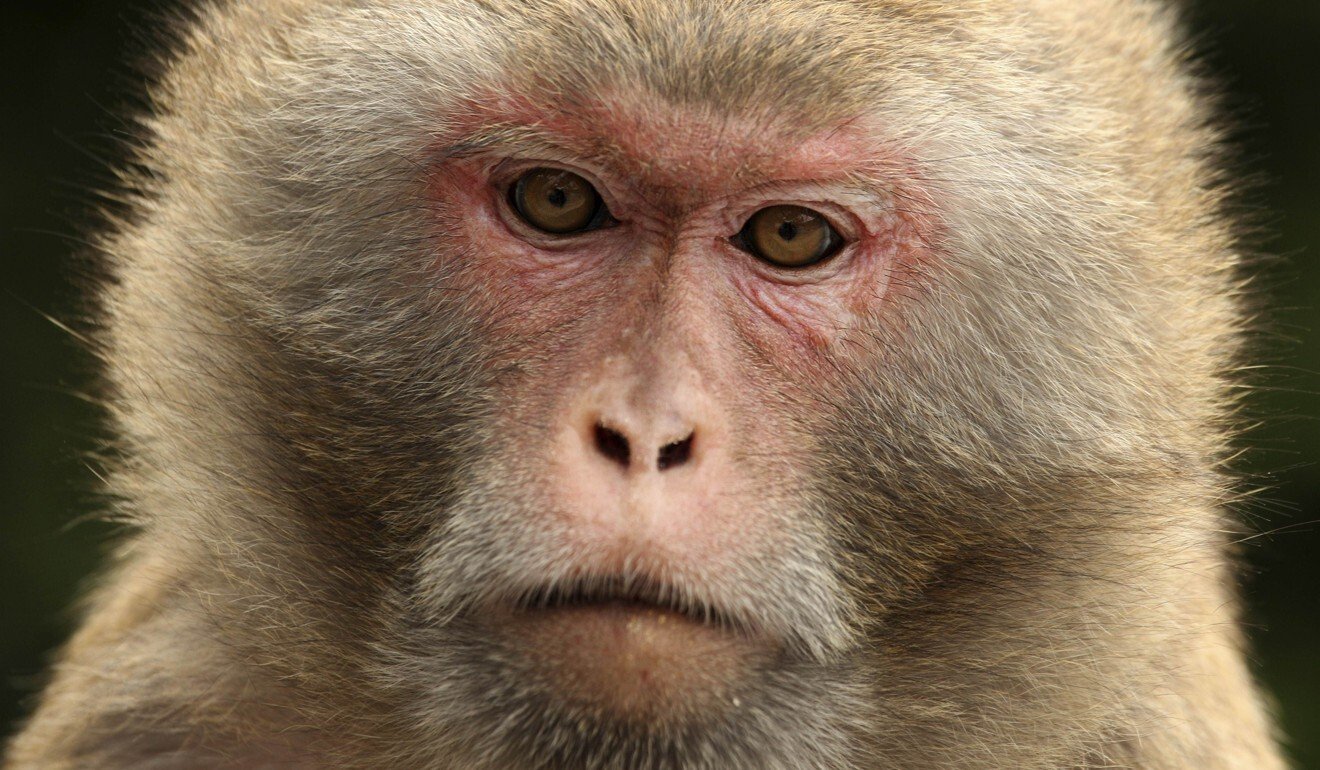
Six rhesus macaque monkeys were inoculated with the vaccine candidate at the National Institutes of Health’s Rocky Mountain Laboratory in Montana last month, according to The New York Times.
Covid-19 vaccine trial starts in Oxford, but remdesivir treatment reportedly flops in China tests
The subjects were exposed afterwards to large quantities of the novel coronavirus, but all six remained healthy after more than 28 days, the newspaper reported, citing researcher Vincent Munster, who conducted the test.
More than 3 million people have been reported to be infected globally and over 210,000 have died from Covid-19, the respiratory disease caused by the coronavirus.
“They are a bunch of very qualified, great scientists [at Oxford] … That’s why we said we will go with this and that’s why we are confident,” Poonawalla told Reuters in a phone interview.
“Being a private limited company, not accountable to public investors or bankers, I can take a little risk and sideline some of the other commercial products and projects that I had planned in my existing facility,” Poonawalla said.
Bill Gates hopes his virus vaccine ‘manufacturing within a year’
27 Apr 2020
As many as 100 potential Covid-19 candidate vaccines are now under development by biotech and research teams around the world, and at least five of these are in preliminary testing in people in what are known as phase one clinical trials.
Poonawalla said he hoped trials of the Oxford vaccine, due to finish in about September, would be successful. Oxford scientists said last week the main focus of initial tests was to ascertain not only whether the vaccine worked but that it induced good immune responses and no unacceptable side effects.
Serum, owned by the Indian billionaire Cyrus Poonawalla, plans to make the vaccine at its two manufacturing plants in the western city of Pune, aiming to produce up to 400 million doses next year if all goes well, Poonawalla said.
“A majority of the vaccine, at least initially, would have to go to our countrymen before it goes abroad,” he said, adding that Serum would leave it to the Indian government to decide which countries would get how much of the vaccine and when.
Rhesus macaque monkeys are often used in animal testing because of their similarity to humans. Photo: AFP
Serum envisages a price of 1,000 rupees (US$14.70) per vaccine, but governments would give it to people without charge, he said.
He said Prime Minister Narendra Modi’s office was “very closely” involved in the vaccine production and the company is hoping the government will help foot the cost of making it.
Over roughly the next five months, Serum will spend some 300 million to 400 million rupees (US$4.4 million to US$5.9 million) on making around 3-5 million doses per month, he said. “[The government] are very happy to share some risk and fund something with us, but we haven’t really pencilled anything down yet,” Poonawalla said.
Coronavirus: clinical trial begins on third vaccine candidate in China
22 Apr 2020
Serum has also partnered with the US biotech firm Codagenix and Austria’s Themis on two other Covid-19 vaccine candidates and plans to announce a fourth alliance in a couple of weeks, he said.
Serum’s board last week also agreed to invest roughly 6 billion rupees (US$8.8 billion) on making a new manufacturing unit to solely produce coronavirus vaccines, Poonawalla said.
Military stresses combat readiness and war mentality in production released just weeks before 70th anniversary of the People’s Republic
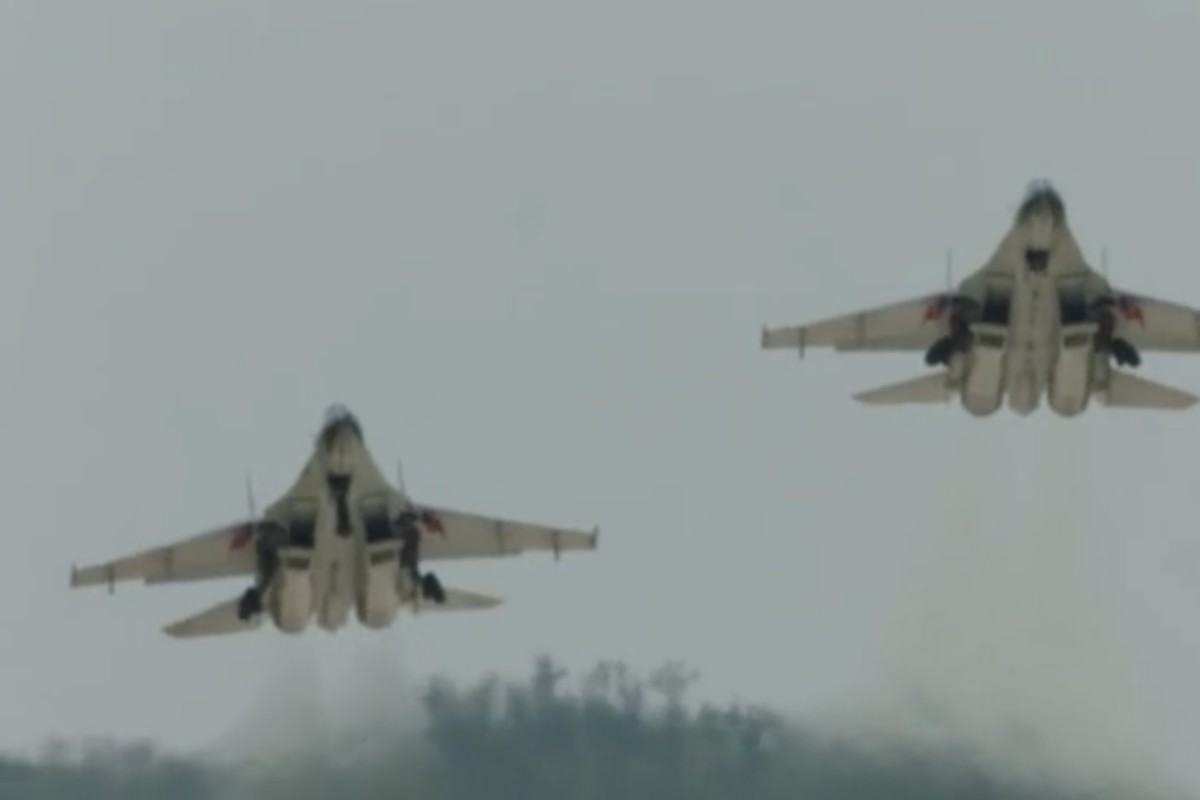
China’s air force shows a more assertive side in a new propaganda video. Photo: Handout
The Chinese air force has ramped up its combat rhetoric in its latest propaganda video, with pilots warning enemies in English and top brass stressing the need for crisis mode.
The four-minute video was posted on the Ministry of National Defence’s website on Wednesday and begins with two J-20 stealth fighters taking off from an unidentified airbase.
At least three missile-carrying J-11 jets are then shown make low passes and various aerobatics at sea.
After that, a pilot shouts in English: “This is the PLA Air Force speaking. You are about to enter Chinese airspace. Leave immediately. Leave immediately.”
The video also features members of an elite brigade called the “Eagles of Liaoning province”, a frequent winner of PLA Air Force competitions.
PLA Air Force formation ‘a sign of stealth fighter mass production’ in China
Brigade member Bai Long, a J-20 fighter pilot, says the team have a higher calling.
“Winning over enemies is more important than winning competitions,” Bai says.
Also featured is Wang Hai, a 93-year-old combat veteran from the Korean war, who encourages air force personnel to fear nothing during combat.
“You cannot do anything if you are not brave enough. You can’t be a pilot if you fear death,” Wang says.
Wang Yongtong, a brigade commander, is also quoted as saying that the Chinese air force is using war games to strengthen its combat readiness.
“We will meticulously prepare for war and improve our combat capacity to resolutely safeguard national sovereignty, security and interests,” he says.
The video’s release comes just a few weeks before China marks the 70th anniversary of the founding of the People’s Republic with a massive military parade showcasing its military weapons.
It also underlines China’s increasingly assertive efforts to defend its interests.
On Wednesday, China hit out at Canada for sending a warship to traverse the Taiwan Strait.
And in late July, South Korea claimed that two Chinese warplanes entered South Korea’s air defence identification zone, a claimed denied by the Chinese foreign ministry.
And in late January, a Chinese surveillance plane crossed the Sea of Japan and the East China Sea via the Tsushima Strait, prompting the Japanese air self-defense force to scramble fighter jets.
Coordination Council for North American Affairs becomes Taiwan Council for US Affairs, island’s foreign ministry says
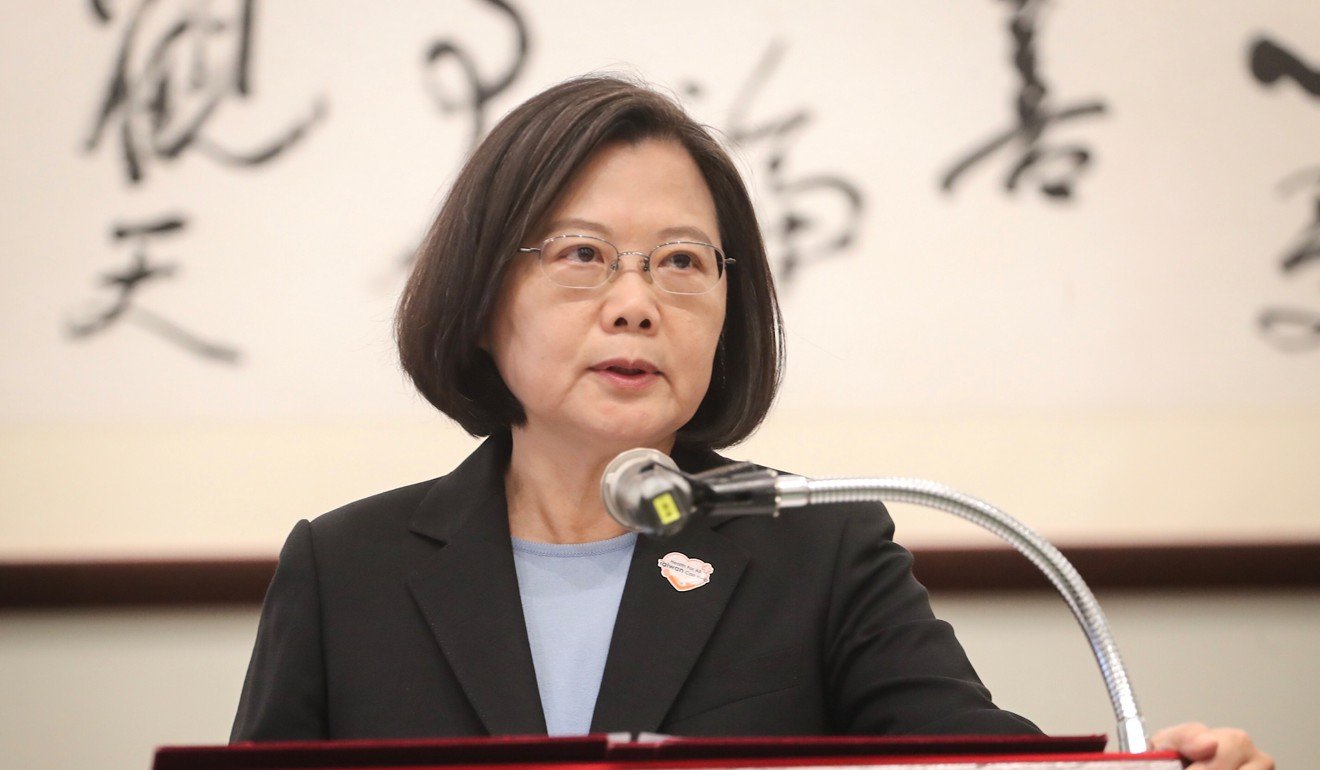
Move signifies ‘firm and close relationship between Taiwan and the US’, President Tsai Ing-wen says
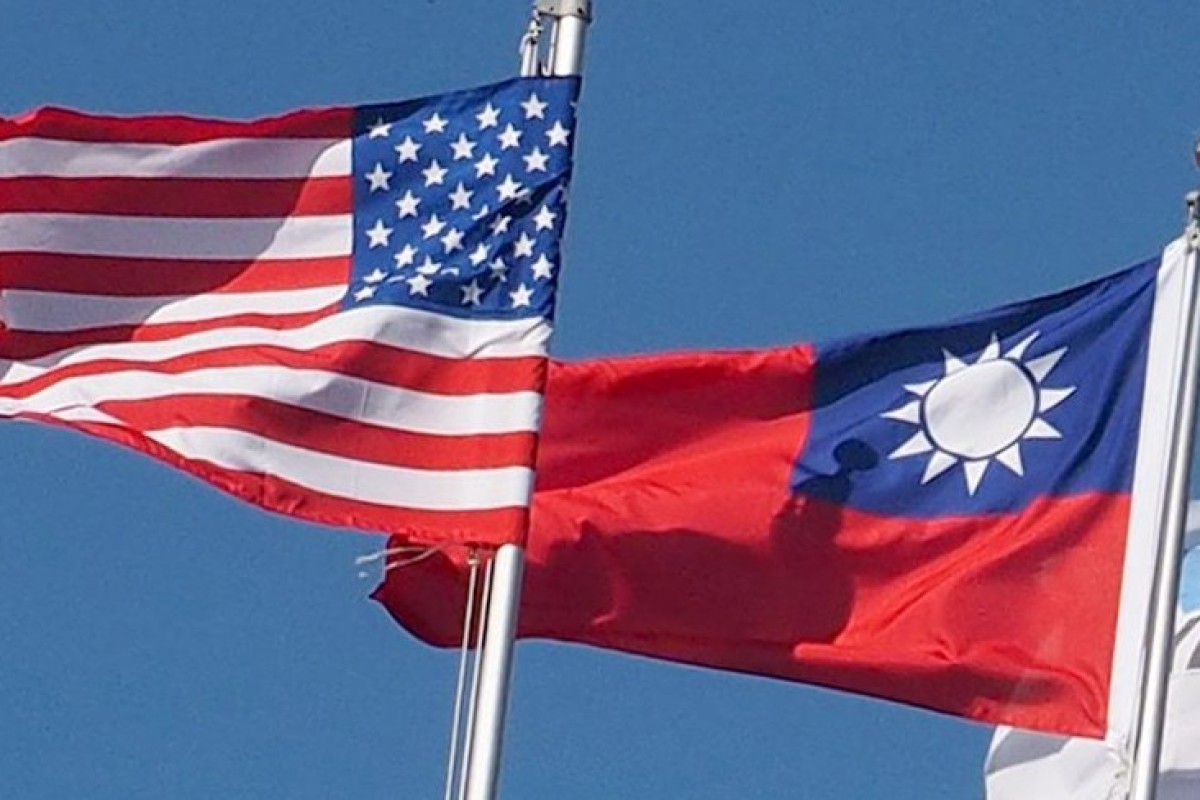
Taiwan has changed the name of its de facto embassy in the United States to better reflect ever-improving ties between the sides. Photo: EPA
Taiwan has changed the name of its de facto embassy in the United States to better reflect relations between the sides, which are at their strongest in decades, Taipei said on Saturday.
Once the necessary formalities have been completed, the agency formerly known as the Coordination Council for North American Affairs will be called the Taiwan Council for US Affairs, the island’s foreign ministry said.
“The new name better reflects the [agency’s] role in coordinating US-Taiwan affairs. It also symbolises the close and amicable relations between Taiwan and the United States,” it said.
Observers said the name change was significant as it appeared to drop the pretence that the council was non-diplomatic or political in nature.
The name change was possible because of the consensus between Taiwan and the US. Photo: CNA
Although Washington severed formal diplomatic ties with Taipei in 1979 in favour of Beijing, the two sides retained unofficial relations that have grown ever-closer in recent years, including an increase in military exchanges and cooperation.
“The new name [was made possible] as a result of the consensus between Taiwan and the US,” the island’s President Tsai Ing-wen said in a Facebook post. “This is the first time the designations ‘Taiwan and the US’ have been used to refer to each other’s affairs office on an equal basis, signifying the firm and close relationship.”
Taiwan begins mass production of missile corvettes, minelayers
Taiwan had been forced to use the old title because of the “special historical background” related to the change in diplomatic allegiance 40 years ago, Tsai said.
Beijing, which considers Taiwan a wayward province awaiting reunification, by force if necessary, has demanded that Washington observe the one-China policy by not officially recognising Taiwan or allowing it to use either “Republic of China” – the island’s official name – or “Taiwan” in the title of its representative offices in the US.
Washington also enacted the Taiwan Relations Act in 1979 to prescribes relations with the island and includes a commitment to supply it with arms to protect itself.
“After continuous efforts and coordination by the two sides, and in 2019, the 40th anniversary of the Taiwan Relations Act, our office handling relations with the US is finally able to change its name,” Tsai said.
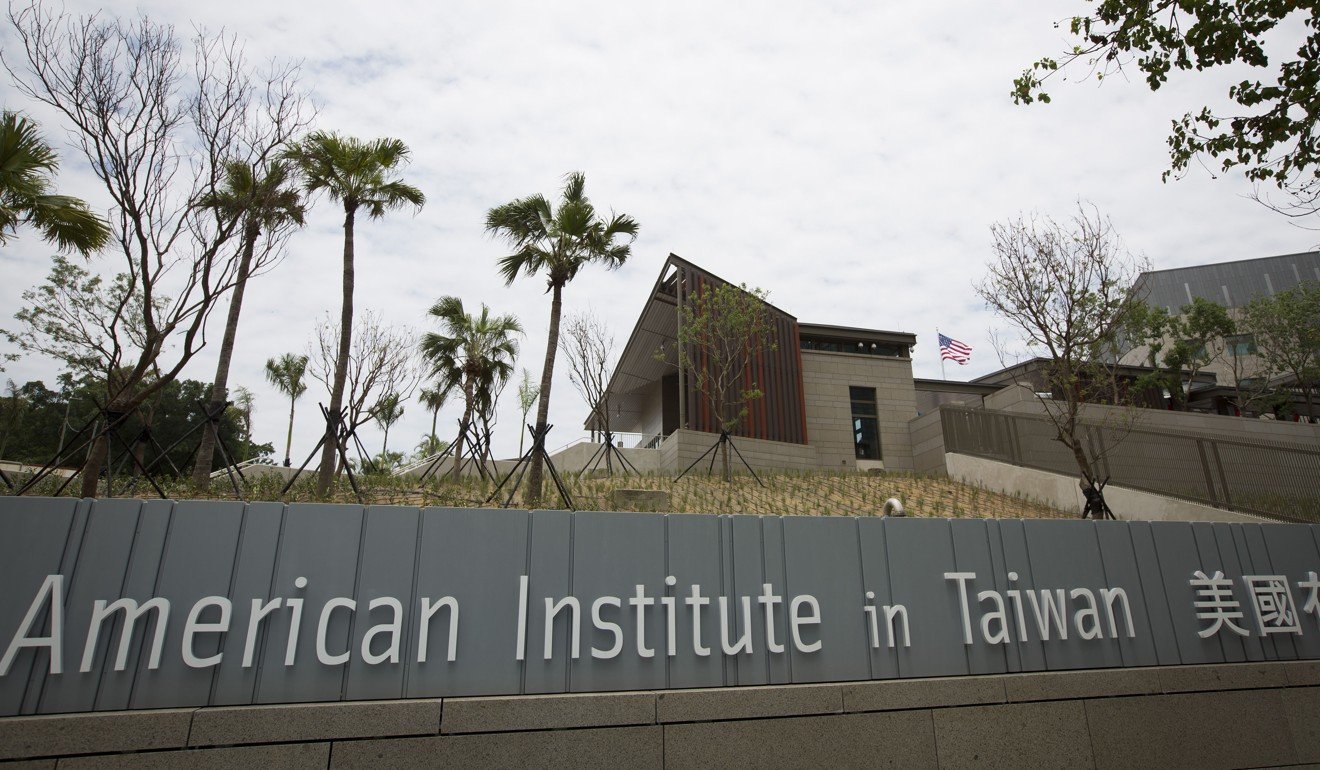
The American Institute in Taiwan relocated to a larger, purpose-built compound last month. Photo: Bloomberg
Presidential spokesman Alex Huang said the name change was due mainly to an improvement in relations between Taiwan and the US as a result of a greater cooperation on the promotion of regional peace and the Indo-Pacific security agenda.
“In the past few years, the US government has given Taiwan strong and firm support in terms of national security and participation in international events, as well as support from Congress and think tanks,” he said, referring to bills signed by US President Donald Trump that allow for exchanges between high-level officials and military personnel, and the approval of new sales of arms and logistical support to the island.
US official urges Pacific island nations to maintain diplomatic ties with Taiwan
Also, last week, Taiwan’s national security chief David Lee met US National Security Adviser John Bolton in Washington for the first talks of their kind since 1979, Taiwan’s Central News Agency reported on Saturday.
Last month, the American Institute in Taiwan – the United States’ unofficial embassy in Taipei – relocated to a significantly larger, purpose-built compound, in yet another sign of improving relations.
US support for Taiwan has increased under Trump’s leadership as he regards Beijing as a hostile competitor, not only on trade, but also in military and global influence terms.
Tensions between Taipei and Beijing have flared since Tsai became president in 2016 and refused to accept the one-China principle. The mainland subsequently halted all official exchanges with the island and embarked on a campaign to squeeze its diplomatic allies around the world.
Self-ruled island cannot match Beijing’s spending, but innovation can help it succeed in a one-sided military conflict, observers say
First of Tuo Jiang-class stealth warships expected to be ready by 2021
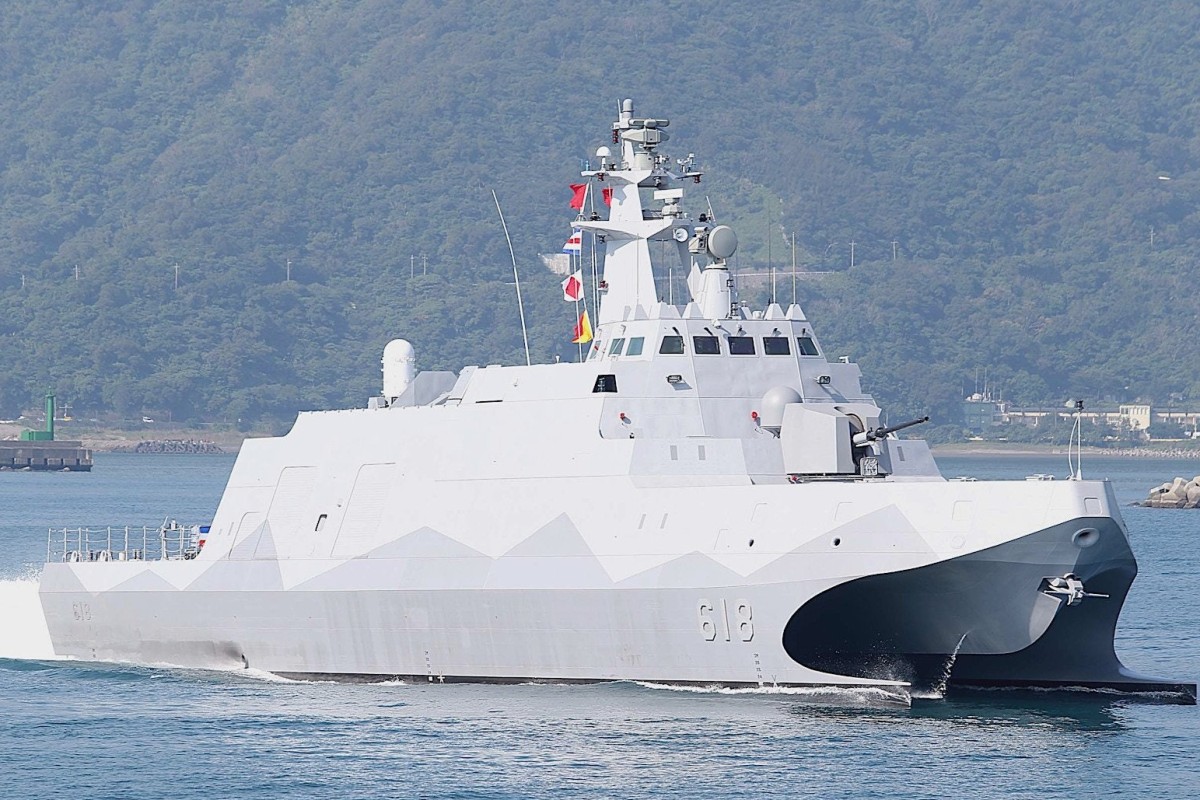
Taiwan began mass production of its Tuo Jiang-class missile corvettes on Friday.
Taiwan has begun mass production of its home-grown Tuo Jiang-class missile corvettes and high-speed minelayers as it seeks to shore up its naval forces amid rising hostility from Beijing.
Dubbed the “aircraft carrier killer”, the small but powerful corvette, which has a displacement of 680 tonnes and a top speed of 45 knots, is a state-of-the-art stealth warship built by Lung Teh Shipbuilding.
A total of three corvettes will be built under the NT$31.6 billion (US$1 billion) Hsun Hai project, the self-ruled island’s navy said.
The warship is equipped with one of the world’s most technologically advanced computer systems and built partly with high-entropy metal alloys for extra strength and durability, it said. Its stealth technology and low radar cross section makes the ship virtually invisible at sea and even more obscure when operating close to the coastline.
Armed with eight subsonic Hsiung Feng II and eight supersonic Hisung Feng III anti-ship missile launchers, the corvettes are intended to take over many of the missions currently undertaken by larger, less manoeuvrable and more expensive frigates and destroyers, the navy said.
In the event of an actual armed conflict with Beijing, the warships would also boost Taiwan’s ability to counter a much larger and better equipped rival, a concept known as asymmetric warfare.
Taiwan simulates repelling invasion as Beijing threat persists
In a ceremony on Friday at Lung Teh’s shipyard in Suao, Yilan county, to mark the start of mass production, Taiwanese President Tsai Ing-wen said the move was made possible after the navy succeeded in overcoming a number of design and technological issues regarding the warship, an earlier version of which she boarded soon after becoming the island’s leader in 2016.
Together with the construction of the high-speed minelayers, also by Lung Teh, and a home-grown submarine at a separate shipyard in Kaohsiung, Tsai said Taiwan was entering a “new era” of naval strength that would give it the ability to thwart any attempts by the People’s Liberation Army to invade its territory.
“This proves we are able to build our own warships and launch a new era of the naval force,” she said.
Construction of the Tuo Jiang-class corvettes was under way, with the first expected to be ready for delivery to the navy in 2021 and the last by 2025, Tsai said.
The first batch of four minelayers would also be ready by 2021, she said.
Taiwan has sought to counter the rising threat from mainland China by developing more of its own military hardware in recent years. Beijing’s military budget for 2019 is 1.2 trillion yuan, or about 16 times as much as Taiwan’s.
Beijing considers Taiwan a wayward province awaiting reunification, by force if necessary, and suspended all official exchanges with it after Tsai, from the independence-leaning Democratic Progressive Party, was elected president and refused to accept the one-China principle.
Experts doubt China’s ability to launch assault on Taiwan
Over the past three years Tsai has prioritised Taiwan’s military expansion, ordering the Chungshan Institute of Science and Technology – the island’s top weapon research and development agency – to speed up production of weapons like the surface-to-air Skybow-III and supersonic anti-ship Hsiung Feng-III missiles.
Taiwan is also expected next year to begin mass production of its CM-34 Clouded Leopard eight-wheeled armoured vehicles and has set a target to manufacture 284 of them by 2023.
Four prototypes of the vehicles, which passed pre-production tests in October, are expected to take part in the island’s annual Han Kuang war games next week.
Chieh Chung, a national security research fellow at the National Policy Foundation in Taipei, said that because of the huge discrepancies in their military budgets Taiwan could not engage in an arms race with the mainland so had to be more innovative.
“Taiwan has to develop an asymmetric defence strategy,” he said. “Take the Tou Jiang corvettes, for example. Because of their high speed, stealth function, small size and powerful weaponry, they can be deployed anywhere near Taiwan’s coast and called into action very quickly to fend off enemy vessels,” he said.
“The same applies to the high-speed minelayers, which can drop mines very quickly and make it very hard for enemy ships to attack the coast,” he said.






 CHINDIA ALERT: You'll be living in their world, very soon