15/05/2020
- Hungarian Foreign Minister Peter Szijjarto tells Chinese counterpart, Wang Yi, that his country ‘always upholds the one China principle’
- Wang also speaks to foreign ministers of Estonia and Bosnia and Herzegovina ahead of World Health Assembly, which starts on Monday
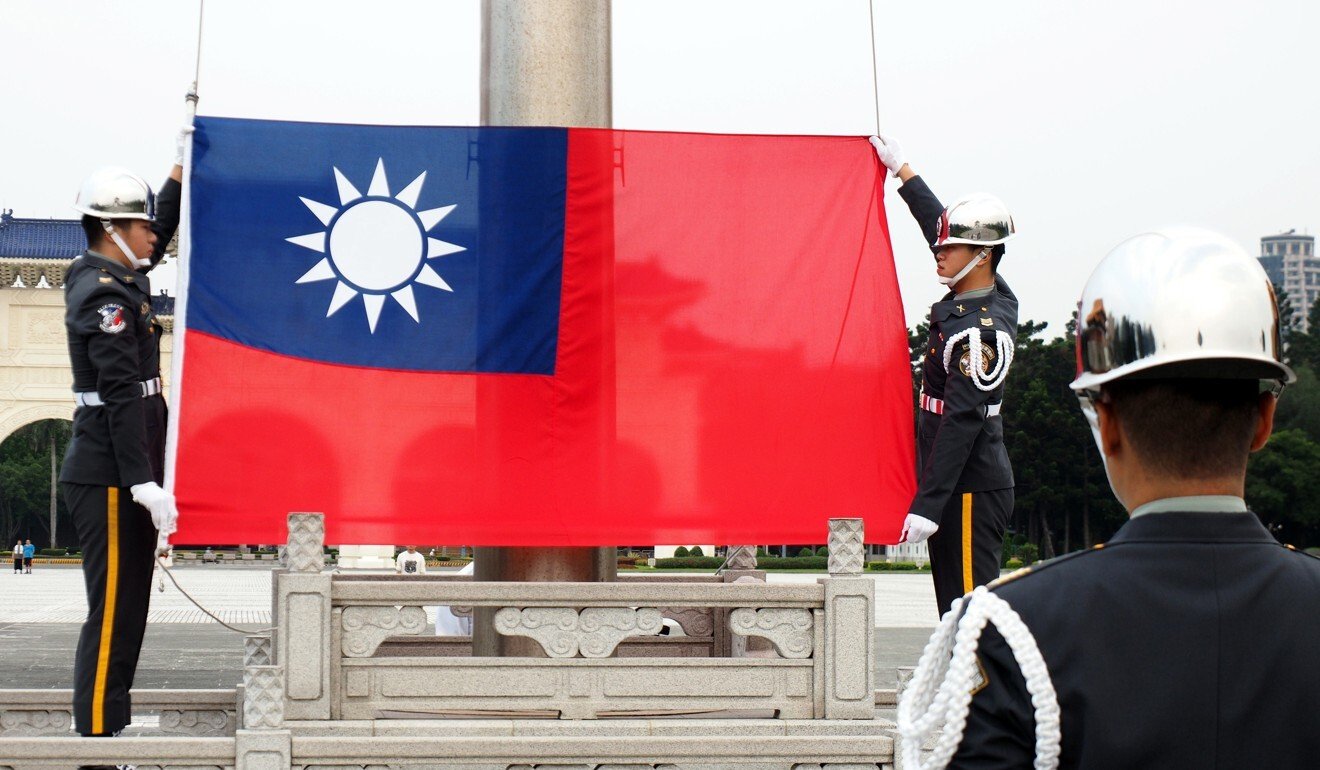
Chinese Foreign Minister Wang Yi spoke to three European foreign ministers on Thursday. Photo: AP
Hungary supports Beijing’s efforts to prevent
Taiwan taking part in the upcoming World Health Assembly (WHA), according to a Chinese statement issued after a telephone conversation between the two countries’ foreign ministers.
China’s Foreign Minister Wang Yi called his European counterpart, Peter Szijjarto, on Thursday, the foreign ministry in Beijing said.
During the call, Szijjarto told Wang that Budapest would not support Taiwan’s accession to the World Health Organisation (WHO) ahead of the annual gathering of health ministers from around the world that starts in Geneva on Monday and which Taipei is keen to attend.
Hungary “always upholds the one China principle”, Szijjarto was quoted as saying.
A report about the ministers’ call by the Hungarian foreign ministry, however, made no mention of Taiwan.
It said that Szijjarto thanked Wang for the medical supplies China had sent to Hungary board 121 flights since the start of the Covid-19 pandemic.
The pair also discussed cooperation on 5G and the development of a rail project between Budapest and the Serbian capital, Belgrade, it said.
Beijing opposes Taiwan’s involvement in the WHO. Photo: EPA-EFE
As well as speaking to Szijjarto, Wang called the foreign ministers of Estonia and Bosnia and Herzegovina on Thursday to discuss the Covid-19 pandemic, but Taiwan was not mentioned, the Chinese statement said.
Taipei donated 80,000 face masks to Estonia in April, and last week, Urmas Paet, an Estonian member of the European parliament urged Budapest to support Taiwan’s membership of the WHO and “not allow itself to be manipulated by China”.
Taiwan has long campaigned to regain observer status at the WHO and has ramped up those efforts since the start of the global health crisis. Despite the devastation caused by Covid-19,
Taiwan has reported just 440 confirmed cases and seven deaths.
Taiwan attended the WHA meetings as an observer between 2009 and 2016, unopposed by Beijing as at the time the island was led by president Ma Ying-jiu from the mainland-friendly Kuomintang.
However, relations between Taipei and Beijing have soured since 2016 and the election of
President Tsai Ing-wen, from the pro-independence Democratic Progressive Party, who won a second term of office in January.
WHO put nations at risk by excluding Taiwan from knowledge sharing, US report says
13 May 2020
Taiwan has not been alone in its campaign to regain its WHO status, with the United States, Australia, New Zealand, Canada and several European countries backing the move.
Last week, US Secretary of State Mike Pompeo called on all nations to support Taipei’s participation as an observer at the WHA, and urged WHO director general Tedros Adhanom Ghebreyesus to allow it.
Despite the support, Taiwan’s Vice-Premier Chen Chien-jen said on Thursday that because of the pressure from Beijing there was now little chance of Taiwan attending the WHA.
China’s foreign ministry spokesman Zhao Lijian said last week it was “resolutely opposed” to New Zealand’s support for Taiwan.
In his calls to Europe, Wang also said that cooperation between Beijing and 17 central and eastern European nations – under the “17+1” banner – would not be affected by the health crisis and that further talks would be held once it had been brought under control.
Source: SCMP
Posted in 5G, around the world, Australia, Beijing, Belgrade, Bosnia, Budapest, canada, cooperation, Covid-19 pandemic, Democratic Progressive Party, development, Estonia, European countries, foreign ministers, Geneva, health ministers, Herzegovina, Hungarian Foreign Minister, Hungary, Kuomintang, medical supplies, membership, Mike Pompeo, New Zealand, one-China principle, opposing, President Tsai Ing-wen, pro-independence, rail project, Serbian capital, stands, Taipei, Taiwan’s, Uncategorized, United States, US Secretary of State, Wang Yi, World Health Assembly, World Health Organisation |
Leave a Comment »
10/02/2020
- Taiwan sends fighters to intercept mainland military aircraft after they cross dividing line in Taiwan Strait
- Incursion comes at end of visit to Washington by vice-president-elect William Lai that angered Beijing
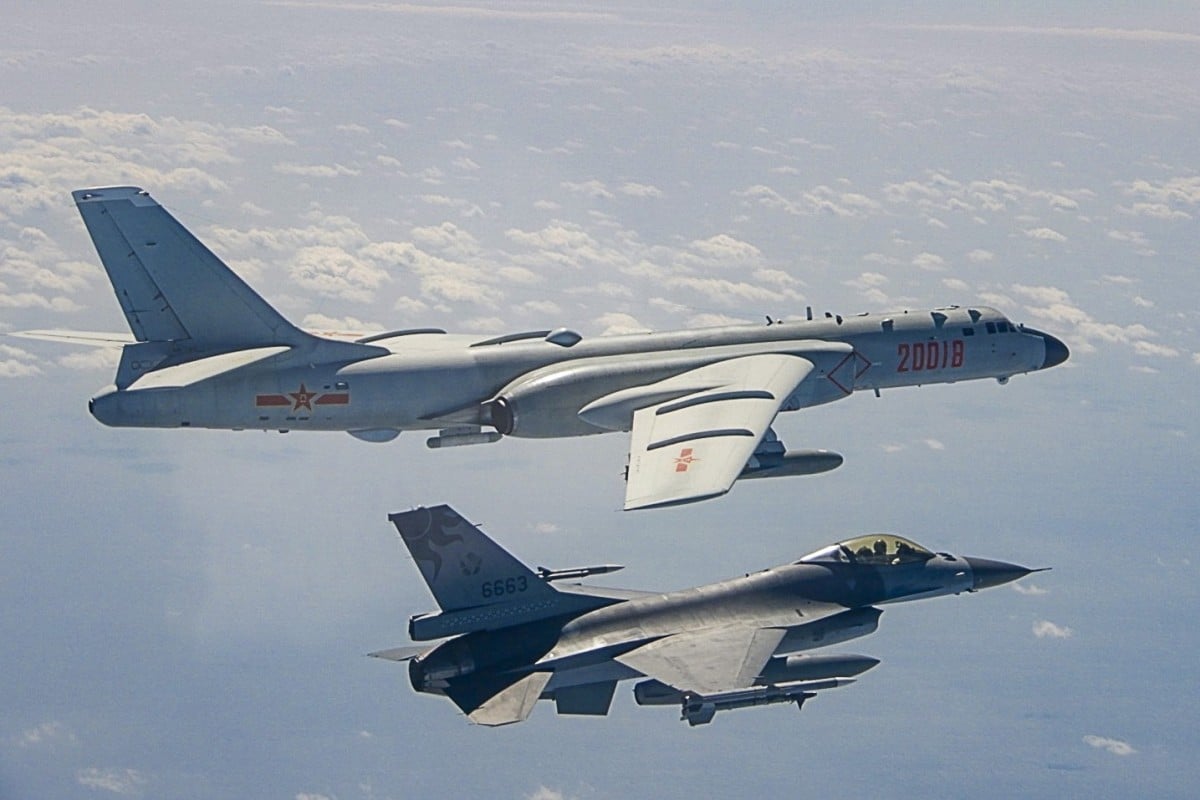
A Taiwanese fighter jet shadows a mainland Chinese bomber over the Taiwan Strait on Monday. Photo: Military News Agency, ROC
Taiwan sent warplanes to intercept a group of mainland Chinese jets that had briefly approached the island on Monday, the second such incident in two days.
The incident came as the island’s vice-president-designate William Lai Ching-te concluded an eight-day visit to the US that had angered Beijing.
The mainland warplanes, including H-6 bombers, briefly crossed the median line in the Taiwan Strait on their way to the western Pacific through the Bashi Channel in the morning for long-haul training exercises, Taiwan’s defence ministry said in a statement on Monday.
“Our air force scrambled fighter jets to shadow, intercept and disperse the communist warplanes through radio broadcasting,” the ministry said, adding the mainland planes later left the area.
The mainland warplanes later returned to their home base after their morning drill, the military said.
It was the second day in a row that the mainland warplanes flew past Taiwan after a group of aircraft, including J-11 fighter jets, KJ-500 early warning aircraft and H-6 bombers, flew over the Bashi Channel on Sunday before returning to their bases via the Miyako Strait northeast of Taiwan, the ministry said.
“The military has full surveillance and control of the communist long-haul training activities and the public can rest assured of our capability to uphold security or our national territory,” it said.
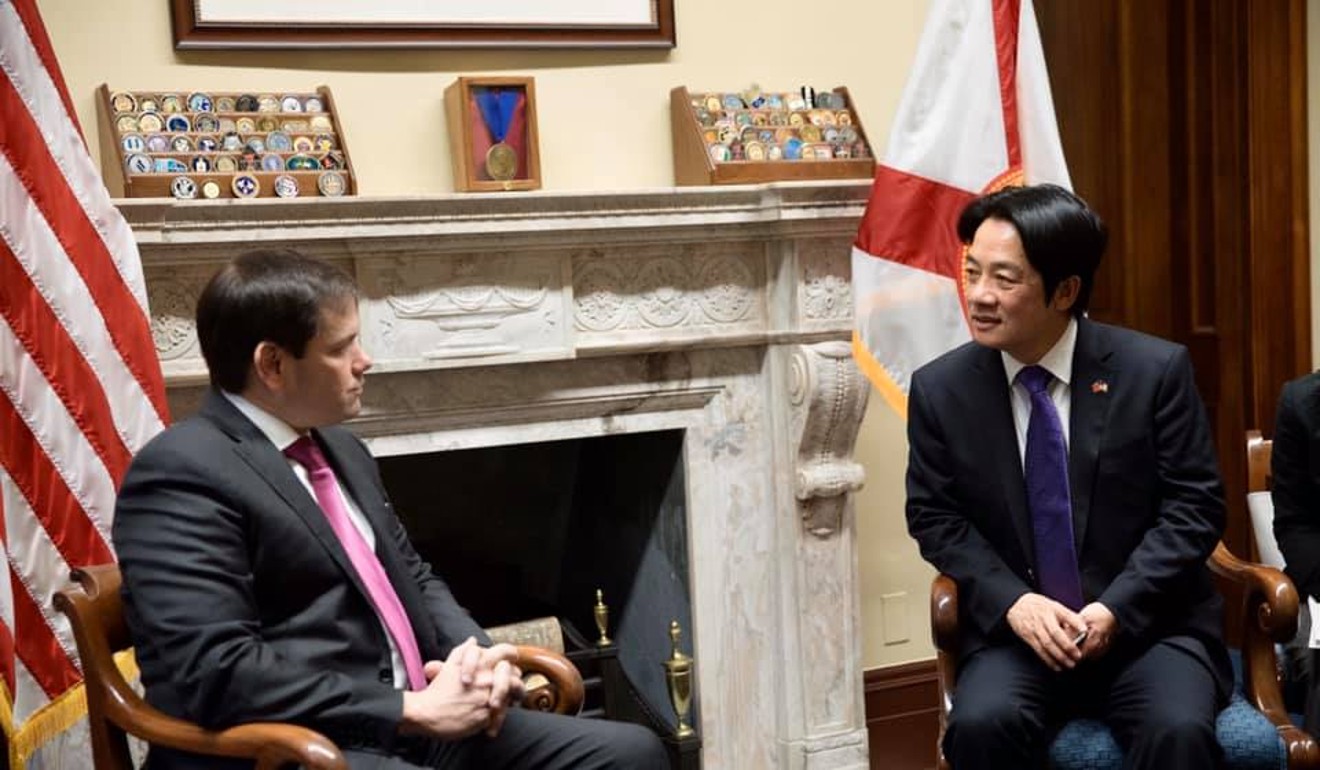
Meanwhile, Lai completed his eight-day “private” visit to Washington, during which he met the National Security Council and other US officials and senators.
Lai, who left for the US last Sunday to attend the National Prayer Breakfast – an annual gathering of political and religious leaders in Washington – was considered the highest-level Taiwanese official to meet with National Security Council officials since the US switched diplomatic recognition to Beijing from Taipei in 1979.
The visit was hailed as a diplomatic breakthrough for the island because until now Washington has been reluctant to allow such exchanges for fear of angering Beijing, which has repeatedly demanded that the US adhere to the “one-China” policy.
Taiwan scrambles jets as mainland Chinese air force flies around island
Beijing views Taiwan as a wayward province that must be brought back to the mainland fold – by force if necessary.
It has suspended official exchanges with Taiwan since Tsai Ing-wen of the independence-leaning Democratic Progressive Party was first elected president in 2016 and refused to accept the one-China principle as the basis for cross-strait exchanges.
Since then, Beijing has staged war games close to the island and poached seven of Taiwan’s allies to heap pressure on the president, who was reelected last month.
A People’s Liberation Army spokesperson said on Sunday the flight was a “necessary action” under “current security situation across the Taiwan Strait”.
Vice-President-elect William Lai Ching-te met National Security Council officials on his visit to the White House. Photo: Facebook
Observers said Lai’s US visit was made possible due to a new US policy to allow high-level official and military exchanges with Taiwan, which has been included in the US security alliance to counter the mainland’s military expansion in the Indo-Pacific region.
They said Lai is still technically a civilian until he takes office in May, and the US can always use this status to defend its move, although the visit has prompted strong protests from the Chinese foreign ministry.
Observers also said Taiwan’s efforts in seeking to join the World Health Organisation amid the deadly coronavirus outbreak have also riled Beijing, which has repeatedly said the island is a mainland province with no right to join international bodies which require statehood for membership.
Taipei complains to World Health Organisation after coronavirus case is classed as ‘Taiwan, China’
On Monday, Ma Xiaoguang, a spokesman for the mainland’s Taiwan Affairs Office, warned the Tsai government against “playing with fire” by “trying to use its strengthening ties with the US to plot independence”.
“This is a sheer provocation,” Ma said, adding what the People’s Liberation Army did was to protect the national sovereignty and territorial integrity of the mainland and to maintain cross-strait peace.
Song Zhongping, a military commentator for Hong Kong Phoenix Television, said the patrol was aimed at the separatist movement on the island.
“Such a patrol is for war-preparedness … and has become a routine practice and a resolution to effectively attack the pro-independence force,” said Song, a former instructor for the PLA’s Second Artillery, the predecessor of the Rocket Force.
A Beijing-based military source close to the PLA, who requested anonymity, said the warplanes were equipped with missiles, which has become a standard procedure for PLA’s air drills.
Source: SCMP
Posted in angered, Beijing, Chinese warplanes, communist warplanes, cross, diplomatic breakthrough, dividing line, Fighters, H-6 bombers, Hong Kong Phoenix Television, incursion, Indo-Pacific region, intercept, international bodies, island, J-11 fighter jets, KJ-500 early warning aircraft, mainland, membership, military aircraft', missiles, National Prayer Breakfast, National Security Council, one-China policy, Pacific, patrol, People’s Liberation Army, PLA, PLA’s Second Artillery, second, Space, spokesperson, statehood, Surveillance, Taipei, Taiwan, Taiwan Strait, two days, Uncategorized, US, Washington, William Lai Ching-te, World Health Organisation |
Leave a Comment »




 CHINDIA ALERT: You'll be living in their world, very soon