Archive for ‘Metro’

07/02/2020

Li Wenliang: Coronavirus death of Wuhan doctor sparks anger

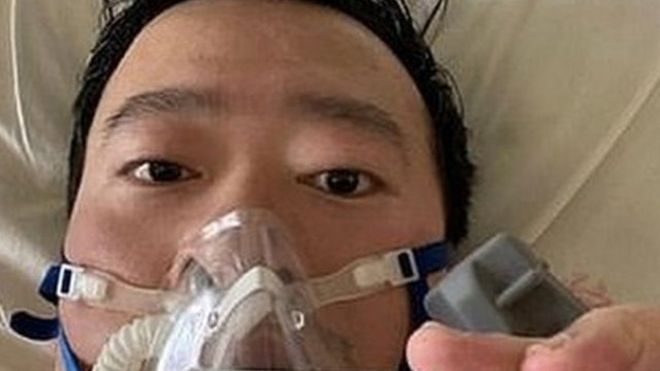
Dr Li posts a picture of himself in a gas mask from his hospital bed on FridayImage copyright DR LI WENLIANG
Image caption Dr Li had posted a picture of himself on social media from his hospital bed

The death of a Chinese doctor who tried to warn about the coronavirus outbreak has sparked an unprecedented level of public anger and grief in China.

Li Wenliang died after contracting the virus while treating patients in Wuhan.

Last December he sent a message to fellow medics warning of a virus he thought looked like Sars – another deadly coronavrius.

But he was told by police to “stop making false comments” and was investigated for “spreading rumours”.

News of his death was met with an intense outpouring of grief on Chinese social media site Weibo – but this quickly turned into anger.

There had already been accusations against the government of downplaying the severity of the virus – and initially trying to keep it secret.

Dr Li’s death has fuelled this further and triggered a conversation about the lack of freedom of speech in China.

The country’s anti-corruption body has now said it will open an investigation into “issues involving Dr Li”.

The Chinese government has previously admitted “shortcomings and deficiencies” in its response to the virus, which has now killed 636 people and infected 31,161 in mainland China.
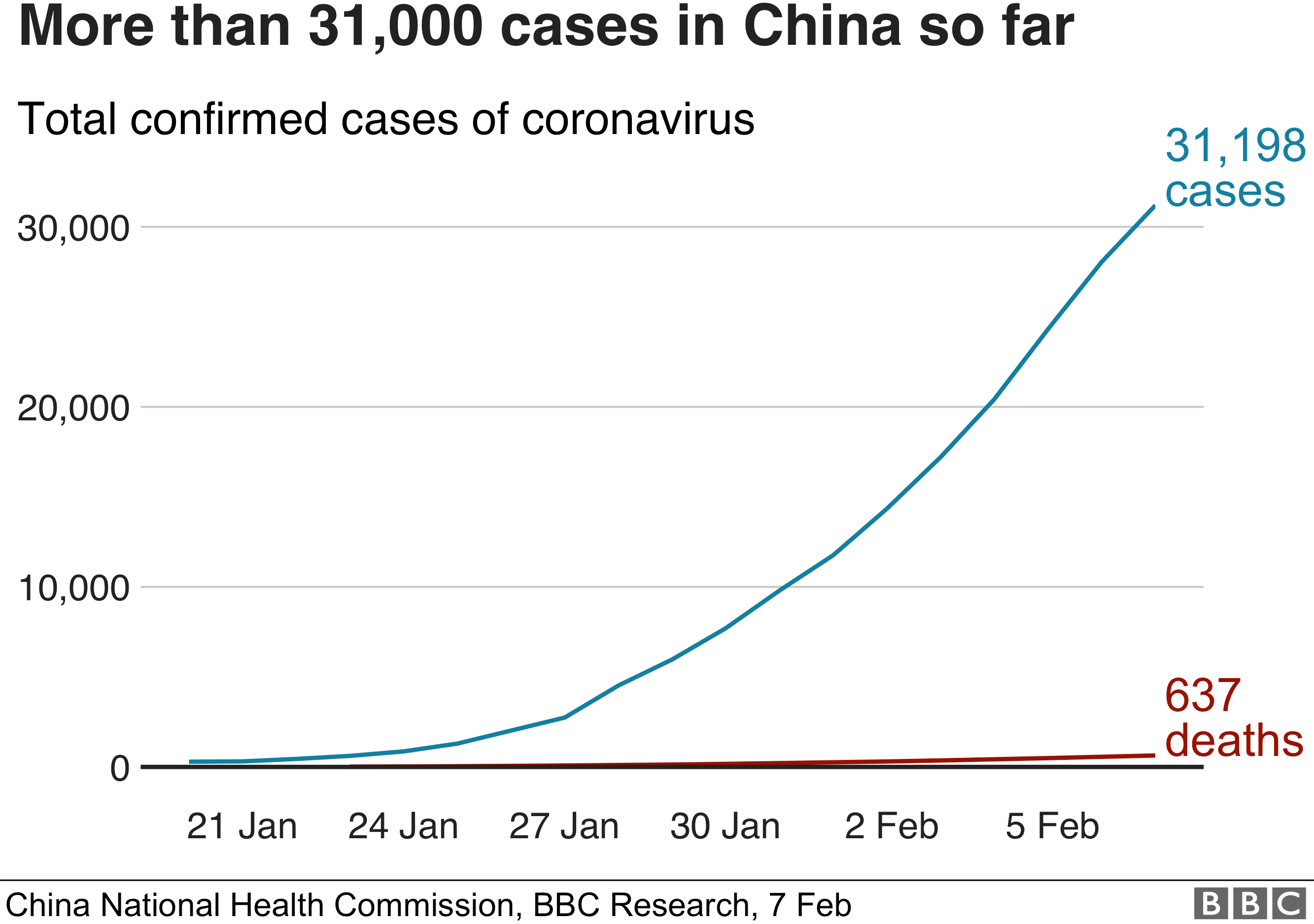

Graphic showing the number of cases in China so far
Presentational white space

According to Chinese site Pear Video, Dr Li’s wife is due to give birth in June.

What has the public reaction been?

Chinese social media has been flooded with anger – it is hard to recall an event in recent years that has triggered as much grief, rage and mistrust against the government.

The top two trending hashtags on the website were “Wuhan government owes Dr Li Wenliang an apology” and “We want freedom of speech”.

Both hashtags were quickly censored. When the BBC searched Weibo on Friday, hundreds of thousands of comments had been wiped. Only a handful remain.

“This is not the death of a whistleblower. This is the death of a hero,” said one comment on Weibo.

A photo circulating on Twitter reportedly sourced from messaging platform WeChat also shows a message in Chinese saying “Farewell Li Wenliang” written in the snow on a riverbank.

Many have now taken to posting under the hashtag “Can you manage, do you understand?” – a reference to the letter Dr Li was told to sign when he was accused of disturbing “social order”.

These comments do not directly name him – but are telling of the mounting anger and distrust towards the government.
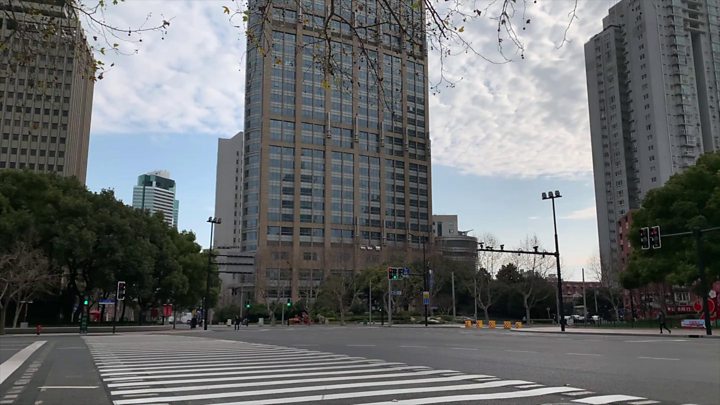
Media caption Coronavirus: Shanghai’s deserted streets and metro

“Do not forget how you feel now. Do not forget this anger. We must not let this happen again,” said one comment on Weibo.

“The truth will always be treated as a rumour. How long are you going to lie? What else do you have to hide?” another said.

“If you are angry with what you see, stand up,” one said. “To the young people of this generation, the power of change is with you.”

Presentational grey line

An epic political disaster

Analysis box by Stephen McDonell, China correspondent

The death of Dr Li Wenliang has been a heart-breaking moment for this country. For the Chinese leadership it is an epic political disaster.

It lays bare the worst aspects of China’s command and control system of governance under Xi Jinping – and the Communist Party would have to be blind not to see it.

If your response to a dangerous health emergency is for the police to harass a doctor trying to blow the whistle, then your structure is obviously broken.

The city’s mayor – reaching for excuses – said he needed clearance to release critical information which all Chinese people were entitled to receive.

Now the spin doctors and censors will try to find a way to convince 1.4 billion people that Dr Li’s death is not a clear example of the limits to the party’s ability to manage an emergency – when openness can save lives, and restricting it can kill.

Chinese people are going to take some convincing.

Presentational grey line

How was the death announced?

There was confusion over when exactly Dr Li had actually died.

He was initially declared dead at 21:30 on Thursday (13:30GMT) by state media outlets the Global Times, People’s Daily and others.

Hours later the Global Times contradicted this report – saying he had been given a treatment known as ECMO, which keeps a person’s heart pumping.

Journalists and doctors at the scene said government officials had intervened – and official media outlets had been told to change their reports to say the doctor was still being treated.

But early on Friday, reports said doctors could not save Dr Li and his time of death was 02:58 on Friday.
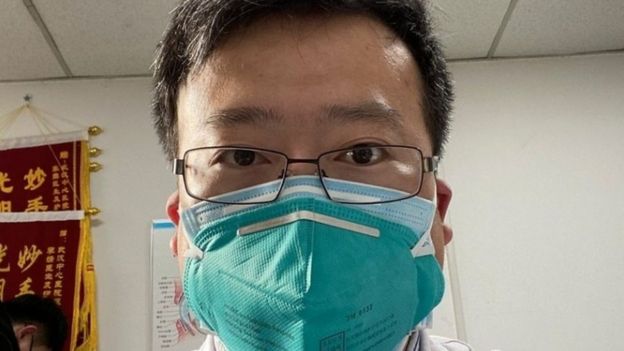
Li WenliangImage copyright LI WENLIANG
Image caption Li Wenliang contracted the virus while working at Wuhan Central Hospital

What did Li Wenliang do?

Dr Li, an ophthalmologist, posted his story on Weibo from a hospital bed a month after sending out his initial warning.

He had noticed seven cases of a virus that he thought looked like Sars – the virus that led to a global epidemic in 2003.

On 30 December he sent a message to fellow doctors in a chat group warning them to wear protective clothing to avoid infection.
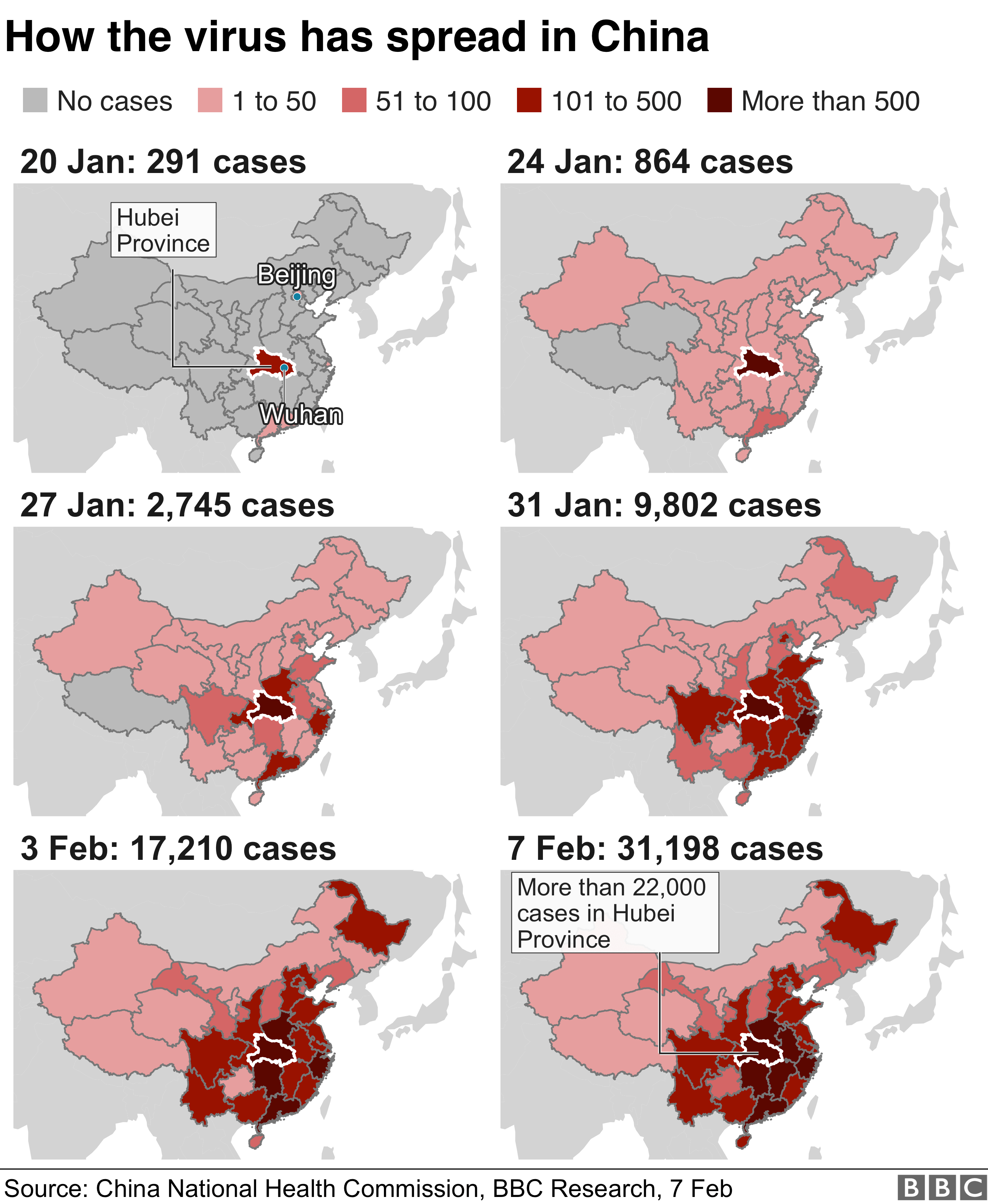
Graphic showing how the virus spread inside China
Four days later he was summoned to the Public Security Bureau where he was told to sign a letter.

In the letter he was accused of “making false comments” that had “severely disturbed the social order”. Local authorities later apologised to Dr Li.

In his Weibo post he describes how on 10 January he started coughing, the next day he had a fever and two days later he was in hospital. He was diagnosed with the coronavirus on 30 January.
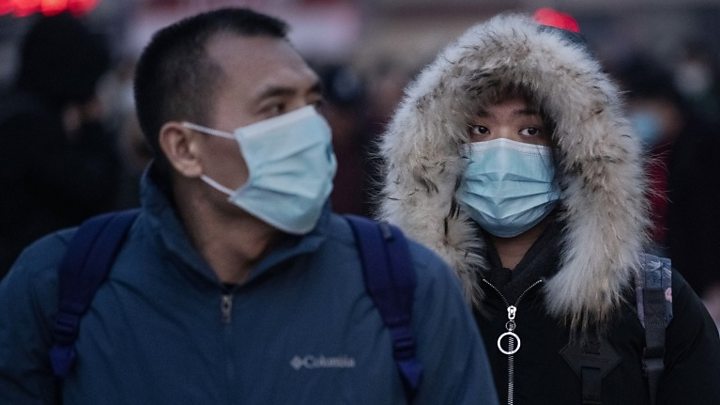
Media caption The BBC’s online health editor on what we know about the virus

What is the latest on the coronavirus?

Chinese President Xi Jinping has told his US counterpart Donald Trump that China is “fully confident and capable of defeating the epidemic”. The country has introduced more restrictive measures to try to control the outbreak:

  • The capital Beijing has banned group dining for events such as birthdays. Cities including Hangzhou and Nanchang are limiting how many family members can leave home each day
  • Hubei province has switched off lifts in high-rise buildings to discourage residents from going outside.

The virus has now spread to more than 25 countries. There have been more than 28,000 cases worldwide but only two of the deaths have been outside mainland China.

Source: The BBC
11/06/2019

Aarey forest: The fight to save Mumbai’s last ‘green lung’

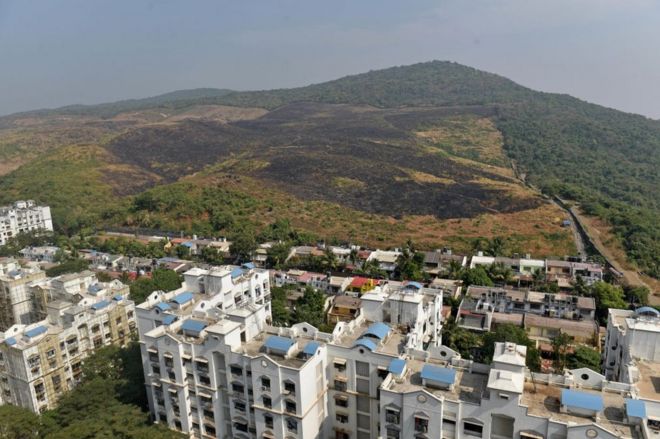
Aarey ForestImage copyright GETTY IMAGES
Image caption Aarey forest is in Mumbai city

The Aarey forest, a verdant strip that lies at the heart of India’s bustling Mumbai city, is often referred to as its last green lung. But now, locals say, it’s under threat from encroachment. BBC Marathi’s Janhavee Moole reports.

As a child, Stalin Dayanand used to picnic in the Aarey forest.

“It was the only place where you could go and play, climb trees or just sit and eat under the shade of a tree and be close to nature,” says Stalin, who prefers to go by his first name.

Now the 54-year-old is the director of an NGO that works to protect forests and wetlands. He is fighting for Aarey.

On 6 June, the government cleared 40 hectares (99 acres) of the 1,300 hectare forest to build a zoo, complete with a night safari.

Another slice of it is being claimed by Mumbai’s new metro rail which is currently under construction. Thousands of trees will have to be felled to construct a new multi-level parking unit for the metro.

Media caption What happens if you ban plastic?

Stalin has petitioned India’s Supreme Court challenging the construction, but the case is still pending.

Locals and environmental activists like him are up in arms because they fear the government will eventually clear the way for private builders to encroach on the Sanjay Gandhi National Park, which lies to the north of Aarey. Spread over 104 sq km (40 sq miles), this protected area makes Mumbai one of the rare cities to have a jungle within its boundaries.

Their concern is partly fuelled by the fact that this is prime location in a city where land is scarce and real estate prices are among the most expensive in the world.

But officials dismiss these fears as unfounded and point out that the construction for the metro only requires 30 hectares of the 1,300 hectares that make up the Aarey forest.

“This is the most suitable land due to its size, shape and location,” says Ashwini Bhide, managing director of the Mumbai metro rail corporation.

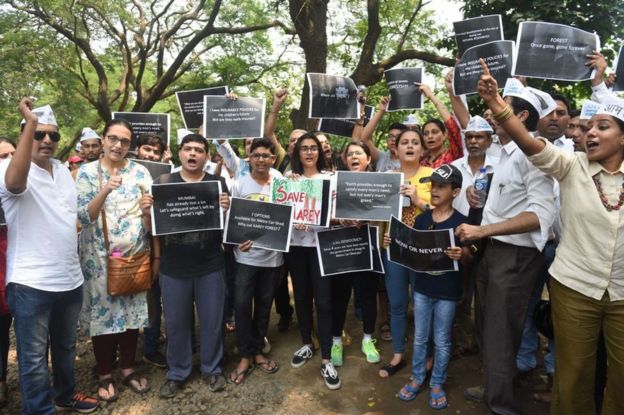
Residents of Aarey colony and Aam Aadmi Party members protest against cutting of trees to build a metro shed at Aarey Colony on 2 October 2018 in Mumbai, India.Image copyright GETTY IMAGES
Image caption Plans to fell trees in the forest have led to protests

She adds that the city badly needs a “mass rapid transport system”. India’s financial hub is congested and infamous for its crawling traffic jams and its local train system heavily overburdened.

Officials say that the metro will eventually carry around 1.7 million passengers every day and bring down the number of vehicles on the road by up to 650,000. The city’s current colonial-era railway system, which is effectively its lifeline, ferries some 7.5 million people between Mumbai’s suburbs and its heart on a daily basis.

But they have been up against the city’s residents, including activists and conservationists, ever since news emerged in 2014 that trees would be cut to make way for the metro.

Presentational grey line

Read more India stories

Presentational grey line

What makes the issue complicated is that the Aarey forest is the site of competing claims.

It’s locally known as the Aarey “milk colony” because most of the land was given to the department of dairy development in 1951. But they are allowed to grow cattle fodder only on a fraction of the land. The rest of it is densely forested and dotted with lakes, and the Mithi river flows through it.

Aarey is also home to tribal communities who live in settlements known as “padas”.

“We are not getting basic facilities here, and now metro authorities want to take away the jungle which belongs to us too,” says Asha Bhoye, who belongs to the Konkani tribe and lives in one of the 29 padas. Plans to relocate some of the tribal communities have also met with resistance and led to protests.

Stalin alleges that instead of declaring the Aarey forest a protected area, the state government has used the opportunity to parcel away pieces of it first to the dairy development department and now to other projects.

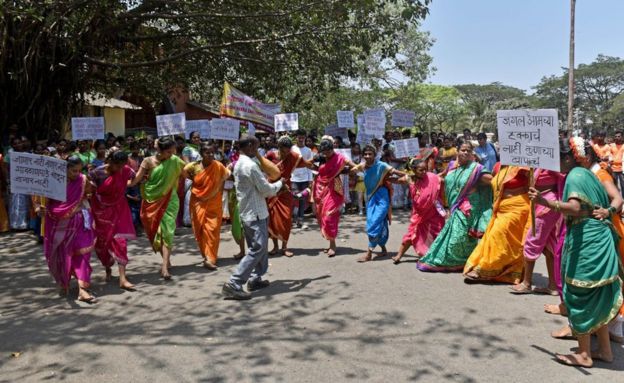
Aadivasi Halka Sanvardhan Samiti and Tribals of Aarey colony protesting to demand protection of Aare forest.Image copyright GETTY IMAGES
Image caption Tribals who live in Aarey demand that it be declared a protected area

“Aarey Forest is part of the same forest as Sanjay Gandhi National Park and we are fighting for the national park itself. In the name of public good, the land is being opened up for developers. It’s a systematic effort to destroy the forest.”

Activists fear that after the parking units are built, other projects will be permitted, further threatening the area’s ecology and wildlife, which includes leopards.

So locals have joined the fight enthusiastically, even leading hikes into the forest to raise awareness. “We bring people here, make them familiar with the forest – there are many species of spiders like trapdoor spiders, the site [of the parking unit] is a leopard site,” says Yash Marwa, a screenwriter who is among those campaigning for the forest.

“Mumbai needs to be liveable”, he adds. “We need to talk about good quality of air and life before talking about infrastructure and development.”

Stalin agrees, saying that “air quality and temperature seem to be last among people’s priorities.”

But he is determined to not give up.

“If I couldn’t do something for my city I’d consider I’ve failed myself.”

Source: The BBC

04/06/2019

Delhi metro: Will free public transport make women safer?

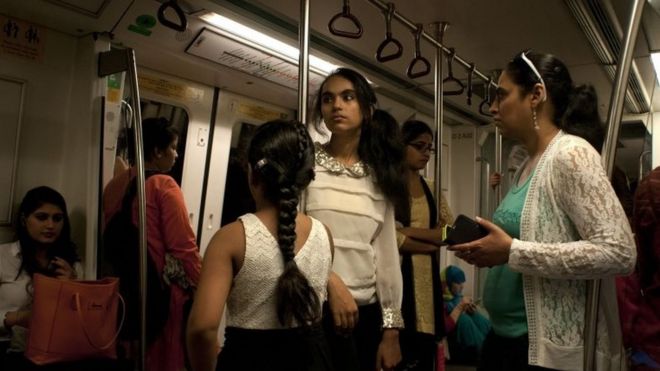
Indian commuters travel in the compartment reserved for women on the metro in New Delhi, India, on June 10, 2015Image copyright GETTY IMAGES
Image caption Mr Kejriwal has proposed free travel on buses and the city’s famed Delhi metro rail service

The chief minister of India’s capital Delhi created a minor sensation when he announced that women would no longer have to pay for public transport.

Arvind Kejriwal said that free rides on city buses and the metro would help improve women’s safety in the city.

Delhi reports some of the highest numbers of rape in India. The 2012 gang rape and murder of a student on a bus in the city sparked massive protests.

However not everyone is convinced that Mr Kejriwal’s proposal will help.

Dinesh Mohan, a transport expert with the Indian Institute of Technology in Delhi, told the BBC that making public transport free wouldn’t solve the problem.

“You need to think about the entire journey and not just the metro – you have to take into account how safe or unsafe sidewalks are and what the journey to the metro station is like in the first place. So if the idea is to make it safer for women, that experience has to be continuous. Safety can’t begin and end at the metro station. I don’t see any thought behind this initiative yet.”

The Delhi metro already reserves a coach exclusively for women on every train it runs.

On social media, the proposal caused a great deal of debate as well.

Many people, including economists and columnists, dismissed the idea and some women even said that they would continue to pay to ride the metro.

Presentational white space

However the proposal also had its share of defenders.

Despite Mr Kejriwal’s announcement, women will have to wait a while to see if it is actually implemented.

The proposal still has to be approved by the federal government because it is an equity partner along with the Delhi government in the Delhi Metro Rail Corporation.

But Mr Kejriwal has said that the federal government’s permission is not necessary as the Delhi government will bear the cost.

Delhi transport minister Kailash Gahlot said since this qualifies as a subsidy, they did not require any such permission.

Some have dismissed the entire thing as a pre-election gimmick by Mr Kejriwal – Delhi will hold state assembly elections next year.

The Delhi Metro Rail Corporation has not officially reacted to the news. But the Times of India newspaper quoted a “source” in the department as saying that implementing the proposal, if it came to pass, would be “difficult”.

Architect and urban planner Sonal Shah said on Twitter that a number of factors had to be taken into consideration for women’s safety to be addressed effectively. She said that transport access was “not equal for men and women”, adding that a number of existing issues with public transport had to be addressed first.

Source: The BBC

19/03/2019

Exclusive: Metro kicks off China unit sale, likely to fetch $2 billion valuation – sources

HONG KONG (Reuters) – German wholesaler Metro AG has kicked off the sale of its China operations by calling for bids, in a deal that would value the business at between $1.5 billion (1.1 billion pounds) and $2 billion, two people with direct knowledge of the deal said.

Metro, which owns 95 stores in China and real estate assets in major cities such as Beijing and Shanghai, is planning to offload a majority stake in its China business, said the people.

The sale move is part of a global reorganisation of the wholesaler and comes as China’s wholesale and retail sectors are experiencing disruption from e-commerce players.

Metro’s China business could yet be valued at up to $3 billion, said two separate sources with direct knowledge of the matter.

Potential bidders include electronics retailer Suning Holdings Group, supermarket chain operators Wumart Stores Inc and Yonghui Superstores, according to three of the people.

Private equity firms such as Hillhouse Capital Group and Bain Capital are also studying a potential deal, they added.

Property makes up the bulk of the value in Metro’s China business, the people said, cautioning, however, that there is a large gap between price expectations among buyers and the seller.

A Metro spokeswoman in Germany said the company is in talks with potential partners concerning the further development of its China business but declined to comment on details of its exchanges with potential partners or the sale process.

Bain and Suning declined to comment. Yonghui and Hillhouse did not immediately respond to requests for comment. Calls to Wumart went unanswered.

First-round, non-binding bids are due in the second week of April, said two of the people. Citigroup and JPMorgan are advising Metro, the people said. The banks declined to comment.

Source: Reuters

Law of Unintended Consequences

continuously updated blog about China & India

ChiaHou's Book Reviews

continuously updated blog about China & India

What's wrong with the world; and its economy

continuously updated blog about China & India