Archive for ‘Ministry of Civil Affairs’

09/03/2020

China issues new policies to fight against poverty

BEIJING, March 8 (Xinhua) — China has rolled out a slew of measures to strengthen social assistance for people most in need and fight against poverty, the Ministry of Civil Affairs said Sunday.

A census targeting poor people will be launched to ensure those eligible are covered by the social security system and have access to supportive policies, the ministry said at a teleconference on poverty relief.

Efforts will be intensified to support disadvantaged groups, including the elderly, the disabled and minors who are incapable of working, have no source of income, and have no others to rely on for support, it said.

The ministry also stressed encouraging social organizations to participate in poverty relief and accelerating the implementation of charity projects to combat poverty.

Targeted assistance will be provided for areas of extreme poverty, said the ministry, calling for more relief projects, financial support and personnel training for these regions.

Source: Xinhua

29/09/2019

Are China’s grandparents reaching their limits on free childcare?

  • Millions of Chinese children are raised by their grandparents but some seniors are demanding compensation
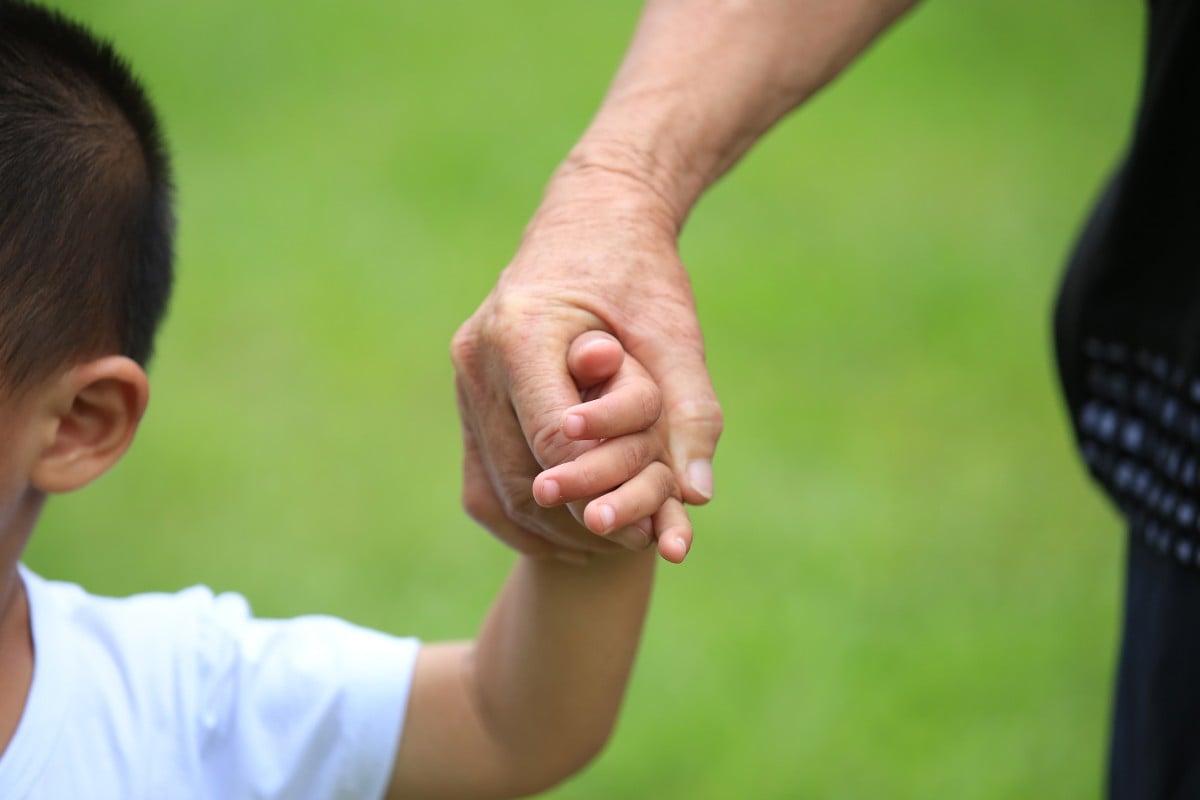
For generations in China grandparents have provided childcare, but some are no longer willing to do so for free. Photo: Shutterstock

The traditional role of grandparents in caring for China’s children has been called into question with two recent lawsuits sparking debate about whether seniors should be paid for their efforts.

Two grandmothers took their demands for compensation to court in separate cases which have highlighted the reliance of Chinese workers on their parents to provide childcare while they pursue professional advancement.

A woman in Mianyang, in the southwestern province of Sichuan, was awarded more than 68,000 yuan (US$9,500) by a local court after she sued her son and daughter-in-law for the costs of raising her nine-year-old grandchild, according to Red Star News.

The woman, identified only by her surname Wang, had been the child’s full-time carer for eight years after his parents left home to seek better-paid jobs elsewhere. Wang said she had taken care of most of her grandson’s living expenses and had decided to seek compensation when his parents said they were considering a divorce.

They should respect our contribution. Grandmother Wang, Sichuan province

“I only want to let them know through this lawsuit that it’s their obligation to raise their children,” she was reported as saying. “The young ones should not take it for granted that old people ought to look after their grandchildren. They should respect our contribution.”

Despite winning the case, she has not received a penny and the boy still lives with her.

In another case, three months ago, a Beijing court supported a woman’s demand for compensation for helping to raise her granddaughter since her birth in 2002.

The stories of the two women generated a public reflection on the Chinese way of childcare which, for generations, has involved leaving most – if not all – of the burden on grandparents.

One of 60 million: life as a ‘left-behind’ child in China

From a cultural perspective, it has been a matter of course in a country with a long history of several generations living under one roof, for grandparents to participate in child rearing, according to Xu Anqi, a researcher specialising in family studies at the Shanghai Academy of Social Sciences.

“Today, as people face fierce competition and great pressure from work, it’s still common to rely on their old parents to look after their children,” she said.

While rapid urbanisation in recent decades has broken up multi-generational households, Chinese elderly still take an active role in child rearing, with many relocating to their children’s cities to take on the job.

Millions more families do it the other way round – with parents leaving children in their hometown with the grandparents while they seek better paying jobs in the cities. In August last year, according to the Ministry of Civil Affairs, China had nearly 7 million “left behind kids”, as they are known.

My little granddaughter is adorable, and generally I enjoy doing all this.Li Xiujuan, grandmother

“Many grandmothers like me would joke that we are ‘unpaid nannies’, but at the same time we feel it’s our responsibility to help them out – they would be in financial stress if one of them quit or they hired a nanny,” said Li Xiujuan, who relocated from her hometown in the central province of Henan to Shanghai two years ago to help look after her granddaughter.
“I’m a 24-hour nanny for my grandkid. I prepare food for her, wash her clothes, attend early childhood classes with her, take her for a walk in the park twice a day, sleep beside her at noon and night …” she said.
“I never cared for my daughter when she was little like I do her daughter now. You know, it was also her grandmother who mainly took care of her daily life when she was young,” Li said, laughing.
“My little granddaughter is adorable, and generally I enjoy doing all this. The hard part is that I miss my friends and relatives back home. We don’t have friends here. I have plenty of things to do at home, but here, nothing but babysitting. People are polite, but it’s difficult to make new friends,” she said.
‘Left behind’ sisters cry when parents leave home to go to work
In a 2017 study of about 3,600 households in six major cities including Beijing and Guangzhou, the Chinese Society of Education found almost 80 per cent of surveyed households had at least one grandparent as carer before children began primary school.
The study also showed that 60 per cent of parents still relied on help from grandparents after children were old enough for primary school at the age of six.
Whether grandparents should be compensated for their efforts split a poll of 49,000 users conducted by social media platform Weibo in late June, with half believing that the older generation should be paid for raising their grandchildren. Only 2.3 per cent said babysitting grandchildren was “an unalterable principle” for the elderly.
“This arrangement could be well managed and improve blood ties if children reward the elderly in their own ways, such as sending gifts on holidays and taking them on trips,” Shanghai researcher Xu said.

I think what they need more is words of appreciation, which many of us have neglected. David Dai, Beijing parent

Grandmother Li agreed: “I think regular payment is a little awkward, but I do expect some kind of reward, like cash gifts on festivals and daily necessities as presents.”
David Dai, a 30-year-old white collar worker in Beijing, said how to reward grandparents for their contribution depended on the financial situation of each household.
“My parents are farmers – they are in good shape and not so old – in their late 50s, and if they didn’t come all the way from my hometown in Anhui to Beijing to look after my son, they would still be taking some odd jobs,” he said.
“Therefore, besides covering their living costs at my place, I give them cash gifts on their birthdays, the Spring Festival and other important occasions, because babysitting their grandchild means they lose the opportunity to work,” he added.
“In some families, the grandparents might have retired and have a good pension. They don’t lack money and enjoy spending time with their grandkids. I don’t think they need to be paid. I think what they need more is words of appreciation, which many of us have neglected,” Dai said.
China boosts childcare and maternal health services in bid to lift birth rate
But for those who never show any gratitude, their parents have every reason not to offer child rearing help or to demand payment, Xu said.
Zhang Tao, a lawyer at the Hiways Law Firm in Shanghai, noted that as long as at least one parent of a child was living, the grandparents had no obligation to help with childcare.
“The grandparents should be compensated for the money they have paid for the child’s education, medical fees, and accommodation from the beneficiary,” he said.
But whether they should be paid has become the latest controversy as more grandparents find it a burden.
Source: SCMP
05/07/2019

China still committed to getting rid of ‘big, foreign and weird’ place names

  • Civil affairs ministry reaffirms plan to eradicate names that ‘violate the core values of socialism, damage national confidence’
  • One man says it reminds him of the dark days of the Cultural Revolution
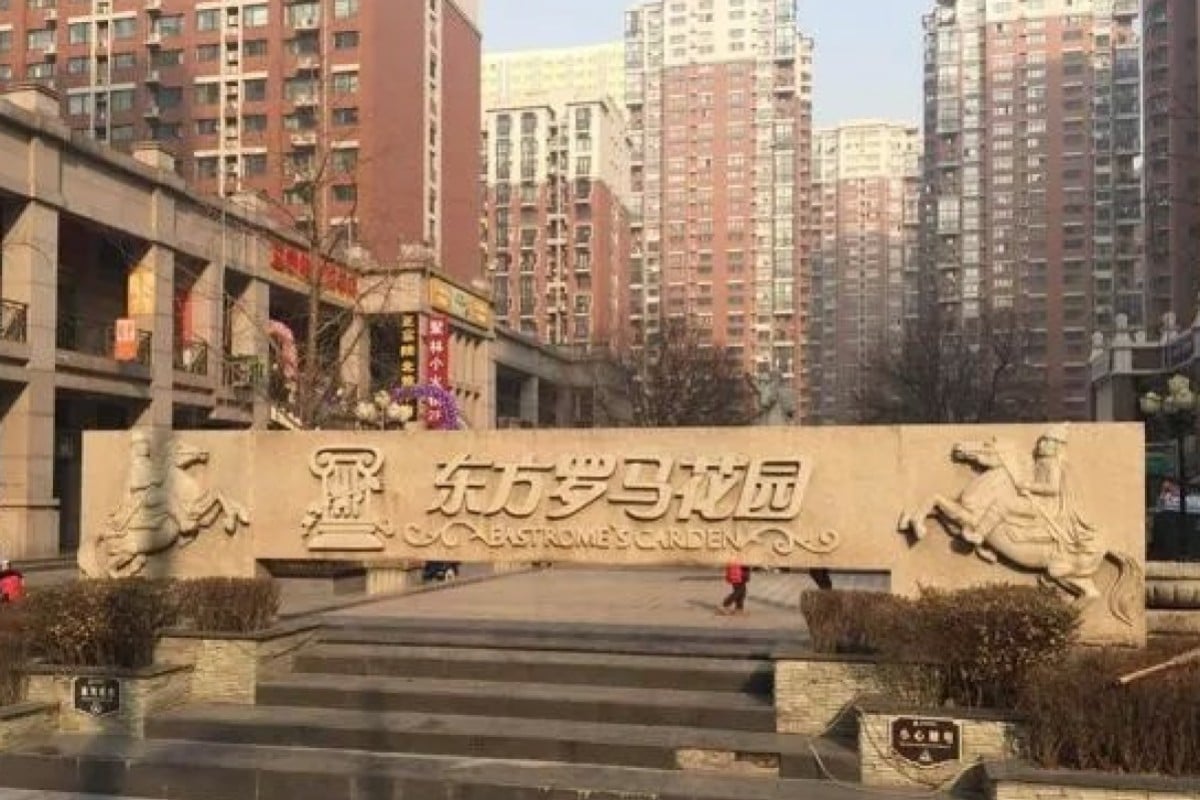
Beijing wants to eradicate place and property names, like “East Rome’s Garden”, that are influenced by foreign or “weird” words. Photo: Weibo
Beijing has reiterated its commitment to rid Chinese cities of “big, foreign and weird” property and place names, sparking a backlash from the public.
The campaign began last year when six government departments introduced a joint policy requiring provincial and county authorities to identify all such properties within their jurisdictions and rename them by the end of March.
On Friday, the Ministry of Civil Affairs reaffirmed its support for the plan, but reminded local governments to implement it “prudently and appropriately”.
Many Chinese properties, especially hotels and apartment buildings, incorporate famous foreign places, like Manhattan, California or Paris, into their names, but under the new rule they all have to go. According to a report by local newspaper Sanqin Metropolis Daily, in one city in Xian, the capital of Shaanxi province, at least 98 apartment projects, hotels, townships, communities and office towers need to be rebranded.
Many Chinese properties, like the Vienna International Hotel, incorporate famous foreign places into their names. Photo: Weibo

But for some people, the plan is nothing more than a waste of time and money.

“If projects are forced to change their names, what about the name on the property certificate, the enterprise licence and tax registration? Do they have to be changed too?” asked Zhu Yun, a woman who lives in Guangzhou, the capital of south China’s Guangdong province.

Hospital’s plan for ‘lucky’ Harvard babies gets poor marks

“And what’s the standard for the new names, and who’s going to do the renaming? It’s just a waste of people’s energy and money, and will do nothing for the national culture or confidence.”

Zhu Min, an octogenarian who also lives in Guangdong, said the scheme had echoes of a darker time in China’s history.

“It reminds me of the bad times of the Cultural Revolution,” he said. “At that time, a great number of streets, roads and stores were forced to rename, because they contained elements of old customs and old culture.”

The debate has also been raging online, with tens of thousands of people airing their views on social media.

“Cultural and national confidence is about respect for multiculturalism,” one person wrote on Weibo, China’s Twitter-like platform.

Tsinghua University sues kindergartens for using its name

Despite the outcry, the civil affairs ministry said the implementation of the scheme was “an important measure … to carry forward the national and local culture”, Xinhua reported.

“The relevant regulations and guidelines of the campaign should be strictly observed to prevent the campaign from being expanded in an arbitrary manner,” it said.

The plan announced last year stated that “big, foreign, weird” place names and those based on homonyms “violate the core values of socialism, damage national confidence, and affect the production and lives of the people, and must be rectified and cleaned up”.

Source: SCMP

05/04/2019

China Focus: Funeral reform fosters new trends in China

BEIJING, April 5 (Xinhua) — “The air and environment in the cemetery have been notably improved, with less people burning joss paper,” said Wang Fang, a tomb sweeper from Yinchuan, Ningxia Hui Autonomous Region.

This year’s Tomb Sweeping Day, which falls on Friday, witnesses more changes, as China has made various efforts to reform funeral traditions in recent years, and ecological burial and environmentally friendly tomb sweeping practices are increasingly popular.

GREENER BURIAL

In a tea garden in Hangzhou in east China’s Zhejiang Province, there stands a hidden cemetery where burial plots are built under tea trees in a bid to enlarge its green area as well as conserve land.

“It would be good to return to nature here after I pass away,” said a local resident surnamed Wu.

China has seen progress in ecological burials in recent years, especially in developed cities. The first model ecological cemetery of Beijing has been built in Babaoshan Revolutionary Cemetery, with a green coverage rate of nearly 90 percent.

Currently, ecological burials in first-tier cities, including Beijing, Shanghai and Guangzhou, takes up more than 20 percent of the total. It is expected that by 2020, the share of ecological burial across the country reach over 50 percent.

In addition, tomb sweeping practices have become greener. Most tomb sweepers would rather present flowers at tombstones than burn joss paper to pay tribute to their deceased families and friends.

On Tomb Sweeping Day, some cemeteries hold cultural activities, such as calligraphy and painting exhibitions as well as poetry recitals as an alternative to tomb sweeping.

LAND CONSERVATIVE

Besides the “tea garden burial,” other ecological burial methods in China include tree, flower, wall and sea burials.

Replacing traditional tombstones with trees and flower beds, putting urns on shelves in walls or just dropping ashes into the sea requires less or even no land.

“At first people said it was for those in financial difficulties to save money, but as time changes, the popularity of ecological burials have increased,” said Zhao Quansheng, manager of a Yinchuan-based cemetery.

“A customer told us that his father voluntarily asked for an ecological burial to conserve land,” Zhao said.

Non-profit cemeteries are also thriving in places of separate burial traditions. In Yishui County, east China’s Shandong Province, 110 non-profit cemeteries have been built, leading to conservation of large areas of land that otherwise would be utilized for burial sites.

Xue Feng, Party secretary of Yishui, said it used to take about 20 to 27 hectares of land to accommodate all the private tombs in the county, but now it only needs 10 percent of that.

LESS MONEY

China has beefed up funeral infrastructure and public services, with the number of funeral parlours and cemeteries reaching 1,760 and 1,420, respectively.

Since 2009, the Ministry of Civil Affairs has pushed forward fee reduction in basic public funeral services as well as other preferential policies, benefiting low-income groups. For example, commercial cemeteries in Chongqing, Gansu and Ningxia were required to set aside part of their burial sites as non-profits for those with financial difficulties.

“Now the whole funeral is free, including the urn and burial site, which is a great help for households with low incomes like us,” said Yuan Li, a rural resident from Yishui, where funeral services have been free of charge since 2017.

Xue said the fee-reduction policy could save the public nearly 200 million yuan (about 30 million U.S. dollars) annually.

The Ministry of Civil Affairs issued a pilot plan for funeral reform in 2017, and released guidelines with another 14 authorities on further reform in 2018.

“The funeral reforms help encourage fine and up-to-date practices and trends, and make contributions to land and ecological conservation,” said Ma Guanghai, sociology professor of Shandong University. “It is an important aspect of social progress.”

Source: Xinhua

23/02/2019

Over 30 mln elderly people benefit from subsidies, allowances

BEIJING, Feb. 23 (Xinhua) — Subsidies and allowances have brought benefits to more than 30 million elderly people, with allowance systems for the elderly established in all provinces nationwide, according to a Ministry of Civil Affairs statement.

Currently, subsidy systems for elderly care services have been built in 30 provinces and nursing subsidy systems in 29 provinces, said the statement.

The ministry has made continuous efforts to improve the service quality of elderly care homes. Checks in 2018 found 163,000 safety hazards and other problems, and 90 percent of them have been solved, it read.

People now have more elderly care choices. As of the end of 2018, there were nearly 30,000 elderly care institutions with 7.5 million beds across the country, it added.

In the future, the ministry will continue optimizing services of elderly care homes, push forward elderly care services in downtown areas of big cities and initiate renovation and upgrading of elderly care homes in rural areas, especially those in poverty-stricken areas, it read.

Source: Xinhua

10/02/2019

More than 100 million Chinese register to volunteer

CHINA-100 MILLION VOLUNTEERS (CN)

Volunteers carry bamboos for sale in Chishui, southwest China’s Guizhou Province, July 14, 2018. More than 100 million Chinese have registered as volunteers by the end of 2018, according to the Ministry of Civil Affairs. There have been about 12,000 organizations of volunteer services registered by the end of 2018, which provided more than 1.2 billion hours of service in total, according to a ministry statement published earlier. Chinese have taken an increasingly active part in volunteering in recent years, particularly at major international events such as the 2008 Beijing Olympic Games, the 2010 Shanghai World Expo, the G20 Hangzhou summit in 2016 and the Shanghai Cooperation Organization Qingdao summit in 2018. The country’s first regulation on volunteer services took effect in December 2017, clarifying the principles and establishing administrative institutions in this regard. With the number of volunteers growing fast, more efforts will be made to encourage their participation in public service and social governance, and improve the quality of their service, said a statement from the China Volunteer Service Federation. (Xinhua/Wang Changyu)

BEIJING, Feb. 9 (Xinhua) — More than 100 million Chinese have registered as volunteers by the end of 2018, according to the Ministry of Civil Affairs.

There have been about 12,000 organizations of volunteer services registered by the end of 2018, which provided more than 1.2 billion hours of service in total, according to a ministry statement published earlier.

Chinese have taken an increasingly active part in volunteering in recent years, particularly at major international events such as the 2008 Beijing Olympic Games, the 2010 Shanghai World Expo, the G20 Hangzhou summit in 2016 and the Shanghai Cooperation Organization Qingdao summit in 2018.

The country’s first regulation on volunteer services took effect in December 2017, clarifying the principles and establishing administrative institutions in this regard.

With the number of volunteers growing fast, more efforts will be made to encourage their participation in public service and social governance, and improve the quality of their service, said a statement from the China Volunteer Service Federation.

Source: Xinhua

Law of Unintended Consequences

continuously updated blog about China & India

ChiaHou's Book Reviews

continuously updated blog about China & India

What's wrong with the world; and its economy

continuously updated blog about China & India