Chindia Alert: You’ll be Living in their World Very Soon
aims to alert you to the threats and opportunities that China and India present. China and India require serious attention; case of ‘hidden dragon and crouching tiger’.
Without this attention, governments, businesses and, indeed, individuals may find themselves at a great disadvantage sooner rather than later.
The POSTs (front webpages) are mainly 'cuttings' from reliable sources, updated continuously.
The PAGEs (see Tabs, above) attempt to make the information more meaningful by putting some structure to the information we have researched and assembled since 2006.
Image copyright GETTY IMAGESImage caption An empty stretch of the road and Delhi Police barricades to screen commuters during lockdown, at Delhi Gate on April 16, 2020 in New Delhi, India.
India has eased some restrictions imposed as part of a nationwide lockdown to curb the spread of the coronavirus.
Most of the new measures are targeted at easing pressure on farming, which employs more than half the nation’s workforce.
Allowing farms to operate again has been seen as essential to avoid food shortages.
But some other measures announced last week, will not be implemented.
This includes the delivery of non-essential items such as mobile phones, computers, and refrigerators by e-commerce firms – the government reversed its decision on that on Sunday.
And none of the restrictions will be lifted in areas that are still considered “hotspots” for the virus – this includes all major Indian cities.
Domestic and international flights and inter-state travel will also remain suspended.
So what restrictions are being eased?
Most of the new measures target agricultural businesses – farming, fisheries and plantations. This will allow crops to be harvested and daily-wagers and others working in these sectors to continue earning.
To restore the supply chain in these industries, cargo trucks will also be allowed to operate across state borders to transport produce from villages to the cities.
Essential public works programmes – such as building roads and water lines in rural areas – will also reopen, but under strict instructions to follow social distancing norms. These are a huge source of employment for hundreds of thousands of daily-wage earners, and farmers looking to supplement their income.
Banks, ATMs, hospitals, clinics, pharmacies and government offices will remain open. And the self-employed – such as plumbers, electricians and carpenters – will also be allowed to work.
Some public and even private workplaces have been permitted to open in areas that are not considered hotspots.
But all businesses and services that reopen are expected to follow social distancing norms.
Who decides what to reopen?
State governments will decide where restrictions can be eased. And several state chief ministers, including Delhi’s Arvind Kejriwal, have said that none of the restrictions will be lifted in their regions.
Mr Kejriwal said the situation in the national capital was still serious and the decision would be reviewed after one week.
India’s most populous state, Uttar Pradesh, will also see all restrictions in place, as will the southern states of Andhra Pradesh, Telangana and Karnataka.
The southern state of Kerala, which has been widely acknowledged for its success in dealing with the virus, has announced a significant easing of the lockdown in areas that it has demarcated as “green” zones.
This includes allowing private vehicular movement and dine-in services at restaurants, with social distancing norms in place. However, it’s implementing what is known as an “odd-even” scheme – private cars with even and odd number plates will be allowed only on alternate days, to limit the number of people on the road.
NEW DELHI (Reuters) – Prime Minister Narendra Modi’s ruling party could lose a quarter of its seats in India’s parliament with an electoral wipeout in the most populous state, if the Congress Party were to join an opposition alliance there, an opinion poll showed on Wednesday.
Modi’s Bharatiya Janata Party won 282 seats in the 545-seat parliament in the last election, including 73 out of the 80 seats from Uttar Pradesh, a giant northern state of more than 200 million people.
But the India Today-Karvy Insights Mood of the Nation poll forecast that the number of seats held by the BJP in the state could plummet to just five, if Congress were to join an alliance set up by other opposition groups. The next general election is due by May.
The shock poll comes after the BJP lost elections in five state assemblies late last year, including three that it had controlled, largely because of rural anger about low farm incomes tied to weak crop prices.
To achieve such a wipeout in Uttar Pradesh, the opposition parties would have to agree to field a single candidate in each constituency, according to the poll. Congress has so far ruled that out, although even without Congress the other opposition parties would still inflict a sizeable defeat on the BJP.
An alliance of three Uttar Pradesh parties – Samajwadi Party (SP), Bahujan Samaj Party (BSP) and Rashtriya Lok Dal – could win 58 seats without Congress, the poll showed. BJP and its ally in the state, Apna Dal, would win 18 seats in that scenario and Congress would have 4.
“The Congress party will fight in all the seats on its own, but a post-poll alliance with SP-BSP is in the offing,” Congress spokesman Sanjay Jha told Reuters. “We are all ideologically compatible and are committed to defeating the fascist corrupt BJP.”
The BJP dismissed the survey, for which a total of 2,478 people were polled in Uttar Pradesh. Opinion polls have a mixed record in the country of 1.3 billion people, where regional issues often overshadow national concerns.
“It’s a poll even before the election has been announced and before parties are actually involved in electioneering,” BJP spokesman Nalin Kohli said. “In any case, it is painting a rather pessimistic figure for the BJP, which we believe will not be the situation in any circumstance.”
Political analysts, however, say the coming together of the SP and BSP, which have both separately governed Uttar Pradesh and mainly represent Hindus of the lower castes and Muslims, could pose a formidable challenge to the ruling party.
Following the state election losses, Modi is considering a series of vote-catching measures, including directly transferring money to farmers, which may cost more than 1 trillion rupees ($14 billion), according to government sources.
“It won’t be possible for the BJP to fracture this alliance,” said Badri Narayan Tiwari, a political analyst based in the Uttar Pradesh city of Prayagraj.
On Wednesday, the government appointed railways minister Piyush Goyal as interim finance minister while Arun Jaitley, also a top lieutenant of Modi, receives medical treatment in the United States ahead of an interim budget on Feb. 1.
The Uttar Pradesh survey was conducted before Congress appointed its President Rahul Gandhi’s charismatic younger sister, Priyanka Gandhi Vadra, to a senior party position that party officials say will help to energise its campaign.
The poll and Jaitley’s medical condition could impact Indian markets on Thursday.


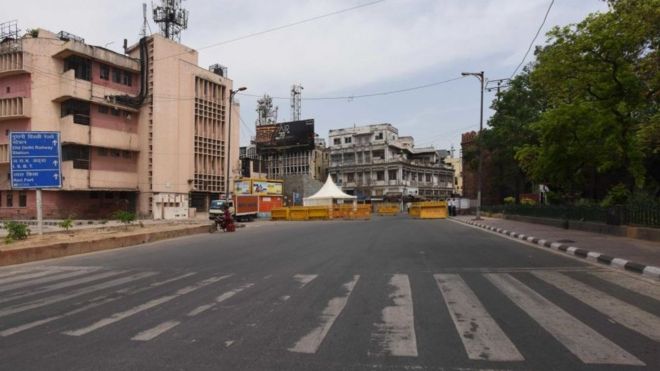 Image copyright GETTY IMAGES
 CHINDIA ALERT: You'll be living in their world, very soon