Archive for ‘mumbai’

18/03/2020

Coronavirus: What India can learn from the deadly 1918 flu

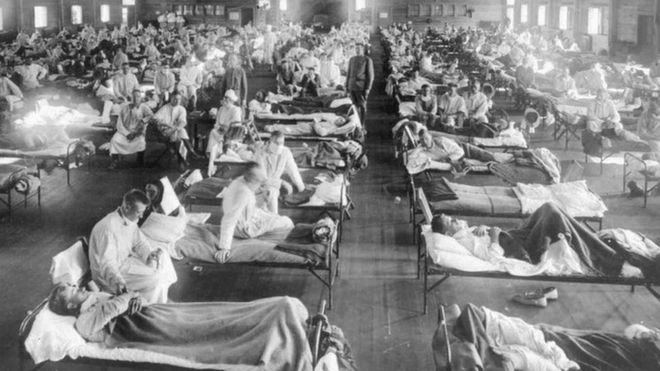
In this 1918 photograph, influenza victims crowd into an emergency hospital at Camp Funston, a subdivision of Fort Riley in KansasImage copyright NATIONAL MUSEUM OF HEALTH AND MEDICINE
Image caption The 1918 flu pandemic is believed to have infected a third of the population worldwide

All interest in living has ceased, Mahatma Gandhi, battling a vile flu in 1918, told a confidante at a retreat in the western Indian state of Gujarat.

The highly infectious Spanish flu had swept through the ashram in Gujarat where 48-year-old Gandhi was living, four years after he had returned from South Africa. He rested, stuck to a liquid diet during “this protracted and first long illness” of his life. When news of his illness spread, a local newspaper wrote: “Gandhi’s life does not belong to him – it belongs to India”.

Outside, the deadly flu, which slunk in through a ship of returning soldiers that docked in Bombay (now Mumbai) in June 1918, ravaged India. The disease, according to health inspector JS Turner, came “like a thief in the night, its onset rapid and insidious”. A second wave of the epidemic began in September in southern India and spread along the coastline.

The influenza killed between 17 and 18 million Indians, more than all the casualties in World War One. India bore a considerable burden of death – it lost 6% of its people. More women – relatively undernourished, cooped up in unhygienic and ill-ventilated dwellings, and nursing the sick – died than men. The pandemic is believed to have infected a third of the world’s population and claimed between 50 and 100 million lives.

Gandhi and his febrile associates at the ashram were lucky to recover. In the parched countryside of northern India, the famous Hindi language writer and poet, Suryakant Tripathi, better known as Nirala, lost his wife and several members of his family to the flu. My family, he wrote, “disappeared in the blink of an eye”. He found the Ganges river “swollen with dead bodies”. Bodies piled up, and there wasn’t enough firewood to cremate them. To make matters worse, a failed monsoon led to a drought and famine-like conditions, leaving people underfed and weak, and pushed them into the cities, stoking the rapid spread of the disease.
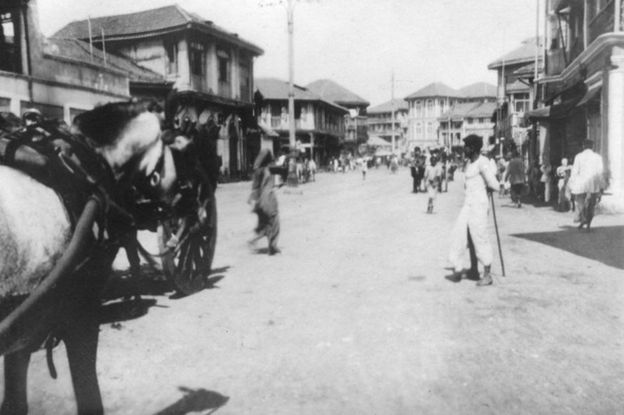
A street in Mumbai (Bombay), India, c1918.Image copyright PRINT COLLECTOR
Image caption Bombay was one of the worst hit cities by the 1918 pandemic

To be sure, the medical realities are vastly different now. Although there’s still no cure, scientists have mapped the genetic material of the coronavirus, and there’s the promise of anti-viral drugs, and a vaccine. The 1918 flu happened in the pre-antibiotic era, and there was simply not enough medical equipment to provide to the critically ill. Also western medicines weren’t widely accepted in India then and most people relied on indigenous medication.

Yet, there appear to be some striking similarities between the two pandemics, separated by a century. And possibly there are some relevant lessons to learn from the flu, and the bungled response to it.

The outbreak in Bombay, an overcrowded city, was the source of the infection’s spread back then – this something that virologists are fearing now. With more than 20 million people, Bombay is India’s most populous city and Maharashtra, the state where it’s located, has reported the highest number of coronivirus cases in the country.

By early July in 1918, 230 people were dying of the disease every day, up nearly three times from the end of June. “The chief symptoms are high temperature and pains in the back and the complaint lasts three days,” The Times of India reported, adding that “nearly every house in Bombay has some of its inmates down with fever”. Workers stayed away from offices and factories. More Indian adults and children were infected than resident Europeans. The newspapers advised people to not spend time outside and stay at home. “The main remedy,” wrote The Times of India, “is to go to bed and not worry”. People were reminded the disease spread “mainly through human contact by means of infected secretions from the nose and mouths”.

“To avoid an attack one should keep away from all places where there is overcrowding and consequent risk of infection such as fairs, festivals, theatres, schools, public lecture halls, cinemas, entertainment parties, crowded railway carriages etc,” wrote the paper. People were advised to sleep in the open rather than in badly ventilated rooms, have nourishing food and get exercise.

“Above all,” The Times of India added, “do not worry too much about the disease”.
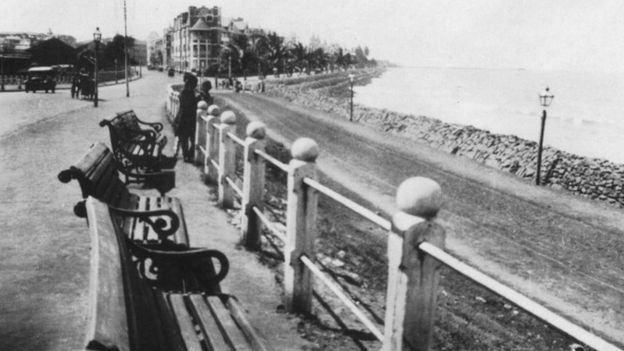
Colaba, Bombay, India, c1918.Image copyright PRINT COLLECTOR

Colonial authorities differed over the source of infection. Health official Turner believed that the people on the docked ship had brought the fever to Bombay, but the government insisted that the crew had caught the flu in the city itself. “This had been the characteristic response of the authorities, to attribute any epidemic that they could not control to India and what was invariably termed the ‘insanitary condition’ of Indians,” observed medical historian Mridula Ramanna in her magisterial study of how Bombay coped with the pandemic.

Later a government report bemoaned the state of India’s government and the urgent need to expand and reform it. Newspapers complained that officials remained in the hills during the emergency, and that the government had thrown people “on the hands of providence”. Hospital sweepers in Bombay, according to Laura Spinney, author of Pale Rider: The Spanish Flu of 1918 and How It Changed the World, stayed away from British soldiers recovering from the flu. “The sweepers had memories of the British response to the plague outbreak which killed eight million Indians between 1886 and 1914.”
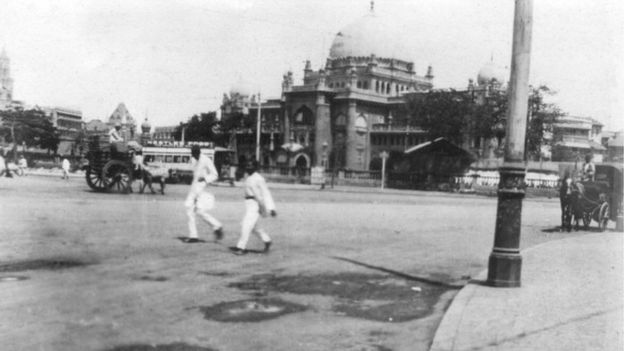
Lady Harding's war hospital, Bombay, India, c1918Image copyright PRINT COLLECTOR
Image caption The hospitals in Bombay were overwhelmed by patients

“The colonial authorities also paid the price for the long indifference to indigenous health, since they were absolutely unequipped to deal with the disaster,” says Ms Spinney. “Also, there was a shortage of doctors as many were away on the war front.”

Eventually NGOs and volunteers joined the response. They set up dispensaries, removed corpses, arranged cremations, opened small hospitals, treated patients, raised money and ran centres to distribute clothes and medicine. Citizens formed anti-influenza committees. “Never before, perhaps, in the history of India, have the educated and more fortunately placed members of the community, come forward in large numbers to help their poorer brethren in time of distress,” a government report said.

Now, as the country battles another deadly infection, the government has responded swiftly. But, like a century ago, civilians will play a key role in limiting the virus’ spread. And as coronavirus cases climb, this is something India should keep in mind.

Source: The BBC
16/03/2020

As coronavirus spreads in Africa, countries move quickly to contain disease with travel bans, closures

  • South Africa, Kenya latest to halt arrivals from ‘high-risk’ countries as cases across the continent double over the weekend
  • Concerns are growing over whether health care systems in some African nations will be able to cope
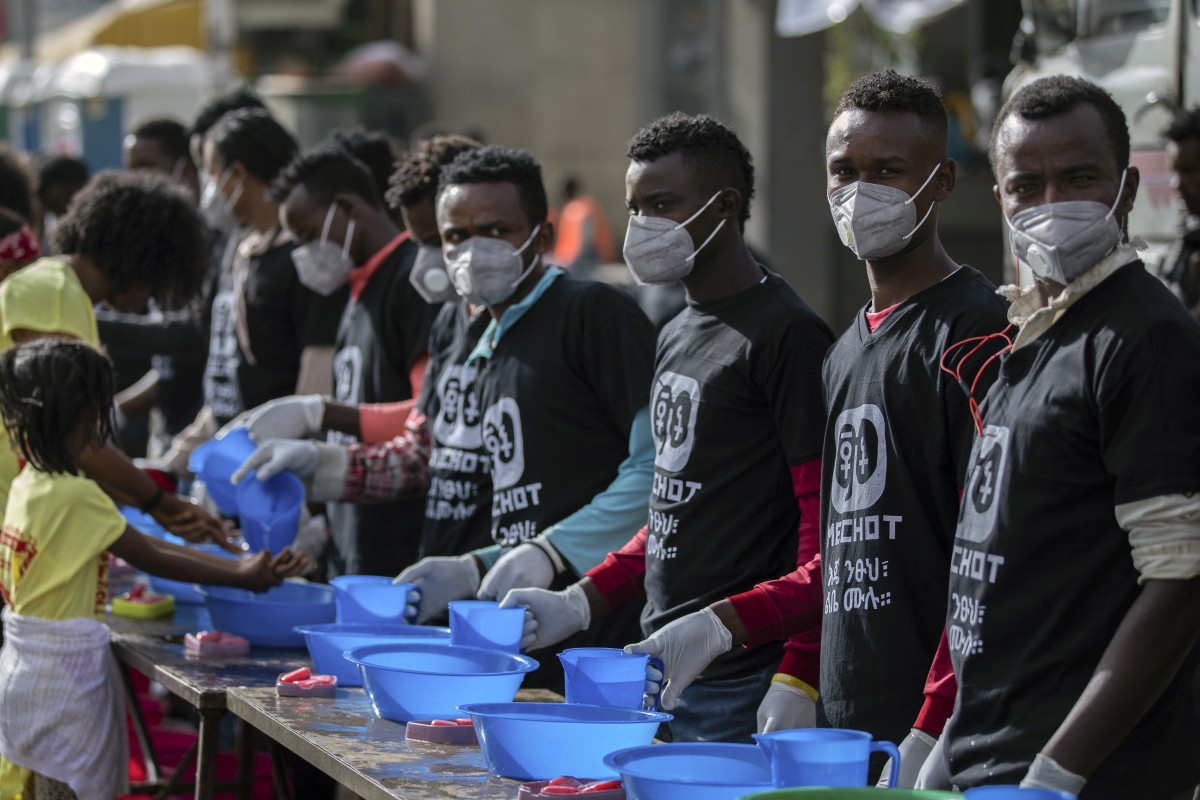
Masked volunteers provide soap and water for participants to wash their hands against the new coronavirus at a women’s 5km fun run in Addis Ababa, Ethiopia on Sunday. Photo: AP
Travel bans and school closures were announced in South Africa and Kenya on Sunday, as concerns grew over the capacity of the continent’s fragile health systems to cope with the spread of the deadly new coronavirus, with more than a dozen countries reporting their first cases.

South African President Cyril Ramaphosa declared a national state of disaster, banning arrivals by foreign nationals from high-risk countries including Italy, Iran, South Korea, Spain, Germany, the United States, Britain and China, effective Wednesday.

“We have cancelled visas to visitors from those countries from today and previously granted visas are hereby revoked,” Ramaphosa said in a televised address on Sunday evening, adding that any foreign national who had visited high-risk countries in the past 20 days would be denied a visa.

South African schools will also be closed from Wednesday until after the Easter weekend. Gatherings of more than 100 people have been banned and mass celebrations for Human Rights Day and other events cancelled. “Never before in the history of our democracy has our country been confronted with such a severe situation,” Ramaphosa said.

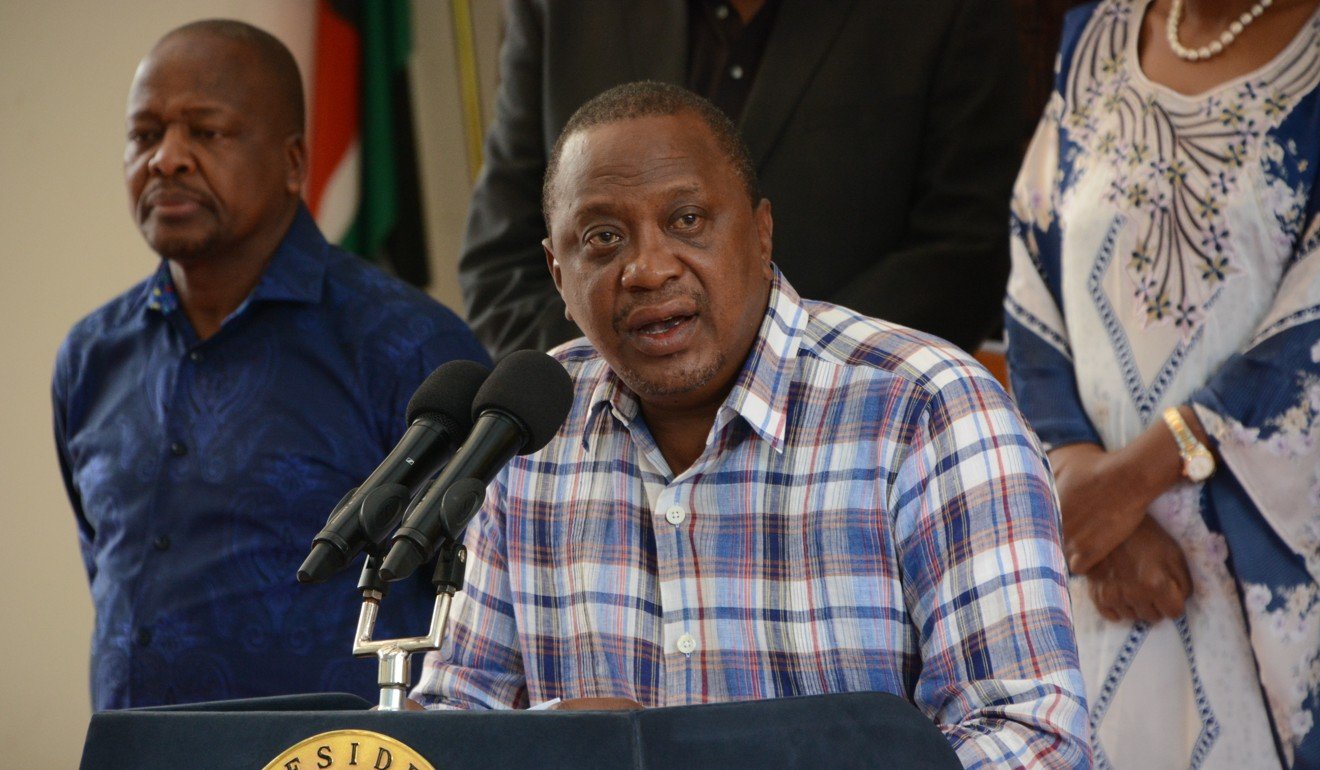
In Kenya, where three cases of Covid-19 – the disease caused by the new coronavirus – have now been confirmed, President Uhuru Kenyatta suspended travel from any country with reported infections. Only Kenyan citizens and foreigners with valid residency permits would be allowed entry, provided they proceeded to self-quarantine or a government-designated quarantine facility, he said.
Kenyan President Uhuru Kenyatta reports two more cases of coronavirus in the country, bringing its total number of cases to three. Photo: DPA
Kenyatta also suspended learning in all educational institutions with immediate effect. “Some of the measures may cause inconvenience, but I want to assure you they are designed to ensure that we effectively contain the spread of the virus,” he said.

Kenya and South Africa join Ghana, Rwanda and Morocco in implementing travel restrictions or outright bans, while others are closing churches, museums, sporting activities, nightclubs and tourist attractions in a bid to curb the spread of the disease.

The continent was largely spared in the early days of the outbreak but has now recorded more than 300 cases and six deaths. Algeria, Morocco, Senegal and Tunisia all reported more new cases over the weekend, which saw numbers of new infections across Africa more than double in just two days.

As numbers rise, the Africa Centres for Disease Control and Prevention (CDC) has said there are around a dozen countries on the continent without the capacity to do their own testing.

They will have to send samples to countries like South Africa, which itself is struggling to contain the virus, with confirmed cases doubling to 61 on Sunday, a day after 114 of its citizens were repatriated from the central Chinese city of Wuhan, the original epicentre of the outbreak and the first to be placed in lockdown.

John Nkengasong, director of the Africa CDC, warned that the risk of other African countries detecting new cases of Covid-19 remained high. “Our strategy is clear: we want to capacitate the member states, so they can quickly detect and mitigate the effects of the disease in Africa, and, if widespread transmission occurs, prevent severe illness and death,” he said.

The World Health Organisation has already warned that critical gaps remain in the capacity of many African nations to trace, detect and treat the disease. On Friday, the WHO Africa office said it was “striving to help member states fill these gaps” but warned of global shortages in personal protective equipment (PPE) including gloves, masks and hand sanitiser.

Major coronavirus outbreak in Africa ‘just a matter of time’

13 Mar 2020

WHO said its first blanket distribution of PPEs, to 24 African countries, had been completed and another wave of distributions was planned.

“With Covid-19 officially declared a pandemic, all countries in Africa must act,” said Dr Matshidiso Moeti, WHO regional director for Africa. “Every country can still change the course of this pandemic by scaling up their emergency preparedness or response.

“Cases may still be low in Africa and we can keep it that way with robust all-of-government actions to fight the new coronavirus.”

The 55 member states of the African Union have suspended meetings until May, while the six countries that make up the East African Community have suspended all planned meetings until further notice.

Coronavirus delays Nigeria’s US$1.5 billion Chinese-built rail project

7 Mar 2020

In Algeria – one of the worst-hit North African countries, with 48 cases and four deaths, as of Monday morning – all schools and universities have been closed, while Senegal, with 24 cases to date, has closed schools and cancelled its Independence Day festivities on April 4, which this year marks 60 years since its independence from France. Cruise ships have also been banned from docking in Senegal.

On Sunday, Rwanda closed all its places of worship and suspended large gatherings such as weddings and sporting activities. Schools and universities in the central African country are also closed. National airline RwandAir has also suspended flights between the capital Kigali and Mumbai until April 30.

This is in addition to earlier suspensions of its routes with Tel Aviv and the southern Chinese city of Guangzhou, which remain in place until further notice.

While most African airlines have suspended flights to cities in mainland China, Ethiopian Airlines has continued flying to most of its destinations, describing its China routes as among its most profitable. Nevertheless, chief executive Tewolde GebreMariam last week said coronavirus fears had cut demand by a fifth on most of its routes.

Source: Reuters

16/03/2020

Mumbai is India’s most ‘forgetful’ city, says Uber

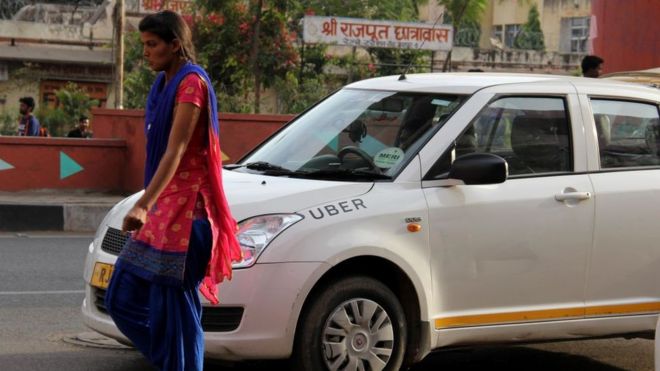
A lady walks past an Uber cab in IndiaImage copyright NURPHOTO
Image caption Uber’s annual Lost & Found Index lists items that passengers leave behind

Mumbai is India’s most “forgetful” city, according to Uber’s Lost & Found Index 2020, followed by Kolkata (formerly Calcutta) and Allahabad.

This is an annual database compiled by the cab aggregator, based on what passengers in different countries leave behind in Uber’s taxis.

Phones top the list in India, which also includes items as unusual as artificial acrylic teeth.

Uber found 3 August 2019 to be the “most forgetful” day in its survey.

India’s capital, Delhi, ranked fourth among the 10 most forgetful cities, followed by the southern city of Bangalore at number 5.

The list of the top 20 most unique lost items also includes mangoes, safari suits, brooms, military shoes and copies of Becoming, Michelle Obama’s memoir.

Uber found that Thursdays and Fridays are the most “forgetful” days of the week, and afternoons – between 13:00 and 15:00 – are the most likely hours when people lose things.

Media caption Why Uber Eats couldn’t deliver in India

The data suggests that people are most likely to leave behind a guitar on Saturdays and Sundays, and their lunch boxes on Tuesdays, Wednesdays and Thursdays.

Source: The BBC
22/02/2020

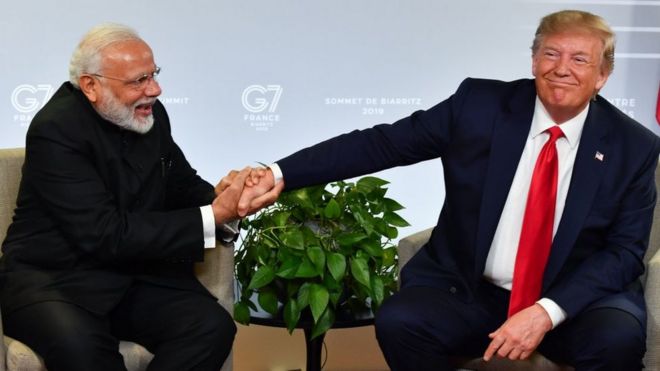
Trump in India: A brief history of US presidents’ trips

Indian Prime Minister Narendra Modi (L) and US President Donald Trump shakes hands as they speak during a bilateral meeting in Biarritz, south-west France on August 26, 2019.Image copyright GETTY IMAGES
Image caption Mr Trump is making his first official visit to India

US President Donald Trump is expecting a raucous welcome on his first official state visit to India on Monday and Tuesday.

He follows a long line of leaders who have made the journey. Some of his predecessors were greeted enthusiastically; others stumbled through diplomatic gaffes; one even had a village named after him.

Can history be a guide to how this diplomatic tryst might go? Here’s a brief look at past visits, ranked in order of how they went.

The good: President Eisenhower

Let’s begin at the beginning.

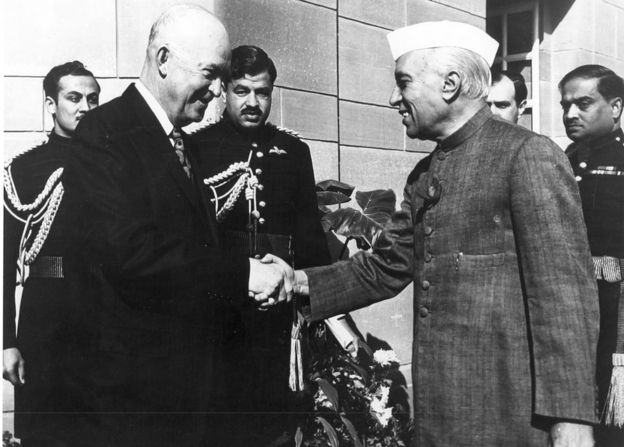
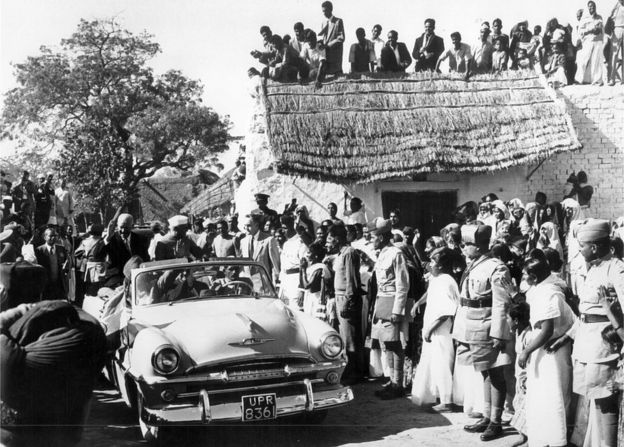
Dwight D Eisenhower, the first US president to visit India, was greeted with a 21-gun salute when he landed in the national capital, Delhi, in December 1959. Huge crowds lined the streets to catch a glimpse of the World War Two hero in his open-top car – Mr Trump is expecting a similar reception in Ahmedabad city, where he will be doing a road show.

President Eisenhower (L) with Prime Minister Jawaharlal NehruImage copyright US EMBASSY ARCHIVES
Image caption Dwight D Eisenhower, pictured with Prime Minister Jawaharlal Nehru, was the first US president to make the trip

The warmth between President Eisenhower and Indian Prime Minister Jawaharlal Nehru helped during what was a rocky phase in US-India ties. This was early in the Cold war, when the US and Pakistan had become become close allies, and India insisted on staying neutral or “non-aligned”. Like today, relations with China were at the core of the India-US equation, with Washington pressuring Delhi to take an aggressive stance with Beijing on the issue of Tibet.

But, on the whole, Eisenhower’s four-day trip was billed a success. And nearly every US president on a state visit to India has emulated his itinerary: he laid flowers at Mahatma Gandhi’s memorial, took in the splendour of the Taj Mahal, addressed parliament and spoke at Delhi’s iconic Ramlila grounds, which, according to one news report, attracted one million people.

When he left, Nehru said he had taken with him “a piece of our heart”.

President Eisenhower drove in open car to small village to get a glimpse of rural India on December 13, 1959.Image copyright US EMBASSY ARCHIVES
Image caption President Eisenhower was greeted by large crowds
Presentational white spaceThe game-changer: Bill Clinton

If there was a game-changing visit, it would be Bill Clinton’s in March 2000 with Prime Minister Atal Bihari Vajpayee. Mr Clinton’s arrival came after a two-decade lull – neither Ronald Reagan nor George Bush Snr made the journey East. It came at a tricky time as Washington had imposed sanctions on Delhi following its 1999 test of a nuclear bomb.

But, according to Navtej Sarna, a former Indian Ambassador to the US, the five-day trip was “a joyous visit”. It included stops in Hyderabad, a southern city that was emerging as a tech hub, and Mumbai, India’s financial capital. “He came and saw the economic and cyber potential of India, and democracy in action,” says Mr Sarna.

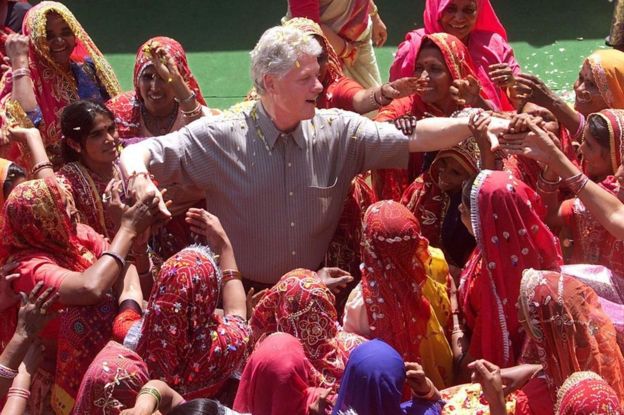
US President Bill Clinton shakes hands with local villagers after touring Nayla Village 23 March 2000.Image copyright GETTY IMAGES
Image caption Bill Clinton’s visit was described as “joyous”
Mr Clinton also danced with villagers, took a tiger safari and sampled Delhi’s famously creamy black dal (lentils) at a luxury hotel that has since been associated with the president.

The country’s reaction is perhaps best expressed in this New York Times headline: “Clinton fever – a delighted India has all the symptoms.”

The nuclear deal: George W Bush

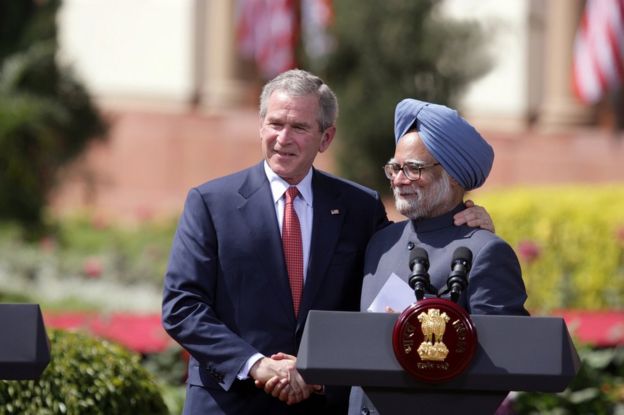
George W Bush, as Forbes magazine once put it, was the “best US president India’s ever had”. His three-day visit in March 2006 was a highlight in the two countries’ strategic relationship – especially in matters of trade and nuclear technology, subjects they have long wrangled over. His strong personal dynamic with Prime Minister Manmohan Singh was hard to miss – after he left office, Mr Bush, a keen artist, even painted a portrait of Mr Singh.

The two leaders are credited for a historic but controversial nuclear deal, which was signed during Mr Bush’s visit. It brought India, which had for decades refused to sign the Nuclear Non-Proliferation Treaty (NPT), out of isolation. Energy-hungry India got access to US civil nuclear technology in exchange for opening its nuclear facilities to inspection.

George W Bush (L) with Manmohan Singh (R)Image copyright US EMBASSY ARCHIVES
Image caption George W Bush and Manmohan Singh had a very good relationship
However, while the visit was substantive, it was not as spectacular as others – there was no trip to the Taj, nor an address to parliament. But the timing was important. Anti-US sentiment over the invasion of Iraq was running high – left-wing MPs had staged a protest against Mr Bush’s visit, and there were demonstrations in other parts of India.

Double visit: Barack Obama

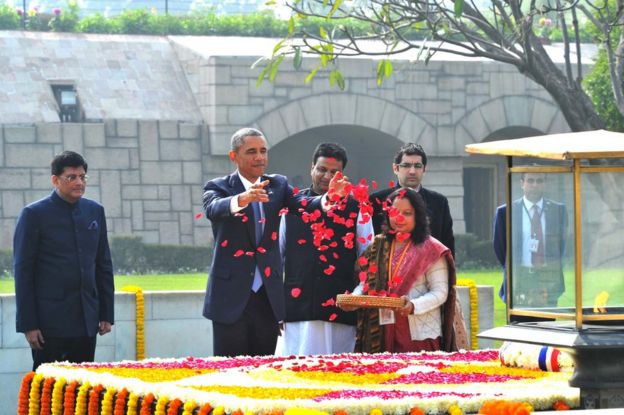
Barack Obama was the only president to make two official visits. First, in 2010 with Prime Minister Manmohan Singh, and then in 2015 with Prime Minister Narendra Modi.

On his first visit – in a break from the past – he landed in Mumbai, instead of Delhi, with a large trade delegation. This was not just about economic ties but a show of solidarity following the Mumbai terror attacks of 2008, which killed 166 people. Mr and Mrs Obama even stayed at the Taj Mahal hotel, one of the main targets.

It was significant that the US president declared support for India to join a reformed and expanded UN Security Council, says Alyssa Ayres, a former US deputy assistant secretary of state for South Asia. “That all these years later nothing has changed in the UN system is another matter, but that was a major policy shift for the United States.”

US President Barack Obama paying floral tributes at the samadhi of Mahatma Gandhi at Rajghat in Delhi.Image copyright US EMBASSY ARCHIVES
Image caption Barack Obama visited India twice
Mr Obama returned in 2015 as chief guest at India’s Republic Day celebrations, at PM Modi’s invitation. Trade, defence and climate change were at the heart of the talks. The trip also emphasised an Indo-Pacific strategy, where both leaders expressed unease over Beijing’s provocations in the South China Sea.

The not-so-good: Jimmy Carter

Although Jimmy Carter’s two-day visit in 1978 was a thaw in India-US relations, it was not free of hiccups.

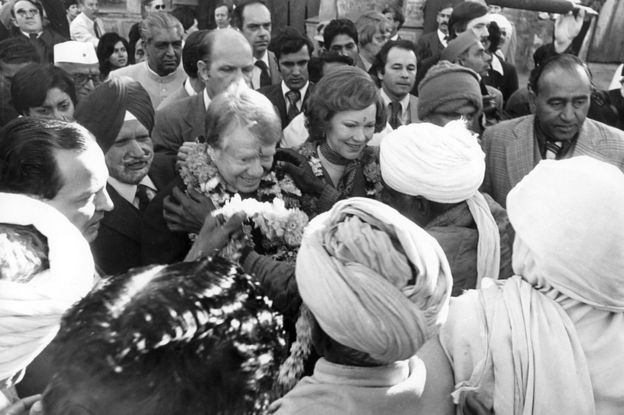
With some 500 reporters in tow, Carter followed a packed itinerary: he met Prime Minister Morarji Desai, addressed a joint session of parliament, went to the Taj Mahal, and dropped by a village just outside Delhi.

The village, Chuma Kheragaon, had a personal connection: Carter’s mother, Lillian, had visited here when she was in India as a member of the Peace Corps in the late 1960s. So when Carter and his wife, Rosalynn, made the trip, they gave the village money and its first television set. It was even renamed “Carterpuri”, a moniker it still holds.

Jimmy Carter being greeted by villagers of 'Carterpuri'Image copyright US EMBASSY ARCHIVES
Image caption Jimmy Carter being greeted by villagers of ‘Carterpuri’
But beyond the photo-ops, India and the US were sparring. India was building its nuclear programme, and had conducted its first test in 1974. The US wanted India to sign the NPF, which sought to stop the spread of nuclear weapons. But India refused, saying the agreement discriminated against developing countries.

In a leaked conversation that made headlines and threatened to derail the visit, Mr Carter promised his Secretary of State, Cyrus Vance, a “very cold and very blunt” letter to Desai. The two leaders signed a declaration, promising greater global co-operation, but Carter left India without the assurances he had hoped for.

The ugly: Richard Nixon

Richard Nixon was no stranger to India when he arrived in August 1969 for a day-long state visit. He had been here as vice-president in 1953, and before that on personal trips. But, by all accounts, he wasn’t a fan.

“Nixon disliked Indians in general and despised [Prime Minister] Indira Gandhi,” according to Gary Bass, author of Blood Telegram: Nixon, Kissinger and a Forgotten Genocide. And, he adds, the feeling was said to be mutual.

This was also at the height of the Cold War, and India’s non-alignment policy “appalled” American presidents. Mr Bass says that under Gandhi, India’s neutrality had turned into a “noticeably pro-Soviet foreign policy”.

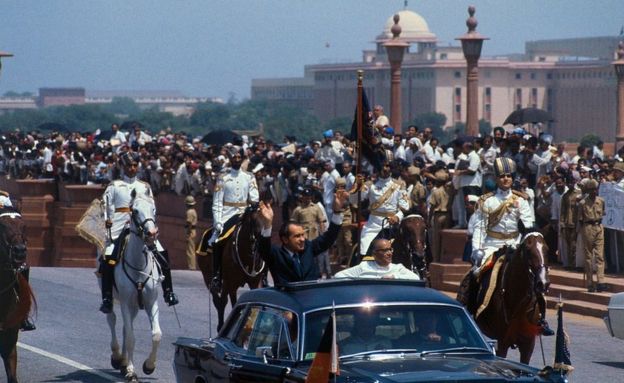
President Richard Nixon waves to crowds as he rides in open car with the acting president of India, Mohammad Hidyatullah, in motorcade from airport upon arrival here July 31.Image copyright GETTY IMAGES
Image caption Richard Nixon waves to the crowds alongside Mohammad Hidyatullah, India’s acting president
The relationship only turned frostier after the trip as India backed Bangladesh (then East Pakistan) in its fight for independence from Pakistan, a close American ally. The differences were laid bare when Gandhi visited the White House in 1971. Declassified state department cables later revealed that Nixon referred to her as an “old witch”.

And the future: Donald Trump

The US and India have certainly had their ups and downs, but during the last official visit in 2015, Mr Obama and Mr Modi signed a declaration of friendship: “Chalein saath saath (Let’s move forward together)…” it began.

President Trump’s visit will take the relationship forward, but it’s unclear how.

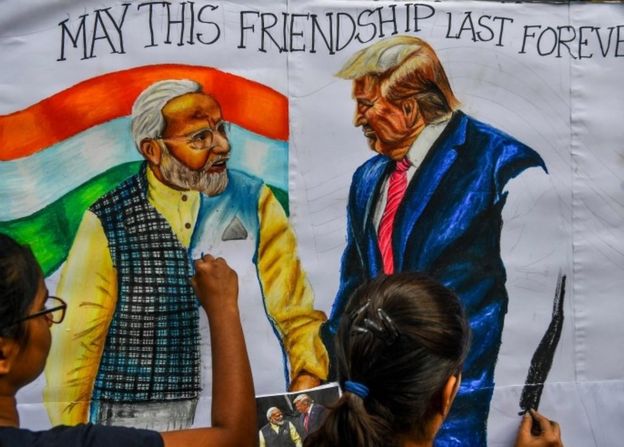
Students paint on canvas faces of US President Donald Trump (R) and India"s Prime Minister Narendra Modi, in the street in Mumbai on February 21, 2020, ahead of the visit of US President in IndiaImage copyright AFP

His arrival in Ahmedabad, the main city in PM Modi’s home state of Gujarat, followed by a big arena event, is expected to draw a massive crowd. It will echo President Eisenhower’s rally in Delhi years ago, perhaps cementing the personal ties between the two leaders.

But while Mr Trump’s trip will be packed with pageantry, it could be light on policy. Unlike other presidential visits, this one is not expected to yield concrete agreements, with the trade deal Mr Trump so badly wants looking unlikely.

Source: The BBC
14/02/2020

India orders telcos to pay dues now, after top court threatens contempt

NEW DELHI/MUMBAI (Reuters) – The Indian government ordered mobile carriers on Friday to immediately pay billions of dollars in dues after the Supreme Court threatened the companies and officials with contempt proceedings for failing to implement an earlier ruling.

The court, which had ordered companies including Vodafone Idea (VODA.NS) and Bharti Airtel (BRTI.NS) to pay 920 billion Indian rupees ($13 billion) in overdue levies and interest by Jan. 23, last month rejected petitions seeking a review of the order it issued back in October.

“This is pure contempt, 100% contempt,” Justice Arun Mishra told lawyers for the companies and the government on Friday.

Later in the day, the Department of Telecommunications called for “immediate payments” from the telcos. A second order instructed relevant offices to stay open on Saturday to “facilitate the Telecom Licensees to make payments or contact them with respect to any matter related to that.”

The companies had contested the government’s definition of revenues subject to tax and Vodafone Idea and Bharti Airtel both flagged risks to their ability to continue as ongoing concerns following the October order. They did not immediately respond to calls seeking comment on the new ruling.

The companies, along with Reliance Jio, which is backed by Asia’s richest man, Mukesh Ambani, control more than 90% of India’s mobile market.

Jio, a relatively new entrant which has disrupted the market with its cut-price offerings, has paid its dues.

Shares in Vodafone Idea, in which Britain’s Vodafone Group (VOD.L) owns a sizable stake, closed down 24.4% after the order. The company’s future is in doubt, with Vodafone Group having said it has no plans to commit any more equity into India.

Shares in Bharti Airtel rose 4.64%, as many investors expect it will be able to survive the payment, leaving it and Jio with a potential opportunity to win market share and enjoy an effective duopoly in the sector. In a letter to the government, Bharti Airtel said it would deposit 100 billion rupees by Thursday and pay the balance “well before” the next hearing on March 17.

Justice Mishra rebuked the government for having failed to implement the court order on collecting the dues. “A desk officer in the government stays a Supreme Court order … Is there any law left in the country?,” he said.

“We will draw up contempt against everyone,” he added, implying that both company and government officials could be fined or jailed if the dues are not paid by March 17.

Analysts said the court’s move could harm the government more broadly, as well as the companies.

“It can’t be in anybody’s interest if a company as high profile as Vodafone Idea shuts shop. Also, the government’s own dues from the sector are at risk,” said Mahesh Uppal, director at ComFirst, a telecom consultancy firm.

BANKS BURDENED

Indian banks are burdened with nearly $140 billion of bad loans and face another huge hit if Vodafone Idea is forced into bankruptcy.

Banks in India are owed roughly 300 billion rupees by Vodafone Idea, according to a Macquarie report from last year.

“Banks were yet to make additional provisioning for these loans as they were expecting some sort of a relief from the court,” said Siddharth Purohit, an analyst at SMC Institutional Equities.

Banks that have the highest exposure to Vodafone Idea include State Bank of India (SBI.NS), Punjab National Bank (PNBK.NS), Canara Bank (CNBK.NS) and Bank of India (BOI.NS), among others, the Macquarie report said.

Vodafone Idea, which owes the government about $4 billion in dues related to the ruling, has seen its shares slide more than 40% since the court ruling in October.

The broader Indian stock market also reversed early gains to trade lower after the ruling as investors worried about the fallout.

Still, some analysts remained hopeful the government could appeal to the court to review its decision.

“Let’s see how the government reacts and what they do. If the government appeals to the court they could still settle it out, and we may see some positives emerge for everyone,” said a senior industry analyst, who asked not to be named.

Source: Reuters

13/02/2020

Economists eye silver lining in India’s rising rural inflation numbers

MUMBAI (Reuters) – India’s rural inflation rate surged faster than urban inflation for the first time in 19 months in January, and economists are optimistic that signals something the country desperately needs – a revival in demand in the rural economy.

Around two-thirds of India’s population depends on the rural sector with agriculture accounting for near 15% of India’s $2.8 trillion economy, and rising inflation suggests pricing power is returning to the hands of the farmers, say economists.

“This augurs well for farmers’ cash flows in the coming months. I expect early signs of demand revival to emerge from the rural belts, going ahead,” said Rupa Rege Nitsure, chief economist at L&T Financial Holdings.

Rural inflation rose to 7.73% in January, higher than the urban inflation rate – which was 7.39% – for the first time since June 2018. The latest data, released on Wednesday, also showed that overall inflation was 7.59% – its highest level in more than six years.

While the higher inflation readout, which comes at a time when India’s growth has likely slumped to 11-year lows, has fanned some concerns around stagflation, economists say the inflation numbers could also signal some momentum returning to rural growth.

The central bank is mandated to keep the retail inflation rate between 2-6% and it targets a medium-term inflation rate of 4%.

Rural inflation has been falling over the last year and half as a lack of proper infrastructure for storage and transport had left rural India with a glut of grains and the floods in several states in 2019 made matters worse for goods transportation.

“Better returns on food prices could improve the prolonged period of unfavourable terms of trade faced by the rural sector,” said Radhika Rao, economist with DBS Bank.

This could bring a glimmer of good news for the government, which has been trying to revive growth and boost consumption.

In its budget earlier this month, the government allocated 5.6% higher spends on agriculture and allied activities for the fiscal year 2020/21, as it seeks to kick-start demand.

While higher rural inflation could help kickstart economic growth, economists caution that urban demand revival remains a concern.

“To that extent that high inflation hurts urban spending, the overall demand dynamics stay unchanged,” Rao said.

Source: Reuters

30/01/2020

A holiday camp for India’s captive elephants

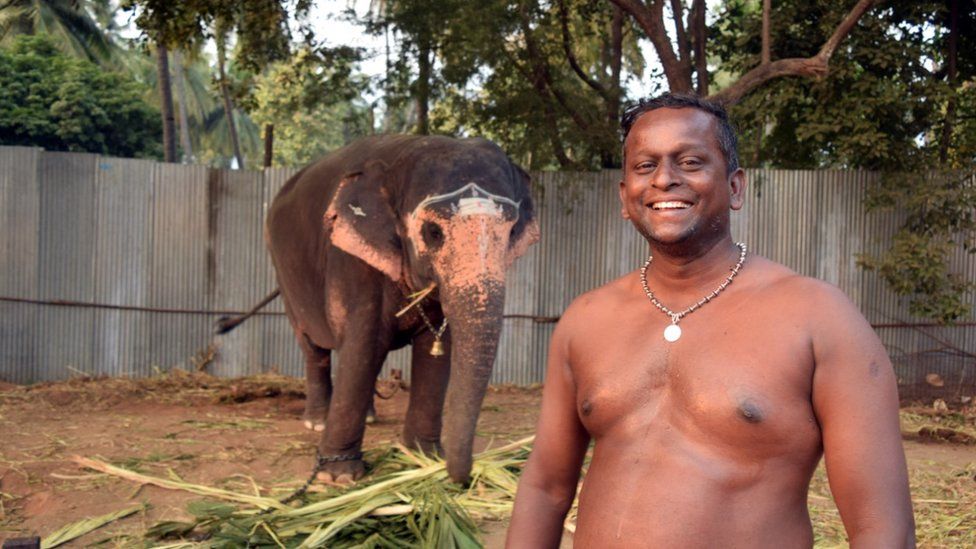
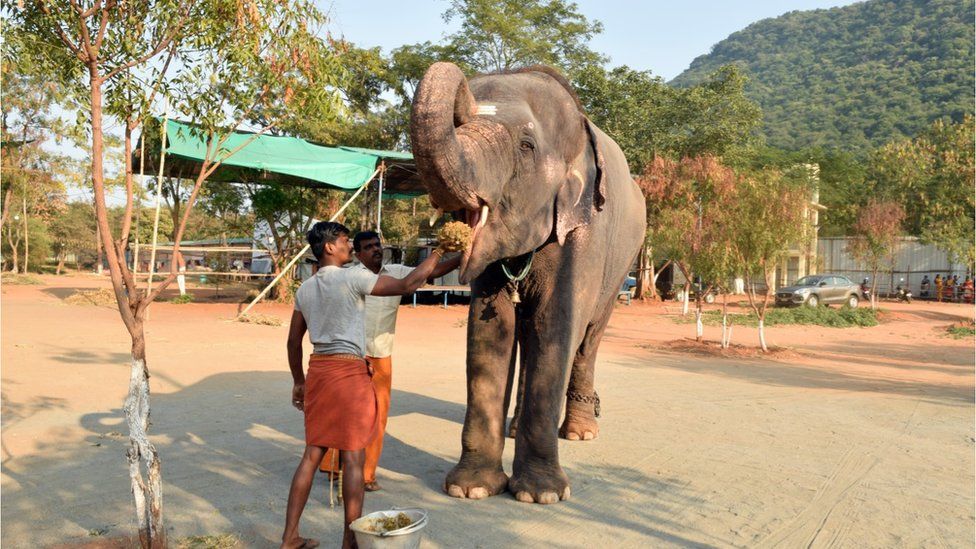
Arjun, the caretaker, and Akila, the elephant
Image caption Arjun, the caretaker, pictured above with temple elephant, Akila

Once a year, some of India’s captive elephants are whisked off to a “rejuvenation camp”, where they are pampered and cared for by their caretakers. Omkar Khandekar visited one such retreat in the southern state of Tamil Nadu.

After seven years of being a local celebrity, Akila the elephant knows how to pose for a selfie. She looks at the camera, raises her trunk and holds still when the flash goes off.

It can get tiring, especially when there are hundreds of requests every day.

Despite this, Akila, performs her daily duties diligently at the Jambukeswarar temple. These include blessing devotees, fetching water for rituals in which idols of the deity are bathed, and leading temple processions around the city, decked up in ceremonial finery.

And, of course, the selfies.

But every December, she gets to take a break.

“When the truck rolls in, I don’t even have to ask her to hop in,” Akila’s caretaker B Arjun said. “Soon, she will be with her friends.”

Elephant
Image caption Elephants sold to temples in Tamil Nadu are brought to this camp every year

India is home to some 27,000 wild elephants. A further 2,500 elephants are held in captivity across the states of Assam, Kerala, Rajasthan and Tamil Nadu.

The country is widely believed to be the “birthplace of taming elephants for use by humans”. Elephants here have been held in captive by Indians for millennia. But 17 years ago, after protests by animal rights activists over instances of handlers abusing and starving captive elephants, the government stepped in to give the animals a bit of respite.

As a result, Akila and numerous other elephants held in temples around India are now brought to a “rejuvenation camp” each year, their caretakers in tow. For several weeks, the animals unwind in a sprawling six-acre clearing in a forest at the foothills of Nilgiris, part of the country’s Western Ghats.

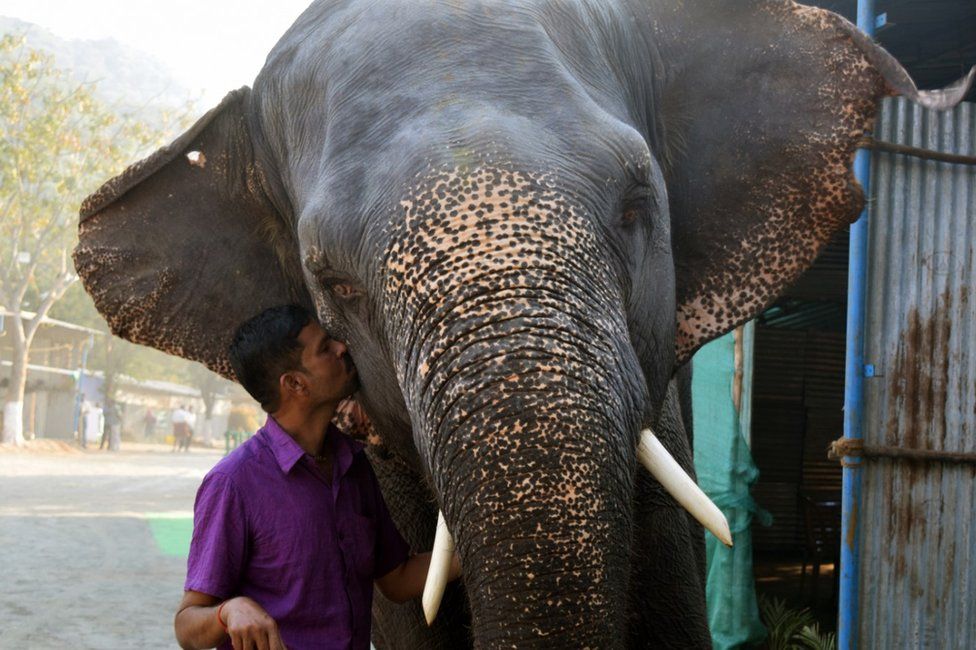
Elephant with caretaker
Image caption India has more than 2,000 captive elephants

The camps were described as an animal welfare initiative and have become a popular annual event for the state’s temple elephants.

The one Akila and 27 other elephants are attending currently opened on 15 December last year, and will go on until 31 January, costing about $200,000 (£153,960) to run.

Supporters argue it is money well spent. A break from the city for these elephants is therapeutic, explains S Selvaraj, a forest officer in the area.

“Wild elephants live in herds of up to 35 members but there’s only one elephant in a temple,” he says. “For 48 days here, they get to be around their own kind and have a normal life.”

Elephant being fed
Image caption It costs about $200,000 to run the six-week annual camp

Akila, who is 16 years old, has been a regular at the camp since 2012, the year she was sold to the temple. Arjun, who has accompanied her every year, is a fourth-generation elephant caretaker.

At the camp, he bathes Akila twice a day, feeds her a special mix of grains, fruits and vegetables mixed with vitamin supplements and takes her for a walk around the grounds. A team of vets are on hand to monitor the health of the camp’s large guests, while at the same time tutoring their handlers in subjects like elephant diet and exercise regimes.

Akila has even forged a friendship with Andal, an older elephant from another temple in the state, said Arjun.

But despite the shady trees and quiet, the getaway is a far cry from an elephant’s “normal life”.

Elephant at the camp
Image caption The government initiated such camps after protests over instances of handlers abusing captive elephants

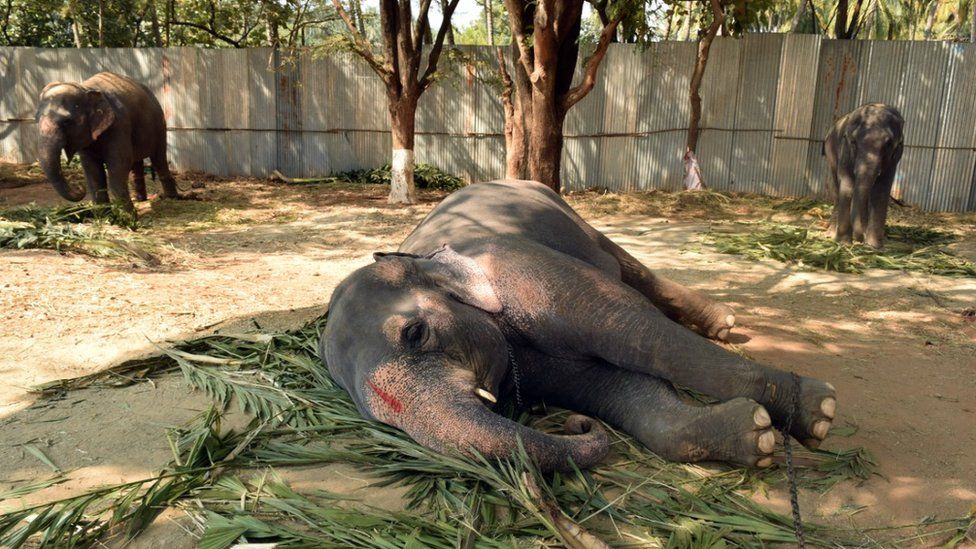
The walled campus has eight watchtowers and a 1.5km (0.93 miles) electric fence around its perimeter. While the elephants appear well cared for, they spend most of their time in chains and are kept under the close eye of their caretakers.

And one six-week rejuvenation camp a year does little to assuage the stress of temple elephants’ everyday lives, activists say.

“Elephants belong in jungles, not temples. A six-week ‘rejuvenation camp’ is like being let out on parole while being sentenced for life imprisonment,” argues Sunish Subramanian, of the Plant and Animals Welfare Society in the western city of Mumbai.

“Even at these camps, the animals are kept in chains and often in unhygienic conditions,” he adds. “If you must continue with the tradition, temple elephants should be kept in the camps for most of the year – in much better conditions – and taken to the temples only during festivals.”

Elephant taking a nap
Image caption The camps have been described as an animal welfare initiative

Even among the company of their own, the elephants – like Andal and Akila – aren’t allowed to get too close.

“I have to make sure the two keep their distance – otherwise, it’ll be difficult to separate them when we go back,” Arjun explains.

It is not just the animal rights activists who have concerns, however.

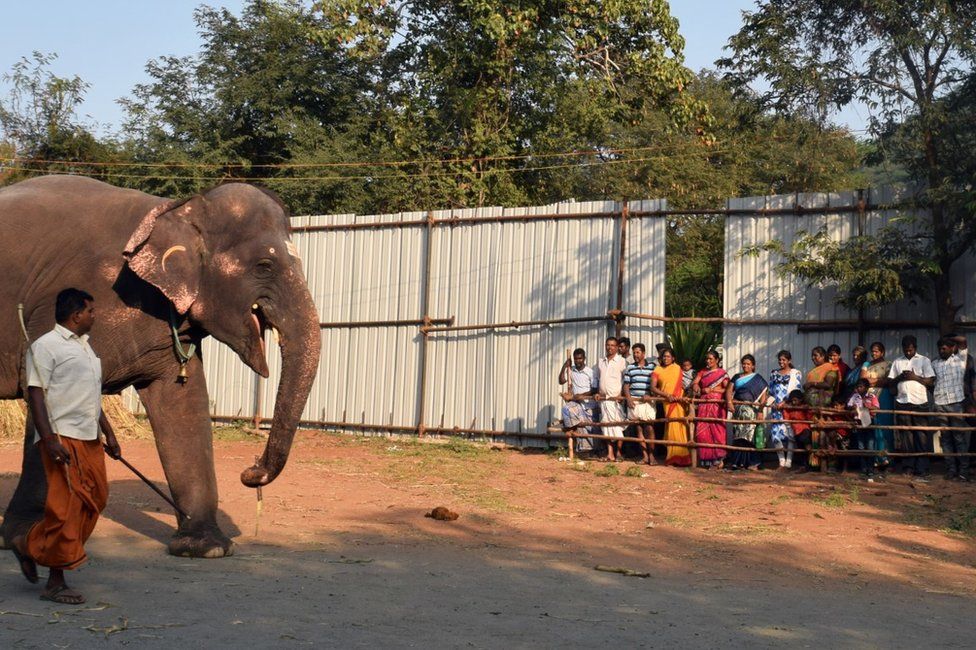
The camp has become a tourist spot in recent years, attracting a steady stream of visitors from neighbouring villages. Most watch, wide-eyed, from the barricades. But not everyone outside the camp is happy.

In 2018, a farmers’ union representing 23 villages nearby, petitioned a court to relocate the camp elsewhere. The petition claimed that the scent of the animals – all female, as is the norm among temple elephants – attracted male elephants from the wild.

This has caused them to go on the rampage, often destroying crops that farmers depend on for their livelihood. The union says 16 people have died in such incidents.

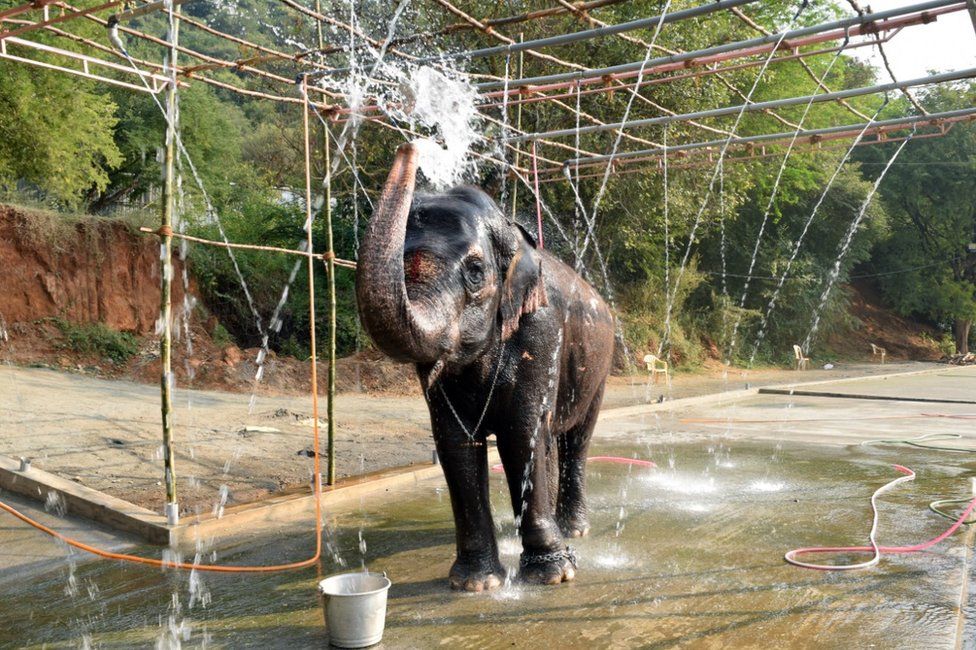
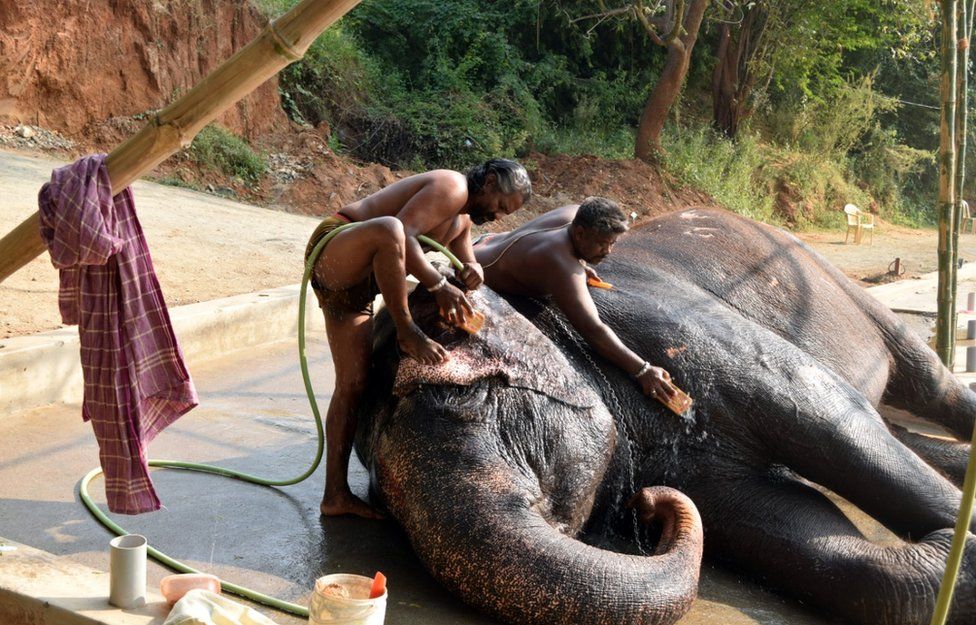
Elephant being bathed
Image caption The camp has also become a popular tourist spot in recent years

But the court rejected the petition. Instead, it asked why there were human settlements in what was identified as an elephant corridor. It also criticised the state government’s tokenism of rejuvenation camps.

“Some day,” it said, “this court is going to ban the practice of keeping elephants in temples.”

But Arjun can’t bear the thought of parting with Akila.

“I love her like my mother,” he says. “She feeds my family, just like my mother used to. Without her, I don’t know what to do.”

But he also understands that his elephant can get lonely. “And that’s why I work twice as hard to make sure she doesn’t.”

Source: The BBC

27/11/2019

Modi’s loss in state election raises questions about bullet train

MUMBAI (Reuters) – India’s richest state is set to be ruled by parties opposed to Prime Minister Narendra Modi’s nationalist Bharatiya Janata Party, jeopardising a Japanese-backed bullet-train project opposed by farmers.

The BJP’s inability to pull together voters in the westerly state of Maharashtra, of which Mumbai is capital, has meant that three parties, including a former BJP ally, will form the government. That is a major setback for Modi after his landslide victory in general elections this year.

It could also hinder the bullet train project, a $17 billion investment largely financed by a long-term, low-cost loan from Japan. The BJP was in power in both Maharashtra and Gujarat states when work began on project in 2017.

“We have always opposed the bullet train,” said Manisha Kayande, a spokesperson for the Shiv Sena, a former BJP ally whose leader is now set to head Maharashtra. “Our state is giving a major chunk of money for the project, when most of the track is in another state. This will definitely be re-framed,” .

The train will run from Mumbai to Ahmedabad, the main city in Gujarat state, a distance of 508 kilometres (315 miles). But it has run into obstacles acquiring land amid opposition from fruit farmers.

Any delay of the project is likely to undermine investor confidence, at a time when growth has slowed to its weakest pace in years.

Critics say India does not need the high-speed train and investment should go instead to improve the existing network.

“We are not against development or infrastructure projects, but at the same time farmers’ interests can’t be ignored. We will rethink about projects that farmers are opposing,” said a senior leader of Nationalist Congress Party, which is a part of the coalition government.

National High Speed Rail Corporation (NHSRCL), the government agency overseeing the project, had no immediate comment.

The authorities have acquired 548 hectares land out of the total requirement 1,380 hectares and the project was targeted to be operational by 2023 , the government told parliament in July.

Protests against land acquisitions are common in India, where tens of millions of farmers till small holdings. A planned $44 billion refinery to be run by a consortium including Saudi Aramco, the world’s biggest oil producer, is also struggling to secure land in Maharashtra.

Source: Reuters

30/10/2019

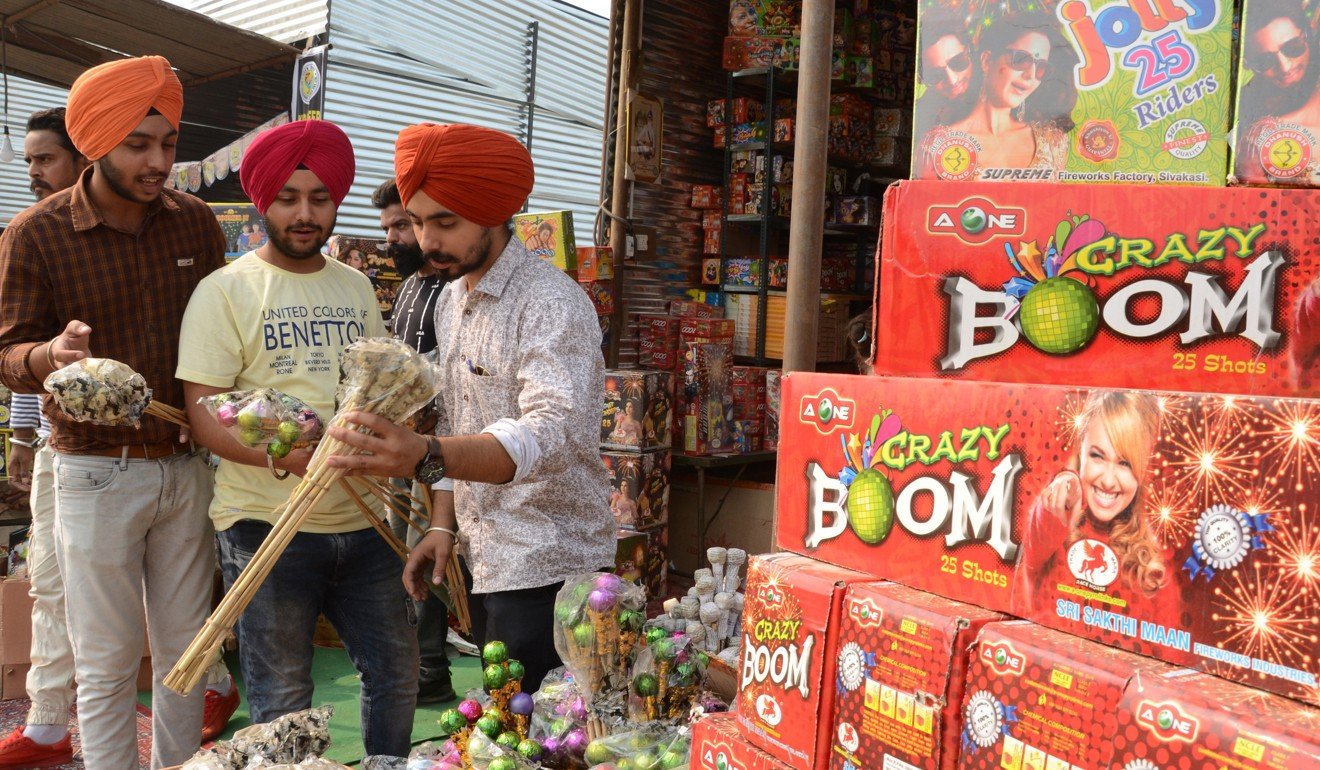
The explosive truth about the link between Chinese fireworks and India’s dim Diwali

  • Black market imports from China, confusing regulations and pollution concerns are undermining India’s fireworks industry
  • Industry sources say Diwali sales this year were down by 30 per cent
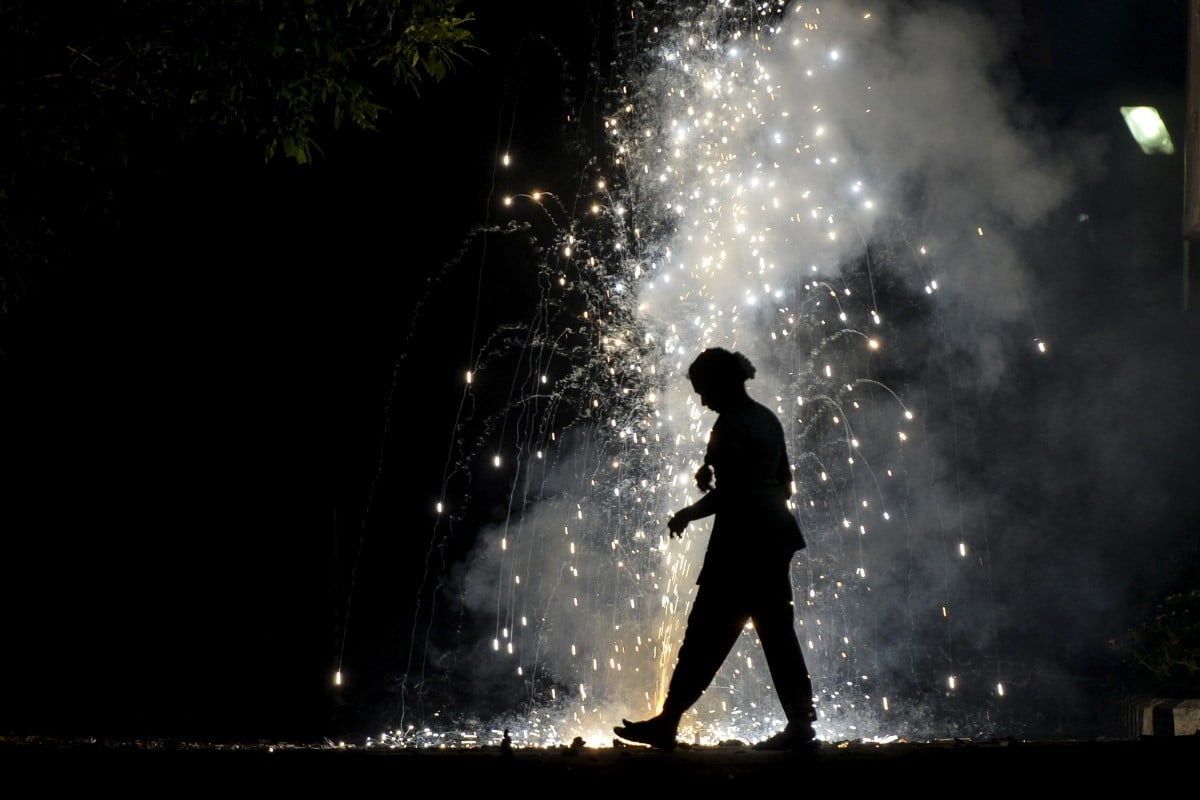
A woman is silhouetted by lit firecrackers during Diwali celebrations in Chennai. Photo: AFP

Arumugam Chinnaswamy set up his makeshift booth selling firecrackers in a Chennai neighbourhood a week ahead of Diwali, the Hindu festival of lights, with great expectations of doing a brisk trade.

Yet a week later, he has been forced to pack up more than half his stock in the hope he’ll have better luck next year.

“Four years ago, I sold firecrackers worth 800,000 rupees (US$11,288) on the eve of Diwali alone. This year, the sales have not even been a quarter of that,” said Chinnaswamy, 65, painting a grim picture that will be recognised by many in the Indian fireworks industry.

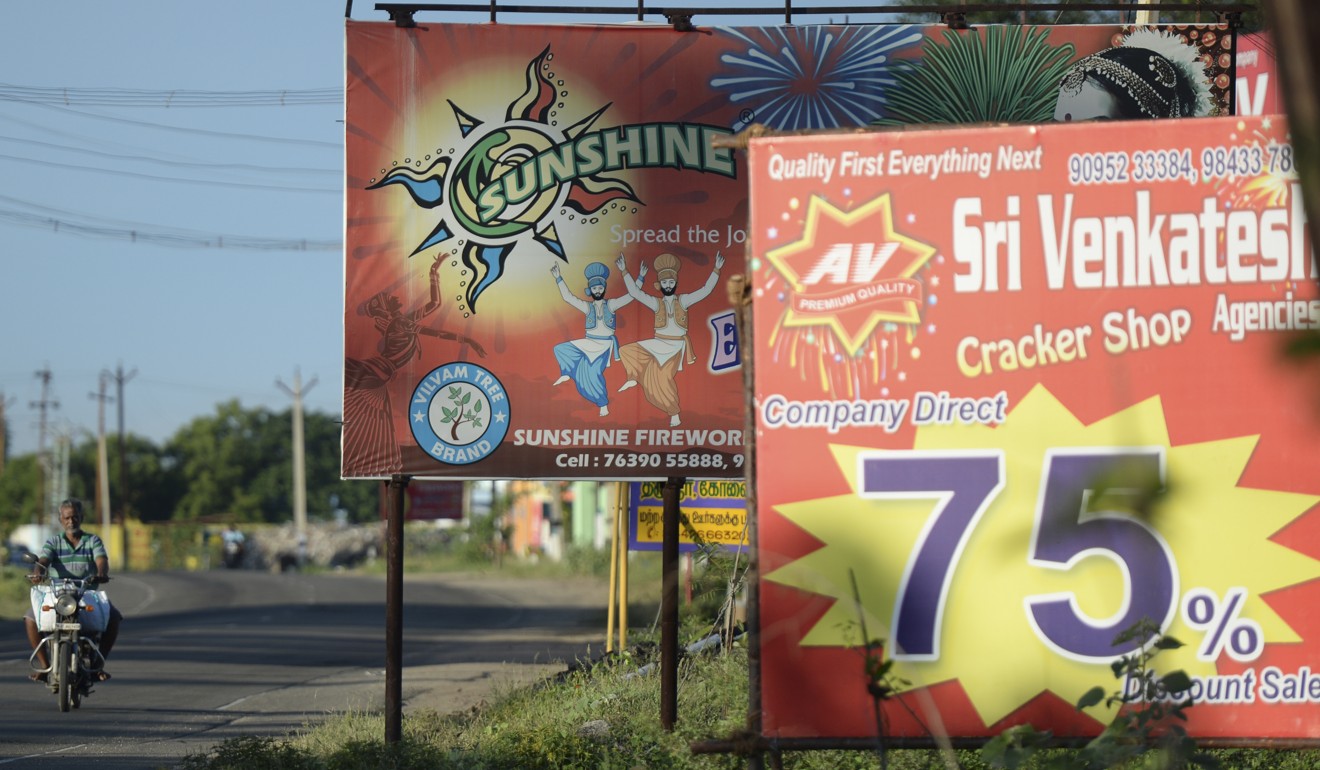
Chinnaswamy buys his firecrackers in Sivakasi, an industrial town in the southern Indian state of Tamil Nadu that produces more than 90 per cent of the country’s fireworks.

Sivakasi’s dry climate has helped to make it the firework capital of India and many production facilities in the town have been in the business for close to a century. For the most part, the industry has resisted mechanisation and still deals in handmade products. Its 1,100-plus manufacturing units provide jobs for 800,000 mostly uneducated workers and its diligent labour force have earned the town the nickname of ‘Little Japan’.
A worker lays firecrackers in an outdoor yard at a manufacturing unit involved in the production of firecrackers ahead of the Hindu festival of Diwali, in Sivakasi. Photo: AFP

But this reputation is under threat, struggling under the weight of an anti-pollution campaign, regulatory uncertainty and the arrival of cheap black-market Chinese imports. Irregular monsoons and a slowdown-induced cash crunch have not helped matters either.

Industry figures estimate the Diwali sales of India’s 80 billion-rupee firecracker industry took a 30 per cent drop this year.

A TOXIC PROBLEM

With pollution in Indian cities among the worst in the world, the government has come under pressure to do something about the nation’s toxic air – a problem that becomes more acute during Diwali due to the toxic fumes emitted when celebratory fireworks are set off. This Diwali, for instance, many areas in New Delhi recorded an Air Quality Index (AQI) of 999, the highest possible reading (the recommended limit is 60).

That makes the fireworks industry seem like an easy target when it comes to meeting government air quality targets.

Trouble began brewing in October last year when the Supreme Court banned the manufacture of traditional fireworks containing barium nitrate, a chief polluter. That decision put a rocket under the industry, as barium nitrate is cheap and is used in about 75 per cent of all firecrackers in India.

Factories in Sivakasi responded with a four-month shutdown protest that decimated annual production levels by up to a third.

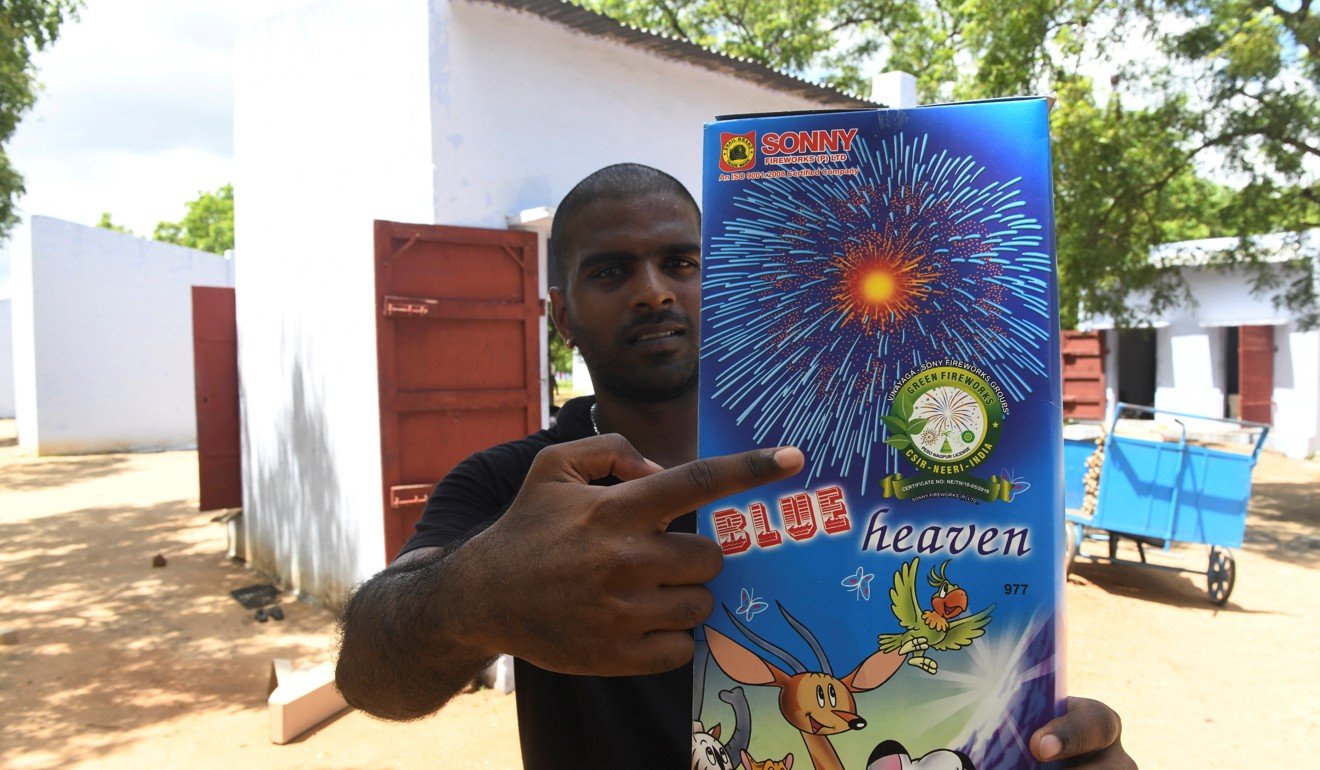
A seal denotes environment friendly ‘Green Fireworks’ at a manufacturing unit in Sivakasi. Photo: AFP

Apparently realising it had overstepped the mark – and that enforcing the Supreme Court regulations would be next to impossible – the government stepped in to rescue the industry, offering its assistance in the manufacture of environment-friendly crackers containing fewer pollutants, but it was too little, too late.

“The Supreme Court verdict was simply Delhi-centric with the vague idea of [cracking down on] urban pollution. It lacked any on-the-ground knowledge of the fireworks industry,” said Tamil Selvan, president of the Indian Fireworks Association, which represents more than 200 medium and large manufacturers.

Singapore travellers give Hong Kong a miss over Diwali long weekend

“Fireworks are low-hanging fruit for the anti-pollution drive as the industry is unorganised. Could the government or judiciary place a similar blanket ban on more pollution-causing industries like automobiles, plastics or tobacco?” asked Selvan.

CHINESE COMPETITION

The industry has also been hit by a flood of cheap Chinese firecrackers that are smuggled into the country on the black market.

In September, the country’s federal anti-smuggling agency, the Directorate of Revenue Intelligence, cautioned various government departments that huge quantities of Chinese-produced firecrackers had reached Indian soil in the lead up to Diwali.

But industry sources complain they have seen little action from the government to combat the problem.

An advert for firecrackers ahead of the Hindu festival of Diwali, in Sivakasi. Photo: AFP

Legally, Indian manufacturers can neither import nor export firecrackers. The Indian firecracker industry is the second-largest in the world after China’s.

Raja Chandrashekar, chief of the Federation of Tamil Nadu Fireworks Traders, a lobbying body, said low-end Indian-manufactured firecrackers such as roll caps and dot caps – popular among children – had struggled to compete with Chinese-made pop pops and throw bombs.

“Despite our repeated complaints to government bodies, Chinese firecrackers find a way into India, particularly in the northern parts. This is severely affecting our business,” said Chandrashekar.

While more Chinese fireworks might be entering India, the effect has been to undermine the industry, resulting in fewer sales overall.

FIZZLING OUT?

The Sivakasi fireworks industry faces other problems, too. Not least among these is the use of child labour, which had been rampant until a government crackdown a few years ago, and the practice of some factories to operate without proper licences and with questionable safety standards.

But despite the darker aspects of the industry, its role goes beyond merely helping Diwali celebrations go with a bang every year.

India is crazy about gold. But can the love last as prices skyrocket?

“The livelihoods of over five million people who are indirectly involved in the business, in areas such as trade and transport, depend on the survival of the industry,” said Chandrashekar.

That survival looks increasingly in question. Dull sales of fireworks have been reported in major cities including New Delhi, Mumbai, Bangalore and Hyderabad, though exact numbers can be hard to come by due to the unregulated nature of the industry and unreliable numbers shared by manufacturers.

So great has the resultant outcry been that some cynics even wonder whether the industry is struggling as much as it claims or whether it is part of a ploy by manufacturers to gain more government concessions and avoid any further crackdown.

“These firecracker manufacturers lie through their teeth about the Diwali sales for self-serving motives such as tax avoidance. The overall business is healthy,” said Vijay Kumar, editor of the Sivakasi-based monthly magazine Pyro India News.

“Though there was a 30-40 per cent shortage in annual production, all the manufactured products have been sold this year. No large stockpile is left with any manufacturer.”

Customers buy firecrackers on the eve of the Hindu festival of Diwali in Amritsar. Photo: AFP

Still, regardless of the manufacturers’ motives, the result of the industry’s struggles has been that street sellers like Chinnaswamy have fewer fireworks to sell – and they are struggling even to sell those.

Chinnaswamy says people are confused about the government’s anti-pollution drive and about what firecrackers are now legal and this has discouraged them from buying. Despite the government’s effort to promote “green crackers” he says these are too hard to come by to be a ready solution, at least for this year.

“There was no clarity on what type of firecrackers, whether green crackers or otherwise, can be set off and at what time of the day. Many consumers even asked me whether or not the conventional firecrackers are totally banned while there was much misinformation floating about on social media,” said Chinnaswamy.

Shaking his head, all he can do is hope that next year his Diwali goes with more of a bang.

Source: SCMP

20/10/2019

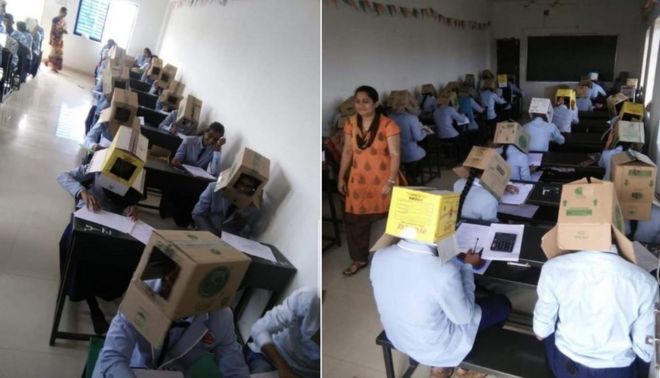
Apology after Indian students wear cardboard boxes for exams

Collage images showing students sitting taking an exam with boxes on their headsImage copyright ANI
Image caption The photographs drew mockery and scorn on social media

An Indian school official has apologised after a bizarre set of images went viral showing students wearing cardboard boxes on their heads.

The images were taken during a chemistry exam at Bhagat Pre-University College in Haveri, Karnataka state.

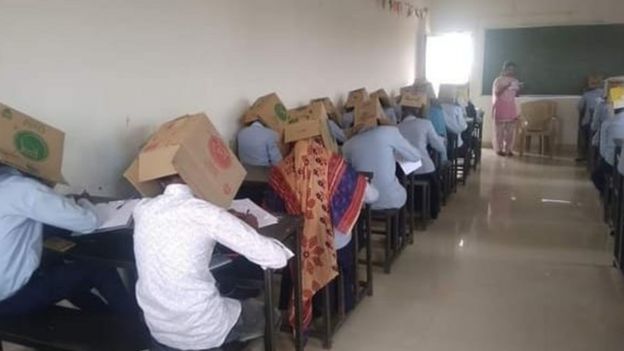
They showed students wearing boxes, cut open on one side, to prevent them from being able to copy other people’s work.

A junior college administrator has spoken publicly and apologised to district officials for the incident.

MB Satish told BBC Hindi he was sorry for trying to use the unusual anti-cheating technique.

He said the school has only implemented the measure on an “experimental basis” after hearing of its use elsewhere.

Students wearing boxes on their heads in examImage copyright ANI
Image caption The school official said he had heard of the technique being used in Mumbai

He also insisted it had been done with the students’ consent – in fact they had brought in their own boxes.

“There was no compulsion of any kind. You can see in the photograph that some students were not wearing it,” he said. “Some who wore it removed it after 15 minutes, some after 20 minutes and we ourselves asked them to remove it after one hour.”

You may also like:

Regional officials reportedly rushed to the school to complain as soon as they were made aware of the images.

SC Peerjade, deputy director of the local pre-University Education Board, described the practice as “inhumane”.

“When I got a message on this, I immediately went to the college and ordered the management to stop the practice,” he was quoted by the Times of India as saying. “I also issued a notice to the college management and am contemplating disciplinary action against them for implementing this idea.”

School officials have said they have ceased the practice and are co-operating with the school board’s directive.

Source: The BBC
Law of Unintended Consequences

continuously updated blog about China & India

ChiaHou's Book Reviews

continuously updated blog about China & India

What's wrong with the world; and its economy

continuously updated blog about China & India