Chindia Alert: You’ll be Living in their World Very Soon
aims to alert you to the threats and opportunities that China and India present. China and India require serious attention; case of ‘hidden dragon and crouching tiger’.
Without this attention, governments, businesses and, indeed, individuals may find themselves at a great disadvantage sooner rather than later.
The POSTs (front webpages) are mainly 'cuttings' from reliable sources, updated continuously.
The PAGEs (see Tabs, above) attempt to make the information more meaningful by putting some structure to the information we have researched and assembled since 2006.
Joint mission will send two unmanned probes into orbit around the closest planet to the sun
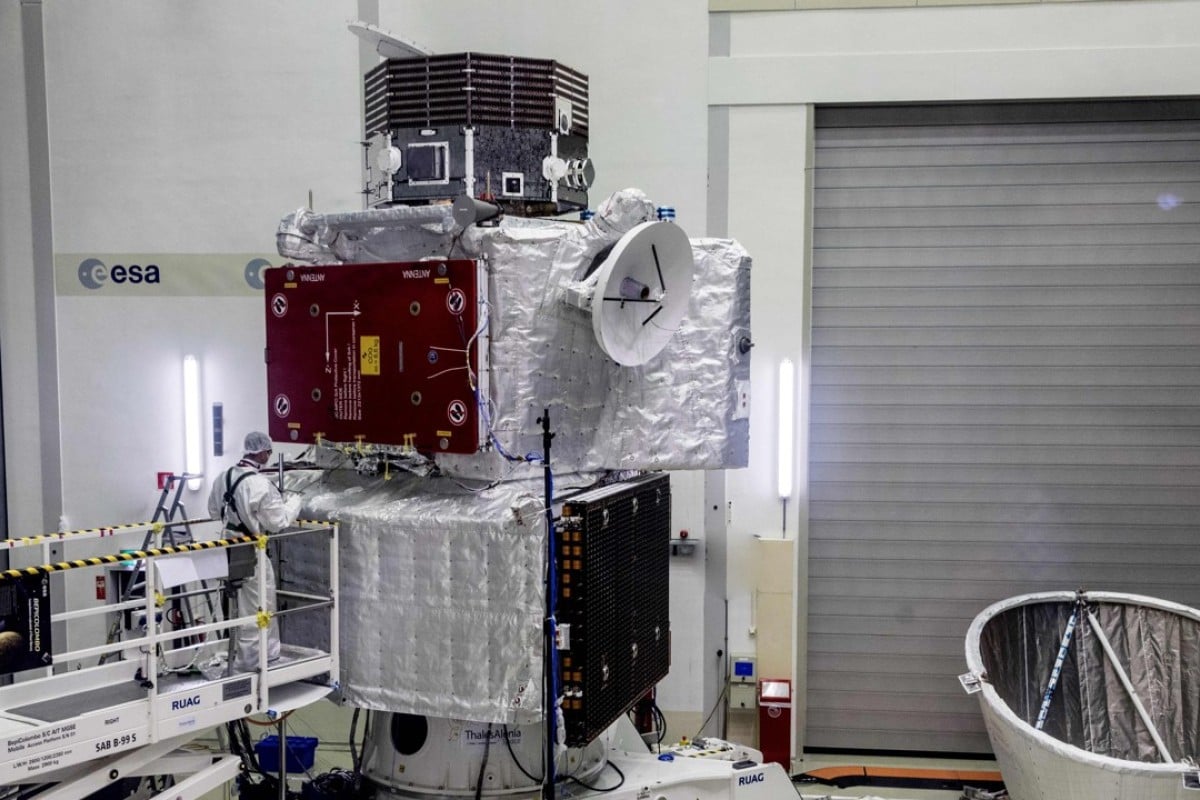
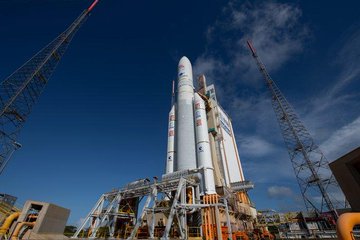
The BepiColombo standing in position at a test facility in Spijkenisse. Its mission to Mercury is scheduled for launch on an Ariane 5 from Europe’s Spaceport in Kourou, French Guiana on October 20. Photo: AFP Photo
Final preparations were underway on Friday for the launch of a joint mission by European and Japanese space agencies to send twin probes to Mercury, the closest planet to the sun.
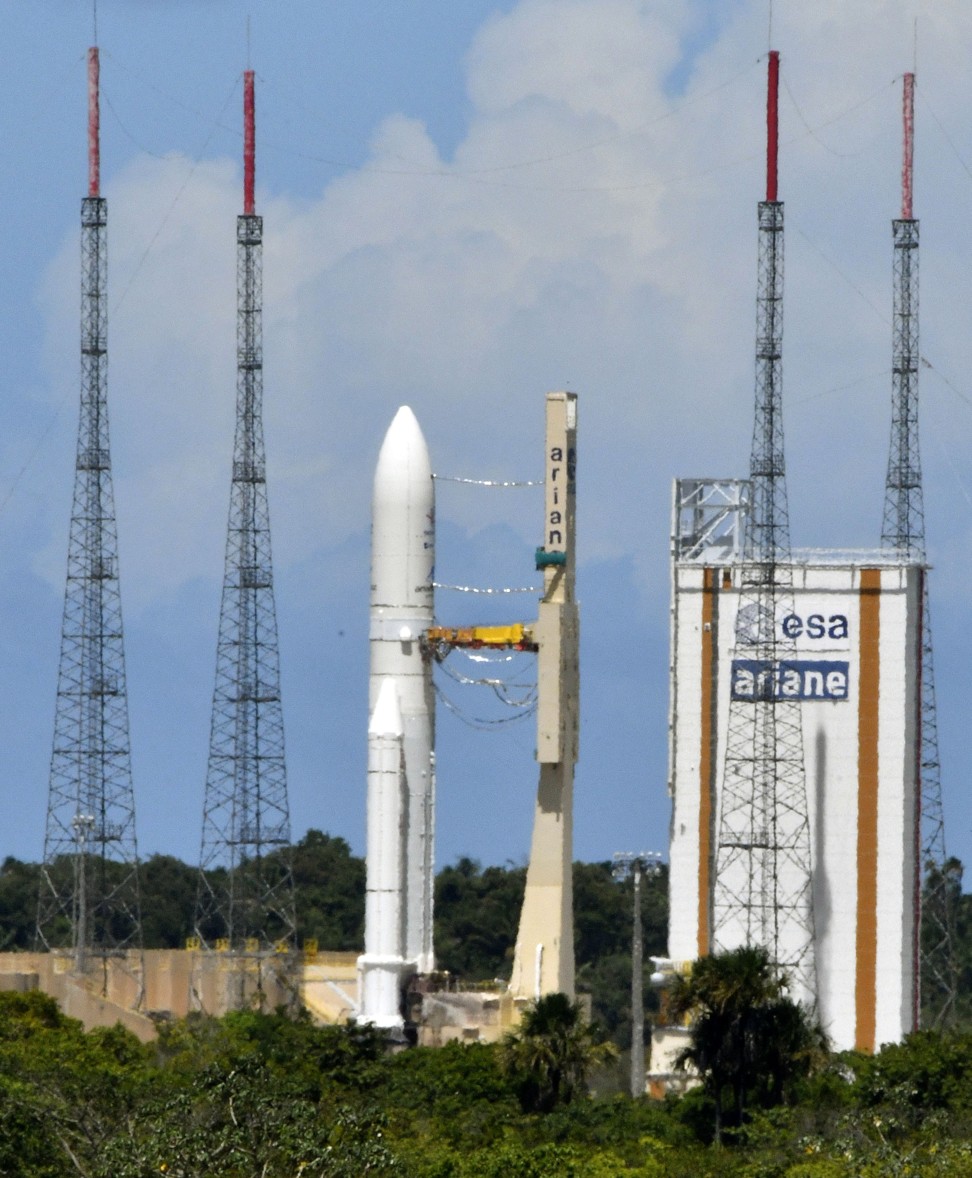
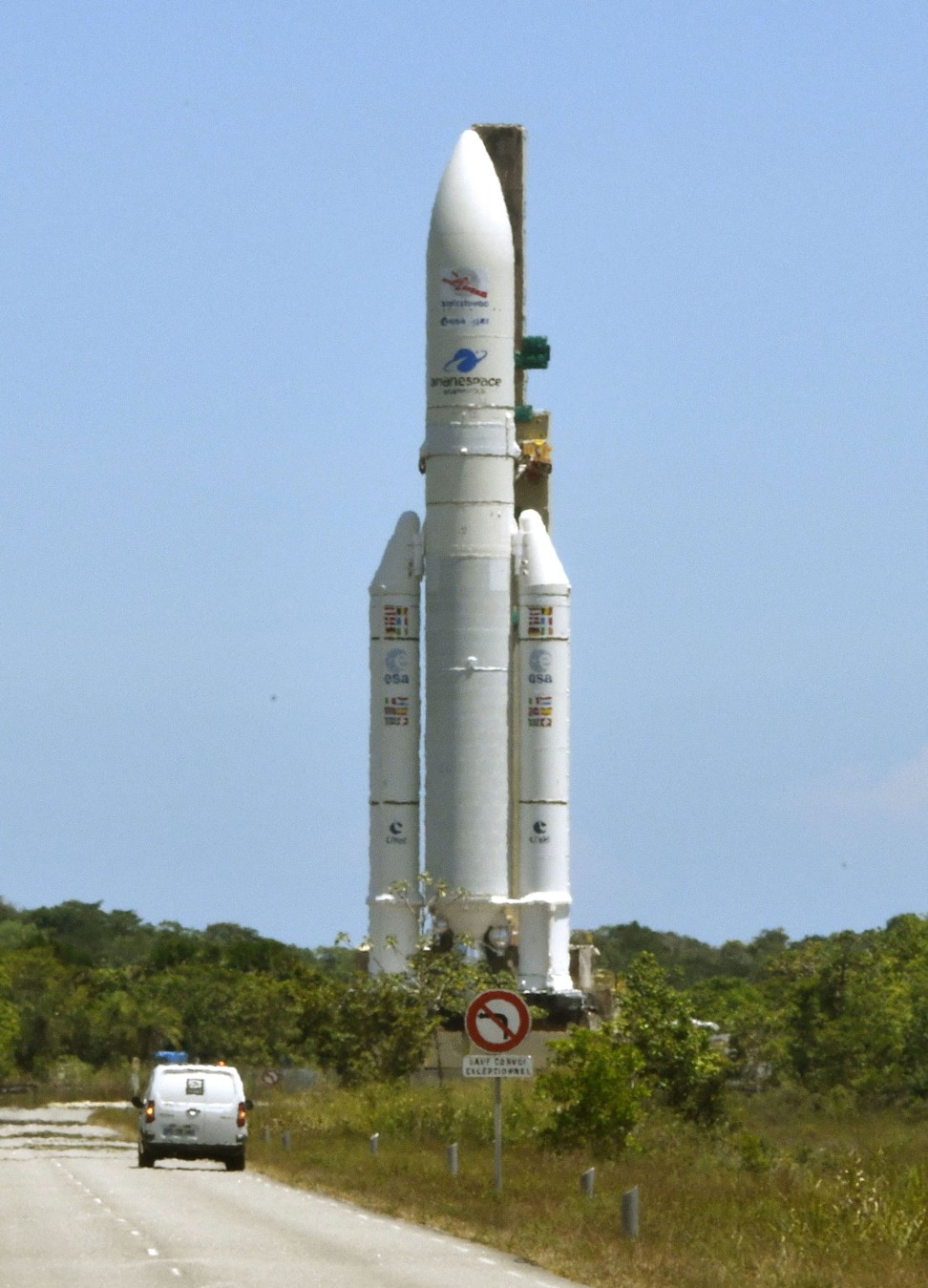
An Ariane 5 rocket is scheduled to lift the unmanned spacecraft into orbit from French Guiana shortly before midnight, the start of a seven-year journey to the solar system’s innermost planet.
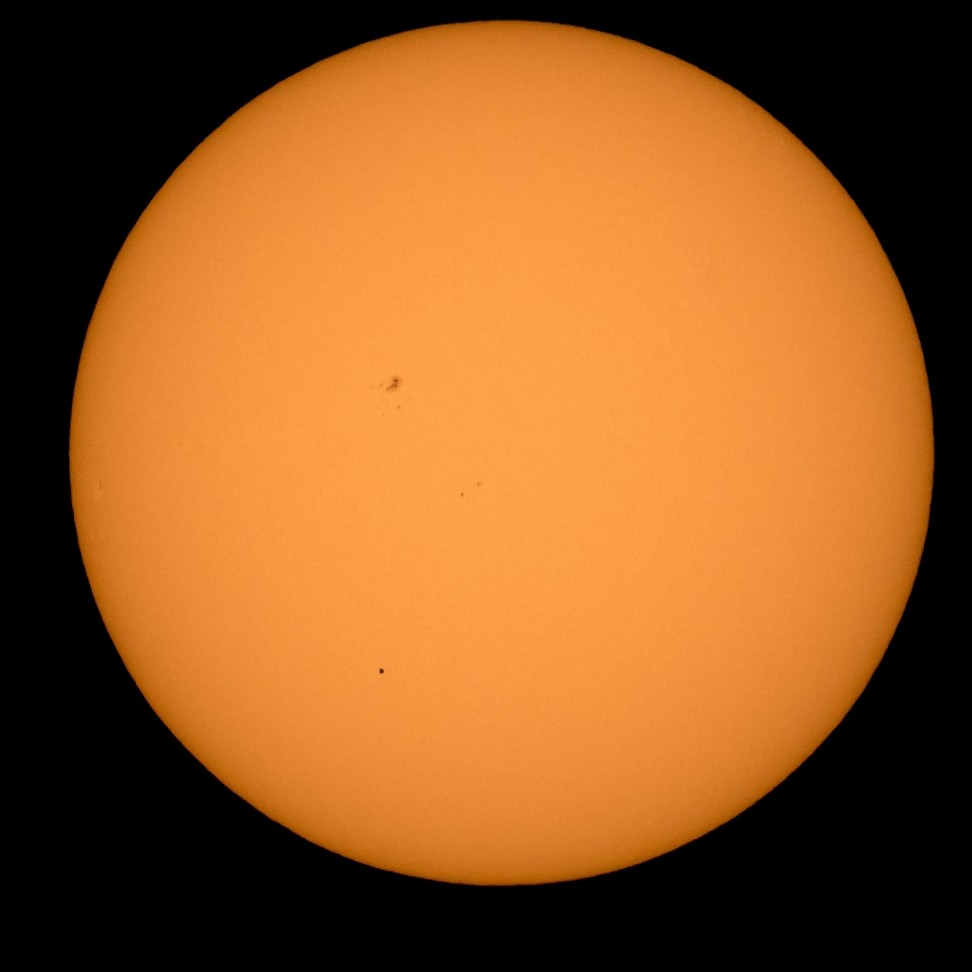
Mercury is seen in silhouette, lower third of image, as it transits across the face of the sun. Photo: AFP PHOTO / NASA / BILL INGALLS
The European Space Agency says the €1.3 billion (US$1.5 billion) mission is one of the most challenging in its history. Mercury’s extreme temperatures, the intense gravity pull of the sun and blistering solar radiation make for hellish conditions.
The BepiColombo spacecraft will have to follow an elliptical path that involves a fly-by of Earth, two of Venus and six of Mercury itself so it can slow down sufficiently before arriving at its destination in December 2025.
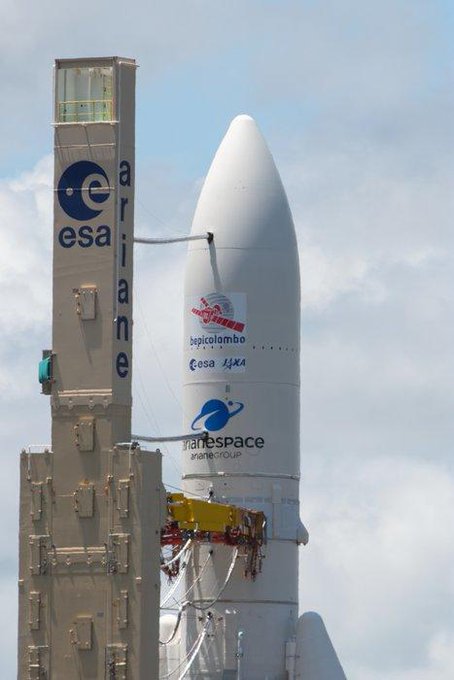
An Ariane-5 rocket is set for launch at the Guiana Space Centre in Kourou in French Guiana. Photo: Kyodo
Newly developed electrical ion thrusters will help nudge the spacecraft, which was named after Italian scientist Giuseppe “Bepi” Colombo, into the right orbit.
Aborted launch astronauts may head to International Space Station this year: Nasa head says
12 Oct 2018
When it arrives, BepiColombo will release two probes – Bepi and Mio – that will independently investigate the surface and magnetic field of Mercury. The probes are designed to cope with temperatures varying from 430 degrees Celsius (806F) on the side facing the sun, and -180 degrees Celsius (-292F) in Mercury’s shadow.
An Ariane-5 rocket is transported to its launch site at the Guiana Space Centre in Kourou. Photo: Kyodo
Scientists hope to build on the insights gained by Nasa’s Messenger probe, which ended its mission in 2015 after a four-year orbit of Mercury. The only other spacecraft to visit Mercury was Nasa’s Mariner 10 that flew past the planet in the mid-1970s.
Japanese space robots have landed on asteroid to carry out world-first survey
22 Sep 2018
Mercury, which is only slightly larger than Earth’s moon, has a massive iron core about which little is known. Researchers are also hoping to learn more about the formation of the solar system from the data gathered by the BepiColombo mission.
Between January 20 and April 4, PM2.5 levels across the country fell by more than 18 per cent, according to the environment ministry
But observers say that as soon as the nation’s factories and roads get back to normal, so too will the air pollution levels
Blue skies were an unexpected upside of locking down cities and halting industrial production across China. Photo: AFP
China’s air quality has improved dramatically in recent weeks as a result of the widespread city lockdowns and strict travel restrictions introduced to contain the
. But experts say the blue skies could rapidly disappear as factories and roads reopen under a government stimulus plan to breathe new life into a stalled economy.
According to the Ministry of Ecology and Environment, between January 20 and April 4 the average concentration of PM2.5 – the tiny particles that pose the biggest risk to health – fell by 18.4 per cent from the same period of last year.
Meanwhile, the average number of days with good air quality – determined as when the air pollution index falls below 100 – rose by 7.5 per cent, it said.
Satellite images released by Nasa and the European Space Agency showed a dramatic drop in nitrogen dioxide emissions in major Chinese cities in the first two months of 2020, compared with a year earlier.
According to Nasa, the changes in Wuhan – the central China city at the epicentre of the initial coronavirus outbreak – were particularly striking, while nitrogen dioxide levels across the whole of eastern and central China were 10 to 30 per cent lower than normal.
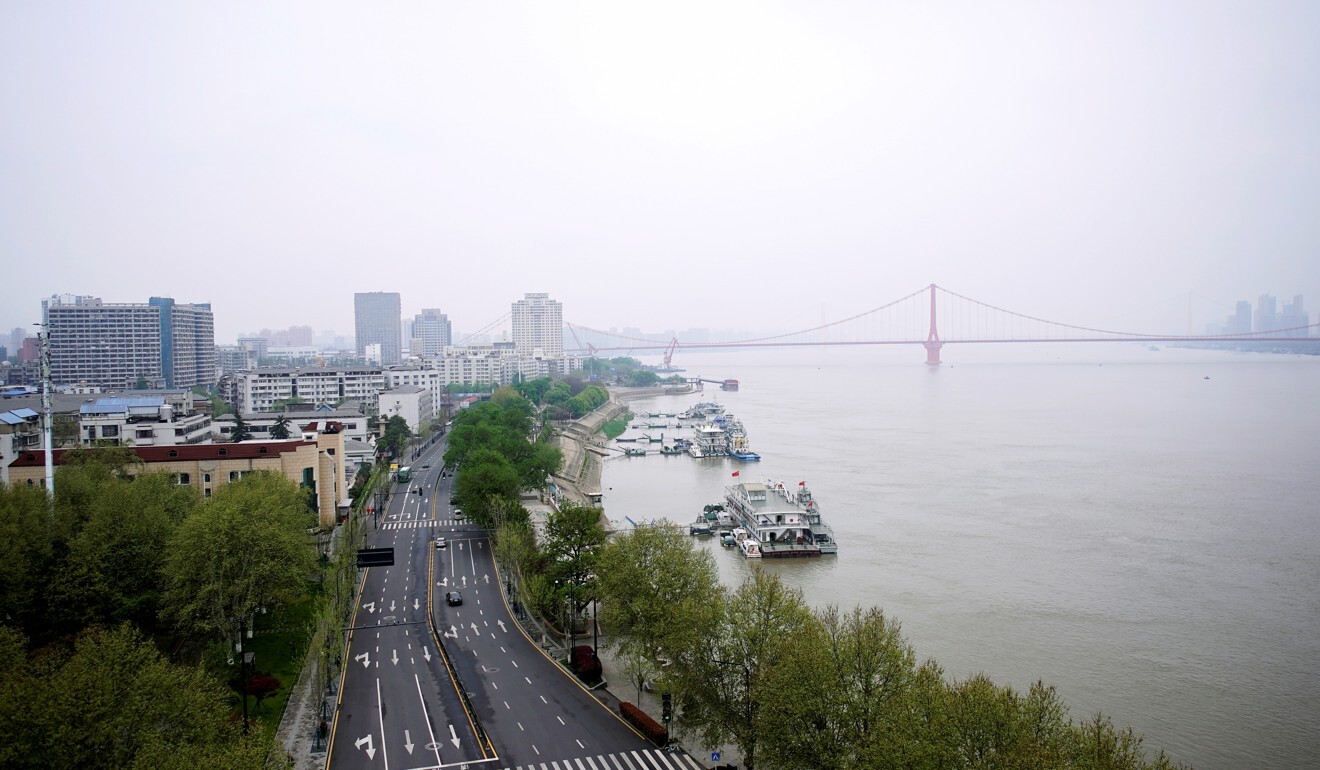
The region is home to hundreds of factories, supplying everything from steel and car parts to microchips. Wuhan, which has a population of 11 million, was placed under lockdown on January 23, but those restrictions were lifted on Wednesday
.
Air pollution is likely to return to China’s cities once the lockdowns are lifted. Photo: Reuters
Nitrogen dioxide is produced by cars, power plants and other industrial facilities and is thought to exacerbate respiratory illnesses such as asthma.
The space agency said the decline in air pollution levels coincided with the restrictions imposed on transport and business activities.
That was consistent with official data from China’s National Development and Reform Commission, which recorded a 25 per cent fall in road freight volume and a 14 per cent decline in the consumption of oil products between January and February.
Guangzhou cases prompt shutdown in ‘Little Africa’ trading hub
8 Apr 2020
Liu Qian, a senior climate campaigner for Greenpeace based in Beijing, said the restrictions on industry and travel were the primary reasons for the improvement in air quality.
According to official data, in February, the concentrations of PM2.5, nitrogen dioxide and sulphur dioxide – a toxic gas that comes mostly from industrial burning of coal and other fossil fuels – all fell, by 27 per cent, 28 per cent and 23 per cent, respectively.
“The causes of air pollution are complicated, but the suspension of industrial activity and a drop in public transport use will have helped to reduce levels,” Liu said.
As the epicentre of the Covid-19 pandemic has shifted to the United States and
, human and industrial activity in China is gradually picking back up, and so is air pollution.
Lauri Myllyvirta, lead analyst with the Centre for Research on Energy and Clean Air in Helsinki, said that levels of nitrogen dioxide pollution, measured both by Nasa satellites and official stations in China, started inching back up in the middle of March and had returned to normal levels by the end of the month.
That coincided with the centre’s findings – published on Carbon Brief, a British website on climate change – that coal consumption at power plants and oil refineries across China returned to their normal levels in the fourth week of March.
How the Wuhan experience could help coronavirus battle in US and Europe
10 Apr 2020
Ma Jun, director of the Institute of Public & Environmental Affairs, a Beijing-based charity, said a stimulus plan to kick-start the economy would have a significant impact on air pollution.
“Once industrial production is fully resumed, so are the emission levels,” he said. “Unless another outbreak happens and triggers another lockdown, which would be terrible, the improvement achieved under the pandemic is unstable and won’t last long.”
After the 2008 financial crisis, Beijing launched a 4 trillion yuan (US$567.6 billion) stimulus package that included massive infrastructure investment, but also did huge damage to the environment. In the years that followed, air pollution rose to record highs and sparked a public backlash.
Even before the Covid-19 outbreak, China’s economy was slowing – it grew by 6.1 per cent in 2019, its slowest for 29 years – and concerns are now growing that policymakers will go all out to revive it.
“Local governments have been under huge pressure since last year, and there are fears that environmental regulations will be sidelined [in the push to boost economic output],” Ma said.
But Beijing had the opportunity to get it right this time by investing more in green infrastructure projects rather than high-carbon projects, he said.
“A balance between economic development and environmental protection is key to achieving a green recovery, and that is what China needs.”
Tennessee academic Hu was arrested on Thursday and charged with three counts of wire fraud and three counts of making false statements
The Justice Department said Hu hid his link to the Peking University while taking funding from the US space agency
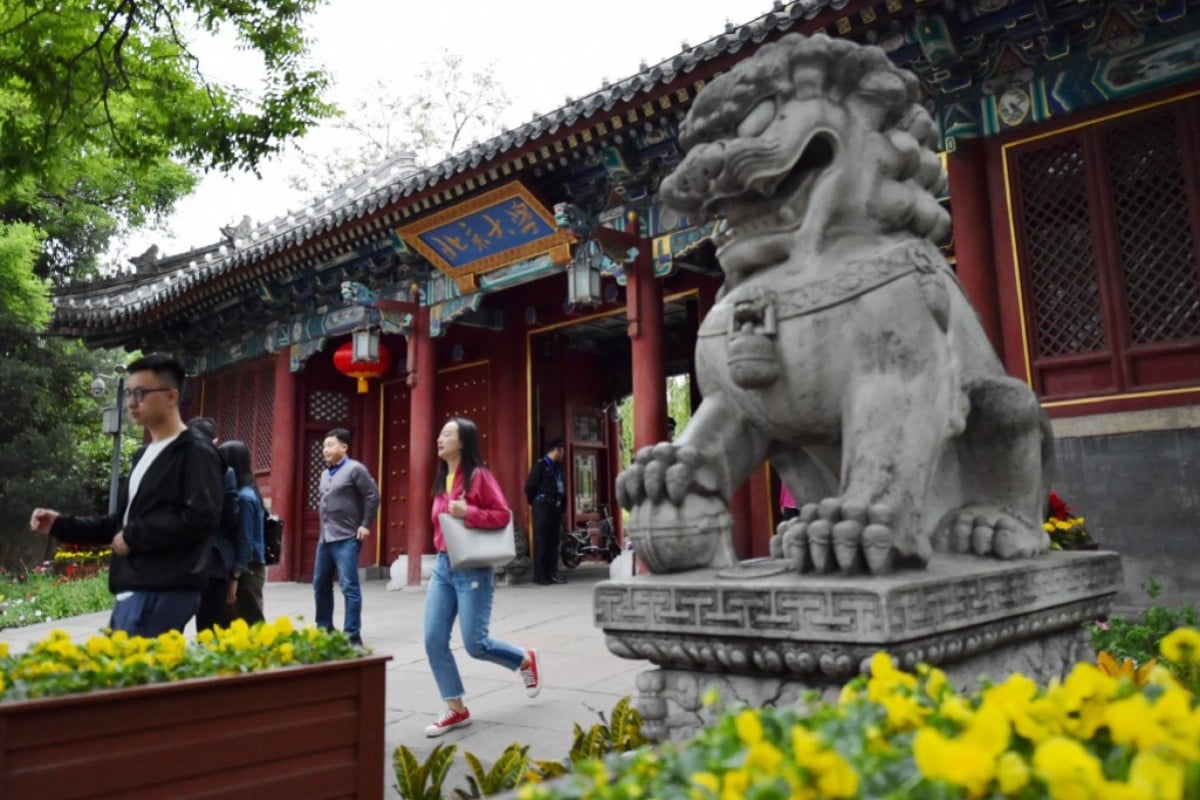
Peking University in Beijing. Photo: Xinhua
US authorities on Thursday charged a professor at a university in Tennessee with fraud and false statements, saying he hid his link to a Chinese institution while taking funding from Nasa.
In the latest case related to US efforts to halt alleged unauthorised technology transfers to China, the Justice Department said Anming Hu hid his ties to Peking University of Technology while he taught and did research at University of Tennessee, Knoxville.
The indictment said that from 2016, Hu “engaged in a scheme to defraud the National Aeronautics and Space Administration” (Nasa) by hiding his affiliation with the Peking University.
“Federal law prohibits Nasa from using appropriated funds on projects in collaboration with China or Chinese universities,” the Justice Department said in a statement.
Hu was arrested on Thursday and charged with three counts of wire fraud and three counts of making false statements.
The wire fraud charges bring up to 20 years in prison and a fine of up to $250,000 each; the false statement counts each bring a maximum five years in prison.
Chinese man pleads guilty to photographing US Navy base
23 Feb 2020
The case was brought by the national security division of the Justice Department, which has taken aim over the past year at a number of Chinese nationals for allegedly stealing industrial and other secrets to boost China’s economy and defence sectors.
“This is just the latest case involving professors or researchers concealing their affiliations with China from their American employers and the US government. We will not tolerate it,” said John Demers, the assistant attorney general for national security.
US charges Harvard chemistry chair with lying about China ties
17 Feb 2020
Washington says Beijing both pressures and incentivises its nationals to bring back proprietary technology from the US.
Among those arrested for allegedly supporting Beijing’s illicit technology acquisition efforts is the chairman of Harvard University’s chemistry and chemical biology department.
Charles Lieber allegedly hid from Harvard and US authorities payments of $50,000 a month for his personal needs and $1.5 million in lab funding from a Chinese university.
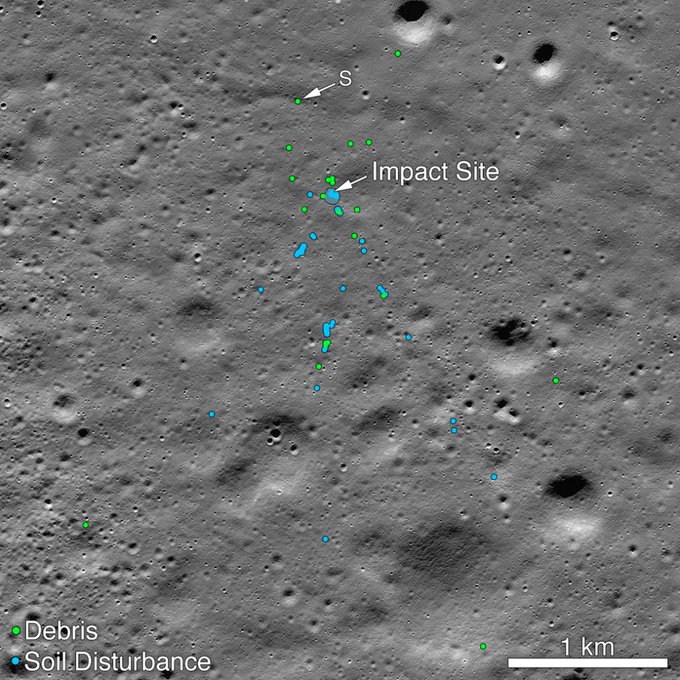
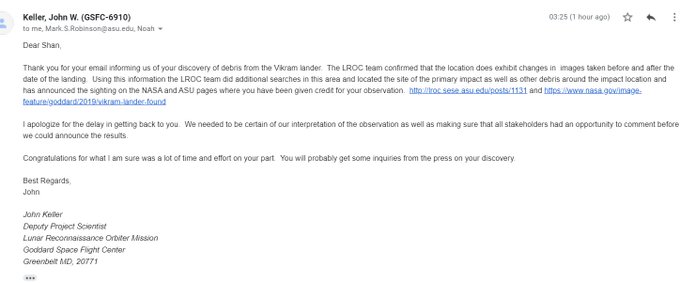
In late September, pictures from a Nasa spacecraft had showed the targeted landing site of the Vikram rover.
Many people had downloaded the image released by Nasa’s Lunar Reconnaissance Orbiter Camera (LROC) team, a statement by the space agency said.
It said after receiving Mr Subramanian’s tip about the location of the debris, the LROC team “confirmed the identification by comparing before and after images”.
Mr Subramanian has tweeted an email sent to him by the space agency congratulating him for his effort.
“We had the images from Nasa [of] the lander’s last location. We knew approximately where it crashed. So I searched pixel-by-pixel around that impact area,” the 33-year-old Chennai-based engineer told BBC Tamil.
Mr Subramanian said he had always “been interested in space” and had watched the July launch of the rocket.
The rover (called Pragyan – wisdom in Sanskrit) had the capacity to travel 500m from the lander in its 14-day life span, and would have sent data and images back to Earth for analysis.
The mission would have focussed on the lunar surface, searching for water and minerals and measuring moonquakes, among other things.
Why would it have been significant?
A soft landing on another planetary body – a feat achieved by just three other countries so far – would have been a huge technological achievement for Isro and India’s space ambitions, says science writer Pallava Bagla.
He adds that it would also have paved the way for future Indian missions to land on Mars, and opened up the possibility of India sending astronauts into space.
For the first time in India’s space history, the interplanetary expedition was led by two women – project director Muthaya Vanitha and mission director Ritu Karidhal.
Media caption Is India a space superpower?
It was also a matter of national pride – the satellite’s lift-off in July was broadcast live on TV and Isro’s official social media accounts.
The mission also made global headlines because it was so cheap – the budget for Avengers: Endgame, for instance, was more than double at an estimated $356m. But this wasn’t the first time Isro has been hailed for its thrift. Its 2014 Mars mission cost $74m, a tenth of the budget for the American Maven orbiter.
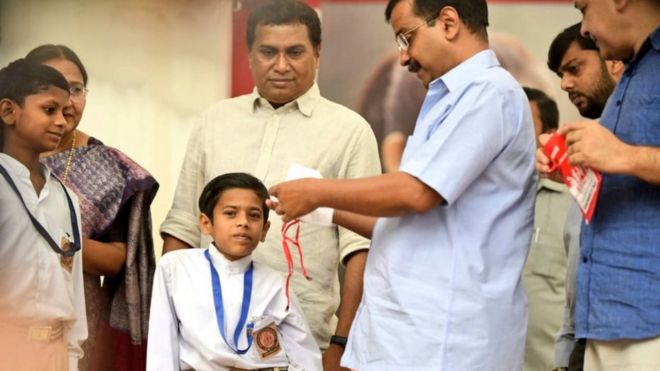
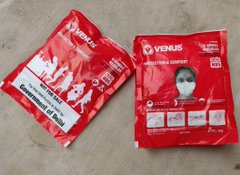
Image copyright TWITTER/@ARVINDKEJRIWALImage caption Delhi Chief MinisterArvind Kejriwal has been handing out masks to school students
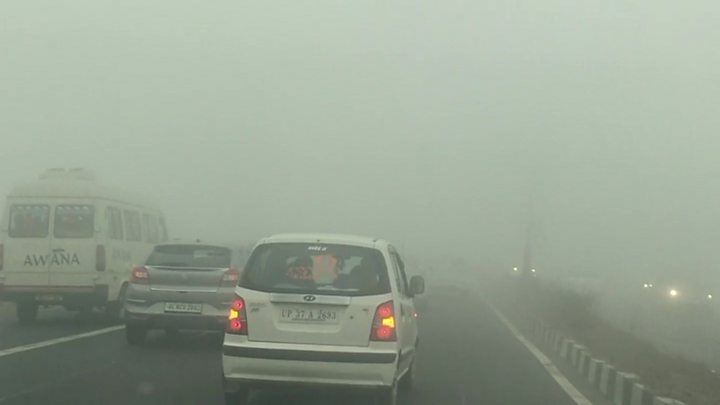
Five million masks are being distributed at schools in India’s capital, Delhi, after pollution made the air so toxic officials were forced to declare a public health emergency.
A Supreme Court mandated panel imposed several restrictions in the city and two neighbouring states, as air quality deteriorated to “severe” levels.
All construction has been halted for a week and fireworks have been banned.
The city’s schools have also been closed until at least next Tuesday.
Delhi’s Chief Minister Arvind Kejriwal said Delhi had been turned into a “gas chamber”.
The masks are being handed out to students and their parents, and Mr Kejriwal has asked people to use them as much as possible.
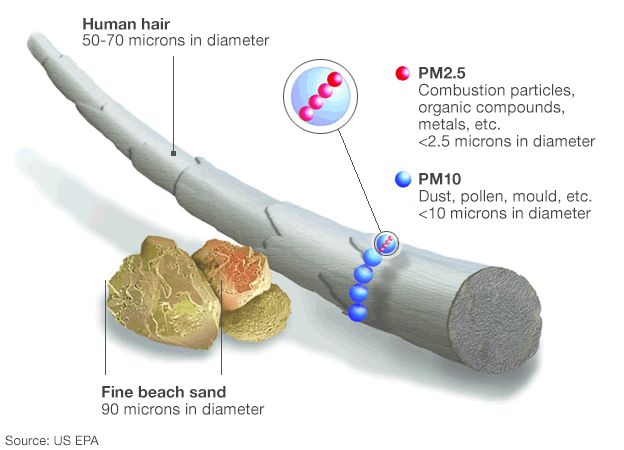
The levels of tiny particulate matter (known as PM2.5) that enter deep into the lungs are 533 micrograms per cubic metre in the city. The WHO recommends that the PM2.5 levels should not be more than 25 micrograms per cubic metre on average in 24 hours.
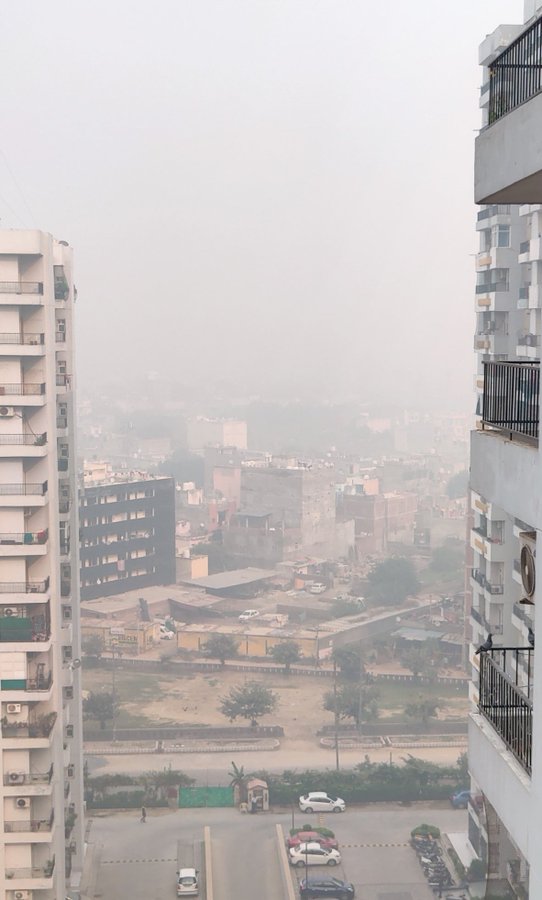
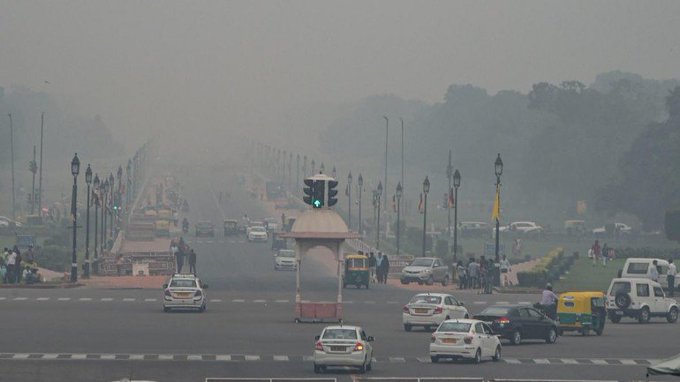
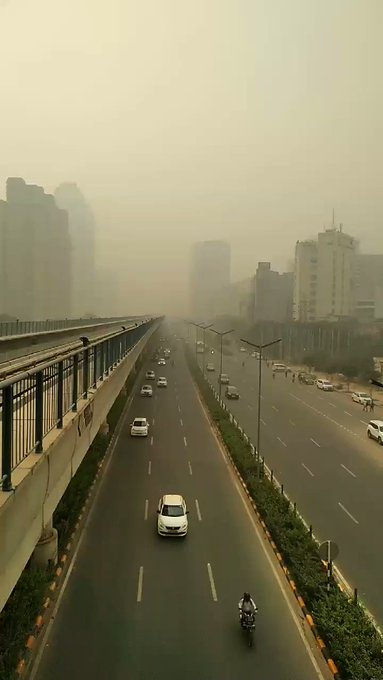
As thick white smog blanketed the city, residents started tweeting pictures of their surroundings. Many are furious that the situation remains the same year after year.
The hashtags #DelhiAirQuality and #FightAgainstDelhiPollition are trending on Twitter.
One of the main reasons for air quality in the city worsening every year in November and December is that farmers in the neighbouring states of Punjab and Haryana burn crop stubble to clear their fields. It’s made worse by the fireworks during the Hindu festival of Diwali.
There are other reasons too, including construction dust, factory and vehicular emissions, but farm fires remain the biggest culprit.
Media caption A hair-raising drive through the Delhi smog
More than two million farmers burn 23 million tonnes of crop residue on some 80,000 sq km of farmland in northern India every winter.
The stubble smoke is a lethal cocktail of particulate matter, carbon dioxide, nitrogen dioxide and sulphur dioxide.
Using satellite data, Harvard University researchers estimated that nearly half of Delhi’s air pollution between 2012 and 2016 was due to stubble burning.
The burning is so widespread that it even shows up in satellite photos from Nasa.
What are PM 2.5 particles?
Particulate matter, or PM, 2.5 is a type of pollution involving fine particles less than 2.5 microns (0.0025mm) in diameter
A second type, PM 10, is of coarser particles with a diameter of up to 10 microns
Some occur naturally – e.g. from dust storms and forest fires, others from human industrial processes
They often consist of fragments that are small enough to reach the lungs or, in the smallest cases, to cross into the bloodstream as well
Chinese President Xi Jinping has made becoming a “space flight superpower” a priority for his government
Chinese space authorities prepare to launch a rocket from a commercial cargo ship at sea. Photo: Handout
China has rolled out its first rules to regulate the manufacture of commercial space rockets and test flights in a move to guide healthy development of the commercial space sector, mirroring similar moves by the US in recent years.
As a rising number of start-ups set out to be China’s version of Elon Musk’s SpaceX, the guidelines are the first since China’s space industry was opened to the private sector in 2014. They require companies to obtain official permission before carrying out rocket research and development as well as production, according to a notice published on the web site of the State Administration of Science, Technology and Industry for National Defense on Monday.
The new rules also require a confidentiality system to be established among commercial rocket companies and asks them to follow state export control regulations when in doubt about whether they can provide overseas services and products.
The detailed regulations come as the number of private companies engaged in the commercialisation of China’s space industry increased to almost 100 in 2018 from 30 a year earlier, and as Beijing puts more emphasis on private sector involvement to boost its space ambitions.
China rockets to forefront of global space race with sea launch success
“The specifics give clear direction for China’s commercial space industry, clarifying the qualifications, operational boundaries and national guarantees, which will be conducive to the sector’s healthy and orderly development,” Shu Chang, CEO of Beijing-based commercial rocket pioneer OneSpace Technology, was quoted as saying to state media Global Times on Tuesday
Since coming to power in 2012, Chinese President Xi Jinping has made becoming a “space flight superpower” a priority for his government. Since 2014, Beijing has encouraged more private investors to participate in its space push to bolster commercial space technology development, including policies directed at investment and providing land for launches.
The guidelines issued on Monday said commercial rocket development had the potential to lower the cost of space sector development, improving China’s space power and competitiveness globally. It also encourages private companies to partner with state-backed organisations to take full advantage of the latter’s resources in research development, production and launch facilities.
Trump criticises Nasa moon mission after previously promoting it
The move by China mirrors similar efforts by the US in recent years to shift the burden of space exploration and technology development away from the state and into the private sector, leading to space rocket development by the likes of Elon Musk, Jeff Bezos and Richard Branson.
Military interests still weigh though. President Donald Trump has championed a return to the moon, calling for a lunar gateway that would allow a continuous stream of spacecraft and people to visit the moon, and serve as a leaping off point for Mars. Trump has also called for the creation of a “Space Force”, a sixth branch of the military that would be focused on defending US interests.
China accounts for roughly 3 per cent of the US$16.1 billion invested in private space companies and partnerships since 2009 in the world. But investments have increased rapidly since 2016, and the country led the world in the third quarter of 2018, according to Space Angels, a US investment firm that specialises in private space ventures.
Beijing is still behind in terms of its space-based military capabilities, but the gap is closing fast, experts say
US law now prohibits Nasa from communicating with China’s space agency
Illustration: Kaliz Lee
This story is part of an ongoing series on US-China relations produced jointly by the South China Morning Post and POLITICO, with reporting from Asia and the United States.
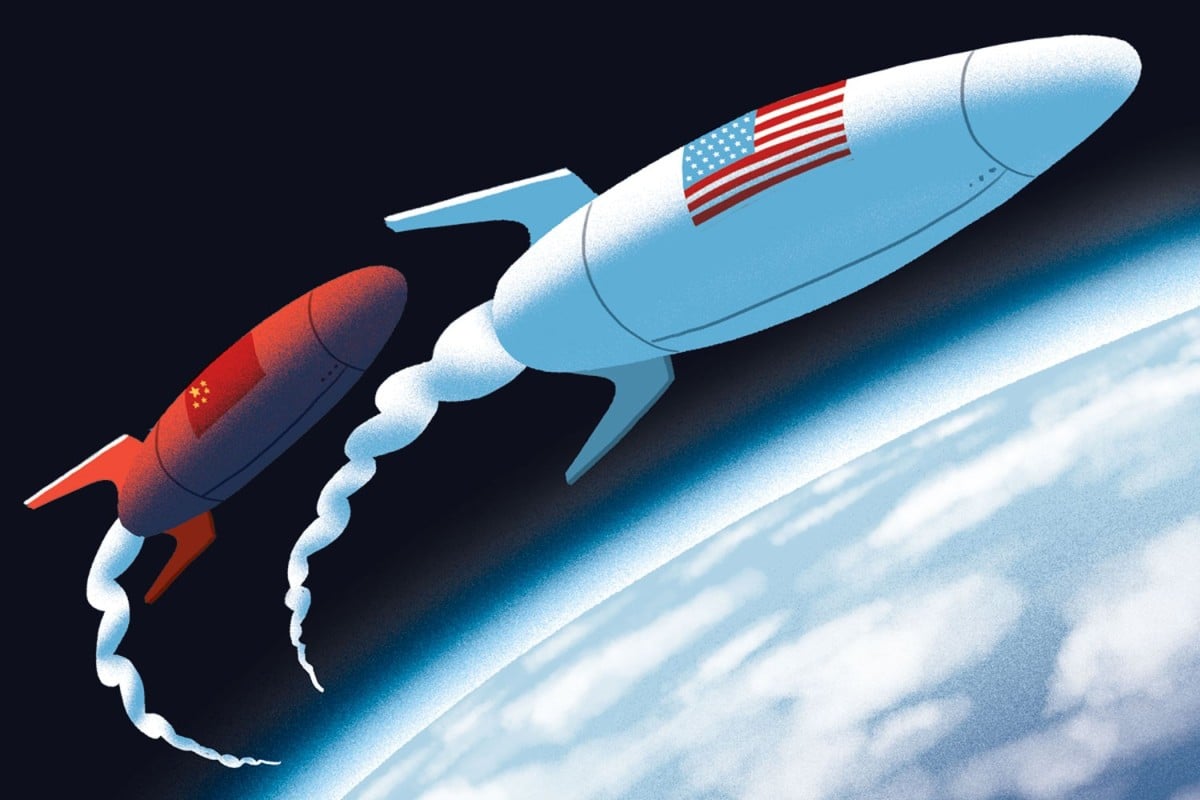
A top Chinese general has a warning for any US leaders planning an arms race in space: be prepared to lose.
Outspending a rival power into economic exhaustion might have helped the US win the cold war, said Qiao Liang, a major general in the Chinese air force who co-wrote the book Unrestricted Warfare: China’s Master Plan to Destroy America. But he said it would not work against a wealthy manufacturing powerhouse like China.
“China is not the Soviet Union,” Qiao said in an interview with the South China Morning Post, a news partner of POLITICO. “If the United States thinks it can also drag China into an arms race and take down China as it did with the Soviets … in the end, probably it would not be China who is down on the ground.”
Qiao’s words come as both Washington and Beijing are pouring money and resources into an increasingly militarised space race that some security specialists and former US officials fear is heightening the risk of war. The aggressive manoeuvres include US President Donald Trump’s proposal for a stand-alone
– which Qiao dismissed as “an unwise move” – and efforts by both countries to develop laser and cyber weapons that could take out each other’s satellites.
The rivalry is plainly on the minds of leaders at the Pentagon, which cites “space” 86 times in a new threat assessment of China’s military. It also warns that the People’s Liberation Army (PLA) is working on “enabling long-range precision strikes” and developing directed-energy weapons for use in orbit.
Sea launch rockets China to forefront of global space race
Trump, Vice-President Mike Pence and a slew of US military leaders have cited China’s military space programmes as a key rationale for proposing the Space Force, which would gather nearly all the defence department’s space-related programmes into a new military branch – similar to the one China created four years ago. Congress is considering the administration’s plan, although some defence hawks are sceptical.
Pence has also expressed alarm at China’s success in
“Last December, China became the first nation to land on the far side of the moon and revealed their ambition to seize the lunar strategic high ground and become the world’s pre-eminent spacefaring nation,” Pence said at a meeting of the National Space Council in March.
China and the US are pouring money into an increasingly militarised space race that some observers fear is heightening the risk of war. Photo: Shutterstock
Even more worrying, neither country seems interested in placing the issue on the diplomatic agenda to lower the tensions, some security advocates say. That is in contrast to the decades of space cooperation that have existed between the US and Russia.
“One of my biggest concerns is that for all the talk about how horrible an armed conflict with China would be for everyone, all the current US policies and actions seem to be preparing for armed conflict instead of avoiding it,” said Brian Weeden, director of programme planning at the Secure World Foundation, which advocates for using space in a peaceful and sustainable way.
“There is not a lot of dialogue between the US and China,” he said.
But other space experts say China is a greater threat to the United States than most people realise – and even an “imminent threat”, according to independent analyst Namrata Goswami.
“If anything, it [the threat from China] is underappreciated and underplayed in the US,” she said. “I suspect that is because the US military might not want to call attention to its own vulnerabilities regarding its space assets.”
Chang’e 4 lunar probe sends first photo of far side of the moon
Qiao said China was not seeking a space war but was preparing to counter any nation, including the US, that sought to pose a threat to its national security.
China’s economic prowess left it well positioned to prevail in an expensive contest with the US, he said.
“When the United States and the Soviet Union engaged in the cold war and the arms race, the United States was the largest manufacturing country, and the Soviet Union was not even the second,” he said. “But today it is China who is the world’s top manufacturer.”
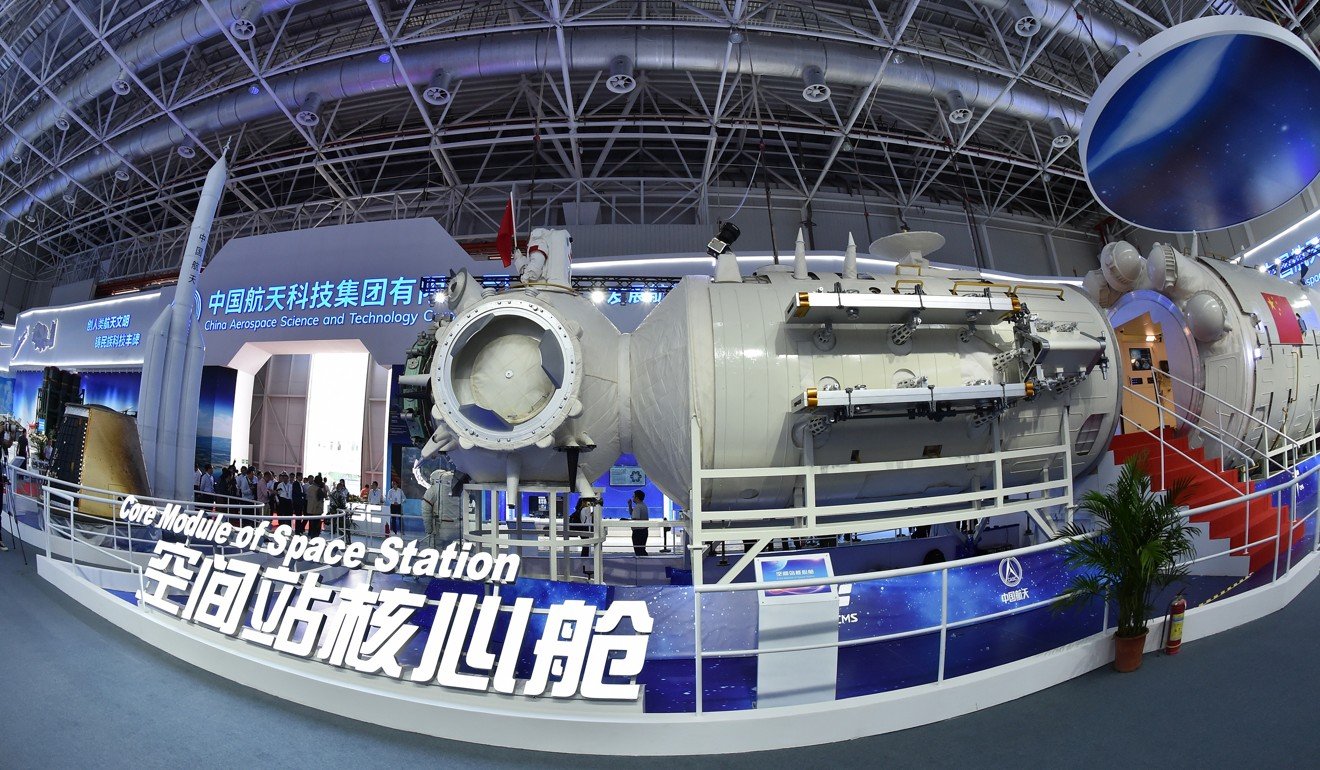
A full-size model of the core module of China’s space station goes on show at Airshow China in November. Photo: Xinhua
Recent reports from US spy agencies and think tanks indicate that China’s efforts are advancing quickly. Those include estimates that China will soon be able to field high-powered lasers designed to attack objects in low-Earth orbit – and evidence that its weapons can already attack targets much further from the Earth than the United States can.
China’s reliance on space assets is also expanding: it has more than 120 intelligence, surveillance and reconnaissance satellites of its own – second only to the United States.
About half of them are owned and operated by the military and could be used to track and target US forces around the world, the report warns.
Will China’s new laser satellite be ‘Death Star’ for submarines?
The threat getting the most attention is the danger China’s orbiting weapons might pose to the satellites the United States relies on for communications, navigation and surveillance – for both military operations and economic well-being.
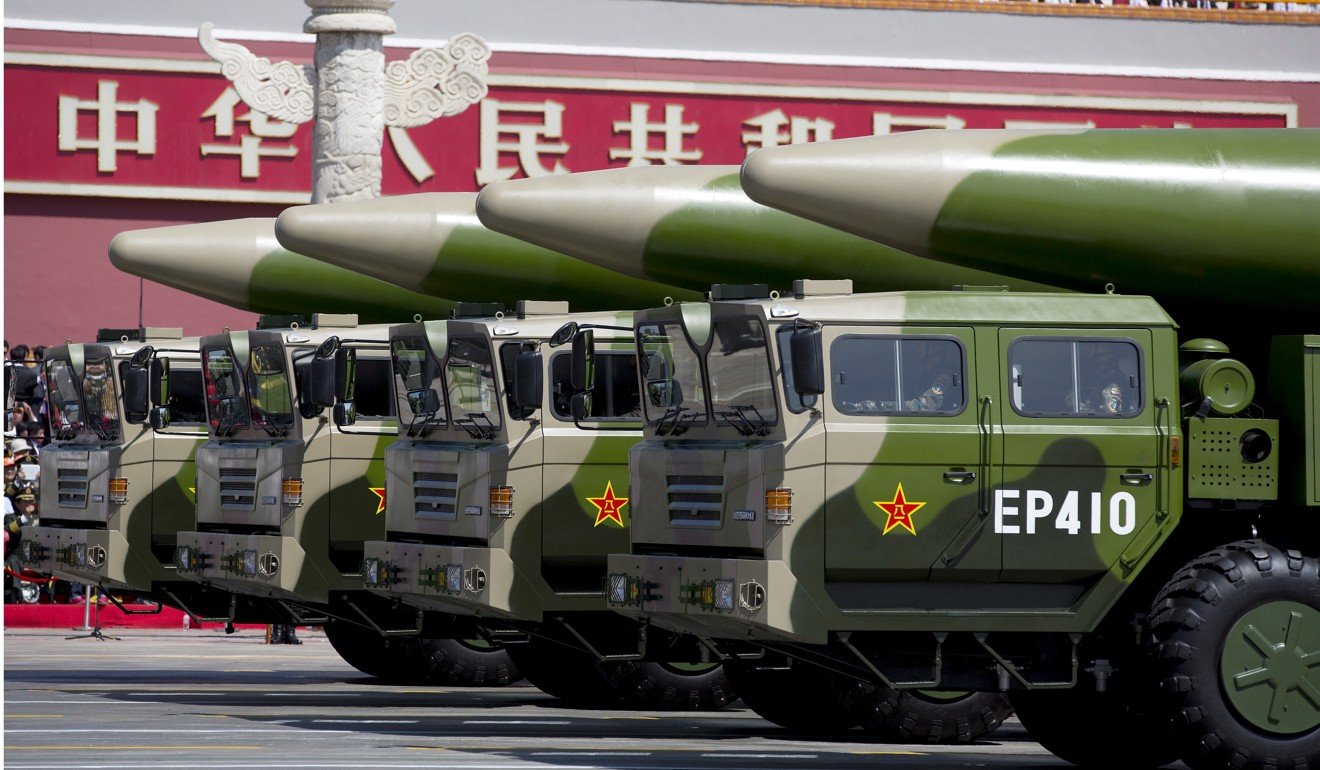
China is heavily investing in so-called counterspace technology, including the development of at least three antisatellite missile systems, according to an April report from the Centre for Strategic and International Studies. It is also developing satellites that can make physical contact with other satellites in orbit, the report said.
While that technology can be used for repairs in orbit, it can also be used to disable a satellite or tear off a solar array to impact a satellite’s power source.
China is developing satellites that can make physical contact with other satellites in orbit. Photo: Xinhua
The Pentagon’s “China Military Power” report found that China is also pursuing new jamming and “directed energy” weapons that can interfere with satellites. In a conflict, that technology would probably be used to “blind and deafen the enemy”, the report said.
China also reorganised the PLA in 2015 to create a Strategic Support Force, a military branch dedicated entirely to space, electronic and cyberwarfare. The new branch was designed to bring space assets from across the military under one organisation, similar to the goal of the US Space Force.
The space-centric branch, which reports directly to the Central Military Commission, is focused primarily on satellite launches and intelligence, navigation and communication operations, but also conducts research and development on new counterspace capabilities, according to the US Defence Intelligence Agency report published in February.
China ‘has overtaken Russia’ as a maritime power
Chinese military units are also training with missiles that could damage or destroy satellites, the agency also reported in February, adding that China will probably have a ground-based laser that can blind optical sensors on satellites in low-Earth orbit by 2020.
Unlike the United States or Russia, China is also believed to have the capacity to use missiles to attack satellites in the more distant geosynchronous orbit, or 35,000km (22,000 miles) above Earth.
If any country were to launch a physical strike in geosynchronous orbit (GEO), the debris field would make the area, which is today used for critical missions like early missile warning and weather observations, unusable.
“We have much more to lose in GEO than any other country,” said Kaitlyn Johnson, an associate fellow who specialises in space security at the Centre for Strategic and International Studies. “We wouldn’t want to have a first strike capability.”
Chinese military units are training with missiles that could destroy satellites. Photo: Reuters
Military experts also worry that China could try to seize areas of the moon that contain strategic resources including ice that could be used for rocket fuel or life support.
But they say it is much more likely China will want to use dominance in space to influence conflicts on Earth. For instance, being able to threaten the military’s GPS or communications satellites might deter the US from getting involved in a conflict in the South China Sea, Weeden said.
The US Space Force is intended to close some of those gaps by grouping space assets together to build expertise and giving the new service autonomy over its budget requests. One of the biggest goals of the new branch is to speed up space acquisitions, allowing new technology to be fielded faster, and to develop a space “doctrine” that would oversee how the US fights conflicts when space platforms are at stake.
China adds new satellite to rival US global positioning system
The Chinese government insists that it is merely responding to aggressive US moves to dominate space militarily. Qiao called it “bullying and hegemonic” for the United States to insist that other countries cannot follow suit.
“The US space troops have long existed,” he said. “They just did not become an independent force … moreover, the US possessed anti-satellite capabilities as early as the 1970s and 1980s. China only developed anti-satellite capabilities at the end of the 1990s and even in the first decade of this century.”
China had little choice but to enhance its capabilities, he said.
“China’s purpose to develop space capabilities, firstly, is we do not want to be blackmailed by others,” Qiao said in the interview. “Second, we hope to use space peacefully. But if others want to oppress us by occupying the heights of space and opening up a ‘fourth battlefield’, China will certainly not accept it.”
Qiao Liang, a major general in the Chinese air force, says it is “bullying and hegemonic” for the United States to insist other countries cannot develop a space force. Photo: Handout
Still, China remained far from surpassing US dominance, he said. “We cannot overtake the US in the next decade or two, but we will narrow the gap in a comprehensive way. And it is possible we may take the lead in some individual areas.”
Weeden agreed.
“China is developing many of the same space capabilities the US did decades ago, while the US is focused on sustaining its capabilities and making them more resilient,” he said.
“On the whole, the US is still far more capable than China is but the relative advantage is narrowing.”
What is space junk and why is it a problem?
The two nations have some diplomatic channels through which they could cooperate in space, including the United Nations’ Committee on the Peaceful Uses of Outer Space, of which both are members. In 2015, the Obama administration established a dialogue with China on space safety, which is quietly continuing under Trump, although Weeden said the meetings were mostly high-level talks.
But the Wolf Amendment, which was first passed in a Congressional appropriations bill in 2011, forbids the US government from working with China and prohibits any bilateral cooperation between the China National Space Administration and the US National Aeronautics and Space Administration on national security grounds. And there is virtually no collaboration between the militaries of the two nations today.
To open the door for conversations that could ease tensions and avoid miscommunication, the US and China must “crawl before we walk”, Audrey Schaffer, the director of space strategy and plans at the defence department, said at a March event on US-China space relations hosted by the Secure World Foundation.
Some potential first steps include the two countries sharing information like their national defence strategies, providing launch notifications of space vehicles or opening routine, secure communications channels between diplomats. Each step would help build trust and transparency, Schaffer said, pointing to the strong relationship between the US and Russia in space as evidence that it could be done.
“Even then when the relationship was just as strained, if not more so, we did manage to work bilaterally and multilaterally with the Soviets to really create mechanisms that would help reduce the risks of conflict and enhance stability,” Schaffer said.
Yutu’s discovery of olivine helps pave the way for scientists to confirm existence of a mantle beneath the moon’s crust
Crystallised mineral likely came from a crater caused by a meteor strike
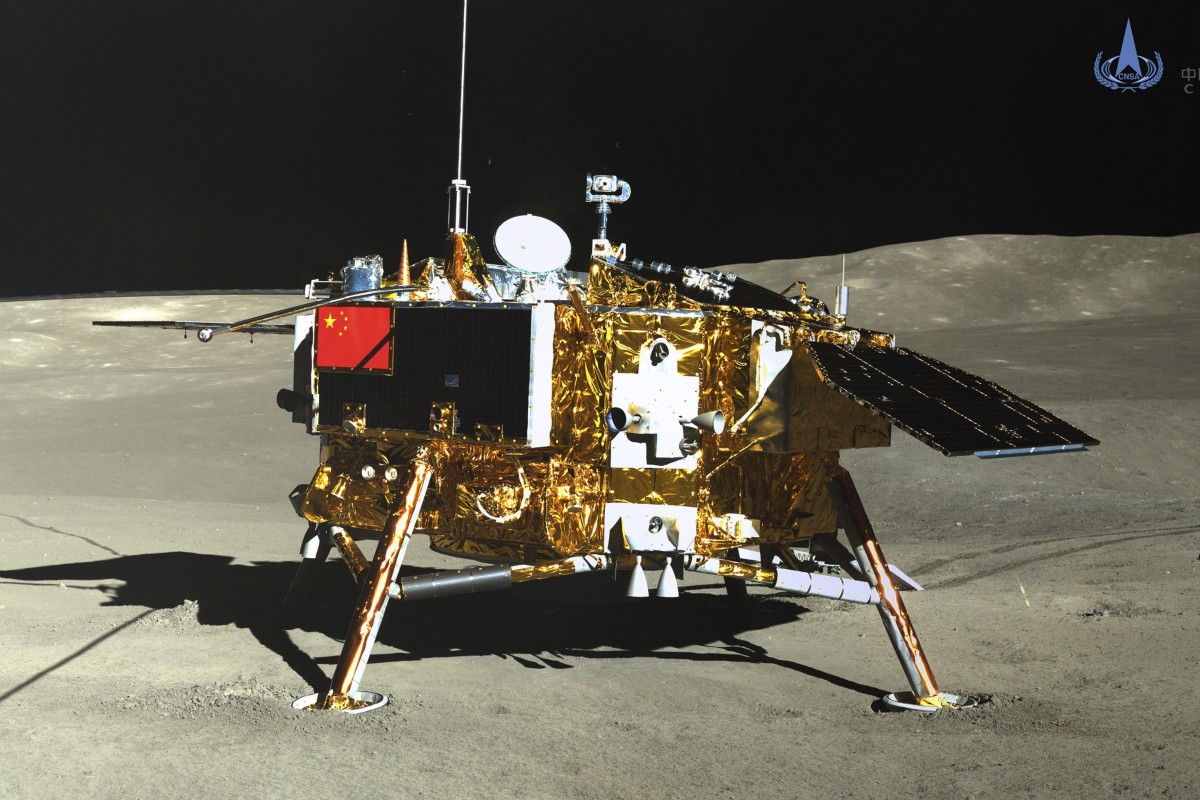
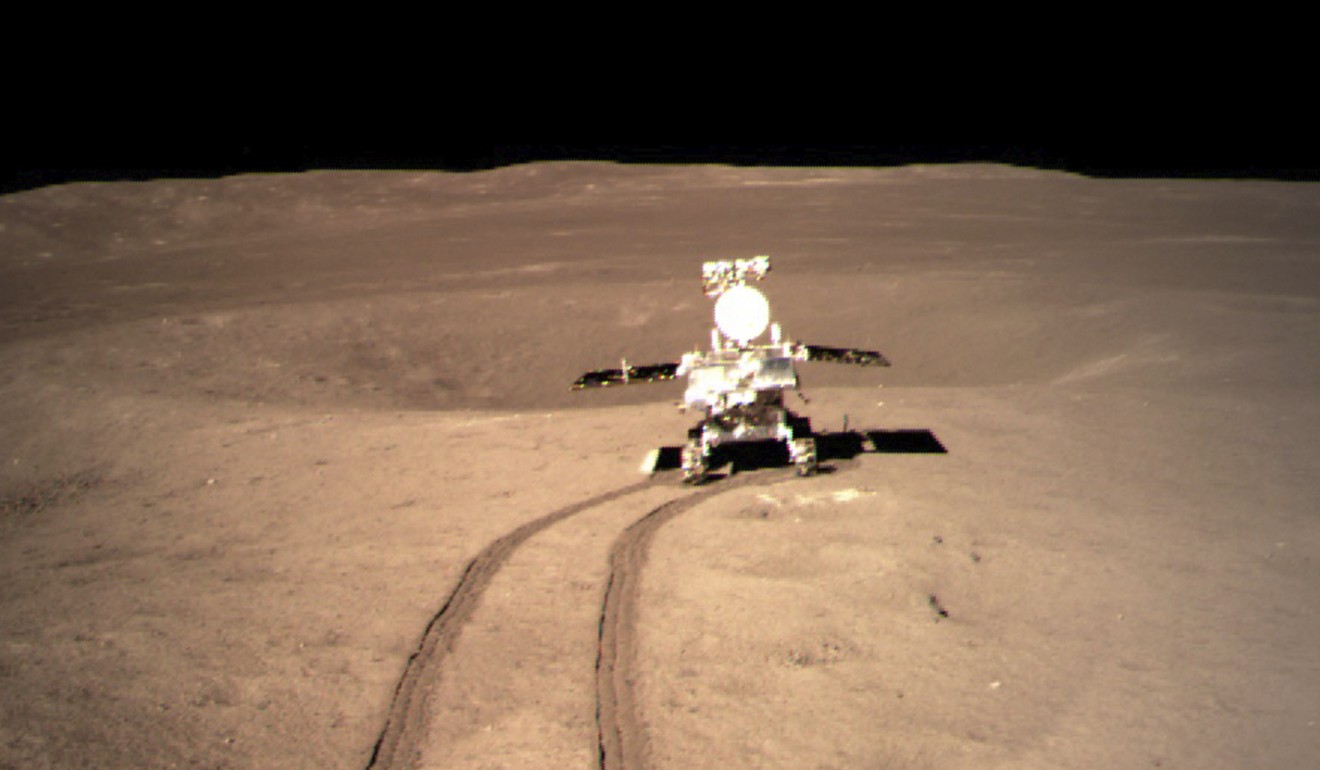
China’s lunar rover, Yutu, has made a groundbreaking discovery. Photo: Xinhua
China’s lunar rover, Yutu, has made a groundbreaking discovery that proves what scientists have been thinking for decades: that the moon has a mantle.
Scientists have long suspected that the moon has a mantle under its crust, just like the Earth, but for the past 60 years lunar explorations, including the US Apollo missions, have failed to provide proof. While there were clues, there was no direct evidence.
“Now we have it,” said Professor Li Chunlai, deputy director of the National Astronomical Observatory of China and a lead scientist on the Chang’e-4 mission that put Yutu, or Jade Rabbit as it is known in English, on the moon.
The findings, published in the latest issue of journal Nature on Thursday, answer some fundamental questions about the moon, such as its internal structure and history of its formation.
The rover discovered olivine in surface samples collected near its landing site. Photo: Xinhua
During its first mission on January 3, Yutu discovered olivine, a green, crystallised mineral usually found deep underground – like the upper mantle of the Earth – in surface samples collected near its landing site.
Further analysis showed that the olivine was not local, but had originated from a 72km diameter (45-mile) crater nearby.
The far side of the moon has more craters than the near side, which faces the Earth, and a meteor strike probably penetrated to the mantle and brought up materials to the surface.
What you need to know about Chang’e 4’s mission to the moon
Yutu’s landing site used to be littered by rocks, but cosmic rays and solar wind weathered them to dust, Li said.
“What we found is the first direct evidence of materials from deep below the lunar crust,” though how deep is still unknown, he said.
It is generally believed that the moon was once covered by oceans of molten rock. Lighter substances rose to the surface and formed a crust while heavier ones sank to form the mantle and core. The new findings support that theory.
China is the first country to land a rover on the far side on the moon and is planning to send a larger spacecraft there later this year to bring back samples.
The first Chinese astronauts will land on the moon between 2025 to 2030, according to Beijing’s latest schedule.
The Apollo missions brought back many rock samples, some of which contained olivine, but some scientists suspected they might have come from a volcanic eruption.
First photo of lunar rover leaving ‘footprints’ on moon
China, the United States and other nations have all announced plans to launch missions to exploit the moon’s resources within the next decade or two.
Yutu’s discovery could help scientists to draw a more accurate map of those resources, including the volume and distribution of minerals, researchers said.
In Chinese folklore, Yutu or Jade Rabbit as it is known in English, is a companion of the moon goddess Chang’e. Photo: Handout
US President Donald Trump gave Nasa an additional US$1.6 billion budget to put Americans back on the moon by 2024.
Li said Chinese scientists were willing to work with their colleagues in the US, but Washington had blocked any such collaboration.
WASHINGTON, Feb. 12 (Xinhua) — Data from NASA satellites have shown that China and India led the way in greening on land, thanks to ambitious tree-planting programs in China and intensive agriculture in both countries.
The study published in the latest edition in Nature Sustainability on Monday showed that at least 25 percent of the foliage expansion since the early 2000s globally came in China.
The researchers from Boston University found that global green leaf area has increased by 5 percent in the new century, an area equivalent to all of the Amazon rainforest.
“China and India account for one-third of the greening, but contain only nine percent of the planet’s land area covered in vegetation,” said lead author Chen Chi of Boston University.
“That is a surprising finding, considering the general notion of land degradation in populous countries from over-exploitation,” said Chen.
Rama Nemani, a research scientist at NASA’s Ames Research Center and a co-author of the study said: “When the greening of the Earth was first observed, we thought it was due to a warmer, wetter climate and fertilization from the added carbon dioxide in the atmosphere.”
But with data from NASA’s Terra and Aqua satellites, scientists realized that humans are also contributing.
“Humans are incredibly resilient. That’s what we see in the satellite data,” said Nemani.
China’s contribution to the global greening trend comes in large part from its programs to conserve and expand forests, accounting for about 42 percent of the greening contribution, according to the study.
Another 32 percent of the greening change in China, and 82 percent in India, resulted from intensive cultivation of food crops, since the farmland in China and India has not changed much since the early 2000s, while both increased their food production to feed large populations.
However, the researchers rang bells as well. They said that the gain in global greenness did not necessarily offset the loss of natural vegetation in tropical regions like Brazil and Indonesia.
The loss of sustainability and biodiversity in those ecosystems cannot be offset by the simple greenness of the landscape, according to the study.


 BepiColombo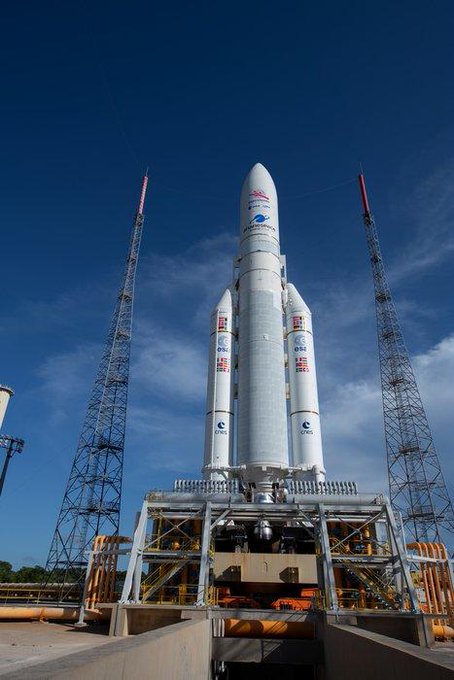






















 CHINDIA ALERT: You'll be living in their world, very soon