22/12/2019
BEIJING, Dec. 21 (Xinhua) — Ask the silver-haired residents of the elderly care community Yinheyuan in central Beijing what they know about artificial intelligence (AI), and they will probably throw the question to the smart speakers within their reach.
These smart speakers, capable of interacting with users with voice-recognition technologies, are also part of the answer. Via voice command, senior residents can control lights, TVs and other home appliances, order food or ask for help.
AI is no longer a technical term used exclusively by professionals in China. Both young and old are enjoying the benefits of the growing smart economy.
After personal computers (PC), PC internet and mobile internet, the growth focus of China’s digital economy is shifting to smart technologies like AI, said Baidu Chairman and CEO Robin Li at the World Internet Conference in October.
In the smart economy era, Li predicted a declining reliance on cellphones and a rising popularity of other smart devices. AI chips, cloud computing services, among others, would become the new digital infrastructure, while innovative businesses will flourish as transport, health, education and other sectors go smart.
Wearable devices, smart home appliances, autonomous driving and smart cities are among the fastest-growing fields in the smart economy.
China is the largest smart speaker market in the world, accounting for 36 percent of global shipments in the third quarter of 2019, according to global market firm Strategy Analytics. It found in a July and August survey that 63 percent of Chinese people without a smart speaker planned to buy one within the following year. Another 22 percent planned to make a purchase later on.
Chinese firms are stepping up investment in 5G, AI and the Internet of Things to gain a foothold in the emerging field. By end-June, China had over 1,200 AI-related enterprises, according to the Ministry of Industry and Information Technology.
Baidu launched its autonomous driving open platform ApollBo in 2017 to coordinate cross-sector efforts in this field. It has launched several L4 autonomous driving vehicles in partnership with leading automobile companies, and a fleet of Apollo-powered robotaxis are now taking test runs in central China’s Changsha.
Nurturing a smart economy is also on the government agenda. China has passed a guideline to boost the integration of AI and the real economy this year, and plans to build some 20 national AI innovative development pilot zones by 2023.
The country’s AI sector is forecast to be worth more than 160 billion yuan (about 22.83 billion U.S. dollars) in 2020, spurring related sectors to exceed 1 trillion yuan, said Lin Nianxiu, deputy director with the National Development and Reform Commission, citing industrial data.
Lin said China would focus on 100 firms dedicated to AI technologies and relevant applications, improve the industrial ecosystem, facilitate the deep integration of AI and the real economy, and intensify its international collaboration on AI technology, standards, industries, laws and regulations and ethics.
Source: Xinhua
Posted in AI, AI chips, Artificial intelligence, artificial intelligence (AI), ask for help, autonomous driving, Baidu, Baidu Chairman and CEO, Beijing, Cellphones, Changsha, China alert, cloud computing services, control lights, digital economy, digital infrastructure, education, empowers, Health, home appliances, individuals, industries, innovative businesses, interacting, Internet of Things, Ministry of Industry and Information Technology, mobile internet, National Development and Reform Commission, National Development and Reform Commission (NDRC), order food, PC internet, personal computers (PC), professionals, senior residents, Smart Cities, smart economy, Smart economy fledging, smart home appliances, smart speaker, smart speakers, technical term, Transport, TVs, Uncategorized, users, voice command, voice-recognition technologies, Wearable devices, World Internet Conference |
Leave a Comment »
15/11/2019
BEIJING, Nov. 15 (Xinhua) — China has signed 197 Belt and Road (B&R) cooperation documents with 137 countries and 30 international organizations by the end of October, the country’s top economic planner said Friday.
Apart from developing and developed economies, a number of companies and financial institutions from developed countries have collaborated with China to expand the third-party market as well, Meng Wei, a spokesperson for the National Development and Reform Commission (NDRC), told a news conference.
The construction of the China-Laos railway, China-Thailand railway, Jakarta-Bandung High-Speed Railway and Hungary-Serbia railway are making solid headway while projects including the Gwadar Port, Hambantota Port, Piraeus Port and Khalifa Port have gone smoothly, the NDRC said.
Meanwhile, the building of the China-Belarus industrial park, China-UAE Industrial Capacity Cooperation Demonstration Zone and China-Egypt Suez Economic and Trade Cooperation Zone is also forging ahead.
From January to September, China’s trade with B&R countries totaled about 950 billion U.S. dollars, and its non-financial direct investment in these countries topped 10 billion dollars, Meng said.
She noted that China has made bilateral currency swap arrangements with 20 B&R countries and established RMB clearing arrangements with seven countries.
In addition, the country has also made achievements with B&R countries in other sectors including technology exchange, education cooperation, culture and tourism, green development and foreign aid.
Source: Xinhua
Posted in Belt and Road (B&R) cooperation, China alert, China-Belarus industrial park, China-Egypt Suez Economic and Trade Cooperation Zone, China-Laos railway, China-Thailand railway, China-UAE Industrial Capacity Cooperation Demonstration Zone, Construction, Culture, education cooperation, foreign aid, green development, Hambantota Port, Hungary-Serbia railway, Jakarta-Bandung High-Speed Railway, Khalifa Port, National Development and Reform Commission (NDRC), Piraeus port, technology exchange, Tourism, Uncategorized |
Leave a Comment »
06/11/2019
- French leader calls for restraint and says he raised the topic ‘on several occasions’ during his visit
- Two sides find common ground on need to defend free trade and fight climate change as Donald Trump starts process of pulling US out of Paris Climate Agreement
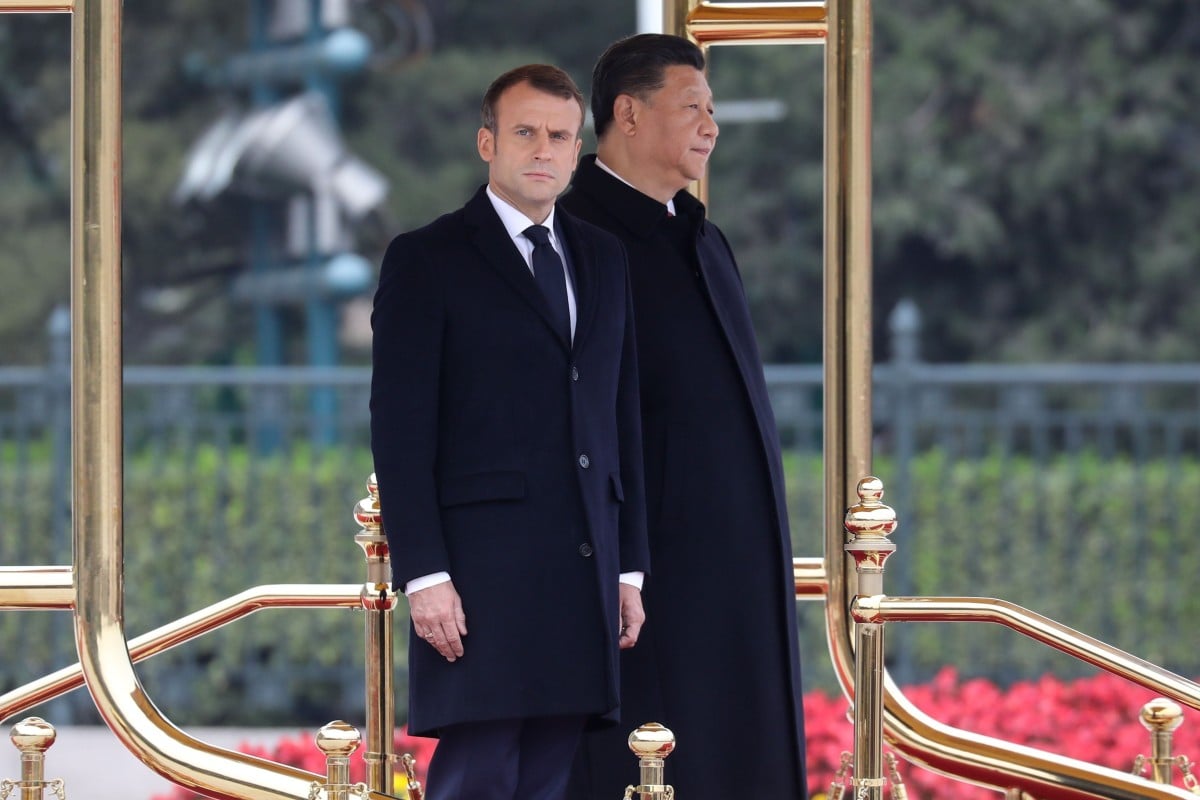
Xi Jinping and Emmanuel Macron at a welcome ceremony ahead of their talks in Beijing on Wednesday. Photo: AFP
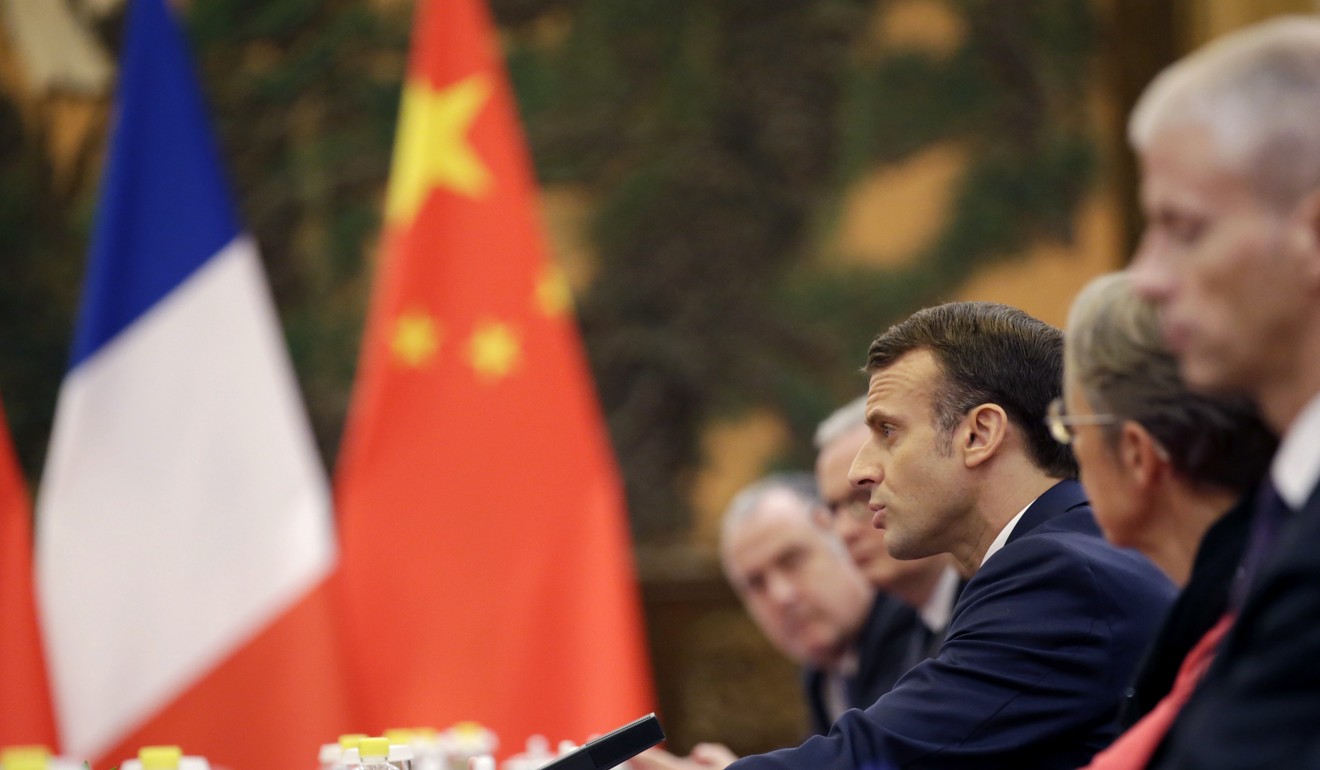
French President Emmanuel Macron said he raised human rights and the Hong Kong situation during his talks with his Chinese counterpart Xi Jinping on Wednesday.
Macron’s visit to China concluded with pledges to work together on climate change, but the French leader also said he also called for a de-escalation of the situation in the city through dialogue after months of protests.
Macron, who had promised to raise “taboo” topics during the visit, told a press conference: “I obviously raised this with President Xi Jinping on several occasions.
“We have repeatedly called on the parties involved to [engage in] dialogue, to show restraint, to de-escalate.”
The discussion followed Xi’s meeting with Hong Kong’s embattled Chief Executive Carrie Lam Cheng Yuet-ngor in Shanghai on Monday, where he expressed “high trust” in her and “fully affirmed” support for her response to the unrest that has gripped the city since June.
Earlier the French and Chinese leaders had restated their commitment to protect free trade and pledged their continued support for the Paris Agreement as the United States begins the process of formally withdrawing from the global climate deal.
Macron expressed “regret” over “some countries’ negative attitude” towards environmental protection and the fight against climate change and pledged to work with China to halt the loss of biodiversity.
The French president’s office also released a statement on Wednesday that reaffirmed France and China’s joint support for the “irreversible” Paris Agreement.
Macron points to common ground with China on tariffs and climate action
With the European Union, China and Russia backing the pact, he added, “the isolated choice of one or another is not enough to change the course of the world. It only leads to marginalisation.”
The two countries also agreed to work together to develop joint nuclear power projects and signed a series of contracts worth US$15 billion.
The deals covered aeronautics, energy and agriculture, including approval for 20 French companies to export poultry, beef and pork to China.
An additional action plan released after the talks said French utility giant EDF and China General Nuclear Power should be encouraged to cooperate on projects in China or third countries, citing the joint efforts by the two companies to build nuclear reactors at the Hinkley Point C station in Britain as an example.
The two sides also committed to signing a contract for the construction of a nuclear fuel recycling plant in China, which would involve French energy giant Orano, by January 31.
Xi took what appeared to be a veiled swipe at the United States, which is still embroiled in a protracted trade war and other confrontations with Beijing.
“We advocate for mutual respect and equal treatment, and are opposed to the law of the jungle and acts of intimidation,” Xi said.
“We advocate for openness, inclusion and for mutually beneficial cooperation, and are opposed to protectionism and a zero-sum game.”
Macron said China and the European Union should work in partnership as the world became more unstable, calling on the two sides to further open up market access.
“We call again for trade multilateralism to respond to distortions that have appeared in the global economy, which have led to a profound rise in inequalities and imbalances that explain the surge of challenges to the international systems,” he said.
“China and Europe also share the same views that the trade war only leads to loss.”
Macron kicks off China visit with deal to protect wine and cheese from counterfeiting
Chinese state news agency Xinhua said the two countries agreed to work together to push forward with plans to assemble Airbus’s A350 model in China.
Meanwhile, Beijing Gas Group and French utility firm Engie will collaborate on a liquefied natural gas terminal and storage in the northern city of Tianjin, while France’s Total will set up a joint venture with China’s Shenergy Group to distribute liquid nitrogen gas by truck in the Yangtze River Delta.
The two countries also agreed to reach an agreement by the end of January 2020 on the cost and location of a nuclear fuel reprocessing facility to be built by Orano, formerly known as Areva.
Wu Libo a professor and director of the Centre for Energy Economics and Strategies Studies at Fudan University, said there was “great potential” for further cooperation between the two countries on nuclear energy.
“France has many useful experiences in the operation and management of nuclear power plants and its plants have long-term safe and stable operation records,” she said.
The two sides agreed to work together on joint nuclear power projects. Photo: AP
Jiang Kejun, a senior researcher at the Energy Research Institute of China’s National Development and Reform Commission, said China’s cooperation with France would add credibility to potential third-country projects.
“China has advanced third-generation technology but it’s still a new member in the nuclear power market, while France has developed nuclear energy for a long time, and its EPR reactors – a technology designed and developed in France – are in business operation,” he said.
Jiang said possible markets for the joint projects included Argentina and India, while some Middle Eastern states – such as Saudi Arabia and Qatar – had expressed interest in nuclear energy.
China’s ambassador hits out at Macron’s team for backing ‘hypocritical’ EU stance on Hong Kong
Tong Jiadong, professor of international trade at Nankai University, said that the deals between the two sides helped show that France and China could work together to counteract US unilateralism.
“Objectively speaking, this will form, or at least imply, an opposition to US unilateralism,” Tong said. “China hopes the cooperation between these two countries produces demonstrable effects for other EU member states.”
Ding Chun, a professor of European Studies at Fudan University, said he did not think the EU wanted to “choose a side” between the US and China.
But Ding continued: “If we are talking about free trade and multilateralism, there’s no doubt that the EU and China share a common view and can balance Donald Trump’s unilateralism.”
Source: SCMP
Posted in Airbus’s A350, Areva, Argentina, Beijing, Beijing Gas Group, calm, Carrie Lam Cheng Yuet-ngor, Centre for Energy Economics and Strategies Studies, Chief Executive, China alert, China’s Shenergy Group, Chinese leader Xi Jinping, Energy Research Institute, Engie, EPR reactors, EU, Europe, European Studies, European Union, French, French President Emmanuel Macron, Fudan University, Hong Kong, India, Liquefied natural gas, liquid nitrogen gas, Middle Eastern states, multilateralism, Nankai University, National Development and Reform Commission, National Development and Reform Commission (NDRC), nuclear energy, nuclear fuel reprocessing facility, nuclear power projects, Orano, Paris climate agreement, President Donald Trump, Qatar, Russia, Saudi Arabia, Shanghai, situation, talks are needed, terminal and storage, Tianjin, Uncategorized, unilateralism, United States, utility firm, welcome ceremony, Yangtze River Delta, zero-sum game |
Leave a Comment »
04/11/2019
- Latest measures grant island’s people and enterprises more equal treatment with their mainland counterparts
- Package in March last year was dismissed by Taiwan’s Mainland Affairs Council as an attempt to buy political support
Taipei’s elections in January could influence the tone of cross-strait relations. Photo: EPA-EFE
Beijing announced a series of sweeteners for Taiwanese businesses and individuals on Monday – including participation in its 5G research and allowing Taiwanese to use mainland consular services – only two months before
Taiwan’s critical presidential election.
The latest 26 measures drawn up by 20 government departments, including the State Council’s Taiwan Affairs Office and the National Development and Reform Commission, are designed to attract more Taiwanese to live and work in mainland China, despite worsening cross-strait relations.
But Taiwan’s Mainland Affairs Council criticised the move as an attempt by the Chinese Communist Party to “divide Taiwan internally, and was a further reflection of attempts to try to interfere in and influence Taiwan’s election”.
It follows a similar package of 31 measures unveiled by Beijing in March last year, which included tax incentives, preferential land-use policies for Taiwanese businesses on the mainland and benefits for Taiwanese individuals in studying or living on the mainland.
Taiwan charges pro-Beijing politicians with accepting mainland cash
The latest measures to grant Taiwan-funded enterprises more equal treatment with their mainland counterparts include offering access to research and development in 5G technology, investment in passenger and cargo air services, the establishment of microlending and financing companies and the right to apply for financial guarantees from local government funds.
Taiwanese individuals will also be officially entitled to mainland Chinese consular protection abroad, will be treated the same as their mainland counterparts when buying residential property on the mainland, and will be able to train in Beijing for the 2020 Olympic Games.
Beijing claims sovereignty over self-ruled Taiwan, and has not renounced the use of force to take the democratic island into its fold. Beijing’s ruling Communist Party has stressed its intention to promote “peaceful reunification”, pledging in its communique from the
fourth plenary meeting of the party’s elite last week to “deepen cross-strait integration and development” while opposing Taiwanese independence.
The latest measures from Beijing came ahead of Taiwan’s presidential and legislative elections in January. Relations across the Taiwan Strait have been frozen under the administration of independence-leaning Taiwanese President, ostensibly over her refusal to accept the “1992 consensus”, or the understanding that there is only “one China” – something that Beijing considers a prerequisite for any talks with Taipei.
Taiwan’s Mainland Affairs Council said on Monday that the roll-out of the 26 measures one year later was intended to “cover up” the fact that the 31 measures had not been executed properly, and reflected administrative problems on the mainland amid slowing economic growth.
“Even more than that, it also reflects that during this period Taiwanese people have rejected ‘one country, two systems’ and do not agree with the results of the Communist Party’s united front divisions,” the council said.
“We urge the Communist Party officials to specifically implement protections for Taiwanese businesses and Taiwanese people in their investments and lives.”
Joseph Wu, Taipei’s foreign minister, also responded with a tweet written in simplified Chinese – which is used on the mainland – rather than the traditional Chinese used in Taiwan.
“China’s Taiwan Affairs Office came out with 26 measures and last year there were 31 – it looks like there are so many measures,” he wrote. “But we in Taiwan do not need one country, two systems, so there is really no need to be so polite. Giving your people more freedom is also good!”
Ongoing
anti-government protests in Hong Kong – which is semi-autonomous from Beijing under the one country, two systems model – have highlighted for many Taiwanese voters the threat from Beijing to the island’s sovereignty.
The latest polling by the MAC found that 89 per cent of respondents opposed the one country, two systems framework that Beijing proposed for Taiwan, up from 75 per cent in a similar survey in January.
Edward I-hsin Chen, a political-science professor at Chinese Culture University in Taipei, said the impact of the 26 measures on the election would depend on how they were implemented, but that one country, two systems was clearly not palatable for Taiwanese voters, whether they supported Tsai’s Democratic Progressive Party (DPP) or the mainland-friendly Kuomintang (KMT).
“Taiwan, of course, will not accept one country, two systems, so these policies will need to be more long-term. Mainland officials did not handle the Hong Kong issue very well, so it will be very hard for one country, two systems in Taiwan – blue and green will both reject it,” he said, referring to the party colours for the KMT and DPP. “But it is good for Taiwanese people and businesses to be able to take part in the 5G sector, and there will be more cooperation in the future.”
Lin Chingfa, former chairman of the Beijing-based Association of Taiwan Investment Enterprises, said he believed the new measures were intended to appeal to Taiwanese youth.
“A very important direction for cross-strait cooperation nowadays is to bridge the opportunities available in mainland China for young people who feel deprived from the slow Taiwanese economy. Some of these policies should be especially appealing to them because it shows that the country hopes to make it more convenient for young Taiwan people willing to come,” Lin said.
He said this approach was especially obvious in the measures that were introduced to provide equal treatment for Taiwan people on the mainland – for example the opportunities for Taiwan people to apply for scholarships and the expansion of places for Taiwanese students at universities.
Source: SCMP
Posted in 5G research, 5G technology, anti-government protests, Association of Taiwan Investment Enterprises, Beijing, cargo air services, China’s State Council, chinese communist party, Chinese Culture University, Democratic Progressive Party (DPP), Election, extends, Hong Kong, Mainland Affairs Council, microlending and financing companies, National Development and Reform Commission, National Development and Reform Commission (NDRC), ne country, two systems model, one China, One country, two systems, passenger air services, presidential, sovereignty, State Council Taiwan Affairs Office, Sweeteners, Taipei, Taiwan Affairs Office, Taiwan’s, Taiwanese, Taiwanese President, Uncategorized |
Leave a Comment »
14/10/2019
Nepali President Bidya Devi Bhandari hosts a grand farewell ceremony for Chinese President Xi Jinping at the airport in Kathmandu, Nepal, Oct. 13, 2019. Nepali Vice President Nanda Bahadur Pun, Prime Minister K.P. Sharma Oli, Chairman of the National Assembly Ganesh Prasad Timilsina, cabinet members and senior army generals also attended the ceremony. Chinese President Xi Jinping returned to Beijing from Kathmandu on Sunday. (Xinhua/Gao Jie)
BEIJING, Oct. 13 (Xinhua) — Chinese President Xi Jinping returned to Beijing Sunday evening after his second informal meeting with Indian Prime Minister Narendra Modi in India and a state visit to Nepal.
Xi’s entourage, including Ding Xuexiang, member of the Political Bureau of the Communist Party of China (CPC) Central Committee, member of the Secretariat of the CPC Central Committee, and director of the General Office of the CPC Central Committee; Yang Jiechi, member of the Political Bureau of the CPC Central Committee and director of the Office of the Foreign Affairs Commission of the CPC Central Committee; State Councilor and Foreign Minister Wang Yi; and He Lifeng, vice chairman of the National Committee of the Chinese People’s Political Consultative Conference and head of the National Development and Reform Commission, also returned to Beijing on the same plane.
As Xi and his entourage were leaving Kathmandu on Sunday noon local time, people of Nepal flocked to both sides of a road leading to the airport, waving flags and playing music to see the Chinese guests off.
Nepali President Bidya Devi Bhandari hosted a grand farewell ceremony for Xi at the airport. Nepali Vice President Nanda Bahadur Pun, Prime Minister K.P. Sharma Oli, Chairman of the National Assembly Ganesh Prasad Timilsina, cabinet members and senior army generals also attended the ceremony, which featured a 21-gun salute and the playing of national anthems of China and Nepal.
Calling his visit to Nepal a “very successful” one, Xi told Bhandari that upon his arrival, he had been warmly welcomed by the Nepali government and people.
Xi said he was convinced that the China-Nepal friendship enjoyed lasting popularity among the two peoples and will be unbreakable.
Expressing his appreciation for the arrangements made by the Nepali president, government and people, Xi said he was very satisfied with the visit that had resulted in the upgrading of bilateral relations.
He called for joint efforts to further develop the friendly relations between the two countries.
Bhandari said Xi’s successful and fruitful visit has become a milestone in the history of bilateral ties.
The Nepal-China relationship has entered a new era and stepped on a new height, Bhandari said, adding that Nepal will resolutely work with China to promote friendly and good neighborly relations and strategic cooperative partnership.
Source: Xinhua
Posted in 21-gun salute, Airport, attended, Beijing, cabinet members, ceremony, Chairman of the National Assembly, China alert, China-Nepal friendship, Chinese President Xi Jinping, Chinese State Councilor and Foreign Minister Wang Yi, Ding Xuexiang, director of the Office of the Foreign Affairs Commission of the CPC Central Committee, flags, Ganesh Prasad Timilsina, General Office of the CPC Central Committee, He Lifeng, Indian Prime Minister Narendra Modi, Kathmandu, member of the Political Bureau of the Communist Party of China (CPC) Central Committee, member of the Political Bureau of the CPC Central Committee, member of the Secretariat of the CPC Central Committee, music, Nanda Bahadur Pun, national anthems, National Committee of the Chinese People's Political Consultative Conference, National Committee of the Chinese People's Political Consultative Conference (CPPCC), National Development and Reform Commission, National Development and Reform Commission (NDRC), Nepal, Nepali President Bidya Devi Bhandari, Nepali Vice President, Office of the Foreign Affairs Commission of the CPC Central Committee, Prime Minister K.P. Sharma Oli, senior army generals, State visit, strategic cooperative partnership, Uncategorized, Yang Jiechi |
Leave a Comment »
11/09/2019
- Agriculture ministry says long-term goal is achievable despite the loss of a third of domestic livestock owing to impact of disease
- Observers believe foreign producers will never be able to produce enough to satisfy the world’s largest market for the meat
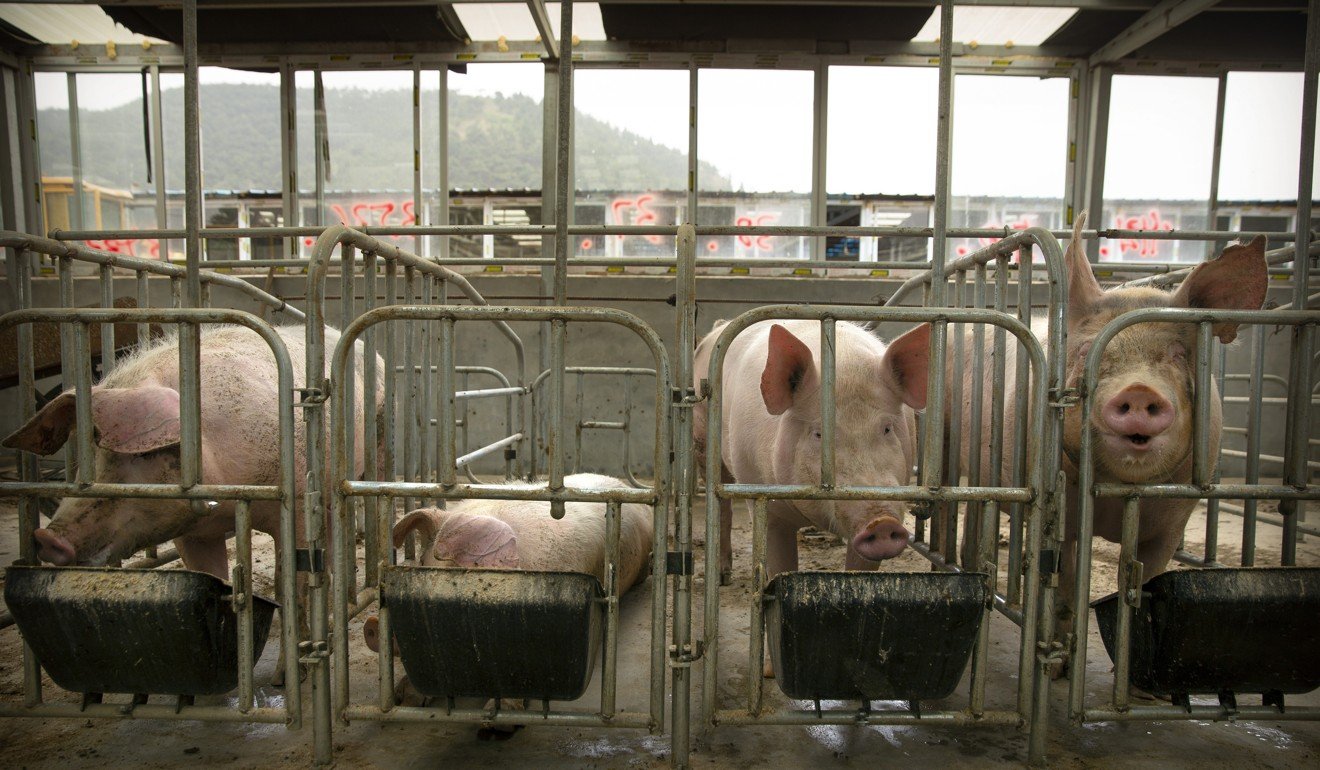
A pork vendor sleeps at a stall at a Beijing wholesale market. Photo: Simon Song
China will continue to strive for self-sufficiency in pork production although its farming industry has suffered a devastating blow after African swine fever wiped out about one-third of its hog herds, officials said on Wednesday.
Yu Kangzhen, a vice-minister for agriculture, said it was unrealistic for China to pin its hope on imports in meeting the country’s demand for pork.
Last year, China consumed about half of the world’s pork but more than 95 per cent was sourced from domestic supplies, which have taken a serious hit this year due to swine fever.
The disease is deadly for pigs, although not for humans, and there is currently no cure or vaccine.
“Even at its highest level, imports accounted for about 2 per cent of China’s domestic production,” said Yu at a press conference in Beijing.
“So from the statistics alone, we can see that we must adhere to the principle of self-sufficiency if we are to meet our demand for meat, and this also explains why we have put forward a 95 per cent self-sufficiency target.”
According to Yu, the total global trade in pork last year was 8 million tonnes – less than 15 per cent of China’s total production of 54 mi
Peng Shaozong, an official from the pricing department of the National Development and Reform Commission (NDRC), expressed confidence that foreign suppliers would be interested in filling any gaps in the Chinese market.
“Imports are guided by the market. If there is money to be made [in selling to China], they will definitely come,” said Peng on the sidelines of the press conference.
Pan Chenjun, from agribusiness bank Rabobank, said China’s pork production was expected to continue to fall in the coming year, putting pressure on the country’s US$140 billion pork industry.
In July, China’s pig population had fallen by 32.2 per cent from a year earlier, and was down 9.4 per cent compared with the previous month, according to latest government figures.
However, Pan said the government’s 95 per cent self-sufficiency target was in line with market realities.
China’s domestic pig stocks have fallen by a third. Photo: AP
“In any case, the 95 per cent [self-sufficiency] goal is reasonable, as China’s pork market size is too big, and imports, despite rising this year, still represent just a small part,” Pan said.
Although China’s domestic shortfall may offer a windfall to foreign suppliers, they must obtain government approval before they could sell to China.
On Monday, Beijing approved imports from 25 Brazilian meat factories, bringing the country’s total number to 89.
On Wednesday, Danish officials completed a three-day trip to China, saying they expected to increase pork exports to China.
Danish food minister Mogens Jensen attended the opening of a new meat processing facility near Shanghai operated by Danish Crown.
China imported 230,000 tonnes of pork from Denmark in 2018, according to the country’s foreign ministry.
On Tuesday, the Chinese State Council issued a new set of guidelines to support the industry, outlining measures such as increased subsidies to boost domestic production in the face of worsening pork shortages that have sent prices to record highs.
The consumer price index released on Tuesday reinforced the bleak picture of a tight market supply as the data showed that pork prices rose by 46.7 per cent in August compared with a year earlier, almost double the 27 per cent rise witnessed in July.
Prices of pork are one of the major indicators used by Chinese citizens to gauge their well-being and, at the moment, that well-being is being eroded rapidly.
According to NDRC, China has already spent a total of 3.23 billion yuan (US$454 million) in subsidies so far this year to tackle the pork shortage crisis.
“As much as 1.1 billion yuan has been newly added under the budget of the central government, with the focus on supporting western provinces in the Yangtze River basin to carry out farm improvement works to control pollution and reduce livestock and poultry waste,” Peng from the NDRC said.
However, a report published by research firm Gavekal Dragonomics on Wednesday cautioned that the government’s plans to soften the blow on the industry might not be effective.
“As the overhaul of pig-raising practices to eliminate the disease would take years even if the government was moving more aggressively, high prices and pork shortages are going to persist,” the report said.
Source: SCMP
Posted in African swine fever, agribusiness bank, Agriculture ministry, aims, Beijing, Brazilian, China alert, Chinese State Council, cure, Danish Crown, Danish food minister, Denmark, despite, devastating blow, farming industry, Gavekal Dragonomics, meat factories, meat processing facility, Mogens Jensen, National Development and Reform Commission (NDRC), pork production, pork vendor, Rabobank, self-sufficient, Shanghai, sleeps, stall, Uncategorized, Vaccine, vice-minister for agriculture, wholesale market, Yangtze River basin |
Leave a Comment »
05/09/2019
- Researchers will conduct tests at site in Gansu to see whether it will make a viable facility to store highly radioactive waste safely
- Scientists say China has the chance to become a world leader in this field but has to find a way to ensure it does not leak
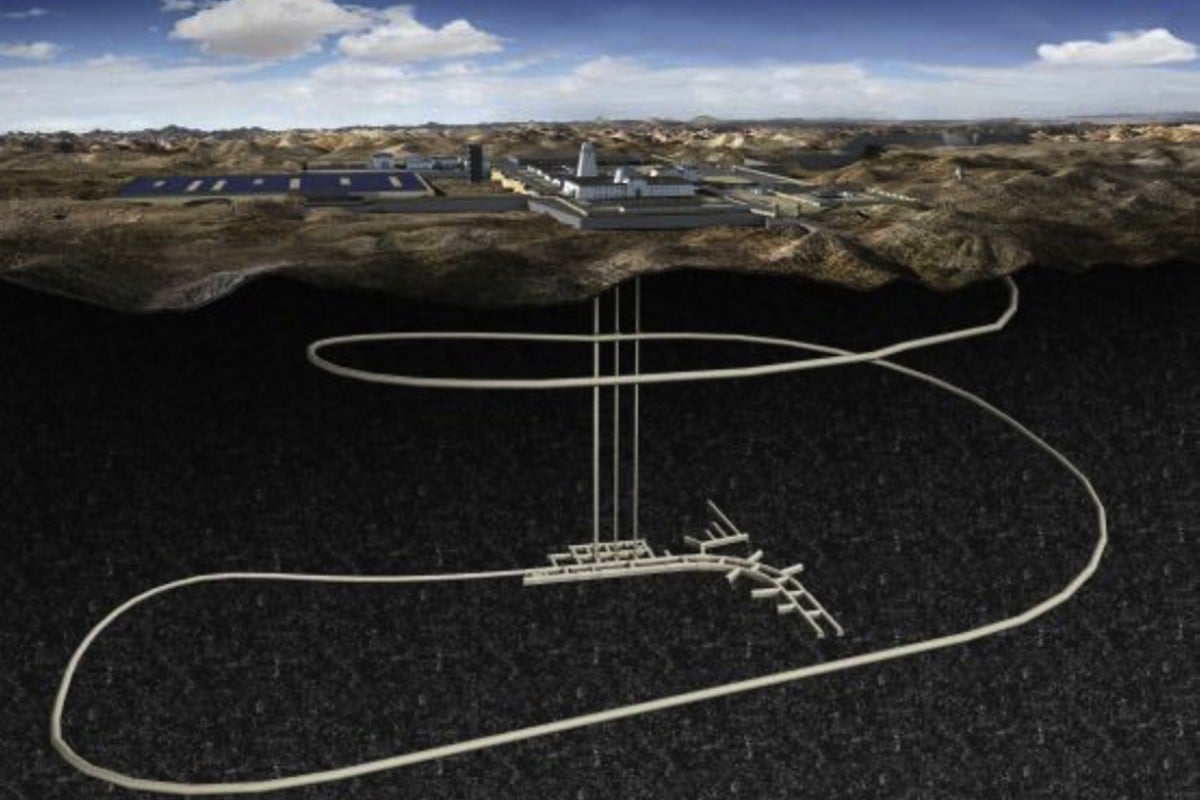
A preliminary design for the Beishan Underground Research Laboratory. Photo: Handout
China has chosen a site for an underground laboratory to research the disposal of highly radioactive waste, the country’s nuclear safety watchdog said on Wednesday.
Officials said work will soon begin on building the Beishan Underground Research Laboratory 400 metres underground in the northwestern province of Gansu.
Liu Hua, the head of the Chinese National Nuclear Safety Administration, said work would be carried out to determine whether it would be possible to build a repository for high-level nuclear waste deep underground.
“China sees radioactive waste disposal as a very important part [of the development nuclear energy],” said Liu. “To develop nuclear energy, we must have safe storage and disposal of nuclear waste.”
China condemns US blacklisting of nuclear firms and says American companies could be hurt as a result
The Chinese authorities see nuclear power an important source of energy that will help to curb carbon emissions and pollution as well as reducing its dependence on fuel imports.
But while the country has made great strides in the development of nuclear power, it needs to find a safe and reliable way of dealing with its growing stockpiles of nuclear waste.
Liu said the Gansu site had been identified as a possible location for a deep nuclear waste store after years of searching.
Once the laboratory is built, scientists and engineers will start experiments to confirm whether it will make a viable underground storage facility.
“Based on the data of the experiments, we can then decide if we are going to pick this as the final site,” he added.
China ‘actively promoting’ nuclear fuel processing plant with French Areva
Chinese officials usually stay tight-lipped about how nuclear waste is disposed of mainly because of fears that any discussion of the topic would trigger safety fears, although in recent years more efforts have been made to inform the public to win support.
Scientists say that nuclear waste can be divided into three categories depending on the level of radioactivity.
Low-level waste consists of minimally radioactive materials such as mop heads, rags, or protective clothing used in nuclear plants, while intermediate-level waste covers things such as filters and used reactor components.
High-level waste, however, is generated by the reprocessing of spent nuclear fuel and scientists generally agree that the safest way to dispose of it is to bury it deep underground in areas where the geology means it will have a minimal impact on the environment while it decays over thousands of years.
The facility will be built in a remote part of Gansu province. Photo: Handout
Some Chinese scientists said the country had the chance to lead the world in this area of research but others have expressed concerns about safety.
Jiang Kejun, a senior researcher at the Energy Research Institute of China’s National Development and Reform Commission, said that very few countries in the world are studying this form of nuclear waste disposal.
“It gives China an opportunity to be a leader in research in this area, plus China has the technology and financial means,” he said.
About a dozen countries including France, Switzerland, Japan, and the United States have carried out research in this area, but in recent years most have abandoned or scaled back their programmes.
At present there are storage sites operating in Finland and the US, but other countries such as Germany have abandoned plans to build similar facilities.
Washington blacklists Chinese nuclear firms for ‘helping military acquire US technology’
But despite broad scientific support for underground disposal, some analysts and many members of the public remain sceptical about whether it is really safe.
Lei Yian, an associate professor at the School of Physics at Peking University, said there was no absolute guarantee that the repositories would be safe when they are come into operation.
“Leakage has happened in [repositories] in the US and the former Soviet Union … it’s a difficult problem worldwide,” he said. “If China can solve it, then it will have solved a global problem.”
China is also building more facilities to dispose of low and intermediate level waste. Officials said new plants were being built in Zhenjiang, Fujian and Shandong, three coastal provinces that currently lack disposal facilities.
At present, two disposal sites for low and intermediate-level waste are in operation in Gansu and Guangdong provinces.
Source: SCMP
Posted in American companies, Beishan Underground Research Laboratory, blacklists, bury it deep, carbon emissions, China alert, chinese authorities, Chinese National Nuclear Safety Administration, Chinese nuclear firms, Chinese officials, coastal provinces, condemns, conduct, Country, deep underground, difficult problem, disposal facilities, earmarks, Energy Research Institute, Environment, filters, Finland, France, French Areva, fuel imports, Fujian, Gansu Province, geology, Germany, global problem, great strides, helping military acquire, High-level waste, highly radioactive waste, hurt, intermediate-level waste, Japan, lack, Leakage, Low-level waste, mop heads, National Development and Reform Commission, National Development and Reform Commission (NDRC), nuclear energy, nuclear firms, nuclear fuel processing plant, Nuclear power, nuclear safety watchdog, nuclear waste, Peking University, Pollution, protective clothing, rags, repositories, repository, reprocessing of spent nuclear fuel, researchers, result, safely, School of Physics, scientists, shandong province, site, source of energy, Soviet Union, stockpiles, store, Switzerland, tests, Uncategorized, underground, underground disposal, United States, US, US blacklisting, US technology, used reactor components, viable facility, Washington, world leader, worldwide, Zhenjiang |
Leave a Comment »
05/06/2019
BEIJING, June 5 (Xinhua) — A national WeChat mini-program was launched Wednesday to enable users to enjoy over 200 e-government services via the cross-region and cross-department digital platform.
The mini-program, a small application embedded within China’s popular social media platform WeChat, connects users with services offered by six government agencies including the National Development and Reform Commission and the Ministry of Commerce, according to a statement from WeChat’s developer Tencent.
Individual users can search information about their education and traffic violation record, among others, while enterprises can apply for certain licenses and certificates online via the mini-program.
The mini-program is also connected with local government online service platforms in several provinces including Guangdong and Zhejiang, while more local e-government services will be connected in the future, the statement said.
E-government services via apps and mini-programs are increasingly popular in China amid national and local efforts to cut administrative red tape to benefit residents and businesses alike.
A total of 30 provincial-level regions have established integrated e-government platforms that incorporate the services of provincial, city and county governments, according to a report released in May.
In 2018, the number of real-name users on provincial e-government platforms reached 145 million, an increase of 38 million over the previous year, the report showed.
Source: Xinhua
Posted in e-government platforms, e-government services, Guangdong, launched, mini-program, Ministry of Commerce (MOC)., National, National Development and Reform Commission (NDRC), promote, TENCENT, Uncategorized, WeChat, Zhejiang |
Leave a Comment »
06/05/2019
Huang Kunming, a member of the Political Bureau of the Communist Party of China (CPC) Central Committee, also head of the Publicity Department of the CPC Central Committee, speaks at the opening ceremony of the second Digital China Summit in Fuzhou, southeast China’s Fujian Province, May 6, 2019. (Xinhua/Ding Lin)
FUZHOU, May 6 (Xinhua) — China on Monday sounded another heartening note for its development of information technologies, as both companies and the government rush to harness the nationwide tech boom to raise efficiency, buoy public satisfaction and even tackle corruption.
The second Digital China Summit opened Monday in eastern China’s Fujian Province, shedding light on the latest information technologies that have penetrated the country’s government, industries and society.
The Chinese government has expected information technologies to nurture new economic engines and upgrade old industries as the country shunts from the high-speed economic growth to the path of high-quality development.
Huang Kunming, a member of the Political Bureau of the Communist Party of China (CPC) Central Committee, in a keynote speech at the summit called for advancing the building of a digital China and smart society, stressing the role of information technology in promoting high-quality development.
Huang, also head of the Publicity Department of the CPC Central Committee, said China’s advantages in internet technology innovation, technology application and as a huge market should be transformed into advantages in developing a digital economy.
The official called for achieving breakthroughs in core technologies, enhancing protection of intellectual property rights, advancing information infrastructure construction and narrowing digital gaps between urban and rural areas.
A report reviewing the country’s digital development in 2018 was also issued at the summit, pointing to rapid growth in sectors including electronic information manufacturing, software service, communications and big data.
The report published by the Cyberspace Administration of China said the country last year recorded more than 9 trillion yuan (1.3 trillion U.S. dollars) in online retail. China’s digital economy reached 31.3 trillion yuan in scale, accounting for one-third of the national GDP in 2018.
Provincial-level e-government platforms have also slashed time for getting government permits by an average of 30 percent, noted the report.
Trendy technologies from driverless vendor vehicles and facial recognition security checks to 5G networks are being used at the event in the city of Fuzhou. A number of tech companies are displaying their cutting-edge products including Baidu’s driverless vehicles, Huawei’s AI chip “Ascend” and Foxconn’s “future factories.”
Pony Ma, CEO of China’s Internet giant Tencent, said at the summit that the company, by working with Fujian police, has used its facial recognition technology to help 1,000 families find missing family members in the past two years.
Hu Xiaoming, president of Ant Financial that runs the popular online payment network Alipay, said at the event that one of every four Chinese now handles government services on Alipay, making it the country’s largest platform that offers access to government services.
E-GOVERNMENT
One of the major highlights at the summit’s exhibition area are the many e-government apps, which have mushroomed across China to incorporate a wide range of government and public services. They are part of the government’s efforts to cut red tape to benefit residents and businesses alike.
In Fuzhou, the host city of the event, a citizen’s typical day now revolves around the e-Fuzhou app, which allows users to buy bus tickets, pay tuition fees and manage social security accounts without the need of visiting government offices.
A slew of digital technology applications, including the big data credit inquiry system, the online tax bureau, and the paperless customs clearance system, have also been developed in the province over the years.
Dingxi, one of the least developed cities in west China’s Gansu Province, has a booth displaying an online monitoring platform, which it launched last year to allow villagers to scrutinize the management of poverty-relief funds and report any signs of corruption.
“We went door-to-door to teach villagers how to use mobile phones to check the subsidies they are entitled to and the sum other families actually received,” said Yang Sirun, an inspector with the city’s discipline inspection commission.
“In the past, some wealthy families feigned poverty to claim subsistence allowances, while some officials fraudulently pocketed subsidies in the names of families that had moved away. The new platform can easily expose such ‘micro corruption,'” Yang said.
The official said since its launch, over 3,400 officials and residents have voluntarily turned in their illegal gains for fear of being reported. “Many hidden problems were also found during the collation of data from different departments, which proves big data’s power in fighting corruption,” he said.
The summit from May 6 to 8 aims to serve as a platform for issuing China’s policies on IT development and displaying the achievements and experience of e-government and the digital economy.
More than 1,500 officials, company representatives and scholars are attending the event, which is co-organized by the Cyberspace Administration of China, National Development and Reform Commission, Ministry of Industry and Information Technology and Fujian provincial government.
Source: Xinhua
Posted in 5G networks, Ant Financial, China alert, corruption, Cyberspace Administration of China, demonstrates, Digital China Summit, digital world, Dingxi, driverless vendor vehicles, facial recognition security checks, Fujian police, Fujian provincial government, Gansu Province, Internet giant Tencent, leapfrog, Ministry of Industry and Information Technology, National Development and Reform Commission (NDRC), poverty-relief funds, Publicity Department of the CPC Central Committee, Standing Committee of the Political Bureau of the Communist Party of China (CPC) Central Committee, summit, Uncategorized |
Leave a Comment »
06/04/2019
BEIJING, April 6 (Xinhua) — China will start building about 15 national logistics hubs this year in its bid to build a nation-wide logistics hub network.
In principle, The national logistics hubs will be built on existent logistics hubs which have a sound infrastructure, strong market demand and huge growth potential, according to an implementation plan released by the National Development and Reform Commission and the Ministry of Transport.
The two ministries will determine the locations of the first batch of national logistics hubs based on the demand of the development under national strategies like the Yangtze River economic belt and local government plans.
China aims to build about 30 national logistics hubs by 2020, and 150 by 2025, when the ratio of total logistics expenses to GDP will be reduced to about 12 percent.
The country’s logistics volume totaled 283.1 trillion yuan (42.14 trillion U.S. dollars) in 2018, up 6.4 percent year on year. The ratio of total logistics expenses to GDP stood at 14.8 percent.
Source: Xinhua
Posted in China alert, ministry of transport, National Development and Reform Commission (NDRC), national logistics hubs, Uncategorized |
Leave a Comment »







 CHINDIA ALERT: You'll be living in their world, very soon