Archive for ‘National Health Commission’

28/03/2020

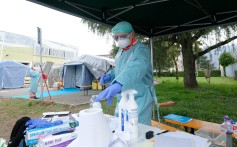
China sends medical team to Pakistan

BEIJING, March 28 (Xinhua) — China has sent a team of medical experts to Pakistan to help the country fight the COVID-19 pandemic, Foreign Ministry spokesperson Geng Shuang announced Saturday.

The team, organized by the National Health Commission, consists of experts selected by the health commission of Xinjiang Uygur Autonomous Region, Geng said in a press statement.

The team left for Pakistan on Saturday afternoon, he said.

Source: Xinhua

28/03/2020

China readies stimulus measures as local virus cases dwindle

SHANGHAI (Reuters) – China’s authorities plan stronger steps to revive an economy hit by the spread of coronavirus, as the nation on Saturday reported no new locally transmitted infections for the previous day.

The ruling Communist Party’s Politburo said on Friday it would step up macroeconomic policy adjustments and pursue more proactive fiscal policy, state media reported. With the world’s second-biggest economy expected to shrink for the first time in four decades this quarter, China is set to unleash hundreds of billions of dollars in stimulus.

The Politburo called for expanding the budget deficit, issuing more local and national bonds, guiding interest rates lower, delaying loan repayments, reducing supply-chain bottlenecks and boosting consumption.

“We expect government ministries to roll out more tangible measures in the coming weeks as this Politburo meeting gave them no choice but to do more,” Goldman Sachs analysts said in a note.

The Politburo did not elaborate on plans for the central government to issue special treasury bonds, which would be the first such issuance since 2007.

Restrictions on foreigners entering the country went into effect on Saturday, as China reported no new locally transmitted infections and a small drop in so-called imported cases.

Airlines have been ordered to sharply cut international flights from Sunday.

Beijing has in recent days emphasised the risk posed by imported virus cases after widespread lockdowns within China helped to sharply reduce domestic transmissions. The Politburo said it would shift its focus to prevent more imported cases and a rebound in locally transmitted infections.

“We must be extremely vigilant and cautious, and we must prevent the post-epidemic relaxation from coming too soon, leading to the loss of all our achievements,” the Communist Party’s official People’s Daily newspaper said in a front-page editorial.

The authorities also reversed planned reopenings of movie theatres, the state-owned China Securities Journal reported, citing sources.

DEATH TOLL AT 3,295

China’s National Health Commission said on Saturday that 54 new coronavirus cases were reported on the mainland on Friday, all imported cases. There were 55 new cases a day earlier, one of which was transmitted locally.

The number of infections for mainland China stands at 81,394, with the death toll rising by three to 3,295, the commission said.

Hubei province reported no new cases, and three new deaths. The province of 60 million, where the virus was first detected, has recorded 67,801 coronavirus cases and 3,177 deaths.

Shanghai reported the highest number of new cases, with 17. An additional 11 cases were reported in Guangdong, six in Fujian, five in Tianjin, four in Zhejiang, three each in Beijing and Liaoning, two each in Inner Mongolia and Jilin, and one in Shandong.

Chinese President Xi Jinping told U.S. President Donald Trump on Friday that China would support U.S. efforts to fight the coronavirus.

The number of confirmed cases of coronavirus in the United States rose by at least 16,000 on Friday to nearly 102,000, the most of any country.

George Gao, the director-general of the Chinese Center for Disease Control and Prevention, urged people to wear masks to control the virus’s spread overseas.

Gao told the journal Science in an interview published late on Friday that the “big mistake in the United States and Europe has been the failure to wear masks, which “can prevent droplets that carry the virus from escaping and infecting others.”

Source: Reuters

27/03/2020

Coronavirus travel: China bars foreign visitors as imported cases rise

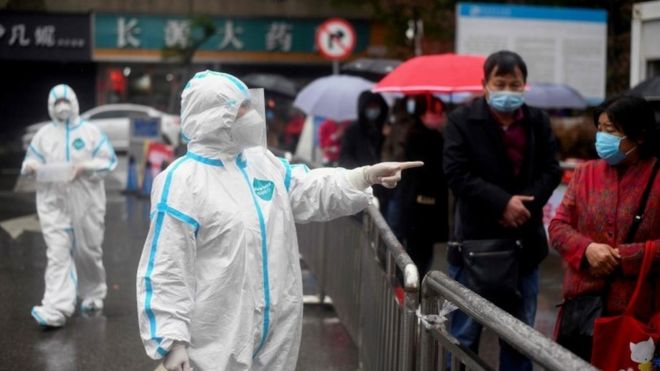
A queue at a fever clinic in Hubei province on FridayImage copyright AFP / GETTY
Image caption A queue at a fever clinic in Hubei province on Friday

China has announced a temporary ban on all foreign visitors, even if they have visas or residence permits.

The country is also limiting Chinese and foreign airlines to one flight per week, and flights must not be more than 75% full.

Although China reported its first locally-transmitted coronavirus case for three days on Friday, almost all its new cases now come from abroad.

There were 55 new cases across China on Thursday – 54 of them from overseas.

What are the new rules?

The Chinese Foreign Ministry said it was “suspending the entry of foreign nationals” because of the “rapid spread of Covid-19 across the world”.

The suspension applies to people with visas and residence passes, but not to diplomats or those with C visas (usually aircraft crew).

People with “emergency humanitarian needs” or those working in certain fields can apply for exceptions.

Although the rules seem dramatic, many foreign airlines had already stopped flying to China – and a number of cities already had restrictions for arrivals.

Last month, for example, Beijing ordered everyone returning to the city into a 14-day quarantine.

What is the coronavirus situation in China?

Although the virus emerged in China, it now has fewer cases than the US and fewer deaths than Italy and Spain.

There have been 81,340 confirmed cases in China and 3,292 deaths, the National Health Commission said on Friday.

In total, 565 of those confirmed cases were classed as “imported” – either foreigners coming into China, or returning Chinese nationals.

In Hubei – the province where the outbreak began – there were no new confirmed or suspected cases on Thursday.

The lockdown in provincial capital Wuhan, which began in January, will be eased on 8 April.

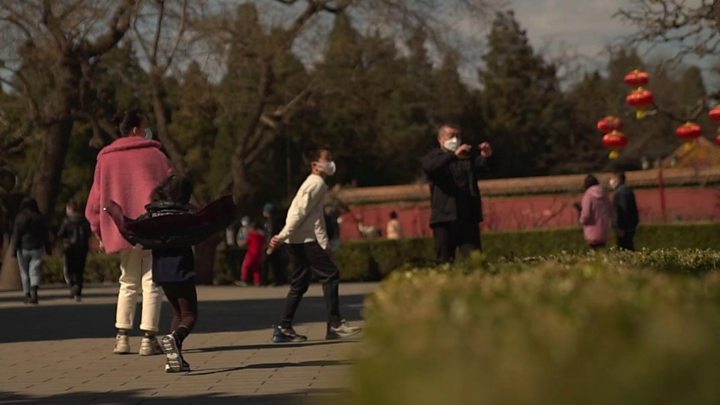
Media caption Stephen McDonell met people in Beijing heading out after the lockdown

Source: The BBC

27/03/2020

China’s Xi offers Trump help in fighting coronavirus as U.S. faces wave of new patients

BEIJING/SHANGHAI (Reuters) – Chinese President Xi Jinping told U.S. President Donald Trump during a phone call on Friday that he would have China’s support in fighting the coronavirus, as the United States faces the prospect of becoming the next global epicentre of the pandemic.

The United States now has the most coronavirus cases of any country, with 84,946 infections and 1,259 deaths. Hospitals in cities like New York and New Orleans struggle to cope with the wave of patients.

Xi’s offer of assistance came amid a long-running war of words between Beijing and Washington over various issues including the coronavirus epidemic.

Trump and some U.S. officials have accused China of a lack of transparency on the virus, and Trump has at times called the coronavirus a “China virus” as it originated there, angering Beijing.

In the call, Xi reiterated to Trump that China had been open and transparent about the epidemic, according to an account of the conversation published by the Chinese foreign ministry.

Trump said on Twitter that he discussed the coronavirus outbreak “in great detail” with Xi.

“China has been through much & has developed a strong understanding of the virus,” Trump said. “We are working closely together. Much respect!”.

The World Health Organization has said the United States, which saw 17,099 new coronavirus cases and 281 deaths in the past 24 hours, is expected to become the epicentre of the pandemic.

CHINA CUTS FLIGHTS

Like U.S. hospitals now, China’s medical system struggled to contain the coronavirus just two months ago, but draconian city lockdowns and severe travel restrictions has seen China dramatically ease the epidemic.

Mainland China on Friday reported its first local coronavirus case in three days and 54 new imported cases, as Beijing ordered airlines to sharply cut international flights, for fear travellers could reignite the coronavirus outbreak.

The 55 new cases detected on Thursday were down from 67 a day earlier, the National Health Commission said on Friday, taking the tally of infections to 81,340. China’s death toll stood at 3,292 as of Thursday, up by five from a day earlier.

The central province of Hubei, with a population of about 60 million, reported no new cases on Thursday, a day after lifting a lockdown and reopening its borders as the epidemic eased there.

The commercial capital of Shanghai reported the most new imported cases with 17, followed by 12 in the southern province of Guangdong and four each in the capital Beijing and the nearby city of Tianjin.

Shanghai now has 125 patients who arrived from overseas, including 46 from Britain and 27 from the United States.

In effect from Sunday, China has ordered its airlines to fly only one route to any country, on just one flight each week. Foreign airlines must comply with similar curbs on flights to China, although many had already halted services.

About 90% of current international flights into China will be suspended, cutting arrivals to 5,000 passengers a day, from 25,000, the civil aviation regulator said late on Thursday.

From Saturday, China will temporarily suspend entry for foreigners with valid visas and residence permits, in an interim measure, the foreign ministry added.

Before the new curbs, foreign nationals made up about a tenth of the roughly 20,000 travellers arriving on international flights every day, an official of China’s National Immigration Administration said last week.

As commercial flights dwindle, Chinese students from wealthy families are paying tens of thousands of dollars to fly home on private jets.

International demand for chartered and private flights into China increased 227% in March from a year earlier, said Shanghai-based private jet service provider iFlyPlus.

Notably, requests for flights from the United States to China rose 10-fold in late March, iFlyPlus told Reuters.

Source: Reuters

24/03/2020

Hubei relaxes restrictions as China’s new coronavirus infections double

BEIJING (Reuters) – China’s Hubei province where the coronavirus pandemic originated will lift travel restrictions on people leaving the region as the epidemic there eases, but other regions will tighten controls as new cases double due to imported infections.

The Hubei Health Commission announced it would lift curbs on outgoing travellers starting March 25, provided they had a health clearance code.

The provincial capital Wuhan, where the virus first appeared and which has been in total lockdown since since Jan. 23, will see its travel restrictions lifted on April 8.

However, the risk from overseas infections appears to be on the rise, prompting tougher screening and quarantine measures in major cities such as the capital Beijing.

China had 78 new cases on Monday, the National Health Commission said, a two-fold increase from Sunday. Of the new cases, 74 were imported infections, up from 39 imported cases a day earlier.

The Chinese capital Beijing was the hardest-hit, with a record 31 new imported cases, followed by southern Guangdong province with 14 and the financial hub of Shanghai with nine. The total number of imported cases stood at 427 as of Monday.

Only four new cases were local transmissions. One was in Wuhan which had not reported a new infection in five days.

Wuhan residents will soon be allowed to leave with a health tracking code, a QR code, which will have an individual’s health status linked to it.

In other parts of the country, authorities have continued to impose tougher screening and quarantine and have diverted international flights from Beijing to other Chinese cities, but that has not stemmed the influx of Chinese nationals, many of whom are students returning home from virus-hit countries.

Beijing’s city government tightened quarantine rules for individuals arriving from overseas, saying on Tuesday that everyone entering the city will be subject to centralised quarantine and health checks.

The southern city of Shenzhen said on Tuesday it will test all arrivals and the Chinese territory of Macau will ban visitors from the mainland, Hong Kong and Taiwan.

The number of local infections from overseas arrivals – the first of which was reported in the southern travel hub of Guangzhou on Saturday – remains very small.

On Monday, Beijing saw its first case of a local person being infected by an international traveller arriving in China. Shanghai reported a similar case, bringing the total number of such infections to three so far.

CONCERNS ABOUT NEW WAVE OF INFECTIONS

The rise in imported cases and the lifting of restrictions in some cities to allow people to return to work and kickstart the battered Chinese economy has raised concerns of a second wave of infections.

A private survey on Tuesday suggested that a 10-11% contraction in first-quarter gross domestic product in the world’s second largest economy “is not unreasonable”.

The epidemic has hammered all sectors of the economy – from manufacturing to tourism. To persuade businesses to reopen, policymakers have promised loans, aids and subsidies.

In the impoverished province of Gansu, government officials are each required to spend at least 200 yuan (24.31 pounds) a week to spur the recovery of the local catering industry.

The official China Daily warned in an editorial on Tuesday that maintaining stringent restrictions on people’s movements would “now do more harm than good”.

Source: Reuters

22/03/2020

Coronavirus: Xi Jinping calls leaders of France, Spain, Germany and Serbia with offers of support

  • Chinese president tells heads of state that Beijing is ready to do all it can to help Europe fight Covid-19, as death toll on the continent passes 5,000
  • ‘Public health crises are the common challenges facing humankind, and unity and cooperation are its most powerful weapons,’ Xi tells German Chancellor Angela Merkel
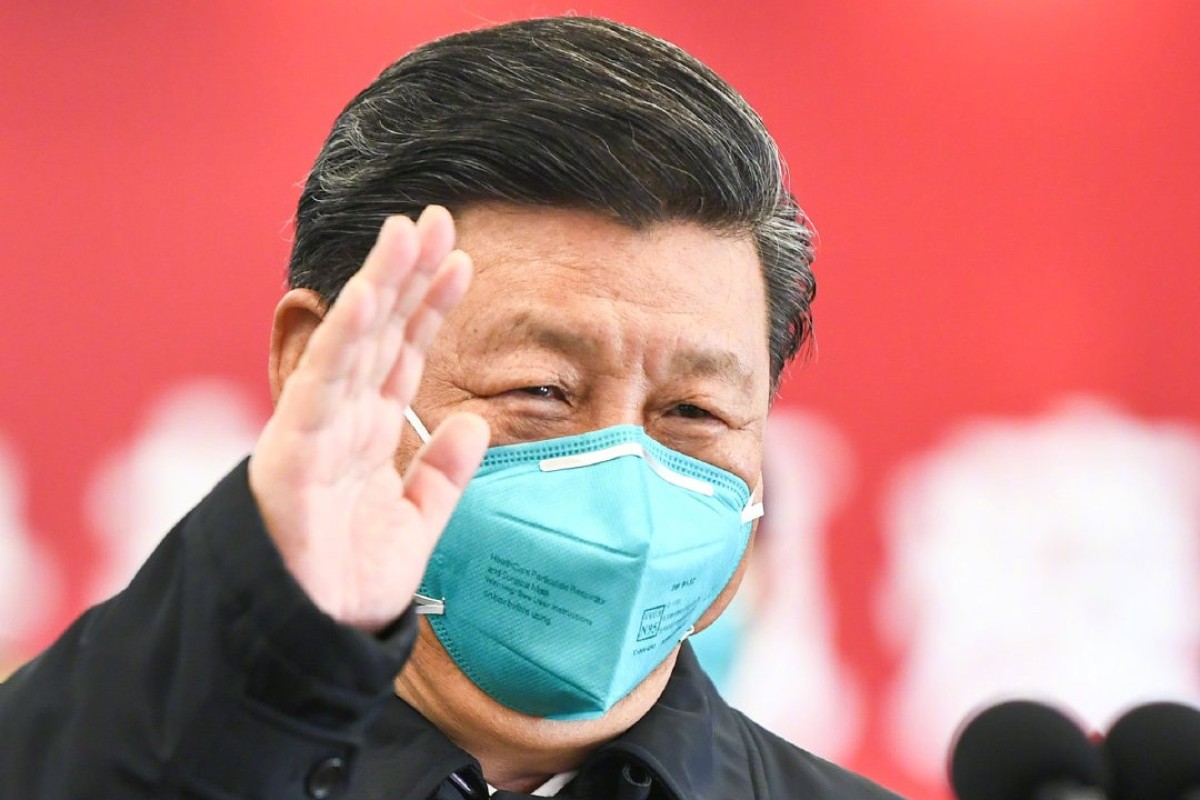
Chinese President Xi Jinping reached out a helping hand to four European leaders on Saturday. Photo: Xinhua
Chinese President Xi Jinping made an unusually intense diplomatic gesture towards Europe on Saturday by calling the leaders of France, Germany, Spain and Serbia to offer support in their fight against Covid-19.
The calls came as many European nations are facing shortages of the essential medical supplies and equipment they need to combat the pandemic that has already killed more than 5,000 people across the continent.
Italy has been the worst hit, with more than 4,000 people killed and over 47,000 infected. In Spain, the death toll jumped by more than 300 on Saturday to 1,326, while the number of confirmed cases neared 25,000.
In contrast, China has reported no new local transmissions for three days. As a result, the industrial powerhouse has been able to send millions of face masks it might otherwise have needed to Europe.
In a call to German Chancellor Angela Merkel, Xi said China was prepared to do all it could to help.
“If Germany is in need, China is willing to provide help within our capabilities,” he was quoted as saying by Xinhua, which reported on all of the calls.

“Public health crises are the common challenges facing humankind, and unity and cooperation are its most powerful weapons,” he said, adding that China was willing to share its “information and experience”.

Beijing was also ready to work with Berlin in other areas, such as vaccine development, Xi said.

Germany, which has reported more than 20,000 cases and 44 deaths, is the only country out of the four Xi called that has not yet requested medical supplies from China.

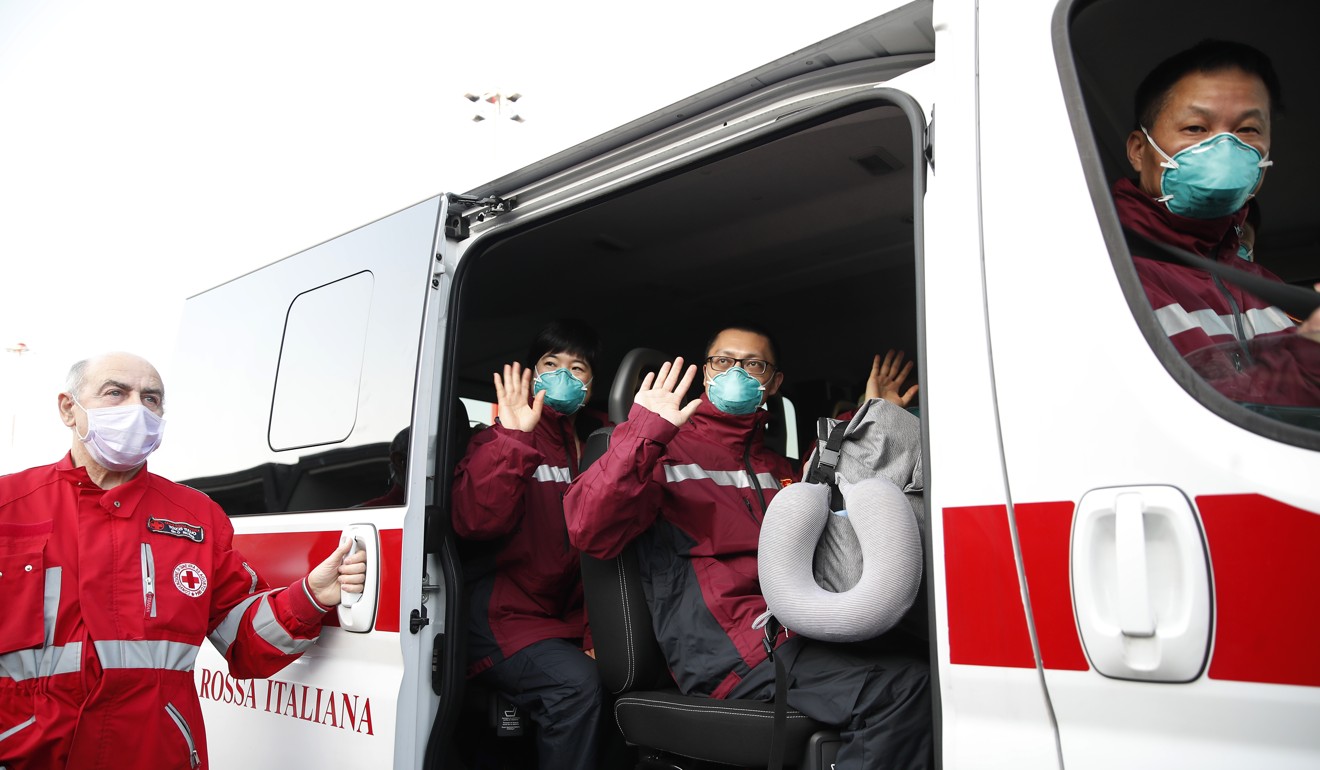
Xi Jinping promised to send Chinese medical support teams to Serbia, like this one that was deployed to Italy. Photo: AP
Of the four countries Xi called, only Serbia is not a member of the European Union. Its president, Aleksandar Vucic, earlier dismissed the EU’s vow of solidarity as a “fantasy” and turned to China for help.

“China and Serbia are comprehensive strategic partners,” Xi told Vucic on Saturday. “The hard-as-iron friendship of the two countries, and of the two peoples, shall last forever.”

Xi pledged to provide Serbia with protective gear and medical equipment, as well as helping it to source materials from China.

Vucic also managed to secure a guarantee from the Chinese president that he would send medical teams to Serbia, like those already deployed in Italy and Spain, the Xinhua report said.
Despite Vucic’s criticism of the EU, the bloc said on Friday it would provide Serbia with 7.5 million (US$8 million) worth of aid.
“Next week, big cargo airplanes will bring critical medical equipment. EU [is] always with Serbia in times of need,” EU ambassador to Belgrade Sem Fabrizi said on Twitter, adding: “Action not words.”

French President Emmanuel Macron has reportedly called for more power to be given to the European Commission, the executive arm of the EU, as member states, current and future, could lose trust in the institution as the health crisis unfolds.

In his phone call with Macron, Xi also appealed for support from the World Health Organisation.

“China is willing to work with France to jointly promote international cooperation on preventing and controlling the disease, and on supporting the UN [United Nations] and WHO in playing a core role in perfecting global public health management,” he said.

The call was the second in three days between the two leaders.

In a poll published on Friday, Macron’s popularity rating rose past 50 per cent for the first time since 2018, France24 reported. The result suggests the French public approves of the way in which he is handling the health crisis.

Xi’s telephone call to Spain was unusual in that he spoke to King Felipe, the ceremonial head of state who generally stays out of politics.

Nonetheless, Xi again pledged his support and willingness to share China’s experiences in handling the disease and treating patients, Xinhua said.

After three days of no new domestic infections in mainland China, some residents of 

Wuhan

, the Chinese city hardest hit by the disease, celebrated with fireworks as local authorities began removing checkpoints. Restrictions were also eased in other cities.

Beijing’s containment efforts are now focused on preventing imported cases. National Health Commission spokesman Mi Feng said on Saturday that the number of such infections had surged by 216 per cent to 269 on Friday, from just 85 on March 11. In the same period, the total number of infections worldwide had risen by 98 per cent.
“We have to strictly stop imported cases, step up epidemic control and avoid any rebound,” he said.
Source: SCMP
19/03/2020

China’s Wuhan marks no new coronavirus case, success of strict measures

CHINA-HUBEI-ZERO INCREASE-COVID-19 (CN)

People enjoy sunset on a plank road at the Donghu Lake in Wuhan, capital of central China’s Hubei Province, March 18, 2020. No new infections of the novel coronavirus were reported on Wednesday in Wuhan, the epicenter of the epidemic, marking a notable first in the city’s months-long battle with the microscopic foe. (Xinhua/Shen Bohan)

WUHAN, March 19 (Xinhua) — No new infections of the novel coronavirus were reported on Wednesday in Wuhan, the epicenter of the epidemic, marking a notable first in the city’s months-long battle with the deadly virus and sending a message of hope to the world gripped by the pandemic.

The Health Commission of Hubei Province, where Wuhan is the capital, said the virus’ death toll climbed by eight in the province, but the total confirmed cases of the novel coronavirus disease (COVID-19) in Wuhan and Hubei remained at 50,005 and 67,800 on Wednesday.

No increase was observed in the province’s number of suspected cases, which fell to zero on Tuesday, in another indication that large-scale transmissions have been suppressed at the epidemic ground zero after a slew of strict measures.

Previously, the central Chinese province had reported single-digit increases of new infections, all of which were from Wuhan, for a week in a row since last Wednesday. A month ago, the figure was several thousand a day.

The province also saw 795 patients discharged from hospital after recovery on Wednesday, reducing its caseload of hospitalized patients to 6,636, including 1,809 in severe condition and 465 in critical condition.

With no new cases in Wuhan, the Chinese mainland on Wednesday reduced the increase in domestic transmissions to zero, according to the National Health Commission. The country now faces a greater threat of infections imported from overseas, which jumped by 34 on Wednesday.

“The clearing of new infections in Wuhan came earlier than predicted, but it is still too early to let down our guard,” said Zhang Boli, one of the leading experts advising on the epidemic fight in Hubei.

Arduous work still lies ahead as China strengthens its defence against imported cases from abroad, treats thousands of patients still in serious or critical condition and rehabilitates those discharged from hospitals, said Zhang, an academician of the Chinese Academy of Engineering.

“CUNNING VIRUS”

The novel coronavirus was first identified in Wuhan in December as a new pathogen facing mankind. Before its traits were fully understood, the virus had cut a swath of infections among Wuhan’s unsuspecting public, before jumping from the transportation hub to other parts of China via the largest seasonal human migration ahead of the Spring Festival.

The Chinese leadership has described the COVID-19 outbreak as the most difficult to contain since the founding of the People’s Republic of China in 1949 and “a big test” for the country.

Medical experts said the virus is more contagious, though less deadly, than the SARS virus that belongs to the same coronavirus family. Globally, the SARS virus infected 8,422 people and killed 919 between 2002 and 2003.

“We still have insufficient knowledge of the novel coronavirus. What we already know is it’s a very cunning virus with a long incubation period,” said Wang Daowen, a cardiologist at Tongji Hospital in Wuhan.

“We still found the virus from the anus, if not from the lungs, of one patient after he was hospitalized for 50 days,” said Wang, who was among the first medical experts joining the treatment of COVID-19. “Usually, a virus should vanish from one’s body in two weeks.”

TURNING TIDE

China began to see a drop in the number of COVID-19 patients on Feb. 18, after the number of recovered patients surged and new cases declined. By late February, the virus had withdrawn from most territories on the Chinese mainland, with only single-digit daily increases of infections in areas outside Wuhan.

On March 6, the epidemic epicenter Wuhan slashed the daily increase of confirmed cases to below 100, down from a peak of more than 14,000 in early February. Bruce Aylward, who led the China-WHO joint mission on COVID-19, said the outbreak in China had come down “faster than would have been expected.”

On March 11, the daily increase of locally transmitted infections dropped to single digits for the first time on the Chinese mainland. The virus has so far caused a total of 80,928 infections and 3,245 fatalities, defying earlier predictions by foreign researchers of a more extensive national outbreak.

Behind the downward trends were a raft of strong measures taken by the Chinese government, including canceling mass events, closing scenic attractions, suspending long-distance buses and asking hundreds of millions of Chinese to stay indoors to break transmission chain.

On Jan. 23, Wuhan declared unprecedented traffic restrictions, including suspending the city’s public transport and all outbound flights and trains, in an attempt to contain the epidemic within its territory.

The situation in Wuhan and its nearby cities was grim. Officials said more than 3,000 medics in Hubei contracted the virus at the early stage of the outbreak due to limited knowledge of the virus. Many families lost multiple loved ones.

Following reports of overloaded local hospitals, more than 42,000 medical staff, including those from the military, were dispatched to Hubei from across the country. At the peak of the fight, one in 10 intensive care medics in China were working in Wuhan.

Fleets of trucks carrying aid goods and displaying banners of “Wuhan be strong!” rushed to the city from all corners of the country. Under a “pairing-up support” system, each city in Hubei is taken care of by at least one provincial-level region.

To ensure the timely admission of patients, two hospitals with a total of 2,600 beds were built from scratch in Wuhan within a few days, and 16 temporary hospitals were converted from gyms and exhibition centers to add 13,000 beds. Nucleic acid testing (NAT) capacity in Wuhan reached 24,000 people a day. Testing is made free and treatment fees are covered by China’s basic medical insurance.

Huang Juan, 38, witnessed the first few days of chaos and despair at local hospitals before calm and order gradually set in amid the influx of support.

Huang recalled the hospitals were packed with patients — over 100 patients were waiting for the injection but only one nurse was around. Every day, her mother who had a fever on the eve of the Spring Festival in late January waited 10 hours to be injected.

After a week of imploration, Huang finally found a hospital willing to admit her mother. Ten days later, her mother was discharged upon negative NAT results. “She still had symptoms, but there was no choice, as many patients were waiting for beds,” Huang said.

The situation improved when her father, also diagnosed with the disease, was hospitalized on Feb. 19.

“He was discharged after the doctor confirmed his recovery on March 11. It was apparent that the standards for discharge were raised as Wuhan got sufficient beds,” Huang said.

Cui Cui (pseudonym), 57, also testified to the improving situation. The Wuhan resident was transferred to the newly built Huoshenshan (Fire God Mountain) Hospital as her sickness worsened on Feb. 10.

The military-run hospital that treats severe cases impressed her with a calm ambiance. “Doctors and nurses there called me ‘auntie’ instead of ‘patient’ and spent time chatting with me to ease my anxiety,” said Cui, who was discharged after recovering on Feb. 26.

COMMUNITY CONTROL

Outside Hubei, the battle against the epidemic has tested the mobilization capacity of China’s big cities and remote villages alike as they scrambled to prevent sporadic imported cases from evolving into community outbreaks.

Earlier this month, Beijing said about 827,000 people who returned to the capital city after the Spring Festival holiday were placed in two-week home observation. Around 161,000 property management staff and security guards were on duty to enforce the quarantine rules.

Shanghai, a metropolis in eastern China, has demanded its over 13,000 residential communities to guard their gates and take temperatures of residents upon entrance, according to Zeng Qun, deputy head of the Shanghai Civil Affairs Bureau.

Quyi Community was among the first Shanghai neighborhoods to adopt closed-off management. Since late January, it has been disinfecting public areas, introducing contactless deliveries and ensuring residents returning from severely affected regions are placed in quarantine.

“For those who are under self-quarantine at home, health workers will provide door-to-door visits every day, and services from grocery shopping to psychological counseling are offered,” said Huang Ying, an official with Hongkou District where the community is located.

Shanghai, with a population of 24 million, is among China’s most populous cities and a commercial hub. It was once predicted as the most susceptible to a coronavirus outbreak.

Mathematical models estimated that without prevention and control measures, Shanghai’s infection numbers would exceed 100,000. Even with some interventions, the figure could still reach tens of thousands, according to Zhang Wenhong, who heads Shanghai’s medical team to fight the epidemic.

“But now, the infection number is just over 300. This means the measures taken by Shanghai over the past month are effective,” Zhang said, describing the city as an epitome of China’s battle against the epidemic.

NEW BATTLEGROUNDS

China’s economy became a new battleground as the war against the virus wore on, delaying the reopening of plants after the Spring Festival holiday and causing a shortage of workers with the nationwide traffic restrictions in place.

China has about 170 million rural migrant workers employed away from their hometowns, many of whom could not return to work as enterprises across the country began to resume production on Feb. 10.

In response, local governments have arranged chartered flights and trains to take workers directly to the factories while issuing subsidies to tide companies over difficulties. By early March, the southern manufacturing heartland Guangdong Province had seen 91.2 percent of firms resume operation.

Almost every sector of Chinese society has chipped in on the anti-virus fight, from barbers offering medics free haircuts to factories revamping their assembly lines to produce medical masks.

According to the Ministry of Industry and Information Technology, China’s output of protective clothing has surged to 500,000 pieces per day from fewer than 20,000 pieces at the beginning of the outbreak. The daily output of N95-rated medical masks rose from 200,000 to 1.6 million, while that of regular masks reached 100 million.

“China’s economic and social development over the past decade has laid a sound foundation for the fight against the epidemic and enabled the society to mobilize more quickly,” said Tang Bei, an international public health researcher at Shanghai International Studies University.

China’s tech boom also made contributions — tech companies rolled out disinfecting robots, thermal camera-equipped drones and AI-powered temperature measurement equipment, which have been rapidly deployed to reduce the risks of cross-infection.

The outbreak has led to what is being called “the world’s largest work-from-home experiment.” The number of online meetings supported by Tencent Meeting on Feb. 10, when most enterprises started resuming work, was 100 times that of its previous average daily use.

Lu Chuanying, a researcher with Shanghai Institutes for International Studies, said digital technologies have risen to the fore, not only in the country’s anti-virus efforts but also in the recovery of the virus-hit economy.

“Remote consultations, artificial intelligence and big data were used to contain the epidemic, while telecommuting, online education and online vegetable markets have kept our lives in quarantine going,” Lu said.

Source: Xinhua

19/03/2020

Coronavirus: Grim toll in Italy as number of deaths near China’s total

  • In Madrid, local health authorities describe ‘one case every 16 minutes’
  • New cases in Europe include new Prince Albert of Monaco and Michel Barnier, the European Union’s chief Brexit negotiator
Italian military trucks and soldiers are seen by Bergamo's cemetery after the army was deployed to move coffins from the cemetery to neighbouring provinces. Photo: Sergio Agazzi/Fotogramma via Reuters
Italian military trucks and soldiers are seen by Bergamo’s cemetery after the army was deployed to move coffins from the cemetery to neighbouring provinces. Photo: Sergio Agazzi/Fotogramma via Reuters

Italians on Thursday mourned a record number of deaths from the Covid-19 pandemic and expected the toll to surpass that of China, where the crisis began. On the mainland, there was a sense of relief as there were no new domestic cases reported for the first time since the outbreak began.

As opposite turning points were marked in China and Europe, the worldwide total of infections exceeded 220,000. The new cases include Monaco’s reigning monarch, Prince Albert, and Michel Barnier, the European Union’s chief Brexit negotiator.

More than 9,000 people have died around the world, at least 2,978 of them in Italy, including five doctors. The death rate in Madrid is described by local health authorities as “one case every 16 minutes”.

Concerns are also growing that the surge in cases in Europe and North America could result in a second wave in Asia, amid reports of mass movements of travellers fleeing the current epicentres.

Australia and New Zealand became the latest countries to ban non-citizens from entry.

In China, the National Health Commission said on Thursday that all 34 new infections reported the previous day had been imported cases.

It is also the first time Hubei province, where the crisis began, recorded no new cases either domestically or from abroad.

The number of new deaths in mainland China was down to single digits, with eight reported, bringing the total fatalities to 3,245.

Coronavirus: Italy’s hospitals overflow with the dead as toll tops 1,000

13 Mar 2020

Italy experienced its worst death toll on Wednesday with 475 reported, the highest one-day official toll of any nation.

Italy has the world’s second-highest number of diagnosed cases, after China.

Dramatic footage has been circulating on social media, showing military vehicles taking corpses out of the Italian city of Bergamo because cremation facilities were overloaded.

Prime Minister Giuseppe Conte extended a nationwide lockdown that is weighing on the economy, saying: “We managed to avoid the collapse of the system and the measures are working.”

Prince Albert of Monaco (pictured in 2019) has tested positive for the coronavirus, it was announced on Thursday. Photo: Xinhua
The government is considering tightening restrictions amid concern that many Italians are not respecting rules that confine them to their homes except for work, health or emergency reasons.

In Spain, the second hardest hit country in Europe, the virus’ spread continues with a rate of 25 per cent new cases per day.

Spanish King Felipe VI, in a rare televised address, told his citizens: “This virus will not defeat us. On the contrary. It will make us stronger as a society.”

Source: SCMP

12/03/2020

Coronavirus pandemic “could be over by June” if countries act, says Chinese adviser

BEIJING (Reuters) – The global coronavirus pandemic could be over by June if countries mobilize to fight it, a senior Chinese medical adviser said on Thursday, as China declared the peak had passed there and new cases in Hubei fell to single digits for the first time.

Around two-thirds of global cases of the coronavirus have been recorded in China’s central Hubei province, where the virus first emerged in December. But in recent weeks the vast majority of new cases have been outside China.

Chinese authorities credit strict measures they have taken, including placing Hubei under near total lockdown, with preventing big outbreaks in other cities, and say other countries should learn from their efforts.

“Broadly speaking, the peak of the epidemic has passed for China,” said Mi Feng, a spokesman for the National Health Commission. “The increase of new cases is falling.”

Zhong Nanshan, the government’s senior medical adviser, told reporters that as long as countries take the outbreak seriously and are prepared to take firm measures, it could be over worldwide in a matter of months.

“My advice is calling for all countries to follow WHO instructions and intervene on a national scale,” he said. “If all countries could get mobilized, it could be over by June.”

Speaking to U.N. Secretary-General Antonio Guterres, President Xi Jinping similarly expressed confidence, state television reported.

“After hard work, China has shown a trend of continuous improvement in epidemic prevention and control,” the report cited Xi as saying.

“I am confident that the Chinese people will be able to overcome this epidemic and achieve their intended economic and social development goals.”

Zhong, an 83-year-old epidemiologist renowned for helping combat the SARS outbreak in 2003, said viruses in the same family typically became less active in warm months.

“My estimate of June is based on scenarios that all countries take positive measures.”

Later on Thursday, Zhong held a teleconference with a group of U.S. medical experts, including from Harvard University, state television reported.

Zhong and his team shared their experiences of quickly testing and containing the virus, difficulties in treatment, and cooperation in clinical research, the report added.

The United States is now facing its own virus crisis as the number of infected people rises.

BUSINESSES REOPEN

With the marked slowdown of the spread of the virus in China, more businesses have reopened, with authorities cautiously easing strict containment measures.

Hubei province announced a further loosening of travel restrictions and will also allow some industries to resume production.

Hubei’s economy, driven by manufacturing and trade, including a sizable auto sector in the provincial capital, Wuhan, had been virtually shut down since Jan. 23.

While the virus is spreading quickly globally, its progress in China has slowed markedly in the past seven days. In all, 15 new cases were recorded in mainland China on Wednesday, down from 24 the day before. Seven of the new cases were outside Hubei, including six imported from abroad.

While only 85 of the cases in China have come from abroad, the rising number of such incidences has prompted authorities to shift their focus on containing the risk of imported cases.

The total number of cases recorded in mainland China was 80,793. As of Tuesday, 62,793 people had recovered and been discharged from hospital, or nearly 80% of the infections.

In Wuhan, the epicenter of the outbreak, 34,094 patients had been discharged from hospitals, but over half were still under observation at so-called “recovery stops” – quarantine venues repurposed from hotels and student dormitories.

Hubei’s health authority said the post-discharge quarantine was a precautionary measure, after a few discharged patients tested positive again.

As of the end of Wednesday, the death toll in mainland China had reached 3,169, up by 11 from the previous day. Hubei accounted for 10 of the new deaths, including seven in Wuhan.

China is focusing on restarting factories and businesses hit by the containment policies. Factory activity plunged to its worst level on record in February, and while more businesses have reopened in recent weeks as containment measures have been eased, analysts do not expect activity to return to normal until April.

Airlines have been hit particularly hard. China’s airlines reported total losses of 20.96 billion yuan ($3 billion) in February. The total number of airline passengers fell 84.5% year-on-year last month, China’s aviation regulator said.

Source: Reuters

10/03/2020

China’s President Xi visits Wuhan as number of new coronavirus cases tumbles

BEIJING (Reuters) – Chinese President Xi Jinping visited Wuhan, the epicentre of the coronavirus outbreak, on Tuesday, the first time he has done so since the epidemic began and a sign that Beijing believes its efforts to control the virus are working.

His arrival in the city, where the virus is believed to have first taken hold late last year, comes after its spread in mainland China has sharply slowed in the past week and as attention has turned to preventing imported infections from overseas hot spots such as Iran, Italy and South Korea.

News of the visit gave a lift to Chinese stocks, with the blue-chip index .CSI300 climbing back into positive territory after falling as much as 1% in morning trade.

“It is obvious that Xi could not have visited Wuhan earlier because the risk of him contracting the virus there was initially too high,” Zhang Ming, a professor at Renmin University in Beijing, told Reuters.

“He is there now to reap the harvest. His being there means the CCP (Communist Party of China) may declare victory against the virus soon,” Zhang said.

China came in for criticism at home and globally over its early response to the outbreak, suppressing information and downplaying its risks, but its draconian efforts at control, including the lock-down of Wuhan and Hubei province where it is originated, have been effective at curbing the spread.

Hubei province, of which Wuhan is the capital, said on Tuesday it would implement a “health code” system to allow people in areas at a medium or low risk of contracting the coronavirus to start travelling.

During his trip to Wuhan, Xi will “visit and express regards to medical workers, military officers and soldiers, community workers, police officers, officials and volunteers who have been fighting the epidemic on the front line, as well as patients and residents during the inspection,” state news agency Xinhua said.

Separately, Taiwan’s government said on Tuesday a second round of evacuations of its citizens who had been stranded in Wuhan had begun, after weeks of arguments between the Chinese-claimed island and Beijing over the arrangements.

NEW CASES FALL

Mainland China had 19 new coronavirus infections on Monday, the National Health Commission said on Tuesday, down from 40 a day earlier. It also marked the third straight day of no new locally transmitted coronavirus cases outside of Hubei.

Of the new cases, 17 were in Wuhan, while one was in Beijing and one other in Guangdong due to people arriving from abroad, according to the health authority.

That brings the total number of confirmed cases in mainland China so far to 80,754.

However, Chinese authorities have ramped up warnings about the risks from foreigners and Chinese nationals travelling to China from viral hot spots abroad such as Iran and Italy.

The one case in Beijing on Monday was due to a traveller from Britain, and the one in Guangdong was an imported case from Spain. As of Monday, there have been 69 imported cases.

More than 114,300 people have been infected by the coronavirus globally and over 4,000 have died, according to a Reuters tally of government announcements.

Outside China, Italy, South Korea and Iran have reported the most cases and deaths.

Since the outbreak, 59,897 patients have been discharged from hospitals in China. Recently discharged patients need to go into quarantine for 14 days.

In Wuhan, 12 of the 14 temporary hospitals dedicated to treating coronavirus patients have closed, with the remaining two due to shut on Tuesday.

On Saturday, a small hotel used to quarantine people under observation in southern Fujian province collapsed, killing 20, while 10 had yet to be rescued.

Of the 71 people inside the hotel in Quanzhou city at the time of the collapse, 58 were in under quarantine, the Quanzhou city government said.

As of the end of Monday, the overall death toll from the coronavirus outbreak in China reached 3,136, up by 17 from the previous day.

Hubei reported 17 new deaths, all of which were in Wuhan.

Xi, who was mostly absent from Chinese state media coverage of the crisis in its early days, has become for more visible in recent weeks.

The Global Times, a nationalist tabloid published by the official People’s Daily, on Tuesday detailed the various instructions and actions Xi had given and taken between Jan. 7 and March 2 to combat the epidemic.

“Xi personally commands the people’s war against the epidemic. He has been paying constant attention to the epidemic prevention and control work and made oral or written instructions every day,” the newspaper said.

Source: Reuters

Law of Unintended Consequences

continuously updated blog about China & India

ChiaHou's Book Reviews

continuously updated blog about China & India

What's wrong with the world; and its economy

continuously updated blog about China & India