13/02/2020
- Elderly resident says he can’t recall this happening in his city before, not even during the Cultural Revolution
- Outbreak is expected to deal a heavy blow to businesses, especially smaller eateries, with some already forced to close
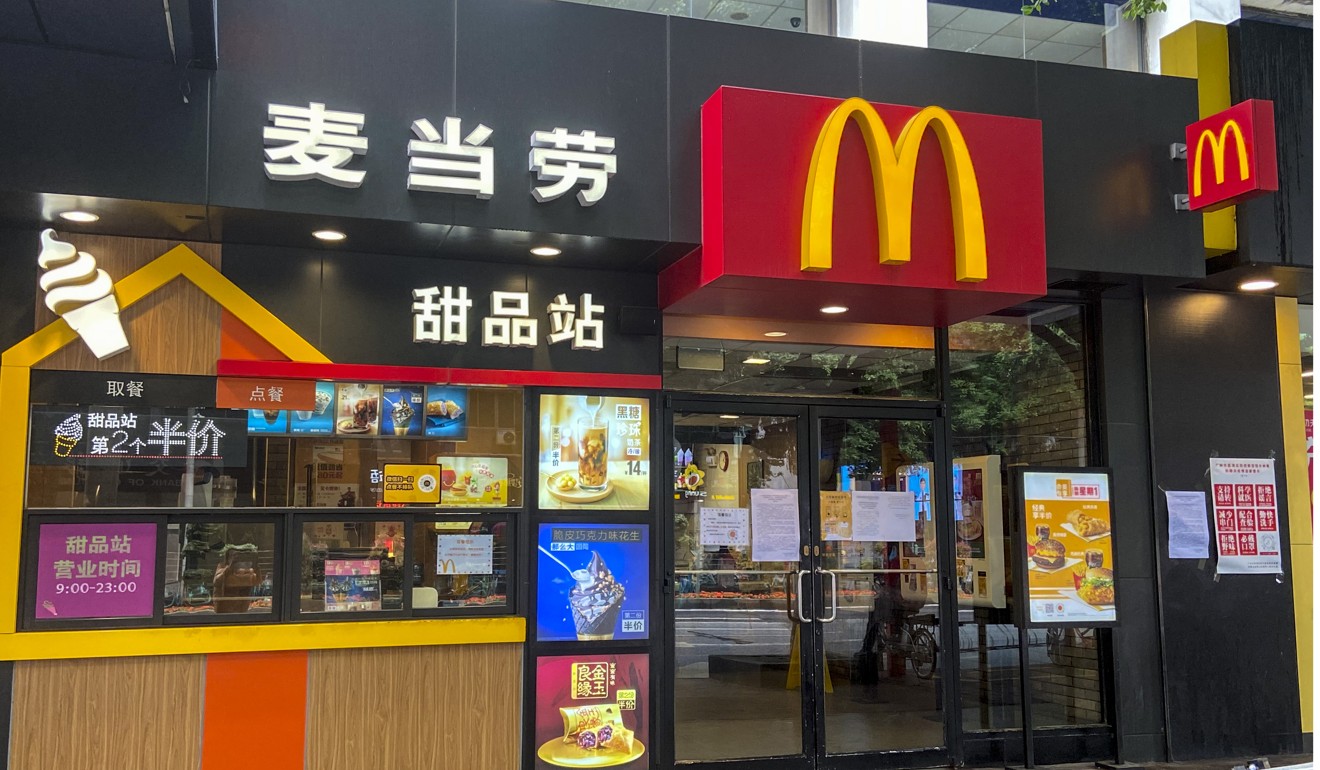
Residents can still get takeaway meals in Guangzhou, but they have been encouraged to order online and have them delivered. Photo: He Huifeng
Guangzhou is home to more than 15 million people and a busy trading port, and has been known as China’s most open city since the 1600s. For locals, going to restaurants for yum cha, or “drinking tea”, and dining on dim sum is an important part of the city’s history and culture – a tradition that has been carried through many generations.
“Even in the ‘three years of natural disasters’ [from 1959 to 1961, when China was in the grip of a famine] I remember there were still restaurants open,” He said. “I was really shocked [by the ban]. I guess the epidemic situation must be severe, otherwise Guangzhou definitely wouldn’t introduce this measure.”
China’s Hubei province reports huge spike in coronavirus cases, rising 10-fold from previous day
Many people in Guangzhou and across the country went back to work on Monday after an extended Lunar New Year break – another measure to try to stop the virus from spreading – with the government keen for businesses to return to normal operations.
The ban on dining in applies to restaurants, but employees can continue to have meals at their company canteens. And while residents can still get takeaways from restaurants, they have been encouraged to do this online, and have their meals delivered, rather than collecting their orders.
Group gatherings have also been banned in the city, and according to Nanfang Daily, some 126 banquets that would have involved more than 90,000 people have been cancelled by authorities already. The authorities did not say how long the measures would be in place.
Guangzhou is not the only city in Guangdong province to bring in a ban on dining in restaurants – Futian district in Shenzhen, Xiangzhou in Zhuhai, Foshan and Zhongshan have all taken the same step.
Beijingers gradually return to work as China’s fight against deadly coronavirus continues
In Guangzhou, while residents try to adapt, businesses are expecting to take a hit. One of the city’s top hotels said the virus outbreak could have a severe impact on the industry.
“Now we will focus on promoting takeaways for local customers. They can order our meals through apps providing online takeaway ordering services,” said Fion Liang, director of sales and marketing at The Garden Hotel. “As for guests staying in the hotel we will deliver meals to their rooms.”
To work or not to work: the difficult coronavirus question facing China
She said the outbreak did not have a big impact on the hotel’s business in January, because the situation only became severe at the end of the month.
“The impact was definitely much bigger in February. If the epidemic continues to be severe throughout February, the occupancy rate of our rooms will be in the single digits this month,” Liang said. “[Most] hotels in Guangzhou are in the same situation.”
The outbreak is expected to deal a heavy blow to restaurants in the city, especially smaller eateries, and some have already been forced to close. June Zhao, the owner of dumpling restaurant Xi Xi, decided to shut down on Wednesday – the day the eat-in ban was announced.
Prospects had been good for the restaurant – it also sold books and alcohol in the evenings, and its trendy decor drew a young crowd.
“We had just started making money last winter and we were looking forward to earning more over the Lunar New Year holiday. But then the coronavirus came, our turnover fell to several hundred yuan a day, and we lost hope,” she said. “The new ban makes this situation worse – takeaway is not a good choice for dumplings, especially in winter. The losses will continue if we stay open.”
Coronavirus: major cities given power to seize private property
The ban has also interrupted daily routines. Freelance cameraman Cony Yu, 28, usually spends some of his working day at cafes, but that is no longer possible. “[Now] I don’t have a comfortable place to sit aside from my home – even the parks have all been closed,” Yu said.
China disinfects entire cities to fight coronavirus outbreak, some twice a day
In the southern tech hub of Shenzhen, dining in has also been banned in central Futian district. Zhu Hao, a financial analyst based in the district, has been working from home for a week and ordering takeaway food every day. But he has to collect it from the gate at his residential compound, where security staff check the temperature of anyone entering or leaving.
He is losing patience with the restrictions. “I want to eat out. I want beef hotpot, coconut chicken, Korean barbecue and seafood,” he said.
In other Shenzhen districts, many restaurants and shopping centres have been temporarily closed or can only provide takeaway meals – including fast food chains such as McDonald’s and Starbucks.
Other places have strict rules for customers. At a bread shop, customers must register their ID and phone numbers and have their temperatures checked before they can enter. And for now, all hotpot restaurants have been closed.
Source: SCMP
Posted in 2020, “drinking tea”, bans, beef hotpot, Beijing, Beijing-Tianjin-Hebei region, Beijingers, capital, Chinese capital, coconut chicken, company canteens, coronavirus, dim sum, disinfects entire cities, eating, Elderly resident, Foshan, Futian, Guangzhou, guideline, hubei province, improve, Korean barbecue, lunar new year, more, Municipality government, new energy vehicles, new energy vehicles (NEVs), non-ferrous metals industries, off the menu, outbreak, outlines, plans, refined oil products, residents, restaurants, roads, seafood, Shenzhen, Smog, takeaway meals, The Garden Hotel, Uncategorized, use, vehicle emissions, World Health Organization's, Wuhan, Xiangzhou, yum cha, Zhongshan, Zhuhai |
Leave a Comment »
23/11/2019
BEIJING (Reuters) – German chemical giant BASF (BASFn.DE) has begun construction of its $10-billion (£7.8 billion) integrated petrochemicals project in China’s southern province of Guangdong, the company said in a statement on Saturday.
The project based in the city of Zhanjiang will be China’s first wholly foreign-owned chemicals complex, for which a framework agreement was signed in January.
It will primarily produce engineering plastics and thermoplastic polyurethane (TPU), and some petrochemical products widely used in automotive, electronics and new energy vehicles industries.
The project’s first phase is expected to be launched in 2022, with production capacity of 60,000 tonnes per year (tpy), taking BASF’s total capacity of engineering plastics and TPU to 290,000 tpy in the Asia-Pacific region.
The entire project is planned to be completed by 2030, the company said, making it the third-largest BASF site worldwide, following Ludwigshafen in Germany and Antwerp in Belgium.
BASF plans to employ a comprehensive smart manufacturing concept at the project, deploying automated packaging, high-tech control systems and automated guided vehicles, it added.
“(The project) will form a solid foundation for a world-class industrial cluster in Zhanjiang and establish stronger business connections between South China and other Asian countries,” Stephan Kothrade, a BASF regional official in China, said in the statement.
The project is “a signal showing China’s efforts of further opening-up are taking effect,” Chinese Premier Li Keqiang said, according to a central government website.
China would treat enterprises with all types of ownership structures, as well as domestic and foreign firms, equally and without discrimination, he added.
Source: Reuters
Posted in Antwerp, automotive, Belgium, Building, chemical giant, China alert, Chinese premier Li Keqiang, Construction, Electronics, engineering plastics, German, Germany's, Guangdong, industries, integrated, Ludwigshafen, new energy vehicles, petrochemical, produce, products, project, starts, thermoplastic polyurethane (TPU), Uncategorized |
Leave a Comment »




 CHINDIA ALERT: You'll be living in their world, very soon