Chindia Alert: You’ll be Living in their World Very Soon
aims to alert you to the threats and opportunities that China and India present. China and India require serious attention; case of ‘hidden dragon and crouching tiger’.
Without this attention, governments, businesses and, indeed, individuals may find themselves at a great disadvantage sooner rather than later.
The POSTs (front webpages) are mainly 'cuttings' from reliable sources, updated continuously.
The PAGEs (see Tabs, above) attempt to make the information more meaningful by putting some structure to the information we have researched and assembled since 2006.
Image copyright GETTY IMAGESImage caption India’s railways are hoping to ease the burden on hospitals
India is preparing for a potential surge in Covid-19 patients by tapping into an unusual resource: its trains, which power the world’s fourth biggest rail network.
The country suspended its passenger trains for the first time after it announced a three-week lockdown on 25 March to contain the coronavirus. As of Wednesday, it had reported 4,643 active cases and 149 deaths, and the numbers are rapidly increasing.
“We, at the railways, thought: how can we contribute?” its spokesman, Rajesh Bajpai, told the BBC. “So we came up with this idea and everyone liked it.”
Work has already begun to convert 5,000 train coaches into quarantine or isolation wards, which amounts to 40,000 beds. And the railway ministry says it’s prepared to convert 15,000 more coaches.
The Indian railways – as the ministry is known – is a behemoth. Largely constructed during British rule, it’s still the mainstay of India’s public transport, and includes some of the world’s busiest urban rail systems. It transports 23 million passengers a day and its 12,000 trains crisscross 65,000km (40,389 miles) of tracks, connecting the remotest parts of India.
Mr Bajpai says the coaches can be spared as they are mostly trying to convert older ones, and passengers will be fewer than ever in the coming months even if restrictions are eased.
He adds that this is not unusual for the railways, which already runs several “special” trains, from luxury trains to exhibition trains to a hospital train, complete with operation theatres.
“The coach is a shell and inside, you can provide anything – a drawing room, a dining room, a kitchen, a hospital.”
A looming crisis?
And India may well need the extra beds.
States have already turned all sorts of spaces – sports centres, stadiums, wedding venues, hotels, resorts – into quarantine or isolation centres. But officials fear they will run out of space as the country ramps up testing.
Image copyright GETTY IMAGESImage caption India suspended all passenger trains last month
For every person who tests positive, there are scores more who need to be traced, quarantined and, if necessary, isolated. But isolation at home is not always an option in India’s joint family households – and especially not in its densely-populated slums.
“There are so many options available and this [the coaches] is one of the options,” Mr Bajpai says.
He doesn’t foresee them being used until beds in existing quarantine or isolation centres are filled. But, he adds, they will keep them ready with the necessary facilities.
That includes converting one of the two toilets in each coach into a “bathing room”, providing oxygen cylinders in every coach, and modifying all the cabins so they can hold medical equipment. And then there are measures that are specific to Covid-19 – such as replacing taps that turn with those that have long handles, and fitting dustbins with foot pedals.
Image copyright GETTY IMAGESImage caption It takes up to three days to turn a coach into an isolation ward
The ministry has also ordered extra coat hooks and mosquito nets for every cabin, and has instructed officials to make sure that charging points are working, the upholstery “is in good condition” and “broken panels are replaced”.
The coaches are being readied in 130 different locations across the country, but it’s yet to be decided where they will be stationed.
Mr Bajpai says it’s up to states to decide which stations they want the coaches in. But that in itself is a process because the coaches need regular water and electric supply.
And there are other concerns too. Summer has begun and large parts of India record scorching temperatures, often more than 40C. And the coaches that are being converted are not air-conditioned.
“The patient will be very uncomfortable. Doctors and nurses will be wearing protective gear, and they will find it very difficult,” says Vivek Sahai, a former chairman of the railway board.
Image copyright GETTY IMAGESImage caption Staff member of Northeast Frontier Railway (NFR) prepare train coaches to convert them into isolation wards for COVID-19 patients.
He also says not everyone might be comfortable squatting to use Indian-style toilets; and he wonders if all the designated coaches have a proper system of waste management. (Indian coaches are designed to dispose of human waste onto the tracks although new technologies have begun to be adopted in recent years.)
“I am not saying it cannot be done but they have to take care of these things,” he says. “But if anybody can do it, it’s the railways.”
However, some experts say that this by itself is not going to help solve India’s problems.
“You don’t just need space,” says Dr Sumit Sengupta, a pulmonologist. “We need thousands of doctors and nurses if you really have to make a dent.”
India is severely short of both, and at least three hospitals have been sealed this week alone after members of the staff tested positive.
Media caption As cases of coronavirus rise and the virus hits India’s congested slums, will the country cope?
“Why isolate someone who has symptoms when there is no treatment? Because you don’t want them to spread the infection,” Dr Sengupta says.
But, he adds, the virus is spreading anyway because so many patients are asymptomatic. He says isolating symptomatic patients will not help unless India starts testing aggressively.
“This will work only as part of a larger strategy,” he adds. “Test, trace and isolate. Test should come first.”
BEIJING (Reuters) – As the world grapples with the escalating coronavirus pandemic, China reopened the city of Wuhan on Wednesday, allowing its 11 million residents to leave for the first time in over two months, a milestone in its effort to combat the outbreak.
But while the operation to contain Wuhan’s coronavirus outbreak has been hailed as a success by China and many international health experts, it didn’t come easy.
Using virus , official reports and over a dozen interviews with officials, residents and scientists in Wuhan, Reuters has compiled a comprehensive account of how the military-style quarantine of the city unfolded.
SCIENTIST TOUR
Wuhan health authorities reported the first case of what turned out to be the new coronavirus in December, and the first known death linked to the virus in early January.
City officials insisted the situation was under control for the first two weeks of January, downplaying the possibility of human-to-human transmission as they focused on a seafood and wildlife market where the outbreak was believed to have started.
But troubling signs were emerging.
Hospital respiratory wards began reaching capacity by around Jan 12, and some people were being turned away, a half dozen Wuhan residents told Reuters.
But at least up to Jan. 16, Wuhan’s government said that no new cases of the disease had occurred for about two weeks, and the city continued as normal. Diners packed restaurants, shoppers flocked to commercial districts, and travellers headed to train stations and airports for their Lunar New Year holidays.
Minimal measures were put in place to take the temperatures of residents in public places, or encourage them to wear protective masks, residents said.
“We ordinary people did not know that we needed to take protective measures,” said Wang Wenjun, whose uncle died of the coronavirus on Jan 31.
But that changed after Jan 18, when a team of scientists sent by the central government in Beijing arrived in Wuhan.
Leading the group was 83-year-old Zhong Nanshan, an epidemiologist credited with raising the alarm in China about the spread of another coronavirus, SARS, in 2003. Over two days, the team investigated the source and scale of Wuhan’s outbreak, inspecting the seafood and wildlife market and other sites.
As the scientists toured Wuhan, their mood darkened as the scale of the crisis became clear, said a source familiar with the trip.
A day before the scientists arrived, four new cases were confirmed in Wuhan, none of which had apparent links to the market.
That cast doubt over local authorities’ previous assertions that there was no substantial evidence of human-to-human transmission, which would have required them to impose drastic containment measures on the city.
The scientists’ visit was the third by an expert group since the end of December as suspicion in Beijing grew that the virus was transmissible and local officials had concealed the challenges they faced containing the disease, according to an academic on the Jan 18 trip and a scientist who visited on Jan 2. Another trip took place on Jan 8.
During the Jan 18 visit, the team made several discoveries that had been previously undisclosed to the public by local officials.
Over a dozen healthcare workers had been infected, efforts to track close contacts with other confirmed cases had dwindled, and hospitals had not conducted a single test before Jan. 16, Zhong and other experts on the team announced a few days after their trip to Wuhan.
On Jan 19, the group of about a half dozen scientists returned to Beijing, where they reported their findings to the National Health Commission, which formulates China’s health policy.
The experts recommended that Wuhan be put under quarantine and that hospital capacity be rapidly expanded, according to two sources who were briefed on the discussions. Zhong himself had suggested the lockdown measures, they said. Zhong and the commission did not respond to requests for comment.
One of the sources said the proposal was initially rejected by Wuhan government officials because they feared the economic impact, but they were overruled by the central authorities.
On the evening of Jan 20, the central government set up a taskforce in Wuhan to spearhead the fight against the epidemic.
The lockdown of Wuhan had been put in motion.
Ye Qing, deputy chief of the statistics bureau in Hubei province, where Wuhan is located, said it was only when Zhong announced his findings that he began to realize the seriousness of this epidemic.
Wuhan officials, he said, reacted far too late. “If the government had sent out a notice, if they had asked everyone to wear masks, to do temperature checks, maybe a lot fewer people would have died.”
He added: “It’s a painful lesson with blood and tears.”
Later tracing of virus patients showed that people confirmed to have the virus travelled from Wuhan to at least 25 provinces, municipalities and administrative regions across China before the lockdown plan went into action.
The Wuhan government and the National Health Commission in Beijing did not respond to requests for comment.
LOCKDOWN
The ripple effects of events in Beijing were soon felt in Wuhan.
On Jan 22, senior officials in Wuhan received a written government notice telling them not to leave the city, or report their whereabouts if they had, according to two local government sources.
The directive offered no further details, but at about 8 p.m. that night, some officials received notice by telephone that the city would be shut off the next morning, the sources said.
The lockdown was publicly announced at 2 a.m., sending thousands of Wuhan residents scrambling to find a way out.
But access into and out of the city was quickly closed off, with public transportation shut down and the use of private cars banned. Residents were soon after restricted to their homes.
Having seized control of the crisis, Beijing also removed a number of key officials from Wuhan and Hubei province.
Wuhan’s mayor, Zhou Xianwang, who kept his job, made a frank admission in an interview with state media a few days later that party-reporting mechanisms had stifled early action.
“Information should have been released more quickly,” he said. The process had been slowed by officials in Wuhan being “obliged to seek permission” before fully disclosing information to the public, he said.
‘NEW NORMAL’
Almost two months after the lockdown was imposed, China has started allowing residents to leave the city, as well as permitting domestic flights and inter-city trains. Wuhan has reported just one new case in the past week, and around 93% of all cases have recovered, according to official data.
As other countries consider Wuhan-style quarantines, those numbers have come under increased scrutiny, however. U.S. President Donald Trump said last week that China’s numbers were “on the light side,” drawing the ire of Beijing.
China has also only just begun reporting data on asymptomatic cases – those in which carriers can transmit the disease without feeling symptoms – in the past week. That followed a public backlash on social media in China that the key numbers had been omitted from the official tally, raising concerns that such cases could lead to a second wave of infections.
Xue Lan, a professor at Tsinghua University who is a member of a government coronavirus task force, said precautions put in place for the lockdown – like social distancing – would likely become a part of life in the future in China.
“From now on our social lives will enter a new normal,” Xue said.
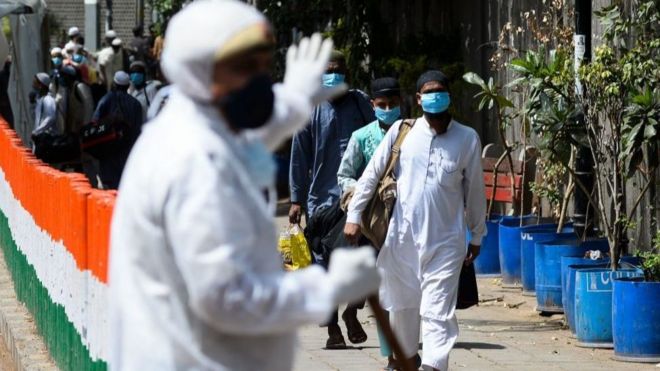
Image copyright GETTY IMAGESImage caption Hundreds have been leaving the mosque to be monitored or tested for the virus
Officials across India are searching for hundreds of people who attended a religious event in the capital that has set off several Covid-19 clusters.
At least six regions have reported cases that can be directly traced to the days-long congregation at a mosque.
Delhi officials are now clearing the building, where more than 1,000 people have been stranded since the government imposed a lockdown last week.
At least 24 have tested positive so far, the state health minister said.
They are among some 300 people who showed symptoms and have been moved to various hospital to be tested, he told the media. Another 700 have been shifted into quarantine centres, he added.
It is believed that the infections were caused by preachers who attended the event from Indonesia.
State officials have called for action to be taken against mosque officials, but they have denied any wrongdoing.
Local media reports say that Nizamuddin – the locality where the mosque is located – has been cordoned off and more than 35 buses carrying people to hospitals or quarantine centres.
The congregation – part of a 20th Century Islamic movement called Tablighi Jamaat – began at the end of February, but some of the main events were held in early March.
It’s unclear if the event was ticketed or even if the organisers maintained a roster of visitors as people attended the event throughout, with some staying on and others leaving. Even overseas visitors, some of them preachers, travelled to other parts of the country where they stayed in local mosques and met people.
Image copyright GETTY IMAGES
So officials have no easy way of finding out how many people attended the event or where they went. But they have already begun to trace and test.
The southern state of Telangana reported on Sunday night that six people who had attended the event died from the virus. The state’s medical officer told the BBC that more than 40 of Telangana’s 71 cases were either directly or indirectly linked to the event.
Indian-administered Kashmir reported its first death from the virus last week – a 65-year-old who had been in Delhi for the congregation. Officials told BBC Urdu that more than 40 of the region’s 48 cases could be traced back to that one patient.
A cluster has even appeared in the distant Andaman and Nicobar Islands, where six of the nine who have tested positive, had returned from the Delhi event.
The southern states of Tamil Nadu, Telangana and Andhra Pradesh have said more than 3,000 people from their states had attended the event, and Tamil Nadu has traced 16 positive patients to it.
States have also asked other people who attended to come forward for testing.
Delhi Chief Minister Arvind Kejriwal has asked for a police complaint to be registered against the head of the mosque.
However, the event’s organisers have issued a statement, saying they had suspended the event and asked everyone to leave as soon as Prime Minister Narendra Modi announced that there would be a day-long national curfew on 22 March.
While many were able to leave, they say, others were stranded because states began to seal their borders the following day, and two days later, India imposed a 21-day lockdown, suspending buses and trains.
The mosque’s premises include dormitories that can house hundreds of people.
The organisers say they informed the local police about all of this and continued to cooperate with medical officers who came to inspect the premises.
The mosque, the statement says, “never violated any provision of law, and always tried to act with compassion and reason towards the visitors who came to Delhi from different states. It did not let them violate the medical guidelines by thronging ISBTs (bus stops) or roaming on streets.”
This is not the first time religious congregations have been blamed for the spread of coronavirus.
Tablighi Jamaat events have also been blamed for spreading cases in Indonesia and Malaysia.
And in South Korea, many positive cases were linked to the Schincheonji church, a secretive religious sect, that has since apologised for its role in the outbreak.
BEIJING (Reuters) – Chinese President Xi Jinping visited Wuhan, the epicentre of the coronavirus outbreak, on Tuesday, the first time he has done so since the epidemic began and a sign that Beijing believes its efforts to control the virus are working.
His arrival in the city, where the virus is believed to have first taken hold late last year, comes after its spread in mainland China has sharply slowed in the past week and as attention has turned to preventing imported infections from overseas hot spots such as Iran, Italy and South Korea.
News of the visit gave a lift to Chinese stocks, with the blue-chip index .CSI300 climbing back into positive territory after falling as much as 1% in morning trade.
“It is obvious that Xi could not have visited Wuhan earlier because the risk of him contracting the virus there was initially too high,” Zhang Ming, a professor at Renmin University in Beijing, told Reuters.
“He is there now to reap the harvest. His being there means the CCP (Communist Party of China) may declare victory against the virus soon,” Zhang said.
China came in for criticism at home and globally over its early response to the outbreak, suppressing information and downplaying its risks, but its draconian efforts at control, including the lock-down of Wuhan and Hubei province where it is originated, have been effective at curbing the spread.
Hubei province, of which Wuhan is the capital, said on Tuesday it would implement a “health code” system to allow people in areas at a medium or low risk of contracting the coronavirus to start travelling.
During his trip to Wuhan, Xi will “visit and express regards to medical workers, military officers and soldiers, community workers, police officers, officials and volunteers who have been fighting the epidemic on the front line, as well as patients and residents during the inspection,” state news agency Xinhua said.
Separately, Taiwan’s government said on Tuesday a second round of evacuations of its citizens who had been stranded in Wuhan had begun, after weeks of arguments between the Chinese-claimed island and Beijing over the arrangements.
NEW CASES FALL
Mainland China had 19 new coronavirus infections on Monday, the National Health Commission said on Tuesday, down from 40 a day earlier. It also marked the third straight day of no new locally transmitted coronavirus cases outside of Hubei.
Of the new cases, 17 were in Wuhan, while one was in Beijing and one other in Guangdong due to people arriving from abroad, according to the health authority.
That brings the total number of confirmed cases in mainland China so far to 80,754.
However, Chinese authorities have ramped up warnings about the risks from foreigners and Chinese nationals travelling to China from viral hot spots abroad such as Iran and Italy.
The one case in Beijing on Monday was due to a traveller from Britain, and the one in Guangdong was an imported case from Spain. As of Monday, there have been 69 imported cases.
More than 114,300 people have been infected by the coronavirus globally and over 4,000 have died, according to a Reuters tally of government announcements.
Outside China, Italy, South Korea and Iran have reported the most cases and deaths.
Since the outbreak, 59,897 patients have been discharged from hospitals in China. Recently discharged patients need to go into quarantine for 14 days.
In Wuhan, 12 of the 14 temporary hospitals dedicated to treating coronavirus patients have closed, with the remaining two due to shut on Tuesday.
On Saturday, a small hotel used to quarantine people under observation in southern Fujian province collapsed, killing 20, while 10 had yet to be rescued.
Of the 71 people inside the hotel in Quanzhou city at the time of the collapse, 58 were in under quarantine, the Quanzhou city government said.
As of the end of Monday, the overall death toll from the coronavirus outbreak in China reached 3,136, up by 17 from the previous day.
Hubei reported 17 new deaths, all of which were in Wuhan.
Xi, who was mostly absent from Chinese state media coverage of the crisis in its early days, has become for more visible in recent weeks.
The Global Times, a nationalist tabloid published by the official People’s Daily, on Tuesday detailed the various instructions and actions Xi had given and taken between Jan. 7 and March 2 to combat the epidemic.
“Xi personally commands the people’s war against the epidemic. He has been paying constant attention to the epidemic prevention and control work and made oral or written instructions every day,” the newspaper said.
BEIJING/SINGAPORE (Reuters) – China reported on Wednesday its smallest number of coronavirus cases since January, lending weight to a prediction by its top medical adviser for the outbreak to end by April, but a global infectious diseases expert warned of the spread elsewhere.
Financial markets took heart from the outlook of the Chinese official, epidemiologist Zhong Nanshan, who said on Tuesday the number of new cases was falling in some provinces, and forecast the epidemic would peak this month, even as the death toll in China rose to more than 1,100 people.
World stocks, which had seen rounds of sell-offs over the virus, surged to record highs on hopes of a peak in cases. The Dow industrials, S&P 500 and Nasdaq all hit new highs, and Asian shares nudged higher on Wednesday.
But the World Health Organization (WHO) has warned that the epidemic poses a global threat akin to terrorism and one expert coordinating its response said while the outbreak may be peaking at its epicentre in China, it was likely to spread elsewhere in the world, where it had just begun.
RELATED COVERAGE
Chess, squabbles aboard cruise ship cast away by coronavirus fears
Singapore’s DBS evacuates 300 staff after employee contracts coronavirus
See more stories
“It has spread to other places where it’s the beginning of the outbreak,” the official, Dale Fisher, head of the Global Outbreak Alert and Response Network coordinated by the WHO, said in an interview in Singapore.
“In Singapore, we are at the beginning of the outbreak.”
Singapore has reported 47 cases and worry about the spread is growing. Its biggest bank, DBS (DBSM.SI), evacuated 300 staff from its head office on Wednesday after a confirmed coronavirus case in the building.
Hundreds of cases have been reported in dozens of other countries and territories around the world, but only two people have died outside mainland China – one in Hong Kong and another in the Philippines.
WHO chief Tedros Adhanom Ghebreyesus said on Tuesday the world had to “wake up and consider this enemy virus as public enemy number one” and the first vaccine was 18 months away.
In China, total infections have hit 44,653, health officials said, including 2,015 new confirmed cases on Tuesday. That was the lowest daily rise in new cases since Jan. 30.
The number of deaths on the mainland rose by 97 to 1,113 by the end of Tuesday.
But doubts have been aired on social media about how reliable the figures are, after the government last week amended guidelines on the classification of cases.
‘STAY HOPEFUL’
The biggest cluster of cases outside China is aboard the Diamond Princess cruise ship quarantined off Japan’s port of Yokohama, with about 3,700 people on board. Japanese officials on Wednesday said 39 more people had tested positive for the virus, taking the total to 175.
One of the new cases was a quarantine officer.
Thailand said it was barring passengers from another cruise ship, MS Westerdam, from disembarking, the latest country to turn it away amid fears of the coronavirus, despite no confirmed infections on board.
“We try to stay hopeful,” American passenger Angela Jones told Reuters in a video recording. “But each day, that becomes a little bit more difficult, when country after country rejects us.”
Echoing the comparison with the fight against terrorism, China’s state news agency Xinhua said late on Tuesday the epidemic was a “battle that has no gunpowder smoke but must be won”.
The epidemic was a big test of China’s governance and capabilities and some officials were still “dropping the ball” in places where it was most severe, it said, adding: “This is a wake-up call.”
The government of Hubei, the central province at the outbreak’s epicentre, dismissed the provincial health commission’s Communist Party boss, state media said on Tuesday, amid mounting public anger over the crisis.
China’s censors had allowed criticism of local officials but have begun cracking down on reporting of the outbreak, issuing reprimands to tech firms that gave free rein to online speech, Chinese journalists said.
The pathogen has been named COVID-19 – CO for corona, VI for virus, D for disease and 19 for the year it emerged. It is suspected to have come from a market that illegally traded wildlife in Hubei’s capital of Wuhan in December.
The city of 11 million people remains under virtual lockdown as part of China’s unprecedented measures to seal infected regions and limit transmission routes.
Travel restrictions that have paralysed the world’s second-biggest economy have left Wuhan and other Chinese cities resembling ghost towns.
Even if the epidemic ends soon, it has taken a toll of China’s economy, with companies laying off workers and needing loans running into billions of dollars to stay afloat. Supply chains for makers of items from cars to smartphones have broken down.
ANZ Bank said China’s first-quarter growth would probably slow to 3.2% to 4.0%, down from a projection of 5.0%.
The likely slowdown in China could shave 0.1 to 0.2 percentage points off both euro zone and British growth this year, credit rating agency S&P Global estimated.
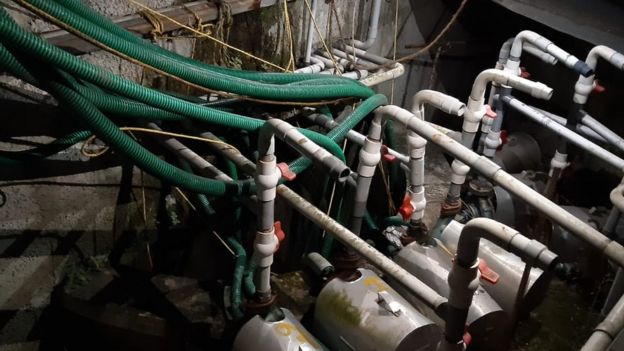
Image copyright JOSHY MALIYEKKALImage caption Drinking water reeking of alcohol started flowing out of the apartment taps
Residents of an apartment building in southern India were left in shock after a mix of beer, brandy and rum started gushing out of their taps.
The smelly, brown liquid began flowing from kitchen taps in the block of flats, in Kerala, on Monday morning.
Bemused residents then contacted the authorities for help, and discovered their water well had been contaminated by officials – albeit accidentally.
It emerged 6,000 litres of confiscated alcohol had been buried nearby.
The alcohol, which officials had placed in a pit after it was seized on court orders, had seeped through the soil and into a well – the same well which supplied the residents of the 18 flats in Thrissur district with drinking water.
“We were so shocked,” Joshy Malyiekkal, owner of the apartment complex, told BBC Hindi’s Imran Qureshi.
Luckily, the strong smell put people off consuming the water. However, the discovery meant there was not only no drinking water for the families, but they were also unable to wash.
“The children couldn’t go to school and even their parents couldn’t go to work,” Mr Malyiekkal said.
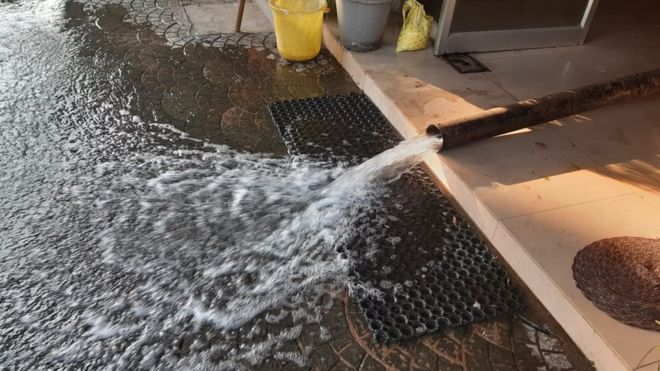
Image copyright JOSHY MALIYEKKALImage caption The contaminated water from the well being pumped out
After residents complained, officials acted to rectify the mistake.
But the process of pumping the well clean is likely to take a month, according to residents, leaving them reliant on deliveries from authorities.
“They’ve been supplying about 5,000 litres of water daily but it is not enough to cover all the families in our building,” Mr Malyiekkal said, pointing out the well was their main source of water.
Officials from the department did not respond to questions from the BBC.
The state of Kerala has the highest consumption of alcohol in the country.
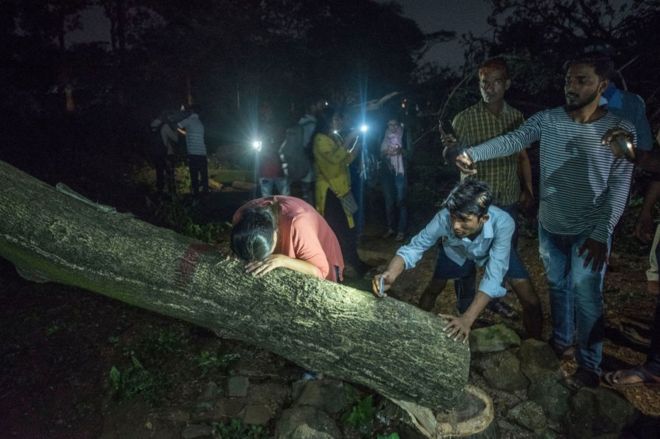
Image copyright GETTY IMAGESImage caption Protesters cry over felled trees in Aarey colony
India’s top court has asked officials to stop cutting trees in a forested area in Mumbai city after protesters clashed with police over the weekend.
The trees, part of a green strip known as Aarey colony, were being cut to make way for a new metro rail project.
Locals have long opposed the move, and filed petitions seeking Aarey to be declared a protected area.
But a high court dismissed the petitions on Friday, sparking protests as officials began felling the trees.
They planned to cut 2,185 trees, and admitted in the Supreme Court that more than 1,500 had already been cut. But petitioners claim that officials have cut around 2,500 trees.
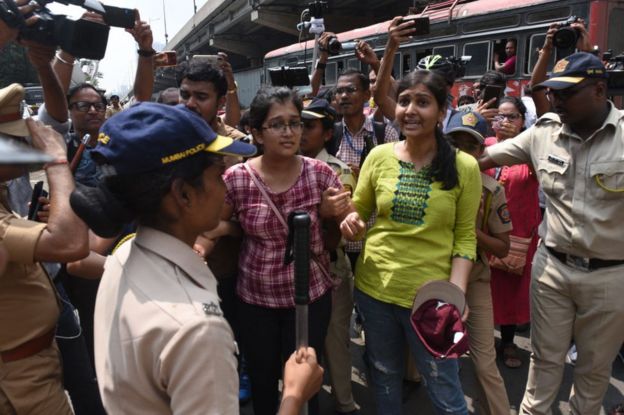
Local residents, students and environmental activists clashed with police on Friday as they took to the streets to stop authorities, and even broke through barricades to enter Aarey colony. More than 50 people were arrested and police imposed restrictions on public gatherings.
The protests grabbed the national spotlight over the weekend, and the Supreme Court took suo moto (without a formal complaint from any party) notice.
What did the Supreme Court say?
A special two-judge bench heard the matter on Monday after students wrote to the chief justice, asking the court to intervene and save the trees.
The court asked the state government of Maharashtra, where Mumbai is located, to not cut any more trees.
Image copyright GETTY IMAGESImage caption Police arrested more than 50 protesters
The court also asked the government to maintain “status quo” – which means that no construction can take place – until 21 October when it will hear the matter again.
The court also ordered the release of all activists who were arrested or detained on bail.
What is Aarey colony?
Spread over 1,300 hectares (3,212 acres), Aarey is a densely forested area dotted with lakes and has the Mithi river flowing through it. It lies at the heart of Mumbai and is often referred to as its last green lung.
It’s locally known as the Aarey “milk colony” because most of the land was given to the department of dairy development in 1951. But they are allowed to grow cattle fodder only on a fraction of the land.
Image copyright GETTY IMAGESImage caption Protesters broke through barricades and clashed with police on Friday
Earlier this year, officials cleared some 40 hectares of the forested area to build a zoo, complete with a night safari. And now, locals complain, another slice of it is in danger from the metro construction.
They also fear that the government will eventually clear the way for private builders to encroach on the Sanjay Gandhi National Park, which lies to the north of Aarey colony.
Officials, however, dismiss these fears as unfounded and point out that the construction for the metro only requires 30 hectares.
How crucial is the metro rail for Mumbai?
The city badly needs a “mass rapid transport system,” Ashwini Bhide, managing director of the Mumbai metro rail corporation, had told the BBC earlier.
The land in Aarey colony, she said, was “the most suitable land due to its size, shape and location”.
She has also been defending the decision to cut the trees on Twitter.
India’s financial hub is congested and infamous for its crawling traffic jams.
Its colonial-era local train system ferries some 7.5 million people between the city’s suburbs and its centre on a daily basis.
Officials say that the metro will eventually carry around 1.7 million passengers every day and bring down the number of vehicles on the road by up to 650,000.
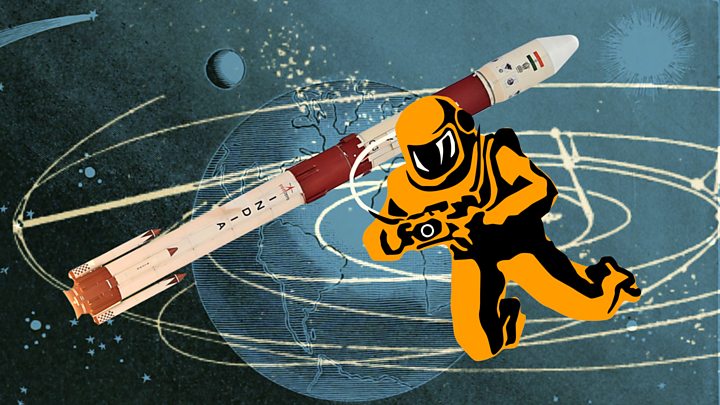
Indian Prime Minister Narendra Modi told his country’s space scientists he was proud of a programme that had come so near to putting a probe on the Moon.
Contact with Chandrayaan-2 was lost moments before its Vikram module was due to touch down at the lunar south pole.
The fate of the craft is not yet known, but Mr Modi said there would be further opportunities.
India would have been the fourth nation to make a soft landing on the Moon.
“The best is yet to come in our space programme. India is with you,” said Mr Modi.
The Chandrayaan-2 approached the Moon as normal until an error occurred about 2.1km (1.3 miles) from the surface, officials said.
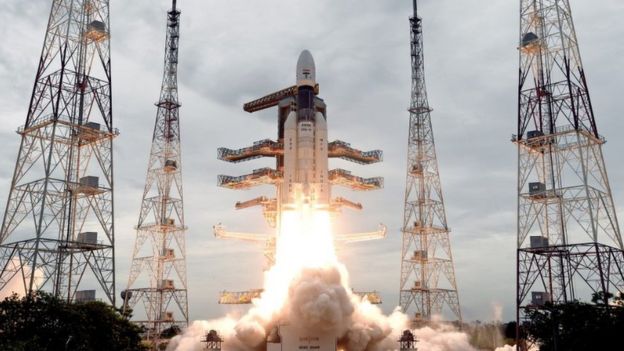
Image copyright ISROImage caption The mission’s lift-off was broadcast live to an audience of hundreds of millions
India’s Space Research Organization (Isro) said it lost contact seconds before the ship was expected to land.
The country’s first Moon mission – Chandrayaan-1, in 2008 – carried out the first and most detailed search for water on the lunar surface using radars.
What happened?
Chandrayaan-2 entered the Moon’s orbit on 20 August and was due to make a controlled descent to the surface early on Saturday, Indian time, over a month after it first took off.
Staff at mission control were glued to the screens at Isro’s Bangalore space centre as the spacecraft made its descent towards the surface.
The control room burst into applause during the so-called rough breaking phase of the descent, with Prime Minister Modi watching the action from behind a glass screen.
Isro chairman Kailasavadivoo Sivan announced to staff that the ship’s initial descent had been “normal,” and that the mission’s data would be analysed.
Mr Sivan had earlier described the final descent as “15 minutes of terror”.
The rover (called Pragyan – wisdom in Sanskrit) had the capacity to travel 500m from the lander in its 14-day life span, and would have sent data and images back to Earth for analysis.
The mission would have focused on the lunar surface, searching for water and minerals and measuring moonquakes, among other things.
Why would it have been significant?
A soft landing on another planetary body – a feat achieved by just three other countries so far – would have been a huge technological achievement for Isro and India’s space ambitions, writes science writer Pallava Bagla.
He adds that it would also have paved the way for future Indian missions to land on Mars, and opened up the possibility of India sending astronauts into space.
For the first time in India’s space history, the interplanetary expedition was led by two women – project director Muthaya Vanitha and mission director Ritu Karidhal.
Media caption Is India a space superpower?
It is also a matter of national pride – the satellite’s lift-off in July was broadcast live on TV and Isro’s official social media accounts.
The mission has also made global headlines because it’s so cheap – the budget for Avengers: Endgame, for instance, was more than double at an estimated $356m. But this isn’t the first time Isro has been hailed for its thrift. Its 2014 Mars mission cost $74m, a tenth of the budget for the American Maven orbiter.
Some 150,000 residents of Baishizhou have to leave by the end of September to make way for malls, hotels and high-end residential projects
They worry about finding affordable housing in the city, and their children’s education
Urban villages like Baishizhou provide affordable housing, mostly for migrant workers. Photo: Phoebe Zhang
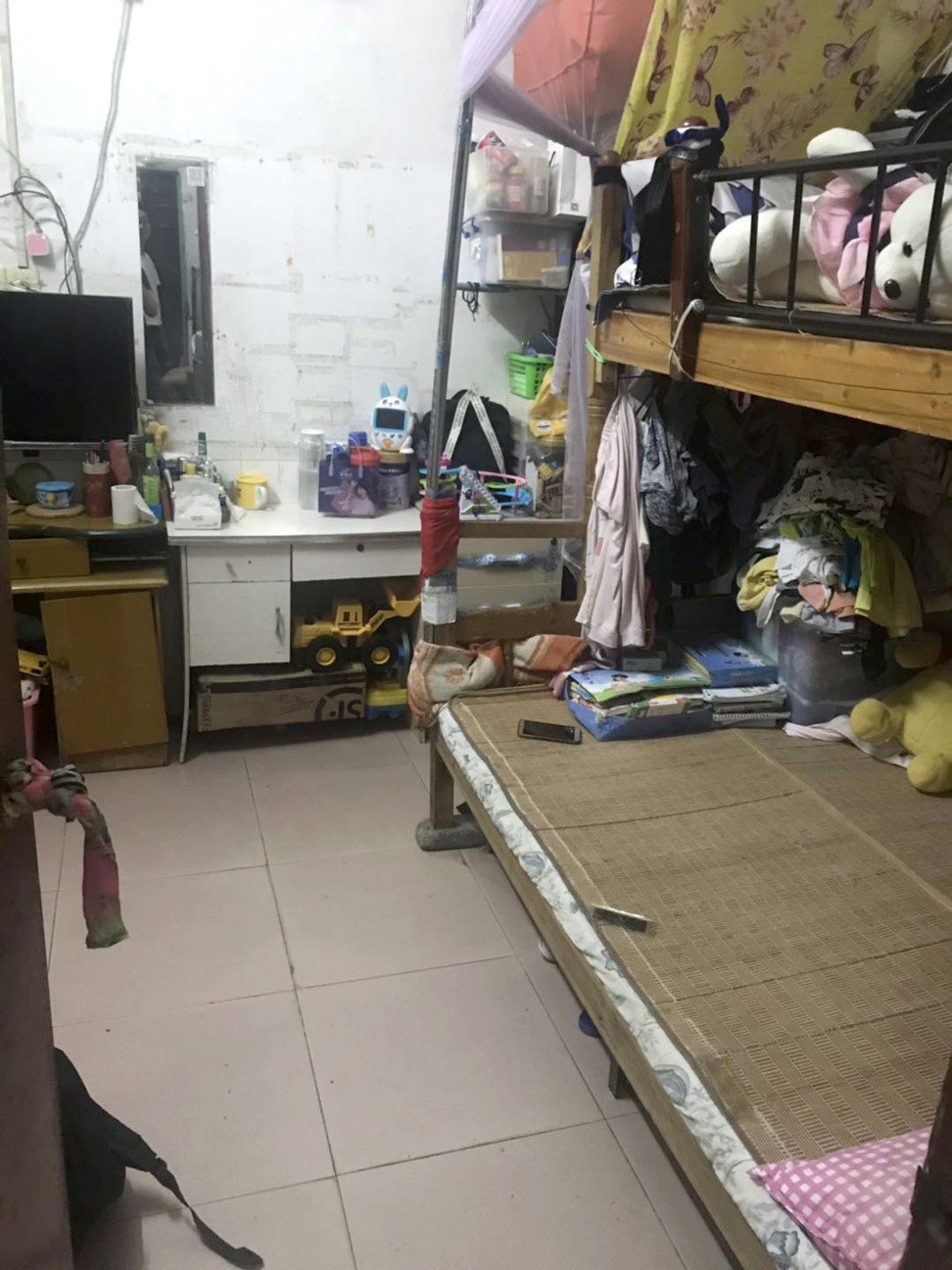
As their eviction deadline nears, all Chen Jian can think about is the wrecking ball – and where his family is going to go. He often dreams about the negotiations – with officials, real estate developers, landlords. On other nights, he cannot sleep at all.
“I’m mostly worried about my daughter – she starts secondary school in September,” said Chen, 41, who works as a quality supervisor for a foreign trading company.
His family of four lives in a cheap one-bedroom flat in Baishizhou, one of the last standing chengzhongcun, or “urban villages”, in the flourishing commercial zones of southern Chinese city Shenzhen.
The villages provide affordable housing – costing from a few hundred to a few thousand yuan per month – to a mostly migrant worker population that provides services and labour.
But Baishizhou, in the Nanshan district, will not be standing for much longer. Many tenants in the area have received eviction notices since June, telling them to move out before the end of September to make way for a real estate project led by Shenzhen-based developer LVGEM Group.
The developer bought the land and buildings from their landlords, and it plans to knock them down and replace them with malls, hotels, high-end residential projects and skyscrapers.
Some 150,000 people are affected, mostly migrant workers, and they will have to find new homes, change jobs or even move back home at short notice.
Chen Jian lives in a one-bedroom flat in Baishizhou with his wife, daughter and son. Photo: Phoebe Zhang
For Chen and more than 2,000 other families, their children’s education is the most urgent issue. He said they could move somewhere else nearby, but the rent would be more than four times higher. A cheaper area would mean a long walk to school for his daughter from the nearest subway station.
As the breadwinner, Chen’s monthly income of 12,000 yuan (US$1,750) has to cover the whole family. His wife takes care of their three-year-old son and their daughter, 12.
“If I were here by myself, I would just pack up my bags and go,” said Chen, who moved to Shenzhen from Henan province. “But I can’t – I have children, I would do anything for my children.”
Families who’ve lived in old Chinese town for generations being kicked out to make way for tourists
Urban villages are a phenomenon that grew from China’s rapid development. In the 1980s, soon after Shenzhen became the country’s first special economic zone, the local government expropriated mostly vacant land from villagers and allowed developers to build commercial properties there.
The locals invested the large sums of money they received into new living spaces in their villages, which they rented out to the migrant workers that flowed into the city amid a manufacturing boom.
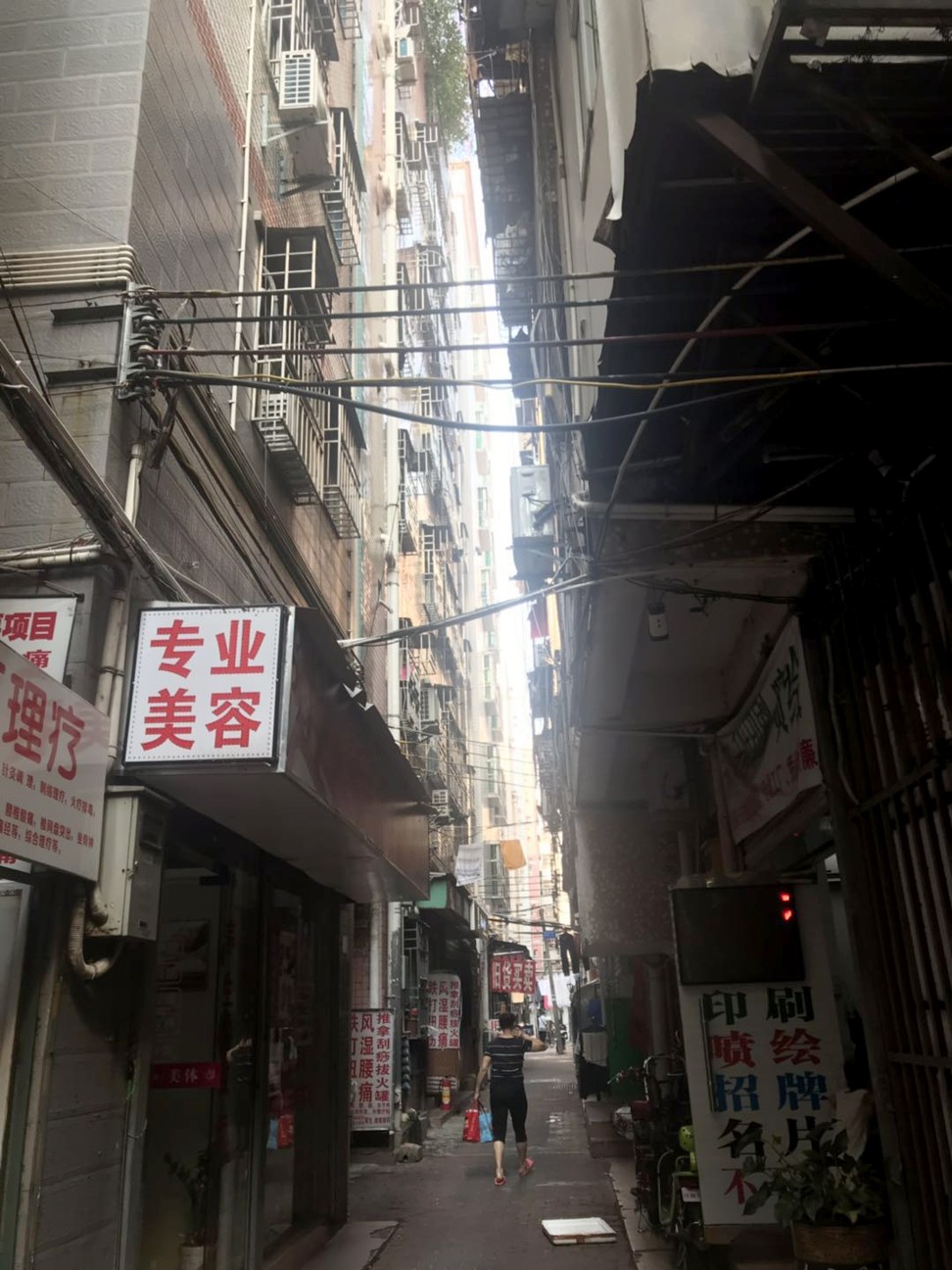
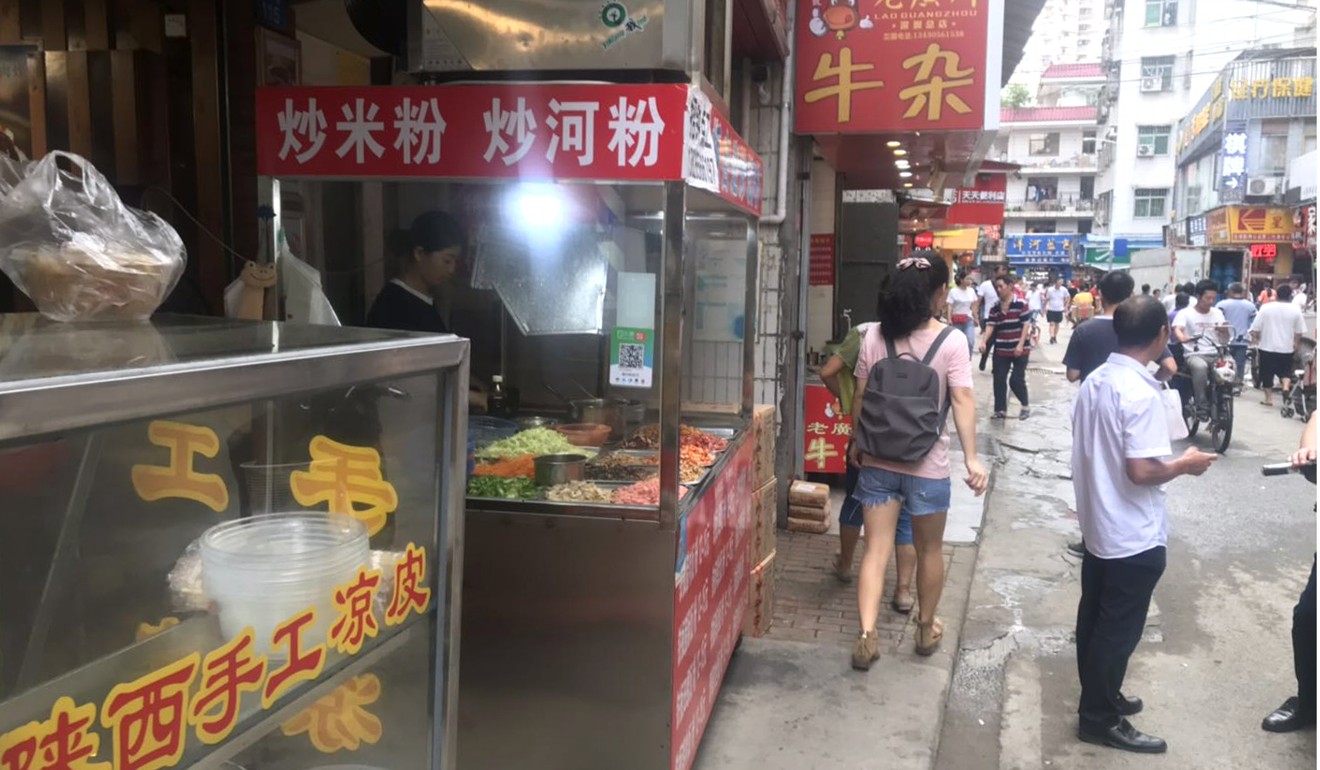
These chengzhongcun emerged as a tangle of damp alleyways, where electricity and telephone wires hang like spiderwebs. They bustle with fruit carts, soy milk shops, cobblers, karaoke parlours, short-stay love hotels and hair salons offering massage services. The “handshake buildings” where people live are packed together so tightly that residents could reach out of the window and shake their neighbour’s hand in the opposite flat.
“I call this ‘voluntary urbanisation’,” said Duan Peng, an architect based in the city. Since he moved to Shenzhen in 2001, Duan has spent many days and nights in Baishizhou. He said its development was in line with the government’s urban planning policy, since it allowed migrant workers to live in a relatively prosperous area in the city centre rather than on its periphery.
“Handshake buildings”, where residents can shake their neighbours’ hands through the windows, are a feature of China’s urban villages. Photo: Phoebe Zhang
Chen moved to Shenzhen with his wife in 2000, and both their children were born there. They moved to Baishizhou in 2008 after he was introduced to his landlord, who is from Chen’s hometown and rented him the flat for 650 yuan a month.
The rent has gone up by just 300 yuan in the 11 years they have lived there. They have watched as new developments sprang up around them – amusement parks, a golf course, malls and an area that is home to some of the country’s top tech companies including Huawei, Tencent and DJI.
How the eviction of Beijing’s migrant workers is tearing at the fabric of the city’s economy
But away from the shiny new developments, 150,000 migrant workers from all over the country are packed into 2,500 buildings in Baishizhou, where rents and services are affordable.
The urban village is full of people like Chen. Small business owner Wang Fang came to Shenzhen from northeast China in 2003 and has lived in Baishizhou ever since. Six months ago, she signed a three-year lease on a commercial space and opened a dumpling restaurant, but she is worried about the future.
“I can’t go back home, I already have a Shenzhen hukou,” she said, referring to the household registration document that gives access to public services. “I don’t have land there any more and can’t make a living there [as a farmer].”
She has not been told she has to leave the restaurant, but Wang and her two sons have until the end of September – when the building’s water and electricity will be cut off – to vacate their flat.
“It’s only a matter of time before the business is shut down as well,” she said.
Small shops and street vendors line Baishizhou’s bustling alleyways. Photo: Phoebe Zhang
According to an online poll of 1,031 Baishizhou residents this week, about half said they may have to find another job, and more than 600 were concerned about their children’s education. The survey, conducted by Shenzhen University urban planning professor Chen Zhu, also found that 70 per cent of those polled planned to find another flat in the city, while 28 per cent would leave.
Duan said the evictions and redevelopment would inevitably affect the surrounding areas, as well as the residents.
“The prices of services in the neighbourhood will increase, because many of the workers [now providing those services] will move far away, and rents will increase as well,” he said.
But for many such redevelopments, while the government, landlords and village officials might be consulted, the tenants are left out.
“Most of these residents, their voices and their interests aren’t on the negotiating table – their losses aren’t calculated in the real estate developer’s demolition costs,” Duan said.
A receptionist at LVGEM said he was not aware of any complaints about the redevelopment, while emails to the company went unanswered.
Meanwhile the developer’s partner, Baishizhou Corporation, told Southern Metropolis Daily it would provide legal services, rentals support and school buses for tenants who will be displaced.
But it is not enough for migrant workers like Chen. Like many of those facing eviction, he fears he will have to pay more rent, and there may not be a school bus service in his area.
He mentions a slogan plastered on walls in the city, “Once you come, you’re a Shenzhener” – part of a government campaign to lure talent and investors.
Chen said he worried that Shenzhen wanted only hi-tech workers and luxury residential compounds in the city, leaving little room for low-income workers.
“Despite what the slogan says, you ask yourself, are you really a Shenzhener?” he said.
Trade talks grinded to a halt last month when Mr Trump accused China of reneging on its promises and raised tariffs on $200bn (£159.2bn) worth of Chinese goods.
The move came as a surprise to many who had thought the US and China were nearing a trade deal. China retaliated with its own tariff hikes.
The Trump administration has threatened to impose tariffs on another $300bn worth of Chinese products if the two sides can’t reach an agreement on trade.
Tariffs on billions of dollars worth of goods from the US and China imposed over the past year have weighed on the global economy and hit financial markets.
Companies ranging from retailers to electronics firms have made submissions to the US trade department warning that more tariffs will hurt their business and consumers.
Still, in his latest comments the US president appeared more optimistic about striking a trade deal.
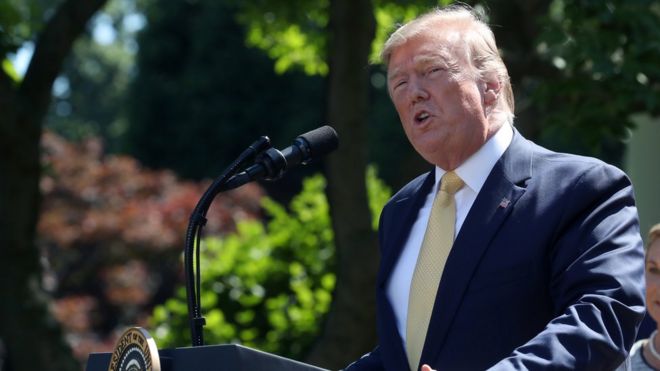
“I think we have a chance. I know that China wants to make a deal. They don’t like the tariffs, and a lot of companies are leaving China in order to avoid the tariffs,” Mr Trump told reporters at the White House on Tuesday.
Despite moves to resume talks, recent comments from both sides suggest they still remain far apart on many issues.
Sticking points in trade negotiations have included how to enforce a deal and how fast to roll back tariffs.


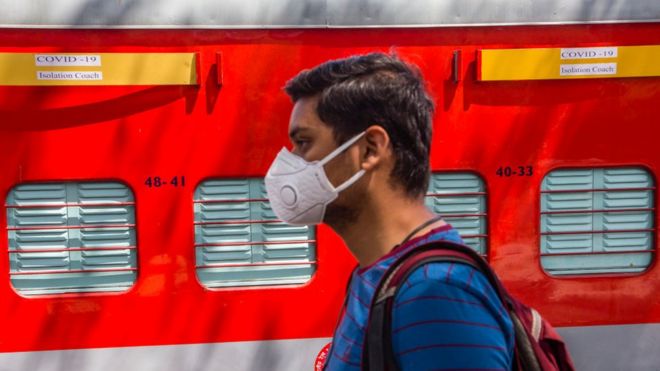 Image copyright GETTY IMAGES
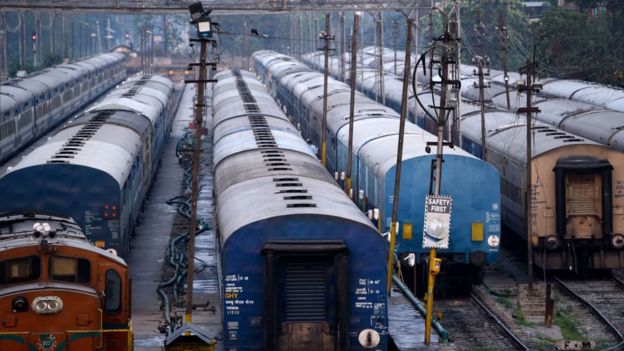 Image copyright GETTY IMAGES
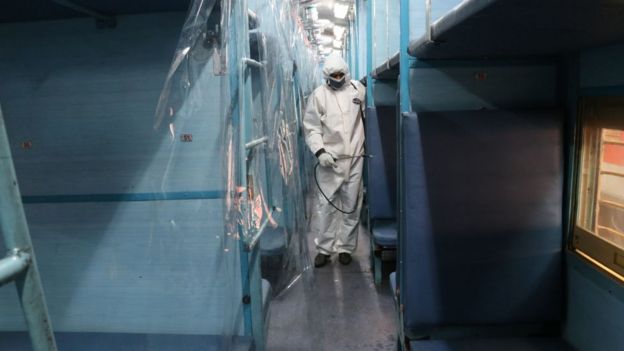 Image copyright GETTY IMAGES
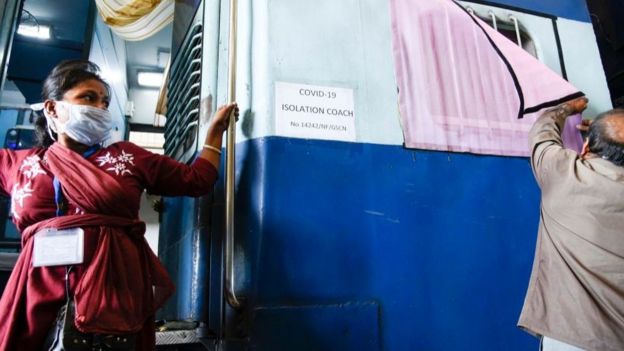 Image copyright GETTY IMAGES




 CHINDIA ALERT: You'll be living in their world, very soon