Chindia Alert: You’ll be Living in their World Very Soon
aims to alert you to the threats and opportunities that China and India present. China and India require serious attention; case of ‘hidden dragon and crouching tiger’.
Without this attention, governments, businesses and, indeed, individuals may find themselves at a great disadvantage sooner rather than later.
The POSTs (front webpages) are mainly 'cuttings' from reliable sources, updated continuously.
The PAGEs (see Tabs, above) attempt to make the information more meaningful by putting some structure to the information we have researched and assembled since 2006.
Image copyright AFP / GETTYImage caption Shoppers walking past a broadcast of Chinese Premier Li Keqiang delivering his speech at the opening of the NPC on Thursday
China’s ruling Communist Party has set in motion a controversial national security law for Hong Kong, a move seen as a major blow to the city’s freedoms.
The law to ban “treason, secession, sedition and subversion” could bypass Hong Kong’s lawmakers.
Critics say China is breaking its promise to allow Hong Kong freedoms not seen elsewhere in China.
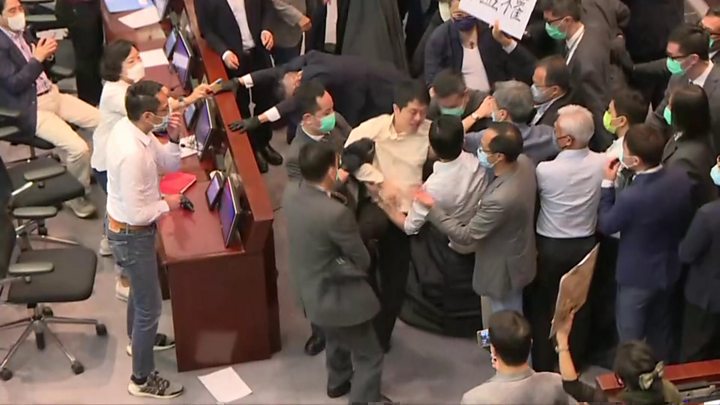
It is likely to fuel public anger and may even trigger fresh protests and demands for democratic reform.
The plan was submitted at the annual National People’s Congress (NPC), which largely rubber-stamps decisions already taken by the Communist leadership, but is still the most important political event of the year.
Hong Kong, a semi-autonomous region and an economic powerhouse, was always meant to have introduced such laws after the handover from British control to Chinese rule in 1997.
After last year’s wave of sustained and violent protest, Beijing is now attempting to push them through, arguing “law-based and forceful measures” must be taken to “prevent, stop and punish” such protests in the future.
On Friday, Hong Kong’s government said it would co-operate with Beijing to enact the law, adding it would not affect the city’s freedoms.
That article says Hong Kong “must improve” national security, before adding: “When needed, relevant national security organs of the Central People’s Government will set up agencies in Hong Kong to fulfil relevant duties to safeguard national security in accordance with the law.”
China could essentially place this law into Annex III of the Basic Law, which covers national laws that must be implemented in Hong Kong – either by legislation, or decree.
Addressing the congress, Premier Li Keqiang spoke of the economic impact of the coronavirus and on Hong Kong and Macau said: “We’ll establish sound legal systems and enforcement mechanisms for safeguarding national security in the two Special Administrative Regions.”
What do opponents say the dangers are?
Hong Kong is what is known as a “special administrative region” of China.
It has observed a “one country, two systems” policy since Britain returned sovereignty in 1997, which has allowed it certain freedoms the rest of China does not have.
Pro-democracy activists fear that China pushing through the law could mean “the end of Hong Kong” – that is, the effective end of its autonomy and these freedoms.
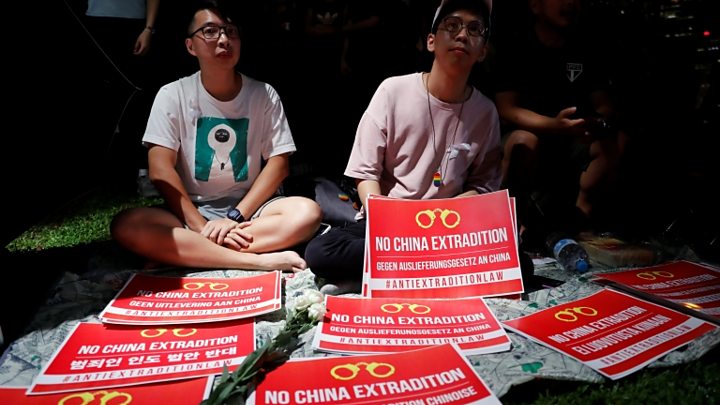
Last year’s mass protests in Hong Kong were sparked by a bill that would have allowed extraditions to mainland China.
Media caption Former Hong Kong governor Chris Patten: “UK should tell China this is outrageous”
The bill was paused, then withdrawn – but the protests continued until the virus outbreak at the end of the year.
The US has also weighed in, with President Trump saying the US would react strongly if it went through – without giving details.
It is currently considering whether to extend Hong Kong’s preferential trading and investment privileges.
Why is China doing this?
Mr Wang said the security risks had become “increasingly notable” – a reference to last year’s protests.
“Considering Hong Kong’s situation at present, efforts must be made at the state-level to establish and improve the legal system and enforcement mechanisms,” he is quoted as saying in state media.
Media caption The BBC’s Helier Cheung on Hong Kong’s 2019 protests
Beijing may also fear September’s elections to Hong Kong’s legislature.
If last year’s success for pro-democracy parties in district elections is repeated, government bills could potentially be blocked.
What is Hong Kong’s legal situation?
Hong Kong was under British control for more than 150 years up to 1997.
The British and Chinese governments signed a treaty – the Sino-British Joint Declaration – that agreed Hong Kong would have “a high degree of autonomy, except in foreign and defence affairs”, for 50 years.
This was enshrined in the Basic Law, which runs out in 2047.
MACAO, Dec. 6 (Xinhua) — The “one country, two systems” principle has proved to be feasible, achievable and popular in the Macao Special Administrative Region (SAR) since Macao returned to the motherland in 1999, said Fu Ziying, director of the Liaison Office of the Central People’s Government in the Macao SAR.
Fu told Xinhua in a recent interview that the Macao SAR government, along with all walks of life, has comprehensively and precisely understood and implemented the “one country, two systems” principle and strictly abided by China’s Constitution and the Basic Law of the Macao SAR since Macao’s return to the motherland.
The Macao SAR government has ensured the steady and practical implementation of the “one country, two systems” principle by devoting to developing economy, improving people’s wellbeing, upholding inclusiveness and mutual support and promoting the unity of the compatriots in Macao under the banner of loving both the motherland and the region, thus opening a new horizon in practicing the “one country, two systems” with Macao characteristics.
Fu eulogized Macao’s success in implementing the “one country, two systems” principle in three aspects.
Firstly, for the past 20 years, the authority of China’s Constitution and the Basic Law has been firmly safeguarded in Macao and the executive-led system has been running smoothly.
The Macao SAR government and all walks of life have always firmly safeguarded the authority of China’s Constitution and the Basic Law by holistically combining upholding the principle of “one country” with respecting the differences of the “two systems,” and maintaining the power of the central government with ensuring the high degree of autonomy of the Macao SAR, ushering in a new era of good political situation in Macao.
The national sovereignty, security and interests are well safeguarded and the capability and level of law-based governance has been significantly promoted in Macao, Fu said.
Secondly, Macao has witnessed rapid economic development and continued improvement of people’s livelihood, with people feeling more satisfied and happier, Fu said.
Macao, by making good use of the advantages of the “one country, two systems” principle, has achieved a leaping development in economy, Fu said.
Over the past 20 years, Macao has witnessed the fastest development in its history, with outstanding performance in various macroeconomic sectors, Fu said.
With the full efforts from the SAR government in building long-term efficient mechanisms in social security, housing, education, health, human resources and disaster prevention and reduction, the social welfare and people’s livelihood have been greatly improved since Macao’s return to the motherland, said Fu,
Thirdly, Macao’s success could be seen in its harmony and inclusiveness in society, where both loving the motherland and the region has become the mainstream value, according to Fu.
He said education on the country’s Constitution and the Basic Law is deep-rooted in the society, as the “one country, two systems,” “Macao people governing Macao” and the high degree of autonomy are well-accepted by residents in Macao.
Fu said Macao has attached great importance to cultivating patriotism among the youth, with patriotic education legalized in Macao in 2006.
The development of the socialism with Chinese characteristics had entered a new era, so is the cause of the “one country, two systems,” said Fu.
Under the leadership of Chinese President Xi Jinping, the practice of “one country, two systems” is included in the Chinese Dream.
In the future, Macao should further exploit the advantages of “one country, two systems” principle, seize the opportunities brought about by the Belt and Road Initiative and the construction of the Guangdong-Hong Kong-Macao Greater Bay Area.
“We will always comprehensively and precisely understand and implement the principle of ‘one country, two systems’,” said Fu.
Fu called on Macao to participate in the country’s reform and opening-up cause more actively so as to help boost the country’s people-to-people exchanges with other countries.
He highlighted the importance of the construction of the Greater Bay Area, hoping that Macao would, by participating in the development, further expand its industries and promote people’s livelihood so as to maintain the economic and social stability.
“Remain true to the original aspiration of the principle of ‘one country, two systems,’ Macao, the land of lotus, will for ever glisten,” Fu added.
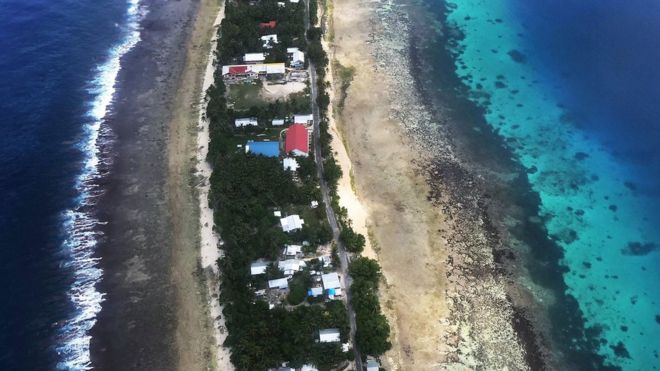
Image copyrightGETTY IMAGESImage captionTuvalu is battling rising sea levels
The tiny South Pacific nation of Tuvalu has rejected offers from Chinese firms to build artificial islands that would help it deal with rising sea levels, its foreign minister says.
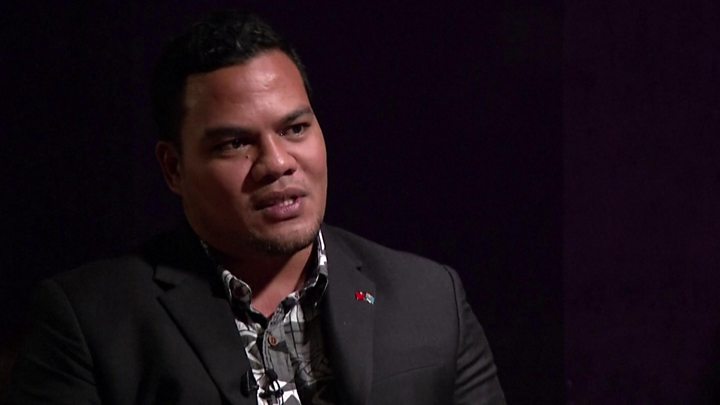
Simon Kofe told Reuters he saw the offers as an attempt to reduce Taiwan’s influence in the region.
But he instead reaffirmed his country’s support for Taiwan.
China has increased efforts to expand its influence in the Pacific, alarming the United States and its allies.
Only 15 countries recognise Taiwan as a sovereign nation and have full diplomatic relations. A number of countries have switched their allegiance from Taiwan to China in recent years.
China refuses to have diplomatic relations with any country that recognises Taiwan.
In recent months Taiwan lost two allies in the region, when Kiribati and the Solomon Islands switched diplomatic recognition to China. Beijing has been accused of luring them in with the promise of financial aid and airplanes.
Media caption Tuvalu’s foreign minister discusses increasing pressure from China
Mr Kofe expressed his backing for Taiwan and said his nation was setting up a group to unite Taiwan’s four remaining Pacific allies – the Marshall Islands, Palau, Nauru and Tuvalu.
“We believe in the power of grouping together and collaborating,” he told Reuters news agency.
“Together with our partners, we will be able to counter the influence from mainland China.”
Mr Kofe said Chinese companies had approached local communities offering to help with a $400m (£310m) government plan to build artificial islands. He believes the companies were backed by the Chinese government.
“We are hearing a lot of information about debt,” he said. “China buying our islands and looking at setting up military bases in our part of the world. Those are things that are concerning to us.”
Beijing has proposed Taiwan operate under a “one country, two systems” structure, similar to Hong Kong.
Since Taiwan President Tsai Ing-wen took office in 2016, seven countries have dropped Taiwan as a diplomatic ally. The support from Tuvalu could help her as she seeks re-election in January.
Chinese President Xi Jinping meets with Chief Executive of Hong Kong Special Administrative Region (HKSAR) Carrie Lam, who is here for the second China International Import Expo (CIIE), in Shanghai, east China, Nov. 4, 2019. (Xinhua/Ju Peng)
SHANGHAI, Nov. 4 (Xinhua) — President Xi Jinping on Monday met with Chief Executive of Hong Kong Special Administrative Region (HKSAR) Carrie Lam, who is in Shanghai for the second China International Import Expo.
After hearing Lam’s report on the recent situation in Hong Kong, Xi said the disturbances in Hong Kong have lasted five months. Lam has led the SAR government to fully discharge its duties, strive to stabilize the situation and improve the social atmosphere, and has done a lot of hard work, he said.
Xi voiced the central government’s high degree of trust in Lam and full acknowledgement of the work of her and her governance team.
Ending violence and chaos and restoring order remain the most important task for Hong Kong at present, he noted.
Xi demanded unswerving efforts to stop and punish violent activities in accordance with the law to safeguard the well-being of the general public in Hong Kong.
Meanwhile, effective efforts should be made in work including having dialogue with all sectors of the society and improving people’s livelihood, Xi said.
Xi expressed his hope that people from all walks of life in Hong Kong fully and faithfully implement the principle of “one country, two systems” and the HKSAR Basic Law, and make concerted efforts to safeguard Hong Kong’s prosperity and stability.
70th anniversary of the founding of the People’s Republic of China marked by its biggest ever military parade and huge civilian parade
Xi says no force can stop China ‘marching forward’ and vows to protect the long-term stability of Hong Kong
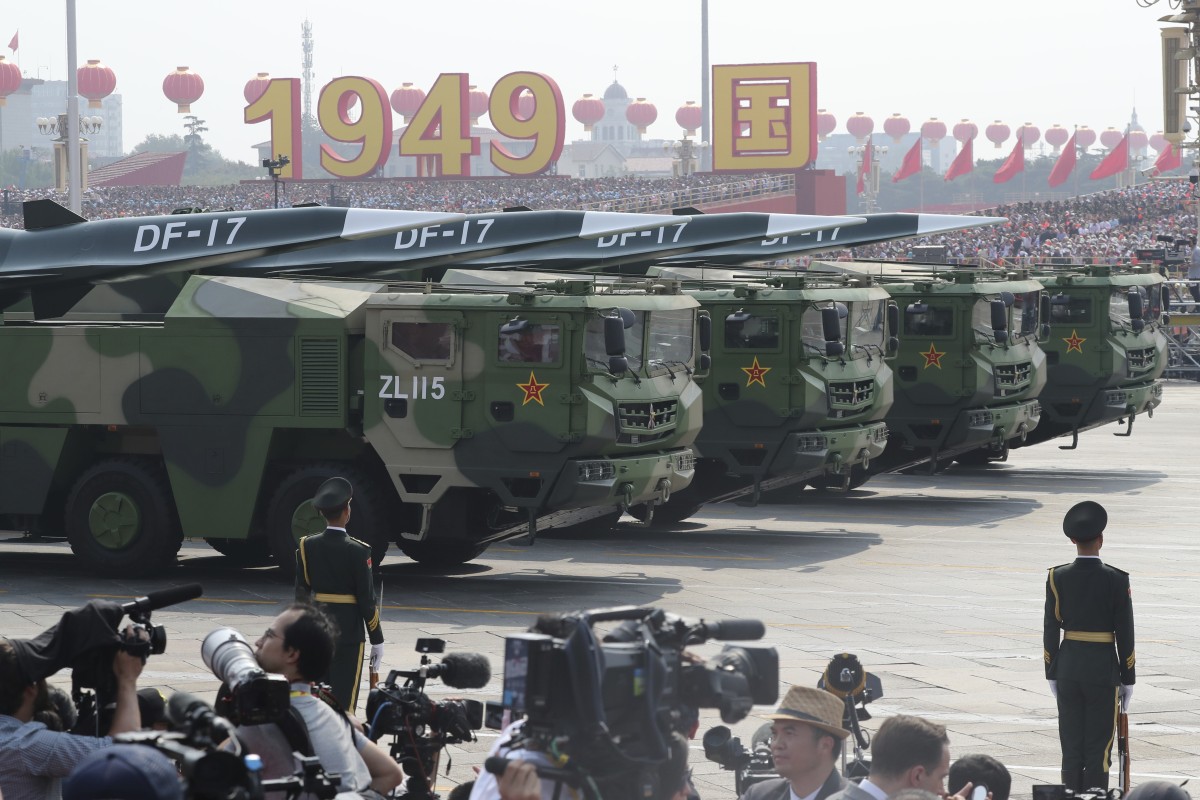
Military vehicles carry DF-17 missiles capable of reaching the US mainland during the parade to mark 70 years of the People’s Republic. Photo: AP
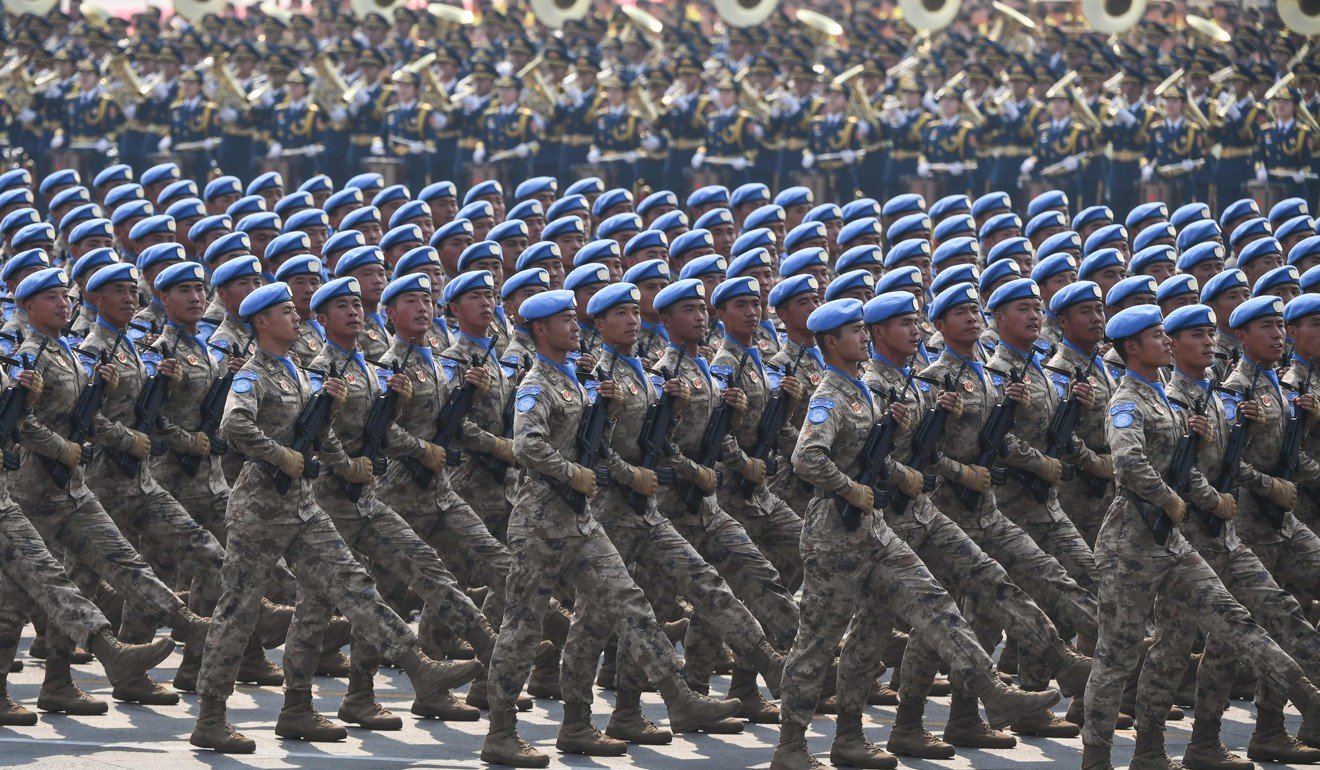
China staged a massive military parade in Beijing on Tuesday to mark the 70th anniversary of the founding of the People’s Republic, with much of the smog-shrouded capital city under a security lockdown.
President Xi Jinping inspected over 15,000 troops, more than 160 aircraft and 580 weapon systems in a show of the country’s growing military might and his drive to modernise the People’s Liberation Army.
He also delivered a bullish eight-minute speech hailing the accomplishments of seven decades of Communist rule and pledging to achieve his vision of a “Chinese dream” of national rejuvenation and global prominence.
Here are some of the key takeaways from a day of celebration in Beijing:
A show of unity
Xi presided over the ceremony in Tiananmen Square flanked by his predecessors Jiang Zemin and Hu Jintao, along with other retired and present party elders.
The rare appearance of Jiang and Hu – on the rostrum of the Gate of Heavenly Peace, where the country’s founding father Mao Zedong declared Communist rule on October 1, 1949 – was clearly aimed at projecting unity and solidarity in the face of daunting domestic and international challenges.
China’s National Day parade, as it happened
Hu had been absent from the funeral of former premier Li Peng in late July, although the ailing Jiang attended.
Former vice-president Zeng Qinghong and Song Ping, the oldest party elder in attendance, also appeared on the rostrum.
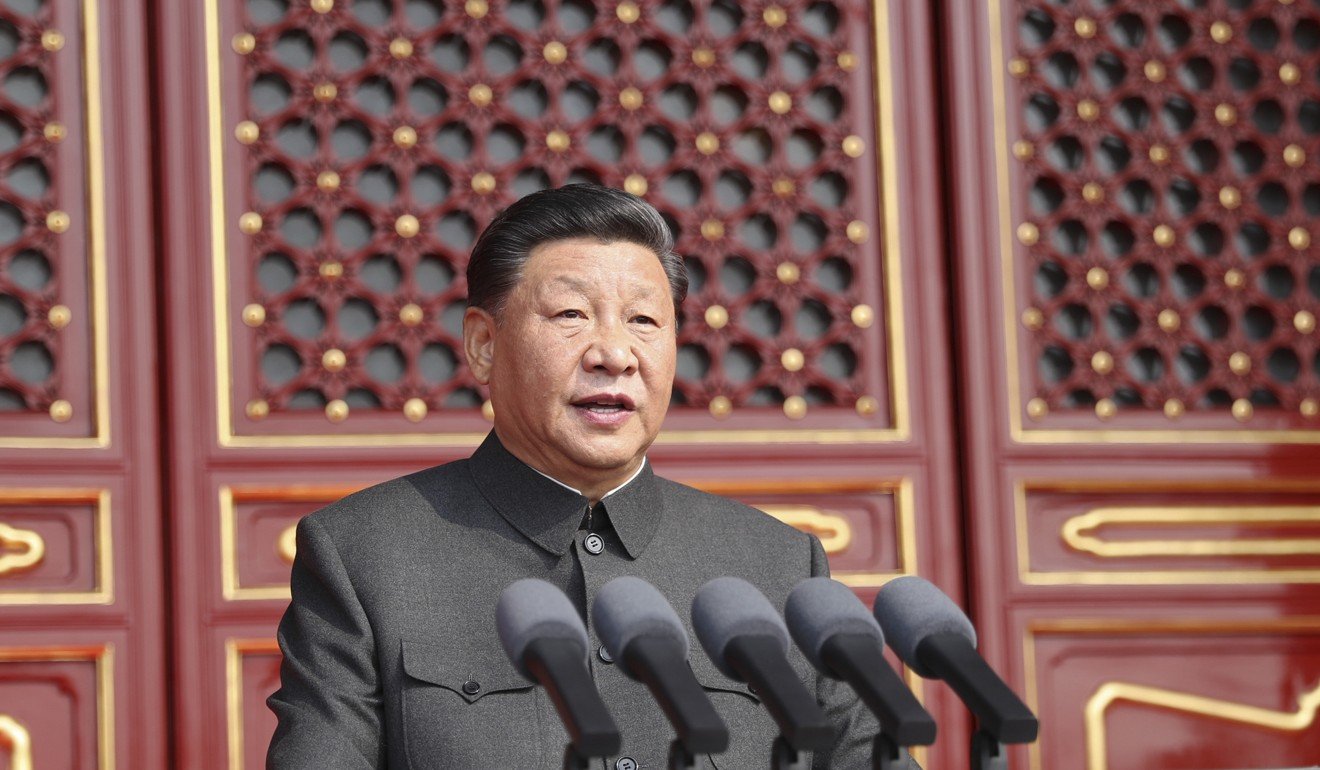
President Xi Jinping speaks in Tiananmen Square during Tuesday’s celebrations. Photo: Xinhua
But notably, while former premier Wen Jiabao was present, his predecessor Zhu Rongji was not.
‘No force can shake China’
Dressed in a Mao suit, Xi’s nationally televised speech invoked China’s “century of humiliation” and praised the achievements of its people, saying there was no force that could stop it forging ahead.
“No force can shake the status of our great motherland, and no force can stop the Chinese people and the Chinese nation from marching forward,” he said.
Chinese troops take part in the Republic’s largest ever military parade. Photo: AFP
“The People’s Liberation Army [PLA] will serve its purpose in safeguarding the sovereignty, security and development interests of the country, and world peace,” he said, at a time when Beijing has expanded its military footprint globally, including with its first overseas military base in Djibouti.
Xi called on the Communist Party and the country to unite and continue to fight for the realisation of what he called the “Chinese dream” – the nation’s rejuvenation.
One country, two systems
Amid escalating unrest in Hong Kong, which has plunged the city into a deepening crisis and threatened to overshadow the National Day celebrations, Xi vowed that the central government would uphold “one country, two systems”.
He said the central government would protect the long-term stability of Hong Kong and Macau, and stressed the goal of “peaceful reunification” with the self-ruling Taiwan, repeating a message frequently used by his predecessors, including Deng Xiaoping, Jiang and Hu.
The theme of one country, two systems later appeared in a National Day parade for the first time, with placards forming the words: “Hong Kong’s tomorrow will be better.”
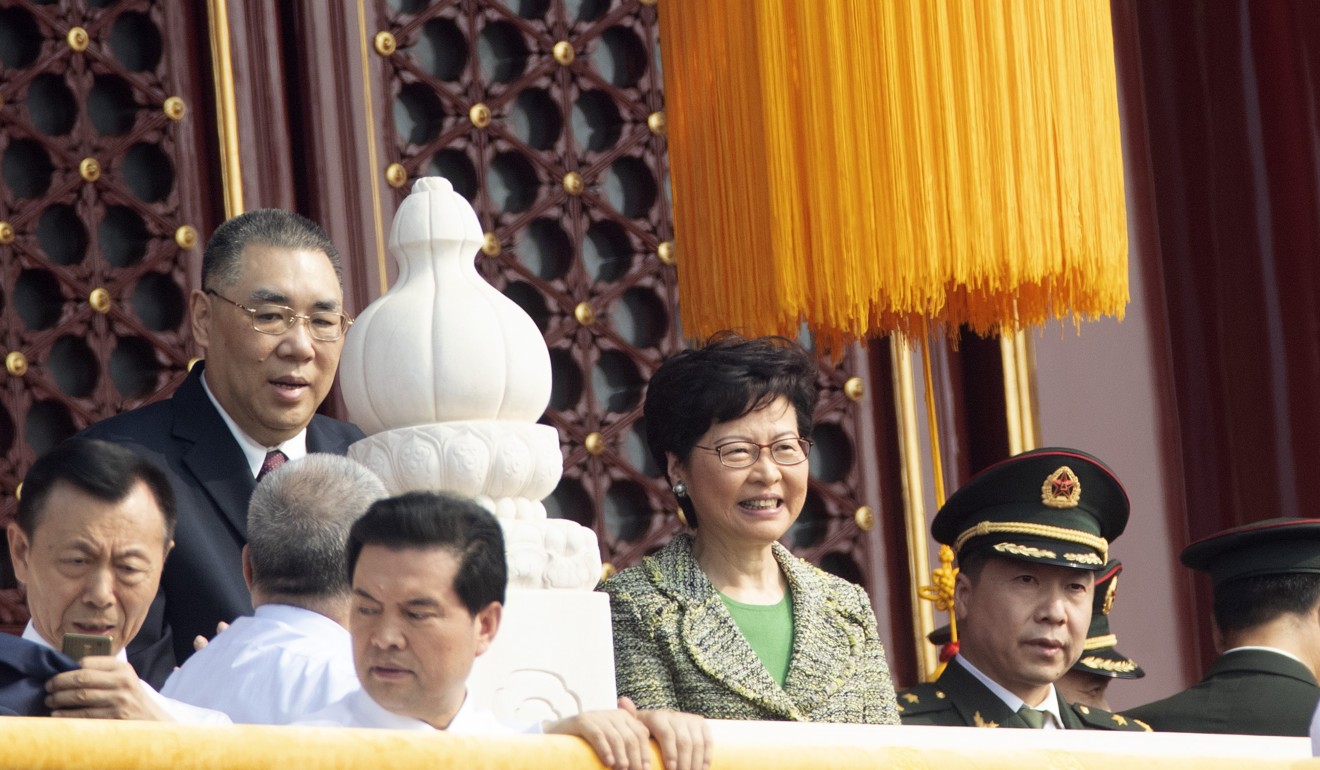
Hong Kong Chief Executive Cheng Yuet-ngor attended the ceremony, as did 10 Hong Kong police officers involved in suppressing anti-government protests in the city.
Showing off new weapons
China’s advancement in military weaponry was on full display, with almost half of the items featured being shown to the public for the first time.
Hong Kong leader Carrie Lam was among the guests in Beijing on Tuesday. Photo: AP
The morning’s celebrations included an 80-minute military parade – the biggest since the founding of the People’s Republic – in an apparent effort to showcase the prowess of the PLA, the world’s biggest military with 2 million personnel.
Among the weapons shown were DF series missiles, including the DF-17, a nuclear-capable glider that has the capacity to strike the US mainland, and the DF-41, which has a range of up to 15,000km, making it the world’s longest-range military missile.
Signalling Xi’s status
A 100,000-strong civilian parade featuring huge portraits of Xi and predecessors including Mao, Deng, Jiang and Hu wrapped up the morning celebration.
The procession was divided into three parts, representing three eras of the People’s Republic: the Mao era, Deng’s reform and opening up, and Xi’s era, which seeks global prominence on a par with that of the United States.
Xi appeared keen to project his supreme status in the party, reinforced since he abolished the constitutional term limit a year ago, allowing him potentially to remain leader for life.
He waved at his own portrait, unveiled alongside a sign reading “Carry out Xi Jinping Thought on Socialism with Chinese Characteristics for a New Era”.
Top law enforcement body starts campaign to rally mainland support for officers amid anti-government protests
Maxim’s described as ‘company that loves the country and loves Hong Kong’ after condemnation of unrest by daughter of founder
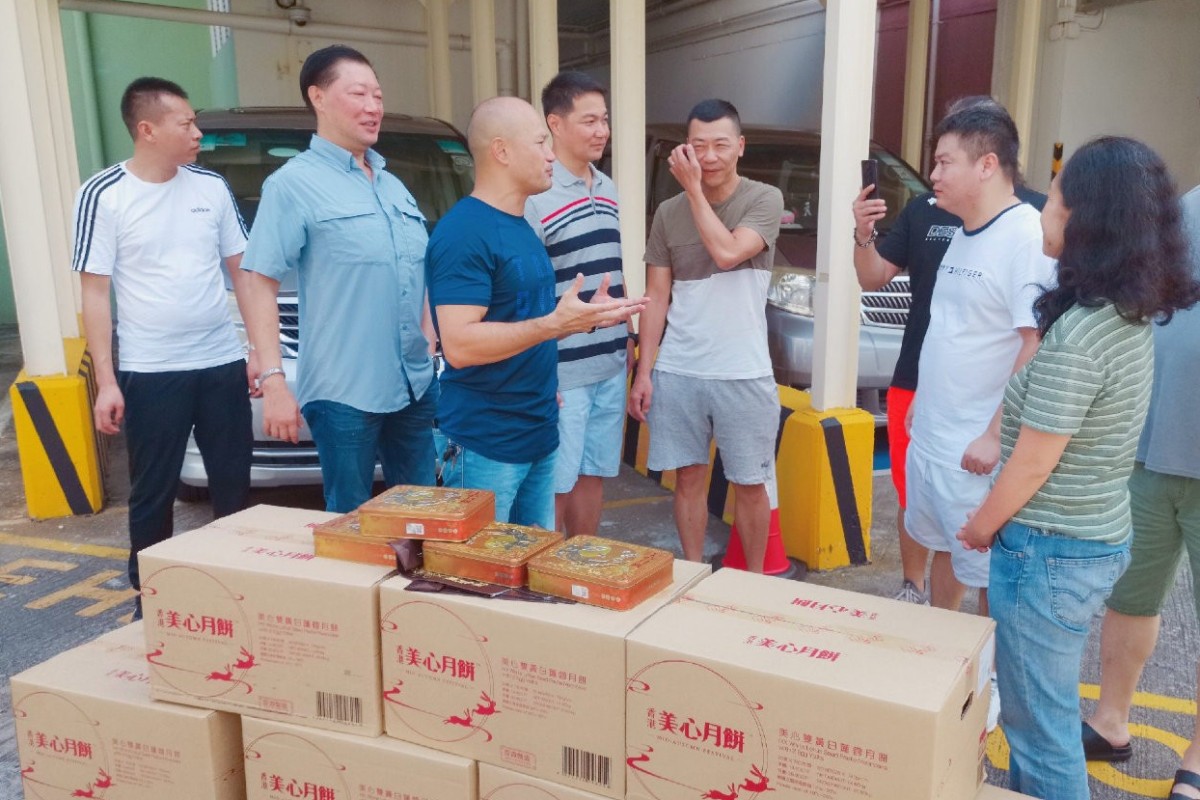
Officer Lau (third from left) and police colleagues receive a delivery of mooncakes. Photo: Weibo
China’s top law enforcement agency has shown its support for Hong Kong’s embattled police by delivering 650 boxes of mooncakes to the force’s dormitories and stations ahead of Friday’s Mid-Autumn Festival.
The festive gifts were sent after an online campaign titled “I want to send hometown delicacies to Hong Kong Police”, launched last Friday by Chang An Jian, an official social media account of the Central Political and Legal Affairs Commission, Beijing’s top political body responsible for law and order.
The commission – a Communist Party organ, rather than a government body that police report to – said in a blog post that seven people had donated about 150,000 yuan (US$21,000) between them.
The campaign represents the latest display of mainland support for the force, with no end in sight to mass protests in Hong Kong triggered in June by opposition to an
that would have allowed the transfer of criminal suspects to mainland China. Hong Kong police have faced numerous accusations of excessive use of force during the unrest.
But the mooncake delivery was complicated by customs regulations, with most major Chinese courier services unwilling to take deliveries containing processed meat and egg yolk across the border with Hong Kong.
“[We] were panicking because a lot of enthusiastic netizens had their salted duck and mooncake deliveries to Hong Kong rejected by couriers!” a Chang An Jian blog post said on Wednesday night.
In the end, 650 boxes of mooncakes that were bought from Hong Kong were sent to police dormitories and stations on Wednesday evening.
Mid-Autumn Festival is the second most important traditional Chinese holiday after Lunar New Year.
“[The mooncakes] were from Maxim’s, a company that loves the country and loves Hong Kong!” the blog post also said.
Annie Wu Suk-ching, whose father co-founded the Maxim’s chain, last week
She was lauded by Communist Party mouthpiece People’s Daily for “clearly adhering to the one country principle” – referring to “one country, two systems”, the principle under which Hong Kong was guaranteed a high degree of autonomy after it was handed over from British to Chinese rule in 1997.
One of Maxim’s biggest rival mooncake manufacturers in Hong Kong, Taipan Bread and Cake, had its products removed from shops across the Chinese mainland and from its biggest e-commerce sites, Tmall.com and JD.com, after the son of its founder was vilified by People’s Daily for a Facebook post that the newspaper said showed he backed the protests.
Recipients of the mooncakes included a police officer who in July was hailed as a hero by Chinese state media and nicknamed “bald sergeant Lau Sir” after pointing a shotgun at protesters who had besieged a police station. Lau has since been invited by Beijing to attend a grand celebration on October 1 for the 70th anniversary of the founding of the People’s Republic of China.
Mooncake importer says stock will be destroyed after mainland backlash
Beijing has focused attention on the violent elements of the Hong Kong protests in its social media posts and media coverage, while businesses have been carefully monitored and expected to toe Beijing’s line on condemning violence and supporting one country, two systems.
“Hong Kong Police have been having a very difficult time,” said one mainlander, surnamed Lu, in a video posted by Chang An Jian. “We want to cheer them up.”
Chinese President Xi Jinping meets with Ho Iat Seng, the newly elected and appointed chief executive of the Macao Special Administrative Region, at the Great Hall of the People in Beijing, capital of China, Sept. 11, 2019. (Xinhua/Xie Huanchi)
BEIJING, Sept. 11 (Xinhua) — President Xi Jinping on Wednesday met with Ho Iat Seng, the newly elected and appointed chief executive of the Macao Special Administrative Region (SAR), at the Great Hall of the People in Beijing.
Xi congratulated Ho on his appointment by the central government as the fifth-term chief executive of the Macao SAR.
“You has long adhered to the position of loving the country and Macao, enthusiastically served the Macao society, worked wholeheartedly on public posts including as a member of the National People’s Congress Standing Committee and president of the Legislative Assembly of the Macao SAR, and made contributions to the country’s reform and opening up, modernization, as well as prosperity and stability of Macao,” Xi said to Ho, adding that the central government fully recognizes such efforts.
“Your nomination and election with overwhelming support fully show that you have won broad endorsement in Macao,” Xi told Ho.
This year marks the 20th anniversary of Macao’s return to the motherland.
For the past 20 years, under the leadership of two chief executives Edmund Ho Hau Wah and Chui Sai On, the Macao SAR government has united people from all walks of life, fully and accurately understood and implemented the principle of “one country, two systems,” firmly upheld the authority of the Constitution and the Basic Law, passed on the core values of loving the country and Macao, promoted Macao’s rapid economic growth, sustained improvement in people’s livelihood and social stability and harmony, demonstrating to the world a successful practice of “one country, two systems” with Macao characteristics, said Xi.
“One country, two systems” has proved to be a workable solution welcomed by the people, said Xi.
Xi hoped that Ho will accurately grasp Macao’s situation and the country’s strategic development needs, unite and lead the Macao SAR government and people from all walks of life to strive for the region’s long-term development and continue the successful implementation of “one country, two systems.”
Ho said he is honored to be appointed the fifth-term chief executive of the Macao SAR by the central government.
Ho pledged to, under the leadership of President Xi and the central government, firmly implement the “one country, two systems” principle, safeguard the authority of the Constitution and the Basic Law, maintain favorable relations between the central government and the Macao SAR, uphold the central government’s overall governing power, defend the country’s sovereignty, security and development interests and make steady progress in implementing the “one country, two systems” principle.
Han Zheng and other senior officials also attended the meeting.
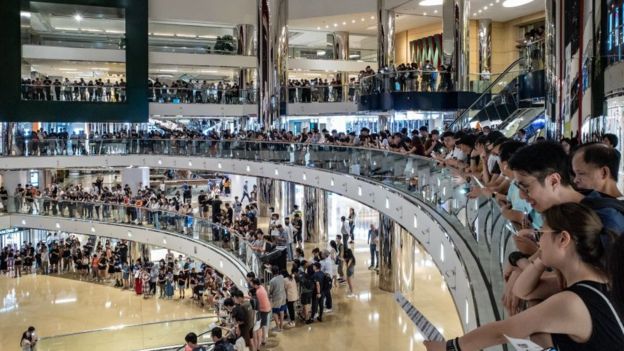
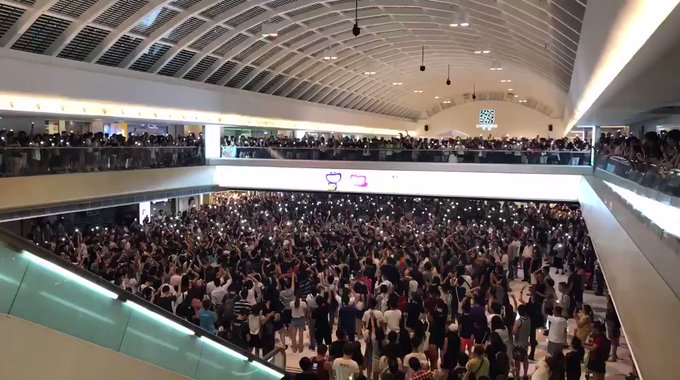
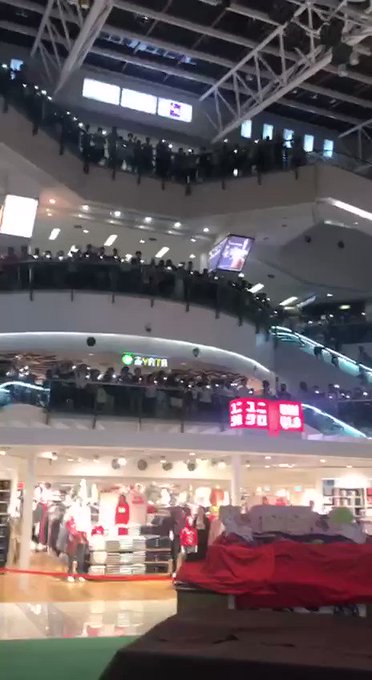
On Tuesday night, thousands of protesters gathered in shopping malls across Hong Kong chanting slogans and singing Glory to Hong Kong.
Image copyright GETTY IMAGESImage caption Many protesters flooded shopping malls
In the popular shopping district of Mongkok, a sea of protesters dressed in black were seen congregating across the different levels of one mall.
Jason Y. Ng
✔@jasonyng
Hundreds of shoppers spontaneously assembled at a mall atrium and broke into song. They sang “Glory to Hong Kong,” an ersatz national anthem (coz we aren’t a national and haven’t the right to an anthem). People ask what Communist China is most afraid of—the answer is right here.
Another video showed protesters chanting “Go Hong Kong” – a phrase that has been used frequently as a sign of encouragement.
Shopping malls have been the scene of clashes in recent weeks, with one incident in July seeing riot police fight battles with protesters inside a mall in the district of Sha Tin.
Without true democracy, HKer shall never surrender! This video shows citizens are gathered in a mall and cheering each other up after singing the song of #HKprotest “Glory to Hong Kong”.
The new rallying cry has joined other popular songs used by the protest movement, including Do You Hear the People Sing? from musical Les Miserables and the Christian hymn Sing Hallelujah to the Lord.
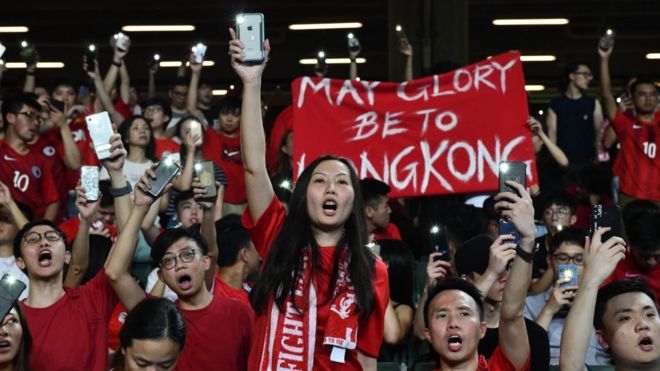
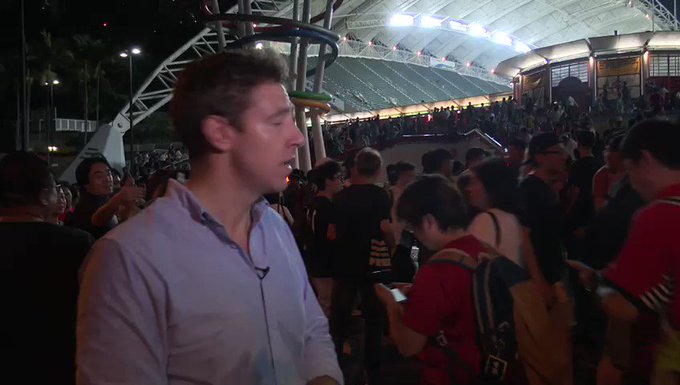
It was also heard at the Hong Kong v Iran football match on Tuesday at Hong Kong Stadium.
#Hongkong soccer fans booing the #Chinese national anthem tonight. Footy fans also have their backs to the field. Carrie Lam’s administration had been planning to introduce tough new penalties for booing the anthem but this can’t be easy to bring in in the city’s current climate. https://twitter.com/SCMPHongKong/status/1171411414801534977 …
The 2022 Fifa World Cup qualifier saw thousands of protesting booing when the Chinese national anthem played before the start of the game.
The jeering, which could be heard from outside the stadium, was intended as a clear “message” to Beijing that they do not want to be part of China in the future, says the BBC’s Nick Beake who was at the game.
Nick Beake
✔@Beaking_News
VIDEO: The moment #HongKong football fans began booing #China national anthem before the start of their @FIFAWorldCup qualifier against #Iran. #CarrieLam ‘s govt has delayed (another) controversial new law that could give 3 year prison term for disrespecting anthem. @BBCWorld
Hong Kong, formerly a British colony, returned to Chinese rule in 1997.
Under the “one country, two systems” rule, the city is granted a high level of autonomy, an independent judiciary and rights such as freedom of speech.
But those freedoms – the Basic Law – expire in 2047 and it is not clear what Hong Kong’s status will then be.
There has been growing anti-mainland sentiment in recent years, and anger at what many feel is increasing mainland interference in Hong Kong affairs.
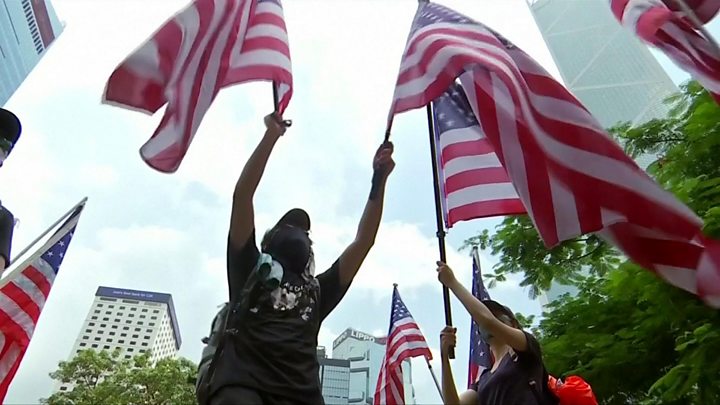
Media caption Protesters sang the US anthem outside the consulate
This reached a tipping point when the Hong Kong parliament proposed a new law that would have enabled suspects in Hong Kong to be extradited to China.
Hundreds of thousands of people marched on the streets in protest of the law, demanding that it be abandoned. The government initially suspended in June, and then finally dropped earlier this week – almost three months after protests first begun.
But protesters have said this is “too little, too late”, and their demands have evolved into calls for a much wider set of reforms, including a call for universal suffrage.
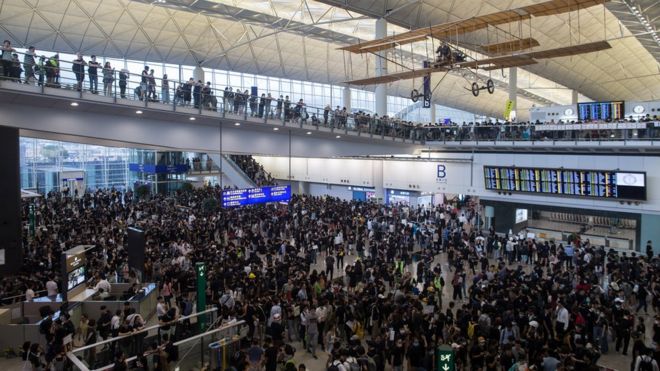
Image copyright EPAImage caption Officials say about 5,000 gathered for the fourth day of protests at the airport
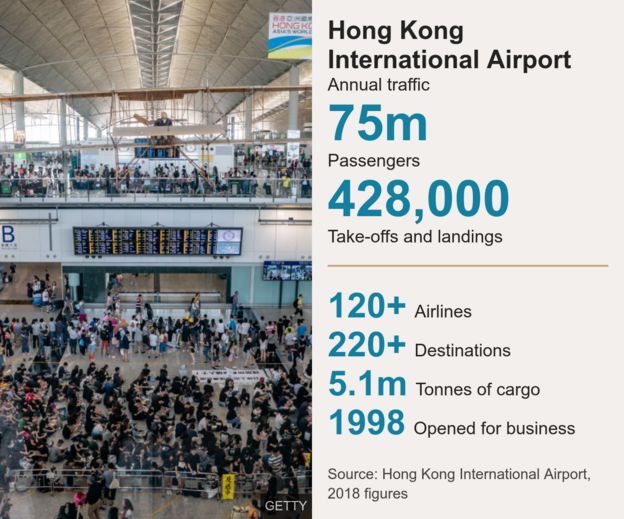
Hong Kong International Airport cancelled all departures on Monday, as thousands of anti-government protesters occupied and caused disruption.
Passengers have been told not to travel to the airport, which is one of the world’s busiest transport hubs.
In a statement, officials blamed “seriously disrupted” operations.
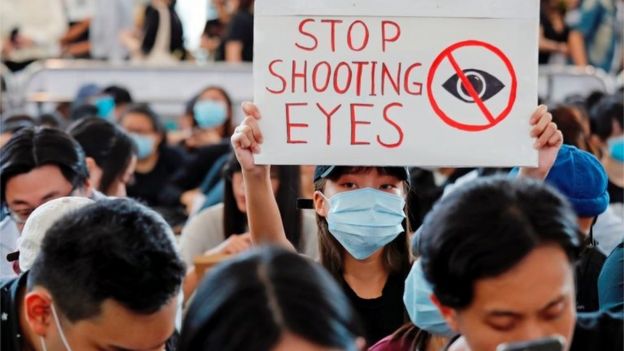
Many of those protesting are critical of the actions of police, who on Sunday were filmed firing tear gas and rubber bullets at close range.
Some protesters wore bandages over their eyes in response to images of a woman bleeding heavily from her eye on Sunday, having reportedly been shot by a police projectile.
In a statement on Monday afternoon, Hong Kong’s Airport Authority said they were cancelling all flights that were not yet checked in.
More than 160 flights scheduled to leave after 18:00 local time (10:00 GMT) will now not depart.
Arrivals already heading into Hong Kong will still be allowed to land, but other scheduled flights have been cancelled.
Officials are now working to reopen the airport by 06:00 on Tuesday, a statement said.
Some passengers expressed annoyance at the disruption. “It’s very frustrating and scary for some people,” one man from Pakistan told the BBC. “We’ll just have to wait for our next flight.”
Helena Morgan, from the UK, said she was set to return to the UK to get her exam results on Thursday. “I’m hoping we get back for them and we’re not on a flight,” she said.
But others were more understanding of the protests. “I was expecting something, given all the news,” one arrival, Gurinda Singh, told Reuters news agency.
As rumours spread that police plan to move in on protesters on Monday evening, thousands opted to leave on foot. There are large backlogs for transport back into the centre, local reports say.
The BBC’s Stephen McDonell, who is at the scene, says the airport has effectively shut down while authorities work out how to deal with the crisis.
Hong Kong’s mass demonstrations and unrest show no sign of abating, more than two months after they were sparked by a controversial extradition bill.
Beijing officials have strongly condemned Sunday’s violence and linked violent protesters to “terrorism”.
Image copyright REUTERSImage caption Many of those who gathered carried signs condemning police conduct
What happened on Sunday?
On Sunday afternoon, a peaceful rally in the city’s Victoria Park led to clashes when protesters moved out of the area and marched along a major road despite a police ban.
There were confrontations in several central districts and police used rubber bullets in an attempt to disperse the demonstrators.
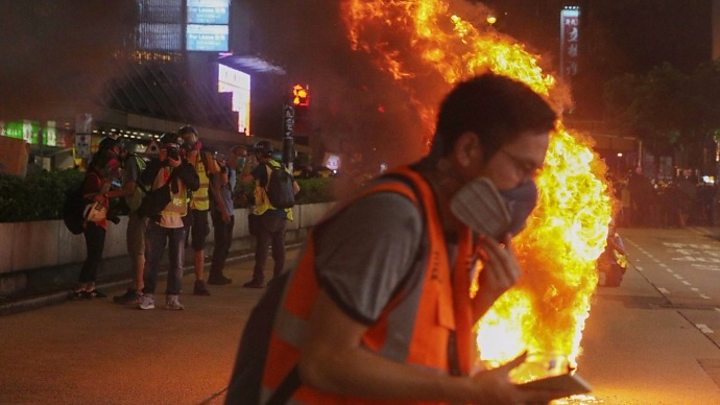
In the bustling central Wan Chai district, petrol bombs and bricks were thrown at police, who responded by charging at protesters.
A number of people, including a police officer, were injured in the clashes.
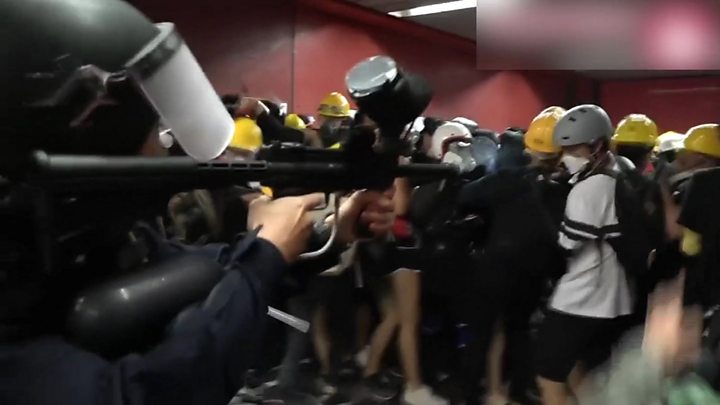
Videos on social media also showed officers storming enclosed railway stations and firing tear gas.
Footage inside another station showed officers firing what appeared to be rubber bullets at close range and several police officers beating people with batons.
Media caption Violence erupts in HK train stations
Local media outlets reported that suspected undercover police officers had dressed-up as protesters to make surprise arrests.
While protests in the city have turned increasingly violent, there were no reports of arrests during the three previous days of the airport sit-in.
What has the reaction been?
On Monday the Chinese authorities, who have not yet physically intervened to quell the unrest, used their strongest language yet to condemn violent protesters.
“Hong Kong’s radical demonstrators have repeatedly used extremely dangerous tools to attack police officers, which already constitutes a serious violent crime, and also shows the first signs of terrorism emerging,” Yang Guang, a spokesman for the Hong Kong and Macau Affairs Office (HKMAO), said at a press briefing.
“This wantonly tramples on Hong Kong’s rule of law and social order.”
Demonstrations started in June in opposition to a proposed extradition bill, which would have allowed suspected criminals to be sent to mainland China for trial.
Critics said it would undermine Hong Kong’s legal freedoms, and could be used to silence political dissidents.
Although the government has now suspended the bill, demonstrators want it to be fully withdrawn.
Their demands have broadened to include calls for an independent inquiry into alleged police brutality, and an amnesty for all arrested protesters.
Hong Kong is part of China but its citizens have more autonomy than those on the mainland.
It has a free press and judicial independence under the so-called “one country, two systems” approach – freedoms which activists fear are being increasingly eroded.
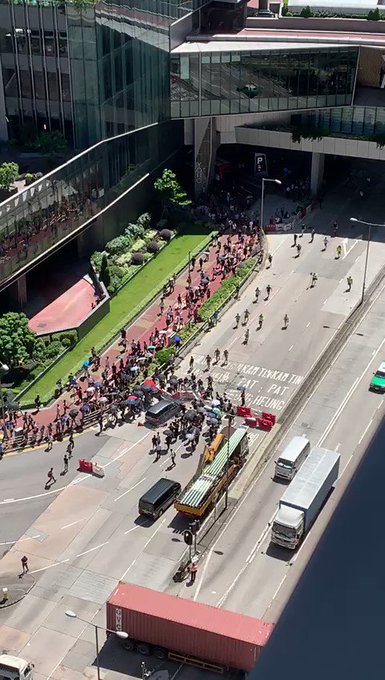
Police in Hong Kong have been fighting running battles with activists in a third consecutive day of protests, after a call for a general strike caused widespread disruption on Monday.
Protesters blocked roads and paralysed train services at peak times on a day of action across the city.
More than 200 flights were cancelled as the protests entered their ninth week.
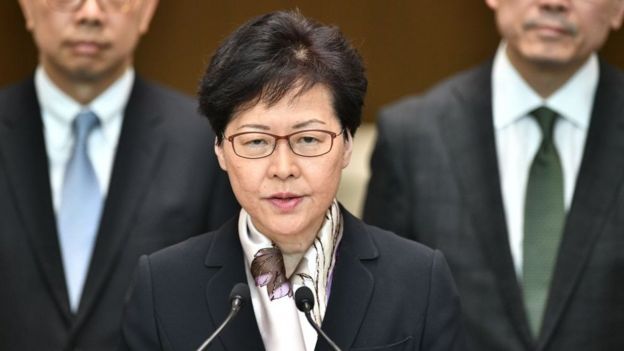
Hong Kong’s leader, Carrie Lam, has pledged to restore law and order, rejecting calls for her resignation.
Initially the demonstrations, which began on 9 June, focused on a controversial extradition law, which would have allowed the transfer of suspects to mainland China. However, the protests have now become a wider challenge to Beijing’s authority.
Ms Lam warned that Hong Kong was “on the verge of a very dangerous situation”.
Media caption Protests take place in Hong Kong for the ninth weekend – for and against the authorities
In her first media address in two weeks, Ms Lam said the protesters’ actions had challenged the principle of “one country, two systems” – the extra freedoms granted to Hong Kong when it was returned from British to Chinese rule in 1997.
She also accused activists of using the extradition bill as a cover for their real goals.
“We continue to allow these violent protesters to make use of the [extradition] bill to conceal their ulterior motives,” she said. “Those ulterior motives are going to destroy Hong Kong.”
Image copyright GETTY IMAGES
The Chinese foreign ministry said no one should underestimate China’s resolve to safeguard the stability of Hong Kong, Reuters news agency reports.
What happened on Monday?
Police fired tear gas at several locations as protesters rallied into the night, setting fires and besieging police stations. In the North Point district, which has a reputation for pro-Beijing sympathies, men wielding long poles clashed with demonstrators before falling back.
More than 80 people were arrested, in addition to the 420 detained since 9 June. In that time, police said they had used more than 1,000 tear gas canisters and 160 rubber bullets.
Protest leaders had called for a general strike. While many people made it to work, in some areas protesters blocked trains from leaving stations and scuffled with commuters. Several lines of the Mass Transit Railway (MTR) were suspended for a time, and the Cross-Harbour Tunnel was also blocked.
One video circulating on Twitter reportedly showed a car in the district of Yuen Long forcefully hitting a barricade set up by protesters, injuring one person.
It is not clear how many joined the strike, but tens of thousands of protesters were out on the streets. Several shops and businesses were closed, including international fashion retailers like Topshop and Zara.
Hong Kong airport, one of the busiest in the world, said travellers should check its website and seek updates directly from the airlines.
Most of the cancelled flights were with local carriers Cathay Pacific and Hong Kong Airlines.
The protests were initially sparked by a controversial bill that would allow China to extradite suspects from Hong Kong to the mainland.
Critics said it would undermine the territory’s judicial independence and could be used to target those who spoke out against the Chinese government.
Although the bill has now been suspended, demonstrators want it fully withdrawn.
Their demands have broadened to include an independent inquiry into alleged police brutality, Ms Lam’s resignation, and the dropping of riot charges linked to the protests.
Last week, more than 40 activists appeared in court charged with rioting. If convicted, they could be jailed for up to 10 years.
The Chinese army has so far stayed out of the dispute, but China’s top policy office in Hong Kong has previously condemned the protests, calling them “horrendous incidents” that have caused “serious damage to the rule of law”.


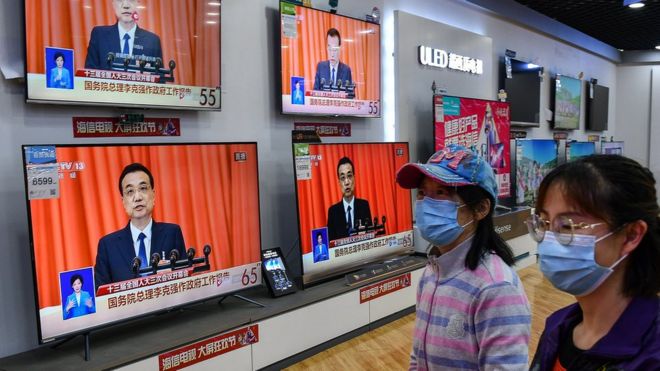 Image copyright AFP / GETTY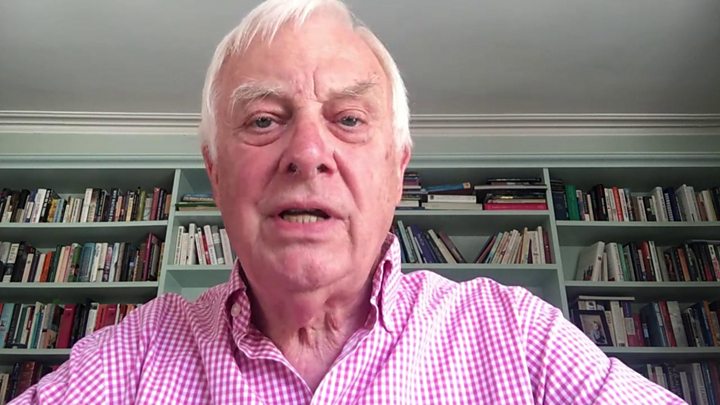









 CHINDIA ALERT: You'll be living in their world, very soon