Archive for ‘operated’

02/05/2020

How a llama could hold the key to beating the coronavirus

  • An antibody engineered from the animal’s immune system was found to neutralise the virus that causes Covid-19
  • American and Belgian researchers hope the discovery may help protect humans from the deadly illness
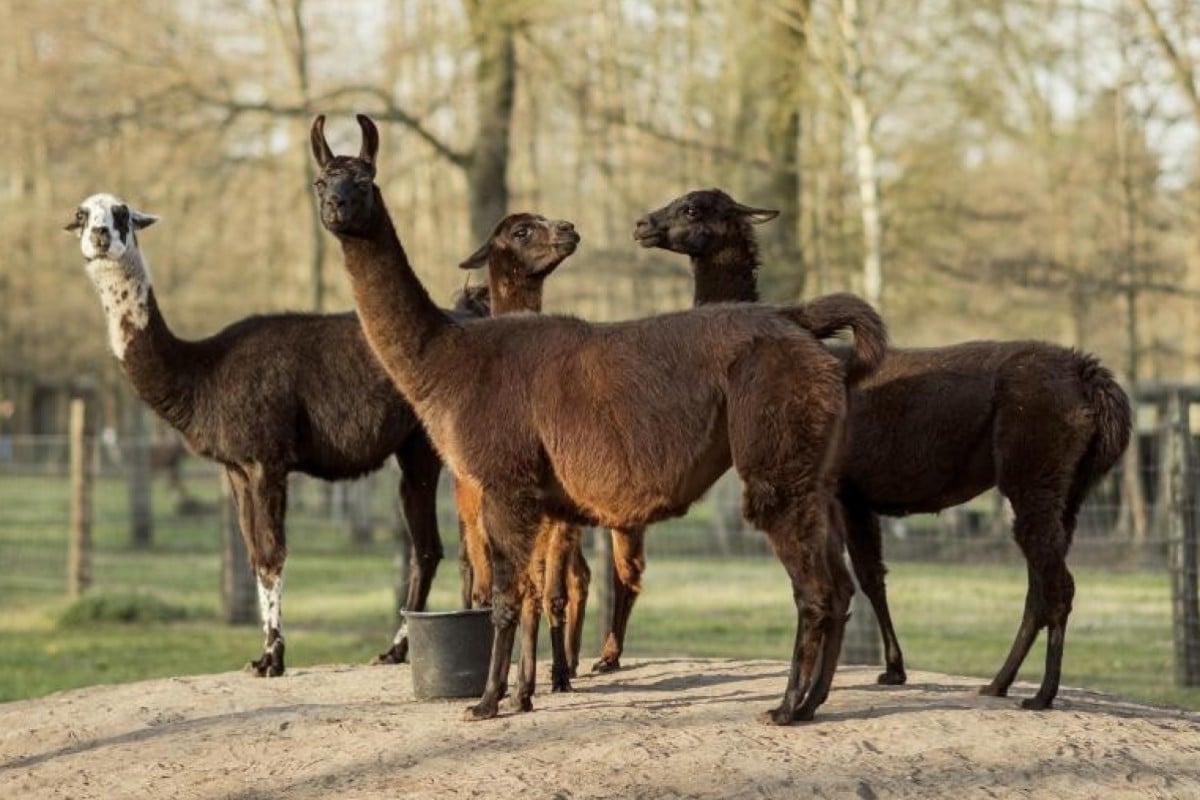
Winter the lama (front) lives on a farm operated by Ghent University's Vlaams Institute for Biotechnology. Photo: Tim Coppens
Winter the llama (front) lives on a farm operated by Ghent University’s Vlaams Institute for Biotechnology. Photo: Tim Coppens

A Belgian llama could hold the key to producing an antibody that neutralises the coronavirus that causes Covid-19.

More studies and clinical trials are needed to see if it can be used in humans to treat Covid-19, but the team of American and Belgian scientists who engineered the antibody said they were encouraged by their preliminary findings, which will be published in the journal Cell next week.

Jason McLellan, from the University of Texas at Austin and co-author of the study, described it as one of the “first antibodies known to neutralise Sars-CoV-2”, the official name for the virus.

“With antibody therapies, you’re directly giving somebody the protective antibodies and so, immediately after treatment, they should be protected,” he wrote in a press release.

“The antibodies could also be used to treat somebody who is already sick to lessen the severity of the disease.”
Winter the llama produced antibodies that proved effective against the Sars-CoV-2 virus. Photo: Tim Coppens
The scientists have been working on coronaviruses – including severe acute respiratory syndrome (Sars) and Middle East respiratory syndrome (Mers) – for years.

In 2016 they injected the llama, named Winter, with Sars and Mers in the hope of developing a treatment for the diseases.

“I thought this would be a small side project,” said Dorien De Vlieger from Ghent University in Belgium, who helped to isolate antibodies against coronaviruses from the llamas.

China’s race for a Covid-19 vaccine hits a hurdle – no outbreak at home

1 May 2020

“Now the scientific impact of this project became bigger than I could ever expect. It’s amazing how unpredictable viruses can be.”

A llama’s immune system produces two types of antibodies when it detects pathogens, one similar to human antibodies and one that is about a quarter of the size.

The antibodies produced by Winter were found to be effective in targeting the Sars virus’s spike protein, which allows it to bind to human cells.

Chinese firm ready to make 100 million Coronavirus vaccine doses if trials are successful
This year they decided to test the antibodies Winter had produced during the Sars experiment to see if it could prove effective against Covid-19.

Although it did bind itself to the Sars-CoV-2 virus it did so “weakly”, so the team then linked two copies of the antibody together to make it bind more effectively.

Oxford vaccine effective in monkeys, heading for mass production in India

30 Apr 2020

“That was exciting to me because I’d been working on this for years. But there wasn’t a big need for a coronavirus treatment then. This was just basic research,” said Daniel Wrapp from the University of Texas, a co-author of the study.

The smaller type of antibodies produced by llamas, called single-domain antibodies or nanobodies, can be used in an inhaler, according to Wrapp.

“That makes them potentially really interesting as a drug for a respiratory pathogen because you’re delivering it right to the site of infection,” said Wrapp.

Researchers created an antibody dubbed VHH-72Fc (blue) that binds tightly to the Sars-CoV-2 spike protein (pink, green and orange), blocking the virus from infecting cells. Photo: University of Texas at Austin
The researchers are preparing for more trials with hamsters or primates to further test the antibody, before taking it to human trials.
The main subject of the study, Winter the llama, is now four years old and lives on a farm operated by Ghent University’s Vlaams Institute for Biotechnologym which said it has around 130 other llamas and alpacas at the facility.
Source: SCMP
23/04/2020

China Focus: China-Europe freight trains help stabilize global supply chain

SHENYANG, April 23 (Xinhua) — With trucks standing bumper to bumper and large cranes loading containers on the train, work returned to normal at a logistics base in northeast China’s Liaoning Province.

The base, where the China-Europe freight trains are set to depart in Shenyang, the provincial capital, has seen stable departures since early April as the novel coronavirus epidemic ebbs away.

With the global supply chain being affected by restrictions in air, land, and port travel due to the global pandemic, China-Europe railway has been playing a more important role, experts say.

“The train was operated by staff in different sections, which means it does not require cross-border personnel health inspections, giving it advantages during the pandemic,” said Shan Jing, an industry insider who wrote a book on China-Europe freight trains.

In March, a total of 809 China-Europe freight trains carrying 73,000 containers were sent across China. Both numbers hit a monthly record.

At the Shenyang logistics base, trains depart to travel through Russia, Belarus, Poland and finally reach Germany in around 18 days. As of April 13, a total of 130 trains carrying 11,200 standard containers had departed from the base.

“The province sends a stable number of five trains each week,” said He Ruofan, a business manager with the Shenyang branch of China Railway Container Transport Corp., Ltd, operator of the trains.

The stable operation has made the route a top choice for many Chinese enterprises, said Yao Xiang, a manager with logistics group Sinotrans’s northeast company.

“Many shipping routes have been canceled, and the rest are more and more expensive amid the epidemic,” said Yao, noting the price for air cargo surged 5 to 10 times the normal price as flights decreased from China to Europe.

With increasing departing trains, returning trains on the route have also been increasing, Yao said.

Among the 130 trains that have been sent from the Shenyang base so far this year, 33 returned, carrying construction materials, car parts, mechanical equipment, and daily products.

“These goods provide supplies to large companies like BMW and Michelin’s Shenyang factories,” Yao said.

Medical supplies have also been sent to hard-hit Europe to fight against the coronavirus pandemic.

As of April 18, a total of 448,000 pieces of medical supplies weighing 1,440 tonnes had been sent to European countries via the route, according to China State Railway Group Company, Ltd.

“China-Europe freight trains have shown great service capabilities during the epidemic,” said Shan, the industry insider. “It serves as a new choice for European enterprises, and I believe more people will come to realize the importance of the route.”

Source: Xinhua

14/04/2020

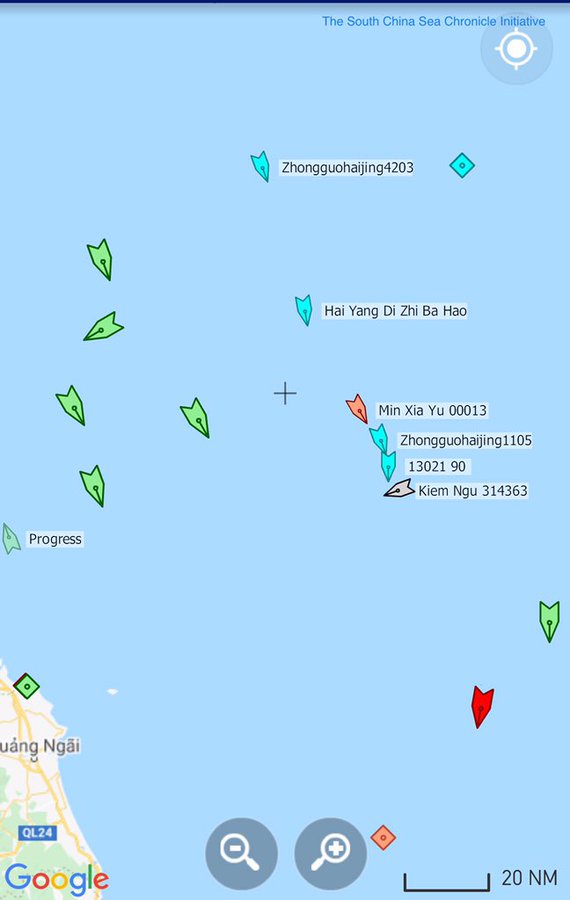
Chinese oil survey ship returns to disputed waters off Vietnam amid coronavirus pandemic

  • Vietnamese ships spent months last year shadowing the Haiyang Dizhi 8 as it surveyed the resource-rich waters within Vietnam’s exclusive economic zone
  • Its return follows charges laid by the US that China is ‘exploiting the distraction’ and vulnerability caused by the pandemic
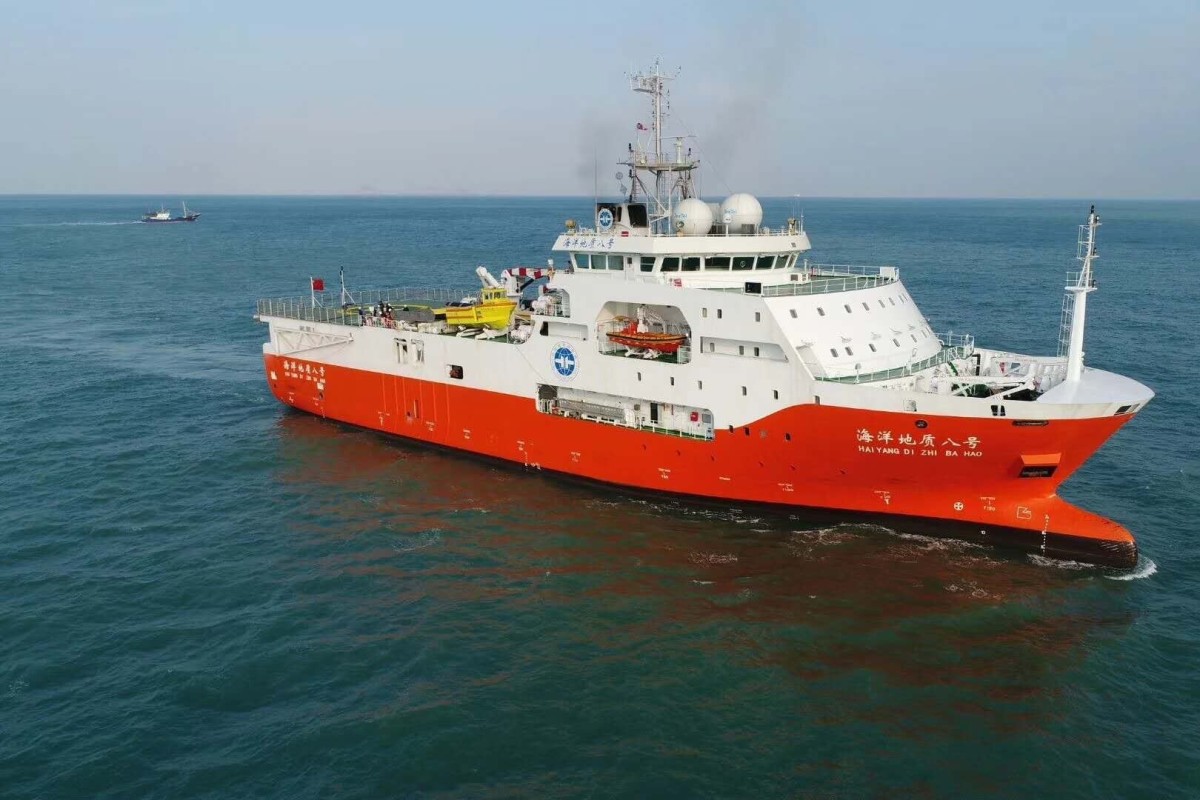
The Haiyang Dizhi 8 at sea. Photo: Weibo
A Chinese ship embroiled in a stand-off with Vietnamese vessels last year
has returned to waters near Vietnam as the United States accused China
of pushing its presence in the South China Sea while other claimants are pre-occupied with the coronavirus.
Vietnamese vessels last year spent months shadowing the Chinese Haiyang Dizhi 8 survey vessel in resource-rich waters that are a potential global flashpoint as the 
US

challenges China’s sweeping maritime claims.

China and Vietnam ‘likely to clash again’ as they build maritime militias
12 Apr 2020
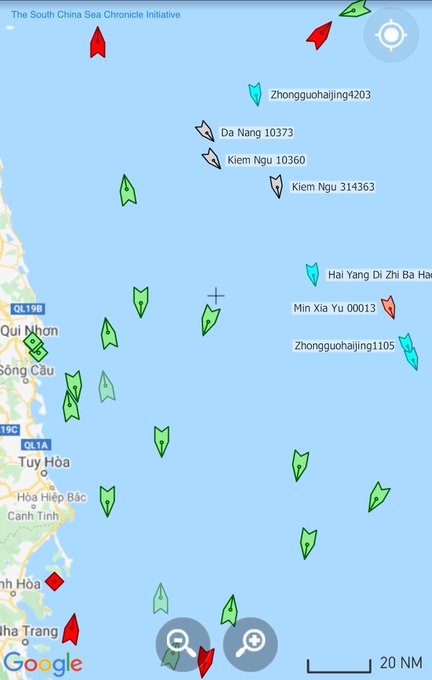
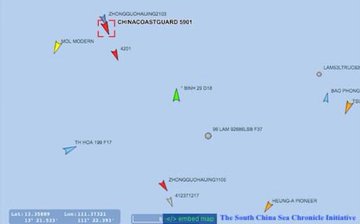
On Tuesday, the ship, which is used for offshore seismic surveys, appeared again 158km off Vietnam’s coast, within its exclusive economic zone (EEZ), flanked by at least one Chinese coastguard vessel, according to data from Marine Traffic, a website that tracks shipping.

At least three Vietnamese vessels were moving with the Chinese ship, according to data issued by the Marine Traffic site.

The presence of the Haiyang Dizhi 8 in Vietnam’s EEZ comes towards the scheduled end of a 15-day nationwide lockdown in Vietnam aimed at curbing the spread of the coronavirus.

It also follows

the sinking of a Vietnamese fishing boat near islands in the disputed waters this month

, an act that drew a protest from Vietnam and accusations that China had violated its sovereignty and threatened the lives of its fishermen.

The US, which last month sent an aircraft carrier to the central Vietnamese port of Da Nang, said it was “seriously concerned” about China’s reported sinking of the vessel.

“We call on the PRC to remain focused on supporting international efforts to combat the global pandemic, and to stop exploiting the distraction or vulnerability of other states to expand its unlawful claims in the South China Sea,” the US State Department said in a statement, referring to China.

Vietnam pulls DreamWorks’ ‘Abominable’ over South China Sea map
The Philippines

, which also has disputed claims in the South China Sea, has raised its concerns too.

On Saturday, the Global Times, published by the official People’s Daily newspaper of China’s ruling Communist Party, said Vietnam had used the fishing boat incident to distract from its “ineptitude” in handling the coronavirus.

Vietnam’s Ministry of Foreign Affairs did not immediately respond to a request for comment.

Helped by a mass quarantine and aggressive contact-tracing, Vietnam has recorded 265 cases of the novel coronavirus and no deaths. Nearly 122,000 coronavirus tests have been carried out in Vietnam.

Coronavirus: what’s behind Vietnam’s containment success?

14 Apr 2020

China and Vietnam have for years been at loggerheads over the potentially energy-rich waters, called the East Sea by Vietnam.

China’s U-shaped “nine-dash line” on its maps marks a vast expanse of the waters that it claims, including large parts of Vietnam’s continental shelf where it has awarded oil concessions. 

Malaysia

and Brunei claim some of the waters that China claims to the south.

During the stand-off last year, at least one Chinese coastguard vessel spent weeks in waters close to an oil rig in a Vietnamese oil block, operated by Russia’s Rosneft, while the Haihyang Dizhi 8 conducted suspected oil exploration surveys in large expanses of Vietnam’s EEZ.
“The deployment of the vessel is Beijing’s move to once again baselessly assert its sovereignty in the South China Sea,” said Ha Hoang Hop, at the Singapore-based ISEAS-Yusof Ishak Institute.
“China is using the coronavirus distraction to increase its assertiveness in the South China Sea, at a time when the US and Europe are struggling to cope with the new coronavirus.”
Source: SCMP
Law of Unintended Consequences

continuously updated blog about China & India

ChiaHou's Book Reviews

continuously updated blog about China & India

What's wrong with the world; and its economy

continuously updated blog about China & India