Chindia Alert: You’ll be Living in their World Very Soon
aims to alert you to the threats and opportunities that China and India present. China and India require serious attention; case of ‘hidden dragon and crouching tiger’.
Without this attention, governments, businesses and, indeed, individuals may find themselves at a great disadvantage sooner rather than later.
The POSTs (front webpages) are mainly 'cuttings' from reliable sources, updated continuously.
The PAGEs (see Tabs, above) attempt to make the information more meaningful by putting some structure to the information we have researched and assembled since 2006.
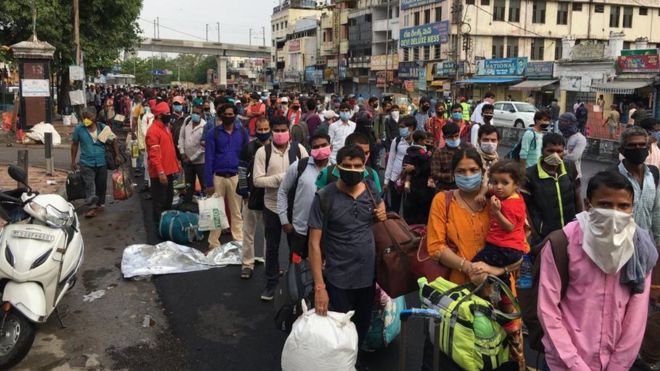
Image caption Passengers gathered outside Secundarabad station in Andhra Pradesh state
India has partially restored train services amid reports of chaos and overcrowding at some stations.
At least 145,000 people will travel in trains on Monday as the country starts to reopen after a prolonged lockdown.
Two hundred trains will now start operations – up from the existing 30 that are currently running.
But maintaining social distancing and cleanliness is proving to be a difficult task as huge crowds gathered outside some stations.
India’s mammoth railway network usually carries 25 million passengers every day.
The ministry of home affairs has issued specific guidelines for the smooth operation of train services. They say that all passengers will have to be screened, social distancing must be followed at the station and in trains and only passengers who have confirmed tickets will be allowed to travel.
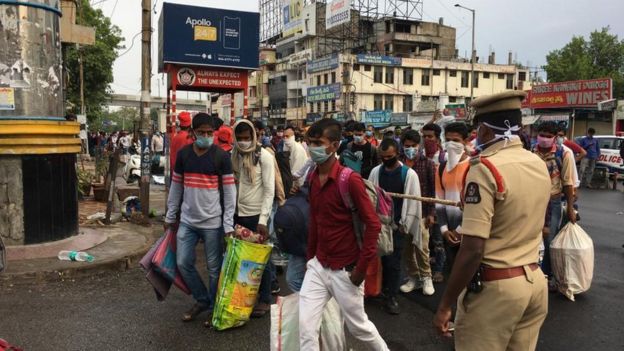
Image caption Police struggled to enforce social distancing due to large crowds
But some stations reported chaotic scenes as officials struggled to enforce these guidelines. BBC Telugu reported that people were standing much too close to each other at Secunderabad railway station in the southern state of Telangana.
“Railway staff and police didn’t allow passengers to go inside the station until at least one hour before the scheduled departure, citing physical distancing measures. This led to some chaos outside the railway station as a large number of passengers had gathered and there was no physical distance maintained. Police later arrived and organised the queues,” BBC Telugu’s Sharath Behara says.
Reporting from Delhi, BBC Hindi’s Salman Ravi said strict social distancing was being followed when passengers boarded trains, and all of them wore masks.
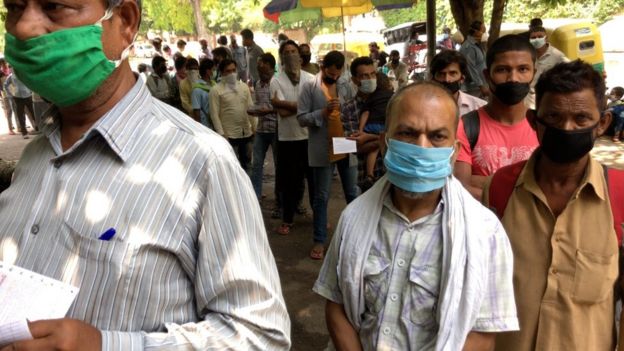
Image caption Passengers waiting outside the train station in Delhi
“But the same was not observed at ticket booking counters. Many people who did not have tickets also turned up at the station and that caused crowding,” he added.
Train services came to a grinding halt when Prime Minister Narendra Modi announced the lockdown on 24 March to stop the spread of coronavirus.
This left millions of daily-wage workers stranded as they desperately tried to go back to their villages from cities. Many of them decided to walk long distances – in some cases more than 1,000 kilometres.
As pressure and criticism mounted, the government started running special trains to ferry migrants. Some 30 trains restarted on 12 May, since then there has been a consistent demand to reopen more routes.
Getting the train network going again is part of the government’s wider strategy to slowly reopen the economy. Millions have lost jobs and factories are struggling to reopen as demand is likely to be sluggish in the coming weeks.
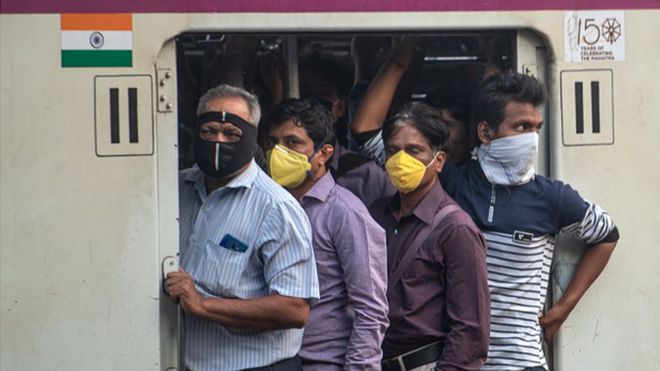
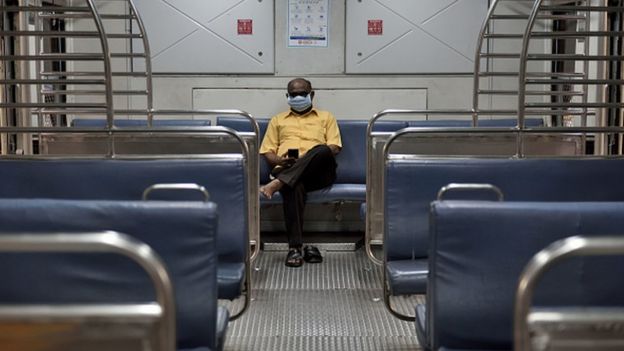
Image copyright GETTY IMAGESImage caption Many passengers have been wearing masks while travelling on the network
One of the world’s busiest urban rail systems will be shut down for ordinary commuters from Monday morning to prevent the spread of coronavirus infection in Mumbai, one of India’s most populous cities. Only government workers in “essential services” will be allowed to travel on a truncated service.
This was waiting to happen.
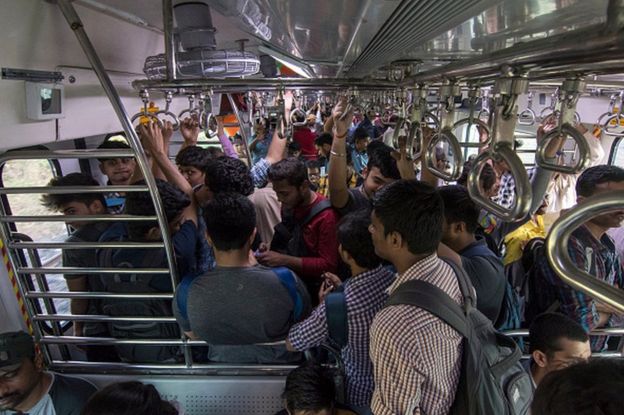
Consider this. Eight million people take Mumbai’s crowded suburban train network every day. Packed to nearly three times its capacity, this is one of the busiest railway systems in the world.
The 459km (285-mile) network is the lifeline of India’s financial and entertainment capital, accounting for nearly 80% of all commuting trips in the populous western city. The suburban trains “cover almost the distance up to [the] moon in one week,” the network’s website says.
The 66-year-old network carries 60,000 passengers per km per day, the highest among all the leading commuter rail systems in the world, say officials. The coaches are sturdy enough to carry a “super dense crush load”, a phrase coined by the railways to describe the intense crowding on Mumbai’s trains. This means that a nine-car train designed for 1,800 standing passengers will often carry up to 7,000 passengers, according to Monisha Rajesh, author of Around India in 80 Trains. “Mumbai’s local trains were certainly not for the fainthearted,” she wrote.
Image copyright GETTY IMAGESImage caption Mumbai’s suburban train network carries eight million passengers every day
Now consider this. The western state of Maharashtra, of which Mumbai is the capital, has confirmed more than 60 coronavirus infections, the highest in India so far. Scores of long distance trains out of the city have been cancelled, but the suburban network has continued to rumble on, raising fears of the mass spread of the virus on these packed trains. The crowded service was an easy target of a terror attack in 2006 when serial blasts ripped though a number of trains. At least 180 people were killed and more than 800 injured – the high casualty figure was attributed to overcrowding.
“From ports and landing places the local transport networks, particularly the railways, carried the virus from large cities to the smallest, remotest settlements,” said a report on the spread of the flu in Britain in 1918-1919.
So should one of the world’s busiest rail networks be shut down to stop a possible spread of the virus in a city that many fear could turn into a coronavirus hotspot?
Image copyright GETTY IMAGESImage caption Officials say ridership on the trains has dropped by 17% after the coronavirus scare
Economists like Shruti Rajagopalan believe so.
“India is conducting the fewest tests per million at the moment. If the virus is truly within the community, then given these two issues, the Mumbai outbreak cannot be contained and people will die without healthcare.
“Mumbai trains are the fastest and surest way to spread the virus (if it is within the community) to the densest parts of the city,” she told me.
There is enough precedent: China stopped trains, ferries, planes and buses from leaving the city of Wuhan; and on Thursday, London officials announced that up to 40 stations on the London Underground network are to be shut as the city attempts to contain the outbreak.
Others are not so sure about linking the spread of a pandemic to public transport systems. One study does not support the effectiveness of suspending mass urban transport systems to reduce or slow down a pandemic because, “whatever the relevance of public transport is to individual-level risk, household exposure most likely poses a greater threat”.
“I have not seen any data on the relative risk of public transportation compared with [dense places like] workplaces or schools,” Timothy Brewer, a professor of epidemiology at the University of California Los Angeles told Vox.com.
He said data from China suggested that “household contact was an important means of transmission outside of Wuhan, suggesting that prolonged contact [with a sick person] increases the risk of transmission”.
“If correct, then the time spent commuting and the density of people commuting could be important factors in assessing if public transportation is a risk factor for the disease’s transmission.”
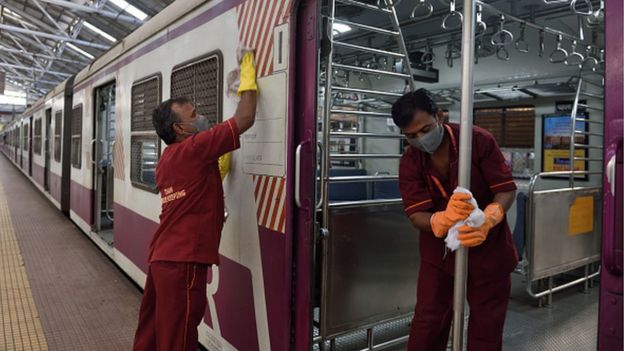
Image copyright GETTY IMAGESImage caption Trains on the network are being scrubbed clean to avoid the spread of infection
Shivaji Sutar, a senior communications officer of the railways, told me that the network was running an aggressive campaign to ease the rush: awareness announcements, posters and videos containing virus information.
They were also monitoring crowds, scrubbing the trains, taking the temperature of willing passengers and embarking on a drive against public spitting, he said.
A combination of awareness and panic has already led to a 27% drop in traffic on the network. But millions of people continue to take the train to work and home every day.
“This is more because of fear than anything else. Most of us have to take the network because we have to come to work. There is still no government directive to all companies to work from home. And apart from passengers wearing masks, I haven’t seen any other precautions being taken,” Rekha Hodge, who has been using the network for three decades, told me. That is bad news.
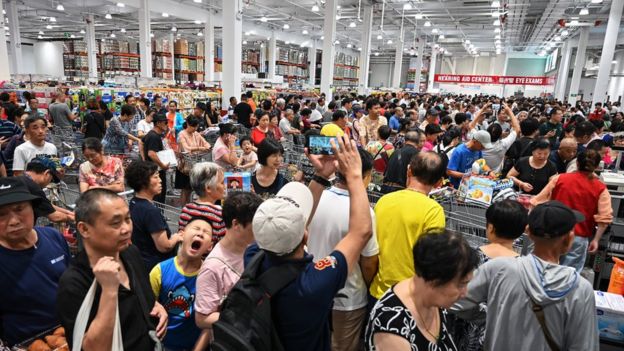
US retailer Costco was forced to close early on its opening day in China, after the store was swamped with shoppers.
Buyers battled long queues and traffic chaos, before the Shanghai store was shut hours early due to “overcrowding”.
Costco’s push into China comes as other foreign retailers have struggled to compete with local rivals.
It also comes at a time of rising tensions between the US and China over trade.
Costco is a discount warehouse store that sells a range of goods, from fresh foods to household electronics.
Some customers spent two hours lining up to pay for their purchases, while some had to wait three hours for parking, state news agency Xinhua reported.
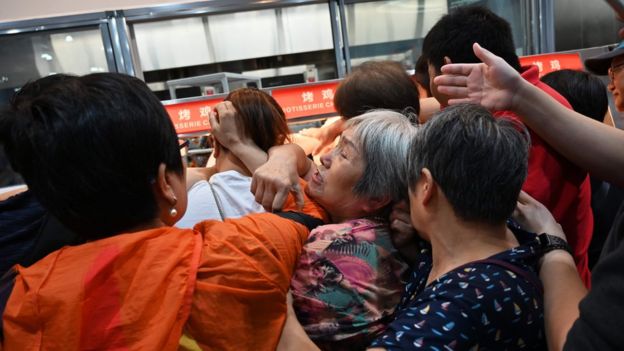
Image copyright AFPImage caption Images from the store show customers caught up in heavy crowds
One video showed people pushing through heavy crowds to get their hands on roast chickens.
“Due to overcrowding in the market, and in order to provide you with a better shopping experience, Costco will temporarily close on the afternoon of August 27. Please avoid coming,” the retailer in a notice on its official app, according to AFP.
Image copyright GETTY IMAGESImage caption Some customers reportedly spent two hours lining up to pay for their goods
Costco has had an online presence in China since 2014, through a partnership with e-commerce giant Alibaba.
The firm’s first store in the country comes as other international retailers battle tough competition in China.
Earlier this year, Amazon said it was downsizing its operations in China and France’s Carrefour agreed to sell 80% of its China business to local retailer Suning.com after a series of losses.
The world’s two largest economies have been fighting a trade war for the past year, and tensions have escalated with the threat of more tariffs from both sides.



 CHINDIA ALERT: You'll be living in their world, very soon