Archive for ‘passports’

01/06/2020

Hong Kong: Boris Johnson urged to form alliance over China security law

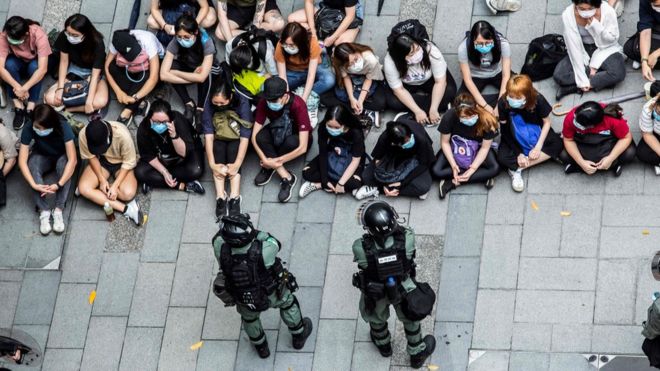
Riot police detain a group of people during a protest in the Causeway Bay district of Hong KongImage copyright AFP
Image caption Beijing’s proposed security law has sparked protests in Hong Kong

Seven former UK foreign secretaries have urged Boris Johnson to form a global alliance to coordinate the response to the China-Hong Kong crisis.

China is facing mounting criticism over a planned security law for Hong Kong which would make it a crime to undermine Beijing’s authority.

Foreign Secretary Dominic Raab said the UK would not turn a blind eye.

Hong Kong was handed back to China from British control in 1997 but under a unique agreement.

The former British colony enjoys some freedoms not seen in mainland China – and these are set out in a mini-constitution called the Basic Law.

But there are fears the proposed law, which has sparked a mass of anti-mainland protests in Hong Kong, could compromise some of the freedoms guaranteed by the Basic Law.

In their letter to the prime minister, the cross-party group of former cabinet ministers says the UK government must be seen to lead the international response, as many countries take their cue from Britain over its former colony.

Jeremy Hunt, David Miliband, Jack Straw, William Hague, Malcolm Rifkind, David Owen and Margaret Beckett all expressed their concern at what they call China’s “flagrant breach” of Sino-British agreements by imposing tough national security laws on Hong Kong.

They urged Mr Johnson to set up an “international contact group” of allies to coordinate any joint action, similar to that set up in 1994 to try to end the conflict in the former Yugoslavia.

A Downing Street spokesman insisted the government was already playing a leading role with international partners in urging China to think again.

Mr Raab said the new security legislation “very clearly violates” the autonomy that is guaranteed under Chinese law as well as that in the 1997 agreement.

He confirmed the UK will allow those who hold British National (Overseas) passports to come to the UK and apply to study and work for an extendable 12-month period.

This will in turn “provide a path to citizenship”, he told the BBC’s Andrew Marr Show on Sunday.

Mr Raab said up to three million people registered as a British national (overseas) in Hong Kong could be eligible for UK citizenship if China presses ahead with the law.

Meanwhile, the chairman of Commons foreign affairs committee, Tom Tugendhat, said the government must realise that China has a “very, very authoritarian system of government” and should rethink the partnership between the two.

Source: The BBC

29/05/2020

Hong Kong: What is the BNO and what does the UK move mean?

A Petitioner is seen holding up a BNO passport outside the British Consulate in Hong Kong on August 21, 2019Image copyright GETTY IMAGES
Image caption Around 300,000 in Hong Kong hold a British National (Overseas) passport

The UK has said it is considering more rights for holders of a special passport issued to some people in Hong Kong.

The territory, which used to be a British colony, was handed back to China in 1997. Anyone born before then is eligible to apply for a British National (Overseas) passport, known as a BNO.

If China implements a controversial proposed security law, people holding the BNO, could get a “path to citizenship”, the UK said.

What is the BNO and who has one?

The BNO passport is essentially a travel document that does not carry citizenship rights with it – although you are entitled to some consular assistance outside of Hong Kong and China with it.

It was issued to people in Hong Kong by the UK before Hong Kong was handed over to China.

Around 300,000 people currently hold a BNO passport, allowing them to visit the UK visa-free for six months. An estimated 2.9 million people are eligible for a BNO passport, said the British Consulate General in Hong Kong.

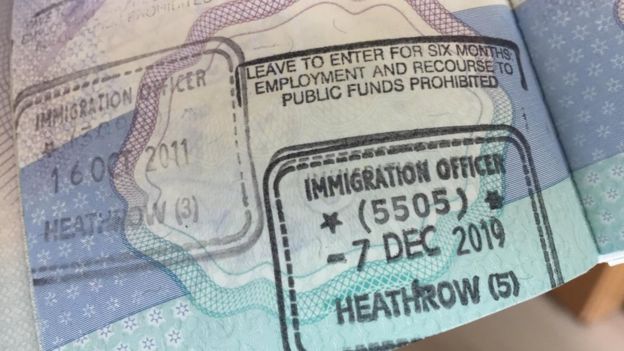
Though it gives the passport holder the right to remain in the UK for up to six months, it doesn’t automatically allow them to reside or work there. They also aren’t allowed to access public funds, including things like government benefits.

BNO holders cannot pass this status on to their children.

What is the UK proposing – and why?

China on Thursday formally approved a plan to impose controversial national security legislation in Hong Kong. It could go into effect as early as the end of June.

Hong Kong was handed back to China, on a number of conditions. These include the region’s high level of autonomy and maintaining certain rights like freedom of speech that do not exist in mainland China.

But this new plan, if put into law, would make it a crime to undermine Beijing’s authority in Hong Kong, and many are concerned it could end Hong Kong’s unique status.

The move triggered a wave of  criticism around the world, with many – including Chris Patten, the last governor of Hong Kong – urging the UK to stand up for the territory.

A BNO passport
Image caption Under current rules, BNO holders are allowed to stay for six months

Later on Thursday, UK Foreign Secretary Dominic Raab said the country would move to scrap the six-month stay limit for BNO holders if China goes on to officially implement the law.

Mr Raab said that BNO passport holders would be allowed to “apply to work and study for extendable periods of 12 months and that will itself provide a pathway to future citizenship”.

What difference could it make?

As a way to help people in Hong Kong who would rather not stay there if the new security laws are implemented, it might prove more symbolic.

For starters only a small percentage of people in Hong Kong currently have a BNO.

But also, the people who the security laws are aimed at – the young anti-mainland protesters who have been getting into violent confrontations with police for months – are not likely to be eligible for the BNO because of their age.

Additionally, though the BNO gives the passport holder the right to visit the UK for up to a year potentially, it’s not clear what other benefits the extension might bring, or if the UK would make it any easier administratively for those already in the country to apply for work or study.

On social media, some Hong Kongers dismissed it as a gesture that amounted to little more than a 12-month tourist visa.

Effectively, it means that those who come to stay in the UK for a year, and who have the funds to be able to extend this enough, could eventually be eligible to apply for citizenship.

It cuts out some of the administrative hoops BNO holders would have had to jump through before this move if they wanted this path.

How has China reacted?

China has firmly opposed the move by the UK, saying it is a violation of the handover agreement that stipulates BNO passport holders do not enjoy UK residency.

China has repeatedly warned Britain to stay out of its affairs in Hong Kong.

The Chinese ambassador to the UK Liu Xiaoming had previously accused some British politicians of viewing Hong Kong “as part of the British empire”.

Source: The BBC

12/04/2020

African ambassadors in China complain to government over ‘discrimination’

JOHANNESBURG (Reuters) – African ambassadors in China have written to the country’s foreign minister over what they call discrimination against Africans as the country seeks to prevent a resurgence of the coronavirus.

Several African countries have separately also demanded that China address their concerns that Africans, in particular in the southern city of Guangzhou, are being mistreated and harassed.

Having brought under control the original outbreak centred on the city of Wuhan, China is now concerned about imported cases and is stepping up scrutiny of foreigners coming into the country and tightening border controls. It has denied any discrimination.

In recent days Africans in Guangzhou have reported being ejected from their apartments by their landlords, being tested for coronavirus several times without being given results and being shunned and discriminated against in public. Such complaints have been made in local media, and on social media.

The ambassadors’ note said such “stigmatisation and discrimination” created the false impression that the virus was being spread by Africans.

“The Group of African Ambassadors in Beijing immediately demands the cessation of forceful testing, quarantine and other inhuman treatments meted out to Africans,” it said.

The note was sent to China’s top diplomat, Wang Yi, copying the chair of the African Union, South African President Cyril Ramaphosa and all African foreign ministers.

The Chinese foreign ministry’s International Press Centre did not immediately respond to a request for comment on the note, sent outside of business hours.

The Chinese embassy in South Africa also did not respond.

Foreign affairs official Liu Baochun told a news conference on Sunday that Guangzhou is enforcing anti-virus measures on anyone who enters the city from across the national border, regardless of nationality, race or gender.

The Chinese embassy in Zimbabwe on Saturday dismissed the accusation that Africans were being deliberately targeted.

“It is harmful to sensationalize isolated incidents,” it said in a tweeted statement. “China treats all individuals in the country, Chinese and foreign alike, as equals.”

DISAPPOINTMENT

The ambassadors’ note highlighted a number of reported incidents, including that Africans were being ejected from hotels in the middle of the night, the seizure of passports, and threats of visa revocation, arrest or deportation.

On Saturday, Ghana’s foreign minister of affairs Shirley Ayorkor Botchwey said she had summoned the Chinese ambassador to express her disappointment and demand action.

Kenya’s foreign ministry has also “officially expressed concern”, adding the government is working with Chinese authorities to address the matter.

On Friday, Nigerian legislator Akinola Alabi tweeted a video of a meeting between the leader of Nigeria’s lower house of parliament, Femi Gbajabiamila, and Chinese Ambassador Zhou Pingjian. In it, Gbajabiamila demanded an explanation from the diplomat after showing Zhou a video of a Nigerian complaining about mistreatment in China.

The ambassador said in response to the questions from the house leader that he took the complaints “very seriously” and promised to convey them to the authorities back home.

Source: Reuters

06/12/2019

Chinese residents worry about rise of facial recognition

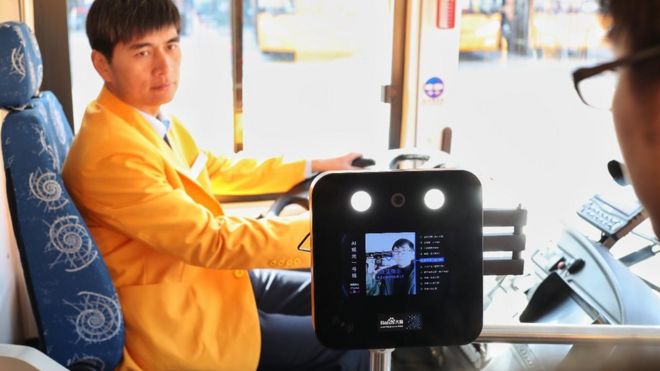
Facial recogition system in busImage copyright GETTY IMAGES
Image caption Some buses in Shanghai have had facial recognition systems fitted to them

A survey by a Beijing research institute indicates growing pushback against facial recognition in China.

Some 74% of respondents said they wanted the option to be able to use traditional ID methods over the tech to verify their identity.

Worries about the biometric data being hacked or otherwise leaked was the main concern cited by the 6,152 respondents.

Facial recognitions systems are being rolled out in stations, schools, and shopping centres across the country.

The survey, first reported in the West by The Financial Times, was released on Thursday by the Nandu Personal Information Protection Research Centre.

It has been described as being one of the first major studies of its kind into public opinion on the subject in mainland China.

Some 80% of respondents said they were concerned that facial recognition system operators had lax security measures.

Separate research suggests that they have good reason to be concerned.

China was ranked the worst of 50 surveyed countries in a study looking at how extensively and invasively biometric ID and surveillance systems are being deployed. The work was carried out by the cybersecurity firm Comparitech.

It said China had no “specific law to protect citizens’ biometrics” and highlighted a “lack of safeguards for employees in the workplace”.

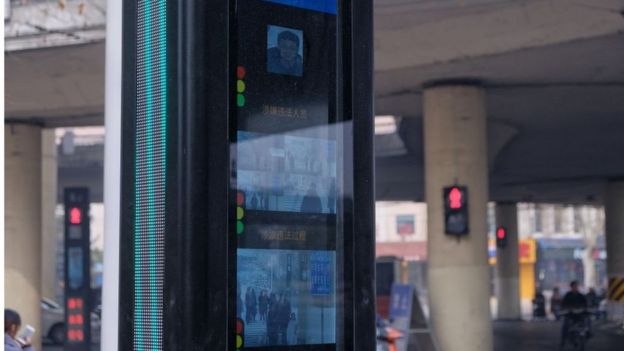
Face recognition system by roadImage copyright GETTY IMAGES
Image caption Some cities are deploying facial recognition systems at road crossings to identify and deter jaywalkers

Surveillance concerns

Nandu’s survey was carried out via the internet between October and November.

In its sample, 57% of respondents voiced concern about their movements being tracked.

In addition, 84% of people said they wanted to be able to review the data that facial recognition systems had collected on them and to be able to request that it should be deleted.

The majority said they wanted an option to be able to use ID cards, driving licenses and/or passports as an alternative. But the survey also suggested that between 60 to 70% of Chinese residents believed facial recognition made public places safer.

Hard to avoid

China has more facial recognition cameras than any other country and they are often hard to avoid.

Earlier this week, local reports said that Zhengzhou, the capital of the northeastern Henan province, had become the first Chinese city to roll the tech out across all its subway train stations.

Commuters can use the technology to automatically authorise payments instead of scanning a QR code on their phones. For now, it is a voluntary option, said the China Daily.

Earlier this month, university professor Guo Bing announced he was suing Hangzhou Safari Park for enforcing facial recognition.

Prof Guo, a season ticket holder at the park, had used his fingerprint to enter for years, but was no longer able to do so.

The case was covered in the government-owned media, indicating that the Chinese Communist Party is willing for the private use of the technology to be discussed and debated by the public.

Media captionWATCH: BBC’s John Sudworth put a Chinese facial recognition system to the test in December 2007

But the state continues to make some uses of the tech mandatory.

At the start of the month, a new regulation came into force that requires mobile phone subscribers to have their faces scanned when they sign a new contract with a provider.

The authorities say the move is designed to prevent the resale of Sim cards to help combat fraud.

But country-watchers have suggested it may also be used to help the police and other officials keep track of the population.

Source: The BBC

Law of Unintended Consequences

continuously updated blog about China & India

ChiaHou's Book Reviews

continuously updated blog about China & India

What's wrong with the world; and its economy

continuously updated blog about China & India