Chindia Alert: You’ll be Living in their World Very Soon
aims to alert you to the threats and opportunities that China and India present. China and India require serious attention; case of ‘hidden dragon and crouching tiger’.
Without this attention, governments, businesses and, indeed, individuals may find themselves at a great disadvantage sooner rather than later.
The POSTs (front webpages) are mainly 'cuttings' from reliable sources, updated continuously.
The PAGEs (see Tabs, above) attempt to make the information more meaningful by putting some structure to the information we have researched and assembled since 2006.
Participants sing in a chorus performance in Kunming, capital of southwest China’s Yunnan Province, Sept. 22, 2019. A total of 3,500 participants took part in a chorus performance here on Sunday to celebrate the upcoming National Day. (Xinhua/Hu Chao)
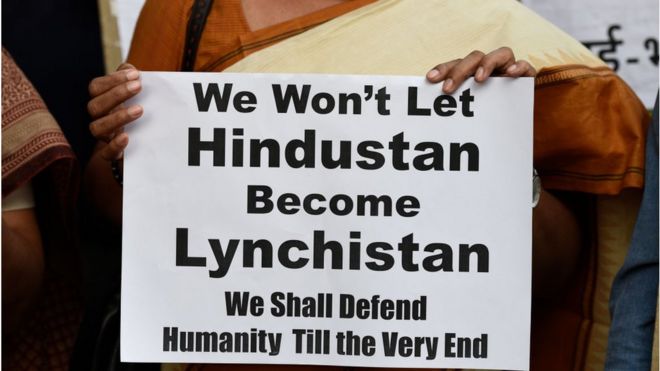
The highest number of such cases has been registered in the northern state of Uttar Pradesh, which borders Delhi.
“At least 46 cases have been reported until 29 August. In all cases, we found that there was no evidence of child trafficking,” director general of police OP Singh told the BBC.
“We appeal to the people to not believe in such rumours. If you are in doubt, just reach out to the police through phone [dial in number 100] or social media,” he added.
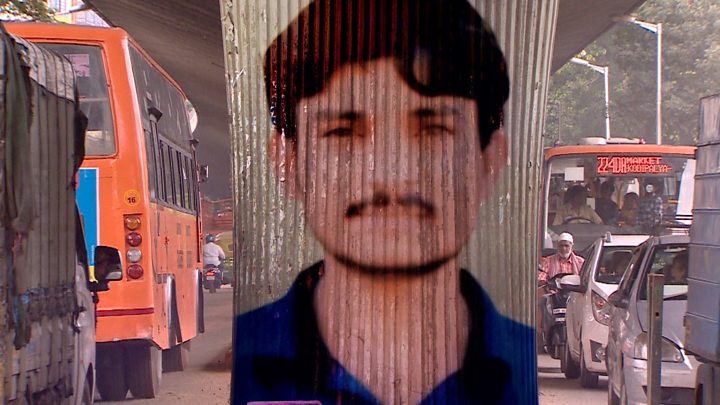
Media captionThe India WhatsApp video driving people to murder
In Ghaziabad district, which is on the outskirts of Delhi, six cases were registered in August.
“In one case, a group of people attacked a grandmother while she was out with her grandchild. People attacked her because her skin colour was different to her grandchild,” senior police officer Neeraj Jadaun said, adding that all suspects in the case had been arrested.
While incidents like this are being reported across India, it is not clear if kidnappings are on the rise.
Rumours of child kidnappings often spread over text messages or WhatsApp, according to reports.
Officials have urged people not to believe messages linked to child abductions and are yet to find any incidents of child abduction related to the spate of messages and videos being shared online.
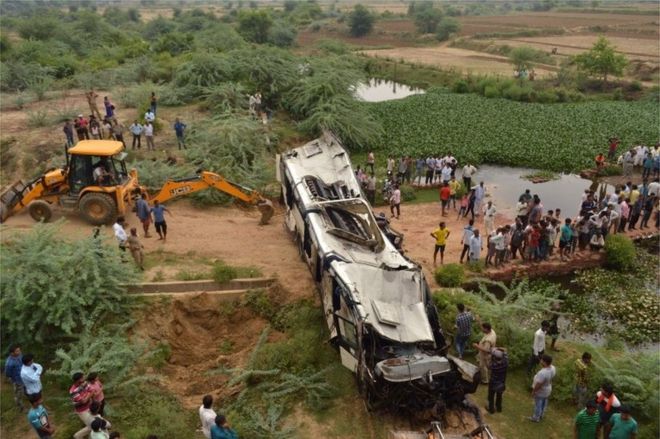
One Sleeper Coach passenger bus travelling from Lucknow to Delhi met with an accident on Yamuna Expressway. It fell into the side fall about 15 feet deep.
20 passengers rescued so far. Efforts are on for the rest.
About 900 people have been killed on the road since it opened in 2012, according to authorities.
Road accidents in India are usually blamed on badly maintained vehicles, poor driving and the state of the roads.
Correspondents say buses in rural India are often old and rickety. Many also do not follow or enforce basic safety measures – it’s not uncommon to see people crowding into buses or even travelling on the roof if they cannot find a seat inside.
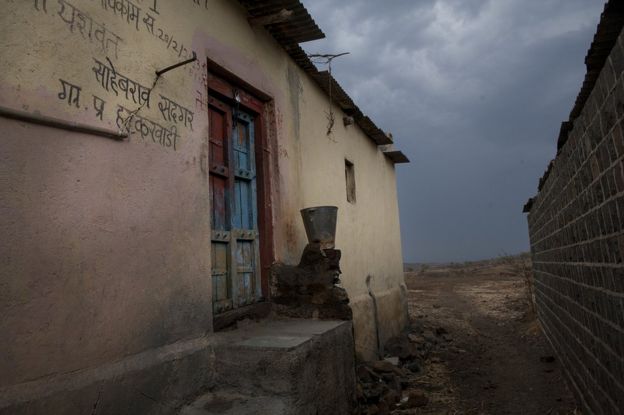
Image caption Hatkarwadi hasn’t seen decent rains in three years
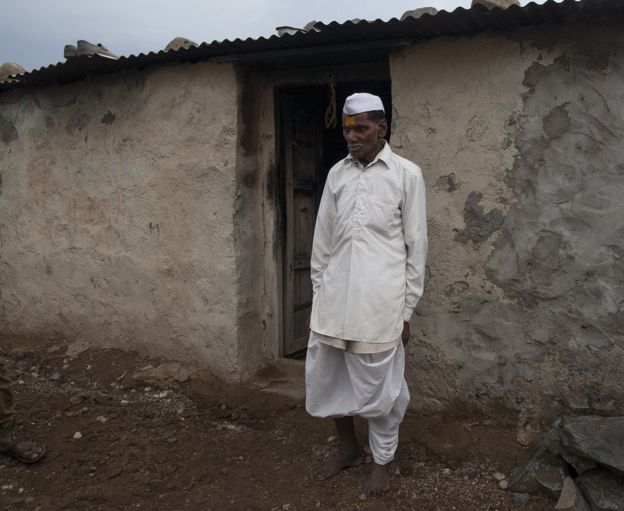
Every morning Dagadu Beldar, 75, wakes up and cooks rice and lentils in his village home in India’s western state of Maharashtra. After that, there’s little else to do.
For the past three years, Mr Beldar has lived alone in his gloomy one-room hut in Hatkarwadi, a stony hillside outback ringed by forests. Drought forced his wife and three sons out of the village. The earth was parched and the wells were dry. There was little water to drink and bathe in, and the family’s millet farm lay barren.
Two sons found work at a sugar factory in Sangli, a cane-growing district some 400km (248 miles) away. Their mother looked after the third son, who went to school there. Hatkarwadi had become a bad memory.
With age, Mr Beldare is going deaf. He mostly keeps to himself in his dark room.
“He’s a very lonely man. He hasn’t seen his family in three years. All because of water,” says Ganesh Sadgar, a neighbour.
Image caption Dagadu Beldar lives alone after his family left the village because of lack of water
Across the lane, 75-year-old Kishan Sadgar’s only son left home a decade ago to work in a sugar factory far away. He lives with his wife and a pet dog. “My son hardly comes home,” he says. “And when he comes he wants to leave after two or three days because there’s no water here.”
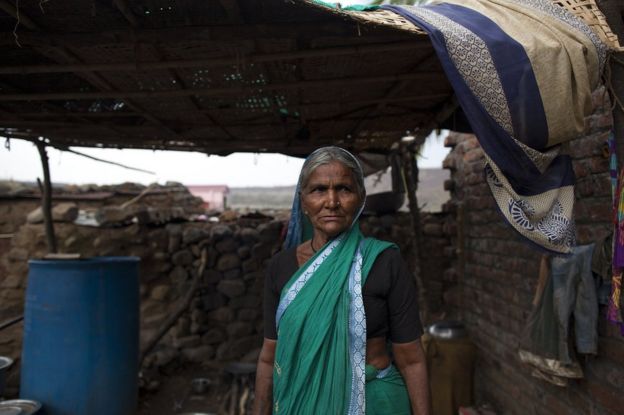
A few doors away, Saga Bai lives with her 14-year-old deaf mute daughter, Parvati. Her only son, Appa, left home years ago to work in a factory. “He hardly comes home. He says he will come only if it rains,” says Ms Bai.
And Ganesh Sadgar, the only graduate in the village, is unable to find a bride because “no woman wants to come here because there’s no water”.
Hatkarwadi is located in Beed, a sprawling sun-baked district which has been impoverished by lack of rain. Not long ago, more than 1,200 people lived in its 125 squat homes. More than half of them, mostly men, have left, leaving behind bolted, abandoned homes. These water refugees eke a living in faraway towns and cities, where they have found work in cane farms, sugar factories, construction sites or as taxi drivers.
Image caption Yashwant Sahibrao Sadgar locked his home and left the village a year ago because of lack of water
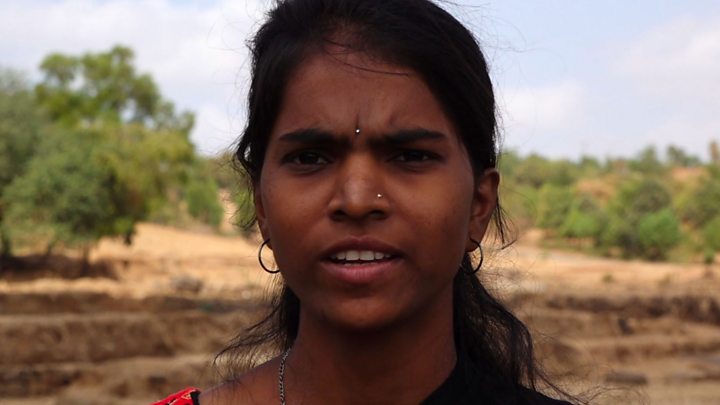
“There is no water. Why should people stay here?” says Bhimrao Beldar, the 42-year-old headman of the village.
The night before I arrived in the village, there had been a brief burst of rain. Next morning, promising grey clouds seemed to be the harbinger of bountiful rains. By mid-afternoon, however, the sky began burning again, extinguishing any such hopes. That’s how fickle hopes are here. The last time the village had “decent rains” was three years ago.
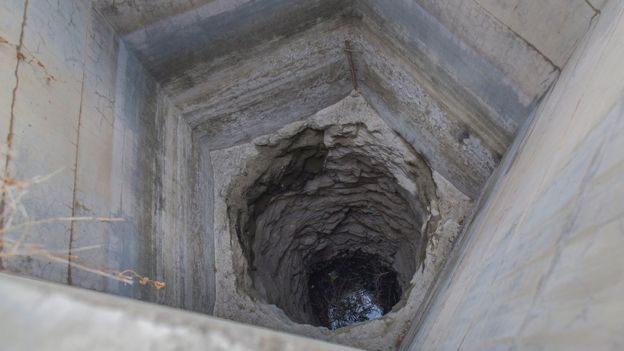
The cruel summer has sucked the life out of Hatkarwadi. The earth is brown and cracked. Cotton and millet farms have withered away. Only two of the 35 wells have some water left. There are a dozen borewells, but the fast receding water table is forcing farmers to drill deep – up to 650ft – to extract water.
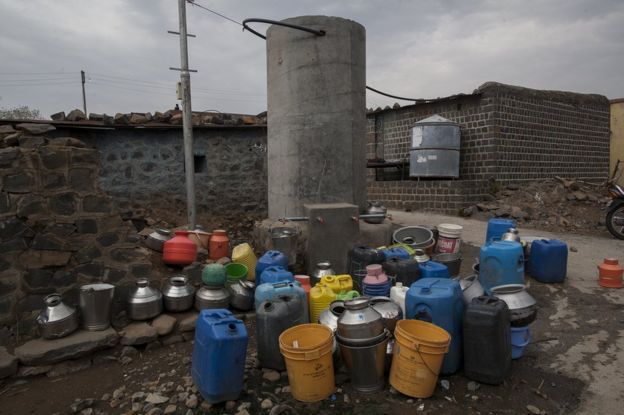
Image caption The only source of water is a few functioning borewells
Even a minor gale snaps electricity lines, so the borewells often don’t work. Water tankers – the lifeline of the drought-hit – refuse to supply because of the precarious state of the narrow strip of tar which serves as the connecting road to the village.
There’s nothing to feed the animals, so 300 buffaloes have been moved to a fodder camp uphill where the animals live with their owners under tarp. Some 75 new toilets built under a federal government programme to end open defecation lie unused because there’s no water. Most villagers borrow drinking and bathing water from well-to-do neighbours who own borewells.
Hatkarwadi is a speck on the map of Beed, where more than a million people have been hit by the drought. Deforestation has reduced forest cover to a bare 2% of the total area of the district. Only 16% of the farms are irrigated. When monsoons are good, the rain-fed farms yield cotton, soya bean, sugarcane, sorghum and millet for 650,000 farmers.
Image caption Most of the village’s 35 wells are dry
For the last six years, Beed has seen declining rainfall. Irregular rainfall patterns have been playing havoc with crops. A 10-day-pause in rainfall can end up damaging crops. Last year’s abundant rains – 99% of the average yearly rainfall of 690mm – still led to crop failure because there were four long interruptions.
The main Godavari river is running dry. Nearly all of the 140 big and small dams in Beed are out of water, as are the 800-odd wells. Two of the major dams now have what officials call “dead water” – low lying stored water, contaminated with sediments and mud. This is the water which is being pumped into ponds from where nearly a thousand tankers pick up supplies, spike them with chlorine and transport them to 300-odd thirsty villages.
Image caption Saga Bai says her son returns to the village ‘only when it rains’
Half of Beed’s 800,000 cattle have been moved to more than 600 cattle camps because of lack of fodder. More than 40,000 people have taken up work under a jobs for work scheme, and officials are opening it up for others to prevent people from going into penury. The drought hasn’t spared people living in towns: the 250,000 residents of Beed town are getting piped water only once a week or sometimes a fortnight.
“This is the worst drought in a decade,” says Astik Kumar Pandey, the senior-most official of Beed. “We are hoping that our drinking water supplies last until end of July and then we have abundant rains”.
The crippling drought in Maharashtra is part of a larger climate catastrophe which has gripped India. More than 40% of the land, by one estimate, is facing drought and more than 500 million people living in at least 10 states are badly affected.
Media caption ‘Men don’t care about drought as women fetch the water’
P Sainath, the founder and editor of the online People’s Archive of Rural India, says the lack of water is an “explosive problem”. But drought alone has not contributed to the crisis, he says. It also has to do with the appropriation of water by the well-to-do at the expense of the poor, and the skewed allocation of water.
“The transfer of water from the farms to the industry, from food crops to water guzzling cash crops, from rural to urban areas, and from livelihood to lifestyle purposes for multiple swimming polls in urban high-rises has also led to this situation.”
Back in his office in Beed, Astik Kumar Pandey peers over a live map tracking the movement of GPS-tagged water tankers in the district. It’s a dense mass of red (stationary tankers picking up supplies) and green (tankers on their way with water) trucks clogging the heart of the district.
“This is how bad the situation is. We are hoping that the rains arrive soon”.
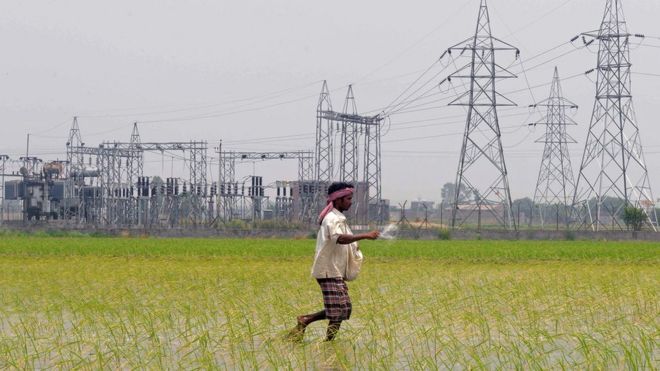
The Indian Prime Minister, Narendra Modi, said last year that his government had reached its target of providing every village in India with electricity.
“Yesterday, we fulfilled a commitment due to which the lives of several Indians will be changed forever,” Mr Modi tweeted in April 2018.
In the run-up to the Indian election, which gets under way on 11 April, BBC Reality Check examines claims and pledges made by the main political parties.
So does this claim stand up to scrutiny?
Let’s start by looking at villages.
There are almost 600,000 villages in India, according to the 2011 census.
The government defines a village as fully electrified if 10% of its households, as well as public places such as schools and health centres, are connected to the grid.
By this definition, all villages have now been electrified, according to official data.
However, much of the work had been done under the previous governments.
When Mr Modi took office, 96% of all the villages in India were already electrified. That left about 18,000 villages to go.
Before the BJP came to power, India had the world’s largest electricity access deficit – 270 million people.
That accounted for just under a third of the overall global deficit, according to the World Bank’s 2017 State of Electricity Access report.
The World Bank estimates that nearly 85% of the entire population now has access to power supply – that’s slightly higher than the government estimate of 82%.
What about households?
The project Mr Modi launched in September 2017 aimed to provide electricity to all Indian households by December 2018, covering 40 million families, primarily targeting rural India.
Virtually all Indian households have now been electrified, according to the government’s data. As of March, just 19,753 households are left.
Image copyrightGETTY IMAGESImage captionThe quality of the electricity supply is weaker in the northern and eastern states.
The current government has suggested it has been electrifying villages at a faster rate than the previous one.
However, using central electricity authority data, we found that under the previous Congress-led government, an average of more than 9,000 villages a year were being electrified compared with the Modi government’s average of more than 4,000 villages a year.
Problems with supply
Although substantial progress has been made to electrify Indian villages – both by the current and previous administrations – the quality of the supply remains a problem, especially in rural areas.
Only six out of 29 states receive a 24-hour power supply, according to a government response to a question in India’s parliament.
Just under half of villages have more than 12 hours of domestic electricity a day and a third receive between eight and 12 hours, according to government data.
States with the highest percentage of villages that receive between just one and four hours of electricity a day include Jharkhand, Mizoram and Arunachal Pradesh.
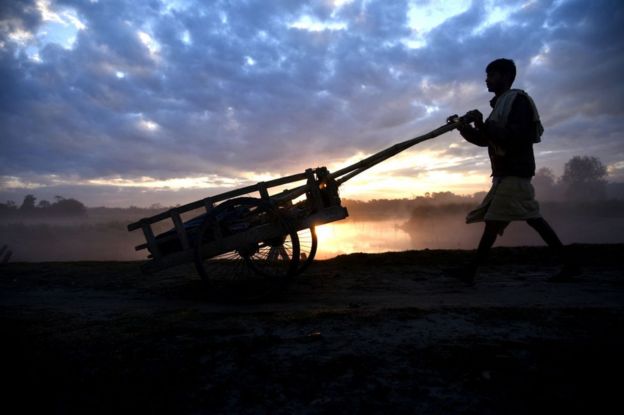
Image copyrightAFPImage captionThe sun rises nearly two hours earlier in the east of India than in the far west
India’s single time zone is a legacy of British rule, and is thought of as a symbol of unity. But not everyone thinks the Indian Standard Time (IST) is a good idea.
Here’s why.
India stretches 3,000km (1,864 miles) from east to west, spanning roughly 30 degrees longitude. This corresponds with a two-hour difference in mean solar times – the passage of time based on the position of the sun in the sky.
The US equivalent would be New York and Utah sharing one time zone. Except that in this case, it also affects more than a billion people – hundreds of millions of whom live in poverty.
The sun rises nearly two hours earlier in the east of India than in the far west. Critics of the single time zone have argued that India should move to two different standard times to make the best use of daylight in eastern India, where the sun rises and sets much earlier than the west. People in the east need to start using their lights earlier in the day and hence use more electricity.
The rising and setting of the sun impacts our body clocks or circadian rhythm. As it gets darker in the evening, the body starts to produce the sleep hormone melatonin – which helps people nod off.
This is how it happens. The school day starts at more or less the same time everywhere in India but children go to bed later and have reduced sleep in areas where the sun sets later. An hour’s delay in sunset time reduces children’s sleep by 30 minutes.
Image copyrightAFPImage captionScientists suggest Manipur, a hilly north-eastern state, should have a different time zone
Using data from the India Time Survey and the national Demographic and Health Survey, Mr Jagnani found that school-going children exposed to later sunsets get fewer years of education, and are less likely to complete primary and middle school.
He found evidence that suggested that sunset-induced sleep deprivation is more pronounced among the poor, especially in periods when households face severe financial constraints.
“This might be because sleep environments among poor households are associated with noise, heat, mosquitoes, overcrowding, and overall uncomfortable physical conditions. The poor may lack the financial resources to invest in sleep-inducing goods like window shades, separate rooms, indoor beds and adjust their sleep schedules,” he told me.
“In addition, poverty may have psychological consequences like stress, negative affective states, and an increase in cognitive load that can affect decision-making.”
Mr Jagnani also found that children’s education outcomes vary with the annual average sunset time across eastern and western locations even within a single district. An hour’s delay in annual average sunset time reduces education by 0.8 years, and children living in locations with later sunsets are less likely to complete primary and middle school, the research showed.
Mr Jagnani says that back of the envelope estimates suggested that India would accrue annual human capital gains of over $4.2bn (0.2% of GDP) if the country switched from the existing single time zone to the proposed two time zone policy: UTC+5 hours for western India and UTC+6 hours for eastern India. (UTC is essentially the same as Greenwich Mean Time or GMT but is measured by an atomic clock and is thus more accurate.)
Image copyrightAFPImage captionThe sun can rise nearly two hours earlier in the east of India than in the far west
India has long debated whether it should move to two time zones. (In fact tea gardens in the north-eastern state of Assam have long set their clocks one hour ahead of IST in what functions as an informal time zone of their own.)
During the late 1980s, a team of researchers at a leading energy institute suggested a system of time zones to save electricity. In 2002, a government panel shot down a similar proposal, citing complexities. There was the risk, some experts felt, of railway accidents as there would be a need to reset times at every crossing from one time zone to another.
Researchers at the National Physical Laboratory said the single time zone was “badly affecting lives” as the sun rises and sets much earlier than official working hours allow for.
Early sunrise, they said, was leading to the loss of many daylight hours as offices, schools and colleges opened too “late” to take full advantage of the sunlight. In winters, the problem was said to be worse as the sun set so early that more electricity was consumed “to keep life active”.
Moral of the story: Sleep is linked to productivity, and a messy time zone can play havoc with the lives of people, especially poor children.





 CHINDIA ALERT: You'll be living in their world, very soon