Chindia Alert: You’ll be Living in their World Very Soon
aims to alert you to the threats and opportunities that China and India present. China and India require serious attention; case of ‘hidden dragon and crouching tiger’.
Without this attention, governments, businesses and, indeed, individuals may find themselves at a great disadvantage sooner rather than later.
The POSTs (front webpages) are mainly 'cuttings' from reliable sources, updated continuously.
The PAGEs (see Tabs, above) attempt to make the information more meaningful by putting some structure to the information we have researched and assembled since 2006.
Defence spending could show the effect of economic headwinds but is still expected to increase
PLA’s modernisation and strategic priorities demand spending is maintained even after GDP’s first contraction since records began, observers say
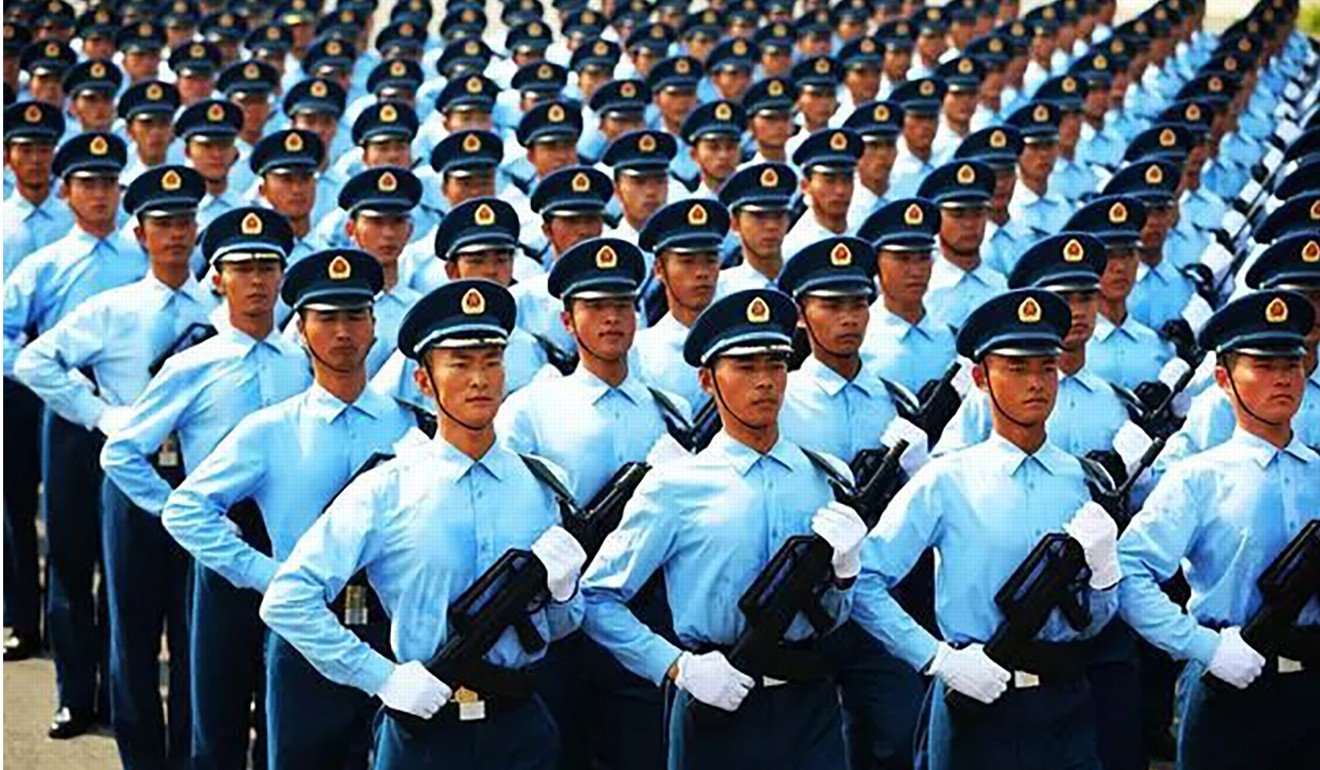
China has made modernising its military and expanding its weaponry a priority. Photo: Xinhua
China’s upcoming defence budget will be only slightly hit by the economic downturn that followed the coronavirus outbreak, and a modest increase is still expected as it continues to develop its military capability, analysts said.
The government’s military budget is expected to be revealed, as is the norm, at this year’s session of the National People’s Congress (NPC), China’s legislative body. Delayed by over two months because of the pandemic, it will finally be convened on May 22.
Last year the defence expenditure announced at the NPC session was
China has said its military expenditure has always been kept below 2 per cent of its GDP over the past 30 years, although its official figures have long been described by Western observers as opaque, with significant omissions of important items.
The South China Sea dispute explained
In a report earlier this week, the Stockholm International Peace Research Institute estimated that China’s actual military spending in 2019 was US$261 billion, the world’s second highest, after the United States’ US$732 billion.
John Lee, adjunct professor at the University of Sydney and senior fellow at the Hudson Institute in Washington, estimated that this year the Chinese defence budget would remain roughly the same or increase modestly, in line with growth levels of recent years.
“In the current environment, Beijing is keen to emphasise that China has recovered substantially from Covid-19 and that its power trajectory is unaffected by recent events,” Lee said. “At the same time, it would be aware of the anger towards the Communist Party for allowing the virus to become a pandemic.
“Regardless of what the reality might be, I would be surprised if there were a dramatic increase or a significant cut.”
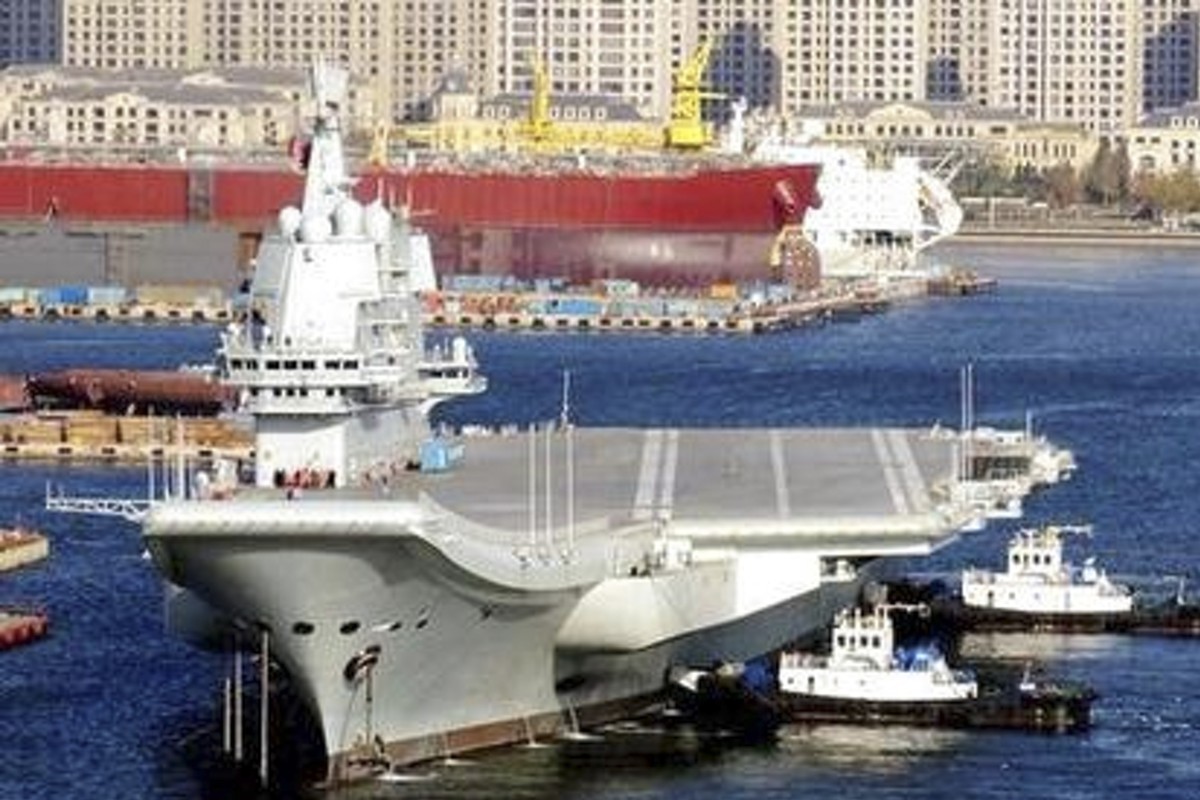
First made-in-China aircraft carrier, the Shandong, enters service
China’s GDP suffered a 6.8 per cent decline in the first quarter, the first contraction since quarterly records began in 1992, after an extensive shutdown while it contained its coronavirus outbreak. However, the official increases in the military budget have since 2011 always exceeded overall GDP growth.
The Chinese government may focus more on job creation, social welfare and poverty alleviation, but not at the expense of military investment, according to Collin Koh, research fellow from the S Rajaratnam School of International Studies at Singapore’s Nanyang Technological University in Singapore.
“I tend to think it will be more or less the same,” Koh said. “To reduce [the budget] may send the wrong signal to would-be adversaries, both domestic and external: that Beijing has lost the will to keep up its military modernisation to assert core national interests.”
PLA flexes military muscle near Taiwan ‘in show of Covid-19 control’
15 Apr 2020
The People’s Liberation Army (PLA) began a massive – and costly – reform in 2015, with a personnel reshuffle, change in structure, upgraded equipment and enhanced training to better resemble battle scenarios. That was supposed to be complete this year.
Given the deteriorating relationship with the United States and rising tensions in the Taiwan Strait and South China Sea, the PLA faces challenges requiring a steady increase in investment, according to Hong Kong-based military commentator Song Zhongping.
Taiwan shows off its military power after presidential election
Macau-based military expert Antony Wong Dong predicted there would still be about 6-7 per cent growth in the budget “no matter what”.
“The PLA played an important role in the fight against the contagion, so a decrease in spending would not be accepted,” Wong said.
That role included the deployment of more than 4,000 military medics to help treat Covid-19 patients, and helping to transport medical supplies.
Wong said it would be a crucial year for the PLA in completing its preparation for potential military action against Taiwan, which would be so strategically important that “[President] Xi Jinping himself would never allow it to be affected by a shortage of funding”.
China’s military draws on 6G dream to modernise its fighting forces
18 Apr 2020
But a slight increase in budget would be sufficient to meet defence needs and maintain a deterrence against potential threats, including preventing self-ruled Taiwan taking the opportunity to declare independence, naval expert Li Jie said.
Beijing views Taiwan as a breakaway province to be reunified with the mainland, by force if necessary. Its relationship with Taipei has been strained, and dialogue halted, since Tsai Ing-wen, of the pro-independence Democratic Progressive Party, was elected the island’s president in 2016. Tsai was re-elected for a second term in January.
Li estimated that the budget would probably be kept at the same level or show a “slight” increase from last year.
“It would feed the ‘China threat’ theory and raise international concerns if the Chinese government expands military spending too much,” he said.
BEIJING (Reuters) – China has given the go-ahead for researchers to begin human safety tests of an experimental coronavirus vaccine in the race to develop a shot against the COVID-19 epidemic that has killed more than 7,000 people worldwide.
Researchers at China’s Academy of Military Medical Sciences, – affiliated to the Chinese People’s Liberation Army (PLA) -received approval to launch early-stage clinical trials of the potential vaccine starting this week, the ruling Communist Party’s People’s Daily reported on Tuesday.
Scientists in the United States said on Monday that clinical trials had begun for a vaccine developed by its National Institute of Allergy and Infectious Diseases and the U.S. biotech firm Moderna.
Details in the Chinese clinical trial registration database show that a “Phase 1” test that will examine whether experimental shot is safe in humans aims to recruit 108 healthy people to take part between March 16 and December 31.
The trial will be conducted by China’s Academy of Military Medical Sciences and the Hong Kong-listed biotech firm CanSino Biologics, the database showed.
Experts at the World Health Organization say they do not expect any fully tested and approved vaccine to reach the market until the middle of next year.
Best pilots from carrier-borne squadrons sent to naval academy for warship training to meet ‘urgent need’ for commanders
They had to pass more than 10 assessments – from political thought to psychological testing – before they could join the programme
China’s second aircraft carrier, the Type 001A, is expected to be operational by the end of this year. Photo: Sina
The Chinese navy is training fighter pilots experienced in carrier-borne operations to command and manage its warships as it seeks to expand its global naval power.
Its best pilots from carrier-borne squadrons – including some qualified to fly fighter jets during both daytime and at night – were sent to a naval academy for warship combat and command training late last month, PLA Daily reported on Monday.
It did not say how many pilots had been selected, but all of them were required to pass more than 10 assessments – ranging from political thought to psychological testing – before they could join the training programme, the official People’s Liberation Army newspaper said.
Beijing-based naval expert Li Jie said the programme would focus on command and control skills for air and sea operations, and some of the pilots would ultimately be selected to command China’s new aircraft carrier strike groups.
As part of its ambition to build a powerful blue-water navy that can operate globally, China plans to have four aircraft carriers in service by 2035. Its second aircraft carrier – the first built in China, known as the Type 001A – is undergoing sea trials and is expected to be operational by the end of this year.
Work on the more modern Type 002 carrier started two years ago and a naval source told the South China Morning Post that construction of a second Type 002 vessel could begin as early as 2021.
But they will need suitable carrier pilots to take command.
“It’s quite an urgent need for the Chinese navy to have carrier group commanders – like its Western counterparts do – who are capable of commanding different warships and aircraft in modern joint-operation combat situations,” Li said.
China to deploy Sharp Sword stealth drone for new Type 001A aircraft carrier
“Aircraft carrier strike groups are supposed to sail on the high seas and into unfamiliar territory, so aside from having a background as naval aviators, all commanding officers should have a broad set of skills and knowledge – from foreign languages and international maritime law to air and sea operations – to help them make good decisions,” he said.
Other navies, such as the United States Navy, require more experience for the role – commanding officers of US aircraft carriers must be former naval aviators as well as former captains of different types of warships.
For example, Captain Pat “Fin” Hannifin, commanding officer of the Nimitz-class aircraft carrier USS Ronald Reagan, has over 2,800 flight hours in 33 different aircraft under his belt. He was also executive officer on another aircraft carrier and commander of an amphibious transport dock.
Rear Admiral Li Xiaoyan, the first captain of China’s only active aircraft carrier, the Liaoning, was a pilot with no experience on carrier-borne aircraft, though he did have experience on a destroyer and frigates. He was replaced by Zhang Zheng just days after the Liaoning formally joined the PLA Navy in 2012, and later by Liu Zhe – neither of whom had naval aviator backgrounds.
Li Xiaoyan was one of the first group of 10 pilots selected for a training programme designed specifically for China’s future aircraft carriers back in 1987. But the whole aircraft carrier plan was suspended in 1998 by premier Zhu Rongji for political and economic reasons, according to China’s Carrier, a book published by China Development Press.
China’s navy begins national search for trainee top-gun pilots
Naval expert Li Jie said the Chinese navy now had to catch up in terms of training pilots, and especially commanding officers, for its aircraft carriers.
“China resumed the aircraft carrier plan and in 2004 started refitting the hull of the Varyag. But after that first group of pilots was trained in 1987, there was no formal training in air and sea operations because there was no aircraft carrier training platform until 2012,” Li said, referring to the unfinished Admiral Kuznetsov-class vessel China bought from Ukraine in 1998, which became the Liaoning.
He said the latest training programme for commanding officers was a continuation of the one that began more than 30 years ago.
HONG KONG (Reuters) – China’s People’s Liberation Army (PLA) soldiers in shorts and t-shirts made a surprising appearance in some Hong Kong streets on Saturday, briefly helping residents clean up debris after anti-government protests blocked roads, witnesses said.
The presence of PLA troops on the streets, even to help clean up roads near their base, could stoke further controversy over the Chinese-ruled territory’s autonomous status.
Hong Kong has been rocked by more than five months of demonstrations by protesters angry at perceived Communist Party meddling in the former British colony, which was guaranteed its freedoms when it returned to Chinese rule in 1997.
Beijing denies interfering and has blamed the unrest on foreign influences.
Clashes between protesters and police have become increasingly violent. China has warned that any attempt at independence for Hong Kong will be crushed, but troops have remained inside their base.
RELATED COVERAGE
China’s PLA soldiers seen helping clean up streets after Hong Kong protests – RTHK
Saturday’s clean up followed some of the worst violence seen this year, after a police operation against protesters at the Chinese University of Hong Kong on Tuesday.
The authorities have since largely stayed away from at least five university campuses that had been barricaded by thousands of students and activists who stockpiled petrol bombs, catapults, bows and arrows and other weapons.
Many protesters appeared to have left the campuses by late Saturday, though some remained behind to man makeshift barricades. Hong Kong’s Cross-Harbour Tunnel was still blocked by protesters occupying Polytechnic University.
Earlier, hundreds of pro-China demonstrators gathered by the city’s legislature and police headquarters, waving Chinese and Hong Kong flags. Some held up posters reading “Police we stand with you”, while others chanted “Support the police”.
Pro-China protests have so far attracted much smaller numbers than those angry at Beijing.
RARE TROOP PRESENCE
By late afternoon, the PLA soldiers had left the streets outside Baptist University, beside their barracks in leafy Kowloon Tong.
Chinese troops have appeared on local streets only once since the 1997 handover, to help with cleanup operations after a typhoon in late 2018. It was not immediately clear how many were involved on Saturday.
Calls to the PLA Hong Kong garrison office and a media liaison officer went unanswered.
Demosistō, a pro-democracy organisation, said Saturday’s cleanup operation could set a “grave precedent” if the city’s government invites the military to deal with internal problems.
In August, Beijing moved thousands of troops across the border into Hong Kong in what state news agency Xinhua described as a routine “rotation”.
Foreign envoys and security analysts estimate up to 12,000 troops are now based across Hong Kong — more than double the usual garrison number.
Standing beside a black flag with the slogan “Liberate Hong Kong, Revolution of our Times,” James Wong, 23, was among a handful of protesters still manning a bridge at Baptist University.
“We didn’t want to confront the people and the PLA troops directly,” he told Reuters. “We are not directly against the PLA, but rather the government. But the PLA should not leave their base because this is Hong Kong territory.”
Wong said even after the campus fortifications have been dismantled “Hong Kong will keep resisting until the government responds to our demands”.
Hundreds of residents moved in to help clear barricaded roads near several universities.
Clashes on Saturday saw at least one petrol bomb thrown before anti-government protesters at the campuses retreated. No soldiers appeared to have been involved in the confrontations.
“We just want our lives to continue,” said one resident who was helping clear streets near HKU. “There are many elderly who need to go the hospital and children who need to go to school. I am very sad to see what is happening in my community.”
PRO-POLICE DEMONSTRATION
Saturday’s rally to denounce the anti-government violence drew a mix of young and elderly.
“From the bottom of our hearts, we believe it is the correct thing to support the police in fighting the rioters for Hong Kong citizens,” said a 49-year-old housewife surnamed Kong.
“A lot of people keep silent, afraid of the rioters. It’s time for all the people who are silent to step up and say that’s enough.”
A 70-year-old street cleaner died on Thursday after being hit on the head by one of several bricks police said had been thrown by “masked rioters”. On Monday, police blamed a “rioter” for dousing a man in petrol and setting him on fire. The victim is in critical condition.
On the same day, police shot a protester in the abdomen. He was in a stable condition.
Many pro-police protesters laid white flowers outside the government office to pay their respects to the cleaner. Others applauded and cheered the police, some bowing and giving thumbs up as they walked past riot police on duty.
Authorities said on Saturday that a highway blocked by anti-government protesters on Friday had reopened after being cleared of debris and petrol bombs.
Train services suspended earlier in the week were gradually resuming, metro operator MTR Corp (0066.HK) said.
Rear Admiral Ma Weiming is seen as pioneer of electromagnetic aircraft launch system
Experts say Ma’s full membership of Central Committee shows how important sea power is to China’s strategic planning
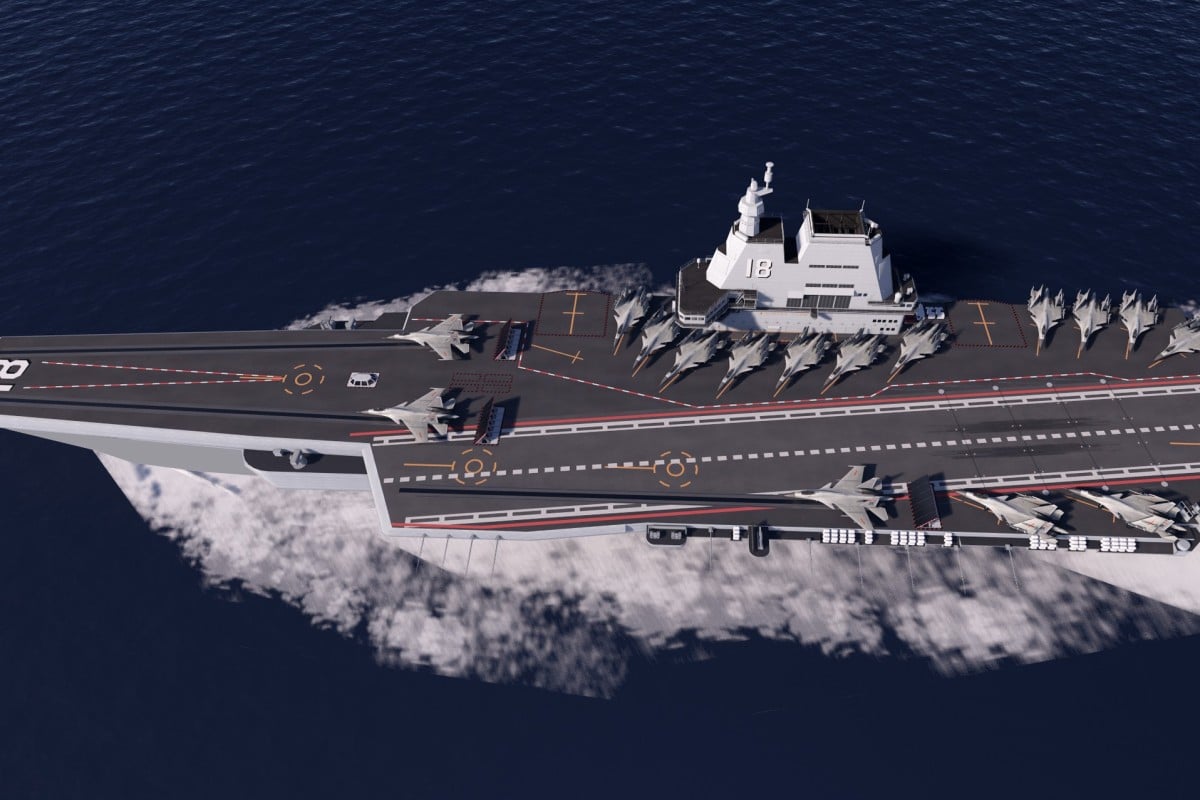
An artist’s impression of China’s third aircraft carrier, the Type 002, which will incorporate an electromagnetic aircraft launch system developed by Rear Admiral Ma Weiming and his team. source: Photo: Handout
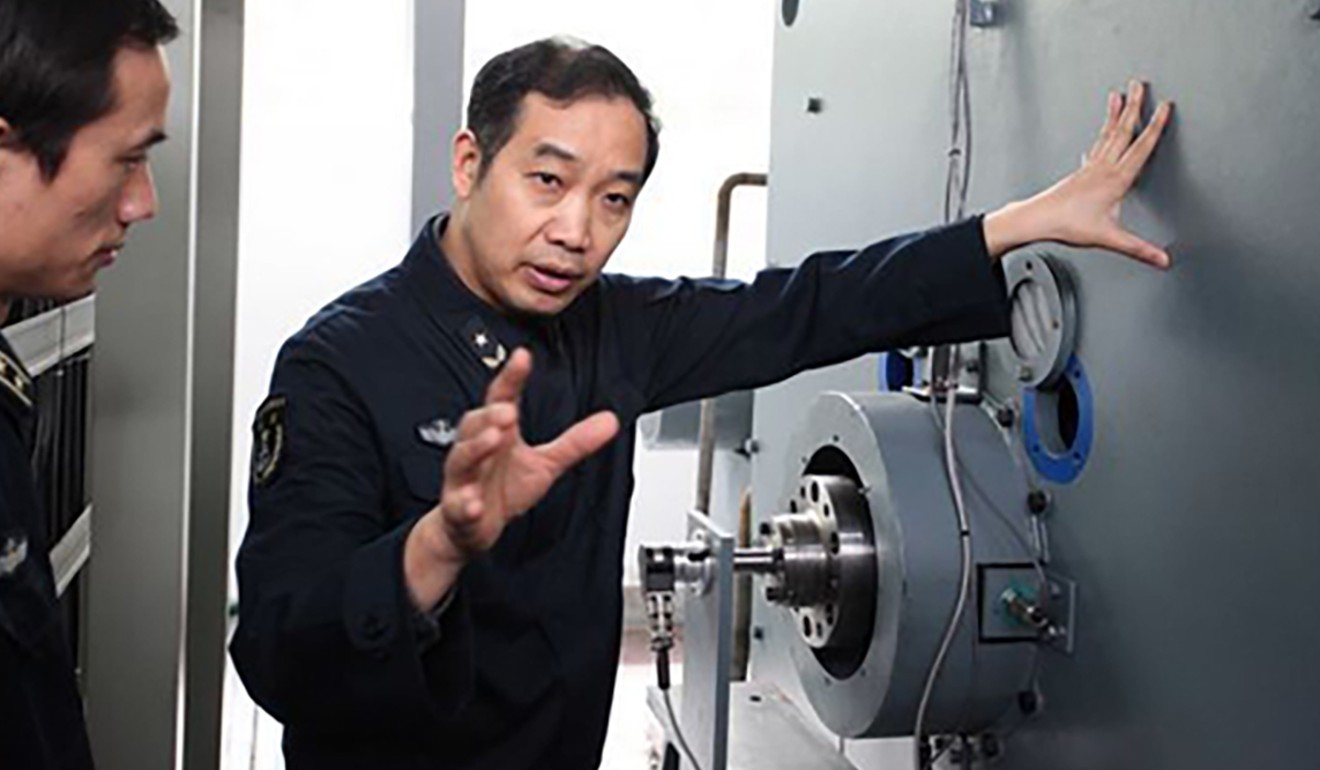
China’s Communist Party has elevated the senior naval engineer behind the development of a hi-tech launch system for the country’s next aircraft carriers, showing China’s ambition to increase its naval power.
Rear Admiral Ma Weiming, who is seen as the pioneer of China’s electromagnetic aircraft launch system (EMALS), was named as a full member, from alternate member, of the party’s Central Committee at the party plenary meeting which ended on Thursday.
The plenum sessions – attended by more than 300 full and alternate members of the Central Committee – provide an opportunity for the party’s most senior members to discuss and forge consensus on key policy issues.
Rear Admiral Ma Weiming (right) has been elevated to full membership of the Communist Party’s Central Committee. Photo: SCMP
Li Jie, a Beijing-based military specialist, said the move showed China’s ambition to continue expanding its naval military power.
“Ma’s promotion signals that Beijing will devote more resources to developing strategic military hardware like large warships and assault landing ships,” he said.
The EMALS is regarded as a breakthrough for the People’s Liberation Army, as it will enable China’s second home-grown aircraft carrier – known as the Type 002 – to launch larger jets with bigger payloads on longer missions.
The system could result in fuel savings of up to 40 per cent. With a higher launch energy capacity, it will also be more efficient than steam catapults, allowing for improvements in ease of maintenance, increased reliability, and more accurate end-speed control and smoother acceleration.
Why Chinese submarines could soon be quieter than US ones
Ma, who comes from Yangzhou in eastern Jiangsu province, graduated from the PLA Naval University of Engineering in Wuhan in 1987 and earned a PhD in electrical engineering from Beijing’s Tsinghua University in 1996.
A specialist in maritime propulsion, electrical engineering and related fields, he has mentored more than 400 masters and doctoral students at the naval university.
He and his team have often been recognised for their work as greater emphasis has been put on research and development amid the country’s military modernisation.
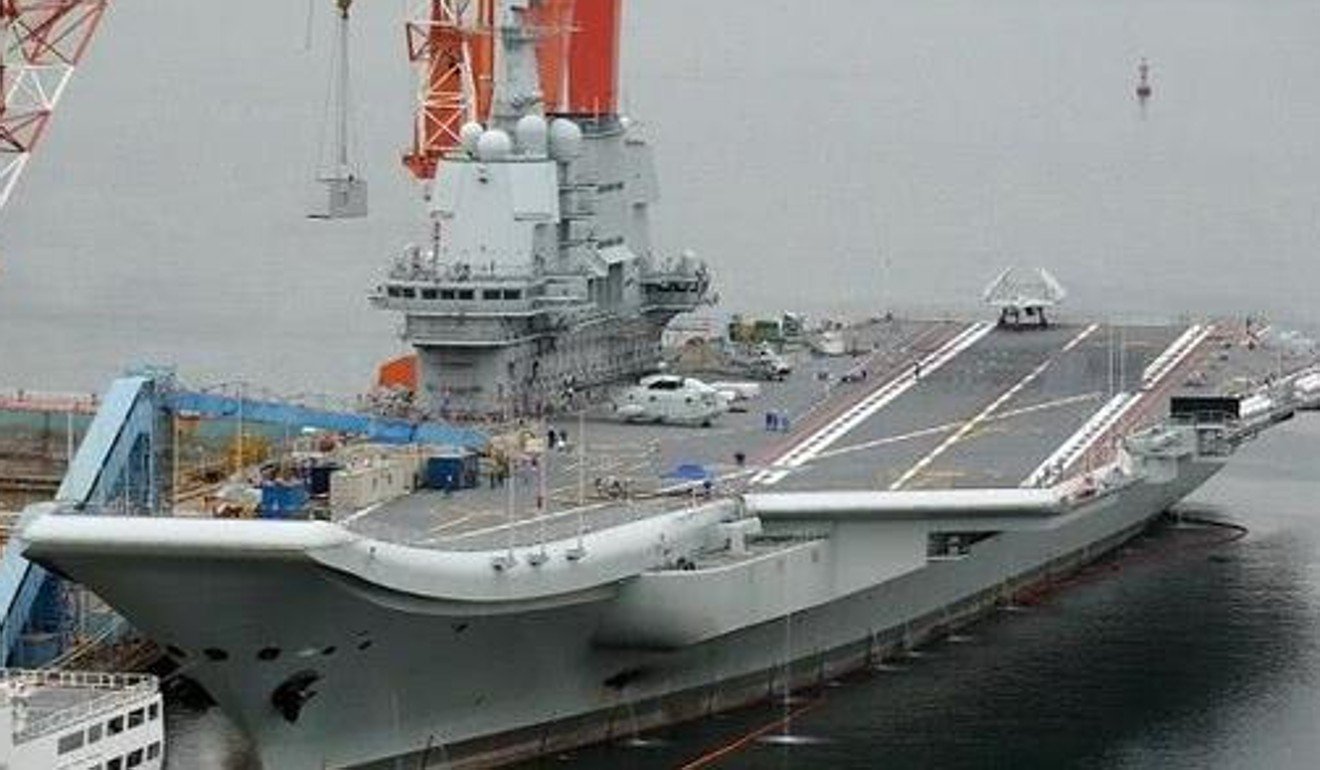
China’s first home-built carrier will use steam catapults and a ski-jump deck to launch aircraft. Photo: Handout
Ma has twice won the National Science and Technology Progress Award and in 2015 was awarded the science and technology achievement prize by the Hong Kong-based Ho Leung Ho Lee Foundation.
According to news reports, in the 1980s Ma spotted a potential flaw with an electrical component China planned to buy from overseas to use on its submarines that would have made the vessels easier to detect. Though the manufacturer denied any such problem, Ma spent five years tweaking the product so that submarines fitted with the part became harder to spot.
Three catapult launchers spotted in image of China’s new aircraft carrier
Beijing-based military expert Zhou Chenming said Ma’s promotion could be seen as a national endorsement of his work on EMALS.
“Ma was elected as a Central Committee member because the party and the country recognise the strategic importance of his work as China is expanding into a naval power with a huge maritime interest to protect,” he said.
Zhou, however, said Ma’s promotion was made two years ago, but he could not be formally made a full member until a vacancy opened up this year.
70th anniversary of the founding of the People’s Republic of China marked by its biggest ever military parade and huge civilian parade
Xi says no force can stop China ‘marching forward’ and vows to protect the long-term stability of Hong Kong
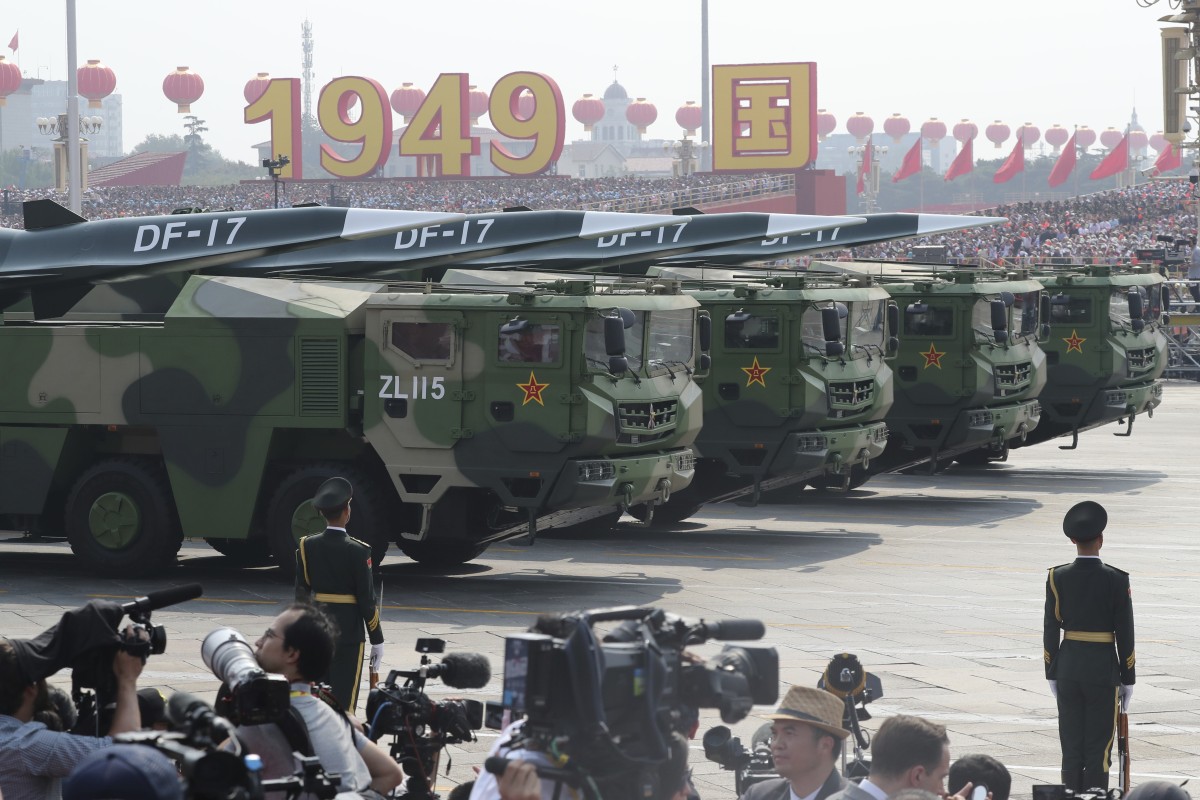
Military vehicles carry DF-17 missiles capable of reaching the US mainland during the parade to mark 70 years of the People’s Republic. Photo: AP
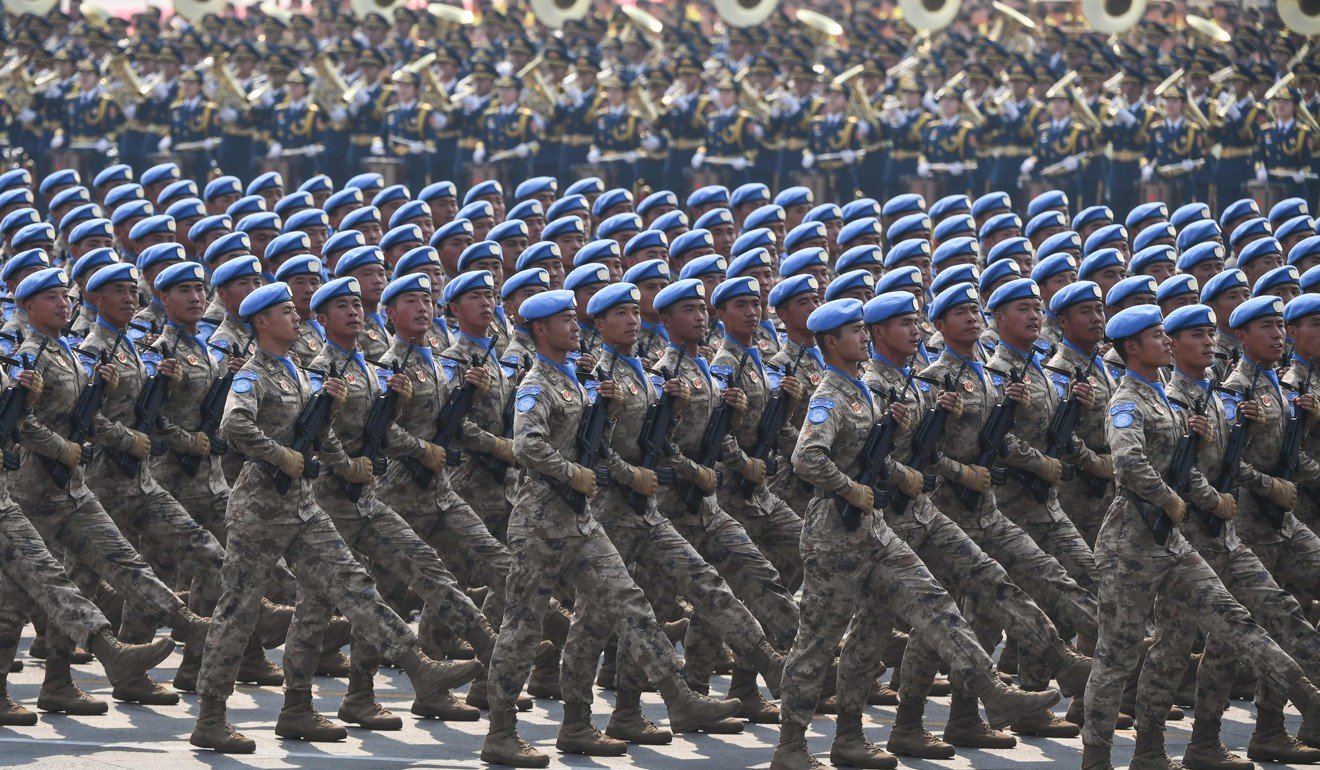
China staged a massive military parade in Beijing on Tuesday to mark the 70th anniversary of the founding of the People’s Republic, with much of the smog-shrouded capital city under a security lockdown.
President Xi Jinping inspected over 15,000 troops, more than 160 aircraft and 580 weapon systems in a show of the country’s growing military might and his drive to modernise the People’s Liberation Army.
He also delivered a bullish eight-minute speech hailing the accomplishments of seven decades of Communist rule and pledging to achieve his vision of a “Chinese dream” of national rejuvenation and global prominence.
Here are some of the key takeaways from a day of celebration in Beijing:
A show of unity
Xi presided over the ceremony in Tiananmen Square flanked by his predecessors Jiang Zemin and Hu Jintao, along with other retired and present party elders.
The rare appearance of Jiang and Hu – on the rostrum of the Gate of Heavenly Peace, where the country’s founding father Mao Zedong declared Communist rule on October 1, 1949 – was clearly aimed at projecting unity and solidarity in the face of daunting domestic and international challenges.
China’s National Day parade, as it happened
Hu had been absent from the funeral of former premier Li Peng in late July, although the ailing Jiang attended.
Former vice-president Zeng Qinghong and Song Ping, the oldest party elder in attendance, also appeared on the rostrum.
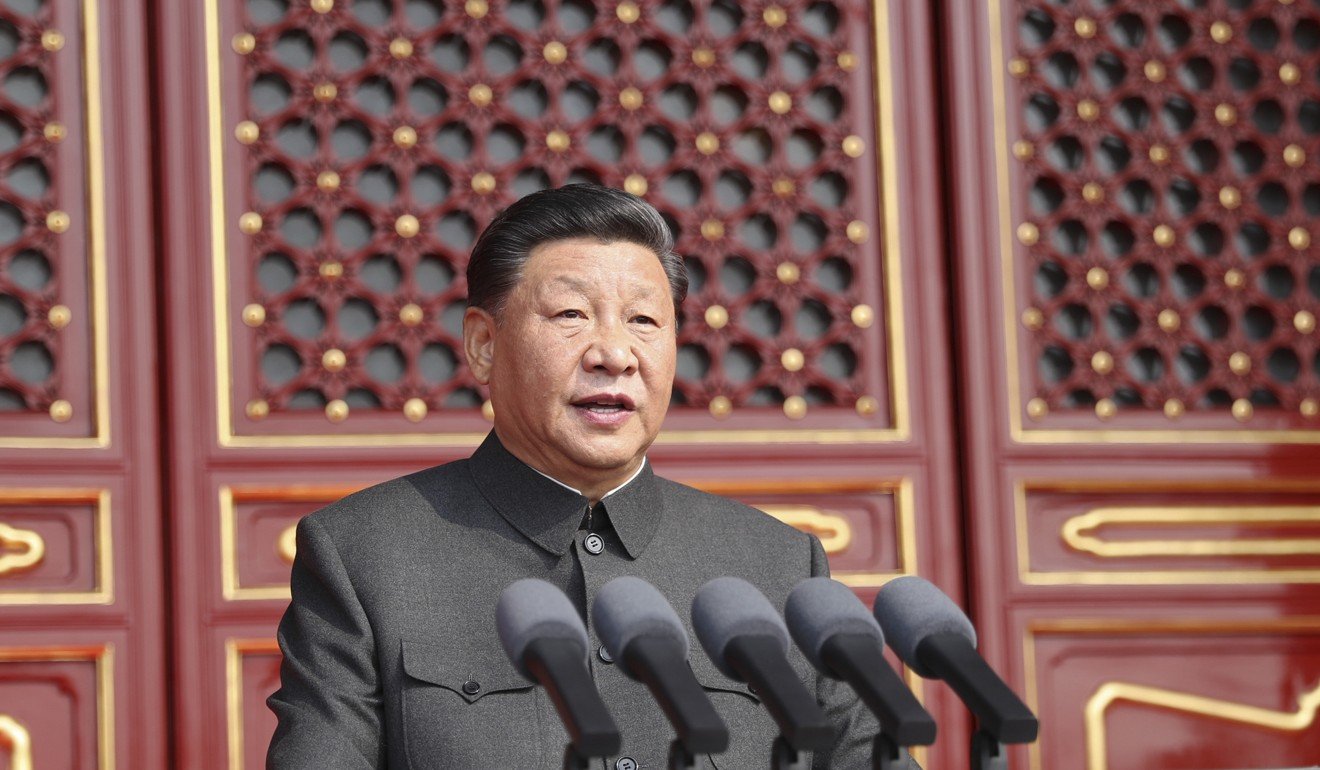
President Xi Jinping speaks in Tiananmen Square during Tuesday’s celebrations. Photo: Xinhua
But notably, while former premier Wen Jiabao was present, his predecessor Zhu Rongji was not.
‘No force can shake China’
Dressed in a Mao suit, Xi’s nationally televised speech invoked China’s “century of humiliation” and praised the achievements of its people, saying there was no force that could stop it forging ahead.
“No force can shake the status of our great motherland, and no force can stop the Chinese people and the Chinese nation from marching forward,” he said.
Chinese troops take part in the Republic’s largest ever military parade. Photo: AFP
“The People’s Liberation Army [PLA] will serve its purpose in safeguarding the sovereignty, security and development interests of the country, and world peace,” he said, at a time when Beijing has expanded its military footprint globally, including with its first overseas military base in Djibouti.
Xi called on the Communist Party and the country to unite and continue to fight for the realisation of what he called the “Chinese dream” – the nation’s rejuvenation.
One country, two systems
Amid escalating unrest in Hong Kong, which has plunged the city into a deepening crisis and threatened to overshadow the National Day celebrations, Xi vowed that the central government would uphold “one country, two systems”.
He said the central government would protect the long-term stability of Hong Kong and Macau, and stressed the goal of “peaceful reunification” with the self-ruling Taiwan, repeating a message frequently used by his predecessors, including Deng Xiaoping, Jiang and Hu.
The theme of one country, two systems later appeared in a National Day parade for the first time, with placards forming the words: “Hong Kong’s tomorrow will be better.”
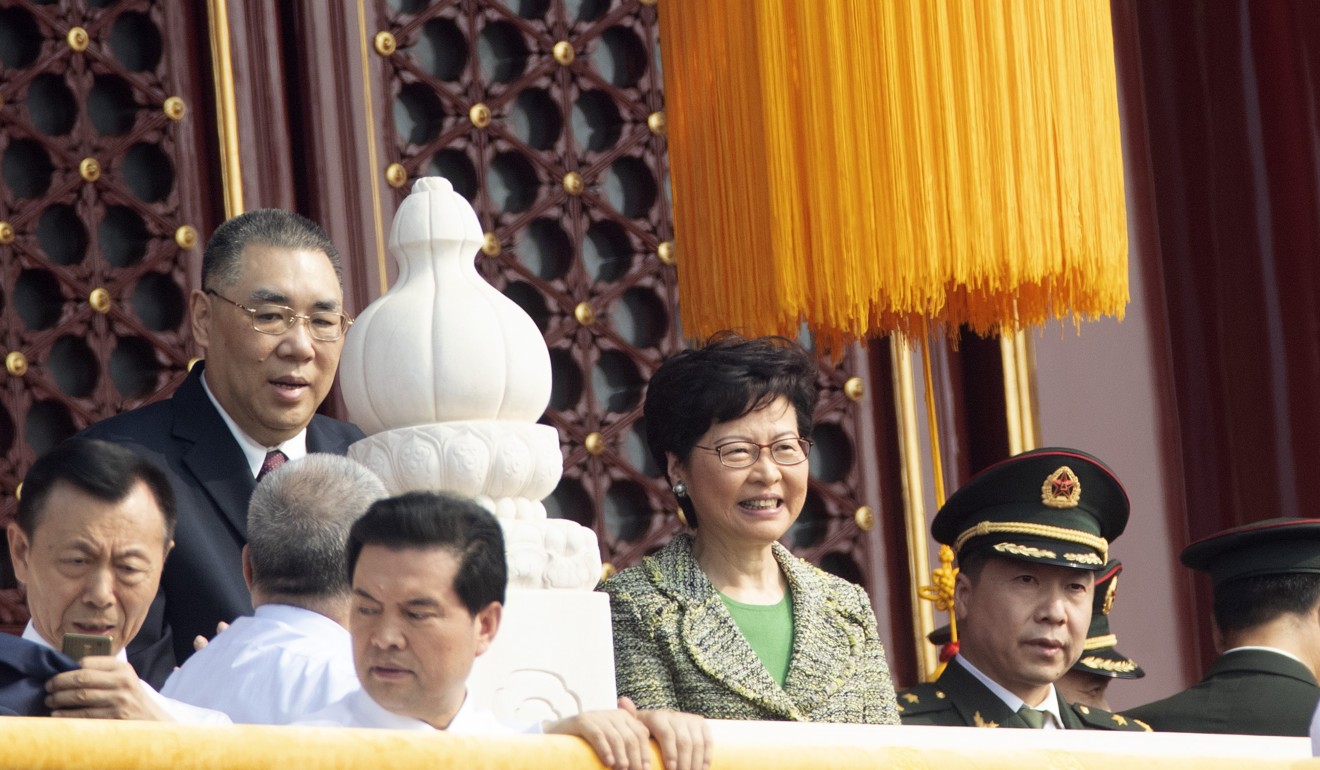
Hong Kong Chief Executive Cheng Yuet-ngor attended the ceremony, as did 10 Hong Kong police officers involved in suppressing anti-government protests in the city.
Showing off new weapons
China’s advancement in military weaponry was on full display, with almost half of the items featured being shown to the public for the first time.
Hong Kong leader Carrie Lam was among the guests in Beijing on Tuesday. Photo: AP
The morning’s celebrations included an 80-minute military parade – the biggest since the founding of the People’s Republic – in an apparent effort to showcase the prowess of the PLA, the world’s biggest military with 2 million personnel.
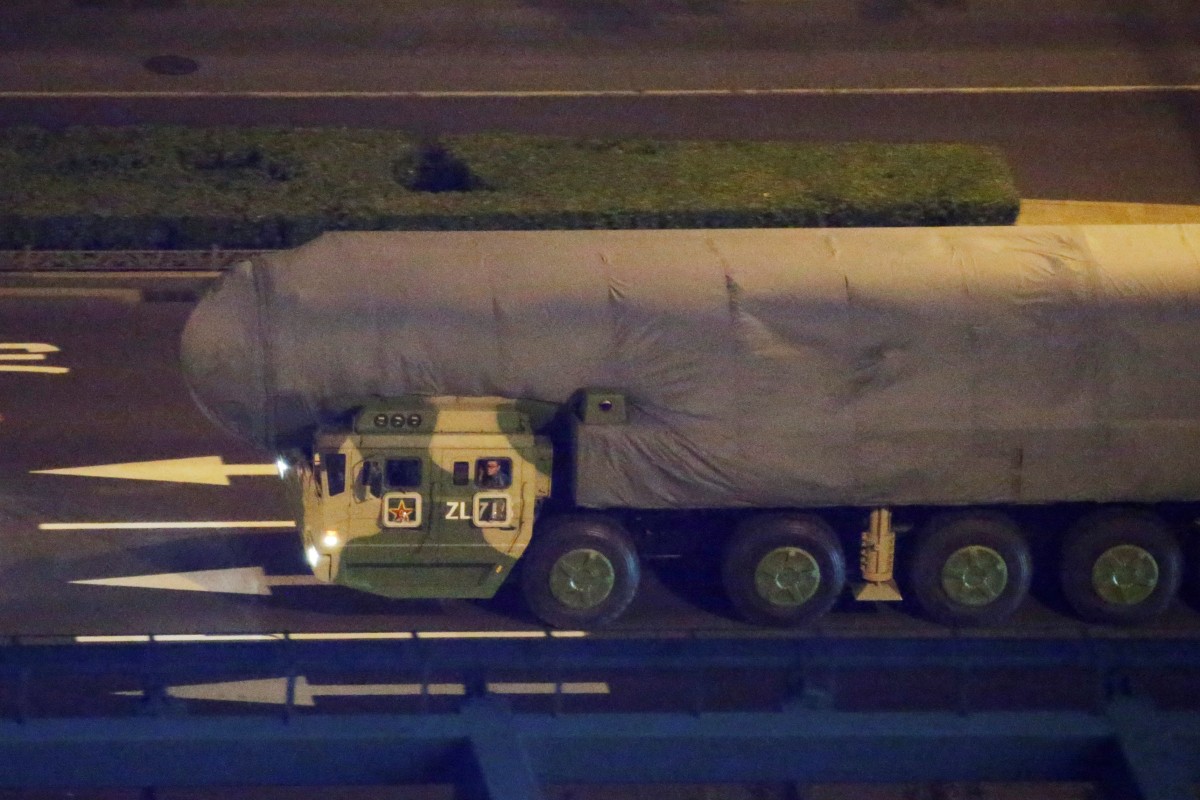
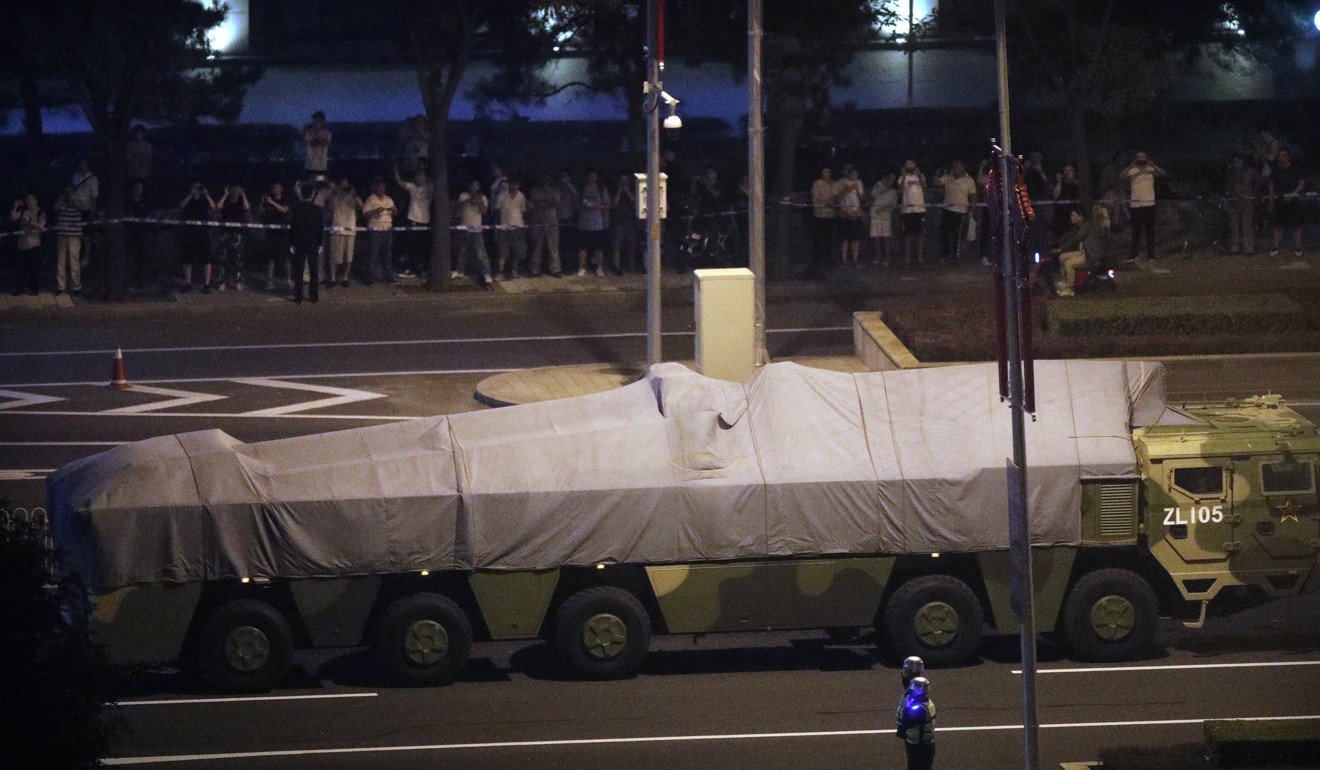
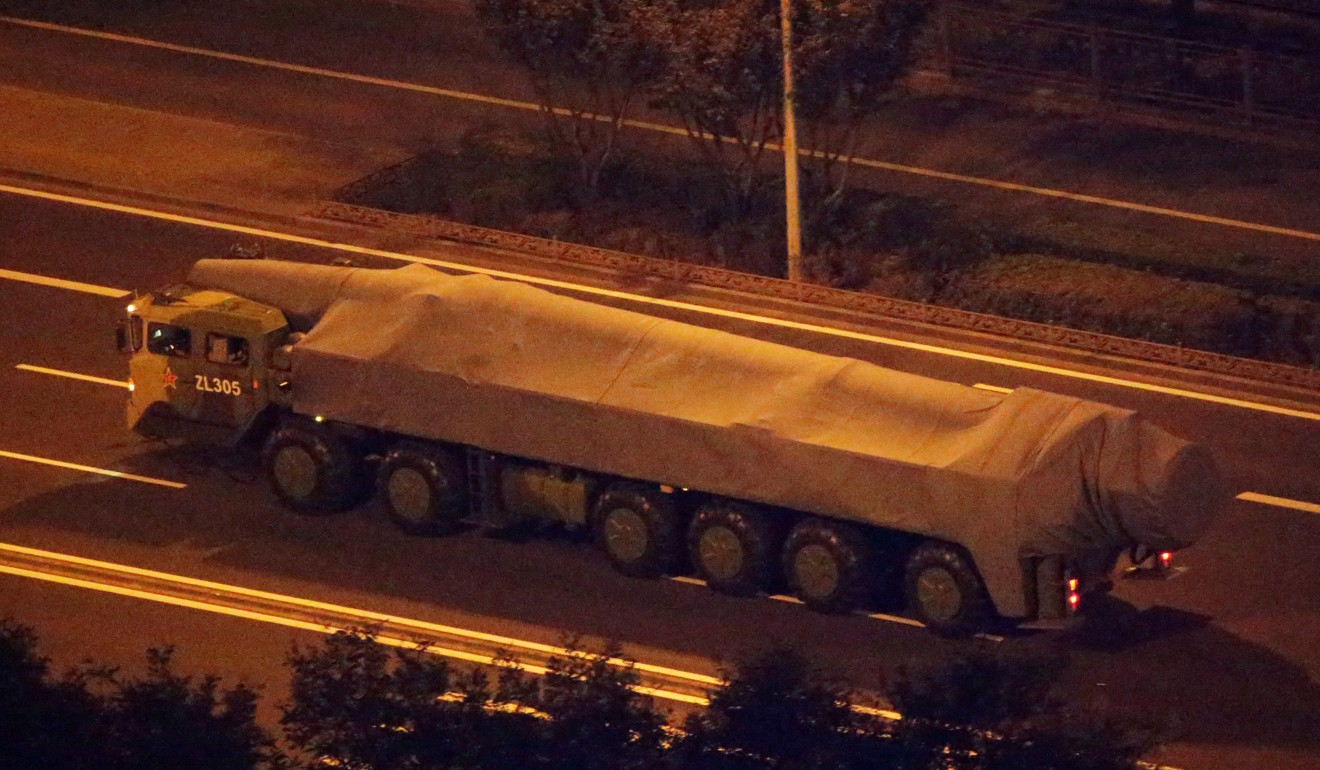
Among the weapons shown were DF series missiles, including the DF-17, a nuclear-capable glider that has the capacity to strike the US mainland, and the DF-41, which has a range of up to 15,000km, making it the world’s longest-range military missile.
Signalling Xi’s status
A 100,000-strong civilian parade featuring huge portraits of Xi and predecessors including Mao, Deng, Jiang and Hu wrapped up the morning celebration.
The procession was divided into three parts, representing three eras of the People’s Republic: the Mao era, Deng’s reform and opening up, and Xi’s era, which seeks global prominence on a par with that of the United States.
Xi appeared keen to project his supreme status in the party, reinforced since he abolished the constitutional term limit a year ago, allowing him potentially to remain leader for life.
He waved at his own portrait, unveiled alongside a sign reading “Carry out Xi Jinping Thought on Socialism with Chinese Characteristics for a New Era”.
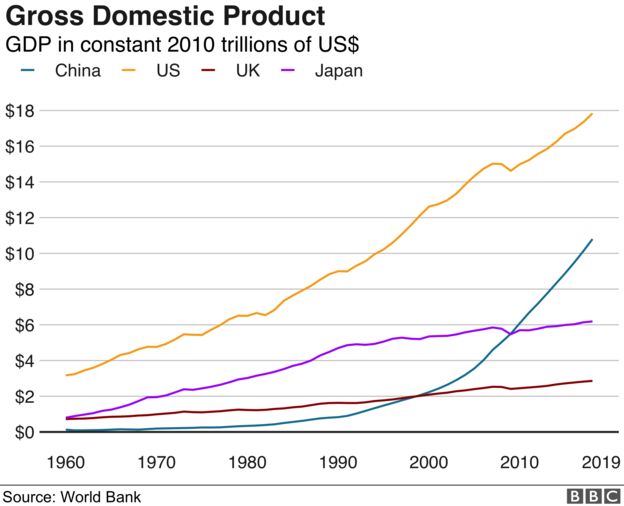
It took China less than 70 years to emerge from isolation and become one of the world’s greatest economic powers.
As the country celebrates the anniversary of the founding of the People’s Republic of China, we look back on how its transformation spread unprecedented wealth – and deepened inequality – across the Asian giant.
“When the Communist Party came into control of China it was very, very poor,” says DBS chief China economist Chris Leung.
“There were no trading partners, no diplomatic relationships, they were relying on self-sufficiency.”
Over the past 40 years, China has introduced a series of landmark market reforms to open up trade routes and investment flows, ultimately pulling hundreds of millions of people out of poverty.
The 1950s had seen one of the biggest human disasters of the 20th Century. The Great Leap Forward was Mao Zedong’s attempt to rapidly industrialise China’s peasant economy, but it failed and 10-40 million people died between 1959-1961 – the most costly famine in human history.
This was followed by the economic disruption of the Cultural Revolution in the 1960s, a campaign which Mao launched to rid the Communist party of his rivals, but which ended up destroying much of the country’s social fabric.
‘Workshop of the world’
Yet after Mao’s death in 1976, reforms spearheaded by Deng Xiaoping began to reshape the economy. Peasants were granted rights to farm their own plots, improving living standards and easing food shortages.
The door was opened to foreign investment as the US and China re-established diplomatic ties in 1979. Eager to take advantage of cheap labour and low rent costs, money poured in.
“From the end of the 1970s onwards we’ve seen what is easily the most impressive economic miracle of any economy in history,” says David Mann, global chief economist at Standard Chartered Bank.
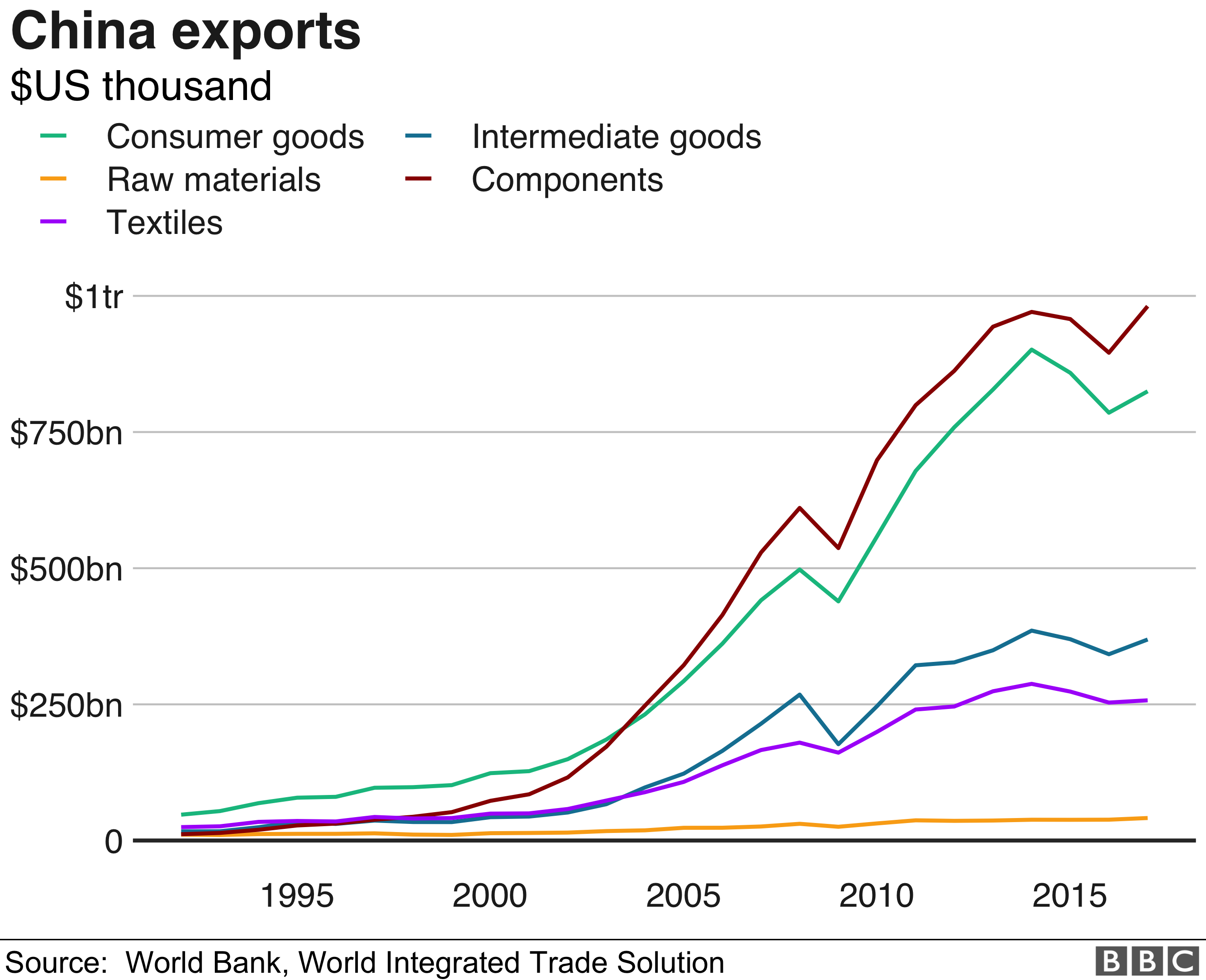
Through the 1990s, China began to clock rapid growth rates and joining the World Trade Organization in 2001 gave it another jolt. Trade barriers and tariffs with other countries were lowered and soon Chinese goods were everywhere.
“It became the workshop of the world,” Mr Mann says.
Take these figures from the London School of Economics: in 1978, exports were $10bn (£8.1bn), less than 1% of world trade.
By 1985, they hit $25bn and a little under two decades later exports valued $4.3trn, making China the world’s largest trading nation in goods.
Poverty rates tumble
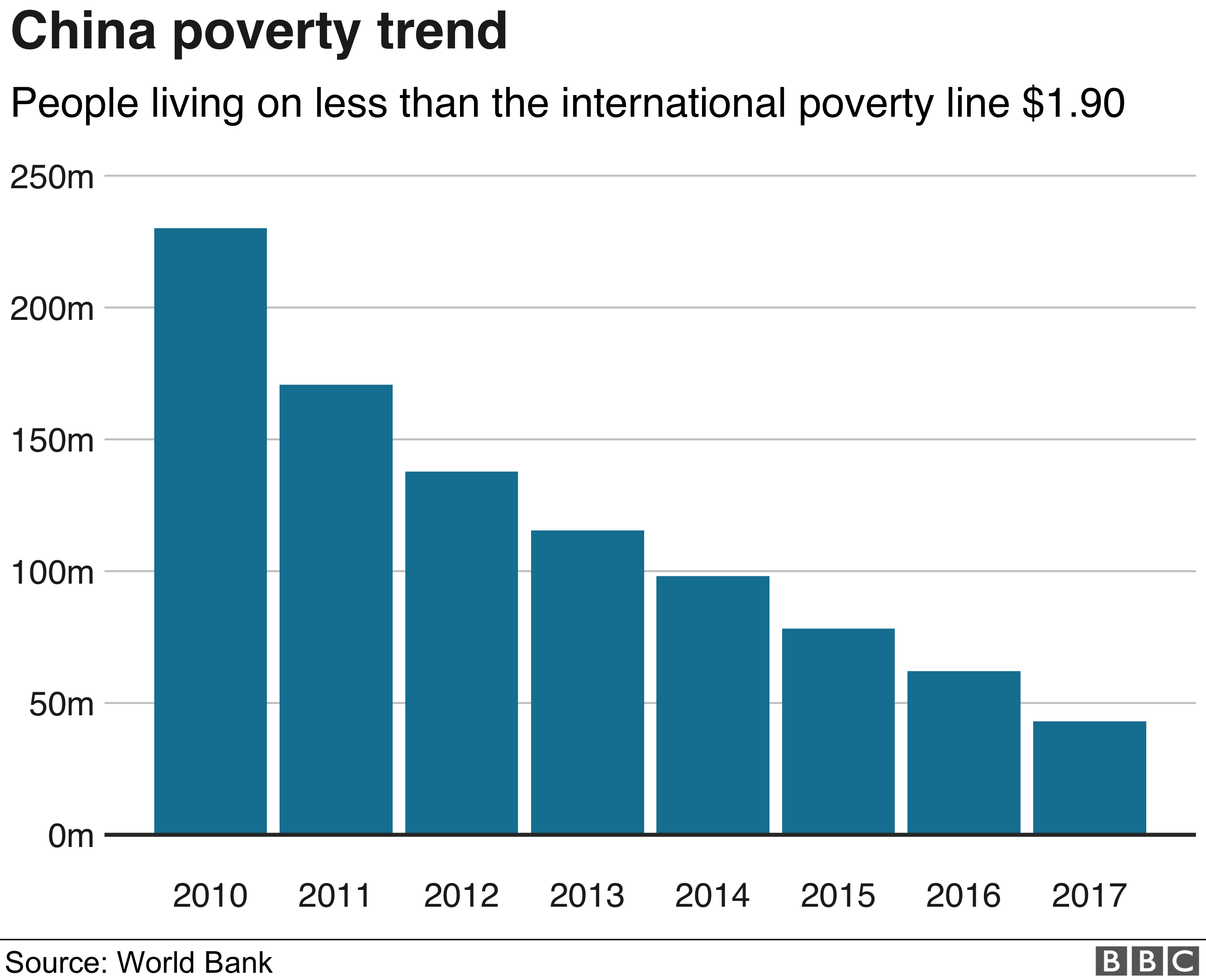
The economic reforms improved the fortunes of hundreds of millions of Chinese people.
The World Bank says more than 850 million people been lifted out of poverty, and the country is on track to eliminate absolute poverty by 2020.
At the same time, education rates have surged. Standard Chartered projects that by 2030, around 27% of China’s workforce will have a university education – that’s about the same as Germany today.
Rising inequality
Still, the fruits of economic success haven’t spread evenly across China’s population of 1.3 billion people.
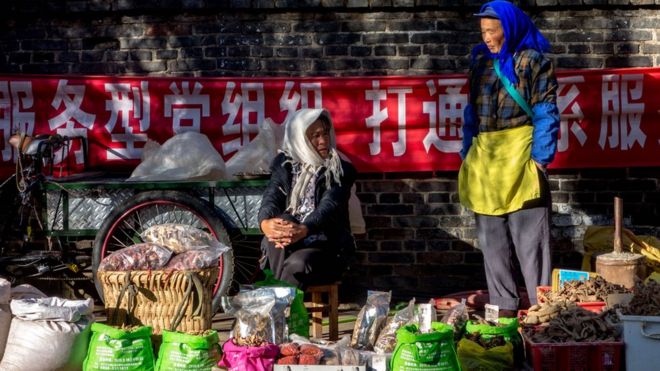
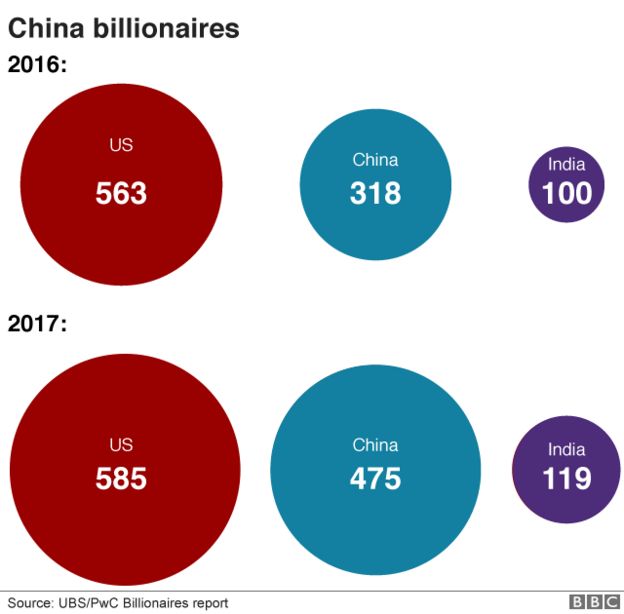
Examples of extreme wealth and a rising middle class exist alongside poor rural communities, and a low skilled, ageing workforce. Inequality has deepened, largely along rural and urban divides.
“The entire economy is not advanced, there’s huge divergences between the different parts,” Mr Mann says.
The World Bank says China’s income per person is still that of a developing country, and less than one quarter of the average of advanced economies.
China’s average annual income is nearly $10,000, according to DBS, compared to around $62,000 in the US.
Slower growth
Now, China is shifting to an era of slower growth.
For years it has pushed to wean its dependence off exports and toward consumption-led growth. New challenges have emerged including softer global demand for its goods and a long-running trade war with the US. The pressures of demographic shifts and an ageing population also cloud the country’s economic outlook.
Still, even if the rate of growth in China eases to between 5% and 6%, the country will still be the most powerful engine of world economic growth.
“At that pace China will still be 35% of global growth, which is the biggest single contributor of any country, three times more important to global growth than the US,” Mr Mann says.
The next economic frontier
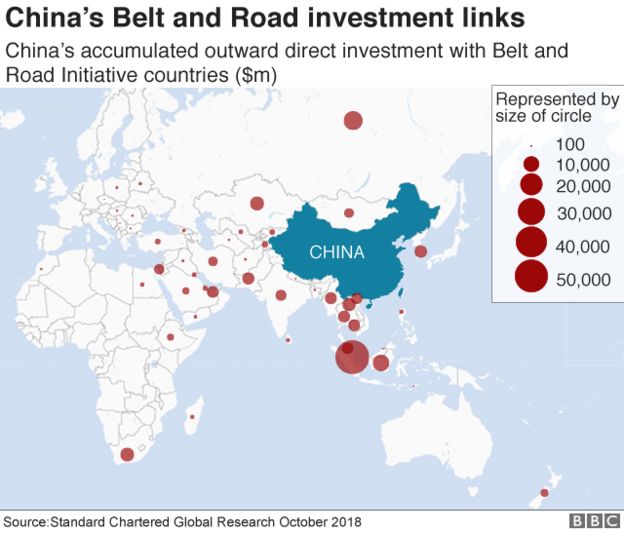
China is also carving out a new front in global economic development. The country’s next chapter in nation-building is unfolding through a wave of funding in the massive global infrastructure project, the Belt and Road Initiative.
The so-called new Silk Road aims to connect almost half the world’s populations and one-fifth of global GDP, setting up trade and investment links that stretch across the world.
Military experts say PLA modernisation brought about during Xi Jinping’s presidency will be the main focus of October 1 celebration in Beijing
It’s necessary for China to ‘show some of its muscle’ amid the trade dispute with the US, observer says
China’s land-based DF-41 intercontinental ballistic missile will be among the military hardware on show on October 1. Photo: Reuters
China plans to show off its most advanced active weapon systems at the upcoming National Day parade, which will be the biggest of the 14 such events it has held over the past seven decades.
The parade, to be held on October 1 to mark the 70th anniversary of the founding of the People’s Republic, will highlight the military modernisation – particularly in nuclear deterrence – that has taken place since President Xi Jinping came to power in late 2012, according to military experts.
The People’s Liberation Army (PLA) offered a glimpse of those weapons during rehearsals for the parade in downtown Beijing from September 14.
As part of the celebrations, Xi, who also chairs the Central Military Commission, will inspect 48 squads on the ground and more than a dozen airborne squadrons, according to a military insider involved in support services for the parade.
More than a dozen airborne squadrons will take part in the National Day parade. Photo: Kyodo
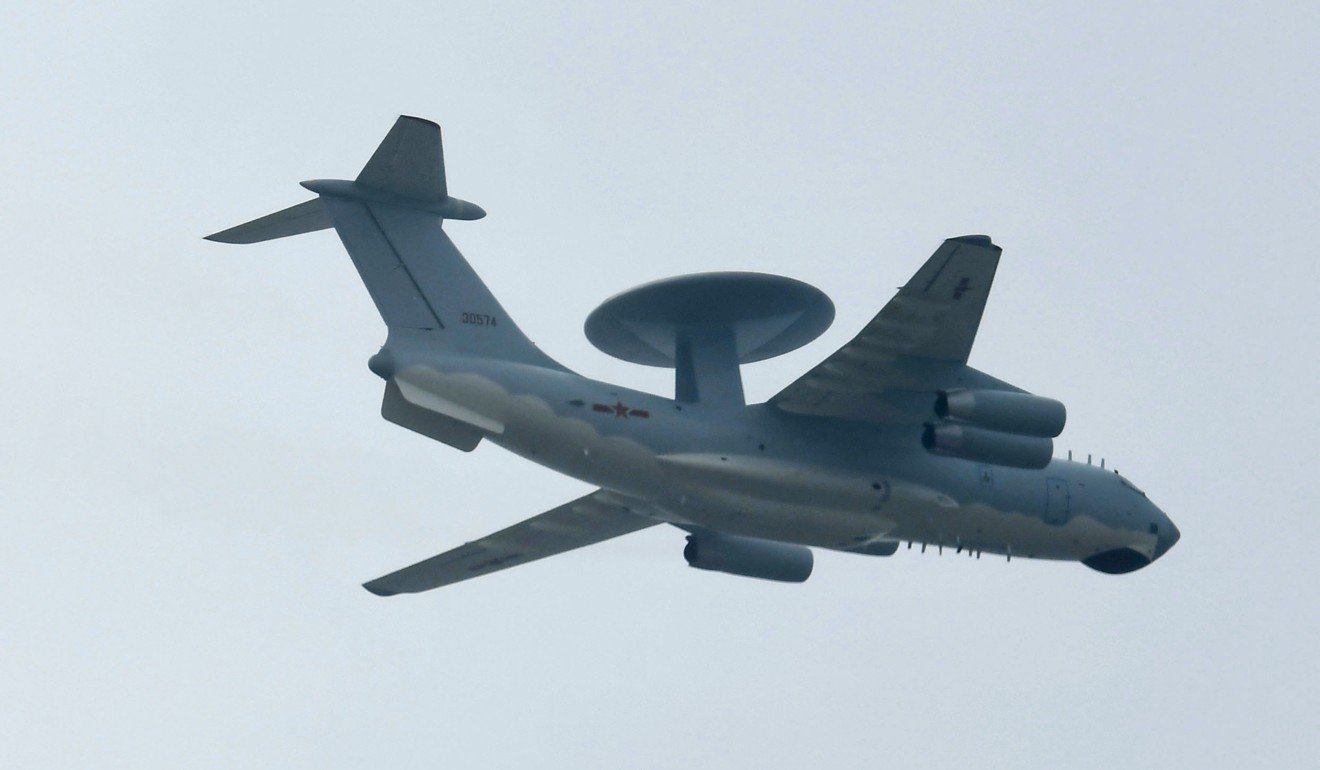
The squadrons will include the air force’s first stealth fighter, the J-20; the main active warplanes such as the J-10 and J-11B; and armed helicopters like the Z-20. However, the J-8 fighter jet would not appear this year, the source said, confirming that the first interceptor built in China has been formally retired.
“The ground march will be led by several hero forces from the five theatre commands, which is different from previous squads selected from the ground forces, air force and navy,” said the insider, who requested anonymity because of the sensitivity of the matter.
“The main goal of this year’s parade is to promote the military modernisation of the PLA under President Xi’s leadership over the past seven years, with the military overhaul being one of the key achievements.”
Thirty-three of the 48 squads would be “weapon squads”, while the 13 others would be made up of infantry troops from the five theatre commands, the source said.
National Day fireworks in Hong Kong cancelled over safety fears
As part of the PLA’s sweeping military reforms, the army’s previous seven military commands were reshaped into five theatre commands, while the four former general headquarters were dissolved and replaced by 15 small functional departments.
In September 2015, Xi announced the PLA would shed 300,000 troops, cutting its size to 2 million, a move aimed at turning the PLA into a more nimble and combat-ready fighting force on a par with international standards.
Xi also split the former Second Artillery Corps into the Rocket Force and the Strategic Support Force, with the latter backing up the military’s electronic warfare units in cyberspace and outer space.
Among the 33 weapon squads, the highlights are expected to be the PLA’s strategic nuclear missiles such as the Rocket Force’s land-based DF-41 intercontinental ballistic missile (ICBM), the DF-21D anti-ship ballistic missile, the DF-17 hypersonic missile and the sea-launched JL-2, or Big Wave-2.
Adam Ni, a researcher at Macquarie University in Australia, said that showing off different types of missiles on land and sea indicated that the PLA was improving its nuclear deterrence capabilities by perfecting a three-pronged military force structure, or the so-called nuclear triad.
The DF-17 hypersonic ballistic missile will be one of the highlights of the parade. Photo: AP
The DF-41 is capable of carrying multiple warheads and many decoys, making it harder to detect than silo-based systems and better able to survive a first strike.
Ni said the DF-41 was China’s next-generation cutting-edge weapon.
“It’s actually an advanced ICBM and has a range to hit practically anywhere in the world, including the continental United States,” Ni said.
“The DF-41 is the ultimate symbol of the destructive potential of Chinese armed forces, just as nuclear weapons are similar symbols of the US and Russia.”
The JL-2 – which has a shorter range of 7,000km (4,350 miles) and can be launched by the PLA Navy’s Type 094 submarines – is unable to hit anywhere on the American continent when launched from submarines in the South China Sea and coastal areas of China.
China tests new warships in live-fire drills near Vietnam
However, China is developing the JL-3, which has a range of about 9,000km; the upgraded version of the JL-2, with a flight test conducted in June, though it is still less than the 12,000km range of the American Trident II.
“China is stepping up its military modernisation, which includes a number of aspects; the land-based aspect is introducing more mobile and survivable missile systems,” Ni said.
“The game change will happen when China is able to hit the whole US continent with its missile submarines in Chinese coastal waters.”
In military terms, survivable refers to the ability to remain mission capable after a single engagement.
The DF-17 is a land-to-land short-range strategic missile capable of delivering both nuclear and conventional payloads. The US intelligence community has estimated that it will reach initial operational capability by 2020. But if the missile is displayed in the parade, that means it is active already.
China conducted two tests of the DF-17 in November 2017, with the first launched from the Jiuquan Space Launch Centre in Inner Mongolia.
An insider said the main goal of this year’s parade is to promote the military modernisation of the PLA. Photo: Reuters
Hong Kong-based military commentator Song Zhongping said the nuclear weapons that would go on show in the parade would all be strategic missiles designed to improve China’s deterrent capabilities.
The show comes after the PLA delivered a national defence white paper in July stressing its goal to “maintain national strategic security by deterring other countries from using or threatening to use nuclear weapons against China”.
Unlike in the past, this year’s report stated that the US and China were now competing superpowers, and that the PLA’s growing forces were developing to the point that they could challenge the US.
Zhou Chenming, a Beijing-based military observer, said it was also necessary for the PLA to “show some of its muscle” amid the ongoing trade dispute between Beijing and Washington.
“To prevent misunderstanding, most of the weapons are just strategic equipment, not tactical arms, because Beijing still doesn’t want to irritate Washington,” he said.
About 280,000 people were involved in the rehearsals for the parade and related support services, according to Xinhua.
Cheng Qiang was just 12 when a magnitude 8 tremor destroyed his village, but he never forgot the heroism of the soldiers sent to help and swore one day to join their ranks
Now a squad leader, on October 1 he will also be part of the National Day celebrations in Tiananmen Square
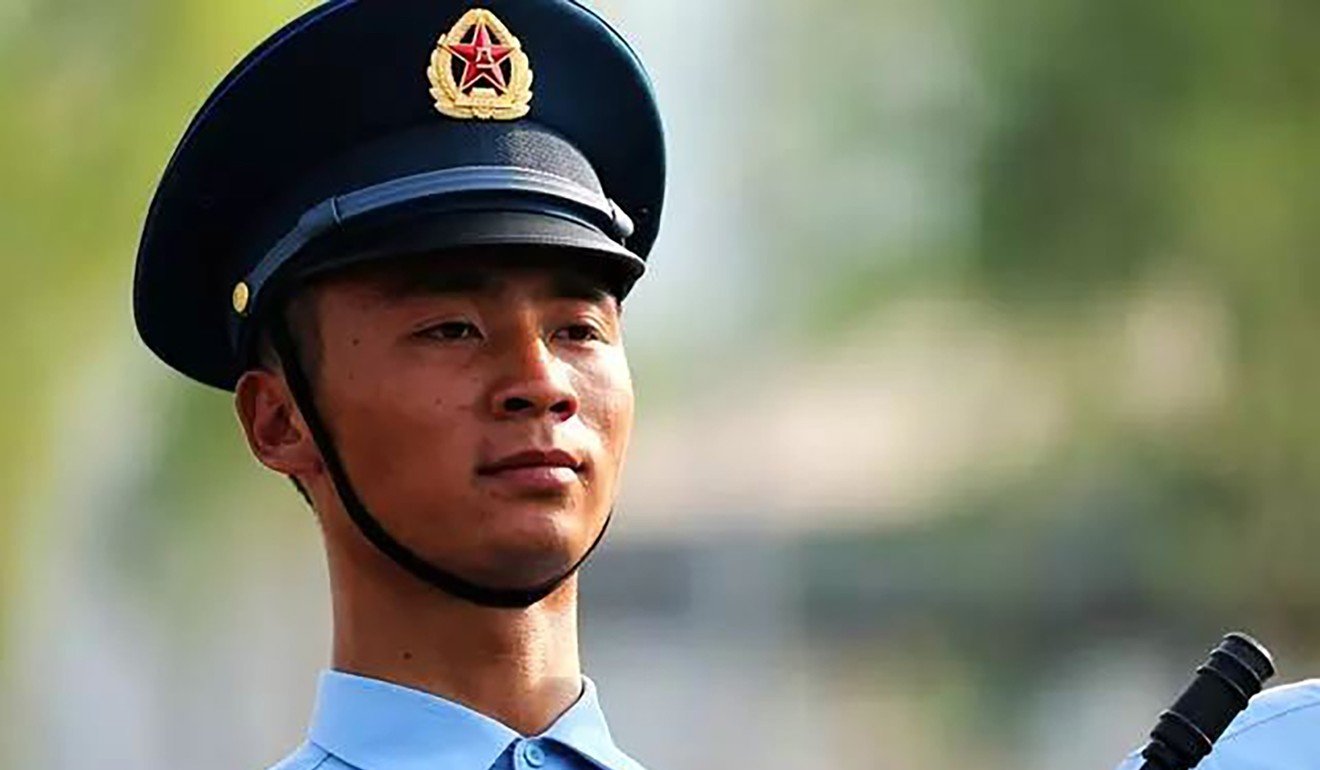
Cheng Qiang was just 12 when his home in Sichuan was hit by a massive earthquake and airborne troops were sent to help. Photo: People.cn
A young man who survived the devastating Sichuan earthquake and vowed to one day join the ranks of the soldiers who spent months rescuing people from the rubble will on Tuesday lead his very own squad of airborne troops in Tiananmen Square as part of the celebrations for the country’s 70th anniversary.
Now 23, Cheng Qiang was just 12 when on May 12, 2008 he and a group of friends played truant from school to go swimming in a local river, Xinhua reported on Thursday.
When the boys had finished their fun they returned to their village in the township of Luoshui to find their school and many other buildings had been razed to the ground. The death toll from the magnitude 8 quake would eventually rise to 87,000, with 370,000 people injured.
Cheng says he is ready to “continue the glory of the airborne troops” at Tuesday’s parade. Photo: Thepaper.cn
In the days and weeks that followed the devastation, tens of thousands of people from around China and the world descended on towns and villages across Sichuan to help with the rescue effort.
But the ones who impressed Cheng the most were the soldiers from the People’s Liberation Army (PLA) with the word “Airborne” printed on the helmets.
“Sometimes they had to remove the debris with their bare hands which were already covered in blood,” he said.
“But they just carried on and eventually pulled dozens of people out of the rubble. I knew then that I wanted to be one of them.”
Cheng said that after the quake having the troops in his village made him feel safe. Photo: People.cn
Having the troops in his village made Cheng feel safe, he said, and he spent his days following them around and doing what he could to help.
Three months later, when the soldiers had completed their work and were preparing to pull out, Cheng said he was determined to show his new heroes just how grateful he was to them.
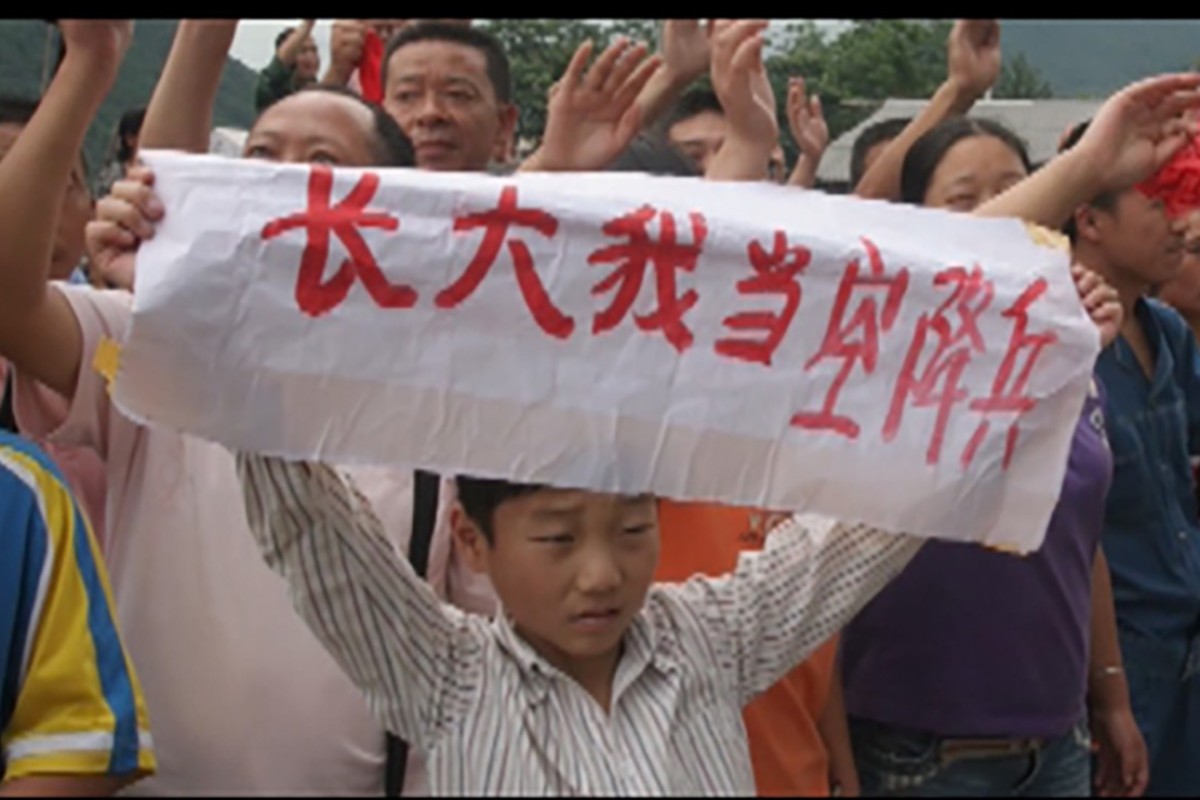
As the villagers gathered at the roadside to bid farewell to the men who had become their saviours, the young boy held up a handwritten sign. It said simply: “I want to be an airborne soldier when I grow up.”
The moment was captured on camera by a press photographer, and the image soon became a symbol of the gratitude felt by the people who had seen their lives and communities shattered but knew they had not been forsaken.
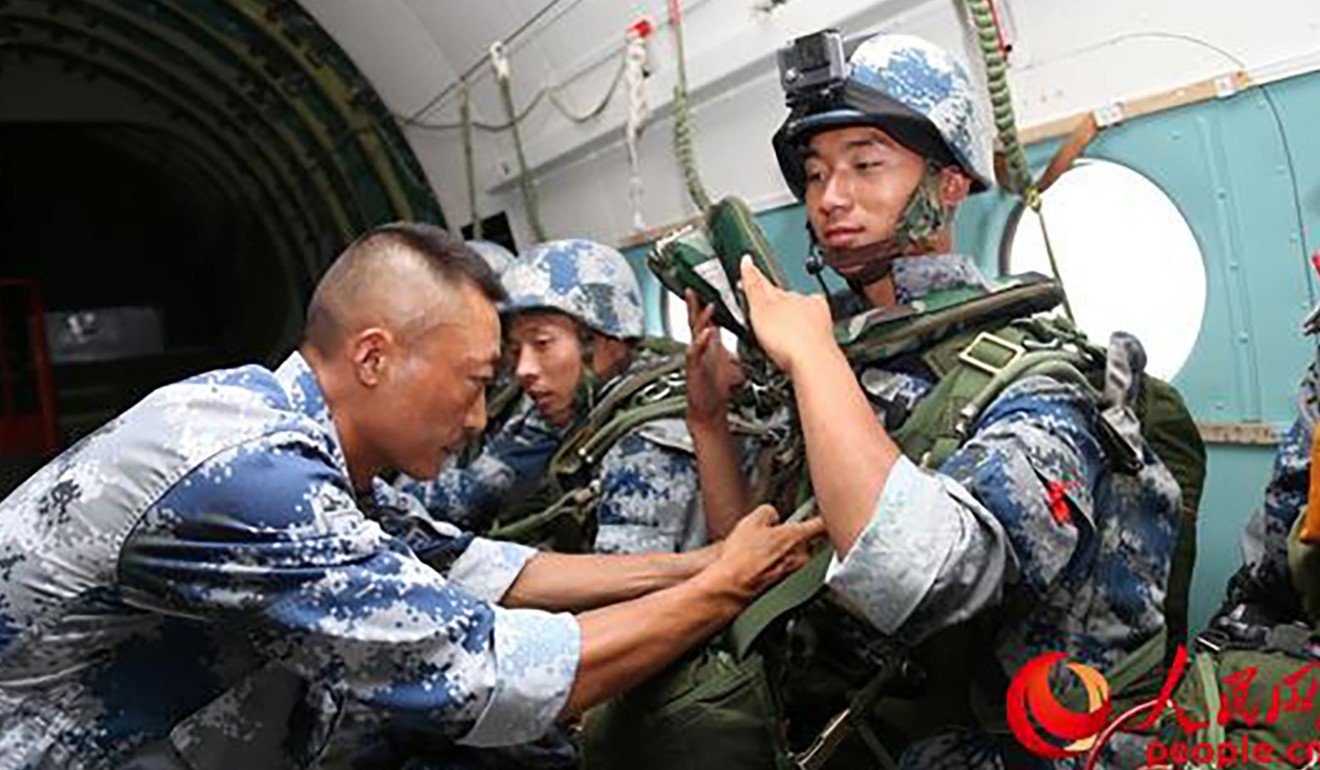
Cheng said he felt dizzy when he first jumped out of a plane. Photo: People.cn
Five years after the troops rolled out, Cheng was preparing to go to college when he heard the PLA was recruiting and that there were places available with the airborne division.
The teenager did not need a second invitation, and after securing a place on a training course and successfully completing it he joined the ranks of his heroes in 2013.
Not that everything was plain sailing, however.
“When I first jumped out of a plane I felt very dizzy and didn’t really know what was going on,” he said.
Thankfully Cheng managed to overcome his vertigo and went on to become a squad leader.
Tens of thousands of troops will take part in China’s National Day parade on October 1. Photo: Thepaper.cn
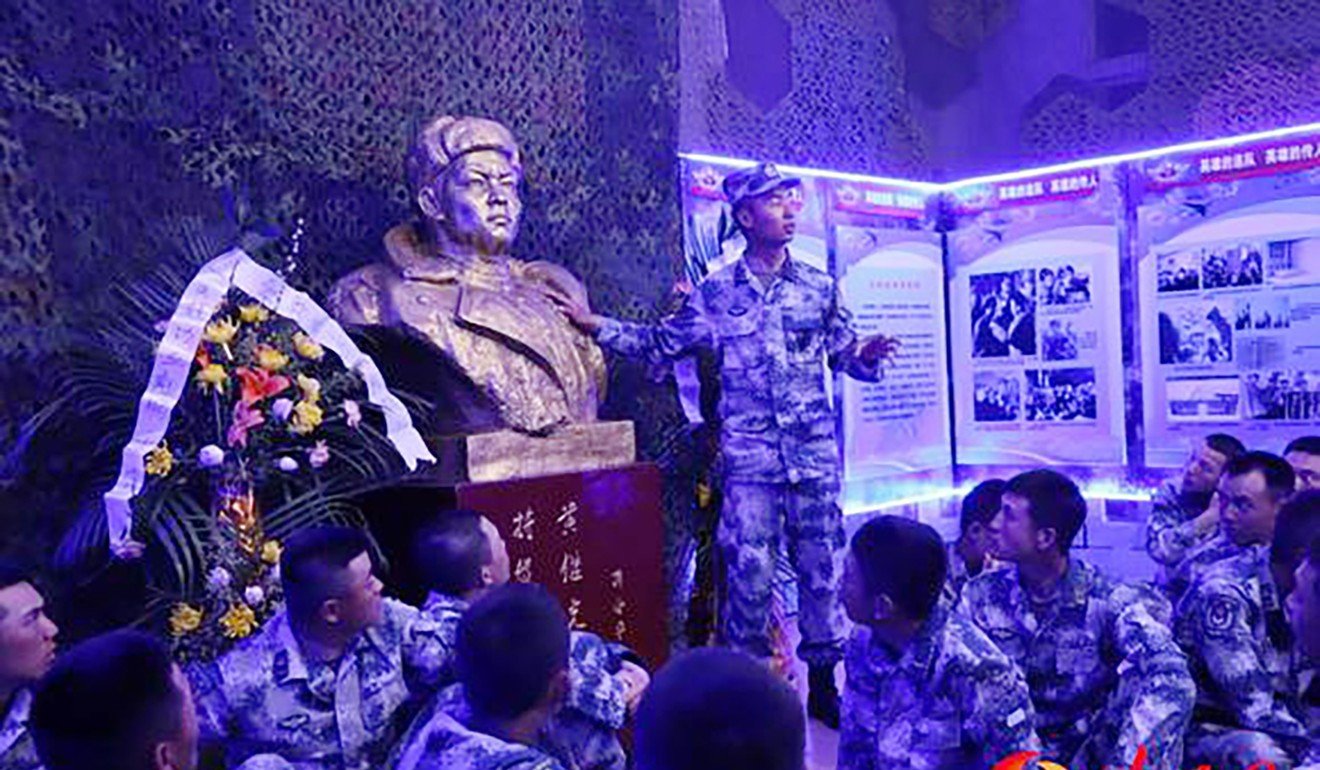
When the preparations were being made for next week’s anniversary celebrations in Beijing, Cheng said he and his squad were chosen to take part.
He said that during the rehearsals for the grand parade, he was repeatedly reprimanded by his trainer for not keeping his knees close enough together, for lifting his feet too high and for letting his gun slip off shoulder.
But he was determined to get it right, and after weeks of hard work and 11 years on from the tragedy that devastated his world, he said he was now ready to put his best foot forward.
“The nightmare of earthquake has long gone,” he said. “I am here to continue the glory of the airborne troops. I am ready for inspection.”
Military experts say PLA modernisation brought about during Xi Jinping’s presidency will be the main focus of October 1 celebration in Beijing
It’s necessary for China to ‘show some of its muscle’ amid the trade dispute with the US, observer says
China’s land-based DF-41 intercontinental ballistic missile will be among the military hardware on show on October 1. Photo: Reuters
China plans to show off its most advanced active weapon systems at the upcoming National Day parade, which will be the biggest of the 14 such events it has held over the past seven decades.
The parade, to be held on October 1 to mark the 70th anniversary of the founding of the People’s Republic, will highlight the military modernisation – particularly in nuclear deterrence – that has taken place since President Xi Jinping came to power in late 2012, according to military experts.
The People’s Liberation Army (PLA) offered a glimpse of those weapons during rehearsals for the parade in downtown Beijing from September 14.
As part of the celebrations, Xi, who also chairs the Central Military Commission, will inspect 48 squads on the ground and more than a dozen airborne squadrons, according to a military insider involved in support services for the parade.
More than a dozen airborne squadrons will take part in the National Day parade. Photo: Kyodo
The squadrons will include the air force’s first stealth fighter, the J-20; the main active warplanes such as the J-10 and J-11B; and armed helicopters like the Z-20. However, the J-8 fighter jet would not appear this year, the source said, confirming that the first interceptor built in China has been formally retired.
“The ground march will be led by several hero forces from the five theatre commands, which is different from previous squads selected from the ground forces, air force and navy,” said the insider, who requested anonymity because of the sensitivity of the matter.
“The main goal of this year’s parade is to promote the military modernisation of the PLA under President Xi’s leadership over the past seven years, with the military overhaul being one of the key achievements.”
Thirty-three of the 48 squads would be “weapon squads”, while the 13 others would be made up of infantry troops from the five theatre commands, the source said.
National Day fireworks in Hong Kong cancelled over safety fears
As part of the PLA’s sweeping military reforms, the army’s previous seven military commands were reshaped into five theatre commands, while the four former general headquarters were dissolved and replaced by 15 small functional departments.
In September 2015, Xi announced the PLA would shed 300,000 troops, cutting its size to 2 million, a move aimed at turning the PLA into a more nimble and combat-ready fighting force on a par with international standards.
Xi also split the former Second Artillery Corps into the Rocket Force and the Strategic Support Force, with the latter backing up the military’s electronic warfare units in cyberspace and outer space.
Among the 33 weapon squads, the highlights are expected to be the PLA’s strategic nuclear missiles such as the Rocket Force’s land-based DF-41 intercontinental ballistic missile (ICBM), the DF-21D anti-ship ballistic missile, the DF-17 hypersonic missile and the sea-launched JL-2, or Big Wave-2.
Adam Ni, a researcher at Macquarie University in Australia, said that showing off different types of missiles on land and sea indicated that the PLA was improving its nuclear deterrence capabilities by perfecting a three-pronged military force structure, or the so-called nuclear triad.
The DF-17 hypersonic ballistic missile will be one of the highlights of the parade. Photo: AP
The DF-41 is capable of carrying multiple warheads and many decoys, making it harder to detect than silo-based systems and better able to survive a first strike.
Ni said the DF-41 was China’s next-generation cutting-edge weapon.
“It’s actually an advanced ICBM and has a range to hit practically anywhere in the world, including the continental United States,” Ni said.
“The DF-41 is the ultimate symbol of the destructive potential of Chinese armed forces, just as nuclear weapons are similar symbols of the US and Russia.”
The JL-2 – which has a shorter range of 7,000km (4,350 miles) and can be launched by the PLA Navy’s Type 094 submarines – is unable to hit anywhere on the American continent when launched from submarines in the South China Sea and coastal areas of China.
China tests new warships in live-fire drills near Vietnam
However, China is developing the JL-3, which has a range of about 9,000km; the upgraded version of the JL-2, with a flight test conducted in June, though it is still less than the 12,000km range of the American Trident II.
“China is stepping up its military modernisation, which includes a number of aspects; the land-based aspect is introducing more mobile and survivable missile systems,” Ni said.
“The game change will happen when China is able to hit the whole US continent with its missile submarines in Chinese coastal waters.”
In military terms, survivable refers to the ability to remain mission capable after a single engagement.
The DF-17 is a land-to-land short-range strategic missile capable of delivering both nuclear and conventional payloads. The US intelligence community has estimated that it will reach initial operational capability by 2020. But if the missile is displayed in the parade, that means it is active already.
China conducted two tests of the DF-17 in November 2017, with the first launched from the Jiuquan Space Launch Centre in Inner Mongolia.
An insider said the main goal of this year’s parade is to promote the military modernisation of the PLA. Photo: Reuters
Hong Kong-based military commentator Song Zhongping said the nuclear weapons that would go on show in the parade would all be strategic missiles designed to improve China’s deterrent capabilities.
The show comes after the PLA delivered a national defence white paper in July stressing its goal to “maintain national strategic security by deterring other countries from using or threatening to use nuclear weapons against China”.
Unlike in the past, this year’s report stated that the US and China were now competing superpowers, and that the PLA’s growing forces were developing to the point that they could challenge the US.
Zhou Chenming, a Beijing-based military observer, said it was also necessary for the PLA to “show some of its muscle” amid the ongoing trade dispute between Beijing and Washington.
“To prevent misunderstanding, most of the weapons are just strategic equipment, not tactical arms, because Beijing still doesn’t want to irritate Washington,” he said.
About 280,000 people were involved in the rehearsals for the parade and related support services, according to Xinhua.




 CHINDIA ALERT: You'll be living in their world, very soon