Chindia Alert: You’ll be Living in their World Very Soon
aims to alert you to the threats and opportunities that China and India present. China and India require serious attention; case of ‘hidden dragon and crouching tiger’.
Without this attention, governments, businesses and, indeed, individuals may find themselves at a great disadvantage sooner rather than later.
The POSTs (front webpages) are mainly 'cuttings' from reliable sources, updated continuously.
The PAGEs (see Tabs, above) attempt to make the information more meaningful by putting some structure to the information we have researched and assembled since 2006.
Footage shows aircraft manoeuvring strangely before emitting bright light and flying away at great speed
Clips of unexplained ‘aerial phenomena’ were recorded by pilots between 2004 and 2015
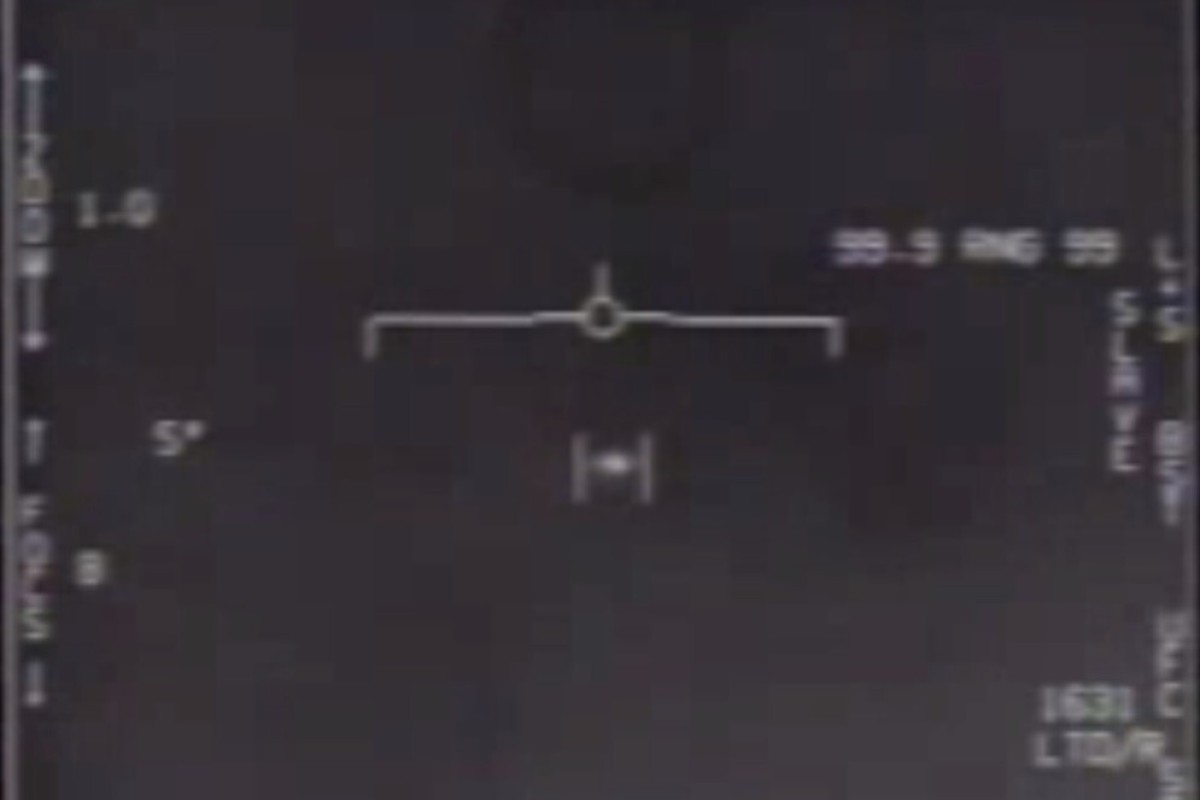
A screen grab from one of the UFO videos released by the Pentagon on Monday. Photo: US Department of Defence
The US Department of Defence has been watching, and recording, the skies.
The Pentagon released three videos on Monday that depict unexplained “unidentified aerial phenomena” which were recorded by pilots between 2004 and 2015.
In each of the reconnaissance videos, a flying aircraft manoeuvres strangely before emitting a bright light and flying away at great speed.
The Pentagon released the videos “to clear up any misconceptions by the public on whether or not the footage that has been circulating was real, or whether or not there is more to the videos”, spokesperson Sue Gough said. “The aerial phenomena observed in the videos remain characterised as ‘unidentified’.”
The Navy originally verified the videos’ existence in 2019 after they were leaked by To the Stars Academy of Arts and Sciences, a UFO research group started by Blink-182 guitarist Tom DeLonge.
“After a thorough review, the department has determined that the authorised release of these unclassified videos does not reveal any sensitive capabilities or systems, and does not impinge on any subsequent investigations of military air space incursions by unidentified aerial phenomena,” Gough said.
The Navy has previously said that releasing information from top-secret briefings about UFOs would cause “exceptionally grave damage” to US national security.
According to the Navy, two of the videos were taken during training missions over military airspace.
“Any incursion into our training ranges by any aircraft or phenomena, identified or not identified, is problematic from both a safety and security concern,” Navy spokesperson Joseph Gradisher said in September 2019.
Carrier targets return of daily services to major Asian cities and more frequent long-haul services
Airline to monitor global situation and adjustments may be made ‘as necessary’
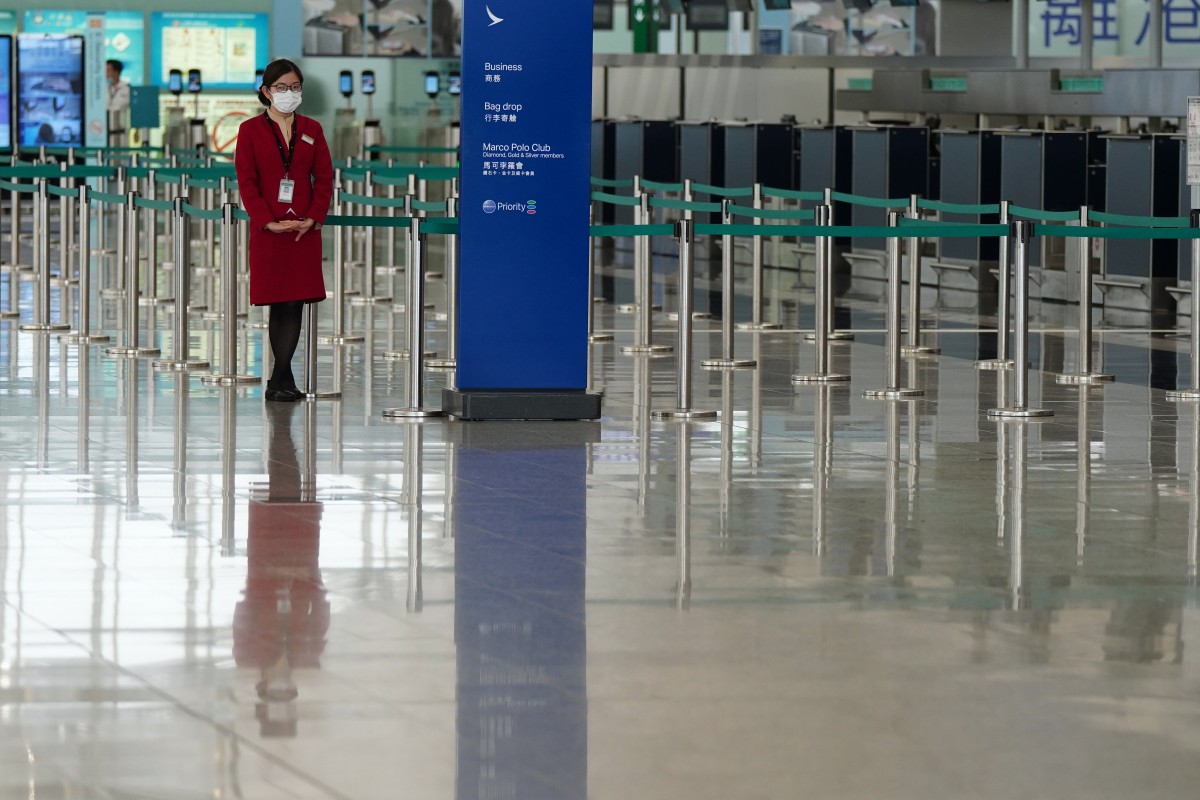
A Cathay Pacific employee stands near the check-in desks at a virtually deserted Hong Kong International Airport. Photo: Sam Tsang
Cathay Pacific Airways has signalled its intent to start reversing its near-total grounding of aircraft because of the coronavirus pandemic, and plans to start increasing its number of passenger flights in the last week of June.
The airline said it hoped to add more long-haul destinations, make flights more frequent, and reinstate some major Asian cities to its daily schedule for the first time in several months, “subject to government travel restrictions”.
Cathay scaled its operations back to a skeleton schedule of 3 per cent of services in early April, and that was extended until June 20. The newly announced increases would take that up to 5 per cent.
Tracking the massive impact of the Covid-19 pandemic on the world’s airline industry in early 2020 Singapore Airlines, another of Asia’s major carriers, said last week it would maintain a 96 per cent reduction in flights until the end of June.
Cathay, which has 236 aircraft, currently operates long-haul flights to London Heathrow, Los Angeles, Vancouver and Sydney twice a week, but will increase that to five times a week.
On top of that, Amsterdam, Frankfurt, San Francisco and Melbourne are among the long-haul destinations set to return three times a week.
With regional routes currently operating three times a week, including Tokyo Narita, Taipei, Beijing and Singapore, Asian routes will increase to a daily service. Osaka and Seoul would also return to the network, too.
“We will continue to monitor the developing situation and further adjustments may be made as necessary,” the airline said.
Coronavirus: ban on non-residents leaves Hong Kong airport virtually deserted
Earlier this month, Cathay’s budget unit HK Express extended its total grounding until June 18, having been on hiatus since March 23.
Meanwhile, Boeing has added to warnings of a very slow recovery in air travel, with Dave Calhoun, its CEO, saying demand may not return to 2019 levels for two to three years.
Cathay Pacific’s daily passenger volume has collapsed from regular previous peaks of 100,000 to less than 1,000 in April. Over the past two months, the company has been running more than 250 extra pairs of cargo-only passenger flights to maintain air freight capacity, much of which is accounted for by passenger services.
In a bid to cut costs, most of the Cathay Pacific Group’s 34,200 staff have taken three weeks of unpaid leave. Also, 433 cabin crew in the US and Canada were told they would be laid off, while about 200 pilots in the UK, Australia have been furloughed.
The International Air Transport Association, which revised down pandemic-related revenue losses for the global sector to US$314 billion (HK$2.4 trillion) two weeks ago, said last week the Hong Kong aviation market would take a US$7.5 billion hit this year, a 27 per cent increase on the previous estimate. That equates to a 59 per cent decline in air travel demand, or a loss of almost 31 million passengers, in 2020.
BOCOM International, a financial services company, forecast in a report on Monday that the city’s aviation sector would lose HK$65.2 billion in revenue in 2020, yet Cathay Pacific could emerge as a winner if it survived largely unscathed, given the weakness of rivals at home and in the region plus its dominant position in Hong Kong.
“Hong Kong aviation is at the most critical juncture in its history. Though calamitous, Covid-19 is set to reshape Hong Kong’s aviation industry for the years, possibly decades, to come,” said transportation analyst Luya You.
“Covid-19’s sweeping blows now offer a blank slate for remaining players to regain lost leadership or gain new markets. If [Cathay Pacific] can survive intact from Covid, the carrier could enjoy winner-takes-all growth trajectory in the years following [2020].”
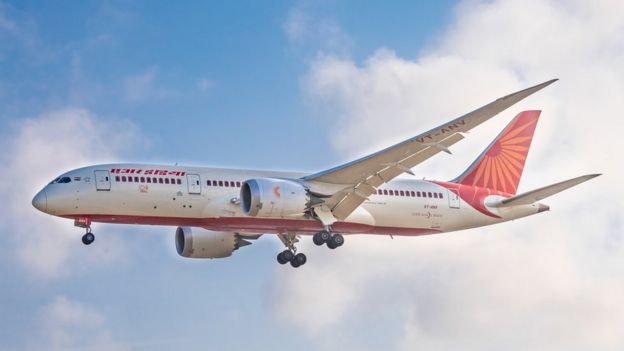
Image copyright GETTY IMAGESImage caption Air India has flown a number of rescue missions
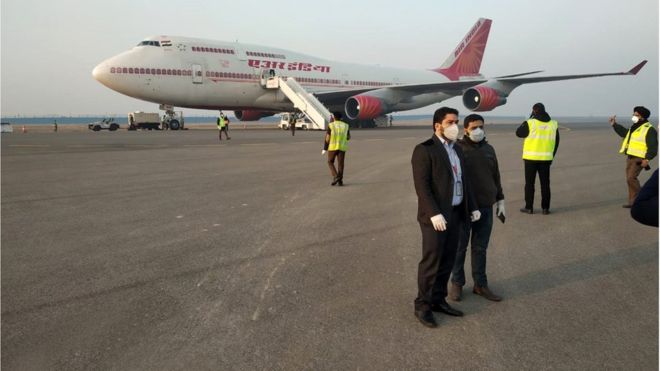
India’s national carrier Air India has been praised for flying a number of flights to rescue Indians stranded in coronavirus-affected countries. Now, a group of pilots have alleged their safety was compromised – a charge the airline denies.
Air India’s fleet has long been used by the government to help Indians in crisis. This has included everything from delivering relief materials during natural calamities to airlifting citizens from Middle Eastern countries during the 2011 Arab Spring.
But this time, as Covid-19 sweeps across the world, crew members have made several allegations about serious shortcomings with regards to ensuring the safety of crew and passengers on recent rescue flights.
In a letter seen by the BBC, the Executive Pilots Association, a body that represents senior long-haul pilots of the airline, says they have been given “flimsy” pieces of Personal Protective Equipment (PPE) that “tear and disintegrate easily on rescue flights”.
The letter, which has been sent to the airline and the aviation ministry, adds that “disinfection processes [for aircraft] are short of international industry best practices”.
Image copyright GETTY IMAGESImage caption Air India is India’s largest airline
“These inadequacies compound the chances of viral exposure and equipment contamination and may even lead to community transmissions of Covid-19 within crew members, passengers and the public at large,” the letter states.
The Indian Pilots’ Guild, which also represents Air India’s long-haul pilots, has written to the ministry citing similar concerns. The BBC has seen this letter as well.
A senior pilot, who did not wish to be identified, told the BBC it is not that the crew “doesn’t want to work in these testing times for the country”.
“All we are asking is that proper safety procedures should be followed. If we don’t have the right PPE and disinfection processes, we are risking the safety of everybody on the plane, our family, and residents of the buildings where we live,” he said.
“We are being compared to soldiers and that is very humbling. But you have to give the right gear to your soldiers.”
An Air India spokesperson acknowledged the letters and said: “Air India is proud of its crew.”
“Our crew has shown tremendous strength, integrity and dedication. All possible measures have been taken towards their health and safety. Best available PPE are procured for our crew,” he told the BBC.
‘Quarantine violations’
The pilot also added that in some cases the norm of following 14-day quarantine period for everybody returning from abroad was not applied to crew members.
The BBC is aware of at least one case where a pilot who returned from a Covid-19-affected country was asked to fly again within seven days.
The spokesperson denied these allegations, saying that “all crew having done international flights have been home quarantined”.
“They have been advised to self-isolate should they develop any symptoms and report immediately. We are following all government quarantine guidelines,” he added.
Image copyright GETTY IMAGESImage caption Air India is due to take stranded Europeans from India to Germany
The two letters add that the crew do not have any specific Covid-19-related insurance policies and don’t have medical teams to examine them when they return from international flights.
“Medical teams all over India are now being covered under a government scheme, although surprisingly air crew are not,” the letters say.
The pilot added that “we are not comparing ourselves to medical staff – they really are the frontline soldiers”.
“But we are also risking our lives, and an insurance will just give us some peace of mind,” he said.
The association has also highlighted the issue of unpaid allowances to the crew.
“Our flying-related allowances, comprising 70% of our total emoluments, remain unpaid since January 2020. This is grossly unfair,” the letter says.
The pilot added that this went against Prime Minister Narendra Modi’s request to employers not to withhold or cut wages in this time of crisis.
“I will repeat again that we do not mind serving the nation, but we need our pay to be protected. We need to be able to look after our families,” he said.
The airline spokesperson said that “all salaries have been paid and efforts are on to clear some pending dues”, but pilots say the withheld allowances are around 70% of their total earnings.
Air India has been saddled with massive debts and several efforts to sell it have failed.
However despite this, the airline is in the midst of planning a massive operation to evacuate foreigners in India at great cost.
The passengers will be collected from several major Indian cities and flown to Frankfurt, but Air India will not be bringing back any Indian citizens who may still be stuck in Europe.
The pilot said “it’s commendable that Air India is helping those in need” but asked why Indians could not be on the return flights as the planes would be flying home empty.
“I want to stress that we will not stop flying rescue and supply missions at any cost. We just want to be heard,” another pilot told the BBC.
“Otherwise it feels like we are alone in this battle when the need is for all of us to work together and look after each other.”
HONG KONG (Reuters) – Staff at Cathay Pacific Airways, Hong Kong’s flagship airline, are on edge.
A Cathay Pacific Boeing 777-300ER plane lands at Hong Kong airport after it reopened following clashes between police and protesters, in Hong Kong, China August 14, 2019. REUTERS/Thomas Peter
Their city has been gripped by months of anti-government protests, and their company is feeling the wrath of China’s aviation regulator after some staff members took part or expressed support.
Since an Aug.9 directive by the Civil Aviation Authority of China (CAAC) that called for the suspension of staff who supported or participated in the demonstrations, the regulator has rejected some entire crew lists without explanation, two sources with knowledge of the matter told Reuters.
The rejections have forced Cathay to scramble, pulling pilots and flight attendants off standby while it investigates social media accounts in an effort to determine which crew member has been deemed a security threat, one of the sources said.
Other disruptions have come in the form of a huge jump in the number of plane inspections upon landing, four pilots said.
The flexing of regulatory muscle has contributed to a climate of fear within the airline, with employees telling Reuters they felt Cathay’s longer-term future as an independent company was highly uncertain and subject to Beijing’s whims.
The CAAC’s labelling of employees who support the protest as a security risk and its demand that they be suspended from flying over mainland airspace has been a de facto career killer.
Around three quarters of Cathay flights use mainland airspace and due to the directive, 30 rank-and-file staff, including eight pilots and 18 flight attendants, have been fired or resigned under pressure, according to the Hong Kong Cabin Crew Federation.
Cathay CEO Rupert Hogg and his top deputy also resigned in August amid the mounting regulatory scrutiny on the 73-year-old airline, one of the region’s most high-profile brands that draws on Hong Kong’s British heritage.
“Things changed very quickly,” said Jeremy Tam, a pro-democracy lawmaker and pilot who resigned from the airline after the CAAC directive, likening the atmosphere to a political trial. “The threat is huge and it’s almost like zero to 100 in two seconds.”
Reuters talked to 14 current and former employees for this article. Nearly all declined to be identified for fear of being fired or due to the sensitivity of the matter.
The CAAC did not respond Reuters requests for comment on the rejections of crew lists or the increase in plane checks.Cathay said in a statement it must comply with all regulatory requirements. “Quite simply, this is our licence to operate; there is no ground for compromise,” it said.
The airline declined to comment on the number of employee departures, but said any terminations took into account factors such as a person’s ability to perform their role.
DEMERIT SYSTEM
Aviation regulators around the world conduct occasional plane inspections at airports to ensure an airline is in compliance with safety regulations.
But after the CAAC’s Aug. 9 directive, the once-infrequent inspections occurred almost daily and included the new and unusual step of checking phones owned by crew for anti-China photos and messages, the pilots said, adding that this had led to flight delays.
The step-up in checks has increased the likelihood of regulators finding minor issues to write up, which pilots said had included dirt on the plane’s exterior and scratches on a fire extinguisher.
Infractions can have outsized consequences under the CAAC’s strict demerit points system, they said, noting the regulator could force Cathay to reduce its number of flights, cut destinations or in a worst-case scenario, revoke the airline’s right to fly to mainland China.
Management has urged staff to do their utmost to avoid infractions.
“It is nothing less than the survival of the airline at stake,” said a senior employee. “Management have made that abundantly clear at meetings.”
Executives are particularly sensitive after seven incidents outside mainland China in the past two months in which pre-flight checks found emergency oxygen bottles for crew were depleted.
The CAAC is more public than many regulatory peers about disclosing safety violations, warnings and punishments.
In 2017, Emirates was banned from expanding its operations for six months following two safety incidents, while flag carrier Air China Ltd was ordered last year to cut Boeing Co 737 flights by 10% after an emergency descent linked to a pilot smoking an e-cigarette in the cockpit.
Cathay declined to provide information on its points under the CAAC system but said it wanted to emphasise that there had been no impact on its flight services into mainland China.
The pilots said the high frequency of airplane checks, which one described as “very intimidatory”, was starting to recede.
A THOUSAND CUTS
Employees are also feeling pressure from other regulatory bodies.
Last week, ahead of China’s National Day on Oct.1, immigration officers at some mainland airports requested photos of crew with the Chinese flag, said a pilot at regional arm Cathay Dragon who flies to the mainland regularly.
He said to his knowledge, most pilots – many of whom are expats from Western countries – had refused but Hong Kong cabin crew were “too nervous to say no” given the scrutiny on their actions by the company and the Chinese government.
“Everyone is walking on eggshells in China,” the pilot said.
Cathay did not respond to a request for comment, while China’s Ministry of Public Security, which oversees immigration, did not respond to a request for comment during a week of public holidays.
There has been no let-up in the widespread, sometimes violent, unrest that has beset Hong Kong. Triggered by a now-withdrawn extradition bill, it has morphed into an outpouring of opposition to the former British colony’s Beijing-backed government.
The crisis has also meant a sharp drop in travel demand to Hong Kong, putting more pressure on Cathay.
Cathay’s overall passenger numbers were down 11.3% in August. Flights at Cathay Dragon, which does most of Cathay’s mainland flying, were on average 60-65% full in September, down from the usual 80%, according to estimates from two pilots.
The pilots said while the sharp drop in demand was in some ways similar in scale to that weathered by Cathay during the SARS epidemic and the global financial crisis, there were key differences that felt more threatening to the company’s future.
Some state-controlled firms such as China CITIC Bank International and Huarong International have told employees to avoid flying with Cathay, and it has been attacked by Chinese state news organisations as well as by many mainland consumers on social media.
CAAC’s Aug.9 statement which called staff who supported the protests a security risk has also put Cathay’s reputation as one of the world’s safest airlines under a cloud it does not deserve, employees said.
Many acknowledged the new management team, which oversees around 33,000 employees, has few palatable options in dealing with the situation given the sway Beijing holds over the airline’s operations.
But they lamented the loss of freedom of speech and sense of job security, saying employees are afraid to speak about anything even vaguely political or voice support for protests on social media for fear of being reported by colleagues under a whistleblower policy.
“It has become a Hong Kong company with mainland employment terms,” a pilot at Cathay Dragon said. “The risk is death by a thousand cuts.”
Schoolboy learned to taxi aircraft by watching repair crews
Stunt won him admiration of pilots and prospect of learning to fly
A Chinese teenager’s efforts to fly a plane ended with a costly crash but might have set him on the path to becoming a pilot. Photo: Weibo
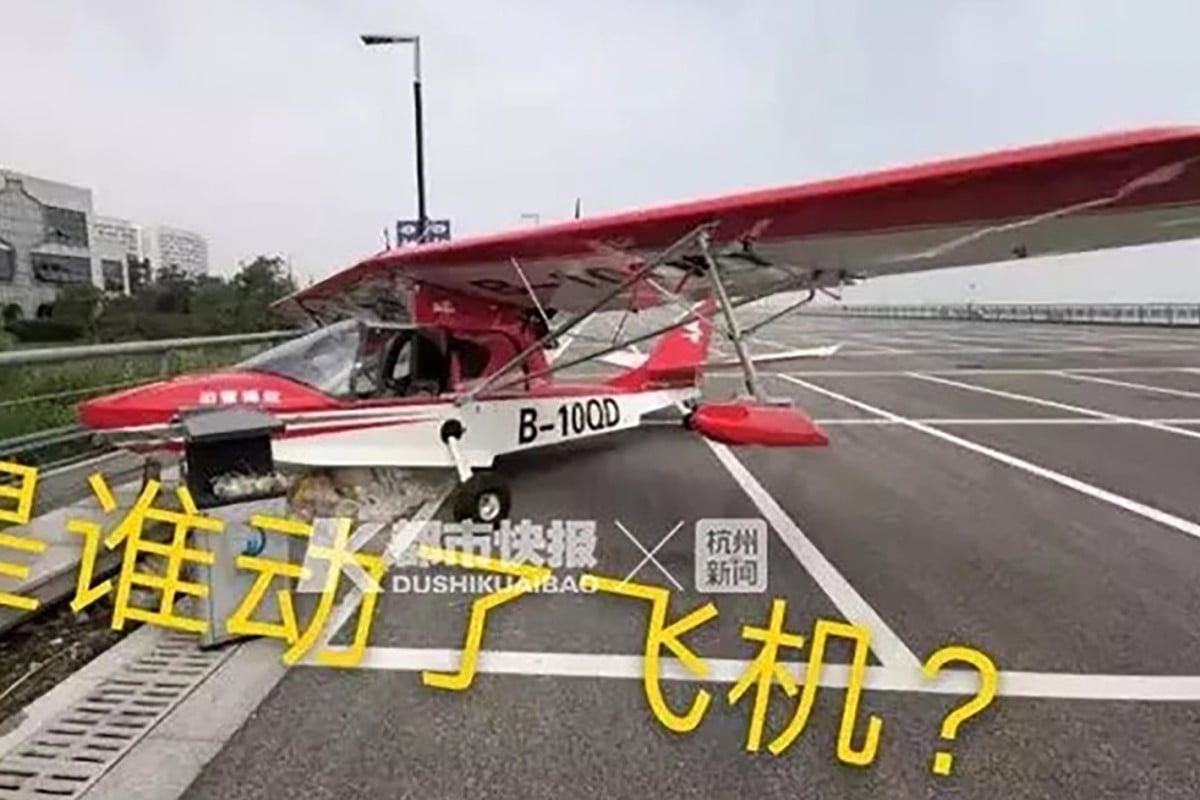
A Chinese teenager who crashed a seaplane into a railing at a lakeside car park in eastern Zhejiang province may have pranked his way into a career as a pilot.
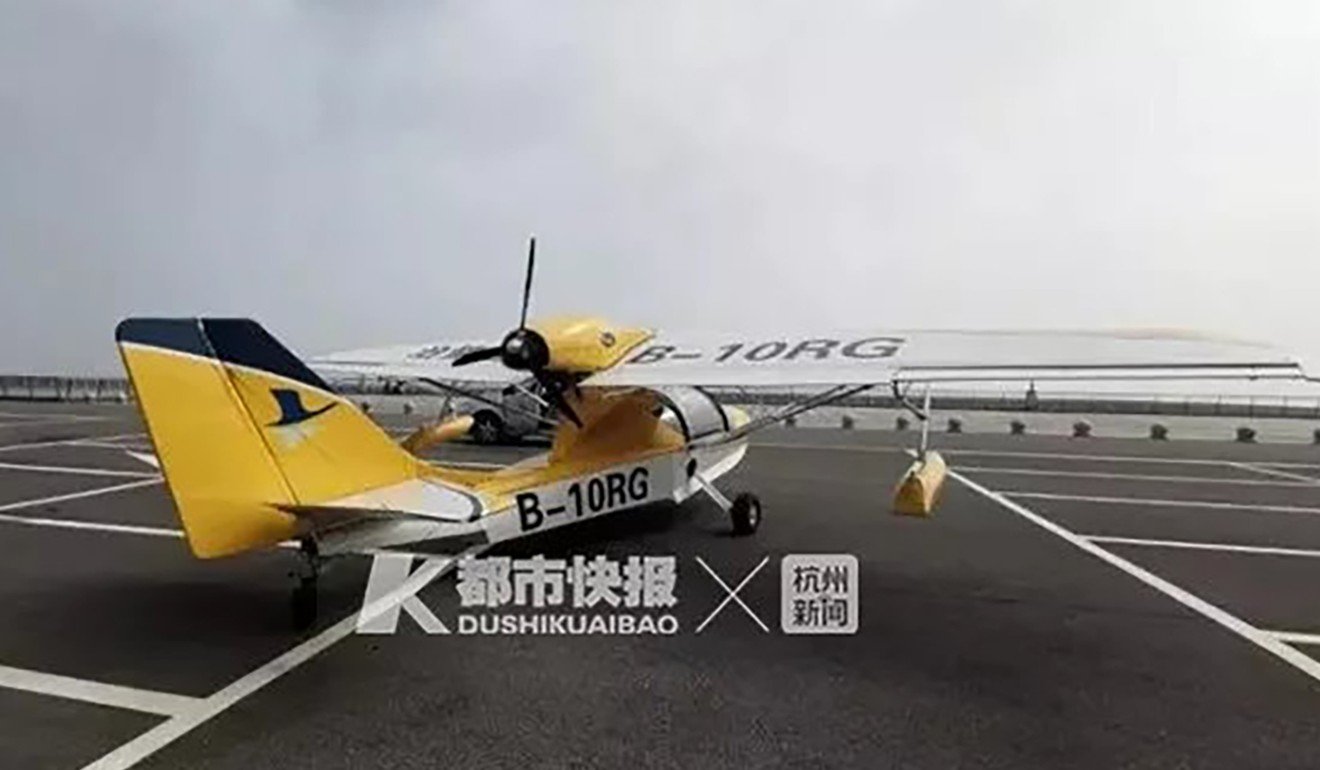
The 13-year-old was caught on camera as he took two planes from their Taihu Lake hangar under cover of darkness on Monday morning, Dushi Express reported on Friday.
The schoolboy, from nearby Huzhou city, spent part of last weekend watching staff at the SeaRey base work on repairs and maintenance. Security camera footage showed him arriving there on an electric bike just after midnight on Sunday.
He then dragged a 450kg (990lbs) plane from its hangar, jumped into the cockpit, started the engine and drove it across a car park, hitting a crash barrier as he tried to make a turn.
The boy gained access to the plane under the cover of darkness. Photo: Weibo
Abandoning the plane, he went back to the hangar and took another for three circuits of the car park before fleeing on his bike.
The teenager caused 8,000 yuan (US$1,200) worth of damage to the 1.88 million-yuan seaplane, the report said.
His parents only learned of their son’s trip when police called on Monday evening and a payment of 2,000 yuan towards the repair bill was negotiated, it said.
Chinese pranksters’ subway landmine stunt blows up in their faces
The SeaRey base director, surnamed He, was quoted as saying that starting and taxiing the plane involved a few simple steps, but that it would have been impossible for the boy to fly it as that required professional piloting skills and 30 hours of training on the flying boat itself.
But he praised the teenager for being observant.
“We pilots all admired him,” the director said, adding that he would like the boy to train at the base and become a pilot.



 CHINDIA ALERT: You'll be living in their world, very soon