Archive for ‘Piraeus port’

15/11/2019

China signs 197 B&R cooperation documents with 137 countries, 30 int’l organizations

BEIJING, Nov. 15 (Xinhua) — China has signed 197 Belt and Road (B&R) cooperation documents with 137 countries and 30 international organizations by the end of October, the country’s top economic planner said Friday.

Apart from developing and developed economies, a number of companies and financial institutions from developed countries have collaborated with China to expand the third-party market as well, Meng Wei, a spokesperson for the National Development and Reform Commission (NDRC), told a news conference.

The construction of the China-Laos railway, China-Thailand railway, Jakarta-Bandung High-Speed Railway and Hungary-Serbia railway are making solid headway while projects including the Gwadar Port, Hambantota Port, Piraeus Port and Khalifa Port have gone smoothly, the NDRC said.

Meanwhile, the building of the China-Belarus industrial park, China-UAE Industrial Capacity Cooperation Demonstration Zone and China-Egypt Suez Economic and Trade Cooperation Zone is also forging ahead.

From January to September, China’s trade with B&R countries totaled about 950 billion U.S. dollars, and its non-financial direct investment in these countries topped 10 billion dollars, Meng said.

She noted that China has made bilateral currency swap arrangements with 20 B&R countries and established RMB clearing arrangements with seven countries.

In addition, the country has also made achievements with B&R countries in other sectors including technology exchange, education cooperation, culture and tourism, green development and foreign aid.

Source: Xinhua

12/11/2019

Xi, Greek PM visit Piraeus Port, hail BRI cooperation

GREECE-CHINESE PRESIDENT-PIRAEUS PORT-VISIT

Chinese President Xi Jinping talks with representatives of local staff members as he visits the Piraeus Port in Greece, Nov. 11, 2019. Xi and his wife Peng Liyuan, accompanied by Greek Prime Minister Kyriakos Mitsotakis and his wife, visited the Piraeus Port on Monday. (Xinhua/Xie Huanchi)

ATHENS, Nov. 11 (Xinhua) — Chinese President Xi Jinping and Greek Prime Minister Kyriakos Mitsotakis on Monday visited the Piraeus Port, a flagship project in bilateral collaboration, and hailed it as a success under the Belt and Road cooperation.

In 2009, a subsidiary of China Ocean Shipping Company, also known as COSCO, started managing the Piraeus Port’s container terminals. In 2016, COSCO acquired a majority stake in the port and formally took over its management and operation.

So far, the project has created jobs for over 10,000 local people directly and indirectly, and has built the Piraeus Port into the largest port in the Mediterranean region and one of the fastest growing container terminals in the world.

Upon their arrival, Xi and his wife Peng Liyuan, accompanied by the Greek prime minister and his wife, were warmly welcomed by Chinese and foreign employees waving national flags of the two countries.

Talking with Xi about their work and life, representatives of local staff extended heartfelt gratitude to COSCO for providing them with job opportunities in the most difficult times during the Greek debt crisis.

Thanks to the Chinese company, they now enjoy stable jobs and happy lives, the Greek employees told Xi.

With the Piraeus Port becoming an important fruit in jointly building the Belt and Road, the local staff said they feel very proud and have full confidence in the port’s future.

Delighted to visit the port, Xi said that seeing is believing, and that he has seen here today that the China-proposed Belt and Road Initiative (BRI) was not a slogan or tale, but a successful practice and brilliant reality.

Noting that the BRI upholds the principle of extensive consultation, joint development and shared benefits, Xi said no one makes decisions for others, and instead all participants share responsibilities and benefits in BRI cooperation.

China, in its external exchanges, upholds the right approach to justice and interests, said the Chinese president, adding that he is delighted to know that COSCO’s Piraeus Port project was able to help local people through hard times.

Xi called local workers important participants in and contributors to jointly building the Belt and Road as they have helped the Piraeus Port develop well, and wished them success at work and a happy life.

The Piraeus Port project is a successful example of China-Greece cooperation featuring complementing each other’s advantages, combining forces, and achieving mutual benefits, Xi said.

He urged the two sides to make continued efforts to further construct and develop the port, achieve the goal of making the port a regional logistics distribution center, and advance the building of the China-Europe Land-Sea Express Line.

Expressing his confidence in the unlimited prospects of the Piraeus Port, Xi said the cooperation fruits will continue to benefit the people of both countries and the region. He also conveyed his wish that the two countries will continuously make new achievements in their cooperation.

For his part, Mitsotakis underlined that China helped the Greek people when his country was embroiled in the debt crisis.

Facts have proved that the Piraeus Port project is mutually beneficial, and has strongly boosted the recovery of the Greek economy and social development, served the interests of Greece and its people, and received the support from the Greek people, he said.

From that the Greek side has come to a deep understanding of the true meaning of “friends,” added the prime minister.

Greece is willing to join efforts with China to further expand and strengthen the Piraeus Port project and make it a paragon in the joint construction of the Belt and Road, Mitsotakis said.

Xi arrived in the Greek capital of Athens on Sunday for a three-day state visit to the European country.

Source: Xinhua

07/04/2019

Greece says EU’s China concerns must not harm its economic interests

  • Deputy prime minister Yannis Dragasakis hopes ‘logic will prevail’ ahead of EU-China summit
  • Affirms Greek support for Beijing’s belt and road plan for global trade
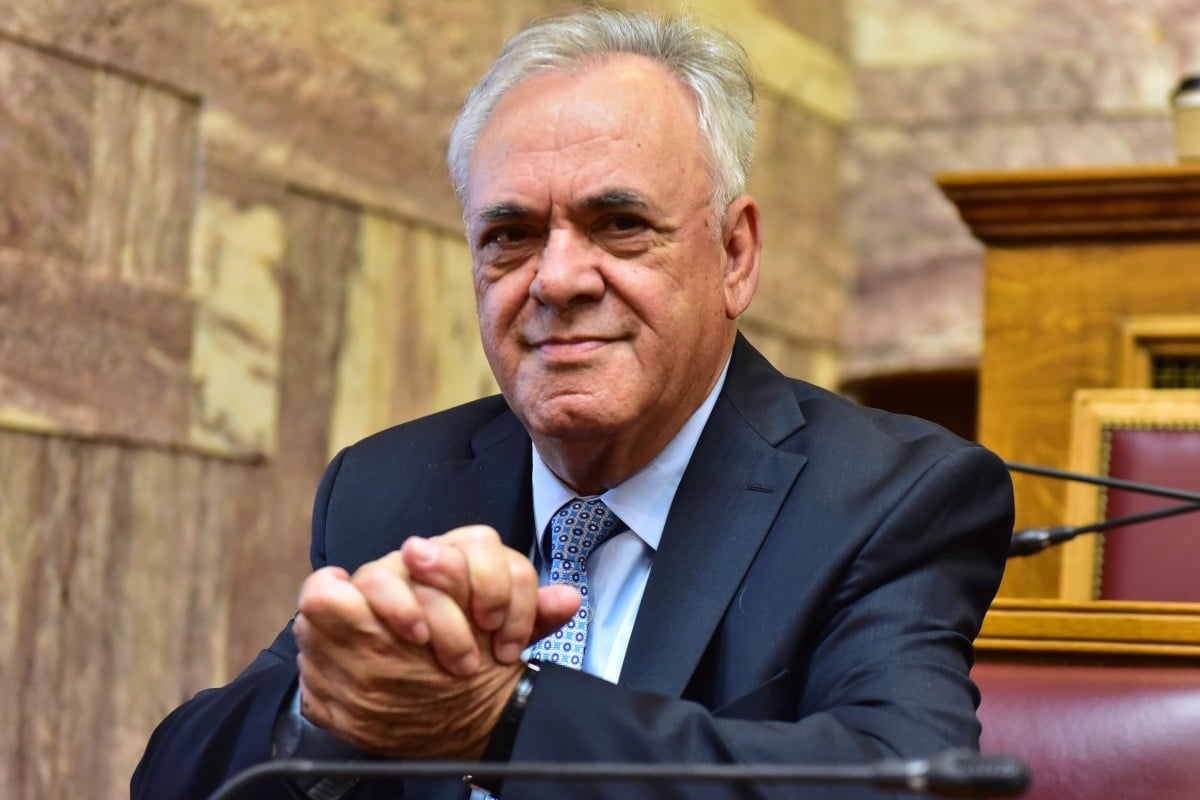
Greece’s deputy prime minister Yannis Dragasakis says the European Union’s suspicion about China is in danger of becoming a “self-fulfilling prophecy”. Photo: Alamy
The deputy prime minister of Greece has warned that European Union suspicion of China is in danger of becoming a “self-fulfilling prophecy” while reaffirming his country’s support for Beijing’s controversial “Belt and Road Initiative”.
In an exclusive interview with theSouth China Morning Post in Athens on Monday, Yannis Dragasakis said he hoped logic would prevail in the EU’s relationship with the world’s second-largest economy.
“We would like to see the EU having good relations with China,” he said.
“Seriously, we should start [the discussion about China] from the opposite end, which is, what are the needs and problems that we can work on with China?”
Dragasakis was speaking ahead of the annual summit between the EU and China in Brussels on Wednesday, which this year will take place against a backdrop of suspicion among some EU countries over Beijing’s political and commercial ambitions in the region.
Europe has been divided over whether to work with China’s enormous belt and road plan, which aims to link China by sea and land with southeast and central Asia, the Middle East, Europe and Africa, through an infrastructure network along the lines of the old Silk Road.
Italy becomes first G7 nation to sign up for China’s belt and road plan

Washington has criticised the scheme as a “vanity project”, and the EU looks set to refer to China as a “strategic rival”, with some European leaders fearing Beijing’s diplomatic manoeuvres could derail unity among member states.

Last month Italy, which is grappling with its third recession in a decade, became the first G7 nation to join the belt and road programme, in a bid to boost exports and upgrade its port facilities.

Last year Greece – ranked second lowest in economic competitiveness within the EU by the World Economic Forum in 2018 – signed up to the scheme, after years of relying on China to help it through its own financial crisis.

Chinese state-owned shipping company Cosco bought a 51 per cent stake in Pireaus Port, Greece’s most important infrastructure hub in 2016 with an option to buy another 16 per cent after five years.

China aims to make the port the “dragon head” of its belt and road programme, serving as a gateway for its cargo to Europe and North Africa.

Will Greece be China’s bridge to the rest of Europe?

With its warming relationship with Beijing, Athens has, at times, departed from EU positions on China.

In 2016, Greece helped stop the EU from issuing a unified statement against Chinese aggression in the South China Sea. The following year, Athens stopped the bloc from condemning China’s human rights record. Days later, it opposed tougher screening on China’s investments in Europe.

Dragasakis was clear that the EU should not devise any policies that may hinder Greece’s ability to revive its economy.

“Greece badly needs investment. We hope logic will prevail at the end of the day, which means we should take advantage of all opportunities and build on these prospects to further our collaboration,” he said.

“Greece will keep following a multidimensional policy, an inclusive policy, without excluding anyone.”

Dragasakis hit back at France and Germany for treating China as a geopolitical rival, while simultaneously signing up to trade agreements with Beijing.

Days before receiving Chinese President Xi Jinping in France last month, President Emmanuel Macron declared that the “time of European naivety” towards China was over – a remark the Greek deputy prime minister described as “interesting” during the interview.

“It’s so interesting, yes. Mr Macron, despite his statement, actually signed very large-scale agreements with China,” he said, adding: “Germany, the same”.

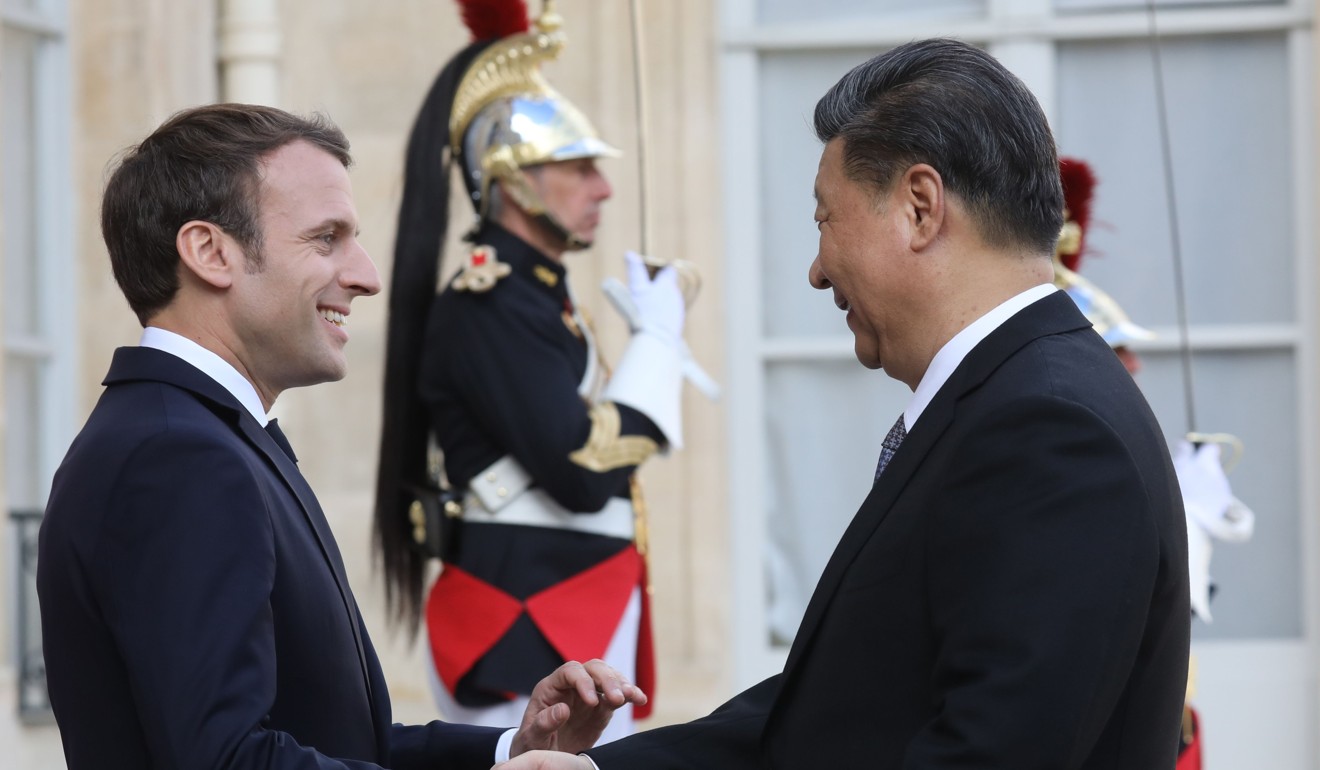
French President Emmanuel Macron welcomes Chinese President Xi Jinping to the Elysee Palace in Paris last month. Photo: AFP

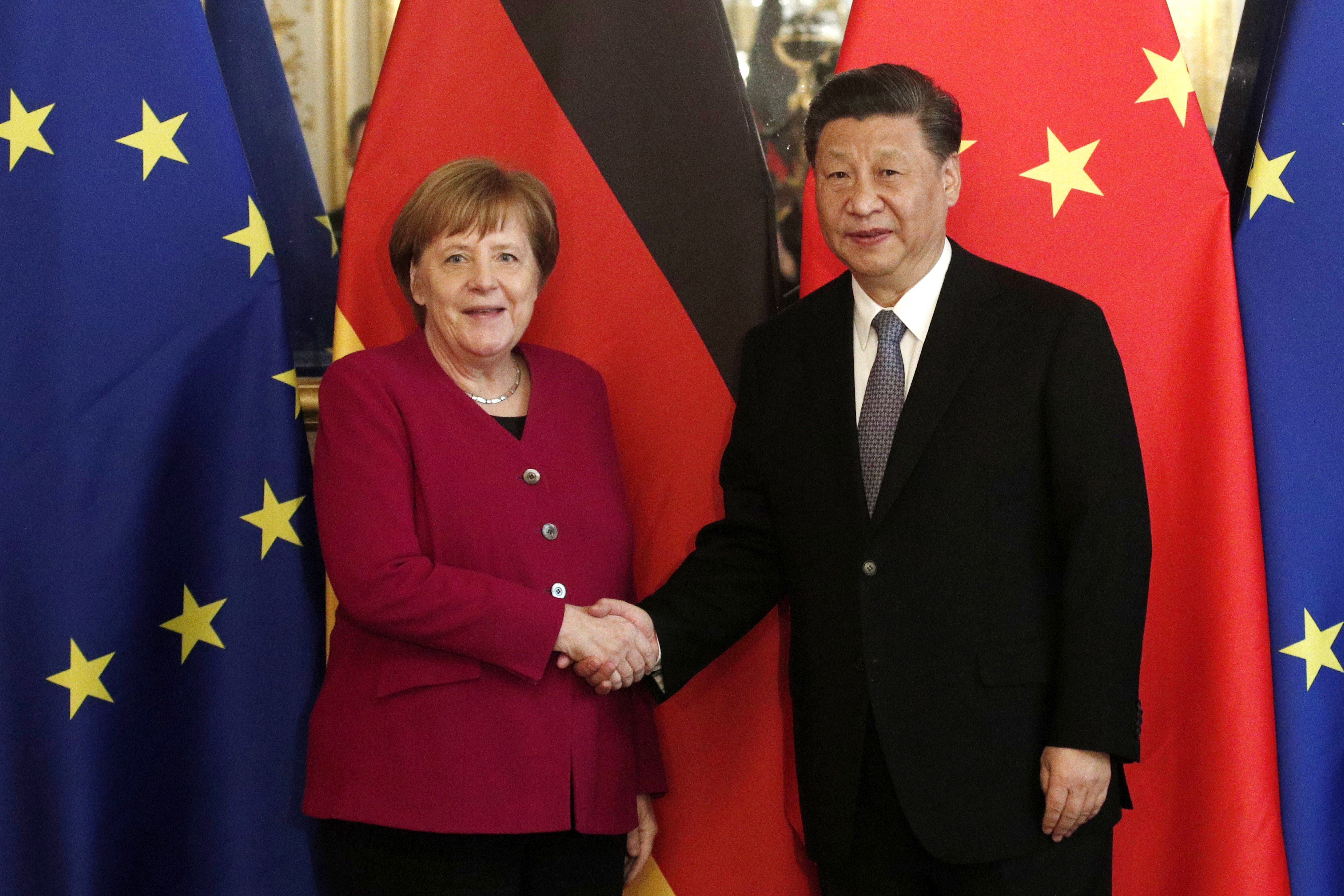
Macron invited German Chancellor Angela Merkel and European Commission President Jean-Claude Juncker to his meeting in Paris with Xi, where the four sought to reassure each other over economic cooperation between the European trading bloc and China.

Dragasakis said Greece’s relations with China were based on “very solid ground” with the two countries sharing complementary interests, particularly through the belt and road plan.

Greek Prime Minister Alexis Tsipras is understood to be considering joining Foreign Minister George Katrougalos at the belt and road summit in Beijing, which will be hosted by Xi later this month.

More than 40 heads of state are expected to attend the summit, with China’s foreign ministry recently saying that Europe had started to see the value of the scheme.

If confirmed, Tsipras’ presence at the summit will be interpreted as an attempt by Greece to consolidate Chinese support in the wake of Italy’s joining of the scheme.

He will also need to mend ties with Beijing, following a recent decision by Greece’s archaeological body to block a plan by Cosco to upgrade facilities at the Piraeus port, throwing the future of the multimillion euro privatisation deal into uncertainty.

Portugal’s support for China’s belt and road plan ‘bad news’ for EU

Dragasakis said there were strong prospects for the future relationship between Greece and China because of the two countries’ reciprocal interest.

Relations with other Asian countries, while not yet as close as Greek ties with China, would continue to be developed, he said.

Dragasakis said Athens would not adopt discriminatory policies against any country as it looked to shore up foreign investments to boost its economy.

India, for instance, has set its sights on Greece as a potential business partner, with President Ram Nath Kovind becoming its first titular head of state to visit Greece last year.

“Relations with India are lagging behind – they are not at the same level as with China, but of course we are mulling further developments with India,” Dragasakis said, adding that Greece would also work more closely with Japan, South Korea and Vietnam.

EU leaders hold out olive branch to Chinese ‘rival’ by saying they want active role in Belt and Road Initiative

EU leaders hold out olive branch to China over belt and road

Read more

China will not divide Europe, senior diplomat says

China will not divide Europe, senior diplomat says

Read more

Beijing calls for ‘objective’ assessment of human rights record.


Source: SCMP

Law of Unintended Consequences

continuously updated blog about China & India

ChiaHou's Book Reviews

continuously updated blog about China & India

What's wrong with the world; and its economy

continuously updated blog about China & India