Chindia Alert: You’ll be Living in their World Very Soon
aims to alert you to the threats and opportunities that China and India present. China and India require serious attention; case of ‘hidden dragon and crouching tiger’.
Without this attention, governments, businesses and, indeed, individuals may find themselves at a great disadvantage sooner rather than later.
The POSTs (front webpages) are mainly 'cuttings' from reliable sources, updated continuously.
The PAGEs (see Tabs, above) attempt to make the information more meaningful by putting some structure to the information we have researched and assembled since 2006.
The statement, issued on 27 April but only reported this week, singles out stadiums, exhibition centres, museums and theatres as public facilities where it’s especially important to ban plagiarism.
“City constructions are the combination of a city’s external image and internal spirit, revealing a city’s culture,” the government statement says.
It calls for a “new era” of architecture to “strengthen cultural confidence, show the city’s features, exhibit the contemporary spirit, and display the Chinese characteristics”.
Image copyright STR / AFP / GETTYImage caption – Not the Arc de Triomphe, but a college gate in Wuhan
The guidelines on “foreign” architecture were mostly welcomed on Chinese social media.
“The ban is great,” wrote a Weibo user, according to state media the Global Times. “It’s much better to protect our historical architectures than build fake copycat ones.”
Another recalled seeing an imitation White House in Jiangsu province. “It burned my eyes,” she said.
Image copyright OLIVIER CHOUCHANA / GETTYImage caption Thames Town, an English-themed town near Shanghai, pictured in 2008
In 2013, the BBC visited “Thames Town”, an imitation English town in Songjiang in Shanghai.
The town features cobbled streets, a medieval meeting hall – even a statue of Winston Churchill – and was a popular spot for wedding photos.
“Usually if you want to see foreign buildings, you have to go abroad,” said one person. “But if we import them to China, people can save money while experiencing foreign-style architecture.”
Image copyright WANG ZHAO / GETTYImage caption – Raffles City, Chongqing, in 2019 – mimicking the Marina Bay Sands hotel in Singapore
China, of course, is not the only country to borrow – or copy – other countries’ designs.
Las Vegas in the US revels in its imitations of iconic foreign architecture including the Eiffel Tower and Venetian canals.
Thailand also has developments that mimic the Italian countryside and charming English villages, mainly aimed at domestic tourists.
A sociology professor known for publishing scores of academic papers in both English and Chinese has been removed from her teaching post by Nanjing University for professional misconduct, according to a statement issued by her employer.
Liang Ying, who is on the faculty of the School of Social and Behavioural Sciences, became the subject of several media reports in October accusing her of plagiarising other people’s work or submitting duplicate manuscripts of at least 15 of her papers. The university said at the time it would investigate the allegations.
In its latest statement, the school said that Liang had “academic ethics and other moral problems” and described her violations as “serious”.
It also said it had “instructed relevant departments … to undertake deep self-reflection and serious self-criticism, and take practical measures to prevent such incidents from happening again”.
Liang, 39, joined Nanjing University in 2009 – where she had earlier completed her doctorate – after gaining a master’s degree from Suzhou University, and doing her postdoctoral research at Peking University and the University of Chicago.
In 2015 she was awarded a place on the Changjiang Scholars Programme, a prestigious award scheme set up by the Ministry of Education.
The university said in its statement that it was applying to have Liang stripped of all of her teaching qualifications and honorary titles.
By the time she joined Nanjing, the then 30-year-old had already had more than 30 papers published. Between 2009 and 2014 she managed to get a further 60 Chinese-language papers into print, and in the years after 2014 had 43 English-language papers published, according to the university’s website.
Despite her prolificacy, investigators discovered that in some instances her work had been either plagiarised or submitted to more than one publication, with only minor changes, China Youth Daily said in a recent report.
The article said that before her dismissal, Liang had since 2014 been asking online publishers to take down her Chinese-language papers on the grounds that her early work was fundamentally flawed.
Her efforts paid off as she succeeded in having more than 120 documents removed from an academic database. She also earned the nickname Professor 404, in reference to the 404 error message displayed online when a webpage cannot be found.
Aside from the allegations of cheating, Liang was also criticised by her students for her lack of commitment and lackadaisical attitude.
According to the newspaper report, the entire student body of her school signed a letter to the university’s administrators complaining about her misconduct as a teacher, including showing up late for lectures, and allowing other students – and sometimes even her father – take the class.
Other students accused Liang of leaving class early, playing with her phone during lectures and threatening to give them low grades if they scored her poorly in their reviews of her.
The university also received complaints about controversial remarks Liang was said to have made in class, including insensitive comments about the “comfort women” who were forced into sexual slavery by the Japanese during their occupation of China in the 1930s and 1940s, the report said.
In another instance, she is said to have boasted about using harrowing videos to trigger distressing memories in survivors of the 1937 Nanking massacre, it said.
Liang defended the research saying she used it to show how traumatic memories had a persistent impact on those areas of the brain that control emotion.


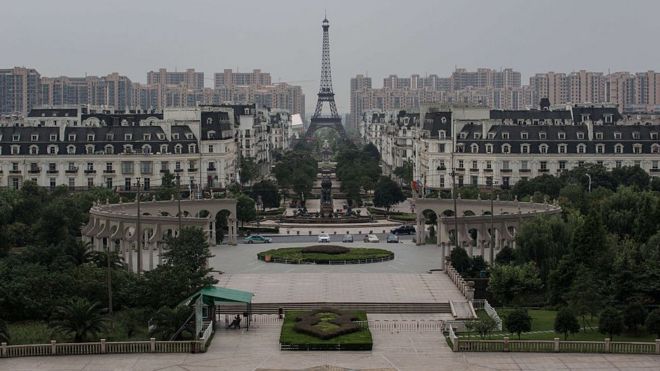 Image copyright GUILLAUME PAYEN / GETTY
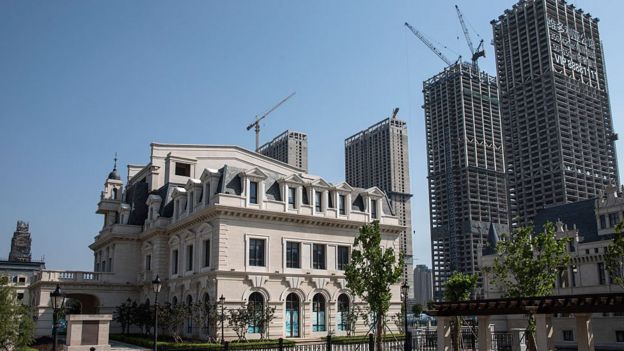 Image copyright THIERRY FALISE / GETTY
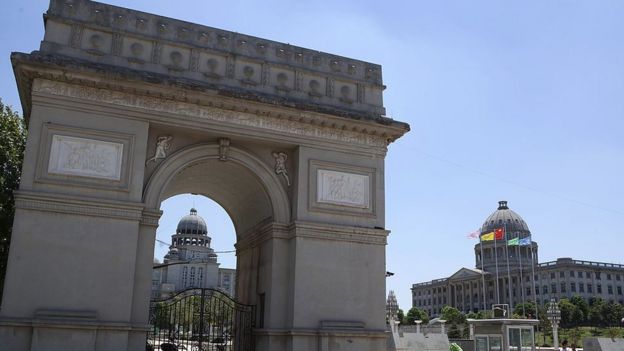 Image copyright STR / AFP / GETTY
 Image copyright OLIVIER CHOUCHANA / GETTY
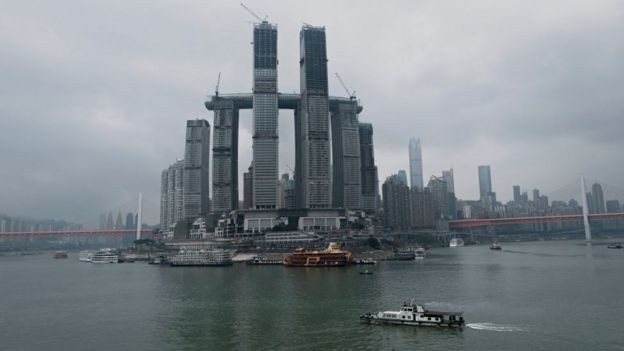 Image copyright WANG ZHAO / GETTY


 CHINDIA ALERT: You'll be living in their world, very soon
COMMENTS: 2