07/10/2019
BEIJING, Oct. 6 (Xinhua) — While fireworks and festivities drew the largest crowds during this year’s National Day holiday, many Chinese chose to celebrate the occasion with a bowl of patriotic noodles and homegrown films.
This year marks the 70th anniversary of the People’s Republic of China which was founded on Oct. 1, 1949. The weeklong National Day holiday, introduced in 1999 by the State Council, or China’s cabinet, saw “National Day noodles” become a popular choice among some Chinese this year.
Birthday noodles are to Chinese people what birthday cakes are to Westerners. In accordance with the Chinese custom, people enjoy a bowl of noodles on their birthday as a symbol of longevity. Many restaurants will prepare a bowl of birthday noodles for free if there is a diner celebrating their birthday.
Beijing Huatian Catering Group, a leading catering company in Beijing that has more than 20 time-honored brands, sold more than 25,000 bowls of National Day noodles and gave away more than 120 bowls of birthday noodles, according to a Saturday report by Beijing Daily.
Beijing Honghua Dahaiwan Catering Group said that it has sold 3,800 bowls of noodles during the first three days of the National Day holiday, up 25 percent compared to the same period of last year.
Moviegoers meanwhile got their fill of National Day celebrations in an entirely different manner.
“My People, My Country,” “The Climbers” and “The Captain” were all set for theatrical release on the Chinese mainland on Sept. 30, a day ahead of the weeklong National Day holiday, according to the China Film Distribution and Exhibition Association.
Featuring seven short stories from seven directors, “My People, My Country” draws on important historical moments since the founding of the PRC, aiming to awaken the shared memories of Chinese around the world.
“The Climbers” dramatizes the real-life expedition of Chinese mountaineers to ascend Mount Qomolangma in 1960 and 1975.
“The Captain” is a cinematic portrayal of a real-life event that occurred on May 14, 2018, when a captain of Sichuan Airlines managed a successful emergency landing after the windshield of his plane broke in the air, safely bringing home the 119 passengers and nine crew members on board.
According to the real-time statistics of MaoYan Movie, the leading online movie ticketing platform in China, the three movies ranked as the top three films at the box office over the holiday. “My People, My Country” has raked in more than 2 billion yuan (around 279.8 million U.S. dollars) as of Sunday, “The Captain,” 1.7 billion yuan, and “The Climbers,” 743 million yuan.
Source: Xinhua
Posted in 70th anniversary, air, Beijing, Beijing Daily, Beijing Honghua Dahaiwan Catering Group, Beijing Huatian Catering Group, birthday cakes, birthday noodles, box office, broke, celebrate, China Film Distribution and Exhibition Association, China's cabinet, China’s State Council, Chinese, Chinese custom, Chinese mountaineers, crew members, festivities, films, Fireworks, homegrown films, largest crowds, longevity, MaoYan Movie, Mount Qomolangma, Moviegoers, My People, My Country, National Day, National Day holiday, Oct. 1, 1949, on board, passengers, patriotic noodles, People's Republic of China, plane, real-life event, real-life expedition, safely bringing home, Sichuan Airlines, successful emergency landing, symbol, The Captain, The Climbers, Uncategorized, Westerners, windshield |
Leave a Comment »
26/09/2019
- Cheng Qiang was just 12 when a magnitude 8 tremor destroyed his village, but he never forgot the heroism of the soldiers sent to help and swore one day to join their ranks
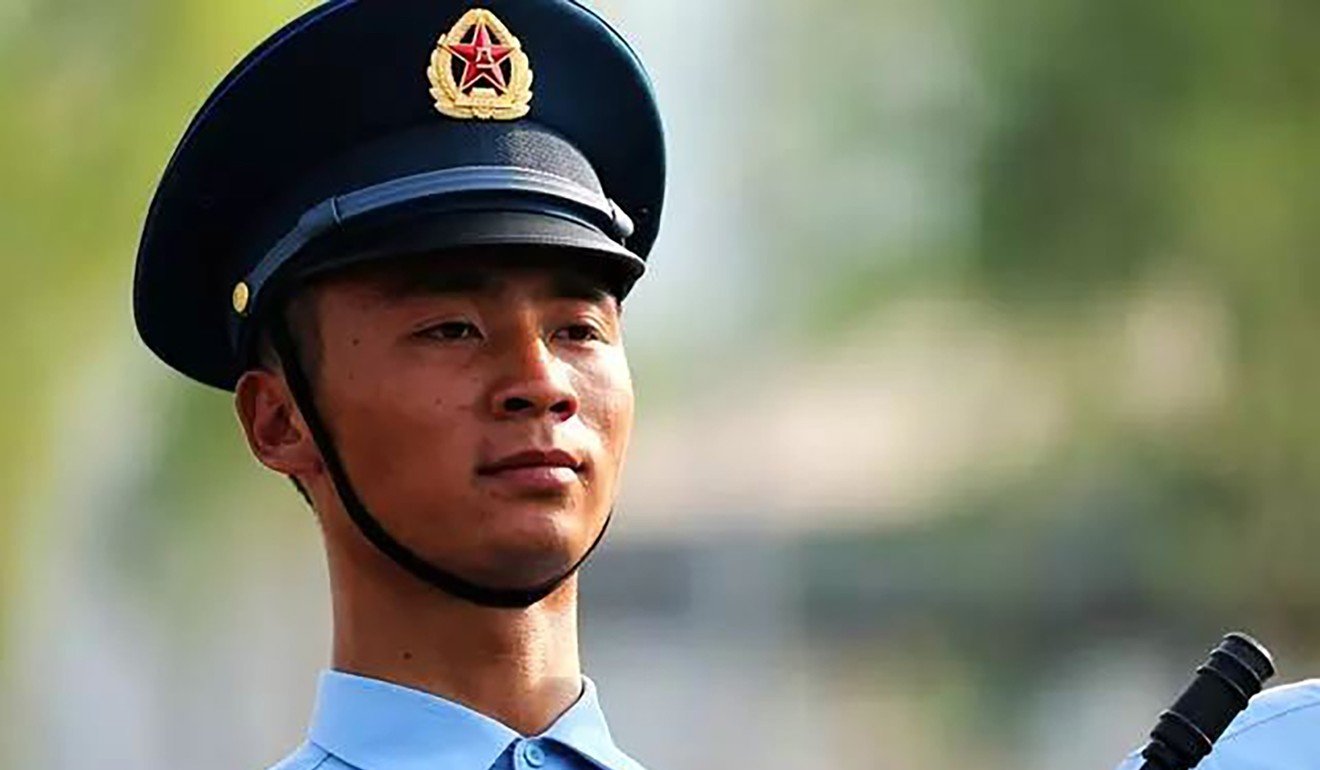
- Now a squad leader, on October 1 he will also be part of the National Day celebrations in Tiananmen Square
Cheng Qiang was just 12 when his home in Sichuan was hit by a massive earthquake and airborne troops were sent to help. Photo: People.cn
A young man who survived the devastating
Sichuan earthquake and vowed to one day join the ranks of the soldiers who spent months rescuing people from the rubble will on Tuesday lead his very own squad of airborne troops in
Tiananmen Square as part of the celebrations for the country’s 70th anniversary.
Now 23, Cheng Qiang was just 12 when on May 12, 2008 he and a group of friends played truant from school to go swimming in a local river, Xinhua reported on Thursday.
When the boys had finished their fun they returned to their village in the township of Luoshui to find their school and many other buildings had been razed to the ground. The death toll from the magnitude 8 quake would eventually rise to 87,000, with 370,000 people injured.
Cheng says he is ready to “continue the glory of the airborne troops” at Tuesday’s parade. Photo: Thepaper.cn
In the days and weeks that followed the devastation, tens of thousands of people from around China and the world descended on towns and villages across Sichuan to help with the rescue effort.
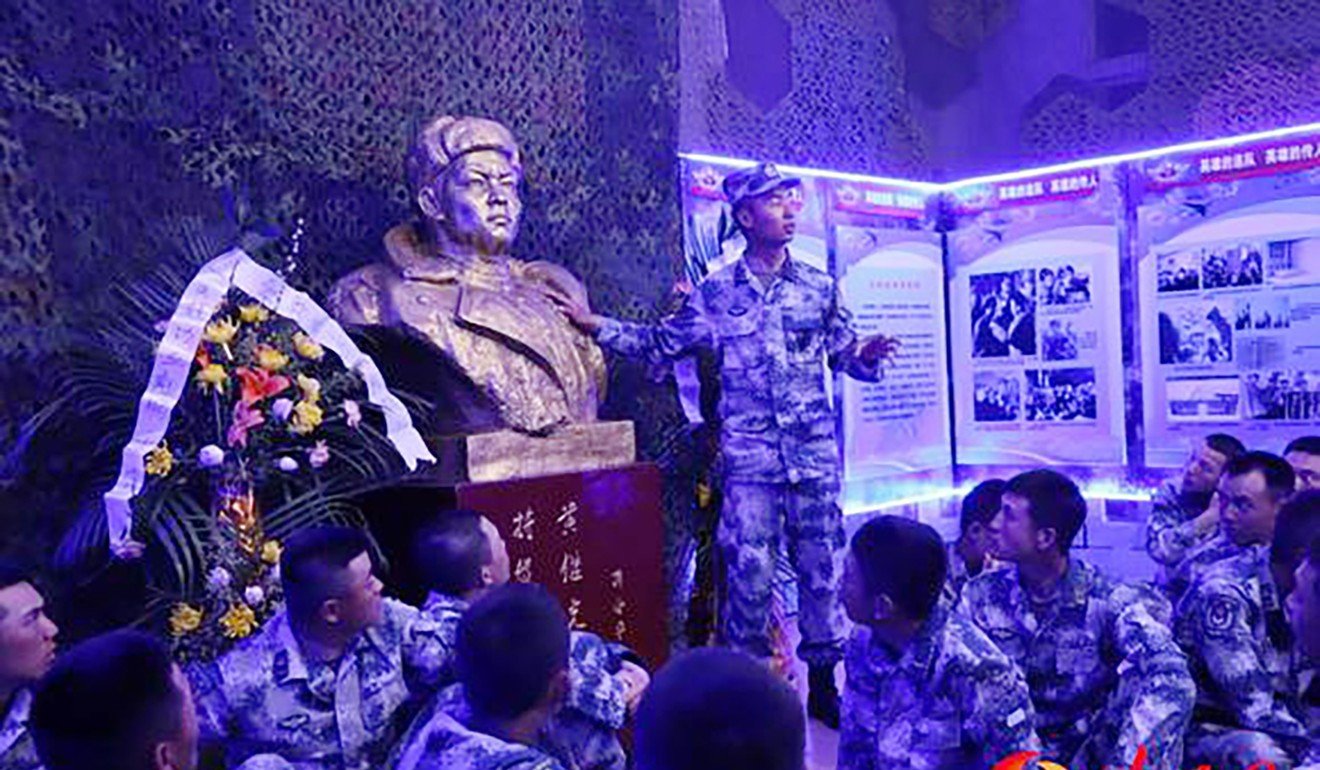
But the ones who impressed Cheng the most were the soldiers from the People’s Liberation Army (PLA) with the word “Airborne” printed on the helmets.
“Sometimes they had to remove the debris with their bare hands which were already covered in blood,” he said.
“But they just carried on and eventually pulled dozens of people out of the rubble. I knew then that I wanted to be one of them.”
Cheng said that after the quake having the troops in his village made him feel safe. Photo: People.cn
Having the troops in his village made Cheng feel safe, he said, and he spent his days following them around and doing what he could to help.
Three months later, when the soldiers had completed their work and were preparing to pull out, Cheng said he was determined to show his new heroes just how grateful he was to them.
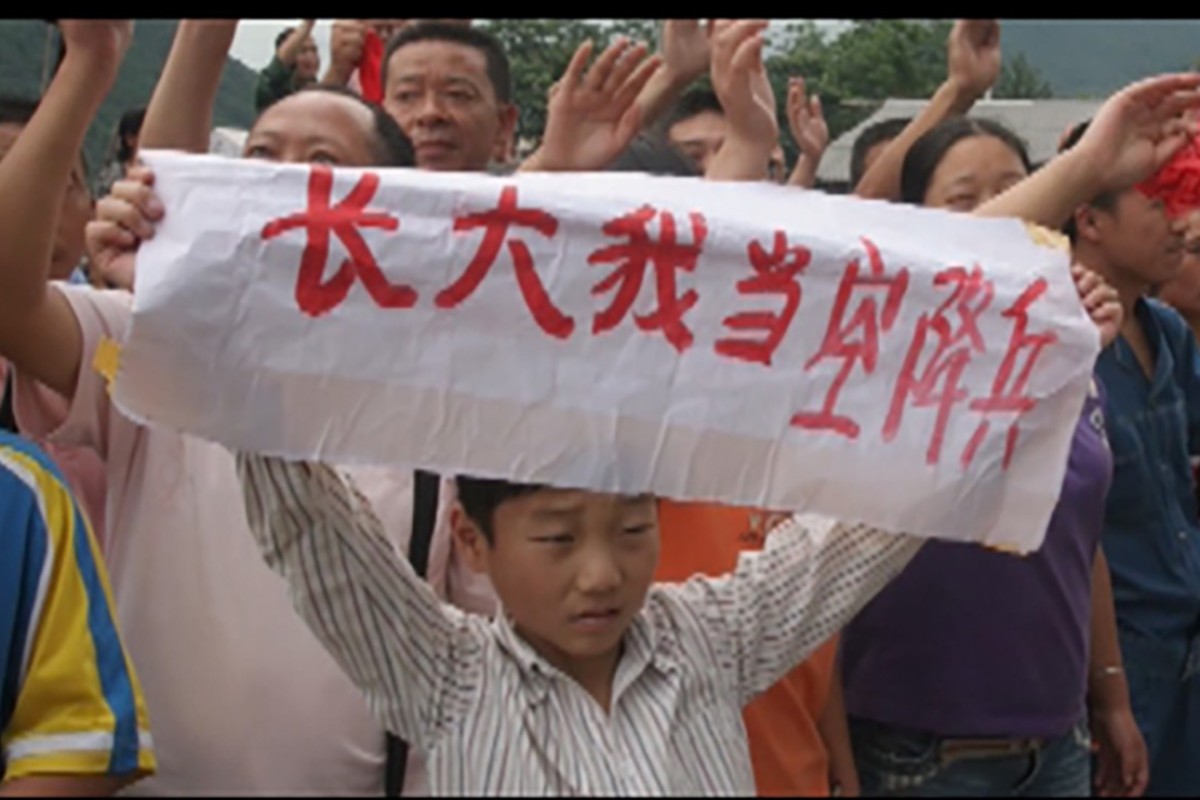
As the villagers gathered at the roadside to bid farewell to the men who had become their saviours, the young boy held up a handwritten sign. It said simply: “I want to be an airborne soldier when I grow up.”
The moment was captured on camera by a press photographer, and the image soon became a symbol of the gratitude felt by the people who had seen their lives and communities shattered but knew they had not been forsaken.
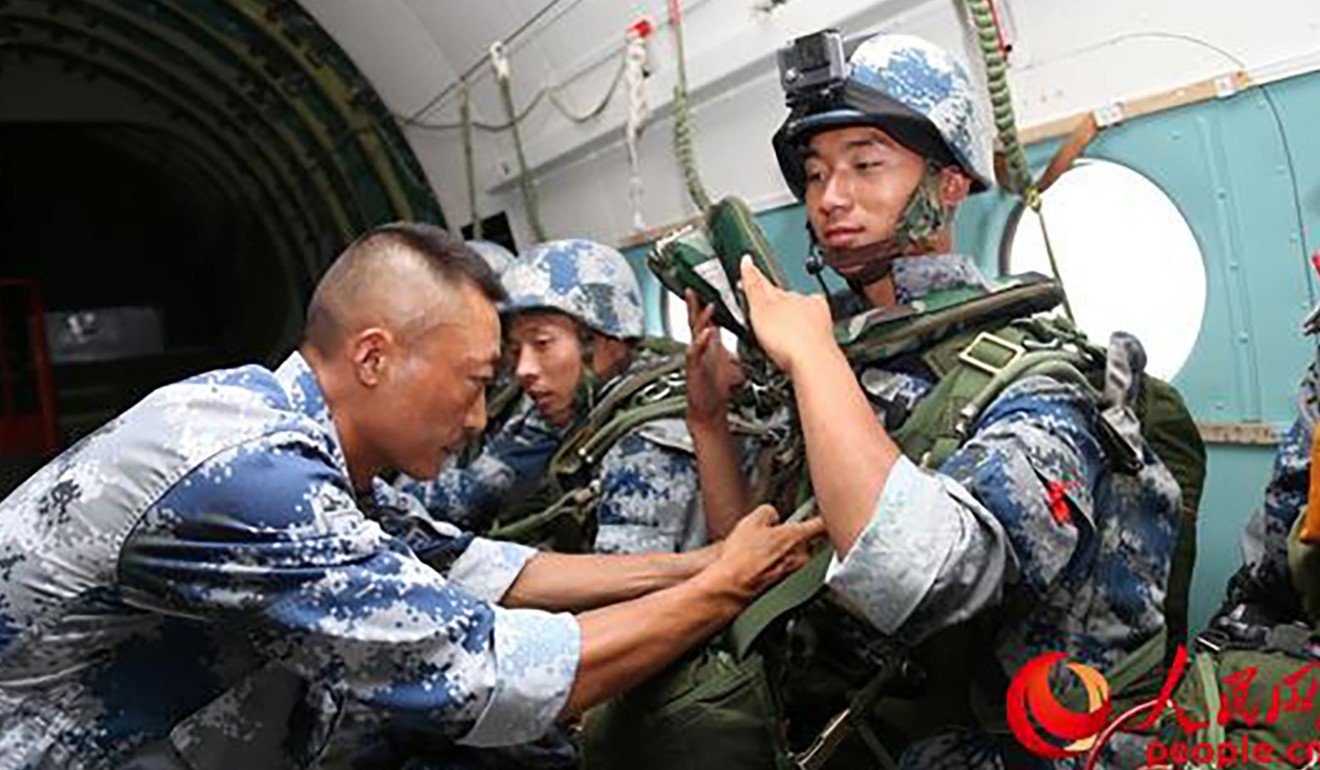
Cheng said he felt dizzy when he first jumped out of a plane. Photo: People.cn
Five years after the troops rolled out, Cheng was preparing to go to college when he heard the PLA was recruiting and that there were places available with the airborne division.
The teenager did not need a second invitation, and after securing a place on a training course and successfully completing it he joined the ranks of his heroes in 2013.
Not that everything was plain sailing, however.
“When I first jumped out of a plane I felt very dizzy and didn’t really know what was going on,” he said.
Thankfully Cheng managed to overcome his vertigo and went on to become a squad leader.
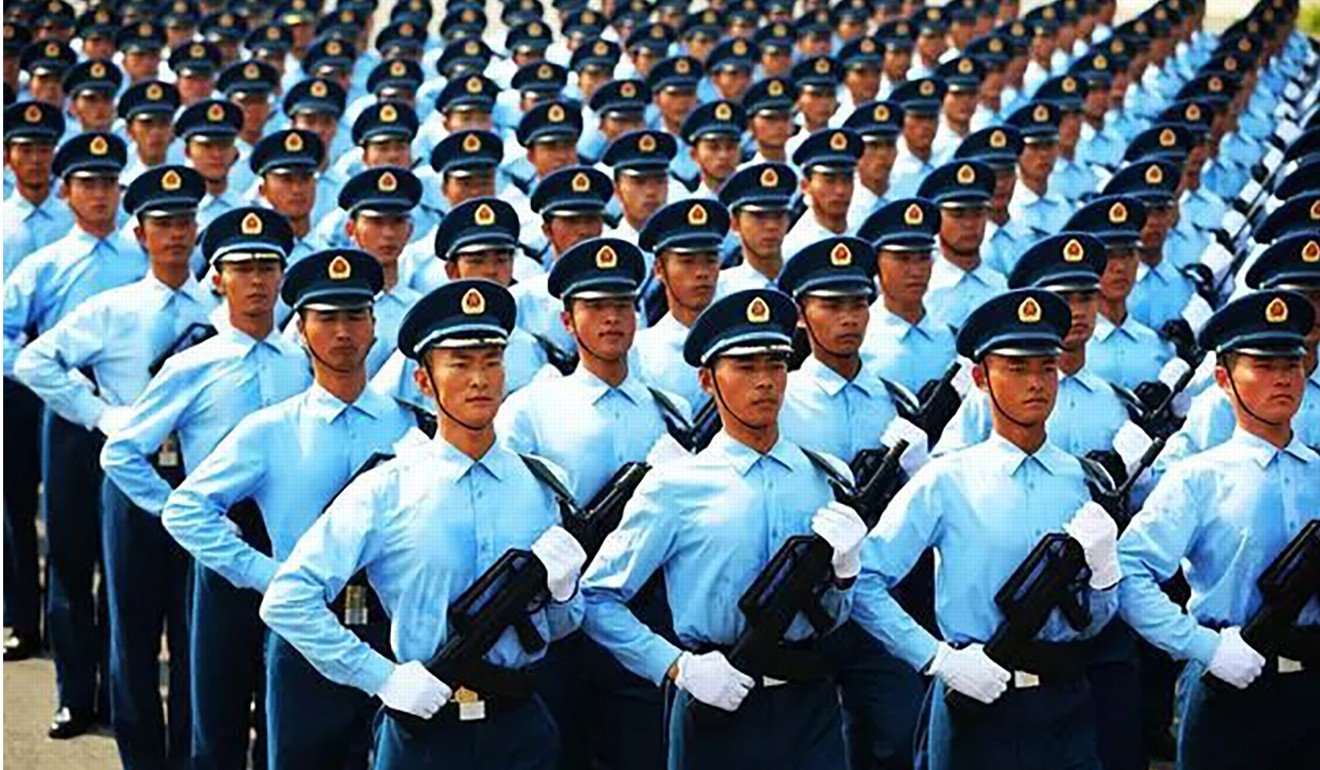
Tens of thousands of troops will take part in China’s National Day parade on October 1. Photo: Thepaper.cn
When the preparations were being made for next week’s anniversary celebrations in Beijing, Cheng said he and his squad were chosen to take part.
He said that during the rehearsals for the grand parade, he was repeatedly reprimanded by his trainer for not keeping his knees close enough together, for lifting his feet too high and for letting his gun slip off shoulder.
But he was determined to get it right, and after weeks of hard work and 11 years on from the tragedy that devastated his world, he said he was now ready to put his best foot forward.
“The nightmare of earthquake has long gone,” he said. “I am here to continue the glory of the airborne troops. I am ready for inspection.”
Source: SCMP
Posted in 70th anniversary parade, airborne, airborne troops, bare hands, captured, celebrations, Cheng Qiang, China alert, college, completing, covered in blood, debris, destroyed, dizzy, earthquake, farewell, first jumped, forgot, grand parade, gratitude, helmets, heroes, heroism, image, invitation, joined, local river, Luoshui, magnitude 8, National Day, October 1, on camera, People’s Liberation Army (PLA), place, plain sailing, plane, press photographer, ranks, ready to join, recruiting, rehearsals, reprimanded, roadside, rubble, saviours, school, securing, sichuan province, soldiers, squad leader, successfully, survivor, swimming, symbol, teenager, Tiananmen Square, trainer, training course, truant, Uncategorized, vertigo, Village |
Leave a Comment »
20/09/2019
- Superstitious medical student, 23, said it was customary in her hometown to throw money for good luck
- Cousin’s child had fallen ill on flight from Jiangxi to Sichuan, she said
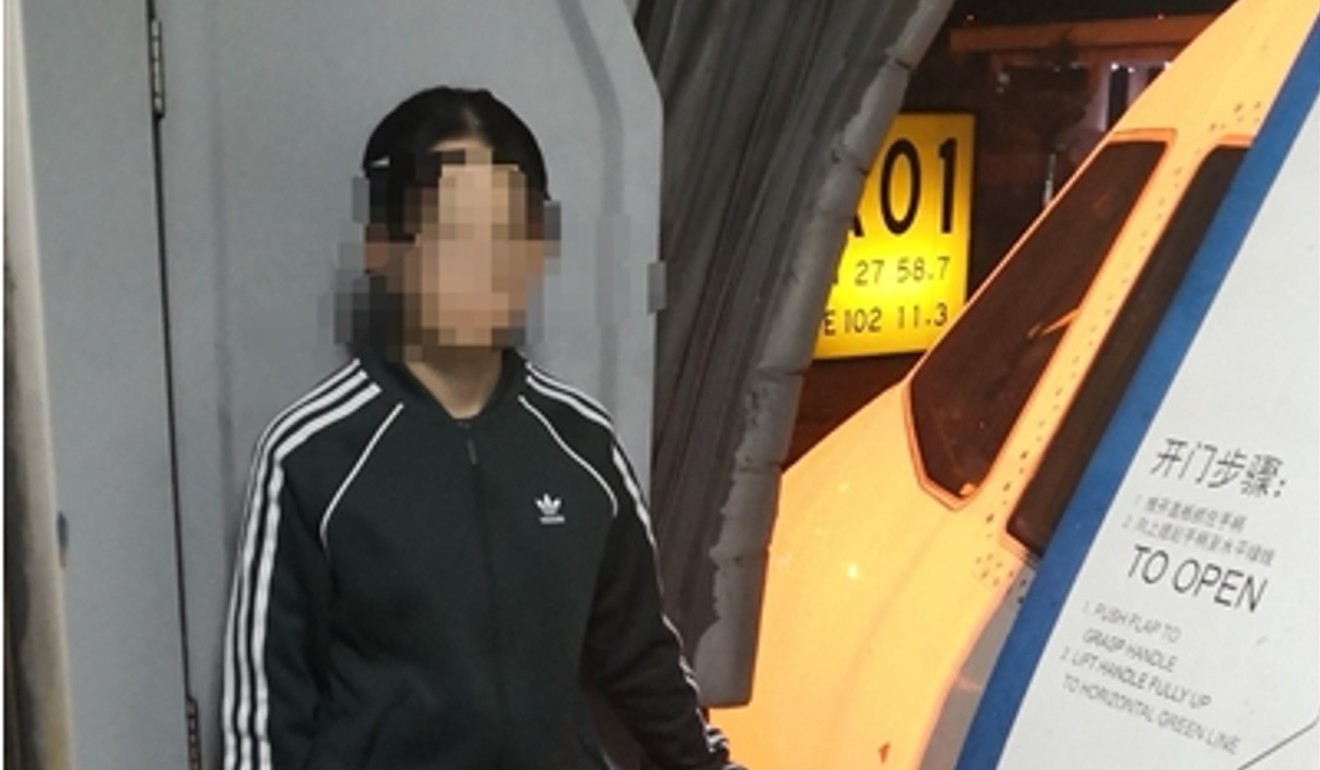
A woman was fined for tossing coins onto the apron at an airport in Sichuan province. Photo: Weibo
A woman who
threw coins onto the parking apron at an airport in southwest China in the superstitious belief it might cure her cousin’s baby’s diarrhoea was instead fined 200 yuan (US$28), local media reported.
The incident happened on September 5, as the woman, surnamed Wang, and a group of her relatives arrived in Xichang, Sichuan province, after flying from Nanchang, Jiangxi province, to attend a family wedding, the Chengdu Business News reported on Friday.
Wang, 23, dropped the coins through the gap between the aircraft and the jet bridge as she and her family were disembarking.
Police said the medical student was shocked when she realised the trouble she had caused. Photo: Weibo
Although no one spotted what she had done at the time, airport workers later found three coins on the ground while conducting a security check and reported the matter to the police.
Officers reviewed footage from the airport’s surveillance cameras and identified Wang as the guilty party and went to see her at her hotel the following morning, the report said.
Wang said that during the flight her cousin’s baby had suffered from diarrhoea and that it was customary in her hometown to toss coins in the hope it would bring the child good luck.
“She said she didn’t realise her action could have had a very serious outcome,” a police officer was quoted as saying, adding that Wang appeared shocked when she realised the trouble she had caused.
However, as her actions had not resulted in any delays to flights or created any other problems, she was charged only with a minor offence.
Many Chinese think tossing coins before a flight will bring them good luck. Photo: EPA
Wang, who recently completed a bachelor’s degree in medicine and was preparing to sit a graduate school entrance examination, was worried the incident might have an impact on her future education and job prospects, the officer said.
More than 5,000 people commented on the story on news portal 163.com, with one asking: “You are so superstitious, how can you treat patients?”
In recent years there have been numerous reports of Chinese travellers causing delays and being punished for tossing coins onto airport runways and even into aircraft engines.
In April, a woman was detained for throwing six coins as she was about to board a plane in southern China in the hope it would guarantee her a safe trip.
Source: SCMP
Posted in aircraft engines, Airport, airport runways, airport workers, apron, baby’s diarrhoea, Bachelor's degree, Chengdu Business News, child, Chinese travellers, Chinese woman, conducting, Cousin, cure, customary, diarrhoea, disembarking, fallen ill, Family, fined, flight, footage, future education, gap, good luck, graduate school entrance examination, ground, guarantee, guilty party, hometown, Hotel, incident, jet bridge, Jiangxi Province, job prospects, medical student, medicine, Nanchang, officers, parking apron, plane, Police, punished, reported, safe trip, security check, sichuan province, Superstitious, surveillance cameras, threw coins, throw money, tossing coins, Uncategorized, worried |
Leave a Comment »
14/08/2019
- Developers say their prototype craft could dive to 1,000 metres in five minutes
- Liu Kaizhou, who also worked the Jiaolong submersible, says ‘We are in uncharted water’
Professor Liu Kaizhou, who developed the autopilot for China’s manned Jiaolong submersible, says his team has designed a vessel that can move through water like a plane moves through the air. Photo: Xinhua
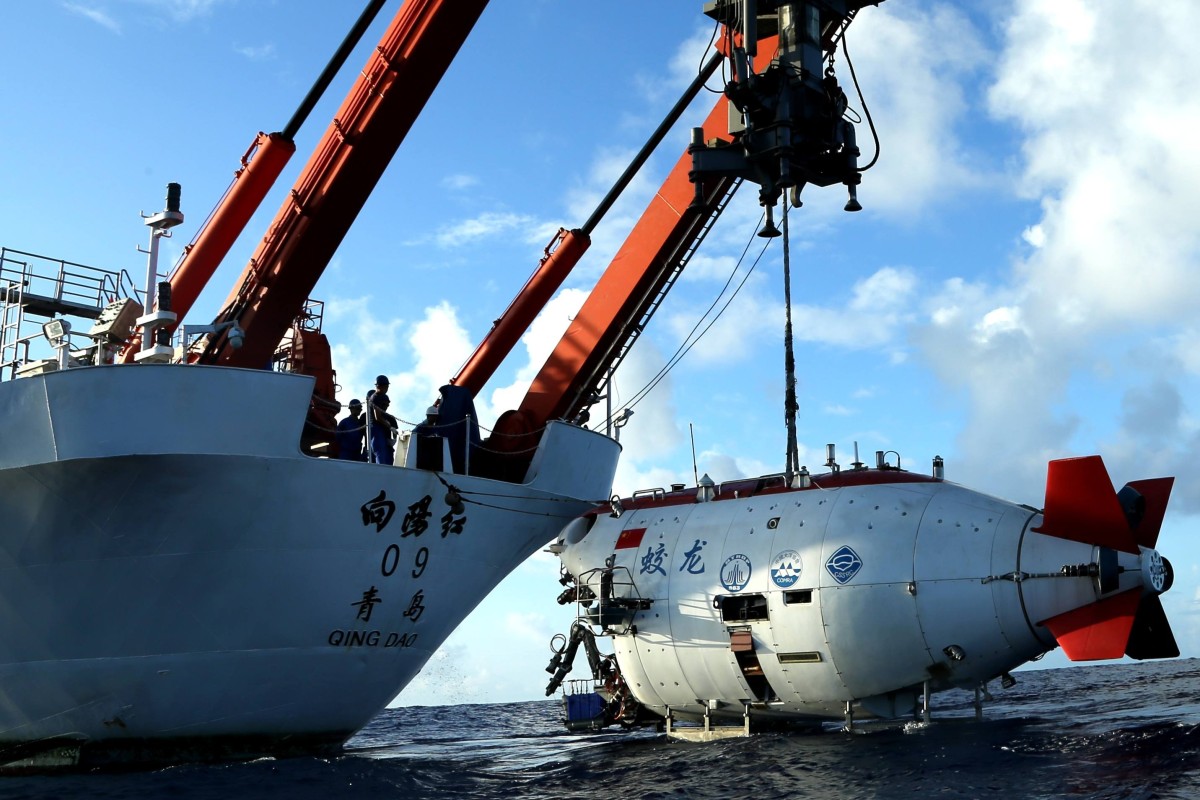
Chinese engineers say they are developing a radical design for a super-fast robot submersible which the project leader, who worked on the manned deep-sea vessel Jiaolong, or Sea Dragon, claims can “fly” in water like a plane travels through the air.
At 3 metres (9.8ft) long, the prototype consists of a cigar-shaped body, with a guidance system in the bow and a jet plane style rudder and a propeller in the stern.
Outriggers house batteries and two more propellers. These are attached to the body by wing-like planes that the developers said will give the vessel the kind of lift in water that takes an aeroplane into the air and back to the earth.
Developers said the prototype will be capable of 10 knots and could dive to a depth of 1,000 metres (3,281 feet) – or surface from that depth – at about three metres a second, taking about 5½ minutes.
Professor Liu Kaizhou, lead scientist of the project at the Shenyang Institute of Automation, part of the Chinese Academy of Sciences in Liaoning province, said the design had great potential.
If a traditional submarine was like an air balloon, he said, the prototype was like an aircraft. “It is technically flying, fast and freely, like a plane for the water.”
The prototype has 20 major components on board, including a computer, and communications and surveillance equipment. These were all developed and tested by the team, but getting them to work together posed some unexpected challenges, Liu said, meaning the transition to operations in a tough marine environment was some time away.
Underwater station could be a game changer, Chinese scientist says
“We aim to make the first open sea test in about a year,” he said.
The submersible can be powered by conventional batteries or a chemical engine that mixes lithium and sulphur hexafluoride to produce heated steam for electrical generators – an energy source often used by torpedoes.
Funded by the Ministry of Science and Technology from 2017, the project was driven by China’s growing ambition to become a superpower in the world’s oceans.
The team said their submersible had the potential to become the backbone of China’s search-and-rescue operations at sea, naval intelligence gathering, high-precision sea floor mapping, or to transport minerals from the seabed to the surface.
Professor Liu Kaizhou (left) with colleagues Ye Cong and Yang Bo, was instrumental in the success of China’s Jiaolong manned submersible. Photo: Xinhua
Professor Du Tezhuan, a researcher in fluid dynamics at the Institute of Mechanics of the Chinese Academy of Sciences in Beijing, said the design was a bold one but it posed the research team many hard questions.
The density of water was much higher than that of air, he said, which meant the vessel would encounter more drag and would need a strong power source.
“Without sufficient speed, the lift will be weak, and to reach high speeds, lots of energy will be needed. Flying in water is not as easy as flying in the air,” said Du, who was not involved in the project.
Why Beijing is speeding up underwater drone tests in the South China Sea
“But in theory it should work. It is worth a try.”
Liu – who led the design of the autopilot system that can take the Jiaolong to depths of more than 7,000 metres (23,000 ft) – said that after tests on the prototype were complete, other innovations were possible. These included covering the vessel with air bubbles to reduce friction.
“This technology is brand new,” he said. “We are in uncharted water and we are excited by the challenges.”
Source: SCMP
Posted in aeroplane, air, air bubbles, ambition, backbone, batteries, Beijing, bow, challenges, chemical engine, Chinese Academy of Sciences, Chinese engineers, Chinese Ministry of Science and Technology, cigar-shaped body, Communications equipment, computer, conventional batteries, covering the vessel, design, Earth, electrical generators, energy source, fly, friction, game changer, guidance system, heated steam, high-precision sea floor mapping, Institute of Mechanics, jet plane, Jiaolong submersible, Liaoning province, lithium, marine environment, Ministry of Science and Technology, naval intelligence gathering, new submersible, Outriggers, plane, propeller, propellers, prototype craft, robot submersible, rudder, search-and-rescue operations at sea, Shenyang Institute of Automation, South China Sea, stern, sulphur hexafluoride, superpower, surveillance equipment, the Sea Dragon, through water, torpedoes, transport minerals from the seabed, Uncategorized, uncharted water, Underwater station, wing-like planes, world's oceans |
Leave a Comment »




 CHINDIA ALERT: You'll be living in their world, very soon