Archive for ‘Plant’

09/05/2020

Xinhua Headlines: World’s factory turns to domestic market amid global coronavirus recession

— As the continued global spread of COVID-19 is weighing on the world economy, China’s foreign trade is under considerable downward pressure.

— Many export-oriented companies in China are turning to the domestic market for a lifeline while grappling with dropping overseas orders as major markets remain in the grip of the pandemic.

by Xinhua writers Zhang Yizhi, Li Huiying, Hu Guanghe, Xu Ruiqing

FUZHOU, May 9 (Xinhua) — Walking back and forth between shelves of neatly stacked shoes, some 20 live streamers dashed at the instructions of their followers on the phone, grabbing a shoe now and then from the shelves for a close-up in front of the camera.

At around eight o’clock every night, the supply chain platform 0594 in the city of Putian, east China’s Fujian Province, springs to life as live streamers flock to the exhibition area to sell shoes produced by the local manufacturers, many of which are troubled by the cancellations or delays of overseas orders amid the global coronavirus pandemic.

“To get rid of the excess inventory, many manufacturers in Putian are turning to live streaming to explore the domestic market,” said Chen Xing, general manager of 0594. “We are now cooperating with over 40 manufacturers and there will be more of them joining us in the future.”

The platform is also building an internet celebrity incubator and has so far organized seven rounds of influencer training courses enrolling more than 200 attendees.

Huang Huafang, 39, signed up for the two-day crash course in late March and soon after started her first live streaming session. She works from around 2 p.m. to 10 p.m., attracting over 500 followers and selling more than 20 pairs of shoes every day.

Though she is not a well-known live streamer, she is optimistic about the future. “There is a long way to go, but I believe live streaming is a trend. It is an essential skill for anyone who wants to market online,” said Huang.

A staff sells shoes through live streaming at an e-commerce warehouse in Putian, southeast China’s Fujian Province, May 7, 2020. (Xinhua/Lin Shanchuan)

According to Chen, the platform 0594 sold almost 130,000 pairs of shoes in April alone. As the domestic economic outlook continues to pick up, the sales target of May has been set at 200,000 pairs.

Like manufacturers in Putian, a city with a large number of export-oriented enterprises, many Chinese factories are turning to the domestic market for a lifeline, while grappling with dropping overseas orders as major markets remain in the grip of the pandemic.

ADAPT OR DIE

With decades of experience in manufacturing and developing products for overseas clients, some export-oriented companies in China are rolling out products catering to the domestic market.

After months of gloomy business, Wu Songlin, general manager of Putian-based Hsieh Shun Footwear Co., Ltd., heaved a sigh of relief as trucks loaded with therapeutic shoes tailored to the home market left his factory.

It was the first shipment for the domestic market since Wu and his partners started the company in 2010. In the past, his company only had two clients, one from Europe and the other from Japan. Business used to run smoothly and life was good.

But his factory was on the brink of a shutdown in March when the coronavirus pandemic started to ravage the global economy. No new orders came in and shipments of existing orders were requested to be delayed until June.

People work in a footwear workshop in Putian, southeast China’s Fujian Province, April 27, 2020. (Xinhua/Lin Shanchuan)

“Orders were canceled after completion of production, and our capital flow is stuck in our inventory. The pressure is mounting to keep the factory running,” Wu said. “By the end of June, workers would be left with no work to do as soon as we complete the existing orders.”

After losing almost all their orders from overseas clients, the desperate shoemaker turned to the domestic market. He called one of his old business partners and secured an order for massage footwear, which is selling like hot cakes in the domestic market as health tops the agenda in the time of the novel coronavirus.

The factory produced 10,000 pairs of massage shoes in April, and the number is expected to reach 30,000 in May, enough to keep the production lines running.

Thanks to the company’s quick adaptation, about 200 workers kept their jobs in the factory, while 20 percent were furloughed and the remaining workers were arranged to work in other companies as part of the city’s employee sharing program.

“If domestic orders keep coming in, our operation will hopefully get back to normal by September when the monthly output of massage shoes will reach 90,000,” Wu said. “By then the company will live and thrive without any orders from overseas customers.”

A woman works in a workshop of Hsieh Shun Footwear Co., Ltd. in Putian, southeast China’s Fujian Province, May 7, 2020. (Xinhua/Lin Shanchuan)

But switching to another market is not easy, explained Wu. In the past, export-oriented factories were only in charge of manufacturing, while brands would take care of sales, promotion as well as customer support.

“If you are selling to the domestic market, you need to have your own brand and marketing capacity,” he said. “Working with e-commerce platforms could be one way out, but it’s more important to understand domestic consumers and meet their needs.”

CUSTOMIZE THE FUTURE

For years, many export-focused manufactures have been trying to climb up the value chain and tap the uncharted waters of the domestic market. As the pandemic continues to spread, there is a strong push for them to embrace customized manufacturing.

In an experience store located in downtown Putian, customers line up waiting to have their feet measured on a smart device. After a few seconds, they get their readings on the phone, and a few swipes and clicks later, they place their orders with unique features, colors, and shapes.

Adjacent to the experience store, there is a flexible manufacturing workshop, which gives quick responses to orders and produces shoes following the customized demands of individual buyers.

SEMS, a longstanding sports footwear manufacturer that has established a partnership with several international brands, started to adopt flexible manufacturing years ago in an effort to adapt to the evolving domestic market.

A customer has her feet measured on a smart device in sports footwear manufacturer SEMS in Putian, southeast China’s Fujian Province, May 8, 2020. (Xinhua/Lin Shanchuan)

Customization gives consumers the benefit of products that fit their needs, and at the same time allows factories to utilize improved workflows and technology to maintain high output and omit the process of inventory and distribution, said Zhu Yizhen, the executive vice president of the company.

“Currently we only sell over 100 pairs of customized shoes a day, but we are at the dawn of a new era,” Zhu said. “We hope more companies awaken to the developing trend and join in the practice of mass customization.”

Customer to manufacturer, or C2M, which allows consumers to place orders directly to factories for customized products, has become a buzzword among export-oriented manufacturers hoping to reach domestic consumers amid the pandemic.

Li Junjie, who runs a ceramic flowerpot plant in Fujian’s Dehua County, one of the manufacturing centers of ceramics in China, did not sell a single pot to his overseas customers since the coronavirus outbreak in late January.

The factory used to export 30 percent of its flowerpots to the United States and Spain, but Li managed to make up for the lost deals by selling on domestic e-commerce platforms. Instead of bulk orders placed by foreign clients, domestic consumers tend to purchase customized products in small amounts.

Photo shows the automatic production line of a customized workshop in sports footwear manufacturer SEMS in Putian, southeast China’s Fujian Province, May 8, 2020. (Xinhua/Lin Shanchuan)

With the big data provided by e-commerce platforms, Li can tell which items will be a hit so as to increase their production and develop new products based on a thorough analysis of different consumer groups.

“Our online sales almost doubled over the past year, and we have sold over 100,000 customized pots this year, thanks to the C2M business model,” Li said.

Li’s company is one of many Chinese small and medium-sized enterprises (SMEs) that have benefited from the e-commerce giant Alibaba’s Spring Thunder Initiative, which is aimed at helping export-focused SMEs expand into new markets.

The initiative will also help some SMEs to transform and develop their business in the Chinese market through measures such as resource support, fee reductions, and fast-track processing.

Source: Xinhua

30/04/2020

Xinhua Headlines: All counties out of poverty in China’s Yangtze River Delta

– The last nine poverty-stricken county-level regions in east China’s Anhui Province have been removed from the country’s list of impoverished counties.

– This marks that all county-level regions in the Yangtze River Delta, consisting of Shanghai and the provinces of Jiangsu, Zhejiang and Anhui, have been officially lifted out of poverty for the first time in history.

HEFEI, April 29 (Xinhua) — Sitting in front of his smartphone, Zhang Chuanfeng touts dried sweet potatoes to viewers on China’s popular video-sharing app Douyin, also known as TikTok.

“These are made from sweet potatoes I grew myself. They are sweet and have an excellent texture,” said Zhang while livestreaming in Tangjiahui Township of Jinzhai County in east China’s Anhui Province. Tucked away in the boundless Dabie Mountains, the township used to have the biggest poor population in the county.

Aerial photo taken on April 16, 2020 shows residential buildings in Dawan Village of Jinzhai County, east China’s Anhui Province. (Xinhua/Liu Junxi)

Jinzhai County is among the last nine county-level regions in Anhui that have been removed from the country’s list of impoverished counties, according to an announcement issued by the provincial government Wednesday. They are also the last group of county-level regions that bid farewell to poverty in the Yangtze River Delta.

E-COMMERCE

Zhang might seem like a typical e-commerce businessman reaping success in China’s booming livestreaming industry. But his road to success has been a lot bumpier: he suffers from dwarfism.

A little more than 1.4 meters tall, Zhang has a babyface, making him “look like a junior school student,” he said. But the man, 38, is the father of a nine-year-old boy.

For Zhang, life was tough before 2014. “Nobody wanted me because of my ‘disabilities’ when I went out to look for jobs,” he said. “I was turned down again and again.”

Zhang was put on the government’s poverty list in 2014 as China implemented targeted poverty-relief measures. With the help of local officials, he got a bank loan of 10,000 yuan (about 1,400 U.S. dollars) and bought 22 lambs. He tended the animals whole-heartedly and seized every opportunity to learn how to raise them more professionally.

Zhang Chuanfeng feeds his lambs in Zhufan Village of Jinzhai County, east China’s Anhui Province, April 26, 2017. (Xinhua/Zhang Duan)

Within a year, the number of his lambs expanded to hundreds. In 2016, Zhang’s earnings exceeded 100,000 yuan, more than enough for him to cast off poverty.

Riding on this success, Zhang began to seek new opportunities. He rented a shop and started selling products online to embrace an e-commerce strategy the local government introduced in 2017.

More than 100 online shops, including Zhang’s, in the county have helped more than 7,000 poverty-stricken households sell about 73 million yuan worth of local specialties since 2018. Zhang alone earned 500,000 yuan from a sales revenue of 5 million yuan last year.

A villager arranges local specialties for sale at Dawan Village of Jinzhai County, east China’s Anhui Province, April 17, 2020. (Xinhua/Liu Junxi)

WICKERWORK SUCCESS

About 100 km north of Jinzhai lies Funan, a place that used to be vulnerable to constant floods.

Zhang Chaoling, who lives by the Huaihe River in Funan County, had to flee her hometown at a young age due to floods, but has flourished on a willow plantation along the river later.

“The land is largely covered by silt following continual flooding in the past. It is an ideal place to plant willows and make wickerwork,” Zhang said.

Zhang left her hometown for Guangzhou in 1993 and found a job in a garment factory. A few years later, she founded a trading company with her husband in Guangzhou, selling wickerwork products from her hometown to other countries.

Zhang returned to her hometown and set up a wickerwork production base in 2011. Funan is famous for its delicate wickerwork. Skilled craftsmen traditionally use local willow as a raw material to weave products such as baskets, furniture and home decorations.

A villager arranges wickerwork products in Funan County, east China’s Anhui Province, April 15, 2020. (Photo by Zhou Mu/Xinhua)

“The flood is well controlled now. I remember the last huge flood came in 2007,” Zhang said.

Taking advantage of the fertile land along the Huaihe River, she plants over 130 hectares of willow trees and employs hundreds of locals mostly in their 50s and 60s.

“I can process 100 to 150 kg of willow twigs per day, from which I make around 80 yuan,” said Geng Shifen, who peels willow twigs with a clamp next to the plantation.

A total of 130,000 people are engaged in the wickerwork industry in Funan, creating an output of nearly 9 billion yuan in 2019, and helping 15,000 locals shake off poverty, local statistics showed.

POVERTY REDUCTION FEAT

The Anhui provincial government Wednesday announced that its last nine county-level regions including Jinzhai and Funan are removed from the country’s list of impoverished counties.

This marks that all 31 impoverished county-level regions in Anhui have shaken off poverty, echoing China’s efforts to eradicate absolute poverty by the end of 2020.

With the announcement, all county-level regions in the Yangtze River Delta have been officially lifted out of poverty for the first time in history.

A bus runs on a rural road in Jinzhai County, east China’s Anhui Province, April 17, 2020. (Xinhua/Liu Junxi)

Covering a 358,000-square-km expanse, the Yangtze River Delta, consisting of Shanghai and the provinces of Jiangsu, Zhejiang and Anhui, is one of the most populated and economically dynamic areas in China, contributing one-fourth of the country’s GDP.

Anhui had a population of 63.65 million as of 2019, official data showed. The poor population in the province had decreased from 4.84 million in 2014 to 87,000 in 2019, and the poverty headcount ratio had been reduced from 9.1 percent to 0.16 percent during the period, according to the provincial poverty relief office.

A county can be removed from the list if its impoverished population drops to less than 2 percent, according to a national mechanism established in April 2016 to eliminate poverty in affected regions. The ratio can be loosened to 3 percent in the western region.

By the end of 2019, 5.51 million people in China were still living in poverty.

“We will continue our work to prevent people from returning to poverty, and help the remaining poor population shake off poverty by all means,” said Jiang Hong, director of the Anhui provincial poverty relief office.

Source: Xinhua

22/04/2020

China allows Samsung Elec staff to enter country for chip factory expansion

SEOUL/BEIJING (Reuters) – China has allowed 200 employees from South Korea’s Samsung Electronics Co Ltd (005930.KS) to enter the country to work on an expansion of the firm’s NAND memory chip factory, the company said on Wednesday.

The move came after China said on Tuesday that it was in talks with some countries to establish fast-track procedures to allow travel by business and technical personnel to ensure the smooth operation of global supply chains.

China said it has reached a consensus on such an arrangement with South Korea, without elaborating on the terms, including whether individuals entering China will be subject to quarantine.

China, where the virus first emerged late last year, blocked entry last month for nearly all foreigners in an effort to curb risks of coronavirus infections posed by travellers from overseas. After bringing the local spread under control with tough containment measures, it is trying to restart its economic engines after weeks of near paralysis.

A chartered China Air Ltd (601111.SS) plane flew in the Samsung Electronics employees on Wednesday, a company spokeswoman said.

Samsung said its employees will follow the local government’s policy upon arrival, without elaborating.

Shaanxi province, where Samsung’s NAND memory chip plant is located, requires people travelling from overseas to undergo a 14-day quarantine, according to South Korea’s foreign ministry.

“Samsung employees will not be exempted from the 14-day quarantine rule imposed by the Shaanxi province. They will get coronavirus tests at the airport upon arrival and will be transported to a local hotel designated by Chinese authorities,” an official at the Consulate General of South Korea in Xi’an told Reuters.

Samsung Electronics in December increased investment at its chip factory in China by $8 billion to boost production of NAND flash memory chips.

Source: Reuters

07/02/2020

Toyota keeps China plant output stopped through Feb. 16 as virus hits supply, logistics

TOKYO (Reuters) – Toyota Motor Corp (7203.T) on Friday said production at all of its China plants would remain suspended through Feb. 16, joining a growing number of automakers facing stoppages due to supply chain issues as the coronavirus spreads.

The Japanese automaker, which operates 12 vehicle and components factories in China, said it would extend its production stoppage “after considering various factors, including guidelines from local and region governments, parts supply, and logistics.

“For the week of Feb. 10, we will be preparing for the return to normal operation from Feb. 17 and beyond,” it said in a statement.

The decision extends Toyota’s initial plans to suspend operations through Sunday, and comes as the threat from the coronavirus crisis closes in on the global auto industry.

South Korea’s Hyundai Motor (005380.KS) and affiliate Kia Motors (000270.KS) said on Friday that they plan to restart production at their Chinese factories on Feb. 17, from a previously planned Feb.9.

“We will take preventive measures against infection at factories,” a spokeswoman said.

A growing number of car makers, including those who do not make cars in China, are flagging the possibility that their global operations could take a hit if they cannot access parts supplies from the country, where there are transportation bans to stop the virus spreading.

Suzuki Motor Corp said it was looking at the possibility of procuring “made in China” car parts from other regions if it cannot access parts due to ongoing stoppages.

The Japanese automaker does not produce or sell any cars in China, but procures some components there for its plants in India, where it controls around half of the passenger vehicle market via its local unit Maruti Suzuki India Ltd (MRTI.NS).

Fiat Chrysler Automobiles NV (FCHA.MI) on Thursday said one of its European plants could close within two to four weeks if Chinese parts suppliers cannot get back to work soon, while Hyundai Motor Co (005380.KS) earlier this week suspended production at its South Korean plants due to a shortage of China-made parts.

Parts made in China are used in millions of vehicles assembled elsewhere, and China’s Hubei province – the epicentre of the coronavirus outbreak – is a major hub for vehicle parts production and shipments.

To limit the spread of the virus, Chinese authorities have announced an extended holiday period in Hubei and 10 other provinces, which account for more than two-thirds of the country’s vehicle production.

IHS Automotive projects plant closures through Feb. 10 would result in a 7% cut in vehicle production in China for the first quarter.

In a note, its analysts said extended closures into March may result in lost production of over 1.7 million vehicles for the period, a decline of roughly one-third of pre-virus output expectations.

“If the situation lingers into mid-March, and plants in adjacent provinces are also idled, the China-wide supply chain disruption caused by parts shortages from Hubei, a major component hub, could have a wide-reaching impact,” they said.

Other industry experts said suppliers had built up a cushion of parts in inventory and in-transit ahead of the long Lunar New Year holiday in late January. Those will start to run out if factories cannot get back to work next week, or if flights to and from China remain limited.

Toyota said its plants outside China were operating as normal for the moment but it has said it was also considering the possibility of manufacturing parts commonly made in China in other regions.

Source: Reuters

02/12/2019

Factbox – The world’s biggest electric vehicle battery makers

(Reuters) – Asian companies dominate the market for electric vehicle (EV) batteries and they are expanding their production capacity in Europe, China and the United States in a fight to win lucrative contracts from global automakers.

Some carmakers worry, however, there won’t be enough batteries for all the EVs they plan to launch in the coming years and a bitter row between South Korea’s SK Innovation and LG Chem risks exacerbating the potential shortfall.

Below are details of the world’s leading EV battery makers with details of their customers and expansion plans:

CATL

China’s Contemporary Amperex Technology (CATL), the world’s biggest EV battery maker, counts BMW (BMWG.DE), Volkswagen (VOWG_p.DE), Daimler (DAIGn.DE) – which makes Mercedes cars – Volvo, Toyota Motor Corp (7203.T) and Honda Motor Co (7267.T) among its customers.

The company emerged as a major force partly thanks to Beijing’s policy of only subsidising vehicles equipped with Chinese batteries in the world’s biggest EV market. Beijing is phasing out EV subsidies next year.

CATL, which operates factories in China, is building its first overseas plant in Germany and is considering a U.S. factory.

PANASONIC CORP (6752.T)

Japan’s Panasonic, a supplier of U.S. EV pioneer Tesla (TSLA.O), said it has installed equipment to ramp up production at Tesla’s Nevada plant to 35 GWh from its current production of around 30 GWh as of late October. Panasonic has said it is investing about $1.6 billion in the factory.

Panasonic also produces EV batteries in Japan, China and plans to shift some of its plants to a new joint venture with Toyota. Panasonic’s clients also include Honda and Ford Motor Company (F.N).

For a graphic of expansion plans: tmsnrt.rs/35tFmOL

BYD CO LTD (002594.SZ)

China’s BYD, which is backed by U.S. investor Warren Buffett, is also one of the world’s biggest EV battery makers. It mainly uses them in-house for its own cars and buses. BYD said last year it is was considering cell production in Europe.

LG CHEM LTD (051910.KS)

The South Korean firm was an early industry mover, winning a contract to supply General Motor’s (GM.N) Volt in 2008. It also supplies Ford, Renault (RENA.PA), Hyundai Motor (005380.KS), Tesla, Volkswagen and Volvo.

It is investing 3.3 trillion won ($2.8 billion) to build and expand production facilities near Tesla’s plant in Shanghai. It has a joint venture (JV) in China with Geely Automobile Holdings (0175.HK), which makes Volvos, and is in talks with other carmakers about JVs in major markets.

The firm is considering building a second U.S. factory in addition to its facility in Michigan and is expanding its plant in Poland.

SAMSUNG SDI CO LTD (006400.KS) Samsung SDI an affiliate of South Korean tech giant Samsung Electronics (005930.KS), has EV battery plants in South Korea, China and Hungary, which supply customers such as BMW (BMWG.DE), Volvo and Volkswagen. Samsung SDI is investing about 1.2 billion euros ($1.3 billion) to expand its factory in Hungary though the EU is investigating whether Budapest’s financial support complies with the bloc’s state aid rules.

Samsung started production last year on the Hungary plant, which will produce batteries for 50,000 EVs a year.

SK INNOVATION CO LTD (096770.KS) LG Chem’s cross-town rival SK Innovation supplies batteries to Volkswagen, Daimler and Kia Motors (000270.KS), as well as Jaguar Land Rover [TAMOJL.UL] and Ferrari (RACE.MI).

An oil refiner that came to the battery industry late, SKI is investing about $3.9 billion to build three plants in the United States, China and Hungary, with a goal of expanding its annual production capacity to 33 GWh by 2022.

SKI currently operates one battery factory in South Korea, with a capacity of 4.7 GWh annually.

It set up a joint venture with Beijing Automotive Industry Corporation (BAIC) of China in August 2018 and another Chinese partner. It is in talks with Volkswagen about another battery JV and is building a $1.7 billion factory in the U.S. state of Georgia, not far from Volkswagen’s Chattanooga plant.

Source: Reuters

30/08/2019

China will exempt Tesla cars from purchase tax

BEIJING (Reuters) – China will exempt Tesla Inc’s (TSLA.O) electric vehicles (EV) from purchase tax, the Ministry of Industry and Information Technology (MIIT) said on its website.
China currently levies a 10% purchase tax on the sale of each vehicle. The move could reduce the cost of buying a Tesla car by up to 99,000 yuan ($13,957.82), according to a post on Tesla’s social media WeChat account.
Tesla’s pre-market share price jumped more than 5% after the announcement.
Sixteen variants – all the Tesla models sold in the country – are listed on the document issued by MIIT, including Model S, X and 3. No reason was given for the decision to exclude the cars from the tax.
The U.S. EV maker is building a plant in Shanghai, the firm’s first overseas factory.

It is due to start production by the end of the year and Tesla has said it should be able to build 3,000 Model 3 vehicles a week in its initial phases.

The plant is slated to have annual output capacity of 250,000 vehicles after production of the Model Y is added.

Source: Reuters

30/07/2019

Punjab: India state launches ‘gun for plants’ scheme


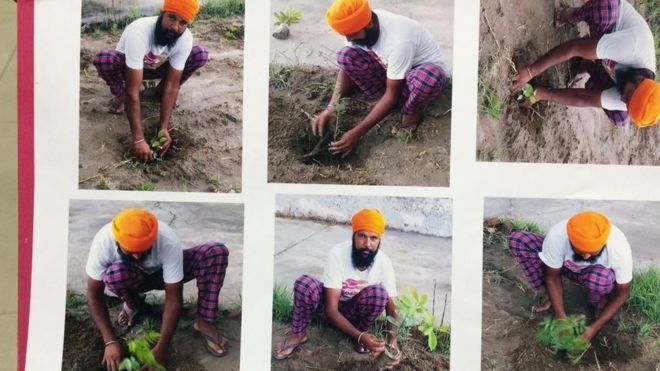
A man poses with plant saplings before applying for a gun licenseImage copyright COURTESY: CHANDER GAIND
Image caption Applicants for gun licenses must plant at least 10 saplings and submit ‘selfies’ as proof

Guns and plant saplings are an odd combination – but in India’s northern Punjab state, the two are now linked.

For a month now, applicants in the state’s Ferozepur district have had to plant at least 10 saplings before applying for gun licences.

“Punjabis are mad about cars, weapons and mobiles. Let them be mad about plantations too,” District Commissioner Chander Gaind told the BBC.

Mr Gaind said applicants would have to submit selfies with the saplings.

“With roads being widened at a [fast] rate, trees are being cut in very large numbers, so this was the need of the hour,” he added.

With 360,000 licensed gun holders, Punjab has the third largest number of licenses in India, government data shows.

But a selfie with a sapling does not guarantee one of the much sought after licences. It merely means the application will be “considered” for processing.

The order was issued on 5 June to coincide with world environment day, but has only now picked up traction in local media as more people have started complying.

Mr Gaind says they have received at least 100 applications – along with selfies – since the order was passed.

But simply planting saplings and taking selfies with them is not enough – applicants also have to submit follow-up selfies a month later, proving that they are nurturing the plants.


Source: The BBC
28/12/2018

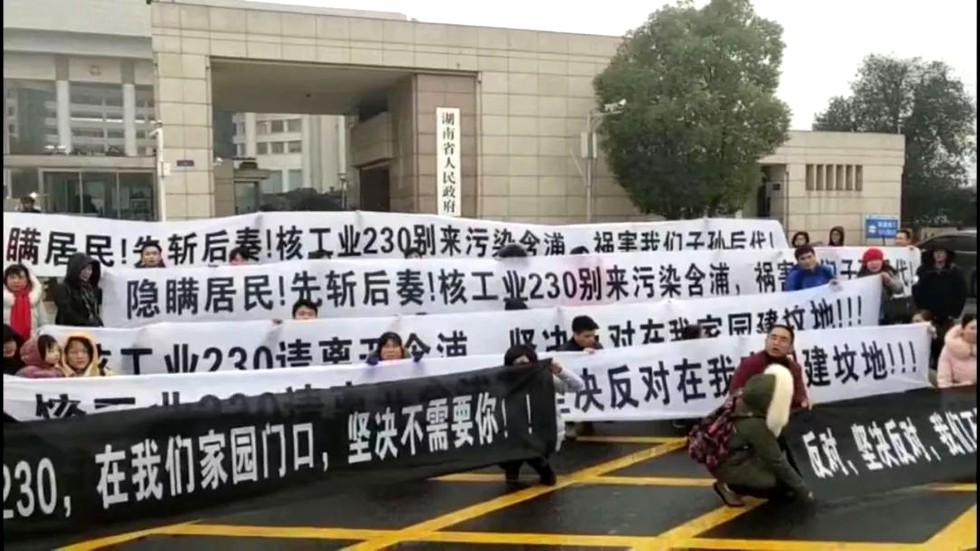
Chinese city residents protest over plans for nuclear research plant

  • Local suspicions over Changsha plant heightened by failure to officially announce the plans until one day before public consultation process was due to end
PUBLISHED : Friday, 28 December, 2018, 7:40pm
UPDATED : Friday, 28 December, 2018, 7:40pm

The protesters fear that radioactive materials used at the planned facility in Changsha, the capital of Hunan province, will pose a health risk.

The institute behind the project did not officially release their plans on Tuesday – after work had began on the site and one day before the public consultation period was supposed to end.

An environmental impact assessment into the project said Number 230 Research Institute, a branch of the China National Nuclear Corporation, had acquired a space of over 20,000 square metres near a densely populated area to expand its offices and laboratories at the site, which will be dedicated to the geological exploration of uranium.

Although the facility is not intended to handle refined uranium, and scientists say that unprocessed material does not emit harmful levels of radiation, residents have expressed concerns about the possible health risks and have called for building work to be halted.

Their concerns were heightened by the failure to carry out an assessment of the radiological hazards and the decision to announce the plans a day before the consultation period was due to end.

Wu Xiaosha, one of the protesters, said people were also angry that the project is already being built without approval.

“The environmental impact assessment report lied about the population in the area – it said there are only 40,000 people in the area, but actually it’s nearly 250,000,” said Wu.

Yang Wenqiang, an official from the Changsha Urban Rural Planning Bureau, refused to comment on the matter, saying the government was holding an emergency meeting and will release a statement later.

In a public letter issued on Thursday, Luo Zheng, deputy head of the Xueshi subdistrict, said he had no idea what the project was planning to do and had asked the institute to explain its population estimate – a question it has not yet answered.

“As for what does this institute does and why should it be built here, I am very curious too,” said Luo.

He said he would visit related institutions to see how they operate and how they evaluate the risks.

Environmental concerns have fuelled a growing number of protests in China in recent years as public awareness of the possible health risks increases.

The Chinese Academy of Social Sciences reported that half of protests with more than 10,000 participants between 2001 and 2013 were sparked by concerns about pollution.

15/12/2018

Boeing opens first 737 plant in China amid U.S.-Sino trade war

ZHOUSHAN, China (Reuters) – Boeing Co (BA.N) opened its first 737 completion plant in China on Saturday, a strategic investment aimed at building a sales lead over arch-rival Airbus (AIR.PA) in one of the world’s top travel markets that has been overshadowed by the U.S-China trade war.

The world’s largest planemaker also delivered the first of its top-selling 737s completed at the facility in Zhoushan, about 290 km (180 miles) southeast of Shanghai, to state carrier Air China (601111.SS)(0753.HK) during a ceremony on Saturday with top executives from both companies.

The executives, alongside representatives from China’s state planner and aviation regulator, unveiled the plane at an event attended by hundreds of people.

Boeing and Airbus have been expanding their footprint in China as they vie for orders in the fast-growing aviation market, which is expected to overtake the United States as the world’s largest in the next decade.

Boeing invested $33 million last year to take a majority stake in a joint venture with state-owned Commercial Aircraft Corp of China (COMAC) to build the completion center, which installs interiors and paints liveries.

Chicago-based Boeing calls itself the top U.S. exporter and delivered more than one out of every four jetliners it made last year to customers in China, where it forecasts demand for 7,700 new airplanes over the next 20 years valued at $1.2 trillion.

However, the plant’s inaugural ceremony was overshadowed by tensions between the United States and China as they engage in a bruising tit-for-tat tariff war. The world’s two largest economies are in a 90-day detente to negotiate a trade deal.

“Am I nervous about the situation? Yeah, of course. It’s a challenging environment,” John Bruns, President of Boeing China, told reporters on a conference call earlier on Saturday.

“We have to keep our eye on the long game in China. Long term, I’m optimistic we will work our way through this,” he said.

While the trade frictions have hurt businesses such as U.S. soy bean farmers and Chinese manufacturers, their impact on Boeing has been unclear. U.S.-made aircraft have so far escaped Beijing’s tariffs.

Bruns said he remained optimistic about the outcome of trade talks between the United States and China and described aviation as a “bright spot” amid tensions between the two countries.

Asked about the possibility of technology transfer agreements between Boeing and COMAC, Bruns stressed that the purpose of the plant was for installing seats, painting vehicles, and completing the planes’ final delivery.

“That’s only a part of what we do in the production of airplanes,” he said.

Officials and executives made no direct reference to the trade tensions in public remarks at the planemaker’s Zhoushan facility.

Boeing aims eventually to hit a delivery target of 100 planes a year at Zhoushan, although Bruns deflected a question on how quickly it would reach that level and said Boeing had no plans to expand work to other aircraft types.

Boeing also hopes the plant will relieve pressure at the Seattle-area facility where it plans to boost production next year of its best-selling 737 narrowbody aircraft but has struggled with production delays.

Law of Unintended Consequences

continuously updated blog about China & India

ChiaHou's Book Reviews

continuously updated blog about China & India

What's wrong with the world; and its economy

continuously updated blog about China & India