Archive for ‘pneumonia’

28/05/2020

India coronavirus: Trouble ahead for India’s fight against infections

Coronavirus in IndiaImage copyright GETTY IMAGES
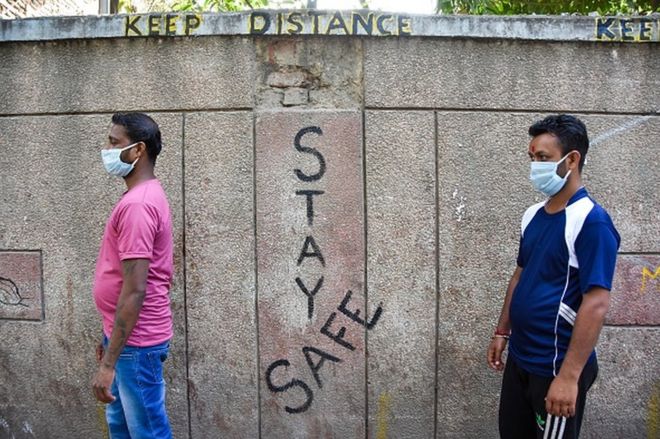
Image caption India has more than 150,000 reported infections

On the face of it, things may not look bad.

Since the first case of coronavirus at the end of January, India has reported more than 150,000 Covid-19 infections. More than 4,000 people have died of the infection.

To put this in some context, as of 22 May, India’s testing positivity rate was around 4%, the death rate from the infection around 3% and the doubling rate of infection – or the amount of time it takes for the number of coronavirus cases to double – was 13 days. The recovery rate of infected patients was around 40%.

All this is markedly lower than in the countries badly hit by the pandemic.

Like elsewhere in the world, there are hotspots and clusters of infection.

More than 80% of the active cases are in five states – Maharashtra, Tamil Nadu, Delhi, Gujarat and Madhya Pradesh – and more than 60% of the cases in five cities, including Mumbai, Delhi and Ahmedabad, according to official data.

More than half of people who have died of the disease have been aged 60 and older and many have underlying conditions, hewing to the international data about elderly people being more vulnerable to the disease.

The more than two-month-long grinding lockdown, official data suggests, has prevented the loss of between 37,000 and 78,000 lives. A paper published in Harvard Data Science Review appears to support that – it shows an eight-week lockdown can prevent about two million cases and, at a 3% fatality rate, prevent some 60,000 deaths.

“Infection has remained limited to certain areas. This also gives us confidence to open up other areas. It is so far an urban disease,” says VK Paul, who heads the medical emergency management plan on Covid-19.

This is where such claims enter uncertain territory.
India testingImage copyright GETTY IMAGES
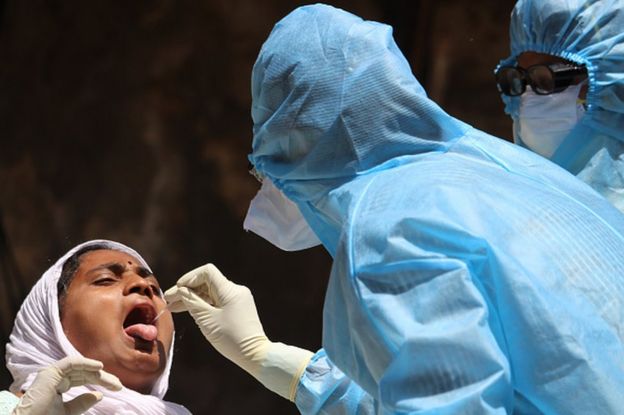
Image caption India has conducted some 180,000 tests so far

India is now among the top 10 countries worldwide in terms of total reported infections, and among the top five in the number of new cases.

Infections are rising sharply, up from 536 cases on 25 March when the first phase of the world’s harshest lockdown was imposed. The growth of infections is outpacing growth in testing – tests have doubled since April but cases have leapt fourfold.

Epidemiologists say the increase in reported infections is possibly because of increased testing. India has been testing up to 100,000 samples a day in the past week. Testing criteria has been expanded to include asymptomatic contacts of positive patients.

Yet, India’s testing remains one of the lowest in the world per head of population – 2,198 tests per million people.

The bungled lockdown at the end of March triggered an exodus of millions of informal workers who lost their jobs in the cities and began returning home in droves, first on foot and then by train. Some four million workers have travelled by rail from cities to their villages in more than half a dozen states in the past three weeks.

There is mounting evidence that this has already led to the spread of infection from the cities to the villages. And with the messy easing of the lockdown earlier this month, there are growing fears of infections spreading further in the cities.

Rising infections and a still-low fatality rate possibly points to milder infection in a younger population and a large number of asymptomatic cases. The focus, says Amitabh Kant, CEO of the government think-tank NITI Aayog, should be “bringing down fatalities and improving the recovery rate”.

But if the infection rate continues to grow, “things are going to get pretty grim in a few weeks time,” a leading virologist told me.
India lockdownImage copyright GETTY IMAGES
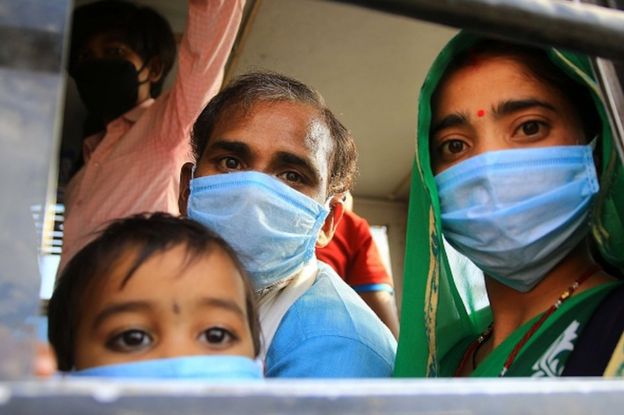
Image caption Millions of workers have fled the cities and returned to their villages after the lockdown

Doctors in the capital, Delhi, and the western city of Mumbai tell me they are already seeing a steady surge in Covid-19 admissions and worry about a looming shortage of hospital beds, including in critical care.

When the infection peaks in July, as is expected, a spike in infections could easily lead to many avoidable deaths as hospitals run out of beds for, or delay treatment to, infected patients who need timely oxygen support and clinical care to recover.

“That is the real worry. A critical-care bed needs an oxygen line, a ventilator, doctors, nursing staff. Everything will be under pressure,” Dr Ravi Dosi, who is heading a Covid-19 ward at a hospital in Indore, told me. His 50-bed ICU is already full of patients battling the infection.

With the lockdown easing, doctors are feeling jittery. “It’s a tactical nightmare because some people have begun going to work but there is a lot of fear”, says Dr Dosi.

“One co-worker sneezed in the office and 10-15 of his colleagues panicked and came to the hospital and demanded they get tested. These are the pressures that are building up.”

One reason for the confusion is the lack of – or the opacity of – adequate data on the pandemic to help frame a strategic and granular response.

Most experts say a one-size-fits-all strategy to contain the pandemic and impose and lift lockdowns will not work in India where different states will see infection peaks at different times. The reported infection rate – the number of infections for every 100 tests – in Maharashtra state, for example, is three times the national average.

“The infection is not spreading uniformly. India will see staggered waves,” a leading virologist, who insisted on anonymity, told me.

The lack of data means questions abound.

What about some 3,000 cases, which are not being assigned to any state because these people were found infected in places where they don’t live? (To put this into context, nine states in India have more than 3,000 cases.) How many of these cases have died or recovered?

Also, it is not clear whether the current data – sparse, and sporadic – is sufficient to map the future trajectory of the disease.

There is, for example, no robust estimate of carriers of the virus who have no symptoms – last month a senior government scientist said at least “80 out of every 100 Covid-19 patients may be asymptomatic or could be showing mild symptoms”.
coronavirus victim burial in IndiaImage copyright GETTY IMAGES
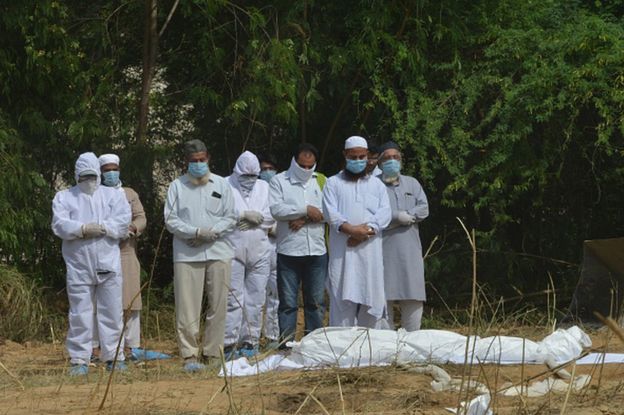
Image caption More than 4,000 people have died of Covid-19 in India

If that is indeed true, then India’s fatality rate is bound to be lower. Atanu Biswas, a professor of statistics, says the predicted trajectory could change “with the huge inclusion of asymptomatic cases”. But, in the absence of data, India cannot be sure.

Also, epidemiologists say, measures like the doubling time of the infections and the reproduction number or R0 have their limitations. R0, or simply the R value, is a way of rating a disease’s ability to spread. The new coronavirus, Sars-CoV-2, has a reproduction number of about three, but estimates vary.

“These measures are good when we are in the middle of a pandemic, less robust with fewer cases. You do need forecasting models for at least a month’s projection to anticipate healthcare needs. We should always evaluate an aggregate of evidence, not just one measure, but a cascade of measures,” Bhramar Mukherjee, a professor of biostatistics and epidemiology at the University of Michigan, told me.

Others say even calculating the number of recorded infections every day is “not always a good indicator of how an infection is spreading”.

A better option would be to look at the number of new tests and new cases every day that would provide a “degree of standardisation”, K Srinath Reddy, president of the Public Health Foundation of India, told me.

Likewise, he believes, a measure of how many Covid-19 deaths have occurred compared with the size of a country’s population – the numbers of deaths per million people – is a better indicator of the fatality rate. Reason: the denominator – the country’s population – remains stable.

In the absence of robust and expansive data, India appears to be struggling to predict the future trajectory of the infection.

It is not clear yet how many deaths are not being reported, although there is no evidence of large scale “hidden deaths”.
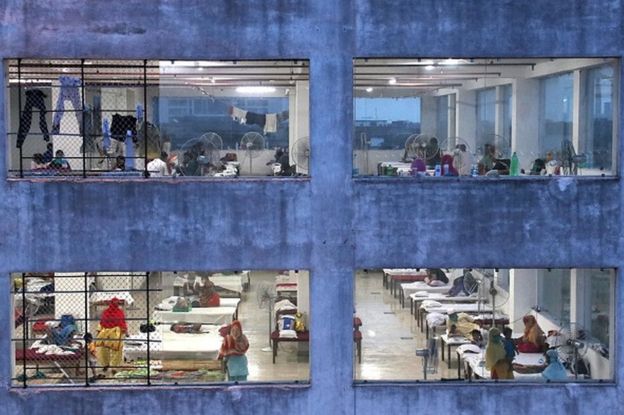
Coronavirus isolation ward in KolkataImage copyright GETTY IMAGES
Image caption A Covid-19 isolation ward in India

Epidemiologists say they would like to see clearer data on deaths due to pneumonia and influenza-like illnesses at this time over the past few years to quantify excess deaths and help with accurate reporting of Covid-19 deaths.

They would also like to see what racial disparities in infections and deaths there are to help improve containment in specific community areas. (In Louisiana, for example, African Americans accounted for 70% of Covid-19 deaths, while comprising 33% of the population.)

What is clear, say epidemiologists, is that India is as yet unable to get a grip on the extent of the spread of infection because of the still limited testing.

“We need reliable forecasting models with projection for the next few weeks for the country and the states,” says Dr Mukherjee.

Epidemiologists say India needs more testing and contact-tracing for both asymptomatic and symptomatic infections, as well as isolation and quarantine.

There’s also the need to test based on the “contact network” to stop super-spreader events – frontline workers, delivery workers, essential workers, practically anybody who interacts with a large group of people.

“We have to learn how to manage and minimise risk in our daily lives as the virus is going to be with us,” says Dr Mukherjee.

Without knowing the true number of infected cases India is, in the words of an epidemiologist, “flying blindfolded”.

That can seriously jeopardise India’s fight against the virus and hobble its response in reviving the broken economy.

Source: The BBC
04/04/2020

Coronavirus: China mourns Covid-19 victims with three-minute silence

Media caption A day of remembrance is held in China to honour those who have died in the coronavirus outbreak

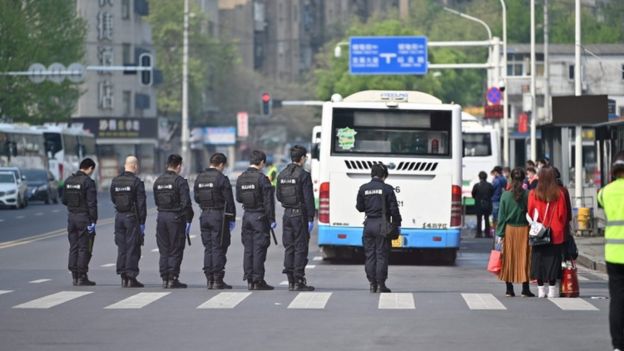
China has mourned the victims of the coronavirus outbreak by observing a three-minute silence, bringing the nation to a halt.

A day of remembrance was declared in China on Saturday to honour the more than 3,300 people who died of Covid-19.

At 10:00 local time (03:00 GMT), people stood still nationwide for three minutes in tribute to the dead.

Cars, trains and ships then sounded their horns, air raid sirens rang as flags were flown at half-mast.

The first cases of coronavirus were detected in the Chinese city of Wuhan in Hubei province late last year.

Since then, the virus has swept the globe, infecting more than one million people and killing nearly 60,000 in 181 countries.

In Wuhan, the epicentre of China’s outbreak, all traffic lights in urban areas were turned red at 10:00, ceasing traffic for three minutes.

China’s government said the event was a chance to pay respects to “martyrs”, a reference to the 14 medical workers who died battling the virus.

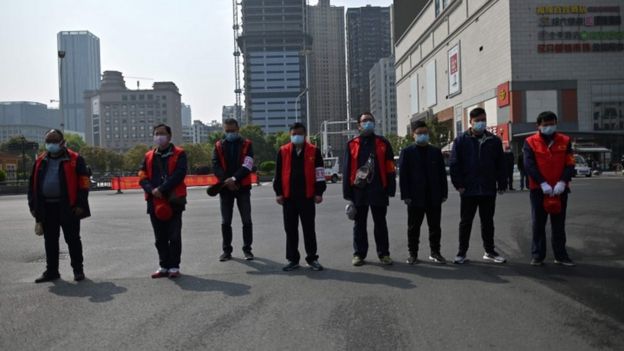
People stop and pay their respects in Wuhan, 4 April 2020Image copyright GETTY IMAGES
Image caption China came to a standstill during the three-minute silence at 10:00 local time

They include Li Wenliang, a doctor in Wuhan who died of Covid-19 after being reprimanded by the authorities for attempting to warn others about the disease.

“I feel a lot of sorrow about our colleagues and patients who died,” a Chinese nurse who treated coronavirus patients told AFP news agency. “I hope they can rest well in heaven.”

Wearing white flowers pinned to their chest, Chinese President Xi Jinping and other government officials paid silent tribute in Beijing.

Saturday’s commemorations coincide with the annual Qingming festival, when millions of Chinese families pay respects to their ancestors.

China first informed the World Health Organization (WHO) about cases of pneumonia with unknown causes on 31 December last year.

By 18 January, the confirmed number of cases had risen to around 60 – but experts estimated the real figure was closer to 1,700.

Police officers and officials stop and pay their respects during a three minutes of silence to mourn those who died in the fight against the pandemicImage copyright GETTY IMAGES
Image caption China’s government said the commemoration was held to pay respects to “martyrs”

Just two days later, as millions of people prepared to travel for the lunar new year, the number of cases more than tripled to more than 200 and the virus was detected in Beijing, Shanghai and Shenzhen.

From that point, the virus began to spread rapidly in Asia and then Europe, eventually reaching every corner of the globe.

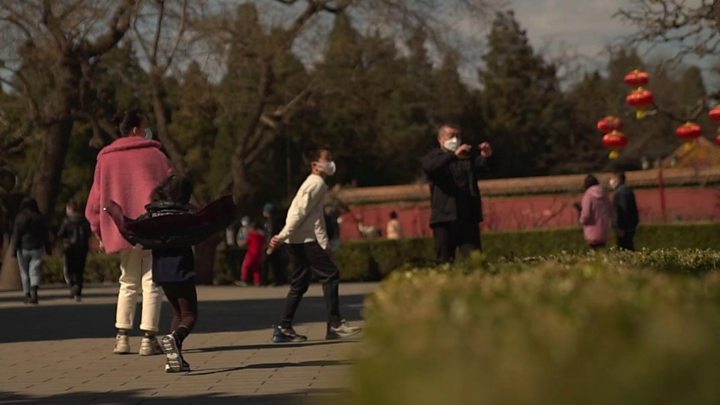
Media caption The BBC met people in Beijing heading out after the lockdown

In the past few weeks, China has started to ease travel and social-distancing restrictions, believing it has brought the health emergency under control.

Last weekend, Wuhan partially re-opened after more than two months of isolation.

On Saturday, China reported 19 new confirmed cases of coronavirus, down from 31 a day earlier. China’s health commission said 18 of those cases involved travellers arriving from abroad.

As it battles to control cases coming from abroad, China temporarily banned all foreign visitors, even if they have visas or residence permits.

What is the latest worldwide?

As the coronavirus crisis in China abates, the rest of the world remains firmly in the grip of the disease.

In the US, now the global epicentre of the outbreak, the number of deaths from the disease jumped to 7,152 on Friday, according to data collated by Johns Hopkins University.

The deaths increased by 1,480 in 24 hours, the highest daily death toll since the pandemic began, AFP news agency reported, citing Johns Hopkins University’s case tracker.

Banner image reading 'more about coronavirus'
Banner

As of Friday, there were 277,953 confirmed cases of coronavirus in the US, a rise of more than 32,000 in 24 hours.

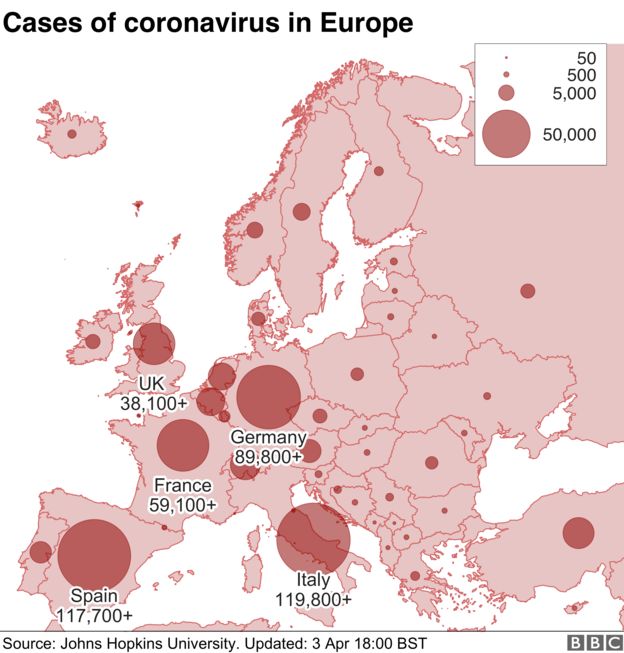
Meanwhile, deaths continue to climb in Italy and Spain, the second and third worst-affected countries in the world.

Map showing number of cases in Europe
Presentational white space

In Italy, deaths increased by 766 on Friday, bringing the total to 14,681. In Spain, the death toll stood at 10,935, a rise of 932 in the past day.

However, there was a glimmer of hope for both countries, as the downward trend in the rate of new cases continued.

In other global developments:

24/03/2020

Coronavirus: Is this textile city set to be ‘India’s Italy’?

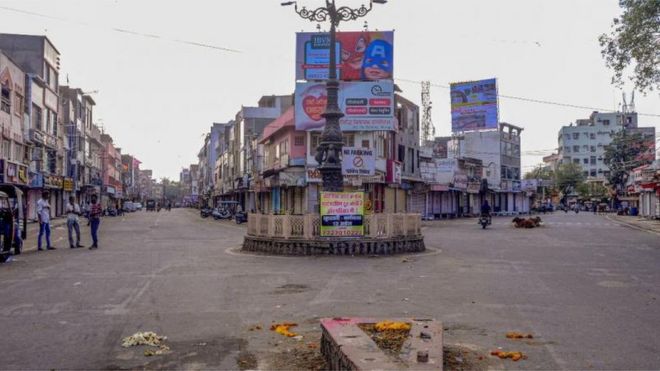
Bhilwara curfewImage copyright PTI
Image caption This city of five million people has been under a lockdown since last week

At 05:00 local time (23:30 GMT) of 8 March, the intensive care unit of a private hospital in the northern Indian state of Rajasthan received a 68-year-old man suffering from pneumonia. He was also having problems breathing.

At the Brijesh Bangar Memorial Hospital in Bhilwara, the new patient was examined by 58-year-old Alok Mittal, a doctor of internal medicine, and his team. The patient wasn’t asked about any travel history; nor did he disclose anything. There were six other patients in the ICU.

The man’s condition did not improve much, and two days later, he was sent to a private hospital in Jaipur, some 250km (155 miles) away, for specialised treatment. In Jaipur, he was treated in two hospitals. “We had no idea what was in store,” Shantilal Acharya, an intensive care nurse who received the patient in the Bhilwara hospital, told me.

For reasons that are still unclear, even the hospitals in Jaipur didn’t test a patient with severe pneumonia for coronavirus. His condition deteriorated swiftly and he died a few days later, on 13 March. The news of his death was conveyed to Dr Mittal and his team.

Bhilwara HospitalImage copyright SHAUKAT AHMED
Image caption The infection possibly spread from a private hospital in Bhilwara

Strangely enough, the doctors didn’t appear to comprehend the gravity of the situation even though it was clear that India was facing an imminent outbreak of Covid-19. The country has reported more than 460 confirmed cases and nine deaths so far, and testing remains low. On 9 March, according to reports, Dr Mittal and a few others travelled to the city of Udaipur, put up in a resort and played Holi, the Indian spring festival of colours. (Repeated attempts at getting through to Dr Mittal by phone and text yielded no results.)

Days after the death of the pneumonia patient, Dr Mittal and a colleague checked themselves into an isolation ward of a government hospital. Over the next few days, a few more colleagues from the hospital joined them in isolation. Twelve of them, including Dr Mittal, tested positive for Covid-19.

Next day, as news of the infections leaked, all hell broke loose. The private hospital was popular with its residents, and many regularly visited its thriving out-patient department for treatment. As people panicked and began blaming the doctors for spreading the infection, authorities moved swiftly.

Bhilwara stationImage copyright SHAUKAT AHMED
Image caption People have been stopped from entering or leaving Bhilwara

They imposed a “civil curfew”, prohibiting people from coming out of their homes and banning public gatherings. They shut schools, colleges, offices, and stopped people from leaving or entering the district. The private hospital was sealed and its 88 patients moved to other healthcare facilities in the area. “Officials were telling us the threat was serious and there was a chance of an outbreak,” local journalist Pramod Tiwari told me.

So Bhilwara, fearing a serious outbreak, did everything that India did a few days later. So could this city of 400,000 people and a major textile making hub, turn out to be India’s first coronavirus “hotspot”?

Consider this.

Of the 69 people tested in the city until Sunday evening, 13 people – including doctors and paramedics – aged between 24 and 58, have tested positive. They include three doctors and nine health workers. Thirty-one people – mostly hospital workers – are in isolation. “Most of them are doing fine,” Dr Arun Gaur, the chief medical officer of the district, told me.

But things could get really bad.

Between 20 February and before going into isolation last week, Dr Mittal and his team of doctors at the hospital saw 6,192 patients who came from 13 districts of Rajasthan and 39 patients belonging to four other states. Drawing from the experience in China and Italy, doctors now know that hospitals might turn out to be the “main source” of Covid-19 transmission. Also, both MERS and SARS had high transmission rates within hospitals. The potential for community transmission of the infection across a large geographical area from the Bhilwara hospital is real, officials fear.

Bhilwara border sealedImage copyright SHAUKAT AHMED
Image caption The city’s borders have been sealed

So did the virus reach this city through the patient who was treated at three hospitals and went untested before he died? Or did one of the more than 80 patients admitted in the hospital transmit it? Or was it spread by another patient in the intensive care? Or had one of the doctors picked up the infection separately and spread it unknowingly?

Nobody will know until all the contact tracing and testing is complete, and that’s the scary part.

The lack of early credible information on the transmission meant that rumours had a field day. Local media reported that one of the infected doctors had received guests from Saudi Arabia at home and had contracted the infection. He had then gone to the hospital and spread the infection to co-workers, the reports added.

Dr Niyaz Khan had to record a mobile phone video from his intensive care bed to squelch the rumour. With monitors beeping around him, Dr Khan, masked and breathless, implored: “Just to set the record straight, I have no relative in Saudi Arabia. I have a son and a wife. None of them is positive. Please don’t believe what is coming in the media.” Another doctor said it was unfair to blame the hospital: “The patient fooled us and told us he didn’t travel outside the country for the two days he was in the ICU with us.” And Dr Mittal himself – his wife has also tested positive – recorded videos in isolation saying that he had tested positive, and he was doing well. “Please do not panic,” the well-known doctor said.

Bhilwara curfewImage copyright GETTY IMAGES
Image caption Residents in the city have begun panicking

That is easier said than done.

Realising the gravity of the situation, 300 teams of government workers and volunteers have fanned out in Bhilwara city. They are knocking on the doors of some 78,000 houses, and asking residents whether they’ve had a guest from outside the country, been treated in the hospital or know anyone who has tested positive. The survey began on 18 March and will finish on 25 March. “They are asking if we have cold, cough and fever and telling us if we have any of the symptoms we should report for tests at the government hospital,” a resident told me.

Another 1,900 similar teams have travelled out into neighbouring villages where more than 2.5 million people live. People in homes with suspect cases are being put into quarantine. Seven thousand people have been put into home quarantine so far.

Fearing a surge in infections, 20 more beds are being added to the hospital’s 30-bed isolation ward, which is already full. Six private hospitals have promised to provide an additional 35 beds for isolation. Thirteen places with 450 beds – extendable to 2,000 beds – where people can be quarantined have also been identified, Rajendra Bhatt, the senior-most official of the district told me. “It’s like fighting a war, but we have been agile and alert,” he said.

Meanwhile the residents, like elsewhere in India, are enduring an extended lockdown and curfew. Rajkumar Jain, a professor of computer science, is locked down with 14 members of his joint family in a two-storey home. “We are in complete panic,” he told me. “People are saying here that Bhilwara is going to become India’s Italy.”

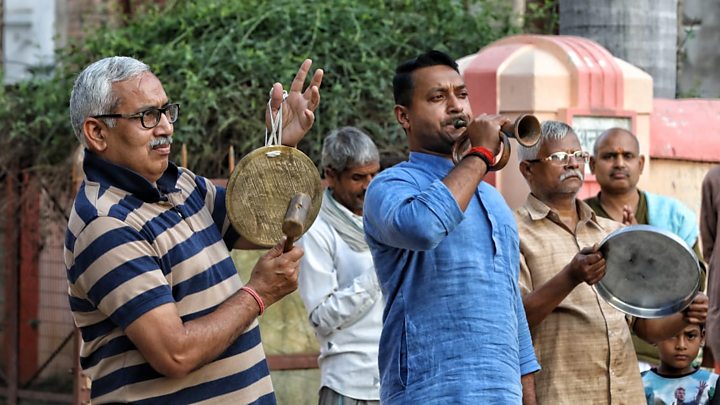
Media captionWATCH: Millions of Indians bang pots and pans in support of health workers

Related Topics

Source: The BBC

21/01/2020

China virus fears grow as human transmission and fourth death confirmed

BEIJING (Reuters) – With millions of Asians travelling on Tuesday for the Lunar New Year holiday, authorities in China confirmed that a new virus could be spread through human contact, reporting 15 medical staff had been infected and a fourth person had died.

The chilling update on the coronavirus outbreak that began in the central city of Wuhan sent shivers through financial markets, as the World Health Organisation called a meeting for Wednesday to consider declaring an international health emergency.

By the end of Monday the number of confirmed cases in China had climbed to 291, the National Health Commission said. Some 270 were in Hubei province. Wuhan, a city of 11 million people is the provincial capital.

The outbreak was also spreading to other cities, with 15 cases in southern province of Guangdong, five in the capital Beijing and two in Shanghai.

“Information about newly reported infections suggest there may now be sustained human to human transmission,” WHO Regional Director for the Western Pacific Takeshi Kasai said in an email statement.

The scare brought back bad memories of Severe Acute Respiratory Syndrome (SARS), another coronavirus that broke out in China in 2002/2003, resulting in the death of nearly 800 people in global pandemic.

Health authorities around the world have begun to step up screening of travellers arriving from China. Two cases have already been identified in Thailand, one in Japan and one in South Korea, while the Philippines reported on Tuesday its first suspected case.

Wuhan Municipal Health Commission confirmed a fourth fatality on Tuesday, disclosing that an 89-year-old man who had underlying health issues, including heart disease, died on Jan. 19.

Chinese authorities also confirmed for the first time that the virus could spread through human contact and said 15 medical staff had been infected.

The mounting anxiety was transmitted to regional markets. China’s onshore yuan CNY= fell 0.6%, its biggest daily drop since Aug. 26, 2019, while airline and travel stocks fell across the region.

European shares also slipped on mounting concerns about the impact of the outbreak, with luxury goods firms particularly hard-hit on worries about weaker demand from Chinese consumers.

The virus can cause pneumonia, with symptoms including fever and difficulty in breathing. As those symptoms are similar to many other respiratory diseases, extra screening is needed.

AIRPORT SCREENING

The origin of the virus has yet to be identified, but the primary source is most likely animal, according to WHO. Chinese officials have linked the outbreak to a seafood market in Wuhan.

“The outbreak of a SARS-like coronavirus in Wuhan is developing into a major potential economic risk to the Asia-Pacific region now that there is medical evidence of human-to-human transmission,” said Rajiv Biswas, Asia Pacific Chief Economist for IHS Markit, in an email statement.

So far, the WHO has not recommended trade or travel restrictions but such measures could be discussed at Wednesday’s emergency meeting.

China’s National Health Commission will also give an update on the outbreak at a press briefing at 10 a.m. (0200 GMT) on Wednesday.

Foreign ministry spokesman Geng Shuang said China will attend the WHO meeting and share relevant information.

“China is willing to deepen its global cooperation and work with the international community to work together to deal with the epidemic,” Geng told reporters at a regular daily briefing.

Airport authorities in the United States as well as most Asian nations also are screening passengers from Wuhan.

Australia on Tuesday said it would screen passengers on flights from Wuhan, while Singapore announced it would quarantine individuals with pneumonia and a history of travel to Wuhan within 14 days prior to the onset of symptoms.

QUEUES FOR MASKS

Wuhan officials have been using infrared thermometers to screen passengers at airports, railway stations and other passenger terminals since Jan. 14.

Zhong Nanshan, head of the National Health Commission’s team of experts investigating the outbreak, said in footage shown by state television on Monday there was no danger of a repeat of the SARS epidemic so long as precautions were taken.

Images of long lines of people queuing to buy face masks were circulating widely on Chinese social media, where the outbreak was one of the top trending topics.

Some online vendors were limiting sales of masks and hand sanitizers as demand surged.

And Shanghai’s market regulator warned on Tuesday that it will punish speculators who hoard masks and other products used for preventing diseases, according to the Shanghai Observer – a web publication backed by a Communist Party newspaper.

Trip.com, China’s top online travel booking platform, said it would refund customers who cancel bookings in Wuhan this month, or whose travel plans are disrupted by quarantines or other regulatory efforts to prevent the spread of the virus.

Source: Reuters

20/01/2020

China confirms spread of new virus as cases surge

BEIJING (Reuters) – An outbreak of a new coronavirus in China has spread to more cities, Chinese authorities said on Monday, as the number of patients tripled and a third person died, stoking concerns about containment of the illness.

The Daxing health commission in the capital Beijing said it had confirmed two cases of coronavirus, while the southern Guangdong province’s health commission confirmed one case in Shenzhen. They mark the first cases in China beyond the central city of Wuhan where the virus first emerged.

The Wuhan Municipal Health Commission said 136 new cases of pneumonia caused by the coronavirus strain had been found in the city over the weekend, adding to 62 already known cases. A third death occurred on Saturday, the authority said in a statement.

This brings the total number of known cases worldwide to more than 200, underscoring the challenge for health authorities seeking to contain the outbreak. South Korea on Monday reported its first confirmed case of the coronavirus, a 35-year-old female Chinese national who had travelled from Wuhan, the fourth patient to be reported outside China.

Hundreds of millions of Chinese tourists will be traveling domestically and abroad during the Lunar New Year holiday period that starts later this week.

A report by London Imperial College’s MRC Centre for Global Infectious Disease Analysis estimated that by Jan. 12 there were 1,723 cases in Wuhan City with onset of related symptoms. Chinese health authorities have not commented directly on the report.

CONTAINMENT EFFORTS

Authorities around the globe, including in the United States and many Asian countries, have stepped up screening of travellers from Wuhan. Last week, two cases were reported in Thailand and one in Japan. All three involved people from Wuhan or who recently visited the city.

The virus belongs to the same family of coronaviruses as Severe Acute Respiratory Syndrome (SARS), which killed nearly 800 people globally during a 2002/03 outbreak that also started in China.

Its symptoms include fever and difficulty in breathing, which are similar to many other respiratory diseases and pose complications for screening efforts.

China’s National Health Commission said on Sunday it will step up prevention efforts, but acknowledged it still doesn’t know the source of the virus.

Shares in pharmaceutical firms and mask makers in China surged Monday because of the outbreak.

The outbreak was one of the top trending topics on Chinese social media platform Weibo, where many users expressed concerns about their safety.

“Who knows how many people who have been to Wuhan may be unaware that they have already been infected?,” one user said.

China’s Global Times, published by the ruling Communist Party’s official People’s Daily newspaper, said in an editorial the government needs to disclose all information and not repeat the mistakes made with SARS. Chinese officials covered up the SARS outbreak for weeks before a growing death toll and rumours forced it to reveal the epidemic.

“Concealment would be a serious blow to the government’s credibility and might trigger greater social panic,” the editorial said.

Source: Reuters

Law of Unintended Consequences

continuously updated blog about China & India

ChiaHou's Book Reviews

continuously updated blog about China & India

What's wrong with the world; and its economy

continuously updated blog about China & India