Archive for ‘polio’

20/03/2020

Coronavirus: Why is India testing so little?

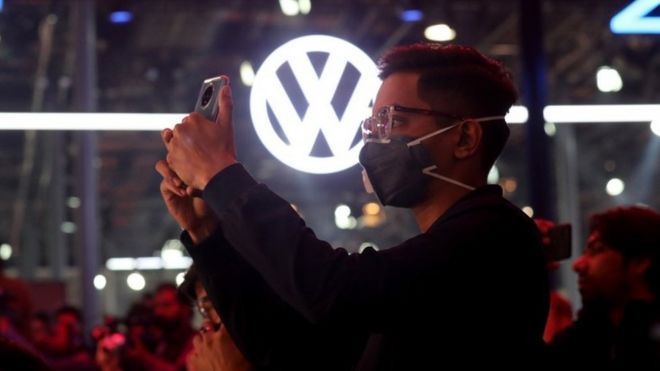
A visitor wears a mask as a precautionary measure against Corona virus at the Volkswagen showcasing hall during the India Auto Expo 2020 in Greater Noida, India, 05 February 2020.Image copyright EPA
Image caption The world’s second-most populous country has reported about 182 infections

“We have a simple message to all countries – test, test, test,” World Health Organisation (WHO) head Tedros Adhanom Ghebreyesus told reporters in Geneva earlier this week.

He was alluding to the coronavirus outbreak, which has killed more than 10,000 people and infected nearly 250,000 in at least 159 countries.

“All countries should be able to test all suspected cases, they cannot fight this pandemic blindfolded,” he said.

With 182 reported infections and four deaths so far, is India taking this advice seriously? Is the world’s second-most populous country testing enough?

The jury is out on this one. India had tested some 14,175 people in 72 state-run labs as of Thursday evening – one of the lowest testing rates in the world. The reason: the country has limited testing. So, only people who have been in touch with an infected person or those who have travelled to high-risk countries, or health workers managing patients with severe respiratory disease and developing Covid-19 symptoms are eligible for testing.

Why is a densely populated country with more than a billion people testing so little? The official assumption is the disease has still not spread in the community. As early “evidence” health authorities say 826 samples collected from patients suffering from acute respiratory disease from 50 government hospitals across India between 1 and 15 March tested negative for coronavirus. Also, hospitals have not yet reported a spike in admissions of respiratory distress cases.

“It is reassuring that at the moment there is no evidence of community outbreak,” says Balram Bhargava, director of the Indian Council of Medical Research (ICMR). He believes Mr Ghebreyesus’s advice is “premature” for India, and it would only “create more fear, more paranoia and more hype”.
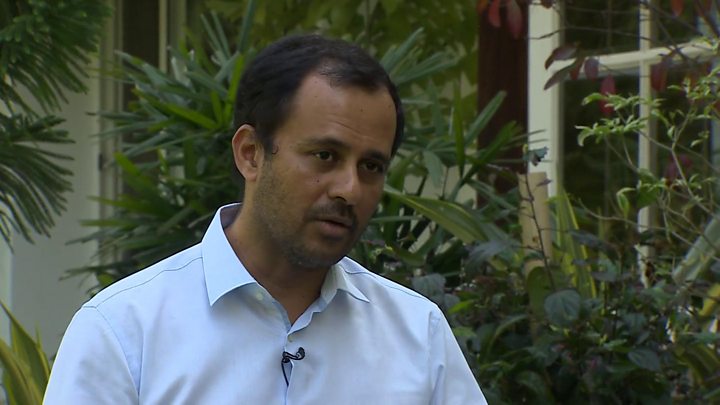
Media caption Dr Ramanan Laxminarayan: “India’s going to be the next hot spot for this epidemic”

But experts are not so sure.

Many of them believe India is also testing below scale because it fears that its under-resourced and uneven public health system could be swamped by patients. India could be buying time to stock up on testing kits and add isolation and hospital beds. “I know mass testing is not a solution, but our testing appears to be too limited. We need to quickly expand to restrict community transmission,” K Sujatha Rao, former federal health secretary and author of But Do We Care: India’s Health System, told me.

On the other hand, say virologists, random, on-demand testing will create panic and completely strain the feeble public health infrastructure. Increased and targeted “sentinel screening” of patients suffering from influenza and diagnoses in hospitals across the country can provide a better idea of whether there is community transmission, they say. “We need focused testing. We cannot do a China or Korea because we simply don’t have the capacity,” a senior virologist told me.

In many ways, it is all about India trying to battle a pandemic with limited resources. Experts talk about the country’s success in defeating polio, combating small pox, successfully controlling the spread of HIV/Aids, and more recently H1N1 with rigorous surveillance, sharp identification of vulnerable people, targeted intervention, and an early engagement with the private sector to prevent disease spread.

Yet, coronavirus is one of the deadliest transmissible viruses in recent history. Every day lost in effective response means the looming danger of a surge in infections. India spends a paltry 1.28% of its GDP on health care, and that may begin to bite if there’s a full-blown outbreak. Partial lockdowns in many cities – shutting schools, colleges, businesses and suspending some rail transport – proves that the government fears that community transmission of the virus might have begun.
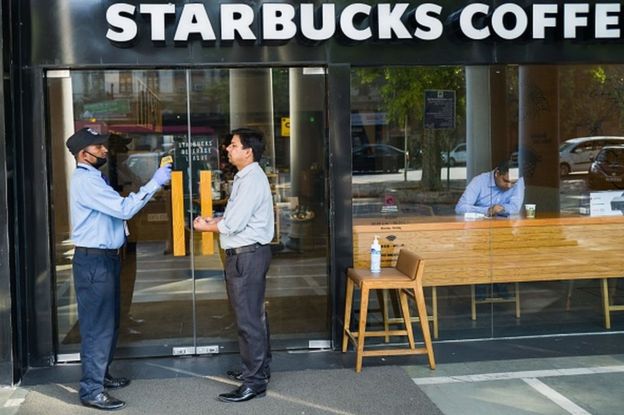
A security guard (L) takes the temperature of a patron as a preventive measure against the COVID-19 novel coronavirus before he enters a Starbucks coffee shop in New Delhi on March 17, 2020Image copyright GETTY IMAGES
Image caption The official assumption is the disease has still not spread in the community

Bracing for the inevitable, India is scaling up testing. Officials say existing labs are able to provide results in six hours and each lab has the capacity to test 90 samples a day which can be doubled. Fifty more state labs are expected to begin testing samples by the end of the week, bringing the total number of testing facilities to 122. Authorities claim that together, the labs will be able to test 8,000 samples a day – a significant scaling up. In addition, the government is planning to allow around 50 private labs to start testing, but they will take up to 10 days to procure kits. (Testing at state-run labs is free, and it is unclear whether the private labs will charge.)

Two rapid testing labs, capable of doing 400 tests a day, are expected to be operational by the end of the week. India has also placed orders for a million test kits, and will be possibly asking the WHO for a million more.

“On testing, the government response has been proportionate, taking into account scope, need and capacity,” Henk Bekedam, WHO Representative to India told me. “We recognise that laboratory networks are expanding the scope and testing and they now include patients with severe acute respiratory infection and influenza-like illness detected through the surveillance system. It would also be important to look at ‘atypical pneumonia’ cases. If they are without any distinctive cause, then they need to be considered for testing.”
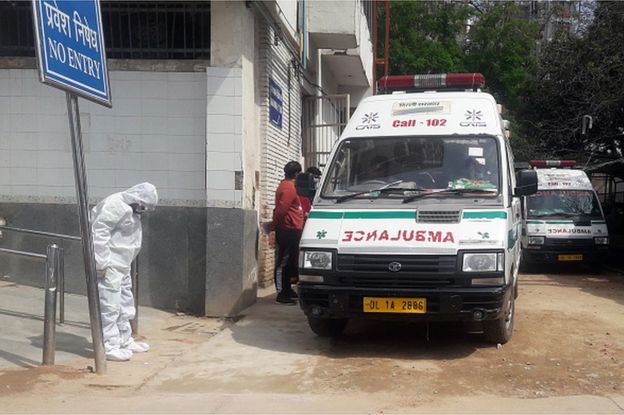
A doctor seen wearing protective suit to protect himself form coronavirus epidemic in the country, at RML Hospital on March 16, 2020 in New Delhi, IndiaImage copyright GETTY IMAGES
Image caption India could be buying time to stock up on testing kits and add isolation and hospital beds

The weeks and months ahead will show whether these steps have been enough. “We cannot say India has escaped community transmission,” Mr Bhargava says candidly. And if and when there is an explosion of infections and more sick people require hospitalisation, India will face formidable challenges.

India has eight doctors per 10,000 people compared to 41 in Italy and 71 in Korea. It has one state-run hospital for more than 55,000 people. (Private hospitals are out of reach for most people). The country has a poor culture of testing, and most people with flu symptoms do not go to doctors and instead try home remedies or go to pharmacies. There’s a scarcity of isolation beds, trained nursing staff and medics, and ventilators and intensive care beds.

India’s influenza cases peak during the monsoon season, and there is no reason why the coronavirus will not make a second coming, virologists say. “Given the way it is progressing in India, it seems it is about two weeks behind Spain and three weeks behind Italy. But that’s the number of known cases. And without sufficient testing and shutting down large gatherings, the numbers could be a lot worse,” Shruti Rajagopalan, economist and a Senior Research Fellow at the Mercatus Center at George Mason University, told me.

India’s traditional neglect of public healthcare will begin to bite if the disease spreads to its teeming small towns and villages. “This is a very unique and real public health challenge,” says Ms Rao. And it’s early days yet.

Source: The BBC

01/02/2020

Coronavirus declared global health emergency by WHO

The new coronavirus has been declared a global emergency by the World Health Organization, as the outbreak continues to spread outside China.

“The main reason for this declaration is not what is happening in China but what is happening in other countries,” said WHO chief Tedros Adhanom Ghebreyesus.

The concern is that it could spread to countries with weaker health systems.

Meanwhile, the US has told its citizens not to travel to China.

The state department issued a level four warning – having previously urged Americans to “reconsider” travel to China – and said any citizens in China “should consider departing using commercial means”.

China has said it will send charter plans to bring back Hubei province residents who are overseas “as soon as possible”.

A foreign ministry spokesman said this was because of the “practical difficulties” Chinese citizens have faced abroad. Hubei is where the virus emerged.

At least 213 people in the China have died from the virus, mostly in Hubei, with almost 10,000 cases nationally.

The WHO said there had been 98 cases in 18 other countries, but no deaths.

Most international cases are in people who had been to Wuhan in Hubei.

However in eight cases – in Germany, Japan, Vietnam and the United States – patients were infected by people who had travelled to China.

People wearing masks

Getty Coronavirus outbreak outside China
  • 18 The number of countries with cases
  • 14 Cases in Thailand and Japan
  • 13 Singapore
  • 11 South Korea
  • 8 Australia and Malaysia
  • 5 France and USA

Source: WHO and local authorities

Speaking at a news conference in Geneva, Dr Tedros described the virus as an “unprecedented outbreak” that has been met with an “unprecedented response”.

He praised the “extraordinary measures” Chinese authorities had taken, and said there was no reason to limit trade or travel to China.

“Let me be clear, this declaration is not a vote of no confidence in China,” he said.

But various countries have taken steps to close borders or cancel flights, and companies like Google, Ikea, Starbucks and Tesla have closed their shops or stopped operations.

The US Commerce Secretary, Wilbur Ross, has said the outbreak could “accelerate the return of jobs to North America”.

Presentational grey line

Preparing other countries

Analysis box by James Gallagher, health and science correspondent

What happens if this virus finds its way into a country that cannot cope?

Many low- and middle-income countries simply lack the tools to spot or contain it. The fear is it could spread uncontrollably and that it may go unnoticed for some time.

Remember this is a disease which emerged only last month – and yet there are already almost 10,000 confirmed cases in China.

The 2014 Ebola outbreak in West Africa – the largest in human history – showed how easily poorer countries can be overwhelmed by such outbreaks.

And if novel coronavirus gets a significant foothold in such places, then it would be incredibly difficult to contain.

We are not at that stage yet – 99% of cases are in China and the WHO is convinced the country can control the outbreak there.

But declaring a global emergency allows the WHO to support lower- and middle-income countries to strengthen their disease surveillance – and prepare them for cases.

Presentational grey line

How unusual is this declaration?

The WHO declares a Public Health Emergency of International Concern when there is “an extraordinary event which is determined… to constitute a public health risk to other states through the international spread of disease”.

It has previously declared five global public health emergencies:

  • Swine flu, 2009 – The H1N1 virus spread across the world in 2009, with death toll estimates ranging from 123,000 to 575,400
  • Polio, 2014 – Although closer than ever to eradication in 2012, polio numbers rose in 2013
  • Zika, 2016 – The WHO declared Zika a public health emergency in 2016 after the disease spread rapidly through the Americas
  • Ebola, 2014 and 2019 – The first emergency over the virus lasted from August 2014 to March 2016 as almost 30,000 people were infected and more than 11,000 died in West Africa. A second emergency was declared last year as an outbreak spread in DR Congo

Media caption Inside the US laboratory developing a coronavirus vaccine

How is China handling the outbreak?

A confirmed case in Tibet means the virus has reached every region in mainland China. According to the country’s National Health Commission, 9,692 cases have tested positive.

The central province of Hubei, where nearly all deaths have occurred, is in a state of lockdown. The province of 60 million people is home to Wuhan, the heart of the outbreak.

The city has effectively been sealed off and China has put numerous transport restrictions in place to curb the spread of the virus.

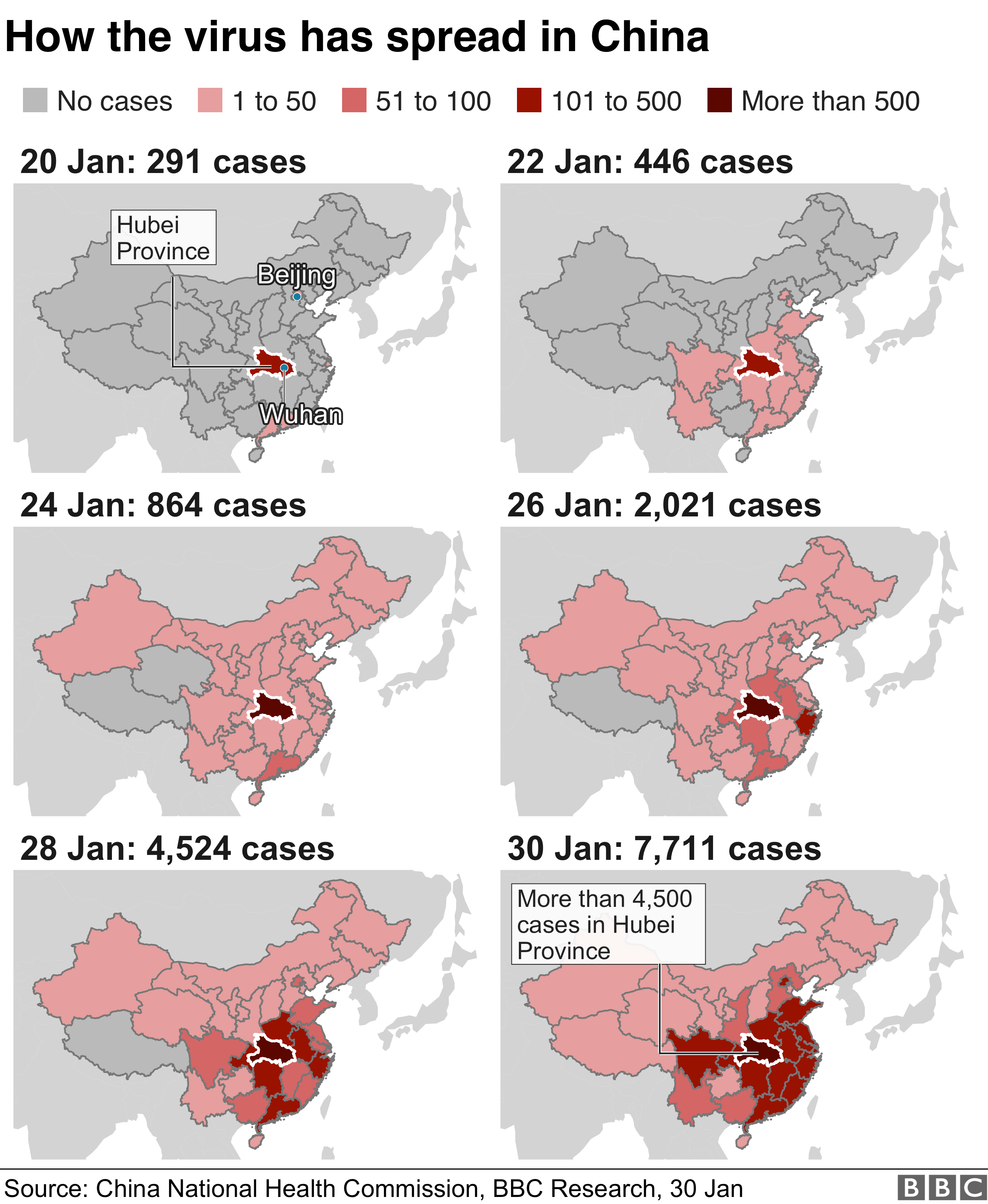
Coronavirus cases have spread to every province in China. There are now 7711 cases compared to 291 on 20 Jan. Hubei province has more than 4500 cases.
People who have been in Hubei are also being told to work from home until it is considered safe for them to return.

The virus is affecting China’s economy, the world’s second-largest, with a growing number of countries advising their citizens to avoid all non-essential travel to the country.

How is the world responding?

Voluntary evacuations of hundreds of foreign nationals from Wuhan are under way.

The UK, Australia, South Korea, Singapore and New Zealand are expected to quarantine all evacuees for two weeks to monitor them for symptoms and avoid contagion.

Australia plans to quarantine its evacuees on Christmas Island, 2,000km (1,200 miles) from the mainland in a detention centre that has been used to house asylum seekers.

In other recent developments:

  • Italy suspended flights to China after two Chinese tourists in Rome were diagnosed with the virus; earlier 6,000 people on board a cruise ship were temporarily barred from disembarking
  • In the US, Chicago health officials have reported the first US case of human-to-human transmission. Around 200 US citizens have been flown out of Wuhan and are being isolated at a Californian military base for at least 72 hours
  • Russia has decided to close its 4,300km (2,670-mile) far-eastern border with China
  • Two flights to Japan have already landed in Tokyo. Japan has now raised its infectious disease advisory level for China
  • Some 250 French nationals have been evacuated from Wuhan
  • India has confirmed its first case of the virus – a student in the southern state of Kerala who was studying in Wuhan
  • Israel has barred all flight connections with China
  • Papua New Guinea has banned all visitors from “Asian ports”
  • North Korea will suspend all flights and trains to and from China, said the British ambassador to North Korea

Source: The BBC

23/01/2020

WHO expert panel to decide whether new virus is an emergency

GENEVA (Reuters) – A World Health Organisation panel of experts on the new coronavirus met on Thursday to evaluate whether the outbreak, which has spread from China to several countries, constitutes an international emergency.

The 16 independent experts in disease control, virology, epidemiology and vaccine development were holding a second closed-door meeting at the U.N. agency’s headquarters in Geneva after not reaching a decision on Wednesday.

Didier Houssin, an adviser to France’s national health security agency, is serving as chair. Chinese health authorities made a presentation by teleconference and have allowed a WHO team into the country who are due to report back to the panel.

A news conference was expected later in the day.

Here are some facts about WHO Emergency Committees:

– Director general Tedros Adhanom Ghebreyesus announced on Monday that the WHO had called an Emergency Committee to assess the outbreak of the novel coronavirus (2019-nCoV) that began in the Chinese city of Wuhan at the end of last year.

– Declaration of a Public Health Emergency of International Concern – known as a “PHEIC” in WHO jargon – is rare.

– The WHO panel’s recommendations, after assessing any evidence of human-to-human transmission and other factors, would be put to Tedros, who would decide whether to declare an emergency.

– Only five emergencies have been declared in the past decade: the H1 virus that caused an influenza pandemic (2009), West Africa’s Ebola outbreak, polio (2014), Zika virus (2016), and the ongoing Ebola outbreak in the Democratic Republic of Congo (2019).

– The WHO’s criteria, laid out in the 2005 International Health Regulations, define a PHEIC as “an extraordinary event which is determined to constitute a public health risk to other states through the international spread of disease and to potentially require a coordinated international response”.

– Such situations are “serious, sudden, unusual or unexpected”, carry cross-border implications and may require immediate international action, its rules say.

– A declaration would lead to boosting public health measures, funding and resources to prevent and reduce international spread.

– It could include recommendations on trade and travel, including airport screening of passengers, although the WHO generally aims to avoid disruptive trade restrictions.

Source: Reuters

Law of Unintended Consequences

continuously updated blog about China & India

ChiaHou's Book Reviews

continuously updated blog about China & India

What's wrong with the world; and its economy

continuously updated blog about China & India