Archive for ‘GeoPolitics’

17/09/2012

* China past and present: review

UK Telegraph: “China past and present: review

By Rana Mitter7:00AM BST 10 Sep 2012Comment

Two books on China explain why the country’s rise to superpower status is still far from inevitable

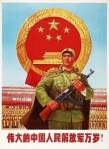
A vision of the Chinese future in a 1982 propaganda posterA vision of the Chinese future in a 1982 propaganda poster Photo: Alamy

Some time this autumn, the Chinese Communist Party will announce the date of the 18th Party Congress. Among the Party’s priorities will be two major issues: the need to project Chinese power more widely in the world, and the consolidation of a system of welfare that will prevent the country’s social discontent from spilling over into outright rebellion. These themes are at the centre of these two important books which, taken together, illustrate why the rise of China is far from inexorable.

Odd Arne Westad’s Restless Empire has two main purposes. The first is to provide an overview of China’s engagement with the world over the past three centuries. Westad starts with an important piece of myth-busting, arguing strongly against the idea that China has been an inward-looking society closed to the rest of the world. Whether it was the trade in silks and porcelains that made China part of a global trading network during the Ming and Qing dynasties that lasted from the 14th century to the 20th, or the forced engagement with the West that came with imperialism, China has always been connected with the wider world. Westad is particularly acute on the Cold War period, using impressive documentation to argue that China’s relationship to the rest of East Asia was not just communist, but Confucian in the ties that Mao nurtured with his ideological “younger brothers” such as Kim Il-sung and Ho Chi Minh (even if the family quickly became dysfunctional).

The second aim emerges in the last two chapters, which concern the foreign policy crises facing China today. Westad firmly rejects the received wisdom that China is set to become a global superpower, dominating policy on everything from international intervention to energy resources. Despite its rhetoric, China has in practice been almost entirely passive or reactive in the past few decades. China shows pleasure in being treated as a global player, but shows little sign of knowing what to do with that power other than criticising the United States. “China has to learn,” he says drily, “that sticking it in the eye of the world’s hyperpower may bring short-term gratification, but it does not amount to a grand strategy in international politics.”

Some of the reasons that China’s leadership may be distracted from visions of world domination are made clear in Gerard Lemos’s The End of the Chinese Dream. Lemos spent four years working in Chongqing, the city that has become notorious for the Bo Xilai murder scandal, but his account is of a less lurid but equally troubling failing in Chinese government. He examines the model of welfarist authoritarianism with which the Chinese Communist Party is attempting to gain the “performance legitimacy” that might keep it in power, and finds it seriously wanting. When the Maoist “iron rice bowl” of guaranteed employment, pensions and health care broke down as China privatised its economy in the Nineties, millions of urban and rural Chinese found themselves left behind as others got rich. Figures tell part of the story: food inflation ran at over 18 per cent in 2008, and some analysts expect that health care costs will rise by 11 per cent annually into the middle of the next decade. But the participants in the surveys that Lemos organised add human voices to the statistics: one among the hundreds he records is the 39-year-old woman who declares “Losing my job [changed my life]. I have no money to see the doctor.” She tells Lemos that she fears she’ll be unable to find “the education fee for my children’s education”. The “Chinese dream” of a middle-class existence with a flat, car, and high-quality education for the next generation has only become a reality in the last decade or two. Now it looks as if it may be slipping out of the grasp of millions even before they have had a chance to aspire to it.

Both writers make poignantly clear the obstacles to China becoming a global leader. At bottom, China does not have a vision of what a Chinese-led world would look like. Nor does its domestic political model of party-led authoritarianism export well to the rest of the world. African and Latin American nations may welcome Chinese investment and on occasion find it expedient to use the threat of Beijing to squeeze concessions from Washington. But however shaky these countries’ engagement with democratisation, they do not seriously tout the “Chinese model” as an alternative, because it is clear that China has not solved its most pressing problems: a demographic crisis exacerbated by the one-child policy, a creaking welfare system, and slowing growth.”

via China past and present: review – Telegraph.

See also:

15/09/2012

* Thousands protest against Japan’s ‘island purchase’

China Daily: “Protests against Japanese government’s move to “purchase” and “nationalize” the Diaoyu Islands continued outside the Japanese Embassy in Beijing on Friday.

Plain-clothes police officers instruct demonstrators to move during a protest outside the Japanese embassy in Beijing September 14, 2012. REUTERS-David Gray

Protesters started to gather in front of the embassy compound in the morning. By 6 pm, more than 5,000 people including wheel-chaired elderly and kids had taken part in the protests.

Police told the protesters in advance to be rational in their protests.

Also on Friday, about 100 people protested against Japan in Tengchong, a city in the southwestern province of Yunnan, while attending a public memorial for soldiers killed during the anti-Japanese war in the 1940s.

The protestors waved China’s national flags and shouted slogans including “Do not forget national humiliation, safeguard sovereignty, and Diaoyu Islands are China’s territory.”

During the anti-Japanese war, Japanese forces occupied Tengchong for two years and committed appalling crimes there.

via Thousands protest against Japan’s ‘island purchase’ |Politics |chinadaily.com.cn.

02/09/2012

* Asian giants seek better ties; China defence minister in India

The Times of India: “A rare visit to India by China’s defence minister should help avoid flare-ups along the border between the nuclear-armed Asian giants at a time when Beijing is grappling with a change of leadership and friction in the South China Sea.

Chinese Minister of National Defense General Liang Guanglie stands on a balcony overlooking the campus of the U.S. Military Academy in West Point, New York, May 10, 2012. REUTERS/Mike Segar

But General Liang Guanglie‘s trip — the first by a Chinese defence minister in eight years — also highlights growing competition between the two emerging powers as they jostle for influence and resources across Asia.

Liang is due to arrive in Mumbai on Sunday afternoon after stopping in Sri Lanka, the island nation off the south coast of India that sits on vital ocean trade routes.

There he sought to play down Indian fears that China is threading a “string of pearls” — or encircling it by financing infrastructure and military strength in neighbours stretching from Pakistan to the Maldives.

“China attaches great importance to its relations with the South Asian nations, and commits itself to forging harmonious co-existence and mutually beneficial and win-win cooperation with them,” he said in speech to Sri Lankan soldiers.

“The PLA’s (People’s Liberation Army) efforts in conducting friendly exchanges and cooperation with its counterparts in the South Asian nations are intended for maintaining regional security and stability and not targeted at any third party.”

As neighbours and emerging superpowers, India and China have a complex relationship. Trade has grown at a dizzying rate but Beijing is wary of India’s close ties to Washington and memories of a border war with China half a century ago are still fresh in New Delhi.

Despite 15 rounds of high level talks to resolve the dispute about where their Himalayan border lies, neither side is close to giving up any territory. Liang is not expected to broach the territorial issue on his trip.

Analysts say Liang’s India tour will demonstrate that Beijing is managing the often twitchy relations with its neighour just ahead of its once-in-a-decade leadership transition.”

via Asian giants seek better ties; China defence minister in India – The Times of India.

See also: 

29/08/2012

* China’s aircraft carrier: in name only

Reuters: “When Japanese activists scrambled ashore on a disputed island chain in the East China Sea this month, one of China’s most hawkish military commentators proposed an uncharacteristically mild response.

A half-built Chinese-owned aircraft carrier Varyag, which is to be converted into a floating casino in China, is towed and escorted by a flotilla of tugboats and pilot ships past the Leandros Tower built in 419 B.C. on the Bosphorus Straits in Istanbul November 1, 2001. REUTERS-Fatih Saribas-Files

Retired Major General Luo Yuan suggested naming China’s new aircraft carrier Diaoyu, after the Diaoyu islands in the East China Sea. It would demonstrate China’s sovereignty over the islands known as the Senkakus in Japanese, he said.

For a notable hardliner, it was one of the least bellicose reactions he has advocated throughout a series of territorial rows that have soured China’s ties with its neighbors in recent months.

More typical was General Luo’s warning in April that the Chinese navy would “strike hard” if provoked during a dispute with the Philippines over Scarborough Shoal in the South China Sea.

One possible reason for General Luo’s restraint, military analysts say, is he knows it could be towards the end of the decade before China can actually deploy the new carrier to the disputed islands or any other trouble spot.

Despite public anticipation in China that the carrier — a refitted, Soviet-era vessel bought from Ukraine — will soon become the flagship of a powerful navy, defense experts say it lacks the strike aircraft, weapons, electronics, training and logistical support it needs to become a fighting warship.

“There is considerable uncertainty involved, but it could take anything from three to five years,” said Carlo Kopp, the Melbourne, Australia based co-founder of Air Power Australia, an independent military think tank.”

via Analysis: China’s aircraft carrier: in name only | Reuters.

See also: China’s military presence

27/08/2012

* China keen to boost mutual investments with India

The Hindu: “Calls to reshape ‘increasingly unsustainable’ trade model amid growing imbalance

China has called for a move to boost mutual investments with India as a measure to strengthen trade ties and reshape what officials have acknowledged is an increasingly unbalanced and strained business relationship, as trade talks between both countries begin in New Delhi on Monday.

The Chinese Commerce Ministry told The Hindu in a written interview ahead of the visit of Commerce Minister Chen Deming, who will lead the Chinese delegation in Monday’s talks, that the relatively strong foreign exchange reserves of both countries and an increasing desire of businesses to go overseas should drive the future of trade ties.

“There is great space for China and India to cooperate in mutual investment,” the Commerce Ministry said.

Both countries will hold the ninth round of the Joint Economic Group (JEG) dialogue in New Delhi on Monday. India’s trade deficit and Chinese concerns about the investment environment in India, particularly in the power and telecom sectors, is expected to be at the focus of the talks.

In an apparent attempt to ease concerns about strains in the trade relationship, Chinese officials have suggested a new approach. Boosting mutual investments would be one way of shifting the relationship from the current model. Trade over the past decade, which has grown from a few billion dollars to US$ 74 billion last year when China became India’s biggest trade partner, has largely been driven by Chinese appetite for Indian ores and Indian need for Chinese machinery.”

via The Hindu : News / National : China keen to boost mutual investments with India.

14/08/2012

* Syria crisis: China hosts Assad aide Bouthaina Shaaban

BBC News: “A senior aide to Syria’s President Bashar al-Assad has flown to China for talks on the crisis, officials say.

The Chinese foreign ministry said Bouthaina Shaaban would meet Foreign Minister Yang Jiechi later.

The ministry said it was part of its effort to implement the UN’s six-point peace plan. China has twice vetoed UN resolutions against the Assad regime.

Meanwhile, UN humanitarian chief Valerie Amos has arrived in Syria to assess the flow of emergency aid.

She is expected to ask for more visas for foreign aid workers as the Syrian Arab Red Crescent struggles to distribute food.

The UN says an estimated two million Syrian civilians have now been affected by the crisis and more than one million have fled their homes.

Tens of thousands of people have fled across Syria’s borders into Turkey, Jordan, Lebanon and Iraq amid continuing violence across the country.

In another development, foreign ministers of the Islamic Co-operation Organisation (OIC) have called for Syria to be suspended from the 57-nation bloc at an emergency two-day summit in Mecca, Saudi Arabia, which starts on Tuesday.

Only ministers from Algeria and Iran, which is regarded as Syria’s closest ally, were against the recommendation, reports say.

“We certainly do not agree with the suspension of any OIC member,” Iranian Foreign Minister Ali Akbar Salehi said after a preliminary meeting in the city of Jeddah on Monday.

“We have to look for other ways, means and mechanisms for resolving conflicts and crises,” he said.”

via BBC News – Syria crisis: China hosts Assad aide Bouthaina Shaaban.

Despite the deteriorating situation in Syria, China resolutely sticks to its principle of non-military intervention and its position of not supporting any regime change.

08/08/2012

* Dollar losing its attraction

The Times: “Soft power is sometimes defined as a way of achieving the outcome you desire without using force. In Britain’s case, this has traditionally been exercised using subtle diplomacy, cultural and legal institutions.

The United States exercises soft power through its culture, films and music, too, but it also does through the ubiquity of the US dollar.

With power comes responsibility. There is a danger now that, in seeking to use the dollar’s reserve currency status to achieve US foreign policy aims, America is undermining that power. A key criticism of the US sanctions on Iran, particularly the ban on Iranian banks from using the Swift payments system, is that it has created incentives for other countries to trade with Iran without using dollars. Iran itself has exploited this by using its own currency in bilateral trade deals with India, China, Russia and Japan.

It is a small step from finding ways of trading with Iran without using dollars to trading with each other without using dollars, something that has been noted by the People’s Bank of China, whose officials are talking increasingly loudly about how and when the yuan might become a global reserve currency.

The aggression shown by the New York State Department of Financial Services towards Standard Chartered has just created another incentive to avoid doing business in dollars.”

via It may be unfair, but the damage is done | The Times.

It’s called shooting oneself in the foot. It’s also another case of the Law of Unintended Consequences.  See also:


01/08/2012

* Chinese military maintains world peace

Xinhua: “China’s Ministry of National Defense says the Chinese People’s Liberation Army makes an important contribution to maintaining world peace and regional stability.

Speaking at a press conference, spokesman Geng Yansheng says the PLA has established military level relations with over 150 countries and set up defense consultation dialogue mechanisms with defense ministries and armed forces 22 countries.

China has taken part in more than 50 joint exercises with armed forces of over 30 countries. All these have helped PLA boost friendly relations and mutual trust with their counterparts.

Geng Yansheng, Spokesman, Ministry of National Defense, said, “The PLA has actively taken part in the UN peacekeeping program. In total, it has contributed more than 20,000 personnel to conduct 23 UN peace keeping missions. This has made China the largest contributing country among the five permanent members of UN security council. It has successfully completed UN mandated peacekeeping missions, such as cease fire monitoring, conflict resolution, supplying transportation and offering medical support.””

via Chinese military maintains world peace – Xinhua | English.news.cn.

30/07/2012

* India’s Power Demand Fuels Bhutan’s Economy

WSJ: “When northern India was hit by its worst power outage in a decade early Monday – bringing trains to a standstill, creating massive road jams in the absence of traffic signals, and keeping thousands of offices and factories shut – the country’s leaders turned to its tiny neighbor Bhutan for help.

The Himalayan kingdom responded by releasing additional power from its hydroelectric plants, allowing New Delhi to restore some order while government officials and engineers worked to fix its electricity network.

This example of David coming to Goliath’s rescue speaks of Bhutan’s successful efforts to increase its electricity generation capacity to help boost its modest economy.

Bhutan – which is just 1% of India’s size and has fewer than 800,000 people compared with its neighbor’s 1.2 billion – now provides 1% of India’s electricity needs.

India has a deal to buy 5.480 billion kilowatt hours of power from Bhutan in the year that began April 1. The number might seem small, but it is hugely significant for Bhutan.

The electricity sector’s share of Bhutan’s economy has reached almost 20%, and it now outstrips agriculture as the single-largest contributor to gross domestic product, according to a World Bank report published in September.

Bhutan’s gross domestic product grew 8.1% in the year that ended March 31, 2011, helped by the construction of new hydropower projects, the report added. It anticipated that electricity exports will be the country’s main source of growth in the short-to-medium term.

Bhutan has hydro power potential of 30,000 megawatts, about a fifth of India’s own potential. However, the hydro projects in India aren’t making much progress due to strong protests from environmentalists and other issues.

So New Delhi is focusing on tapping the potential of land-locked Bhutan. India has helped build 96% of the kingdom’s overall hydropower capacity (1,472 megawatts.)

In July 2006, India agreed to develop and import 5,000 megawatt of electricity from Bhutan by 2020. The target was doubled to 10,000 MW in May 2008.

India also has a significant military presence in Bhutan, which it views of strategic importance as it shares a disputed border with China.”

via India’s Power Demand Fuels Bhutan’s Economy – India Real Time – WSJ.

20/07/2012

* ASEAN to claim common ground on South China Sea, but no communiqué

Reuters: “Southeast Asian states have reached a “common position” on the disputed South China Sea, but will not resurrect a joint communiqué aborted after unprecedented discord over the issue at a summit last week, Indonesia’s Foreign Minister said on Friday.

Marty Natalegawa sought to put a positive gloss on two days of shuttle diplomacy that failed to rally members of the Association of Southeast Asian nations (ASEAN) behind a belated, face-saving communiqué.

They had failed to agree the customary end-of-summit joint statement last Friday for the first time in the bloc’s 45-year history. The divisions follow a rise in incidents of naval brinkmanship involving Chinese vessels in the oil-rich waters that has sparked fears of a military clash.

Natalegawa told Reuters the 10 members had agreed on the components of an ASEAN “instrument” that would be issued by chair Cambodia later on Friday and would detail what was agreed upon during last week’s ASEAN Regional Forum in Phnom Penh, including the maritime dispute.

“We are trying so that other decisions made by the foreign ministers will be formulated in a different instrument for follow up,” Natalegawa told Reuters.

“The non-existence of a joint communiqué is behind us,” he said, adding that the customary communiqué was aborted last week because one of the four paragraphs relating to the South China Sea in the 132-paragraph draft could not be agreed on.

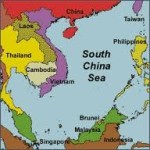
Disputes over how to address the increasingly assertive role of China – an ally of several ASEAN states – in the strategic waters of the South China Sea has placed the issue squarely as Southeast Asia’s biggest potential military flashpoint.

China has territorial claims over a huge area covering waters that Vietnam and the Philippines say they also have sovereignty over. All three countries are eager to tap possibly huge offshore oil reserves.

The failure to issue the communiqué and the bitter rows behind closed doors over what words to use and what to exclude have been a huge embarrassment for a 10-member bloc planning to form an EU-style economic community by 2015.

The row illustrated how Southeast Asian nations have been polarized by China’s rapidly expanding influence in the region and the economic dependence on Beijing that some of ASEAN’s poorer states now have, among the Cambodia, this year’s chair.”

via ASEAN to claim common ground on South China Sea, but no communiqué | Reuters.

Law of Unintended Consequences

continuously updated blog about China & India

ChiaHou's Book Reviews

continuously updated blog about China & India

What's wrong with the world; and its economy

continuously updated blog about China & India