20/05/2012
BBC News: “Chinese activist Chen Guangcheng has arrived in New York to begin a new life in the United States.
The blind human rights lawyer caused a diplomatic crisis when he escaped house arrest to arrive at the US embassy in Beijing last month. Speaking outside New York University, where he has been offered a fellowship, Mr Chen said China had dealt with the situation with “restraint and calm”. But he raised concerns about ongoing reprisals against his family. “Acts of retribution in Shandong have not been abated and my rights to practice law have been curbed – we hope to see a thorough investigation into this,” he said, referring to the province where he was kept under house arrest. The activist thanked US officials and his supporters for their help and said he had come to the United States for “recuperation in body and spirit”.
Chen Guangcheng and his family were taken from a Beijing hospital, where he was being treated for a foot injury, to the capitals airport on Saturday. A crowd of activists, supporters and curious New Yorkers greeted Chen at the university apartment block in Greenwich Village where he and his family will stay. Wearing dark glasses and hobbling on crutches, he may not have looked like a conquering hero, but that is how he was treated. There were cheers and screams of encouragement. Some had brought flowers, while one woman was led away in tears after failing to secure a hug from her idol.
…
Former House speaker Nancy Pelosi described his arrival in the US as “a milestone in the cause for human rights in China“.”
via BBC News – China dissident Chen Guangcheng arrives in the US.
Posted in China alert, Dissident, Freedom, GeoPolitics, Good news, Human rights, Illegal practices, immigration, Justice, Politics |
3 Comments »
15/05/2012
BBC News: “China has raised concerns over growing military ties between Australia and the US, Australian Foreign Minister Bob Carr said as he visited Beijing.

Chinese officials had told him that “the time for Cold War alliances has long since passed”, he told reporters. The US has recently started rotating troops through bases in Australia.
On Monday Mr Carr met counterpart Yang Jiechi. He is also due to meet Vice Premier Li Keqiang to discuss a China-Australia free trade deal. China is a major trading partner for Australia and about a quarter of all Australian exports now go to China. But Australia’s key security partnership is with the US. Last month the first contingent of some US marines to be stationed in Darwin arrived; the US will eventually deploy a 2,500-strong force in northern Australia by 2017.”
via BBC News – Carr: China concerned by Australia-US military ties.
Related article:
Posted in China alert, Defence, GeoPolitics, Military, Politics |
Leave a Comment »
10/05/2012
China Daily: “Marine forces of China and Thailand will hold a joint military training in south Chinas Guangdong province from May 9 to 29, sources with Ministry of National Defense said Tuesday.

Garuda as national symbol of Thailand (Photo credit: Wikipedia)
The training, codenamed Blue Commando-2012, will be conducted in Zhanjiang and Shanwei of the province in line with an agreement reached by the two countries navies, according to the ministry’s information office. The training will be the second of its kind by the two navies marine forces since 2010, and it will feature anti-terrorism and increase mutual understanding of the two forces.”
via Marine forces of China, Thailand to hold joint training|chinadaily.com.cn.
It takes two to tango. So it is with the US trying to ‘surround’ China with alliances or naval exercise with Australia, India, Philippines and (see other post) with Singapore. In the meanwhile, China is holding exercises or reaffirming military alliances with Russia and Thailand.
Related articles and posts:
Posted in China alert, Defence, GeoPolitics, Military |
3 Comments »
10/05/2012

Strait of Malacca from globe at Field Museum (Photo credit: Wikipedia)
Reuters: “The first of a new class of U.S. coastal warships will be sent to Singapore next spring for a roughly 10-month deployment, the Navy said on Wednesday, spotlighting a move that may stir China’s fears of U.S. involvement in South China Sea disputes.
Deployment of the shallow-draft ship “Freedom” will help refine crew rotations, logistics and maintenance processes to maximize the classs value to U.S. combat commanders, Rear Admiral Thomas Rowden, the Navys director of surface warfare, told reporters.”Well be deploying the ship for about 10 months in the spring of next year” to Singapore, he said in a teleconference. “In the meantime, were prepping her for success in the execution of that deployment.
“Singapore is strategically located along the Strait of Malacca, the chief link between the Indian and Pacific Oceans through which flows about 40 percent of world trade. The government has discussed hosting up to four such U.S. “Littoral Combat Ships,” or LCS, on a rotational basis at its naval facilities. Both countries have said the deployment stops short of a basing agreement.”
via U.S. plans 10-month warship deployment to Singapore | Reuters.
It takes two to tango. So it is with the US trying to ‘surround’ China with alliances or naval exercise with Australia, India, Philippines and with Singapore. In the meanwhile, China is holding exercises or reaffirming military alliances with Russia and Thailand (see other post).
Related articles and posts:
Posted in China alert, Defence, GeoPolitics, Military |
2 Comments »
09/05/2012
Xinhua: “The construction of a 100-billion yuan (16 billion U.S. dollars) high-tech zone was jointly launched Tuesday in southwest China’s Sichuan province by the provincial government and a Singapore company.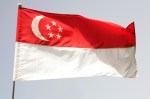
The Singapore-Sichuan High-tech Innovation Park, planned to cover 10.34 square kilometers and house 120,000 residents in Gaoxin district and Tianfu district in Chengdu, capital of Sichuan, is expected to attract an investment of 100 billion yuan from 2012 to 2020. Under the guidance of Sichuan government authorities, the project will be operated by the Singapore-Sichuan company Sino-Singapore Chengdu High-Tech Innovation Park Development Company Ltd., with a registered capital of 297 million U.S. dollars, jointly invested by Singapore state-owned company Temasek Holdings and Chengdu High-tech Investment Group, said Tang Hua, deputy director of the development administration of Gaoxin district. …
The park will mainly focus on eight industries including information technology, service outsourcing, digital media, biomedicine, environmental protection, precision machinery, finance and training, Tang said.The park is expected to have 120,000 to 150,000 employees as a new platform for China, Singapore and other countries to invest in western China, said Lim Swee Say, minister of Prime Ministers Office, advisor of Singapore-Sichuan Trade and Investment Committee, secretary-general of Singapore National Trade Union Congress.”
via China, Singapore to build 100 bln yuan high-tech zone – Xinhua | English.news.cn.
Yet another sign of China’s determination to reduce reliance on foreign hi-tech.
Related articles:
Posted in China alert, Economics, GeoPolitics, self-sufficiency, Technology |
2 Comments »
07/05/2012

Xinhua: “China and five Central Asian nations held a cooperation forum on Monday in Tongxiang of east China’s Zhejiang province. The forum, themed around mutual trust, cooperation and harmonious development, focused on pragmatic, social and cultural cooperation between China and Kyrgyzstan, Tajikistan, Kazakhstan, Turkmenistan and Uzbekistan.
It also saw the signing of a declaration on further promoting their cooperation. Bai Lichen, vice chairman of the Chinese Peoples Political Consultative Conference, Chinas top advisory body, attended the opening ceremony and met with representatives from the five Central Asian countries.”
via China, Central Asian countries hold cooperation forum – Xinhua | English.news.cn.
Related post: https://chindiapedia.wordpress.com/wp-admin/post.php?post=5753&action=edit
https://chindia-alert.org/political-factors/geopolitics-chinese/
Posted in China alert, Economics, GeoPolitics |
Leave a Comment »
07/05/2012

Trinamool Congress chief Mamata Banerjee September 7, 2008. (Photo credit: Wikipedia)
The Hindu: “The U.S. has agreed to treat West Bengal as a partner state for investment in the changed political situation, Chief Minister Mamata Banerjee said in Kolkata on Monday.
“As per partner state, they will invest in West Bengal which was not taking place due to the political situation in the past,” Ms. Banerjee told reporters after a 52-minute meeting with U.S. Secretary of State Hillary Clinton. She also said that the issue of FDI in retail did not come up during the meeting. She said that the areas identified for U.S. investment were IT, software sector, manufacturing, deep sea port, tourism, health care and education. “They will give full support for economic and business development,” Mr. Banerjee said, adding that Chief Secretary Samar Ghosh and U.S. Ambassador Nancy Powell would coordinate and monitor the progress.”
via The Hindu : News / National : U.S. agrees to treat West Bengal as partner for investment: Mamata.
Posted in Economics, GeoPolitics, India alert, Investment in tangibles, Manufacturing, Technology |
2 Comments »
03/05/2012
NY Times: “Limited military talks between China and the United States — an arena in which the two sides view each other with mounting unease — open here on Wednesday as a prelude to a wider-ranging economic and strategic dialogue between Secretary of State Hillary Rodham Clinton and Treasury Secretary Timothy F. Geithner and their Chinese counterparts.

Secretary of State Hillary Clinton and Treasury Secretary Timothy Geithner listen as President Barack Obama addresses the opening session of the first U.S.-China Strategic and Economic Dialogue at the Ronald Reagan Building and International Trade Center in Washington on July 27, 2009. (Photo credit: Wikipedia)
Military talks are a prelude to an economic and strategic dialogue. China is increasingly suspicious of what it views as stepped-up spying by American planes and ships along its coast, and the United States is disquieted by China’s growing array of weaponry, analysts on both sides say. The two nations have been unable to agree on a serious agenda for military talks despite an escalation of tensions as China presses territorial claims in the East and South China Seas and the United States fortifies longstanding alliances from Australia to the Philippines.
The meetings, known as the Strategic and Economic Dialogue, will be limited to a one-day session on Wednesday that will cover two subjects, cyberwarfare and maritime issues, Obama administration officials said.”
via Unease Mounting, China and U.S. to Open Military Talks – NYTimes.com.
Posted in China alert, Defence, Diplomacy, GeoPolitics, Military |
Leave a Comment »
01/05/2012
The Hindu: “Japan on Monday asked India to sign the Nuclear Non-Proliferation Treaty NPT even as the two sides decided to reopen talks on a bilateral civil nuclear agreement.
During the sixth Foreign Minister-level strategic dialogue here, the two sides agreed to prepare a master plan for the industrial development of south India, especially areas around Chennai and Bangalore, and accelerate talks on export of rare earths to Japan.
Another decision was to extend their dialogue to a code of conduct in outer space, cyber security and maritime issues, including security and freedom of navigation in the South China Sea. The talks also covered Japanese investment in high speed trains, the Delhi-Mumbai Industrial Corridor and the Dedicated Freight Corridor. While agreeing to step up interaction between the Coast Guards, India and Japan decided to hold their first-ever maritime exercises towards the middle of the year.”
via The Hindu : News / National : Sign nuclear non-proliferation treaty, Japan tells India.
Posted in Diplomacy, GeoPolitics, Good news, India alert, Technology, Trade |
Leave a Comment »
30/04/2012
New York Times: “… The (joint US-Philippines military) exercises included mock beach invasions along coastlines facing China, whose military buildup and territorial claims in the South China Sea have alarmed some of its neighbors and jumpstarted the United States’ military “pivot” to the region.
That American policy, which will include sending more troops and ships to the region, appears to have picked up speed in recent weeks. On Thursday, Japan and the United States announced what was effectively a compromise on Okinawa that calls for thousands of Marines to leave for Guam and Hawaii in an attempt to allow others to remain on the strategic Japanese island despite local objections. And on Monday, Secretary of State Hillary Rodham Clinton and Secretary of Defense Leon E. Panetta will meet their Philippine counterparts in Washington, the highest level meeting after months of talks to expand the American military presence in the Philippines.
Ramping up the number of troops in the Philippines — even if they are rotating in and out from temporary bases — would still be something of a reversal for the nation after Philippine lawmakers years ago forced the closing of American bases, including the shuttering in 1992 of the Subic Bay Naval Station. The base, which had been a cornerstone of the United States’ military presence in Asia, was a casualty of some Filipinos’ sense that the facility served as a painful reminder of decades of American rule.
via Philippines Role May Grow as U.S. Adjusts Asia Strategy – NYTimes.com.
America continues with its strategy to encircle China in the Pacific, with military alliances not only with its traditional allies, Taiwan, Japan and South Korea; but also with Australia, India and the Philippines.
Related articles and posts:
Posted in China alert, Defence, GeoPolitics, Military |
6 Comments »


 CHINDIA ALERT: You'll be living in their world, very soon