

This post supports my view that the Chinese authorities are trying very hard to listen to the people.
30/07/2012
* India’s Power Demand Fuels Bhutan’s Economy
WSJ: “When northern India was hit by its worst power outage in a decade early Monday – bringing trains to a standstill, creating massive road jams in the absence of traffic signals, and keeping thousands of offices and factories shut – the country’s leaders turned to its tiny neighbor Bhutan for help.
The Himalayan kingdom responded by releasing additional power from its hydroelectric plants, allowing New Delhi to restore some order while government officials and engineers worked to fix its electricity network.
This example of David coming to Goliath’s rescue speaks of Bhutan’s successful efforts to increase its electricity generation capacity to help boost its modest economy.
Bhutan – which is just 1% of India’s size and has fewer than 800,000 people compared with its neighbor’s 1.2 billion – now provides 1% of India’s electricity needs.
India has a deal to buy 5.480 billion kilowatt hours of power from Bhutan in the year that began April 1. The number might seem small, but it is hugely significant for Bhutan.
The electricity sector’s share of Bhutan’s economy has reached almost 20%, and it now outstrips agriculture as the single-largest contributor to gross domestic product, according to a World Bank report published in September.
Bhutan’s gross domestic product grew 8.1% in the year that ended March 31, 2011, helped by the construction of new hydropower projects, the report added. It anticipated that electricity exports will be the country’s main source of growth in the short-to-medium term.
Bhutan has hydro power potential of 30,000 megawatts, about a fifth of India’s own potential. However, the hydro projects in India aren’t making much progress due to strong protests from environmentalists and other issues.
So New Delhi is focusing on tapping the potential of land-locked Bhutan. India has helped build 96% of the kingdom’s overall hydropower capacity (1,472 megawatts.)
In July 2006, India agreed to develop and import 5,000 megawatt of electricity from Bhutan by 2020. The target was doubled to 10,000 MW in May 2008.
India also has a significant military presence in Bhutan, which it views of strategic importance as it shares a disputed border with China.”
via India’s Power Demand Fuels Bhutan’s Economy – India Real Time – WSJ.
Related articles
- India-Bhutan-China Strategic Triangle – Analysis (eurasiareview.com)
- Bhutan may get 50% ownership of Joint-Venture hydroprojects (thebhutanese.bt)
- Tata Power seeks nod to produce in Bhutan and sell to India (thehindu.com)
- Bhutan’s move reflects maturing Sino-Indian ties (thehindu.com)
29/07/2012
* China Court Dismisses Ni Yulan’s Fraud Conviction
NY Times: “A Chinese appeals court on Friday threw out a fraud conviction against a human rights activist who has fought on behalf of people evicted from their homes, but it upheld a separate conviction against her for causing a disturbance, her lawyers said.
A lower court had ruled that the activist, Ni Yulan, and her husband, Dong Jiqin, acted in an unruly way when they failed to pay for their stay at a hotel — where they had been detained by the police — and mistreated staff members. It also ruled that Ms. Ni had received money through deceit.
One of her lawyers, Cheng Hai, said the higher court, the Beijing First Intermediate Court, had rescinded the fraud conviction and reduced Ms. Ni’s prison sentence by two months to two years and six months after the person who gave Ms. Ni the money told the court it was a donation.
“We consider it a success,” said Dong Qianyong, another lawyer for Ms. Ni.
Public disturbance convictions against the couple remain, and Dong Jiqin’s two-year sentence handed down by the lower court stands, Mr. Cheng said.
Mr. Cheng said he planned to appeal again for Ms. Ni’s release.”
via China Court Dismisses Ni Yulan’s Fraud Conviction – NYTimes.com.
Yet another indication that China is softening its approach towards dissidents.
See also: https://chindia-alert.org/2012/05/20/china-dissident-chen-guangcheng-arrives-in-the-us/
29/07/2012
* Thirsty South Asia’s river rifts threaten “water wars”
WSJ: “As the silver waters of the Kishanganga rush through this north Kashmir valley, Indian labourers are hard at work on a hydropower project that will dam the river just before it flows across one of the world’s most militarised borders into Pakistan.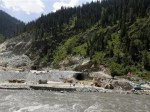
The loud hum of excavators echoes through the pine-covered valley, clearing masses of soil and boulders.
The 330-MW dam shows India’s growing focus on hydropower but also highlights how water is a growing source of tension with downstream Pakistan, which depends on the snow-fed Himalayan rivers for everything from drinking water to agriculture.
Islamabad has complained to an international court that the dam in the Gurez valley, one of dozens planned by India, will affect river flows and is illegal. The court has halted any permanent work on the river for the moment, although India can still continue tunneling and other associated projects.
In the years since their partition from British India in 1947, land disputes have led the two nuclear-armed neighbours to two of their three wars. The next flashpoint could well be water.
“There is definitely potential for conflict based on water, particularly if we are looking to the year 2050, when there could be considerable water scarcity in India and Pakistan,” says Michael Kugelman, South Asia Associate at the Woodrow Wilson International Center for Scholars in Washington.”
via India Insight
29/07/2012
* Bo wife murder charge vexes skeptical Chinese
Reuters: “China’s ruling Communist Party might insist that the murder charge against Gu Kailai, the wife of ousted Politburo member Bo Xilai, is a simple case of all being equal before the law, but winning over the jury of public opinion is proving tough.
Since China’s last big political scandal — the purge of Shanghai party chief Chen Liangyu in 2007 — its citizens have flocked to sign up to the Twitter-like microblogging site Sina Weibo, ensuring this time there will be lively public debate about the case against Bo and Gu, despite tight censorship.
In its first official statement on Gu’s case since April, state news agency Xinhua ran a brief report last week saying China will try Gu on charges of murdering a British businessman. The news spread rapidly on Weibo.
While state media generally stuck to reprinting that story, the influential tabloid the Global Times on Friday wrote an editorial warning nobody was above the law.
But that is a line the party is going to have a hard time convincing people is true, as suspicion swirls that populist politician Bo and his wife Gu are victims of a power struggle — and no more corrupt than other Chinese leaders.
People already have little faith in government statements despite repeated pledges to be transparent, after the SARS cover-up in 2003, among others, and refusal to discuss events such as the 1989 crackdown on pro-democracy demonstrators in Beijing.”
via Bo wife murder charge vexes skeptical Chinese | Reuters.
See also:
29/07/2012
* China waste water pipeline scrapped after protest
BBC News: “Authorities in China say a project to build a waste water pipeline in the city of Qidong has been scrapped after a protest over pollution.
Demonstrators took to the streets of the city, north of Shanghai, and ransacked local government offices. They said the pipeline, proposed as part of a paper-making company, would pollute their coastal waters.
China has seen rising anger about environmental damage after three decades of rapid economic growth.
The thousands of protesters overturned cars as well as storming the local government offices and throwing documents from the windows. Items which the protesters allege are often received as bribes by officials – such as wine – were also seized from the offices, reports say.”
via BBC News – China waste water pipeline scrapped after protest.
Yet another example that ‘people power’ is beginning to affect decisions by local authorities in China.
See also: https://chindia-alert.org/2012/07/03/china-factory-construction-halted-amid-violent-protests/
24/07/2012
* 4 killed in police firing as Assam violence continues
The Hindu: “The toll in continuing violence in western Assam reached 25 on Tuesday with four persons killed in police firing in Kokrajhar district, where shoot-at-sight orders and indefinite curfew were in force.
“Four persons were killed in police firing this morning when they were indulging in violence in the Rampur and Chaparkata areas of Kokrajhar,” IGP, Bodoland Territorial Areas District (BTAD), S N Singh said.
Sporadic incidents of violence and arson were reported from Kokrajhar, Chirang and Dhubri districts, while the situation was tense in neighbouring Bongaigaon and Udalguri districts. Bongaigaon and Udalguri districts fall under the BTAD.
Around 70 houses in four villages at Bijni in Chirang district were torched. Over 50,000 people are housed in relief camps.
There were reports of violence spreading to Sonitpur district in north central Assam also.
Shoot-at-sight orders and indefinite curfew continued in Kokrajhar, where the army was deployed, while night curfew was in force in Dhubri and Chirang districts, official sources said.”
via The Hindu : States / Other States : 4 killed in police firing as Assam violence continues.
23/07/2012
* Twisted road to Raisina Hill
Times of India: “The mood was light as Pranab Mukherjee unwound at his residence on Thursday after polling ended. “Well sir, every time we send a Bill to Rashtrapati Bhavan for your approval, please don’t correct the commas, language and grammar,” joked a senior minister.
The compliment to Mukherjee’s reputation for reading the fine print raised a laugh. He could afford to be expansive with ministers Pawan Bansal and V Narayanasamy reporting that voting had gone to plan. But his journey to Rashtrapati Bhawan was not smooth. The last leg began about two months ago when Sonia Gandhi initiated discussions on who should replace Pratibha Patil. Given the unpredictable nature of allies like Mamata Banerjee and Mulayam Singh Yadav, the task wasn’t easy. Some in the Congress argue Sonia could have preferred Hamid Ansari, others feel Mukherjee was on equal footing. PM Manmohan Singh pointed to his utility in government.”
20/07/2012
* China’s health reforms for all
China Daily: “Vice-Premier Li Keqiang on Thursday urged the country to push forward with medical reform.
The basic public health insurance system has covered both urban and rural areas, but the system to insure people with acute diseases and serious chronological diseases has not yet been established, Li said. He said a person who suffers from such an illness is likely to impose a major financial burden on their whole family.
Li asked medical reformers to cover such diseases under the current public health insurance system.
He also suggested that the insurance industry and the government work together to help people combat such diseases. He said government, individuals and insurance companies can together share the burden of chronic disease.
China is set to build a “relatively sound” public service system and achieve “equalization” in public service supply by 2020, according to the country’s first national plan for public services.
The State Council issued the plan, which covers the 12th Five-Year Plan period (2011-15), on Thursday. It specifies the scope of public services and defines standards and operating mechanisms for the provision of services.
The basic public services listed cover eight major sectors — public education, labor and employment services, social security, social services, healthcare, population and family planning services, and housing services, as well as culture and sports.
“It establishes a future trend that each Chinese citizen, regardless of gender, social status, wealth or place of residence, is equally entitled to basic social services, which will be detached as an ultimate goal from the household registration system,” Hu Zucai, vice-minister of the National Development and Reform Commission, said at a news conference.
Also, “it will help accelerate the transformation of the country’s economic growth pattern and boost domestic consumption”, he said.
“Promoting the equalization of basic public services is necessary to build a harmonious society and safeguard social fairness and justice,” he said.
At present, there are huge gaps in public service supply and access between urban and rural areas, different population groups and regions, Hu said.
For instance, the number of doctors serving every 1,000 people in urban areas is more than twice that in rural areas, according to the Ministry of Health.
To address discrepancies, the government will channel more social resources toward rural areas, poor regions and vulnerable social groups in order to ensure that all people have equal access to basic public services, Hu said.”
via China’s health reforms for all |Politics |chinadaily.com.cn.
20/07/2012
* ASEAN to claim common ground on South China Sea, but no communiqué
Reuters: “Southeast Asian states have reached a “common position” on the disputed South China Sea, but will not resurrect a joint communiqué aborted after unprecedented discord over the issue at a summit last week, Indonesia’s Foreign Minister said on Friday.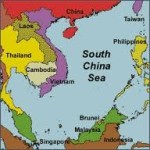
Marty Natalegawa sought to put a positive gloss on two days of shuttle diplomacy that failed to rally members of the Association of Southeast Asian nations (ASEAN) behind a belated, face-saving communiqué.
They had failed to agree the customary end-of-summit joint statement last Friday for the first time in the bloc’s 45-year history. The divisions follow a rise in incidents of naval brinkmanship involving Chinese vessels in the oil-rich waters that has sparked fears of a military clash.
Natalegawa told Reuters the 10 members had agreed on the components of an ASEAN “instrument” that would be issued by chair Cambodia later on Friday and would detail what was agreed upon during last week’s ASEAN Regional Forum in Phnom Penh, including the maritime dispute.
“We are trying so that other decisions made by the foreign ministers will be formulated in a different instrument for follow up,” Natalegawa told Reuters.
“The non-existence of a joint communiqué is behind us,” he said, adding that the customary communiqué was aborted last week because one of the four paragraphs relating to the South China Sea in the 132-paragraph draft could not be agreed on.
Disputes over how to address the increasingly assertive role of China – an ally of several ASEAN states – in the strategic waters of the South China Sea has placed the issue squarely as Southeast Asia’s biggest potential military flashpoint.
China has territorial claims over a huge area covering waters that Vietnam and the Philippines say they also have sovereignty over. All three countries are eager to tap possibly huge offshore oil reserves.
The failure to issue the communiqué and the bitter rows behind closed doors over what words to use and what to exclude have been a huge embarrassment for a 10-member bloc planning to form an EU-style economic community by 2015.
The row illustrated how Southeast Asian nations have been polarized by China’s rapidly expanding influence in the region and the economic dependence on Beijing that some of ASEAN’s poorer states now have, among the Cambodia, this year’s chair.”
via ASEAN to claim common ground on South China Sea, but no communiqué | Reuters.
Related articles
- UPDATE2: S. China Sea row forces ASEAN to forego communique for 1st time in 45 years (english.kyodonews.jp)


