Archive for ‘Politics’

13/06/2012

* Gun Ring Involving U.S. Soldier Is Broken Up, Chinese Officials Say

NY Times: “The Chinese authorities said on Tuesday that they had detained 23 suspects here and had broken up an international gun trafficking ring that conspired with a United States soldier to smuggle firearms into China.

The Ministry of Public Security said that more than 100 guns and gun parts, and about 50,000 bullets, had been seized in the case, which is being jointly investigated with the American authorities. The announcement came weeks after United States officials arrested Staff Sgt. Joseph Debose, 29, a soldier with a Special Forces National Guard unit in North Carolina, on charges of illegal firearms trafficking.

According to the United States attorney’s office for the Eastern District of New York, customs officers in Shanghai stumbled upon the smuggling ring in August after discovering a Beretta 9-millimeter semi-automatic handgun and other firearms hidden inside a stereo speaker in a U.P.S. package. After contacting U.P.S. in the United States, as well as the Department of Homeland Security, the authorities traced the package to two Chinese nationals in New York, using shipping documents and surveillance video from a U.P.S. facility in Queens. The two men eventually led the authorities to Sergeant Debose, who was acting as a gun dealer in North Carolina, prosecutors said.”

via Gun Ring Involving U.S. Soldier Is Broken Up, Chinese Officials Say – NYTimes.com.

13/06/2012

* China football ex-chiefs Nan Yong and Xie Yalong jailed

BBC News: “Two ex-heads of China’s football league have been jailed for 10-and-a-half years each for corruption, making them the most senior football officials sentenced. Nan Yong and his predecessor Xie Yalong were both accused of accepting bribes. Nan was also fined 200,000 yuan ($31,400; £20,200) and Xie is set to have personal assets and illegal takings confiscated.

China has increased efforts to clean up the game, hit by a series of scandals.

Nan, charged with 17 counts of taking bribes, was sentenced by a court in Tieling in north-eastern China. Xie, who was sentenced in Dandong, denies the charges against him adding that he only confessed to the allegations under torture. More than 900,000 yuan in personal assets and illegal takings of his are set to be confiscated.

Several other verdicts have also been delivered in similar cases in other cities, Chinese media reported.

In Dandong, a former national team captain was also sentenced to 10 years and six months in jail and fined 200,000 yuan. Four former national team players were sentenced in Shenyang for to up to six years’ jail and fined 500,000 yuan for taking bribes and match fixing.

via BBC News – China football ex-chiefs Nan Yong and Xie Yalong jailed.

09/06/2012

* China Signals Interest in Afghanistan

NY Times: “In a sign of China’s growing interest in neighboring Afghanistan after the departure of the United States and NATO led forces, President Hu Jintao met the Afghan leader, Hamid Karzai, in the Great Hall of the People on Friday and announced a new strategic partnership between the two countries.

Mr. Karzai was given special attention this week at the summit meeting of the Shanghai

English: Afghan President Hamid Karzai at a su...

Cooperation Organization, a group of six countries organized by China that includes Russia and Central Asian nations bordering Afghanistan. China is trying to ensure that a Muslim separatist group in a western region does not benefit from the Taliban when Western forces leave Afghanistan.

In a joint statement, China and Afghanistan said they would step up cooperation in security and the fight against terrorism, as well as increase intelligence sharing. No specifics were given.

A modest $23 million aid grant for unspecified projects that accompanied the new partnership indicated that despite concerns about the stability of Afghanistan after 2014, when most United States and allied troops are expected to be gone, China had no immediate plans to play a major development role.

This was Mr. Karzai’s fifth, and most prominent, visit to China. No Chinese leader has been to Afghanistan since the 1958 visit of Prime Minister Zhou Enlai. China’s major worry is the prospect of a Taliban-dominated Afghanistan lending sanctuary to the separatist group, the East Turkestan Islamic Movement, led by ethnic Uighurs, a Turkic-speaking, largely Muslim people in the autonomous western region of Xinjiang. The group wants a breakaway homeland in Xinjiang.

via China Signals Interest in Afghanistan – NYTimes.com.

See also: 

09/06/2012

* India’s Failed Food System

NY Times: ““Spurred by agricultural innovation and generous farm subsidies, India now grows so much food that it has a bigger grain stockpile than any country except China, and it exports some of it to countries like Saudi Arabia and Australia,” Vikas Bajaj writes in The New York TImes. “Yet one-fifth of its people are malnourished — double the rate of other developing countries like Vietnam and China — because of pervasive corruption, mismanagement and waste in the programs that are supposed to distribute food to the poor. ”

The biggest gap is the inefficient, corrupt system used to get the food to those who need it. Just 41.4 percent of the grain picked up by the states from federal warehouses reaches Indian homes, according to a recent World Bank study. Critics say officials all along the chain, from warehouse managers to shopkeepers, steal food and sell it to traders, pocketing tidy, illicit profits. Poor Indians who have ration cards often complain about both the quality and quantity of grain available at government stores, called fair price shops.”

via Indias Failed Food System – NYTimes.com.

See also: How close will India be in 25 years?

Tags: ,
31/05/2012

* Iran cancels $2 billion dam deal with China

Iran has cancelled a $2 billion contract for a Chinese firm to help build a hydroelectric dam in the country, Chinese state media said on Thursday, a move that risks upsetting Beijing, one of Tehran’s most important economic and political allies.

Iranian President Mahmoud Ahmadinejad is due to visit China next week for a security summit, where he is expected to hold talks with his Chinese counterpart, Hu Jintao, on Iran’s disputed nuclear programme.

In March 2011, Iran’s official IRNA news agency said China’s Sinohydro Corp. had signed a contract with Iranian hydro firm Farab to build the dam, described as the world’s tallest, in Iran’s western province of Lorestan. It was designed to support a 1,500-megawatt power station.

The Global Times, a popular tabloid owned by Chinese Communist Party mouthpiece the People’s Daily, said the Iranian government had decided to cancel the contract. The report did not cite sources or give a reason for the cancellation.

But it quoted Iranian media reports as saying Iran’s central bank was “dissatisfied” with financing options offered by China.

From China Daily Mail blog

Iran cancels $2 billion dam deal with China « China Daily Mail.

31/05/2012

* Senior leader says to promote Xinjiang’s leapfrog development

Xinhua: “Vice Premier Li Keqiang on Wednesday called for more support to Xinjiang Uygur Autonomous Region to achieve leapfrog development and long-term stability in this westernmost region of China. Li made the remarks at the 3rd National Work Conference on “pairing assistance” projects to support Xinjiang’s development.

Maps of Xinjiang Uygur Autonomous Region of Ch...

Maps of Xinjiang Uygur Autonomous Region of China Español: Región autónoma de Xinjiang (Photo credit: Wikipedia)

President Hu Jintao met the delegates to the annual conference and thanked them for their efforts made in accelerating Xinjiang’s development. Premier Wen Jiabao and Vice President Xi Jinping, both members of the Standing Committee of the Political Bureau of the Communist Party of China CPC Central Committee, were present at the meeting.  Zhou Yongkang, also member of the Standing Committee of the Political Bureau of the CPC Central Committee, also met with the delegates and attended the conference.

Huge achievements have been made in the past two years under a large number of pairing assistance projects for Xinjiang, especially projects concerning Xinjiang people’s well-being, said Li, also a member of the Standing Committee of the Political Bureau of the CPC Central Committee.

Vast land, abundant resources and huge development potential make Xinjiang a major area to implement China’s strategy to expand domestic demand and the strategy to develop the country’s western regions, Li said, adding Xinjiang is also a key area to accommodate transfer of domestic industries. Xinjiang is one of the bridgeheads for China’s opening to central Asia and Europe, said Li, calling for speeding up the opening of China’s western border areas while enhancing the openness of its eastern coastal regions.

Li noted that assisting the development of Xinjiang is a long-lasting, arduous and imperative task. More efforts and higher effectiveness are needed to advance the programs concerning the well-being of local people, such as housing, employment, medical care and social insurance, while the infrastructure construction and environmental protection should be further improved, said Li. More support regarding technology, education, talented people and excellent cadres should be provided to Xinjiang, and the exchanges between Xinjiang and inland areas should be enhanced, Li added.”

via Senior leader says to promote Xinjiangs leapfrog development – Xinhua | English.news.cn.

Xinjiang and Tibet are the two areas where ethnic minorities do not see eye to eye with the Han majority. Interestingly, both are strong adherents of religion; Buddhism in the case of Tibet and Islam in the case of Xinjiang. Until and unless the central authorities can convince these minorities that they have some form of self-determination (after all both are called ‘autonomous regions’ of China), unrest will continue.

31/05/2012

* New punishments for police abusing prisoners

China Daily: “Chinese police will face punishment ranging from demotion to dismissal if they are found to have abused inmates or connived in the maltreatment of prisoners, according to a provision published by the Ministry of Supervision on Wednesday.

Police will be fired if prisoners die as a result of their beating, corporal punishment or maltreatment, as well as their manipulation or connivance in similar misconduct, reads the provision. Dismissal also applies in cases of police found to have harbored criminal activities committed by inmates, or to have helped prisoners escape.

The provision, which will take effect on July 1, serves as a discipline guidance for police in prisons and labor camps, meaning police will face criminal charges simultaneously if their misconduct breaks the law.

In China, those who commit misdemeanors are normally placed in reeducation-through-labor centers instead of prisons. China promulgated a six-article ban governing the conduct of prison and labor camp police in 2006. It prohibits police from abusing prisoners, collecting money and belongings from prisoners families, gambling and drinking in working hours.”

via New punishments for police abusing prisoners |Society |chinadaily.com.cn.

Another sign of the Chinese government trying to establish the rule of law; part of the reform urged by Premier Wen.

Related post: 

31/05/2012

* Bikram Singh assumes charge as new Army Chief

The Hindu: “Gen Bikram Singh, a veteran infantry officer, on Thursday took over as the 25th Chief of the Indian Army succeeding Gen V.K. Singh whose 26-month tenure was mired by controversies.

The 59-year-old Gen Bikram Singh will have a tenure of two years and three months in the top post. Prior to his appointment as Army Chief, Gen Bikram was commanding the Kolkata-based Eastern Army Command.

He has held several important appointments in counter insurgency areas as the Corps Commander of Srinagar-based 15 Corps and Akhnoor-based 10 Division as Major General.

The officer, better known as ‘Bikki’ to his friends, was commissioned into the Sikh Light Infantry regiment on March 31, 1972 after attending the prestigious Indian Military Academy IMA.”

via The Hindu : News / National : Bikram Singh assumes charge as new Army Chief.

31/05/2012

* Myanmar can be link between India, China: Indian PM

Times of India: “Looking to quell speculation about India and China taking their rivalry to gas-rich Myanmar, PM Manmohan Singh said the country was perfectly placed to play the role of an economic bridge between China and India. While Indian officials have often described Myanmar as India’s gateway to Aseancountries, this is the first time Myanmar has been spoken about by the government as a link between India and China.

English: Manmohan Singh, current prime ministe...

English: Manmohan Singh, current prime minister of India. (Photo credit: Wikipedia)

While China alone accounts for more than 70% of investments into Myanmar, India stands at the 13th position in terms of its investments into the country. Despite its attempts to play a larger economic role there, India continues to be looked upon as a Johnny-come-lately whose infrastructure projects, including the ambitious Kaladan multimodal transport facility, have hardly taken off. On the other hand, Beijing is even building a gas pipeline from Myanmar to China.”

via Myanmar can be link between India, China: PM – The Times of India.

30/05/2012

* China could owe America one trillion dollars

China has a secret: It owes American investors hundreds of billions of dollars.

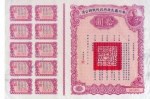
The Chinese government doesn’t like to talk about it and the U.S. government doesn’t want to raise it. But decades ago, Beijing defaulted on debt owed to Americans, as well as investors and governments around the world. In one case, it was paid. In the rest it was not. More than 20,000 American investors own this debt. The U.S. government may also own Chinese war debt, unpaid since World War II.

With the simple stroke of an executive proclamation, President Barack Obama can begin the process of addressing this issue. A 1930s-era law has established a quasi-public agency within the Securities and Exchange Commission, known as the Corporation of Foreign Securities Holders, which can arbitrate this dispute, much as a predecessor agency did for decades. China can both afford and benefit from this solution; it will afford goodwill at a time when relations between the world’s two superpowers are strained.

The story begins nearly 100 years ago, in 1913, when the government of China began issuing bonds to foreign investors and governments for infrastructure work to modernise the country. As the country fell into civil war in 1927, paying these debts became increasingly difficult and the government fell into default. Even so, in April 1938, the Nationalist government of China began to issue U.S.-dollar denominated bonds to finance the war against Japan’s brutal invasion.

Locked in a pitched battle for survival, the government issued these bonds into 1940. As part of its wartime financial aid, the U.S. government further provided a $500 million credit to China in March 1942, shipping gold there and helping to stabilise the currency. In return, it appears that the U.S. government redeemed some of these dollar-denominated bonds. But China doesn’t appear to have repaid this debt either, according to State Department records, and the declaration of the People’s Republic of China in 1949 ended decades of political, military and financial cooperation.

While successor governments are usually bound by the debts of predecessor governments, the new Communist government refused to pay any of these claims. The issue lay dormant for decades, just as the bilateral relationship did. Then, in 1979, as part of normalising relations, Washington released government financial claims regarding the expropriation of American property and appears to have dropped the matter of the war debt entirely. However, it is one thing for government decision-makers to let go of government debt, however questionable that is.

And it is entirely another thing for individual citizens to press their claims. Some U.S. investors tried to sue the Chinese government in the 1980s and 1990s. However, the Foreign Sovereign Immunities Act makes it very hard for any U.S. citizen to sue a foreign government in U.S. courts because the law generally says that U.S. courts do not have jurisdiction.

The law usually only allows the jurisdiction of U.S. courts if a foreign government waives its immunity, commits a tort or seizes property. Recent additional exceptions have been added for terrorism. China lost an initial summary judgement for failing to appear in court but, with the urging of the U.S. State Department, later appeared in court and successfully argued that U.S. courts did not have jurisdiction.

Today, the Chinese bonds held by U.S. investors may be worth as much as $750 billion, according to Jonna Bianco, president of the American Bondholders Foundation, who estimates the value of bonds held by investors worldwide may be $10 billion, including interest and penalties for default.

China Daily Mail blog: “China could owe America one trillion dollars.”
Law of Unintended Consequences

continuously updated blog about China & India

ChiaHou's Book Reviews

continuously updated blog about China & India

What's wrong with the world; and its economy

continuously updated blog about China & India