Archive for ‘Politics’

18/03/2016

How Modi’s Social Media Skills Earned Him a Spot on Time’s Internet Influencers List – India Real Time – WSJ

Since Narendra Modi took office nearly two years ago, his social media might has helped cultivate his international profile as an Indian prime minister who receives rockstar welcomes at concert venues and sports arenas overseas, shares smiling selfies with other heads of state and boasts among the biggest banks of Twitter followers of world political leaders.

This week, he burnished that image by winning a spot for a second consecutive year on Time magazine’s list of the 30 most influential people on the Internet.

The roundup of online luminaries describes Mr. Modi as an “Internet star,” noting that the prime minister, unlike other world leaders, uses social media to break news and conduct diplomacy. With 18.7 million followers, Mr. Modi ranks second only to President Barack Obama among political leaders.

The magazine’s picks of Internet A-listers also includes U.S. presidential hopeful Donald Trump, who has nearly 7 million Twitter followers, artist Kanye West and the author of the Harry Potter series, J.K. Rowling.

Mr. Modi used Twitter to announce Mr. Obama’s visit to India last year as the guest of honor at India’s Republic Day parade, and signaled a breakthrough in tense relations with neighboring Pakistan by tweeting that India’s foreign secretary would travel to that country. He tweets in several languages, shouting out to other world leaders on their birthdays and congratulating them on election victories.

The digital-savvy leader and his Bharatiya Janata Party’s social media team runs a full-time, data-driven operation. It coins hashtags and uses what one member called “online volunteers”–a digital army to retweet and comment on posts relating to the prime minister and his policies–to keep him trending.

They also use specialized software to study social media behavior and track the ebbs and flows of online sentiment to Mr. Modi’s speeches and actions, funneling their analysis to help craft his message–and to tweak it when traffic turns unfavorable.

Mr. Modi appears to have become a regular on Time’s rankings. Last year, he was on its “100 Most Influential People” list where Mr. Obama called him India’s “reformer-in-chief.”

Source: How Modi’s Social Media Skills Earned Him a Spot on Time’s Internet Influencers List – India Real Time – WSJ

05/03/2016

China lays out its vision to become a tech power | Reuters

China aims to become a world leader in advanced industries such as semiconductors and in the next generation of chip materials, robotics, aviation equipment and satellites, the government said in its blueprint for development between 2016 and 2020.

In its new draft five-year development plan unveiled on Saturday, Beijing also said it aims to use the internet to bolster a slowing economy and make the country a cyber power.

China aims to boost its R&D spending to 2.5 percent of gross domestic product for the five-year period, compared with 2.1 percent of GDP in 2011-to-2015.

Innovation is the primary driving force for the country’s development, Premier Li Keqiang said in a speech at the start of the annual full session of parliament.

China is hoping to marry its tech sector’s nimbleness and ability to gather and process mountains of data to make other, traditional areas of the economy more advanced and efficient, with an eye to shoring up its slowing economy and helping transition to a growth model that is driven more by services and consumption than by exports and investment.

This policy, known as “Internet Plus”, also applies to government, health care and education.

As technology has come to permeate every layer of Chinese business and society, controlling technology and using technology to exert control have become key priorities for the government.

China will implement its “cyber power strategy”, the five-year plan said, underscoring the weight Beijing gives to controlling the Internet, both for domestic national security and the aim of becoming a powerful voice in international governance of the web. China aims to increase Internet control capabilities, set up a network security review system, strengthen cyberspace control and promote a multilateral, democratic and transparent international Internet governance system, according to the plan.

Source: China lays out its vision to become a tech power | Reuters

05/03/2016

The Limits of Growth: Economic Headwinds Inform China’s Latest Military Budget – China Real Time Report – WSJ

With an official defense budget increase of 7.6% to 954 billion yuan ($147 billion) announced today, Beijing’s quest to restore China’s historic “greatness” and to attain international status as a military power commensurate with its economic standing continues.

Yet with GDP growth slowing and social and demographic headwinds mounting, Chinese leaders face increasingly difficult tradeoffs concerning how to allocate government largesse.

With Beijing’s 2016 official defense budget, it is clear that even military spending is not immune to China’s economic and fiscal realities. Advance reports that this year’s official budget would entail an increase of as much as 20% proved significantly off-the-mark. So, what’s in a number? Nothing short of this: Beijing’s latest defense spending figure provides further evidence that it is determined to avoid succumbing to Soviet-style military overextension – yet it remains committed to enhancing capabilities to further its priorities, especially vis-à-vis contested island and maritime claims in the East and South China Seas.

Make no mistake: drawing on the world’s second-largest (and growing) economy, the People’s Liberation Army (PLA) is increasingly well-endowed and capable of asserting China’s regional interests. Even as GDP growth continues to slow, President Xi Jinping appears determined to order, and fund, ambitious military modernization and PLA reforms. The PLA is now far-and-away the world’s second best-resourced military and, unlike the globally-distributed and -deployed U.S. military, is focused overwhelmingly on its immediate neighborhood.

Source: The Limits of Growth: Economic Headwinds Inform China’s Latest Military Budget – China Real Time Report – WSJ


02/03/2016

Today’s ‘Kings Without Crowns?’ — The Growing Powers of Xi’s Party Disciplinarians – China Real Time Report – WSJ

After hunting corrupt cadres over the past three years, the Communist Party’s much-feared graftbusters are switching gears to political policing.

In the process, they have emerged with an authority perhaps unparalleled since ancient China.

With President Xi Jinping’s blessing, the already-powerful Central Commission for Discipline Inspection is stationing inspectors in all central party and government departments, extending its reach into the top echelons of China’s bureaucracy.

In addition to targeting graft and waste, the CCDI has also become a kind of thought police for officials, academics and propagandists. Its inspectors are increasingly denouncing those deemed disloyalty to the party leadership.

The agency’s expanded scope reminded the Procuratorial Daily (in Chinese), a newspaper run by China’s top prosecutorial agency, of how Ming Dynasty rulers in the 14th century fortified a body of imperial censors who hunted errant officials in the name of the emperor.

Embedded in the Ming court’s six ministries, the censors could make direct representations to the emperor, despite their relatively junior rank, and assist the monarch in administrative tasks.

“But their most important power was to inspect the six ministries and impeach ministers,” the newspaper said. “It was this special status that made them ‘kings without crowns’ in the Ming Dynasty court.”

Recent developments, legal experts say, suggest that Mr. Xi is transforming the agency from a party watchdog into an arm of government.

“In effect, Xi Jinping is creating a parallel bureaucracy that can go around existing party and government institutions, to make things happen,” said Carl Minzner, a law professor at Fordham University who studies the Chinese legal system.

Disciplinary inspectors have also found a role in imposing party ideology beyond the traditional corridors of power.

Source: Today’s ‘Kings Without Crowns?’ — The Growing Powers of Xi’s Party Disciplinarians – China Real Time Report – WSJ

24/02/2016

China cuts more red-tape – Xinhua | English.news.cn

I wish the UK government would follow this excellent lead.

“The State Council, China’s cabinet, has decided to abolish another 13 items of administrative approval to reduce intervention in the economy.

The items released on Tuesday involve finance and business qualification reviews.

The decision will help vitalize the economy and strengthen growth, the State Council said.

Facing a complicated global landscape and pressure from an economic slowdown at home, the central government has made transforming government functions a top priority.

State Council agencies have canceled or delegated administrative approval powers on 599 items since March 2013, meeting the target to cut the number of items requiring approval by one-third within the term of this government ahead of schedule.”

Source: China cuts more red-tape – Xinhua | English.news.cn

23/02/2016

Angry victims heckle Haryana CM after Jat riots kill 19 | Reuters

A political ally of Prime Minister Narendra Modi was shouted down on Tuesday by a crowd angered by rioting in Haryana that destroyed businesses, paralysed transport and cut water supplies to metropolitan Delhi.

Photo

The chief minister of Haryana, Manohar Lal Khattar was heckled by local people in the town of Rohtak after they objected to his comments promising that they would receive compensation.

More than a week of unrest involving the Jat rural caste has challenged the authority of Modi, who was elected in 2014 with the largest majority in three decades but has publicly ignored the outburst of anger over a lack of jobs.

Although Jat leaders reached a deal late on Monday to end more than a week of protests that killed 19 people and injured 170, anger was still boiling among the victims whose livelihoods had been ruined.

Live TV pictures showed Khattar giving up his attempt to address angry people on the street. After retreating indoors to give an impromptu news conference, he repeated his promise of compensation only to be shouted down again.

Soon after Modi won national power, Khattar led his nationalist Bharatiya Janata Party to power in Haryana, a state of 25 million people, for the first time.

TRAIL OF DESTRUCTION

There was a trail of destruction through the town, one of several to be hit by Jat agitation to demand more government jobs and college places, with one Hyundai dealership gutted. Traders who staged an earlier sit-down protest said they had lost everything.

“I had two showrooms on the road; both were first looted and then set on fire. I have nothing left now,” Anil Kumar told Reuters Television.

Kumar appealed to Modi and to chief minister Khattar for compensation: “Are we not humans? Don’t our votes count? Why did they not have any mercy on us? Don’t we pay our taxes?”

Modi has remained silent through the worst social unrest of his 20 months in office. A senior government official said he would give a statement in due course to parliament, which convened for its budget session on Tuesday.

Finance Minister Arun Jaitley next week presents his annual budget. He is expected to announce big hikes in public sector pay that would make it hard to free up funds for investment without borrowing more money.

Thousands of troops were deployed to quell the protests, which flared on Monday near Sonipat when a freight train was torched and, according to reports, police shot dead three protesters. Jats also attacked buses in neighbouring Rajasthan.

Disruption has been huge, with at least 850 trains cancelled, 500 factories closed and business losses estimated at as much as $5 billion by one regional lobby group. India’s largest car maker, Maruti Suzuki, shut two factories at the weekend because its supply of components was disrupted.

The army on Monday retook control of a canal that supplies three-fifths of the water to Delhi, a metropolis with a population of over 20 million. A key sluice gate was reopened, but protesters sought to cut the water supply at another place.

“The canal was damaged by protesters and repair work will have to be done,” Delhi’s Water Resources Minister Kapil Mishra said. “The water crisis will continue for a few more days.”

Source: Angry victims heckle Haryana CM after Jat riots kill 19 | Reuters

21/02/2016

Xi takes nuclear option in bid to rule for life | The Sunday Times

Very worrying, if true.

CHINA is moving towards one-man rule as the state media step up demands for personal loyalty to President Xi Jinping, a departure from the Communist party’s collective leadership of recent decades.

Xi Jinping appears to be building a personality cult around him as Mao did

Last week the party’s flagship newspaper issued a call for Xi to have the power to “remake the political landscape of China”. The article, supposedly written by one of a literary group, was put out on a social media account run by the People’s Daily. It said all communists must be loyal to Xi and “line up with the leadership”.

The campaign to enshrine Xi as the infallible “core” of authority is worrying many inside the political elite and coincides with China exerting its military muscle and possibly preparing to change its nuclear weapons strategy.

The People’s Liberation Army (PLA) has just stationed surface-to-air missiles on a disputed island in the South China Sea. The Chinese expansion comes as Barack Obama rallies Asian nations to support free navigation in the strategic waterway. The prospect of one man dominating the party, the state and the army in China could be the most challenging test in the next American president’s in-tray.

Xi’s grand plans include a total reorganisation of the Chinese military command structure that has included an internal debate about its nuclear weapons. Xi recently formed a dedicated PLA rocket force to control the nuclear ballistic missile arsenal. A report for the Union of Concerned Scientists, a US-based group, says China may be considering placing its nuclear forces on alert, which means that, like America and Britain, its weapons would be ready to fire on command.

That would be a shift of position for a nation that affirms it will not be the first to use nuclear weapons in any conflict. China has already started an ambitious programme to upgrade its older missiles with multiple warheads like those of other nuclear powers.

Rising military budgets show that despite the slower Chinese economy and big flows of capital out of the country, Xi is seizing any initiative to turn nationalism to his advantage. A source who grew up in the party’s privileged residential compounds in Beijing said the moves harked back to an earlier era: “There is a fear among the families, the long-time party members for generations, that this guy wants to make himself into another Chairman Mao and rule for life.”

It is clear that, like Mao, Xi, 62, is using articles and essays in the state media, often penned by pseudonymous authors or published in the provinces, to intimidate his enemies and promote himself.

Last week a social media platform controlled by the Beijing Daily, the voice of the capital’s municipal committee, launched a striking attack on a party faction opposed to Xi, the Communist Youth League. Officials connected to the league were “ambitious aristocrats whose self-serving attitude did no good to the party and led to scandals”, it sneered.

Targeting the league — whose members include the prime minister, Li Keqiang, and the former president, Hu Jintao — is a signal that Xi has broken with the consensus set after the unrest of 1989 that the party’s factions do not attack one another in public. In the past, a league connection meant a fast-track to promotion for young high-flyers. Now it seems to be a liability.

A study by the Central Commission for Discipline Inspection — the party watchdog unleashed by Xi against rivals accused of corruption — has criticised the “mentality” of league members. The commission’s propaganda publication, the China Discipline Inspection Paper, warned against “those who form their own circles inside the party” and referred to fallen officials as “gangs”.

This Mao-era language singled out the “petroleum gang” under the purged security chief, Zhou Yongkang, whose cronies dominated the Chinese oil industry, and the “secretary gang” around Ling Jihua, a close aide to Hu and a former league stalwart. Ling is already under arrest on corruption and bribery charges.

Defining people as members of “gangs” or “cliques” is a classic tactic of communist infighting and a prelude to destroying them.

Chilled by the signals from the top, half the provincial party chiefs in the country this month pledged allegiance to Xi as “the core”.

The term represents a significant change from the language used about Xi’s predecessors, Hu and Jiang Zemin, who were referred to as being only “at the core” of a collective leadership. The last strongman in China, Deng Xiaoping, exercised his power behind the scenes and scorned a cult of personality.”

Source: Xi takes nuclear option in bid to rule for life | The Sunday Times

20/02/2016

Leaders of Nepal and India mend fences after friction | Reuters

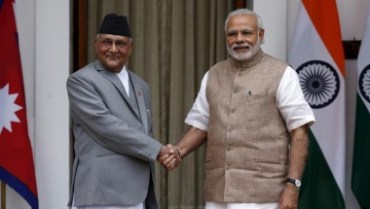
The leaders of Nepal and India have overcome mutual misgivings, India’s foreign secretary said on Saturday, after talks to ease tensions over Nepal’s recently-adopted constitution.

Nepal's Prime Minister Khadga Prasad Sharma Oli (L) shakes hands with his Indian counterpart Narendra Modi during a photo opportunity ahead of their meeting at Hyderabad House in New Delhi, India, February 20, 2016. REUTERS/Adnan Abidi

Prime Minister K.P. Oli visited New Delhi for talks with his Indian counterpart Narendra Modi after a months-long freeze in relations triggered by the grievances of plains dwellers in southern Nepal who have close historical ties to India.

Nepal, which moved from absolute to constitutional monarchy in 1990, made changes to its constitution to ensure greater participation of the Madhesi community in parliament.

But community leaders said the amendments failed to address their central fear that provincial borders would be redrawn in a way that would divide them.

“Our prime minister appreciated the progress made towards consolidation of constitutional democracy in Nepal,” Indian Foreign Secretary Subrahmanyan Jaishankar told a news briefing.

Source: Leaders of Nepal and India mend fences after friction | Reuters

20/02/2016

Pathankot Attack: Pakistan Begins Formal Police Investigation – India Real Time – WSJ

Pakistan has launched a formal police investigation into the alleged involvement of Pakistan-based militants in a deadly attack on an Indian air force base last month, senior government and police officials said Friday.

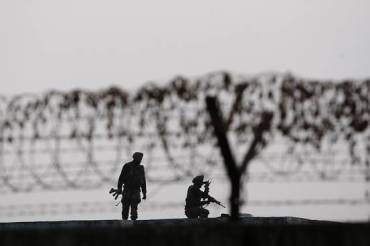
Six heavily-armed militants attacked the Pathankot air force base on Jan. 2, sparking a battle with Indian forces that lasted more than 40 hours, killed seven Indian security personnel and threatened to dismantle a tentative improvement in relations between Islamabad and New Delhi.

India suspected Pakistan-based Jaish-e-Mohammad, a U.S.-designated foreign terrorist group, was behind the Pathankot attack, and demanded Pakistan take action against the perpetrators.

Source: Pathankot Attack: Pakistan Begins Formal Police Investigation – India Real Time – WSJ

17/02/2016

Free Speech in China Gets an Unlikely State-Media Backer – China Real Time Report – WSJ

China’s ruling Communist Party is cracking down on internal criticism, and the editor of one of the country’s most nationalist tabloids isn’t going to take it anymore.

In a post on his Weibo microblog over the weekend, Hu Xijin, editor in chief of the Global Times, called on Chinese authorities to show greater tolerance for dissenting opinions.

“China should open up more channels for criticism and suggestions and encourage constructive criticism,” Mr. Hu wrote on Sunday. “There also should be a certain amount of tolerance for unconstructive criticism.”

While allowing greater freedom of speech can lead to some problems, it brings greater benefits, he wrote, adding that recent Chinese history since the beginning of Communist rule in 1949 shows that freedom of speech “is inseparably linked to the vitality of society.”

“As for the problems it causes, the state has ample capacity to respond,” Mr. Hu wrote, without elaborating.

The message had received more than 2,000 comments and 1,500 “likes” as of Wednesday afternoon, on par with some of Mr. Hu’s other recent posts.

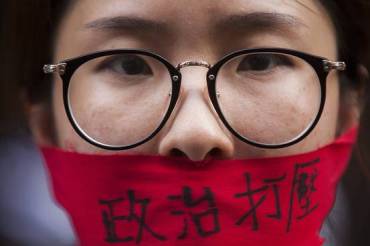
The posting comes as the Communist Party is doubling down on its efforts to stifle dissent among cadres. The sacking last November of Zhao Xinyu, an editor at a state-run newspaper, drew attention to a new tool in the party’s repertoire: the punishment of members for “groundlessly commenting” on official policies.

Introduced in a set of party rules last October, the prohibition against speaking out on national policies – known in Chinese as 妄议中央, wangyi zhongyang – is likely to have a chilling effect on political discussion within China, experts say.

It wasn’t clear whether Mr. Hu’s posting was in reaction to the new regulation – although some of the comments on his post indicated that the issue is on Chinese Internet users’ minds. “Aren’t you afraid of [being fired for] groundlessly commenting on official policies?” one user wrote.

Source: Free Speech in China Gets an Unlikely State-Media Backer – China Real Time Report – WSJ

Law of Unintended Consequences

continuously updated blog about China & India

ChiaHou's Book Reviews

continuously updated blog about China & India

What's wrong with the world; and its economy

continuously updated blog about China & India